
Joe's Vintage Guitars - Preserving History One Guitar at a Time

Vintage guitar authentication guide

How to Spot a Fake Martin Guitar

A convincing headstock logo is not enough. Start inside the soundhole, then test whether the markings, wood, bracing, trim, hardware, and claimed production year agree.

Use several clues togetherModel and year matterPhotos are enough to start
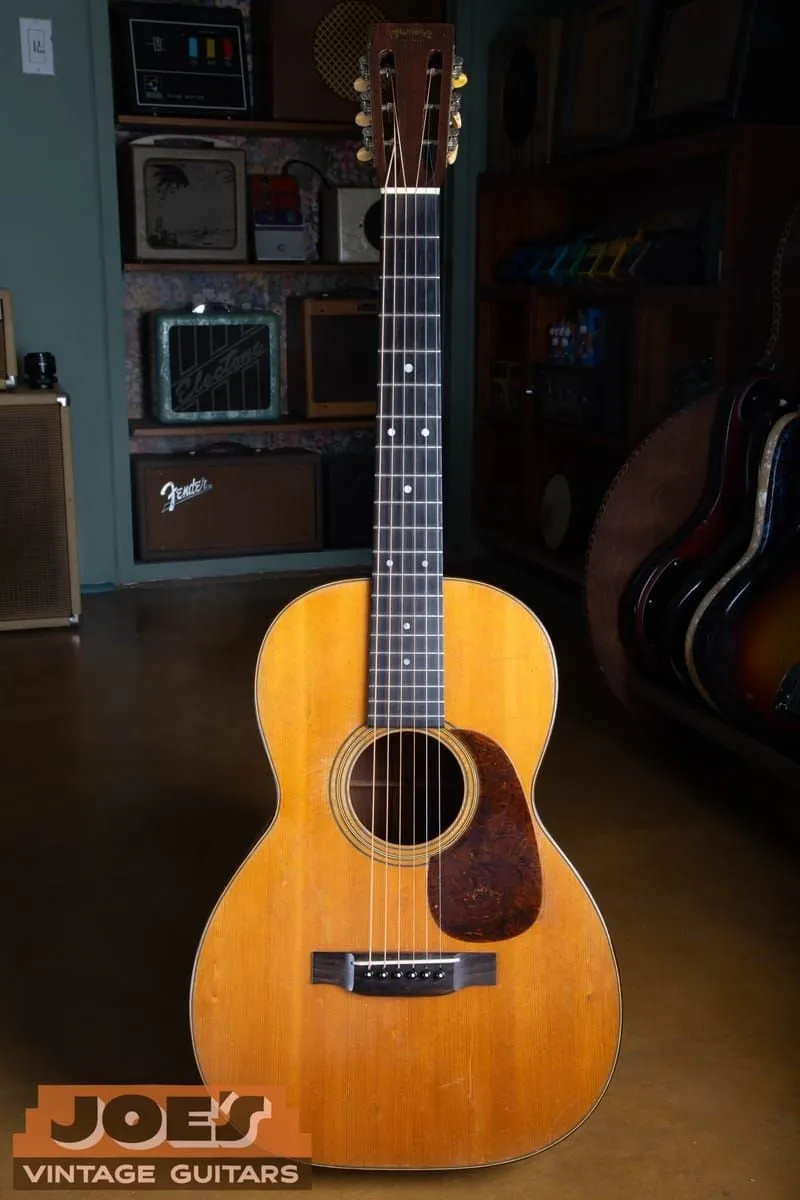
Vintage Martin 00-21 acoustic guitar shown in its case
Start with the whole instrument, then move to the details that are hardest to fake.
One clue is not a verdict

Counterfeiters copy real details. Authentic guitars can also be repaired or modified.

Identify the exact claim

The model, factory, and production period decide which features should be present.

Do no harm

Photograph first. Do not force old screws, pull electronics, or clean away useful evidence.

Start here

The Fast Martin Field Check

Martin construction and markings changed over time, and not every authentic model uses the same materials. Use these checks to find contradictions, then verify the exact model and era before making a final call.

1

First field check

Start With the Neck-Block Markings

Many steel-string Martins carry the model and serial number stamped into the neck block. Use Joe's Martin serial-number lookup and model guide to check the year, location, and format before judging the stamp's typography, spacing, position, and depth.

  • Photograph the full neck block square-on and in side light.
  • Check the model and serial together; a plausible number paired with the wrong model format is still a problem.
  • Compare the stamp with authenticated examples from the same production period.
Keep it in context. Old stamps can be light, uneven, dirty, or partly hidden. One imperfect character does not prove a fake.
Suspect exampleBurning around the logo and thin, serif text on a fake Martin neck block stamp.
Authentic comparisonMachine-stamped model and serial on the authentic Martin used for comparison.
2

Material clue

Use the Inside-Outside Grain Test Carefully

When a specific Martin model and year should have solid back or side wood, distinctive grain lines should continue through the same piece. For dreadnought specifications, use the D-18, D-28, and D-45 guide; for smaller bodies, compare the Martin 0, 00, and 000 guide.

  • Choose one distinctive grain line and locate the same area inside the body.
  • Use bright, angled light and account for color changes caused by finish and interior darkness.
  • Confirm that the claimed model was actually built with solid wood before using this test.
Keep it in context. Martin has made instruments with different construction and material specifications. Laminate construction is not itself counterfeit when it is correct for the model.
Outside referenceChoose a distinctive line or swirl on the exterior.
Inside referenceLook for the same grain path on the corresponding interior surface.
3

Construction clue

Read the Center Strip and Interior Work

The back center strip, bracing, bridge plate, kerfing, glue work, and tool marks reveal how the guitar was built. Joe's 1976 Martin 000-45 authentication study shows how the stamp, trim, finish, and construction are checked together on a real instrument.

  • Inspect the full strip rather than one cropped logo.
  • Compare brace shape and placement, bridge plate material and size, and interior workmanship.
  • Look for fresh sanding, added ink, altered braces, or repairs around the stamp.
Keep it in context. A blank or unusual center strip is not universal proof of a fake. Model, year, factory, and prior repair history all matter.
Interior maker's markA center-strip marking photographed through the soundhole.

The deeper check

What Else Has to Match?

A convincing Martin should remain convincing as you move from the obvious details to the construction and parts beneath them.

  • Body size and styleDimensions, trim, rosette, binding, inlays, and back-strip pattern should match the style number.
  • Wood specificationTop, back, sides, neck, fingerboard, and bridge materials should fit the exact year and model.
  • Bracing and bridge platePattern, shaping, scalloping, position, and bridge-plate construction provide strong period clues.
  • Bridge and pickguardFootprint, location, shape, material, and finish disturbance can reveal replacements or altered construction.
  • Headstock and tunersLogo style, stamp, volute, slots, tuner footprint, and extra holes should make sense together.
  • Finish and repairsOverspray, refinishing, neck resets, cracks, and bridge work affect originality without automatically making it fake.

Before you buy or sell

Photos to Send for a Martin Authentication Review

Start with what you can photograph safely. Joe will tell you if one more hidden detail would settle the question.

  • Full front, back, and both sides
  • Front and back of the headstock
  • Entire neck block with model and serial visible
  • Center strip from end block toward the neck block
  • Interior braces and bridge plate
  • Bridge, saddle, pickguard, rosette, and binding
  • Exterior and matching interior wood grain
  • Cracks, repairs, overspray, case, and paperwork

Common questions

Martin Authentication Questions

A real guitar can have changed parts. A clean-looking guitar can still be wrong. These distinctions matter before you price it.

Does a Martin serial number prove authenticity?

No. It can establish a possible production year, but the stamp, model format, materials, construction, and specifications must also agree.

Is every laminate Martin-style guitar fake?

No. Some legitimate instruments use laminate construction. The question is whether the materials match the exact model and production claim.

Should I remove anything to photograph the interior?

Usually not. A phone camera, mirror, and good light through the soundhole are enough for the first review.

Can Joe authenticate a Martin from photos?

Often, yes for an initial opinion. A rare pre-war instrument or a heavily rebuilt guitar may require hands-on inspection.

Still unsure?

Have Joe Review the Whole Guitar

A serial number or one photo can raise a question. A complete photo set is how the answer becomes reliable.

Get a Free Martin Appraisal
Enlarged authentication photo