

Electric Guitars · 1959 To 1968
Martin Electric Guitar History: E, F And GT Changes
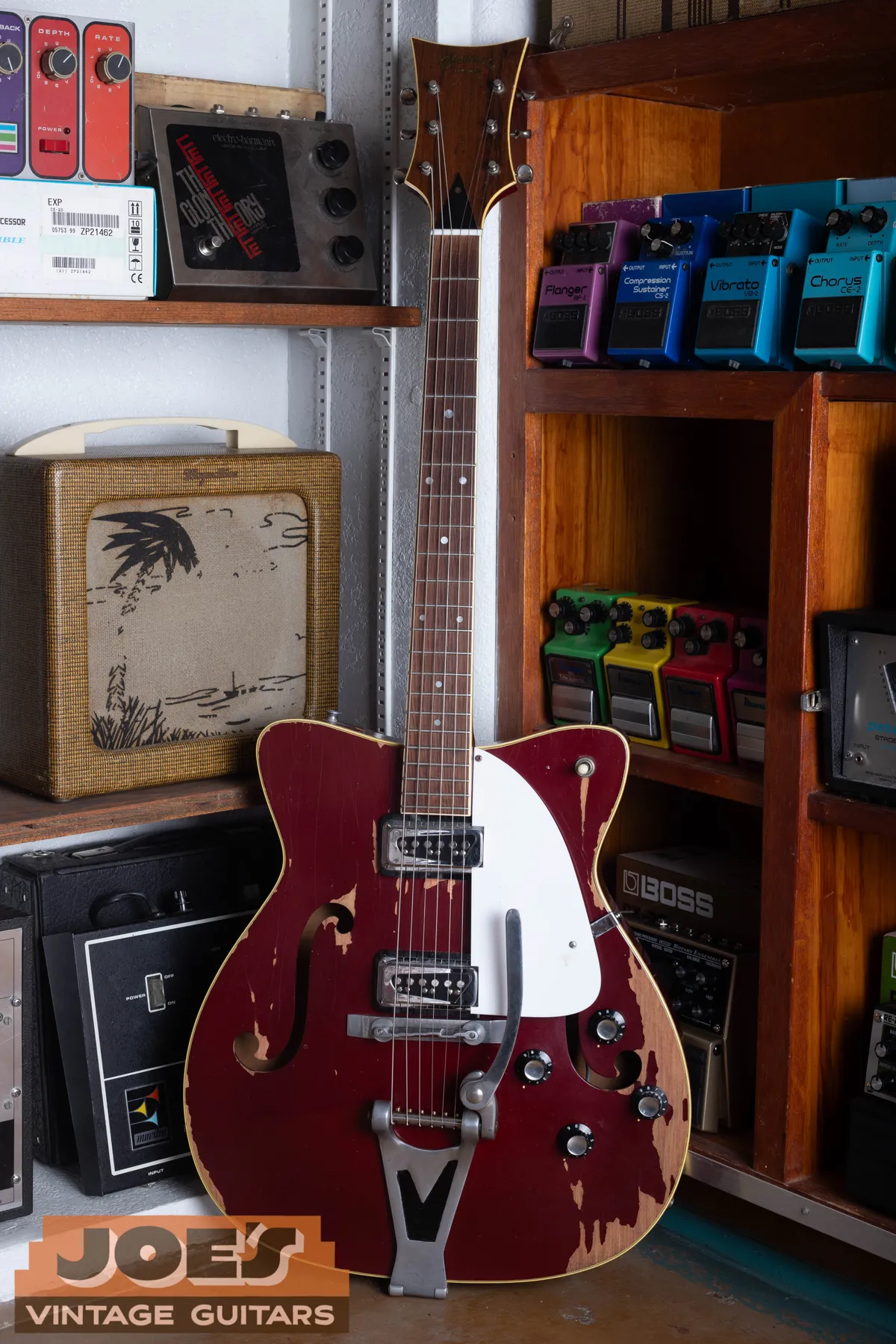
Martin’s early electric history moved through three designs: flat-top acoustics fitted with pickups, the thin hollowbody F series, and the redesigned GT series. The changes involved body shape, pickup layout, bridge construction and neck design. Catalog availability sometimes continued after production ended.
- 00-18E Introduced
- 1959
- F-Series First Batches
- 1961
- GT-Series Introduction
- 1965
- GT-70 Production
- 1965 And 1966
- GT Production Ends
- 1967
Models Covered In This Article
- 00-18E
- F-50
- F-55
- F-65
- GT-70
- GT-75
Model Changes By Year
| Year Or Period | What Changed |
|---|---|
| 1959 | The 00-18E joined the electrified flat-top range with a DeArmond pickup and top-mounted controls; a second pickup was available. |
| 1961 | F-50, F-55 and F-65 prototypes introduced thin hollowbody designs. The F-50 had one pickup, the F-55 two, and the F-65 added a second cutaway. |
| 1962 | The F series moved into larger production with an adjustable clear plexiglass bridge. |
| 1964 | 00-18E production ended, although remaining guitars were still listed the following year. |
| 1965 | F-series production ended as the GT-70 and GT-75 arrived with a revised body and neck design. |
| 1966 | GT-70 production ended after the 1965 and 1966 run. |
| 1967 | A twelve-string GT-75 appeared briefly. GT-series production ended that year. |
| 1968 | GT models still appeared in catalogs and price lists after manufacturing had stopped. |
1959: The Electrified Flat-Tops
The 00-18E retained a flat-top acoustic body while adding a DeArmond pickup and controls on the top. A second pickup was available. The model belonged to the same early electric effort as the larger D-18E and D-28E.
This first approach adapted the acoustic platform. The later F series was a different thin hollowbody design, so the shift was more substantial than adding another pickup to the 00-18E.
1961 And 1962: The F-Series Hollowbodies
The first F-50, F-55 and F-65 prototypes and small batches date to 1961, followed by larger production in 1962. The F-50 used one pickup. The F-55 added a second pickup, and the F-65 used the two-pickup arrangement with a double-cutaway body.
An adjustable clear plexiglass bridge was part of the original F-series design. A later wood or metal replacement on an individual guitar is not a new factory model phase. The F model numbers distinguished simultaneous versions, rather than a sequence in which every F-50 became an F-55 and then an F-65.
1964 And 1965: The Early Electric Lines End
00-18E production ended in 1964, but the model remained in the next year’s price list while stock was available. The F series ended in 1965.
Martin built 519 F-50s in total, with only one recorded in the final year. These production dates explain why a sales listing or catalog date may be later than the manufacturing period.
1965 And 1966: The GT Redesign
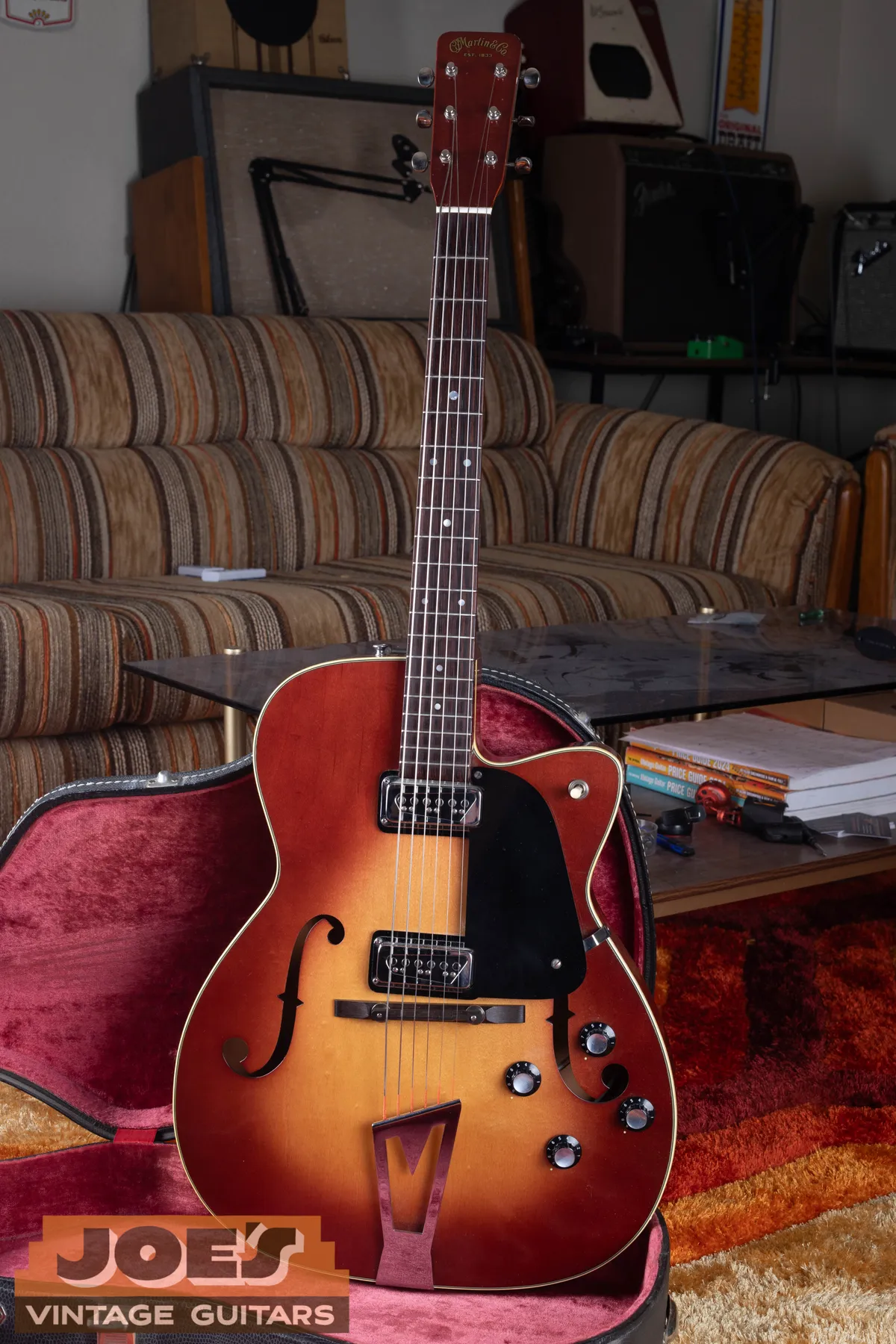
The GT-70 and GT-75 arrived in 1965 with a revised body, bolt-on neck construction and an adjustable neck rod. GT-70 identified the single-cutaway version; GT-75 identified the double-cutaway version. A Bigsby vibrato was optional.
The GT hardware and neck arrangement differed from the earlier flat-top electrics. GT-70 production lasted through 1966, while the GT-75 continued into the following year. Headstock outlines and finishes varied within the GT period and should not be turned into unsupported one-year cutoffs.
1967 And 1968: Twelve Strings And Remaining Stock
A twelve-string GT-75 appeared briefly in 1967. Its elongated conventional headstock accommodated twelve tuners, setting it apart from the six-string GT headstock forms.
GT-series production ended in 1967. Catalog and price-list appearances continued in 1968, reflecting continued availability rather than another year of manufacture. The twelve-string version was a short addition at the end of the line.
Was The F Series A Continuation Of Martin’s Acoustic F Archtops?
No. The acoustic F-1, F-2, F-7 and F-9 belonged to the 1930s and 1940s archtop family. The F-50, F-55 and F-65 were thin hollowbody electrics introduced in 1961.
Were GT Guitars Still Being Made In 1968?
GT production ended in 1967. The models remained in 1968 catalogs and price lists, so a later advertisement does not establish a 1968 build date.
Martin Identification Resources
- D-18E Versus D-28E Authentication
Use the dedicated comparison for the two dreadnought electrics.
- Martin Tuner Dating
Compare machines and their mounting evidence independently of the pickups.
- Martin Serial And Model Numbers
Find the production year from the neck-block serial.
- Martin Construction And Dating
Follow changes in bridges, necks, braces and materials.
- Sell A Martin Guitar
Send Joe the details of a Martin you are considering selling.
Martin Owners On Working With Joe
“feeling no regrets after selling our 1920’s Martin on to these folks”
“they took the time to look at the photos of my Martin D18 and emailed back an appraisal”
Your Martin’s Model, Year And Condition
Send Joe Photos Of Your Martin
Include the front, back, headstock, model and serial markings, and any known repairs.
Photo Credits
Photographs from the Joe’s Vintage Guitars archive. Each caption identifies the instrument shown, including comparison photographs.