

Archtop Guitars · 1931 To 1942
Martin Archtop History: C, R And F Model Changes
Martin’s acoustic archtops developed through three parallel families between 1931 and 1942. The C models began with carved tops and round soundholes; the smaller R series used pressed tops before the R-18 changed construction; and the F series introduced a wider 16-inch body. Soundholes, top construction and body size changed on separate schedules.
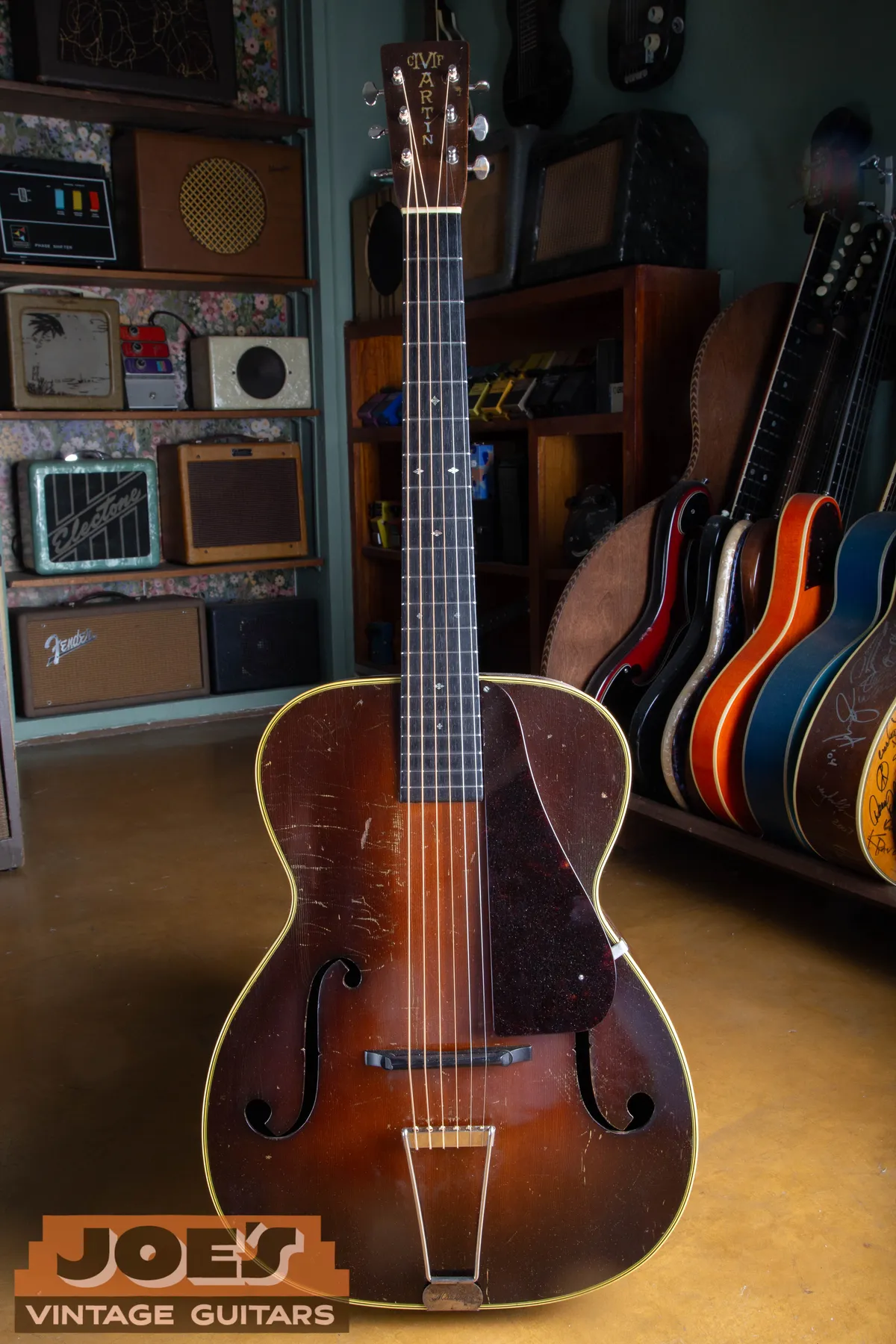
- First C Series
- 1931
- Wider F Series
- 1935
- R-18 Becomes Carved
- Mid-1936
- Final Acoustic Archtops
- 1942
- F-Series Total
- 401 Guitars
Models Covered In This Article
- C-1
- C-1T
- C-2
- C-3
- R-17
- R-18
- R-18T
- F-1
- F-2
- F-7
- F-9
Model Changes By Year
| Year Or Period | What Changed |
|---|---|
| 1931 | The C series began with 15-inch bodies, carved spruce tops and round soundholes. C-1 used mahogany; C-2 and C-3 used rosewood with increasingly elaborate trim. |
| 1932 To 1933 | F-holes replaced the early round-hole C design. The smaller R-18 appeared with a pressed spruce top and also moved from a round soundhole to f-holes. |
| December 1934 | The R-17 added a mahogany-topped version to the smaller archtop family. |
| 1935 | The F-7 and F-9 introduced wider 16-inch archtop bodies. |
| Mid-1936 | The R-18 changed from a pressed top with segmented f-holes to a carved top with continuous f-holes. |
| 1940 | The simpler F-1 and F-2 joined the 16-inch range, with mahogany and rosewood back and sides respectively. |
| 1942 | Final C production came in August, the last F batch in September, and the final R-18 batch in November. |
1931: The Round-Hole C Series
The first C-series batch dates to June 1931. The guitars had 15-inch bodies, carved spruce tops and round soundholes. C-1 used mahogany back and sides, while C-2 and C-3 used rosewood, with the C-3 receiving more elaborate decoration.
The raised top carried a floating bridge and tailpiece. Martin’s archtop construction should not be equated with a carved back: the company also shaped thin back plates with internal braces. Top arching and back construction are separate specifications.
1932 And 1933: F-Holes And The Smaller R-18
During 1932 and 1933, f-holes replaced the earliest round-hole C design. The transition was not one simultaneous change across every model.
The smaller R-18 began with a pressed spruce top. Its early round-soundhole form also gave way to f-holes. Pressing a thin plate into an arch and carving an arch from thicker wood are different construction methods, even when the resulting guitars share a similar outline.
1934 And 1935: The R-17 And Wider F Models
The R-17 arrived in December 1934 with a mahogany top. It provided a different material option within the smaller archtop family.
In 1935, the F-7 and F-9 expanded Martin’s archtop body width to 16 inches. These larger models occupied a more elaborate tier above the smaller guitars. Their acoustic F designation is separate from the F-series electrics introduced decades later.
Mid-1936: The R-18 Adopts A Carved Top
The R-18 changed from a pressed top to a carved top in mid-1936. The earlier segmented f-holes gave way to continuous f-hole openings with the revised construction.
This is a dated structural change within one model. A rule that every R-18 had a pressed top would miss the later version, while a rule that every Martin archtop was carved would miss the earlier R-18.
1940 To 1942: Simpler F Models And The End Of Production
The F-1 and F-2 joined the 16-inch family in 1940 with simpler decoration. The F-1 used mahogany back and sides; the F-2 used rosewood. Total acoustic F-series production was 401 guitars, including 91 F-1s.
The original acoustic archtop line ended in 1942. The final C guitars were made in August, the final F batch in September, and the last R-18 batch in November. Later flat-top conversions of these bodies are individual modifications, not a further factory archtop model period.
Did Martin Archtops Always Have F-Holes?
No. The first C-series guitars had round soundholes, and the early R-18 also used a round soundhole. F-holes entered during the early-1930s development of the line.
Were All R-18 Tops Pressed?
No. Earlier R-18 tops were pressed, but the model changed to a carved top in mid-1936. The change also replaced the segmented f-hole arrangement with continuous openings.
Martin Identification Resources
- Tenor Authentication
Add scale and four-string neck checks for the tenor archtops.
- Martin Serial And Model Numbers
Find the production year from the neck-block serial.
- Martin Construction And Dating
Follow changes in bridges, necks, braces and materials.
- Sell A Martin Guitar
Send Joe the details of a Martin you are considering selling.
Martin Owners On Working With Joe
“feeling no regrets after selling our 1920’s Martin on to these folks”
“they took the time to look at the photos of my Martin D18 and emailed back an appraisal”
Your Martin’s Model, Year And Condition
Send Joe Photos Of Your Martin
Include the front, back, headstock, model and serial markings, and any known repairs.
Photo Credits
Photographs from the Joe’s Vintage Guitars archive. Each caption identifies the instrument shown, including comparison photographs.