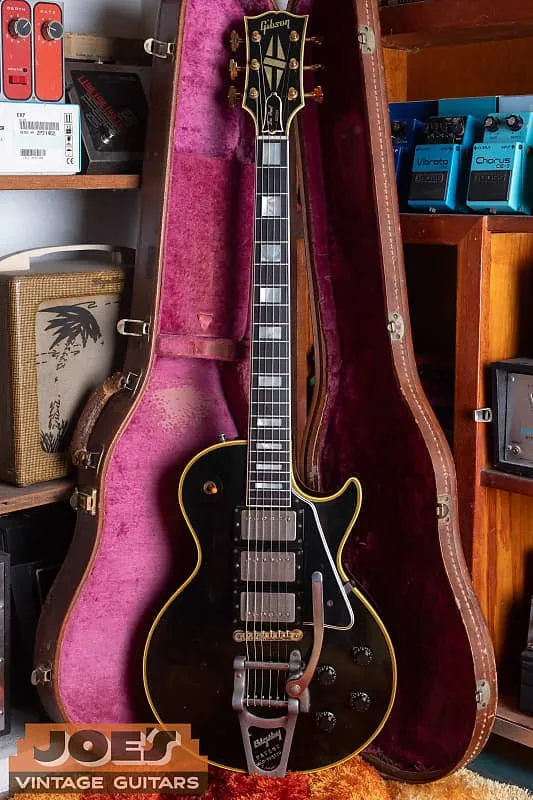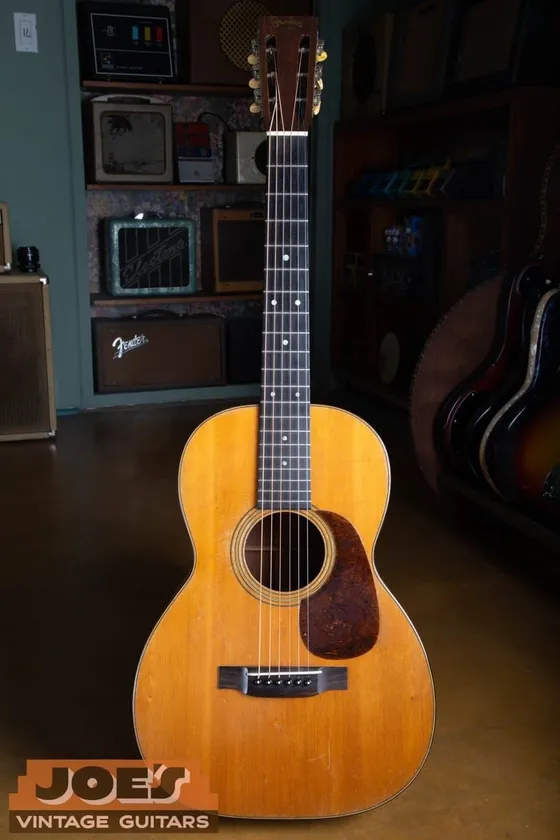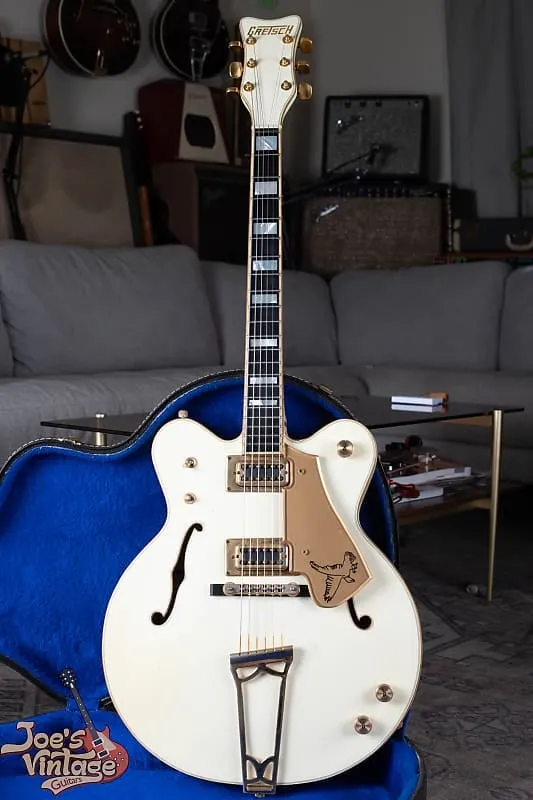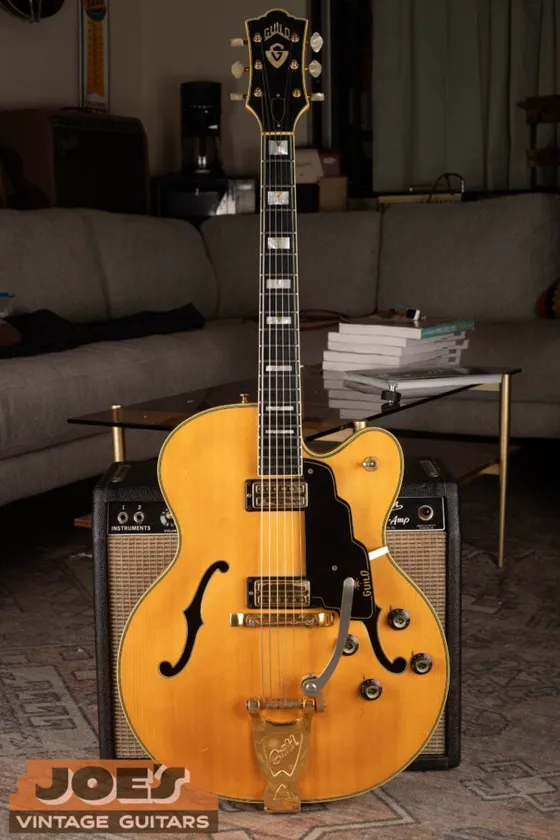
Free Vintage Guitar Appraisal: What Is Your Vintage Guitar Worth?

Expert Valuations For Fender, Gibson, Martin & Every Major American Brand

Getting a free vintage guitar appraisal shouldn’t be a hassle. At Joe’s Vintage Guitars, I help owners and collectors nationwide find out what their gear is worth in today’s market. Maybe you want the cash value of a vintage Gibson, need a Fender Serial Number identified, or have a whole Guitar Collection to Sell. Either way, I’ll give you a straight, honest answer and the right numbers before you sell or insure it.

How to Get Your Free Vintage Guitar Valuation In 3 Simple Steps

Step 1:

Send Over the Details

Just fill out the form below with the brand, model, and a few clear photos. One old Fender or a whole collection built over the years, either way this is the easiest way to get started. The more details you give me, the more accurate the guitar identification will be. You can also call, text, or email if you’d rather reach out that way.

Man taking photo of cherry Gibson ES-335
Step 2:

Expert Review & Research

I use more than just the serial number to date your guitar correctly, including pot codes and hardware specs. I’ll go through the details, checking the serial number and looking over the parts and overall condition. Once I’ve pinned down the model & year, I’ll compare it against recent sales and my own market data to find what it’s actually worth today.

Joe Dampt reviewing Gibson Barney Kessel guitar
Step 3:

Get Your Valuation

I’ll get back to you with a straight, honest look at what your guitar is worth right now. Curious about its history or ready to move it on, you’ll have solid numbers to work from. And if you do decide to sell, I’m always happy to make a fair cash offer and buy it through my easy nationwide process.

Email from Joe explaining market value of cherry red Gibson ES-335

Get An Appraisal

For Your Vintage Guitar Or Collection Online Or In Person

What Type Of Appraisal Do You Need? (optional)
Best Way To Reply: (optional)

*If you have photos, you will have the option to upload them after clicking submit

Nationwide Vintage Guitar Values You Can Trust

Expertise By The Numbers

10,000+ Vintage Instruments Appraised Personally
$2,000,000+ Annual Volume in Vintage Gear Bought & Sold
1,000+ Instruments Repaired & Restored by Joe
20+ Countries Shipped to Globally
1500+ Hours Of live performance and studio session guitar work

Known Beyond Arizona

I’m based in Mesa, but I’ve spent years building a name as a vintage guitar buyer for collectors all over the country. I work mostly on the high-end stuff, the instruments with real history that take an experienced eye to get right.

No Shipping Required

You don’t have to ship your guitar just to find out what it is. I can spot original parts, finish issues, and hardware specs from good photos. I’ve done thousands of these remote appraisals for owners across the US, all without them leaving the living room.

Beyond the “Big Three”

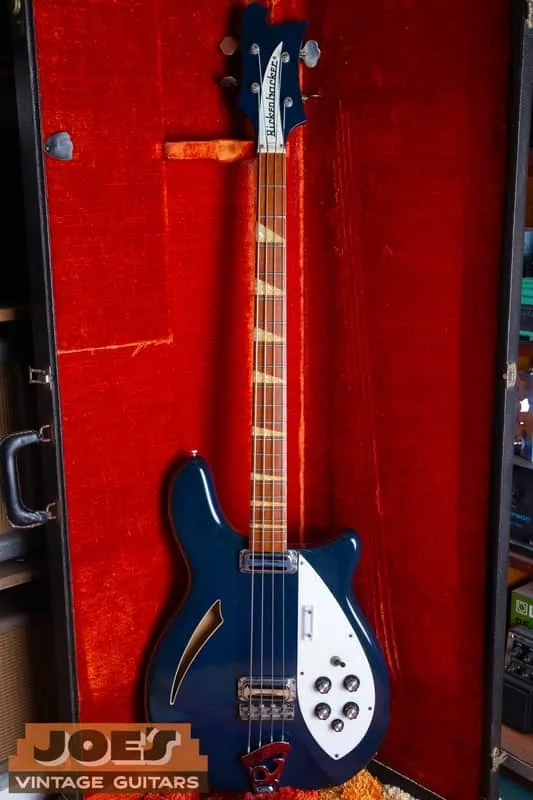
My market knowledge goes well past Fender and Gibson. If you need an accurate Gretsch appraisal, the value of a vintage Guild, or help identifying a rare Rickenbacker or Epiphone, I’ve got the national sales data to give you a real number.

Real-World Market Data

I don’t go by the bargain-bin prices from 10 years ago, or the inflated ‘asking prices’ you see on Reverb. I track real sales data across the national vintage guitar market so my numbers reflect what’s actually selling right now.

Notable Appraisals:
Real-World Vintage Guitar Case Studies

I’ve handled thousands of vintage instruments over the years. Here are a few where my research got sellers the full story, and the right price, for their gear.

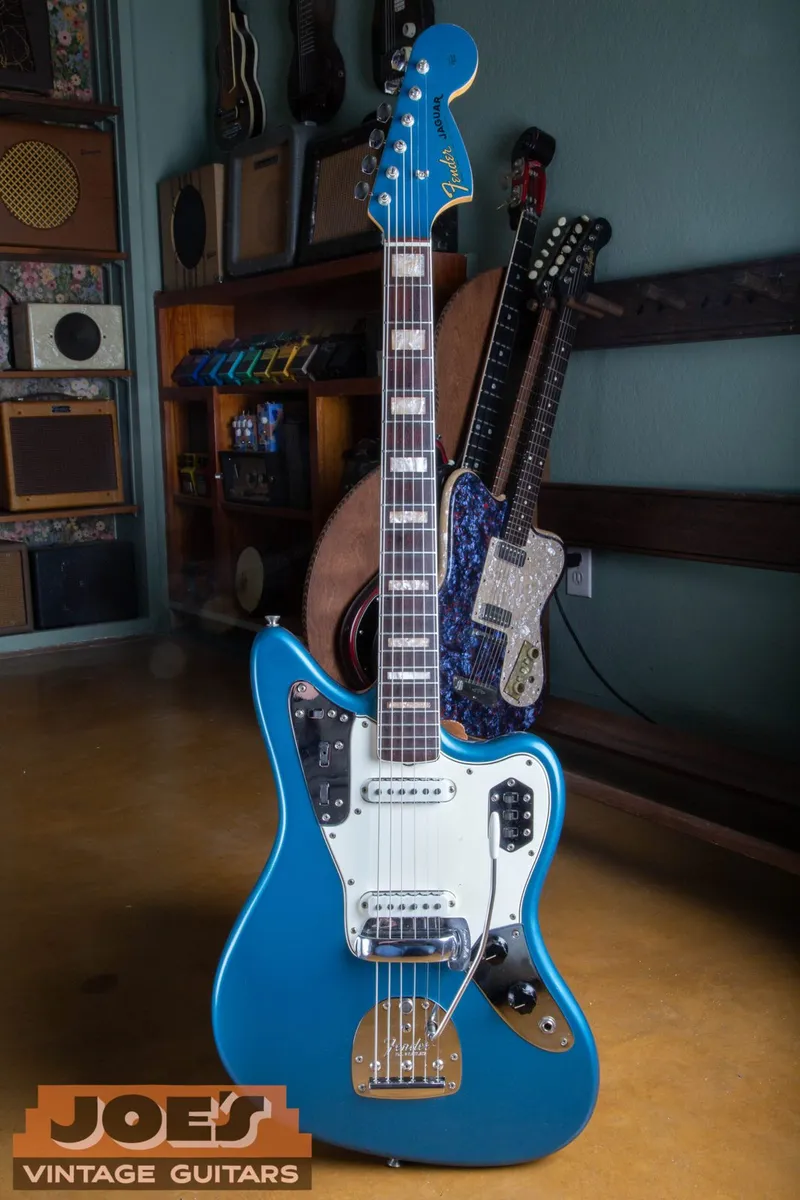
1966 Fender Jaguar in Lake Placid Blue custom color with matching headstock, authenticated by Joe’s Vintage Guitars
The 1966 Jaguar in Lake Placid Blue
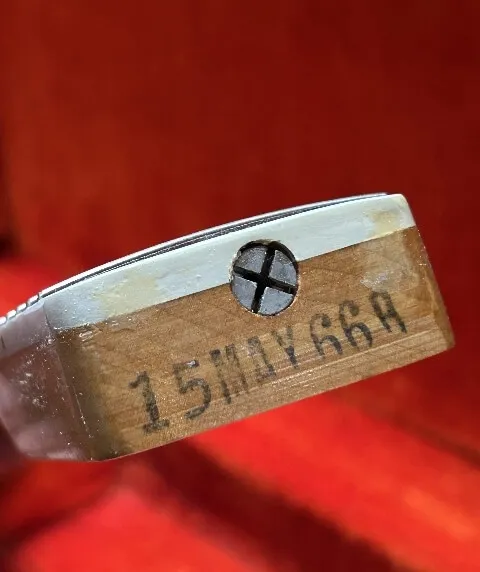
Neck heel date stamp reading 15 MAY 66 on the 1966 Fender Jaguar, confirming the production year
Neck heel stamped 15 MAY 66
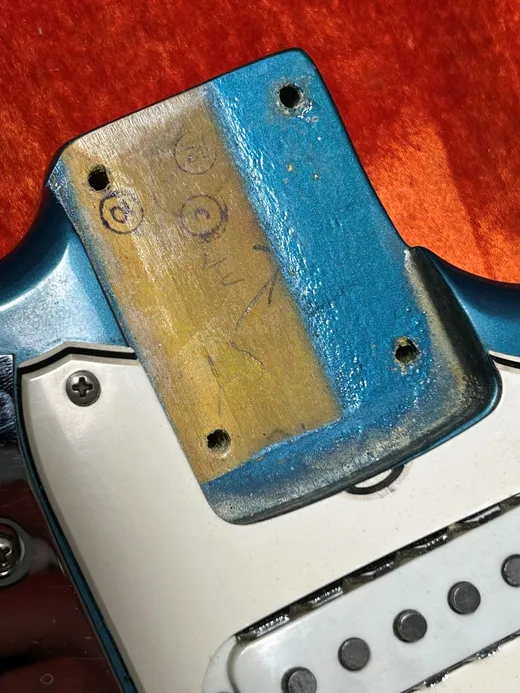
Neck pocket of the Lake Placid Blue Fender Jaguar showing the original paint stick marks used to authenticate the factory custom color finish
Paint stick marks in the neck pocket
Original electronics and untouched solder joints inside the 1966 Fender Jaguar, verifying factory-original wiring and finish
Untouched original solder joints
Fender Custom Color Authentication

1966 Fender Jaguar in Lake Placid Blue

The Challenge:
Determining if the rare custom color finish was factory-original or a high-quality ‘pro-refinish’ from years ago.
The Detail:
I asked the seller for photos of the ‘paint stick’ mark in the neck pocket in order to aid in finish authentication, as well as detailed photos of the electronics to inspect the originality of the solder joints. Untouched solder joints are key in confirming the originality of a Fender finish. I also verified the neck heel date and pot codes to confirm the 1966 production window.
The Outcome:
Confirmed the guitar was a 100% original custom color survivor. This verification provided the owner with a precise market valuation, reflecting its rarity compared to the more common sunburst models. Custom color Fender guitars are often worth twice as much (or more) than sunburst models.
1962 Gibson ES-335 in cherry red, a transitional-year semi-hollow body electric guitar appraised by Joe’s Vintage Guitars
1962 Gibson ES-335 in cherry
Original PAF humbucking pickups removed from the 1962 Gibson ES-335 to verify the patent-applied-for stickers and construction
Verifying the original PAF pickups
Vintage PAF Pickup Identification

1962 Gibson ES-335 (Transitional Year)

The Challenge:
1962 is a major ‘transition’ year for Gibson. The goal was to determine if this Cherry 335 still held the coveted PAF pickups, early Patent Number pickups, or a mix of both. This was an in-person appraisal.
The Detail:
I pulled the pickups to verify the PAF stickers, ‘L’ shaped tooling marks, cover solder, and overall construction. I then looked at the pots and wiring to confirm that the electronics were untouched. I also spent time on the hardware, identifying the ‘no-wire’ ABR-1 bridge and the ‘short seam’, lightweight aluminum stop tailpiece. Unlike the heavier zinc versions that followed, this specific tailpiece is a key indicator of an early ’62. I finished by verifying that the single-line, double-ring Kluson tuners were original with no added or enlarged holes.
The Outcome:
With two original PAFs and all-original hardware, this was about as good as it gets. The confirmation let the seller ask the full premium a transitional 1962 model brings.
1956 Gibson ES-5 in rare natural blonde finish, a three-pickup archtop electric guitar appraised by Joe’s Vintage Guitars
The rare natural-finish 1956 ES-5
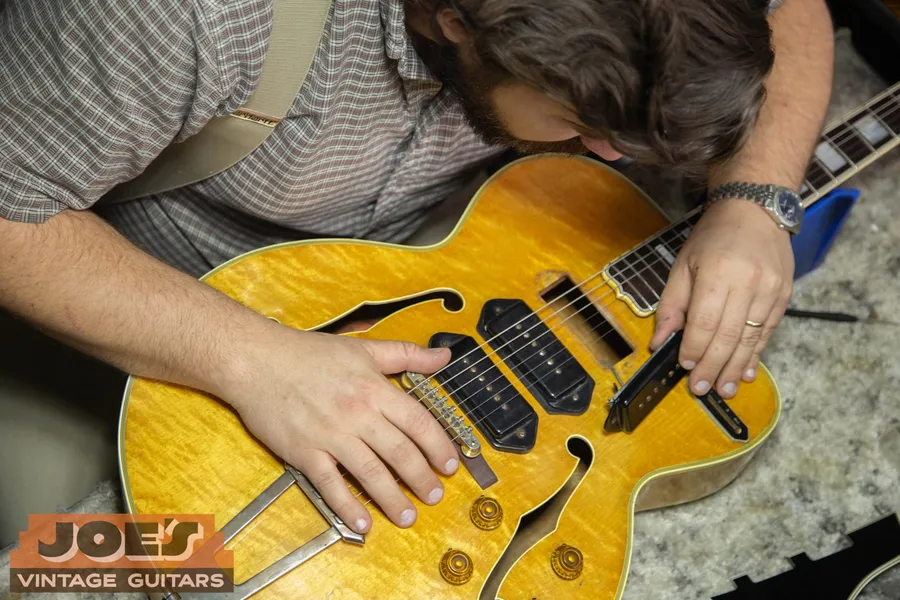
Joe’s Vintage Guitars specialist closely examining the top and binding of a 1956 Gibson ES-5 during an in-person appraisal
Examining the ES-5 in person
Gibson Factory Inconsistencies

1956 Gibson ES-5 (The “N” Mystery)

The Challenge:
This was an in-person appraisal with a couple of ‘red flags.’ It was a Natural finish, but the label was missing the ‘N’ designation Gibson usually used. Even weirder, it had double black ‘stingers’ on the back of the neck, which can often mean that someone is trying to hide a headstock/heel repair or a refinish.
The Detail:
I did a deep dive into the finish, looking at the weather checking and the way the finish had aged under the hardware. Also performed a ‘blacklight test’ by looking for that telltale nitrocellulose green glow and consistency of finish. I looked for any overspray in the cavities and checked the interior for original wiring. After a full physical disassembly, I was able to prove that the missing ‘N’ was just a factory slip-up. Most importantly, the finish and those black stingers were 100% factory original.
The Outcome:
By certifying the guitar as factory-original, I cleared up the doubts that would have made buyers walk away. It gave the owner peace of mind and protected the value of a seriously rare Gibson. According to the Gibson shipping totals, a Natural ES-5 is approximately three to four times rare than a Sunburst.

Free Expert Market Valuation vs.
Official Insurance Appraisals

I handle appraisals two ways depending on what you’re trying to do. Both come from my years spent tracking the national vintage guitar market, but they’re for two different situations.

Couple receiving free guitar valuation

Free Expert Market Valuation

This is the “straight-talk” option. Use this if you’re thinking about selling, found a family heirloom, or just want to know what your guitar is actually worth in today’s economy. It’s an informal assessment based on actual sales data, not the ‘dreamer’ asking prices you see all over the internet.

Official insurance appraisal document

Official Insurance Appraisals

If you need a formal, legal document for an insurance rider, a tax donation, or an estate, you’ll need this instead. I provide a detailed, signed report on Joe’s Vintage Guitars letterhead that meets the strict requirements of major insurers. This covers the deep-dive research and the professional liability that comes with a certified valuation.

Current Market Pulse: Notes From The Trade

The vintage market doesn’t sit still. Here’s a quick look at what I’m seeing right now from the daily ‘buy and sell’ side of the national vintage guitar market.

  • “Player Grade” is on fire.

    I’m seeing a surge in demand for 50s and 60s gear that is ‘player grade’. Whereas any modification used to be a death sentence for value, I’ve been noticing that the market has become increasingly forgiving towards modifications, especially if they are era-correct vintage mods. Now, is your refinished 50s Fender Telecaster going to be worth as much as an original one? Not even close. But it will be worth comparatively more than it was a few years ago, especially if it’s a cool older refinish.

  • The Hunt for Transition Years.

    Collectors are getting much more specific. They’re hunting for those ‘in-between’ months where the specs were shifting. If I can identify a stray PAF pickup or an early-spec neck profile on a mid-60s piece, it’s adding thousands to the value.

  • The Reality Check.

    There’s a massive gap right now between the ‘asking prices’ you see on the big public sites and what the actual sales data is telling us. A lot of sellers are still acting as if COVID-era price inflation never ended. Don’t get me wrong, the market is still strong, but prices aren’t climbing at that crazy rate anymore. That’s left the market full of unsold listings and inflated, speculative prices that just aren’t grounded in reality.

  • “Under the Radar” Brands.

    Everyone wants a Burst or a Blackguard, but I’m seeing a huge uptick in interest for brands like Gretsch, Guild, and Epiphone (Kalamazoo-made). The ‘alternative’ vintage market is booming because the value-to-vibe ratio is so high. If you’ve got a clean Gretsch 6120 or an Epiphone Crestwood, don’t sleep on it. Collector interest in these ‘other’ brands is as strong as I’ve ever seen it.

Vintage Guitar Condition Grading Explained

What the grades actually mean, and how they move the price

A 1959 Gibson Les Paul graded Mint can sell for three to four times the price of the exact same model graded Good. The grading system used by professional dealers and auction houses is very different from casual descriptions like ‘great shape’ or ‘a few dings.’

The grades below are the standard used by serious collectors and dealers. Electric and acoustic grading criteria differ: on an electric, the focus is on original finish and hardware; on an acoustic, the top and structural integrity carry additional weight.

Vintage Electric Guitar Condition Grades

GradeDescriptionValue Impact
Mint 100% original factory finish. No checking, buckle rash, or wear of any kind. Original hardware, pickups, and electronics with zero oxidation. Original frets at full height. Top of Market
Excellent Original finish with only the lightest signs of play. All original hardware and electronics. Minor surface oxidation acceptable. Frets at 90%+ height. 80 to 95% of Mint
Very Good+ Original finish showing honest player wear, with moderate checking and light buckle rash. All original hardware. Original or refretted with good height. 60 to 75% of Mint
Very Good Visible player wear, heavier checking, moderate buckle rash, small dings. Mostly original hardware with minor replacements. Plays well after set-up. 45 to 60% of Mint
Good Heavy player wear. May include a repaired crack or small headstock repair. Mix of original and non-original parts. Functional as a gigging instrument. 25 to 40% of Mint
Fair Refinished, or original finish with significant structural repairs. Non-original hardware throughout, including pickups. Playable but requires work. 10 to 25% of Mint
Poor Significant structural damage, missing parts, heavy modifications. Heavily modified or non-functional electronics. A project guitar. Parts Value Only

Vintage Acoustic Guitar Condition Grades

GradeDescriptionValue Impact
Mint Original nitrocellulose finish perfectly intact. No checking, no pick wear. 100% original binding, intact bracing, perfect glue joints. Practically impossible on pre-war instruments. Top of Market
Excellent Original finish with very light checking or minor pick wear near soundhole. No belly-up. All original binding. No structural cracks. 80 to 95% of Mint
Very Good+ Original finish showing honest play wear. Light to moderate pick wear and checking. One neatly repaired crack acceptable. All original bracing. 60 to 75% of Mint
Very Good Heavy checking, moderate pick wear, possible small top dings. No refin. Likely refretted. Neck reset likely performed. A few professionally repaired cracks. 45 to 60% of Mint
Good Heavy player wear. Possible touch-up or localized refinish. Multiple repaired cracks. Bridge plate replacement acceptable. Multiple refrets. 25 to 40% of Mint
Fair Full or partial refinish, OR extensive top damage with amateur repairs. Significant bellying. Major structural repairs throughout. 10 to 25% of Mint
Poor Extensive damage, missing top sections, heavily cracked soundboard, or amateur refinish. Not playable without major restoration. Restoration / Parts

Vintage Guitar Collection Appraisals: Expert Valuation for Estates & Large Inventories

When you’re looking at 20, 50, or even 100+ instruments, the hardest part is usually just knowing where to start. Whether you built the collection yourself or you’ve suddenly inherited a room full of gear, I’m here to help you get a clear, realistic look at what’s actually there.

I’ve appraised and bought dozens of 100+ piece collections. My largest so far was a single appraisal and purchase of 713 guitars and amps. No collection is too big or too complicated for me to take on.

  • Inventory Without the Stress. I’ll help you catalog the whole collection, turning a pile of cases into a clear list with the exact years and models identified.
  • Spotting the “Money” Guitars. I’ll pick out the ‘heavy hitters,’ the high-value collector pieces, and separate them from the ‘player-grade’ gear.
  • One Voice for Every Brand. You don’t need a ‘Gibson guy’ and a ‘Martin guy.’ I track actual sales data for all the major American names.
  • Remote Collection Review. You don’t have to ship a trailer of gear to Mesa just to get an answer. I’ve developed a remote collection appraisal system using high-res photos.
Large collection of vintage electric guitars

Spotting The Fakes: A Professional Guide To Gibson, Martin, And Fender Authenticity

The market right now is crawling with ‘tributes,’ partscasters, and outright scams designed to fool people who don’t spend every day looking at 1950s wood. When I handle an appraisal, I’m doing a forensic deep dive. The truth is always buried in the stuff that’s too expensive or too tedious for a faker to get right.

Gibson

Fake Gibson truss rod showing a recessed hole for an Allen wrench where the standing brass adjustment nut should be, a counterfeit giveaway Authentic Gibson truss rod with the correct standing brass adjustment nut

The Truss Rod Reveal

Real Gibson uses a brass hex nut for adjustments. Almost every fake uses a recessed Allen key. If you see a deep hole meant for a hex wrench instead of that standing brass nut, you’re looking at a counterfeit.

Fake Gibson bridge sitting on chunky bolts with a flathead screwdriver slot on top, a counterfeit sign Authentic Gibson ABR-1 bridge adjusted with smooth thumbwheels on a genuine American-made Gibson

The “Flathead” Bridge Tell

On a genuine American-made Gibson, the bridge is adjusted using thumbwheels. Counterfeits almost exclusively use a bridge that sits on large, chunky bolts with a flathead screwdriver slot on top.

Back of an authentic Gibson headstock showing the factory wing seam line where the headstock wings are glued on Back of a fake Gibson headstock with no wing seam line, indicating a one-piece counterfeit neck

The Headstock “Wings”

A genuine Gibson neck is carved from a single piece of mahogany, but the ‘flares’ on the side of the headstock are separate pieces of wood called ‘wings’ glued on at the factory. Most fakes use a ‘scarf joint.’

Fake Gibson serial number laser-etched into the finish after painting, a counterfeit characteristic Authentic Gibson serial number stamped into the wood between the tuners on a genuine headstock

Stampings vs. Laser Etching

Gibson serial numbers are stamped into the wood before paint. Counterfeits usually laser-etch numbers after the finish is dry. If the serial looks sharp enough to cut your finger, it’s a fake.

Martin

Fake Martin neck block stamped in a generic serifed font, a counterfeit warning sign Authentic Martin neck block cleanly stamped with the model and serial number in Martin’s correct typeface

The Neck Block Identity

Through the soundhole, the model name and serial number should be cleanly stamped into solid mahogany using Martin’s sans-serif typeface. Fakers usually stumble here with generic, serifed stamps or sloppy ink transfers.

Distinct Brazilian rosewood grain pattern on the outside of a genuine solid-wood Martin back The same distinct grain pattern visible inside the Martin back, confirming solid wood rather than laminate

The “Inside-Outside” Grain Test

On a solid-wood Martin, grain patterns on the outside back match the inside back exactly. If the inside looks plain while the outside is figured rosewood, it’s a laminate.

Authentic Martin back center strip stamped C.F. Martin & Co. Nazareth, PA., seen through the soundhole

The Back Center Strip

On a genuine Nazareth-built Martin, the back center strip is stamped with ‘C.F. Martin & Co. Nazareth, PA.’ If that strip is blank or the font looks like modern computer print, you need a professional look.

Fender

Authentic vintage Fender neck heel ink-stamped 2OCT62B, a genuine factory production date stamp

Date Stamps & Codes

On a vintage piece, you’re looking for a handwritten pencil date or ink stamp on the ‘butt’ of the neck, like ‘5-62’ or ‘13MAY65B.’ A clean modern barcode or no markings means a newer guitar or ‘Partscaster.’

Authentic Fender neck with the correct dark walnut wood truss rod plug at the headstock adjustment Fake Fender neck with a black plastic insert instead of the genuine walnut truss rod plug

The “Walnut Plug” Test

On a genuine American Fender with a headstock-adjust truss rod, you’ll see a distinct dark walnut wood plug surrounding the adjustment hole. Counterfeits leave raw wood or a cheap black plastic insert.

Authentic Fender bullet truss rod nut, the correct factory hardware for 1970s headstock-adjust necks Genuine dark walnut truss rod plug on a vintage Fender neck, a reliable real-Fender identifier

Era-Correct Hardware

Fender was very specific about which hardware went with which era. A ‘1954’ Strat with an 11-screw pickguard (didn’t exist until 1959) or a ‘1960s’ neck with a 3-bolt ‘Micro-Tilt’ plate is a parts-bin guitar.

Authentic Vintage Guitar Reviews

5-Star Rated Vintage Guitar Appraiser Across The USA

Jim W. (PA)

★★★★★

I sent an email to Joe’s Vintage Guitars last evening about 10:00 PM Eastern Time. I included a description of my guitar including serial number and a couple of photos. He responded immediately with a real pleasant email and gave me a value on my guitar. I can’t tell you how cool the experience was!

Read This Review On Google

Ray

★★★★★

I had been doing some research on the value of instruments that my father owned when I saw Joe’s Vintage Guitars website and their free appraisals. The next day I called. Joe patiently went through each instrument and provided me with a range of values for each one. I appreciated his knowledge, honesty, and willingness to take time to help me.

Read This Review On Google

Amy Vickery

★★★★★

They were very easy to deal with and appraised my 1979 Guild within minutes! I sent pictures and details via text and received a FREE estimated value right away! 10/10 highly recommend!

Read This Review On Google

Missy

★★★★★

I highly recommend Joe’s Vintage Guitars if you have a guitar that you’d like to get an appraisal on. I sent my contact information and was called the next day. The process couldn’t have been any easier. Thank you again for an easy and honest appraisal!

Read This Review On Google

Kevin Richard Scholl

★★★★★

I needed help with accurately unscrambling the serial number on my Gibson Spirit. I saw Joe’s web site and it said ‘Contact me if you need help dating, valuing or selling a guitar.’ So I called, he answered quickly and told me it was indeed a 1983 Spirit. Nice guy, real chill and pleasant to speak with.

Read This Review On Google

D Angelino

★★★★★

Joe called me himself to let me know the value of my ’76 Les Paul Custom. He was fair, honest, super easy to talk with, as well as being informative and educational. His call was a really pleasant break in my day. I trust his knowledge, experience and character.

Read This Review On Google

FAQs About Our Guitar Appraisal Services

What's The Difference Between Fair Market Value And An Insurance Appraisal?

Fair market value is what a buyer will realistically hand you in cash today. An insurance appraisal is usually higher. It's the retail cost of replacing your instrument with an equivalent one from a dealer if yours gets stolen or destroyed. I give you the numbers for both. If you're selling, you know your floor. If you're insuring, you know your coverage.

Do I Have To Bring The Guitar To Mesa To Get An Appraisal?

Not at all. I love it when great gear walks through the door, but I do most appraisals remotely. From clear photos of the right details, like neck heels, pot codes, and solder joints, I can authenticate and value your guitar anywhere in the country.

Why Can't I Just Check eBay Or Reverb Sold Listings To Find The Value Myself?

Sold listings don't tell you the whole story. A 1965 Stratocaster that sold for $12,000 might have had swapped pickups, a refret, and overspray, while an untouched one could be worth double. I price your guitar off private sales data and the exact factory specs that public listings leave out.

How Much Does A Refinish Or A Headstock Repair Hurt The Value?

It depends on the era and how good the work is, but as a rule a refinish on a golden-era Fender or Gibson cuts the collector value by about half. A headstock break does about the same, usually 40% to 50%. That's not the end of the road, though. These guitars still sell well as player-grade instruments, and I know how to price them for that market.

Can You Help With Appraisals For An Estate Or Probate Court?

Yes. Settling an estate takes accurate numbers and clean paperwork. I write official appraisals that hold up for legal, tax, and probate purposes, so the family isn't left guessing.

Will You Buy My Guitar After You Appraise It?

Absolutely. If you decide to sell, I'll make a fair cash offer based on that same value. There's never any pressure, but the option is there if you'd rather sell quick than deal with tire-kickers online.

Get in Touch!

Got a classic guitar or amp you’re thinking of selling? At Joe’s Vintage Guitars, I buy individual pieces, whole collections, and other stringed instruments, and I do free appraisals. Send your pics to joesvintageguitars94@gmail.com or text me at (602) 900-6635, and I’ll tell you what it’s worth.

Best Way To Reply: (optional)

*If you have photos, you will have the option to upload them after clicking submit