

Vintage Fender Amp Serial Numbers: How To Find The Year
Fender Amp Date Code Decoder
Enter the two-letter code stamped on your amp’s tube chart and I’ll tell you the month and year it was built.
Try: (March 1965) · (January 1957)
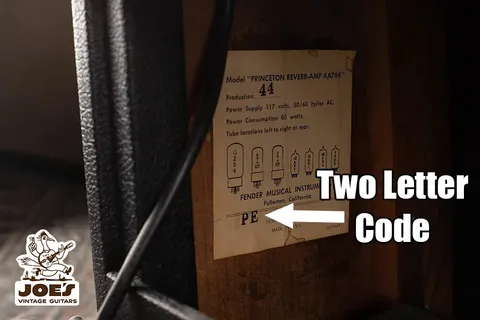
Table Of Contents
- Fender Amp Serial Numbers
- Using Fender Amplifier Tube Chart Codes to Date Your Fender Amp
- What If The Tube Chart Is Missing? Other Methods of Dating Fender Amps
- Which Era Of Fender Amplifier Do You Have?
- 1948-1959: Tweed
- 1959-1963: Blonde and Brownface
- 1963-1967: Blackface
- 1967-1980: Silverface
- Using Transformer and Speaker Codes to Date Your Fender Amplifier
- Do You Have a Fender Amp You Want To Sell?
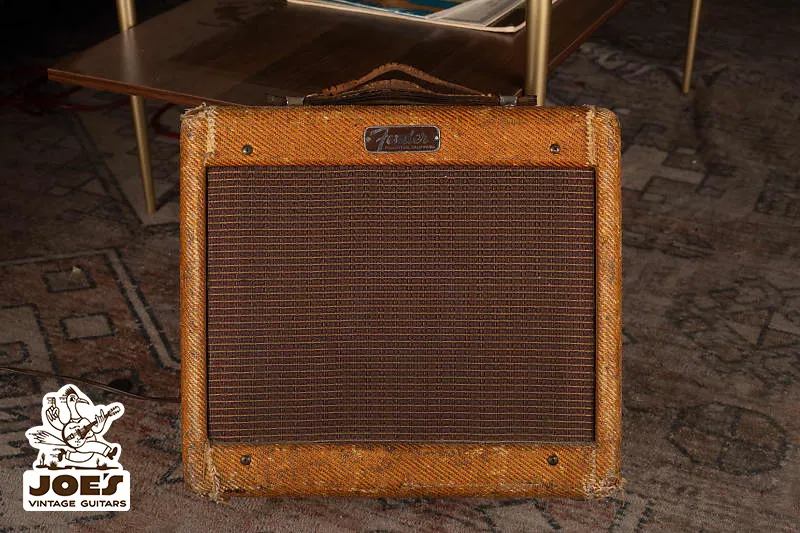
I hear it all the time: “I have a vintage Fender amplifier, can you help me find out what year it was made?” Yes, I can. I’ve dated so many of these over the years that I put together this guide to walk you through it.
Fender Amp Serial Numbers
Let’s get this straight right off the bat: Fender amp serial numbers are not useful for finding their year. Fender amp serial numbers weren’t always sequential, so you can’t use them to date the amp.
If you’re working with a guitar and not an amp, check out my guide on How To Read Fender Serial Numbers, which focuses on identifying guitar production years.
Luckily, Fender used some other codes that will help you find the year.
Note: This article deals only with vintage Fender amps made in 1980 & before.
Using Fender Amplifier Tube Chart Codes to Date Your Fender Amp
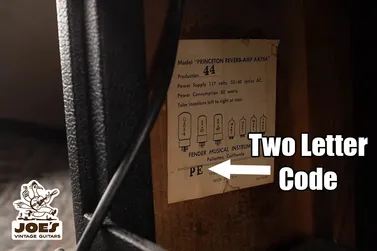
All vintage Fender amplifiers came with a paper tube chart pasted to the interior of the chassis, usually on the left inner side, but sometimes on the right. Up until 1970 or so, these tube charts almost always bear an ink-stamped two letter code. The first letter of this code tells you the year of manufacture:
- A: 1951
- B: 1952
- C: 1953
- D: 1954
- E: 1955
- F: 1956
- G: 1957
- H: 1958
- I: 1959
- J: 1960
- K: 1961
- L: 1962
- M: 1963
- N: 1964
- O: 1965
- P: 1966
- Q: 1967
- R: 1968
- S: 1969
- T: 1970
What If The Tube Chart Is Missing? Other Methods of Dating Fender Amps
As you can imagine, on amplifiers that are several decades old, a piece of paper glued to the side of the cabinet can often flake off and go missing. In addition, the two letter code can sometimes be missing from the tube chart. Without access to the two letter code, dating a Fender amp becomes a little more complicated. Here are some tips.
Which Era Of Fender Amplifier Do You Have?
The nice thing about vintage Fender amplifiers is that each era of amplifier has a unique look. By using the appearance of your amp, you can discern a range of years during which it was manufactured.
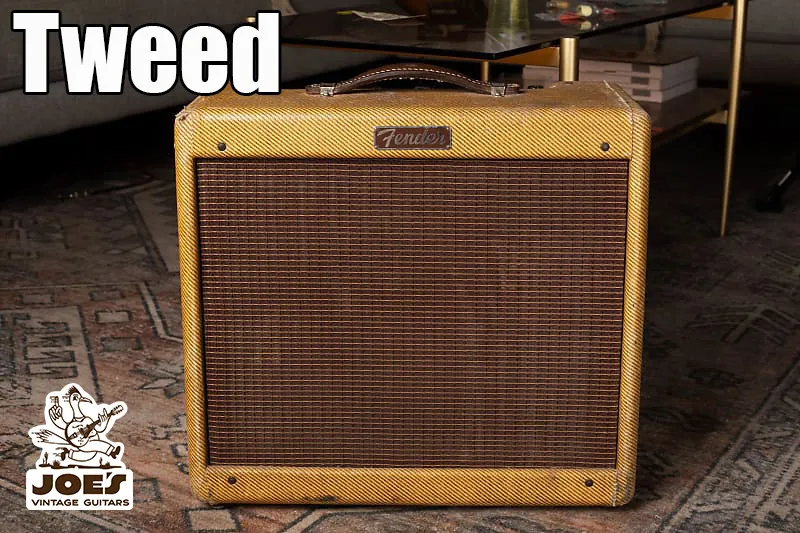
1948-1959: Tweed
Fender amps from this era have a light brown tweed covering and a brown “Fender” plaque on the front. The control knobs are on the top side of the amp.
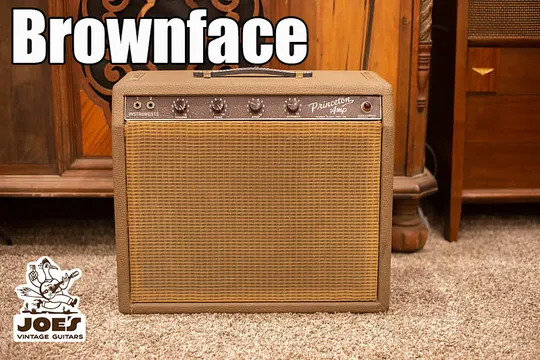
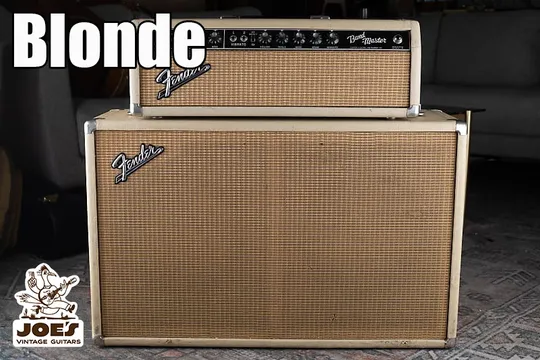
1959-1963: Blonde & Brownface
Amps from this era have either a blonde colored tolex or a brown colored tolex and have the control knobs on the front of the amp.
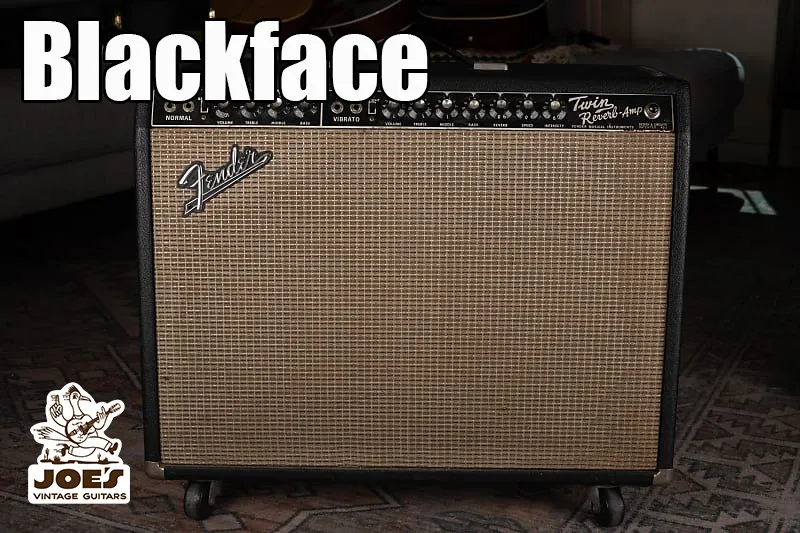
1963-1967: Blackface
Amps from this era are covered in black tolex and have a black control panel with the amp model written in a white script.
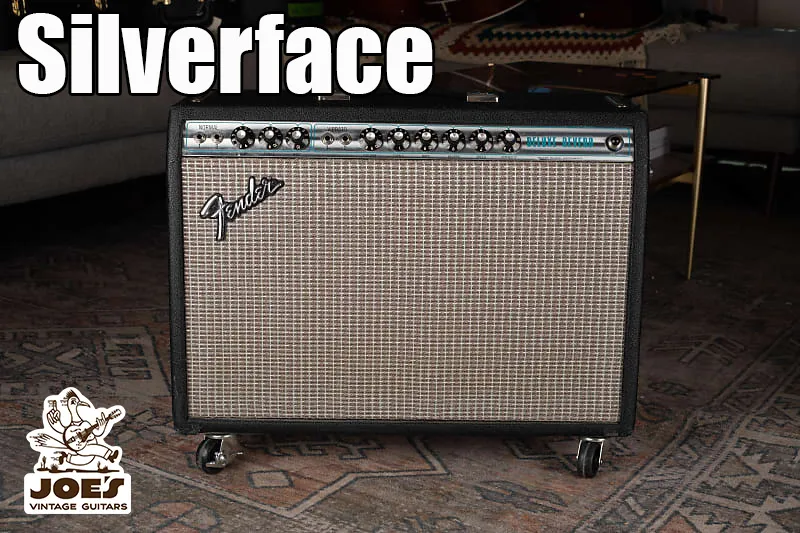
1967-1980: Silverface
Amps from this era still have the same black tolex covering, but they have a shiny silver faceplate with the model in blue lettering.
Using Transformer & Speaker Codes to Date Your Fender Amplifier
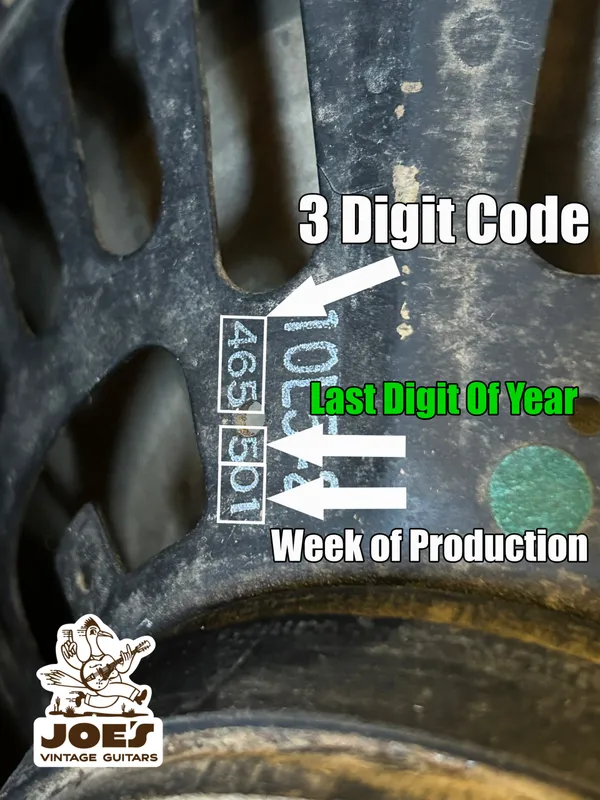
When the tube chart or two letter code is missing, it is possible to date Fender amps by looking at codes on their components. Looking at the speaker is the easiest way to do this, but codes can also be found on the transformers. These codes are to be used in conjunction with the above information about the aesthetic appearance of your amp since the codes only provide the last digit of the year (for example, a 2 could mean 1962 or 1972. If the amp is brown or blonde, it is a 1962, if it is silver, it is 1972).
These codes consist of a 3 digit manufacturer code, followed by 3 more digits, which indicate the year and week of manufacture. The first number in the second set of 3 digits indicates the last number in the year of manufacture (ie 5 for 1955 or 1965, etc) So, in the picture below, this speaker was made in 1955, 1965, or 1975 since “5” is the first digit in the second set of 3 numbers. Since the amp is a “Silverface” we can conclude that it was made in 1975.
Remember! You are looking for a 6 digit code with numbers only! Happy hunting!
If after identifying your amp’s year you decide it’s time to sell your amplifier or effect, Joe’s Vintage Guitars makes the process simple and fair.
Do You Have a Fender Amp You Want To Sell?
At Joe’s Vintage Guitars I buy all kinds of vintage Fender amplifiers. If you want to sell your amplifier made before 1967, I’d be glad to make you a top-dollar offer. Reach out at (602) 900-6635
I also do appraisals for vintage Fender guitars. If you’re curious what yours might be worth, I can help you figure out the value of your Telecaster or the worth of your Stratocaster using real market data.