

Guild Dating Library
Guild Serial Number Lookup: How To Date A Guild Guitar
Dating and authenticating a vintage Guild is the first step in figuring out its value. The serial charts are the foundation, but they're only part of the picture.
If you're new to this, the guitar dating overview explains what the serial and parts can each tell you.
Find the serial, enter it in the decoder, then compare the model and features in the photo guides below.
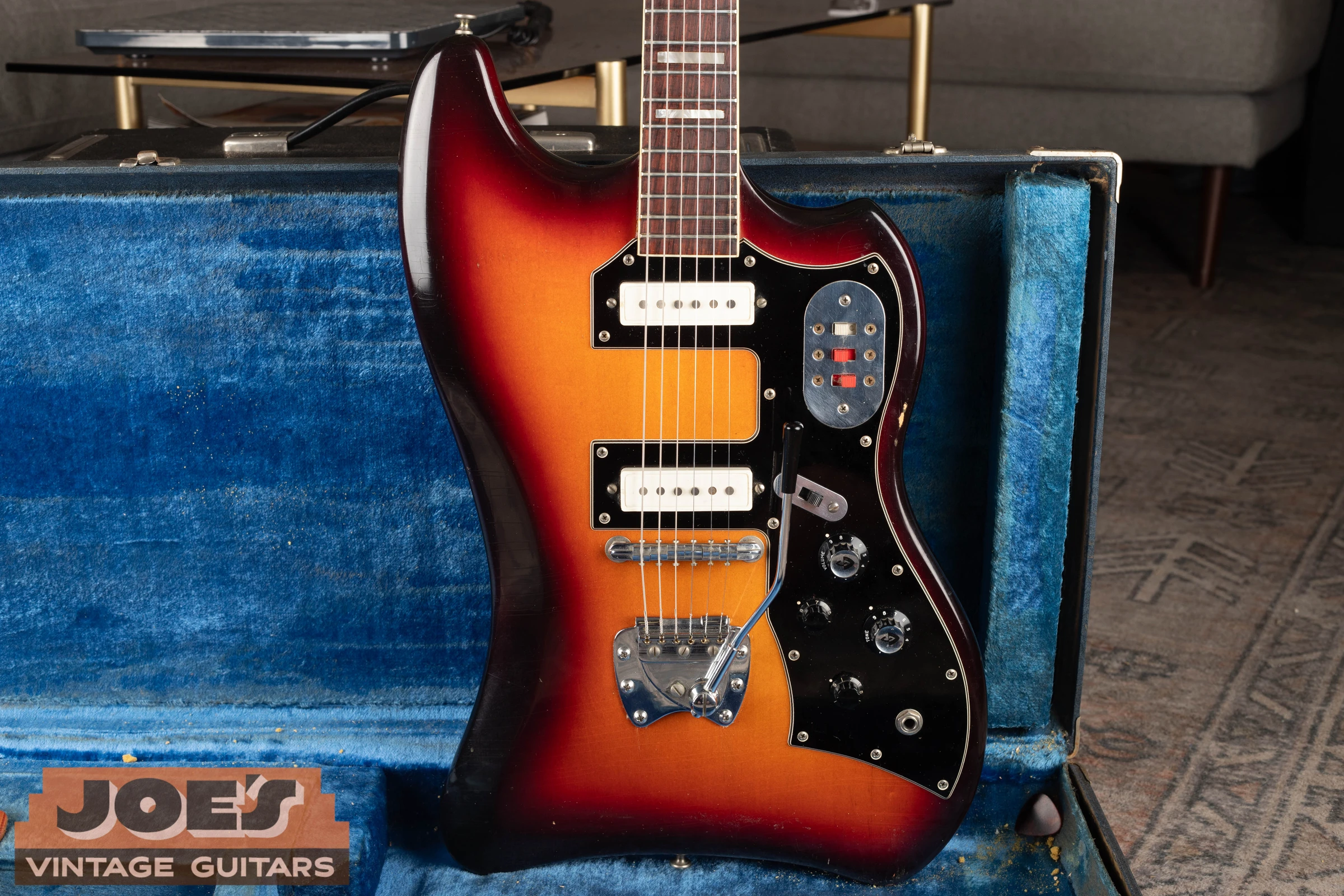
Start With The Serial, Then Check The Guitar
Guild's history runs through several factory moves, Manhattan and Hoboken, then Westerly, Corona, Tacoma, New Hartford and Oxnard, each one with its own quirks and numbering. Imported Guild lines need their own model and country context as well.
Many Guild serial numbers are model-specific. If your serial has a letter prefix, you’ll need to find your model in the era charts below to date it. A prefix identifies a sequence to compare with the model charts; it doesn't make the remaining digits a year code. The factory-era guide explains the transitions, and the vintage versus reissue guide separates old designs from later production.
This guide provides published serial records and physical identification examples. Some records are incomplete, so the decoder identifies uncertainty instead of manufacturing an exact year. If you need help evaluating your vintage guitar, reach out for a free Guild appraisal. If you're ready to sell a vintage Guild, get in touch for a competitive cash offer.
How To Use The Guild Serial Lookup
Locate Your Serial Number
Find the serial number on the back of the headstock, on an interior label, or stamped on the neck block.
Enter Your Serial Number
Type your Guild serial number into the decoder field and submit it.
Match The Era
Answer the follow-up question if the decoder asks one, such as the model for a shared prefix. Use the full model charts when the decoder cannot resolve the number.
Review Your Result
Compare the result with the label, country marking and physical features. Keep an approximate or unresolved date when the records do not support an exact year.
Compare The Details
Guild Identification And Dating Guides
Use the label and model to choose a chart, then compare the features that can confirm or complicate its result. Every photo opens to a larger view.
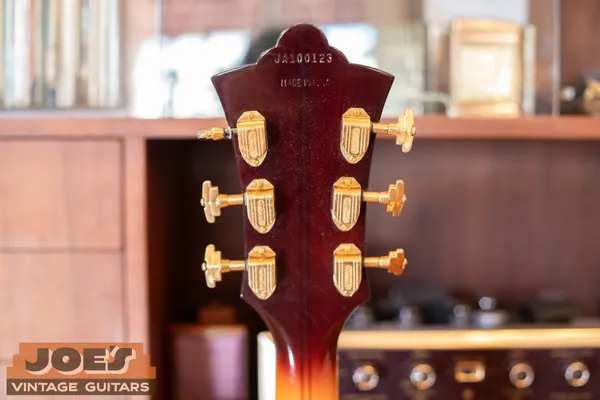
Guild Model Prefix Serial Number Charts
Find your model first, then compare the complete serial. A range and an annual last-number entry answer different questions.
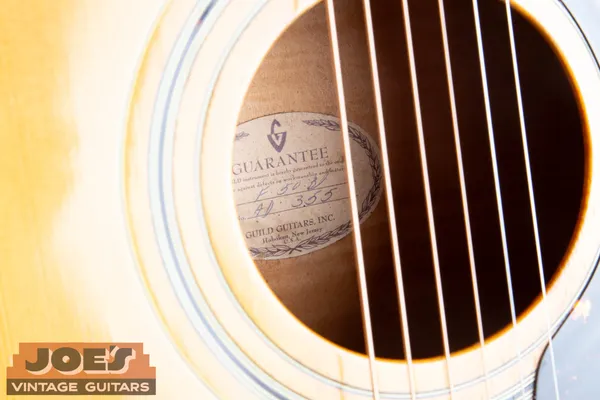
Guild Labels And Serial Number Locations
Photograph the complete label and both sides of the headstock. The words around a serial can matter as much as the number.
Guild Factory Eras And Serial Number Systems
A factory name helps choose a serial system. It does not replace the model, the full number or a physical inspection.
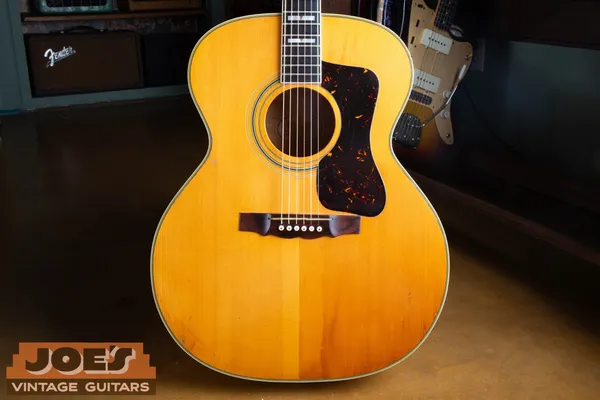
Guild Acoustic Guitar Identification Guide
Start with the model line, then compare the body and appointments. Similar-looking Guild acoustics can belong to different models and factory periods.
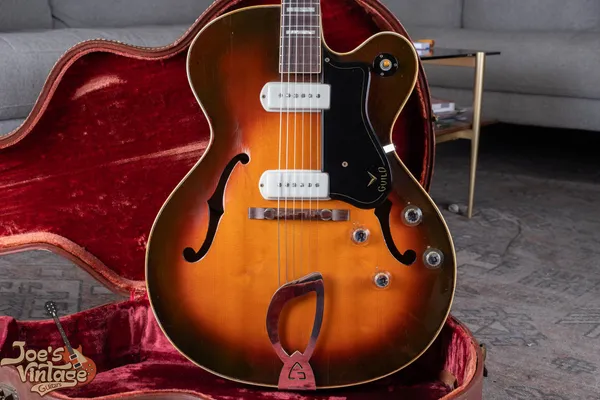
Guild Electric Guitar Identification Guide
Identify the body and model before dating the parts. Guild archtops, Starfires and solidbody designs use different construction and serial records.
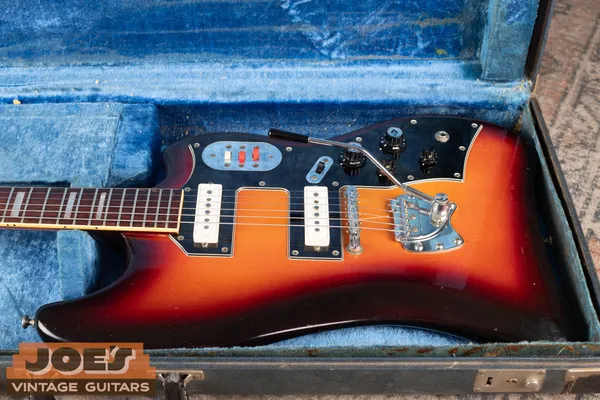
Guild Pickup And Hardware Dating Guide
Hardware can support a Guild identification, but it can also have been replaced. Describe the installed parts before deciding what they prove. The charts below name the pickups and hardware, with typical eras and model examples.
Topics In This Guide
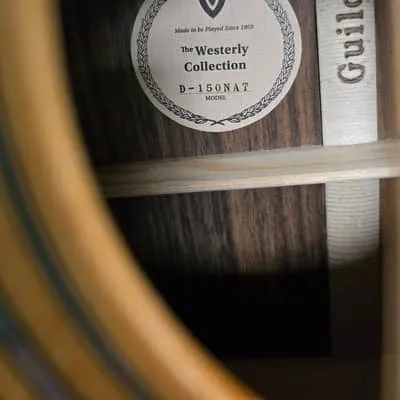
Vintage Guild Vs. Reissue: How To Tell Them Apart
Guild has reused model names and design details. Establish the production line and serial system before assigning an old date to a familiar-looking guitar.
Guild Serial Numbers By Era
Optimized for mobile. Every chart below scrolls horizontally and stacks into readable cards on a phone, so you can track model years and designations wherever you are. Enter your number in the decoder above for an instant read, or browse the era charts directly.
Part 1: The Early Eras (1953 To 1969)
The Numerical Sequence (1953 To 1959)
In the earliest years of production, Guild used a straightforward numerical sequence. The first instruments came from New York, followed by Hoboken production. Guild labels its earliest records approximate, so shared boundary numbers can point to more than one year.
| YEAR | APPROXIMATE LAST SERIAL NUMBER PRODUCED |
|---|---|
| 1953 | 1000 to 1500 |
| 1954 | 1500 to 2200 |
| 1955 | 2200 to 3000 |
| 1956 | 3000 to 4000 |
| 1957 | 4000 to 5700 |
| 1958 | 5700 to 8300 |
| 1959 | 12035 |
No Matching Rows In This Era.
The 1959 entry is an approximate last number, not a published first-to-last range. Keep that distinction when checking a late-1950s guitar.
General Ranges (1960 To 1969)
From 1960 to 1964, Guild continued a single sequential numbering system for all models. From 1965 to 1969, a separate serial system was introduced for each model. Your serial number may be a sequential one or a model-specific one, so check both charts and compare accordingly.
| YEAR | FIRST NUMBER PRODUCED | LAST NUMBER PRODUCED |
|---|---|---|
| 1960 | 12036 | 14713 |
| 1961 | 14714 | 18419 |
| 1962 | 18420 | 22722 |
| 1963 | 22723 | 28943 |
| 1964 | 28944 | 38636 |
| 1965 | ** | 46606** (see next chart) |
| 1966 | ** | 46608** (see next chart) |
| 1967 | ** | 46637** (see next chart) |
| 1968 | ** | 46656** (see next chart) |
| 1969 | ** | 46695** (see next chart) |
No Matching Rows In This Era.
For 1965 to 1969, the ** marker means Guild does not provide a first number in this table. The listed endpoints do not justify inventing five exact numeric ranges. Use the model-specific chart and the instrument’s features.
Model-Specific Ranges (1965 To 1969)
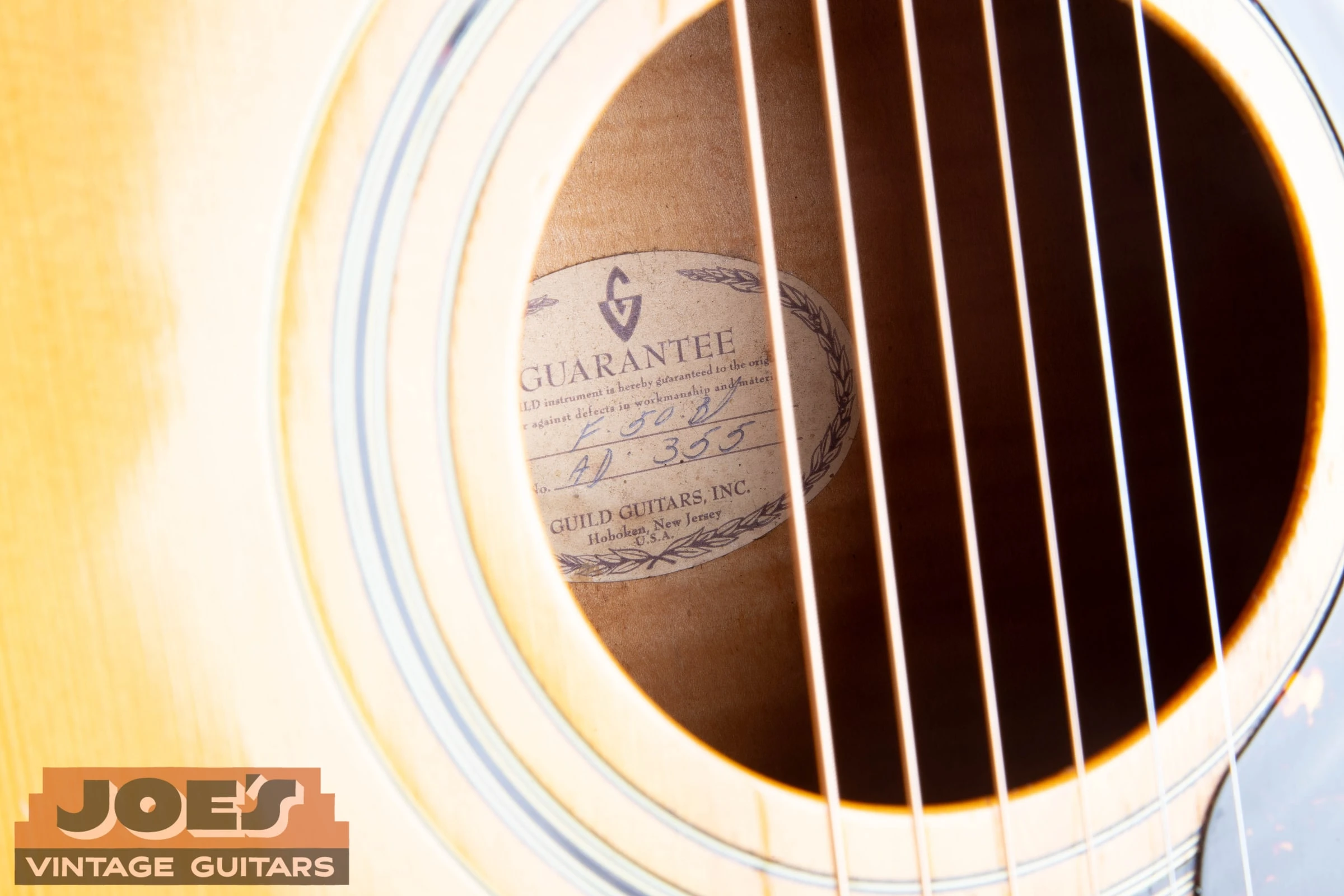
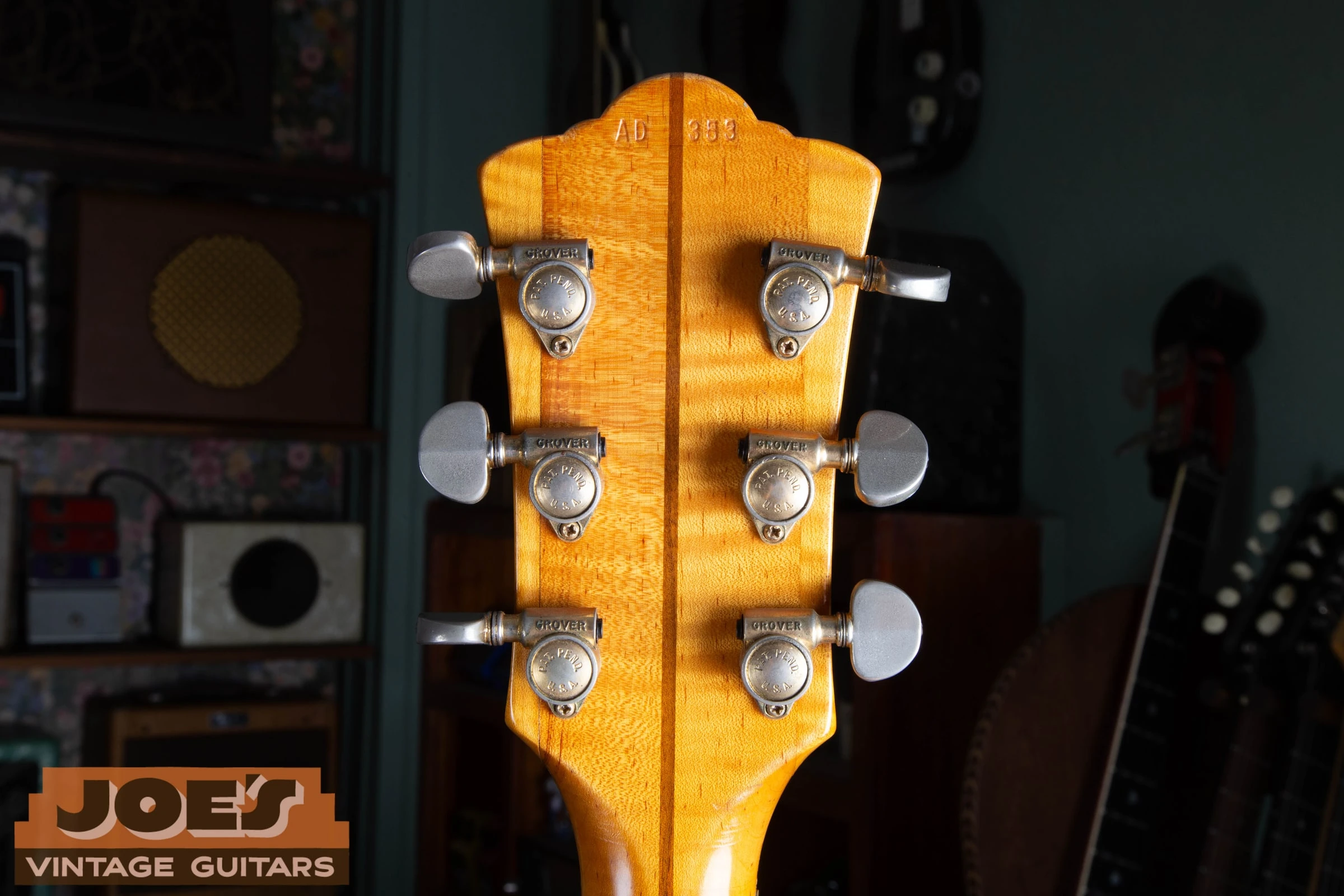
During this period, refer to the model-specific prefixes to determine the year. For example, F50 serial AD355 falls in the 1968 row. Open the full 1965 to 1969 chart and compare your complete model.
Tip: the fastest way to navigate these model-specific charts on a computer is to press Ctrl+F and type your prefix into the search bar. You can then jump straight to the rows that share your guitar's prefix.
Part 2: The Westerly Era (1970 To 1979)
In 1970, Guild consolidated production back into a single sequential system. Dating Guilds from this period is much easier than the preceding era. Just match your number to the year ranges below.
| YEAR | FIRST NUMBER PRODUCED | LAST NUMBER PRODUCED |
|---|---|---|
| 1970 | 46696 | 50978 |
| 1971 | 50979 | 61463 |
| 1972 | 61464 | 75602 |
| 1973 | 75603 | 95496 |
| 1974 | 95497 | 112803 |
| 1975 | 112804 | 130304 |
| 1976 | 130305 | 149625 |
| 1977 | 149626 | 169867 |
| 1978 | 169868 | 195067 |
| 1979 | 195068 | 211877 (to Sept. 30, 1979) |
No Matching Rows In This Era.
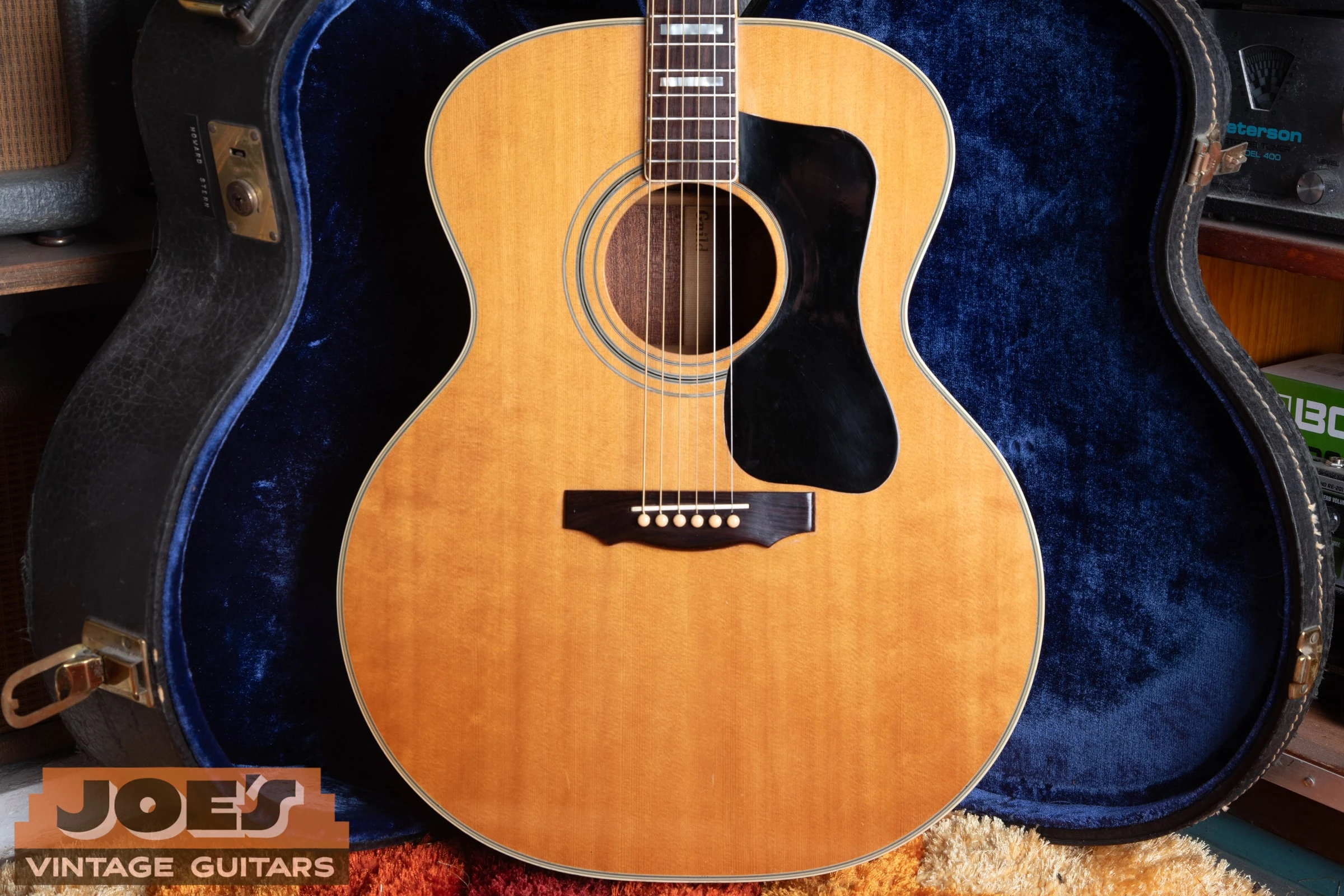
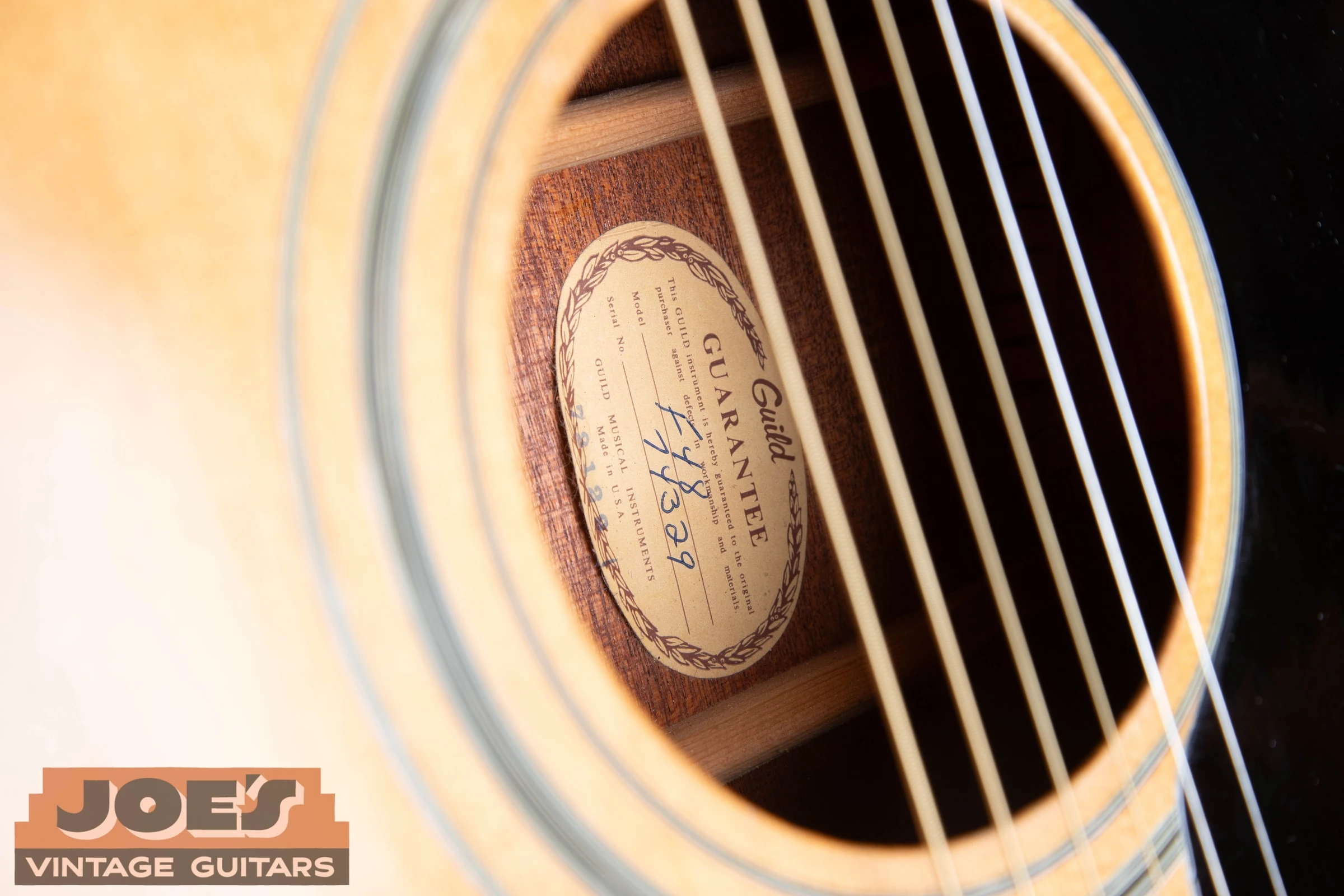
The F48 shown below carries serial 74329, which falls between 61464 and 75602 in 1972. A serial in this system is a count, not a month-and-year code. The acoustic identification guide shows its model and construction details.
Part 3: Return To Model Prefixes (1979 To 1983)
In late 1979, the prefix system was reintroduced. The figures in the 1979 to 1983 model chart represent the last serial number produced for each model in each year.
An annual endpoint isn't a complete range. Compare adjacent years only when the model and prefix stay consistent. A missing year or changed sequence needs further evidence. Keep all leading zeroes in the number.
Part 4: Westerly Era Continued (1984 To 1989)
During this high-production era, Guild continued model-specific serialization. Match your model to find the last serial number of that year.
The 1984 to 1989 chart includes changing prefixes and incomplete cells. Artist Award JA100123 sits between the published 1984 endpoint JA100122 and 1985 endpoint JA100127, supporting a 1985 reading when the model agrees. Other rows require their own comparison.
Part 5: The 1990s Transition (1990 To 1993)
Guild continued model-specific serialization through 1994. The 1990 to 1993 table stops at 1993; the next table supplies 1994 records.
Use the full model designation. Related names such as D40 and D40C are separate rows where the source distinguishes them. Combining them can assign a serial endpoint to a model that has no record for that year.
Part 6: Expansion And Model Prefixes (1994 To 1996)
For 1994, factory records typically provide only the model prefix and the last serial number. For 1995 and 1996, Guild returned to providing full production ranges (first and last serial numbers) for each model.
The 1994 to 1996 chart preserves those different column meanings. Some published ranges overlap, so a shared boundary number should remain a transition-period answer until other evidence resolves it.
Part 7: Late Westerly Records (1997)
As the 1990s progressed, Guild provided detailed beginning and ending serial-number ranges for each model. This chart covers 1997 production, including several well-known acoustics and the continuation of the Starfire electric series.
Search the 1997 model ranges. The published table does not supply complete 1998 or 1999 data. For a later guitar, review the Corona transition and later factory systems rather than extrapolating a year from the end of this chart.
Part 8: Julian Dating And Authentication
The Tacoma And New Hartford Julian System
For Guild instruments built in Tacoma, Washington (from February 2005) or New Hartford, Connecticut (from December 2008), a specialized serial system is used. These numbers consist of two letters followed by six digits, for example TJ 037 016:
- Factory Location: the first letter identifies the plant (T for Tacoma, N for New Hartford).
- Year Code: the second letter identifies the year. I=2005, J=2006, K=2007, L=2008, M=2009, N=2010.
- Julian Day: the first three digits give the day of the year, 001 to 365 or 366 in a leap year.
- Unit Number: the final three digits are the specific unit built that day.
TJ037016 therefore reads February 6, 2006. NM016002 reads January 16, 2009. Have a serial in this format? The decoder at the top of the page checks the calendar and factory period.
This system is not a universal rule for every Guild made after 2005. Corona, Oxnard and imported models need their own context. Compare the factory-era guide when a format doesn't fit.
Professional Authentication Checklist
Serial numbers give you the baseline, but real authentication takes a physical inspection of these areas:
1. Internal Labels
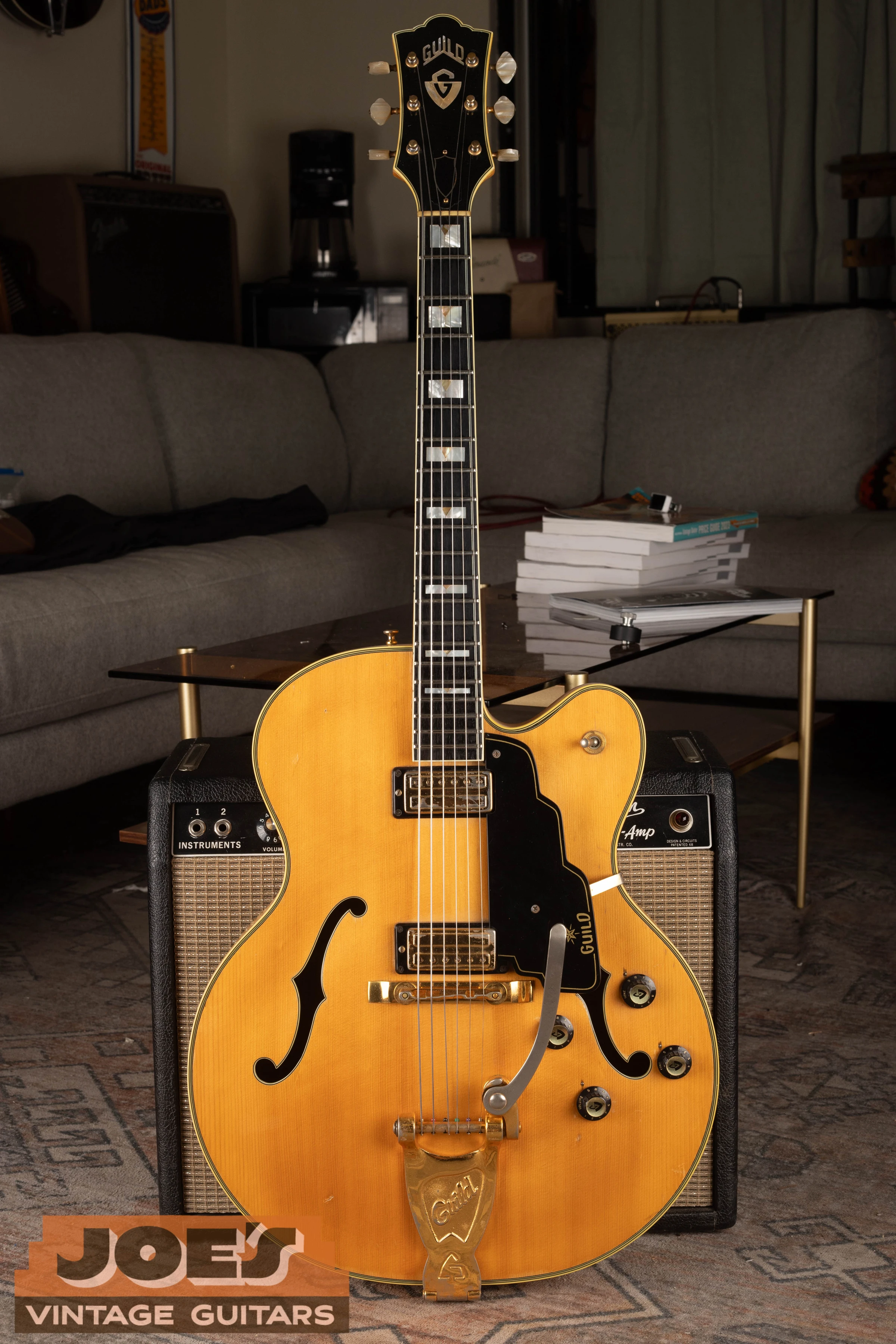
For Hoboken-era examples, look for a label explicitly stating “Hoboken, New Jersey.” Read the model and serial as well as the address. Label color alone is not a date code. When the label and headstock both carry serials, compare them and investigate any disagreement. The label guide shows what to photograph.
2. Potentiometer (Pot) Codes
For a seven-digit EIA code, the first three digits identify the manufacturer, such as 137 for CTS. The next two digits identify the year, and the last two the week of production. That dates the pot, which can predate assembly or be a replacement. The hardware guide explains how to use this evidence.
Pickups, Bridges And Tuners
Compare the installed parts with the pickup names and era chart. It separates Franz single coils, DeArmond Dynasonics, compact Guild humbuckers and later HB-1s, with model examples for each. The bridge and tailpiece comparison covers Guild harp tailpieces, Bigsbys, Hagstrom vibratos and the No. 10 Adjusto-Matic; the tuner chart adds Grover, Schaller and other documented applications.
3. Finish And Structure
Nitrocellulose Check: vintage Guilds used nitrocellulose lacquer, which often develops fine “weather checking” lines over time. Binding can also shrink or separate. These are condition clues, not proof of originality. Include the neck heel, body edges and any repaired areas in your photographs, then compare the examples with later parts.
A Starfire’s model, pickups and factory-era evidence help select the matching Starfire value range.
Frequently Asked Questions
How Do I Read A Guild Serial Number?
Find the serial number first, then match it to the right era. Guild used early numeric sequences, model-specific prefixes in 1965 to 1969 and again from late 1979, and Julian codes for Tacoma and New Hartford production. Match your number against the numeric charts or model charts. Later imports and other factories may need different records.
Where Is The Serial Number On A Guild Guitar?
It depends on the era. Look on the back of the headstock, on a label inside the soundhole or body, or stamped on the neck block. Electric and acoustic models can differ, so check all three spots. The label and serial-location guide shows examples.
How Do I Date A Guild Without A Serial Number?
Physical features can help when a serial is worn or missing. The headstock logo, tuner brand, pickup type, and bridge or binding details all narrow the year, and the build location (Hoboken versus Westerly) helps confirm the era. Compare the acoustic or electric model guide, allowing for replacement parts and later reissues. An exact year may remain unresolved.
What Is A Westerly Guild?
A Westerly Guild was built during the Rhode Island factory era. Guild’s own history dates the relocation to 1967, and production moved to Corona in late 2001. The modern Westerly Collection is a separate series name. The factory-era guide explains the distinction. I buy vintage Westerly Guilds across the country.
How Much Is My Vintage Guild Worth?
Value depends on the model, year, condition, and originality. Repairs and replacement parts affect which instruments make useful comparisons. Send me photos and the serial number for a free Guild appraisal.
Sources And Further Reading
- Guild’s Official Serial Number Records
Check the published model ranges, annual endpoints and Julian-format explanation.
- Guild’s Factory And Model FAQ
Read the manufacturer’s account of factory moves and limits in the surviving records.
- Guild’s Westerly Collection Introduction
Distinguish the 1967 factory relocation from the later collection named after it.
Consider Selling Your Vintage Guild To Joe’s Vintage Guitars
I'm a dedicated buyer of Westerly and Hoboken-era Guilds, and I travel the U.S. to make top-dollar cash offers, with prepaid packing and fully insured shipping. If you've used this guide to date your instrument and you're ready to find it a new home, contact me for a free professional evaluation.
Sell My GuildDating another brand? I’ve published free serial number guides for Fender, Gibson, Martin, Gretsch, and Rickenbacker as well.
Written By Joe Dampt

“Driven by a love for classic tunes, I specialize in buying, selling, and appraising vintage guitars, bringing music and history together.”
Joe also wrote a featured guest essay on vintage-guitar authentication for Vintage Verified, the independent Nashville instrument-authentication lab.
Read More About Joe · Published On: March 12, 2026