

Guild Identification Guide
Guild Factory Eras And Serial Number Systems
A factory name helps choose a serial system. It does not replace the model, the full number or a physical inspection.
Back To The Guild Serial LookupNew York And Hoboken: The Early Instruments
Guild’s early story includes New York before Hoboken. That matters when a short numeric serial is advertised simply as a “Hoboken-era” guitar. The 1953 to 1959 records are approximate; the 1960 to 1964 chart supplies clearer first and last numbers.
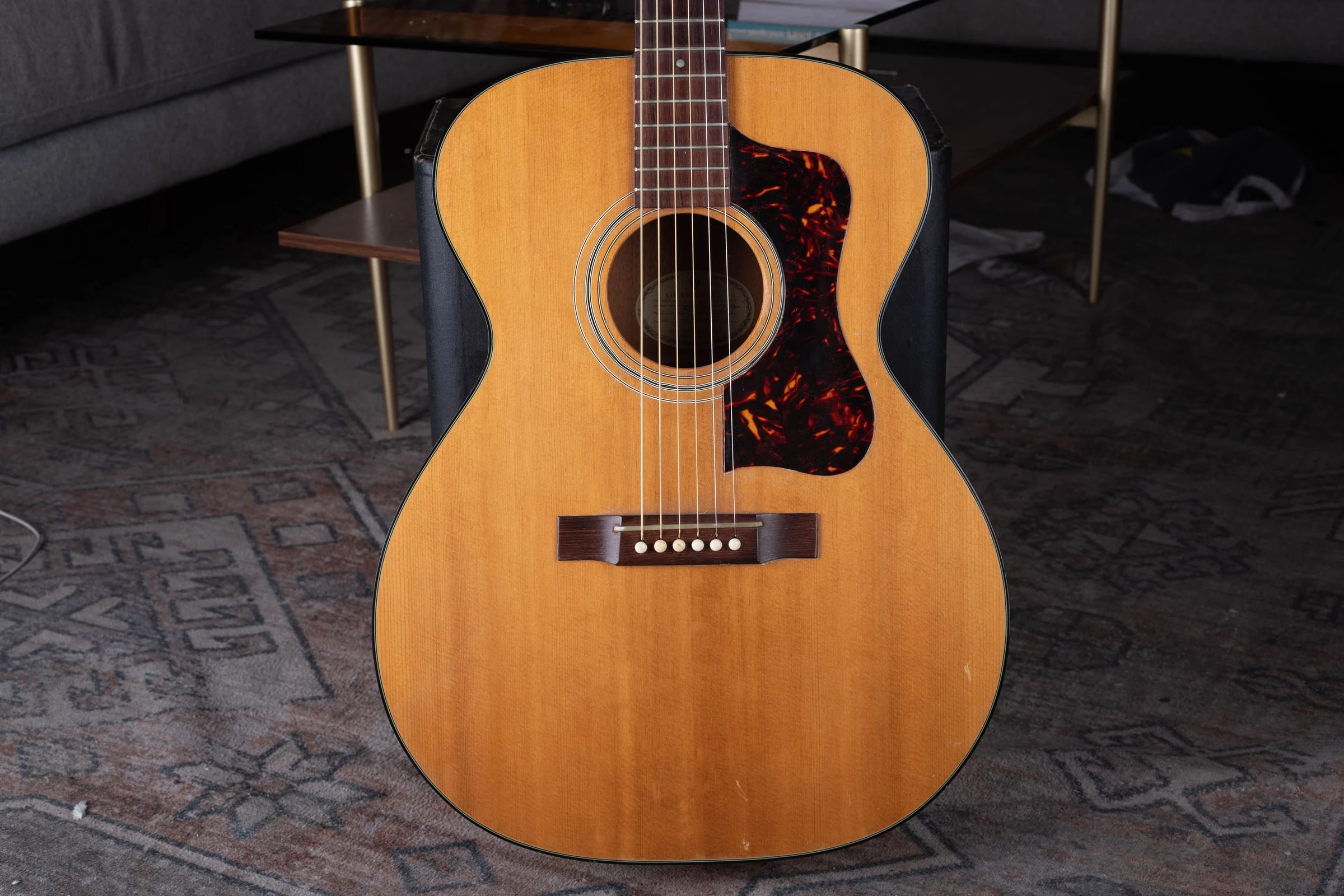
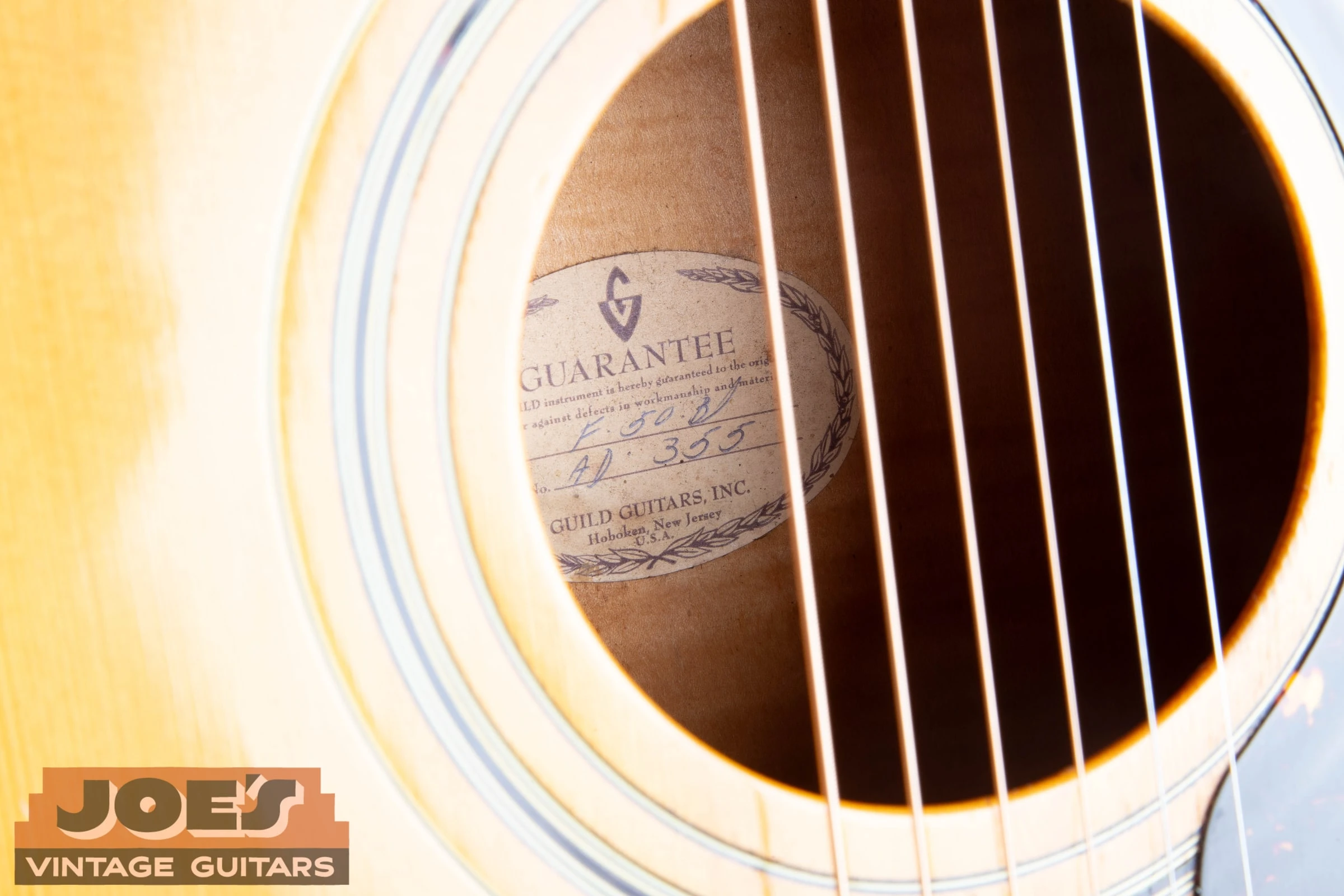
On the photographed F30, the label says Hoboken and the headstock reads 29030. That combination is consistent with the 1964 chart. On the F50, the label also says Hoboken, but AD355 belongs to the 1968 F50 row. A printed address can therefore remain useful without giving a precise assembly location.
For an early guitar, photograph the label wording, headstock front and back, body shape and hardware. Compare the label examples before deciding which chart applies. An address copied from an old label is not enough to resolve a transition instrument.
Westerly: Model Prefixes And Numeric Sequences
Guild’s own Westerly retrospective places the relocation to Rhode Island in 1967. The factory era and serial era do not begin on the same day: the model-specific charts cover 1965 to 1969, spanning the relocation.
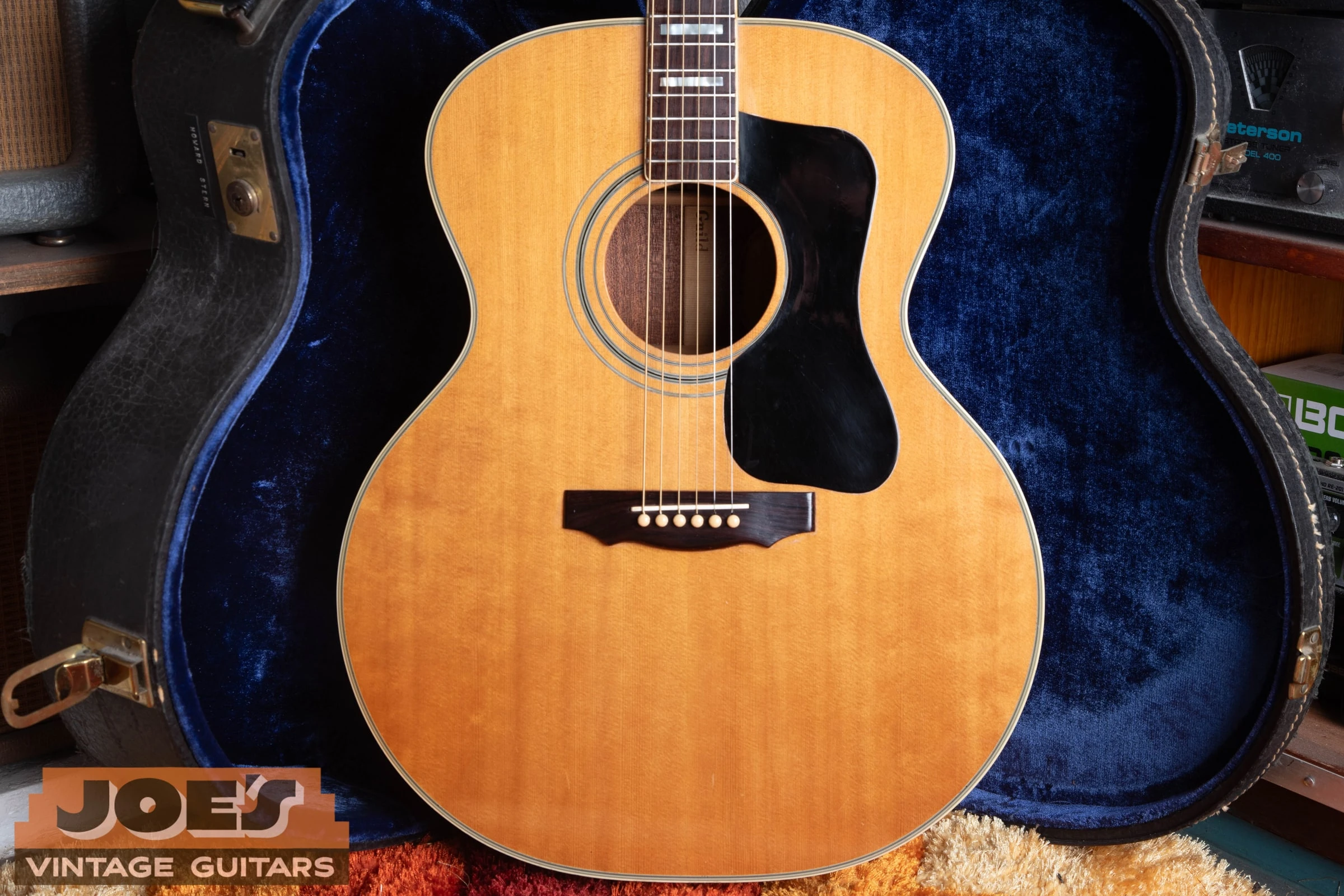
In 1970, Guild consolidated production back into a single sequential system. Dating Guilds from this period is much easier than the preceding era. Just match your number to the year ranges in the 1970 to 1979 chart. The F48 serial 74329, for example, falls in 1972.
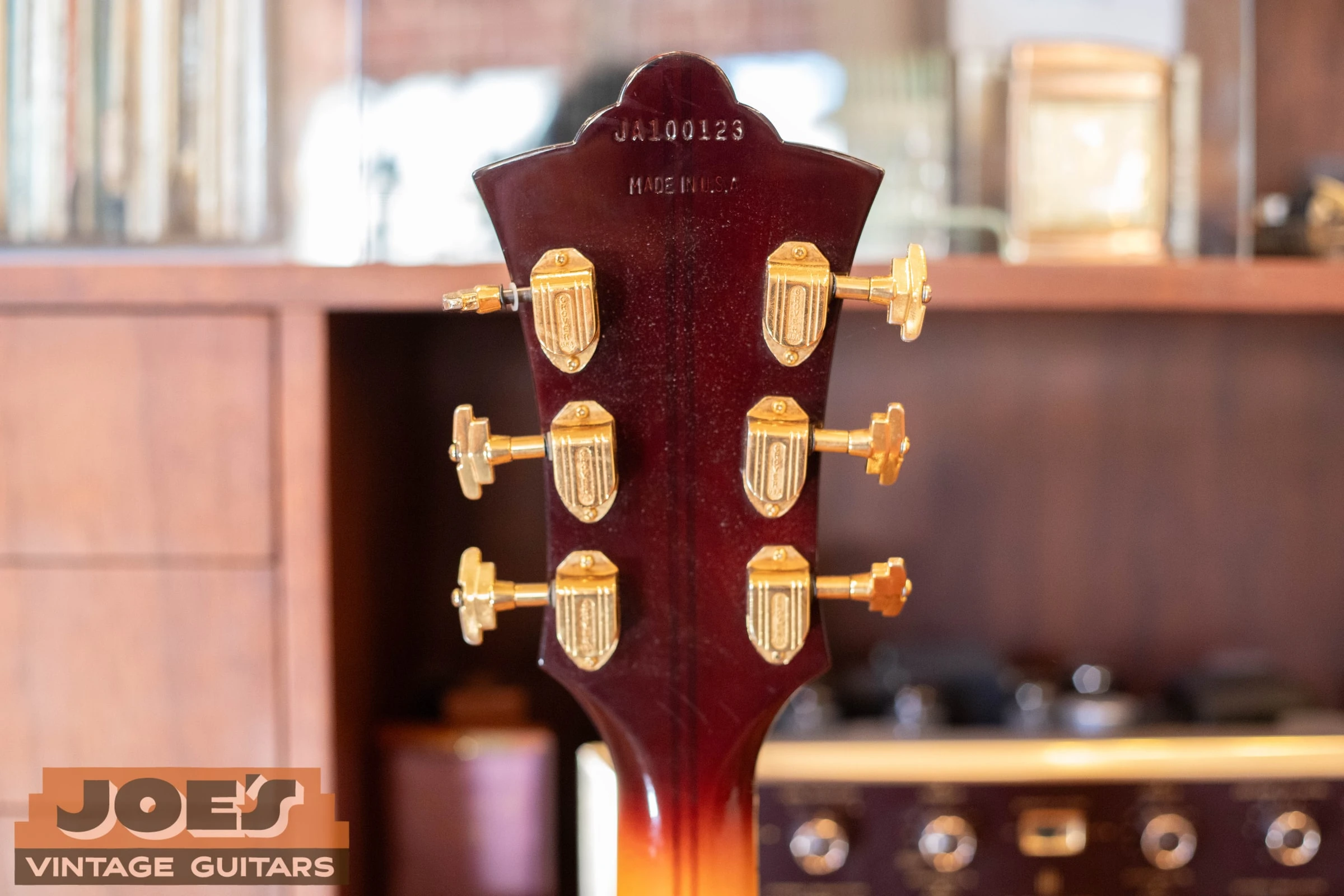
Later Westerly instruments use model records again. The Artist Award JA100123 is compared with annual endpoints, while the 1995 to 1997 material includes explicit ranges. Those differences explain why there isn't one “Westerly formula.” Use the full model charts with the model printed on the instrument.
Corona: The Late-2001 Transition
The Guild FAQ describes the late-2001 move to Corona, California, including nearly complete Westerly kits finished there. That can complicate a simple choice between “Westerly” and “Corona.” Record what the instrument and documents actually say rather than forcing a transition guitar into a single label.
Guild identifies C-leading serial prefixes for Corona production. But C is not a universal Corona test: older Mark-series records include prefixes such as CA and CB. A nylon-string Mark model with a 1960s prefix should not become a 2000s guitar merely because its number begins with C.
The published charts on this site don't provide a complete universal 1998 to 2004 decoder. For an unresolved example, gather the model, full serial, label, country marking and any original paperwork. The acoustic identification guide helps separate a model designation from the serial.
Tacoma And New Hartford: Julian Date Codes
Guild’s dating notes give February 2005 for the Tacoma system and December 2008 for New Hartford. These serials use a factory letter, a year letter, a three-digit day of year and a three-digit unit sequence. TJ037016 reads February 6, 2006 in the Tacoma format; NM016002 reads January 16, 2009 in the New Hartford format.
The day field is a calendar count, not a month and day stuck together. Day 060 is March 1 in a common year and February 29 in a leap year. Day 366 is valid only in a leap year. The decoder checks those calendar limits rather than accepting an impossible date.
Factory timing also matters. An N-prefixed reading before December 2008 contradicts the stated start of New Hartford production. A letter that would produce a much later year should not be extended indefinitely into Oxnard production. Use the full factory context alongside the arithmetic.
Oxnard And Imported Guild Lines
Later USA production moved to Oxnard, California. The 2016 factory visit published in Acoustic Guitar describes the operating factory and January 2016 relaunch. An ownership change, a factory buildout and the date a particular guitar was made are different milestones.
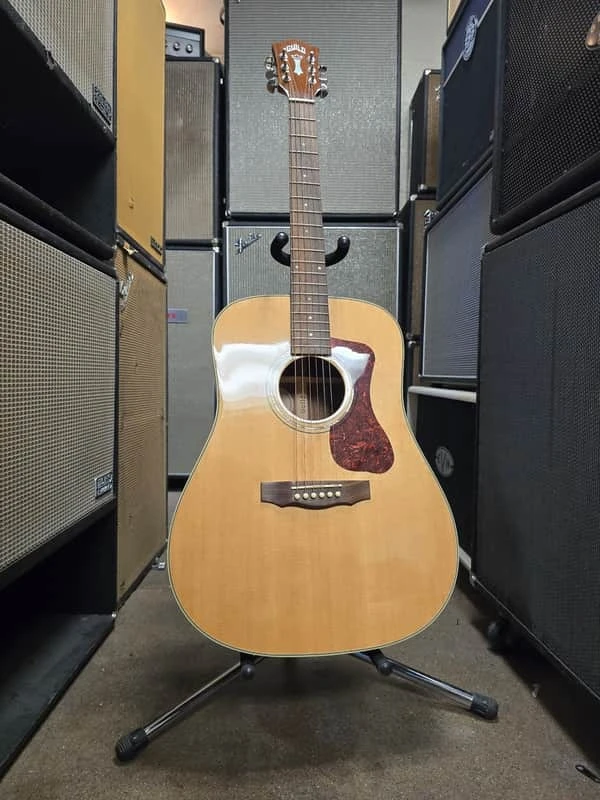
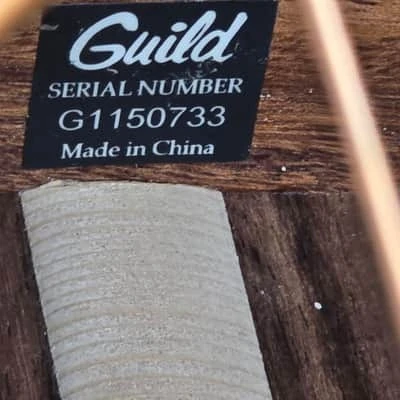
Imported instruments have their own model and serial context. The D-150NAT below carries a Chinese country marking and a Westerly Collection label. Its series name refers to Guild heritage. It isn't evidence of manufacture in Rhode Island.
For a current model, check the manufacturer's specification for the exact version. A USA M-20, an imported acoustic and a Newark St. electric can share familiar Guild design details without sharing a serial algorithm. Compare the vintage and later examples, then include the country mark in any appraisal request.
Sources And Further Reading
- Guild’s Factory And Model FAQ
Check the manufacturer’s explanation of factory moves, series names and record limitations.
- Guild’s Westerly Retrospective
Check the stated 1967 relocation and the later collection’s name.
- Guild’s Serial Number Records
Compare the manufacturer’s published ranges, annual endpoints and dating notes.
- Oxnard Factory Visit, 2016
Read the eyewitness account of operating production and the January 2016 relaunch.
Get Help Identifying Your Guild
Send the serial, a full front and back view, and close-ups of the feature you want checked. Include any known repairs or replacement parts.
Get A Free Guild AppraisalReturn to the Guild serial lookup and dating library to compare the rest of the instrument.