

Guild Identification Guide
Guild Acoustic Guitar Identification Guide
Start with the model line, then compare the body and appointments. Similar-looking Guild acoustics can belong to different models and factory periods.
Back To The Guild Serial LookupMatch The Model Line To The Body
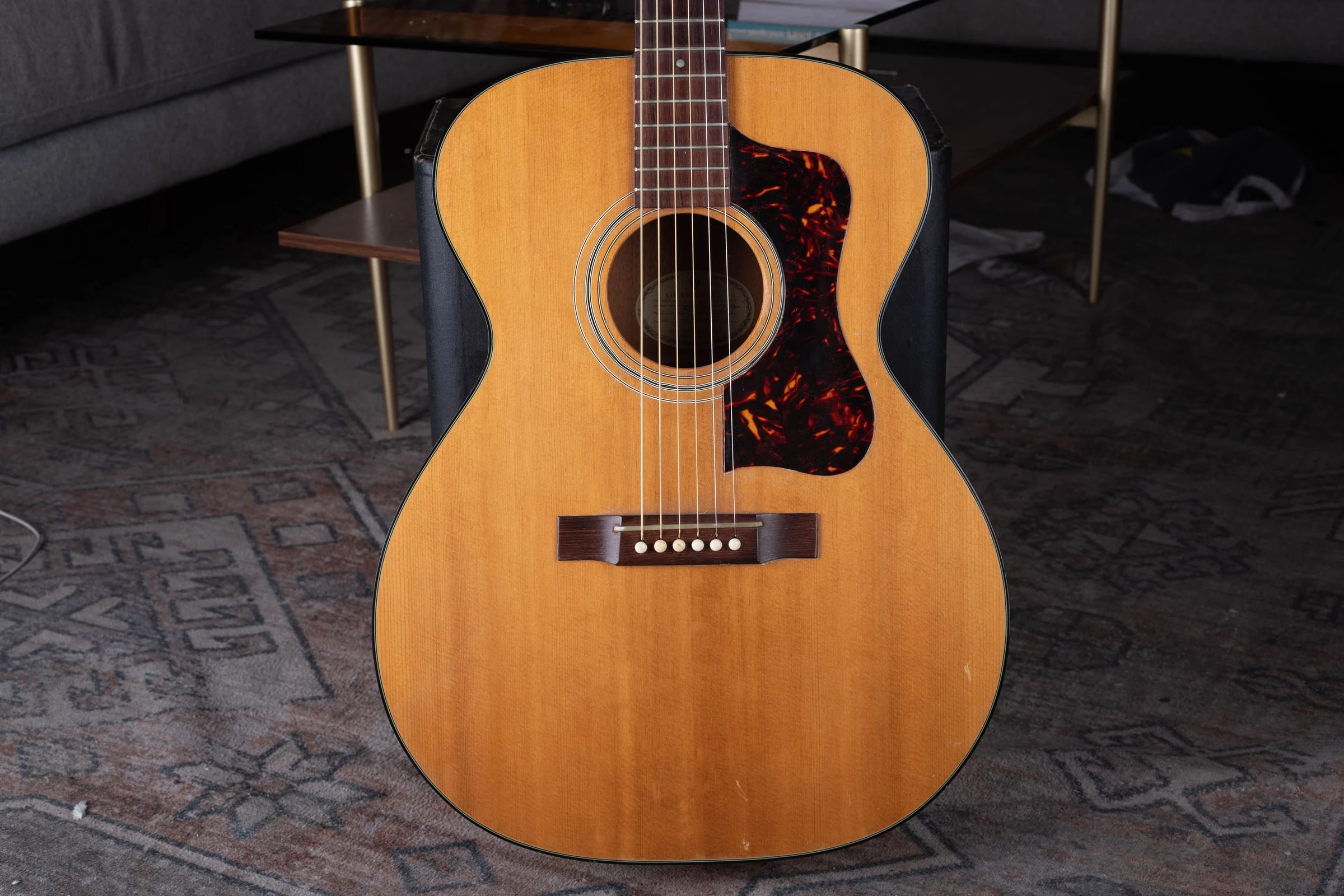
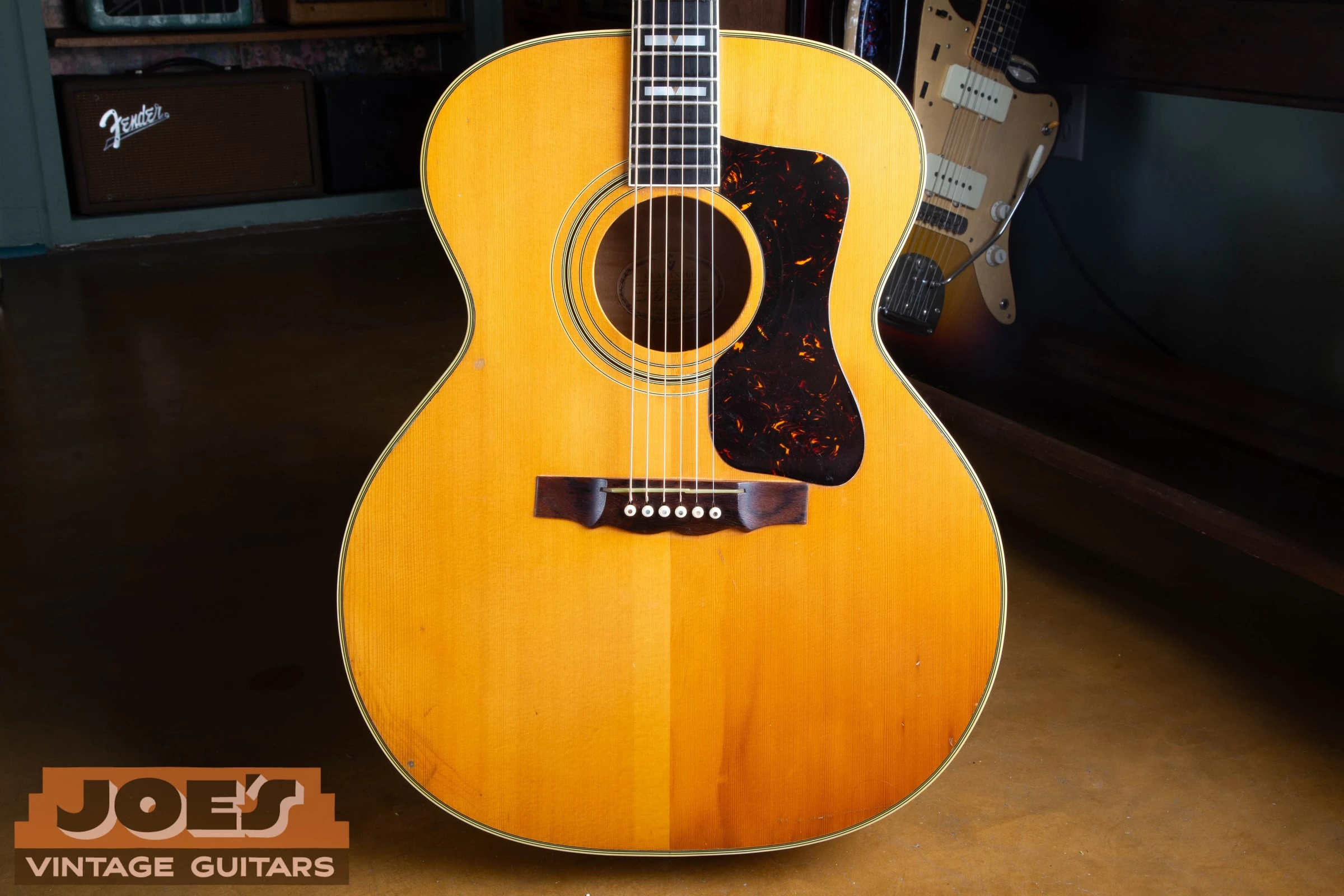
Read the model inside the body before naming an acoustic from its outline. The F30, F48 and F50 examples below have related Guild styling but different proportions and appointments. Their model names are not production years, and an F prefix should not be treated as one unchanging body size across Guild history.
Write down the complete designation, including finish, cutaway or electronics suffixes. Then record the serial separately. On the F30 label, 29030 is the serial; on the F50, AD355 is the serial. Use the serial lookup to put those instruments into a production period before comparing specifications.
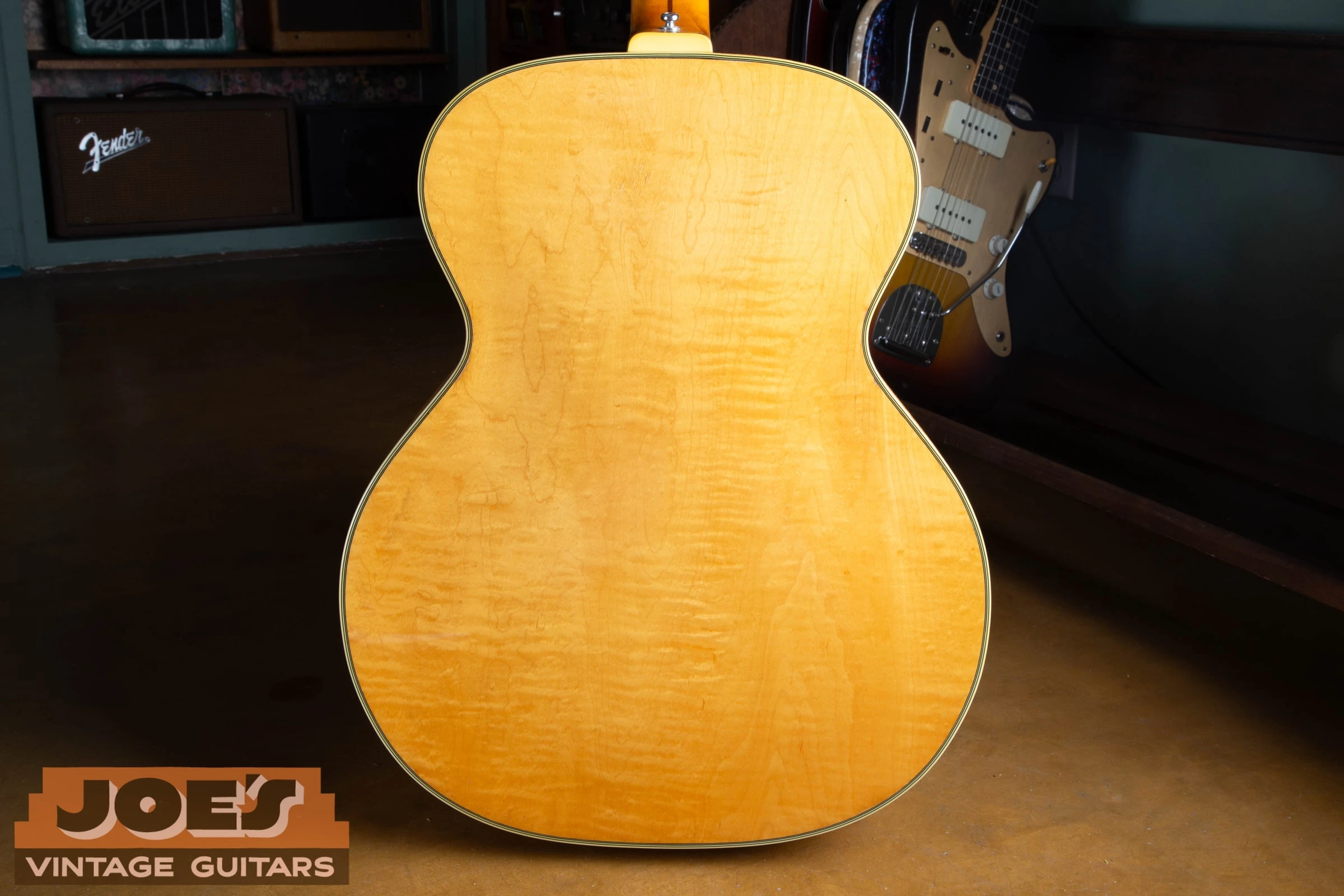
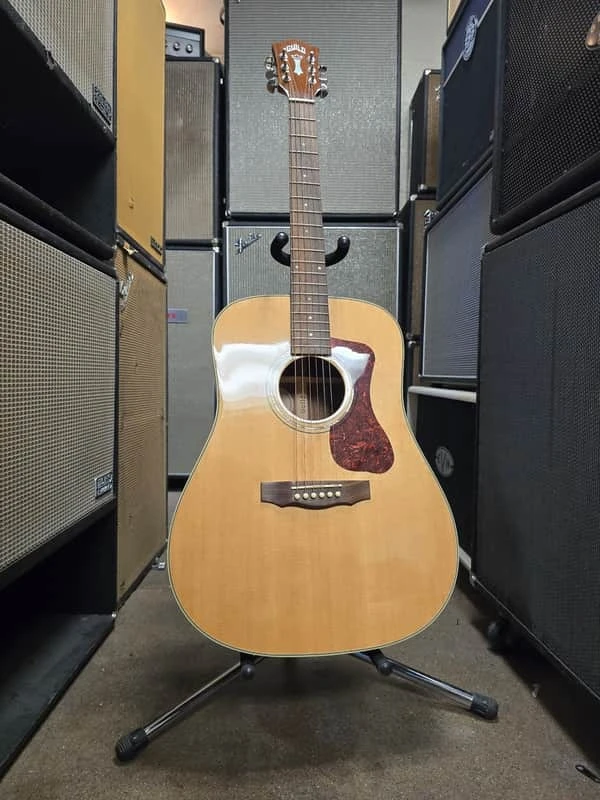
Take a straight front photograph with the entire body and headstock visible. An angled view can make the lower bout look wider or hide the shoulder shape. A back photograph helps document wood appearance and construction, but grain alone won't prove the species or whether every panel is solid wood.
Headstock Logos And Fingerboard Inlays
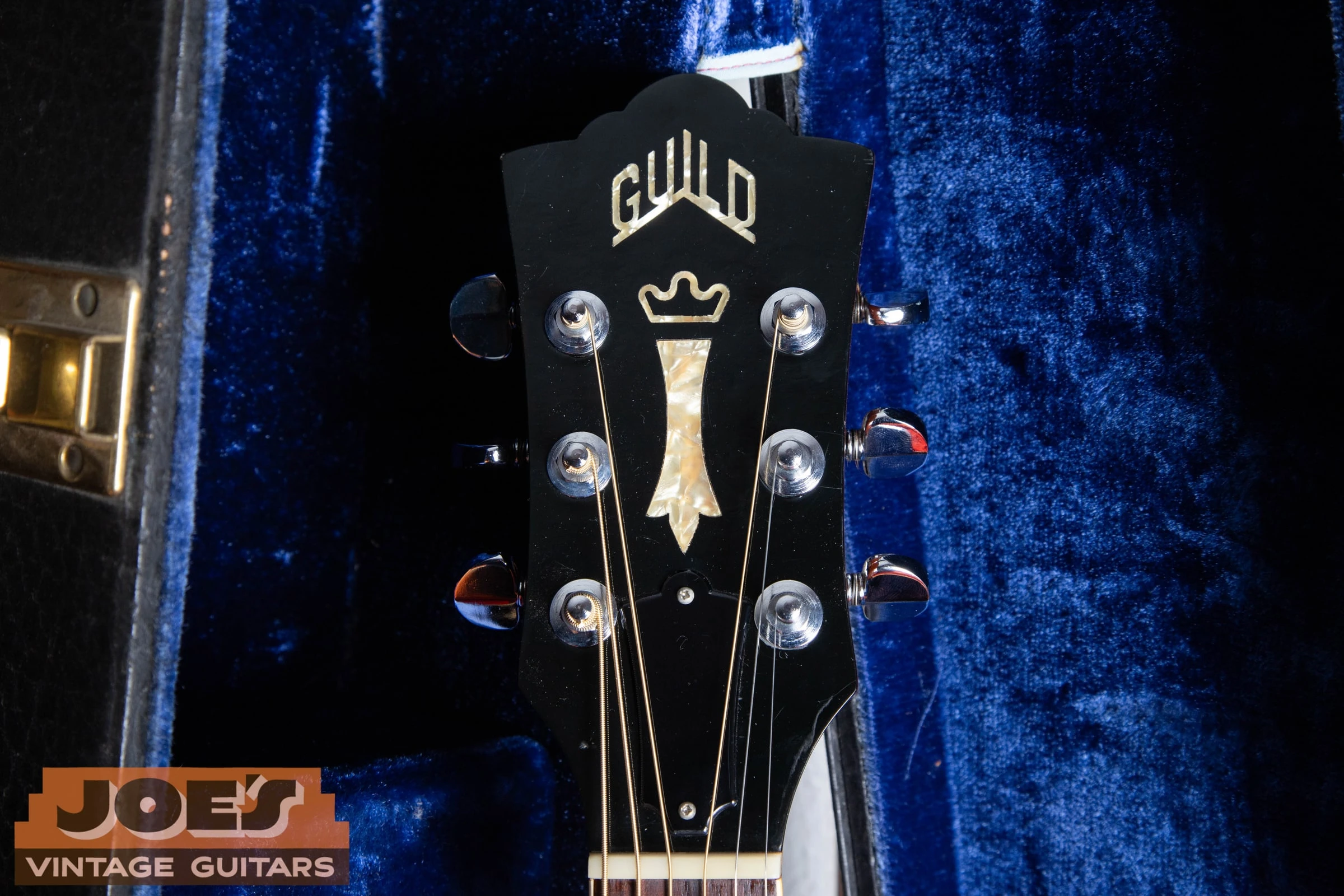
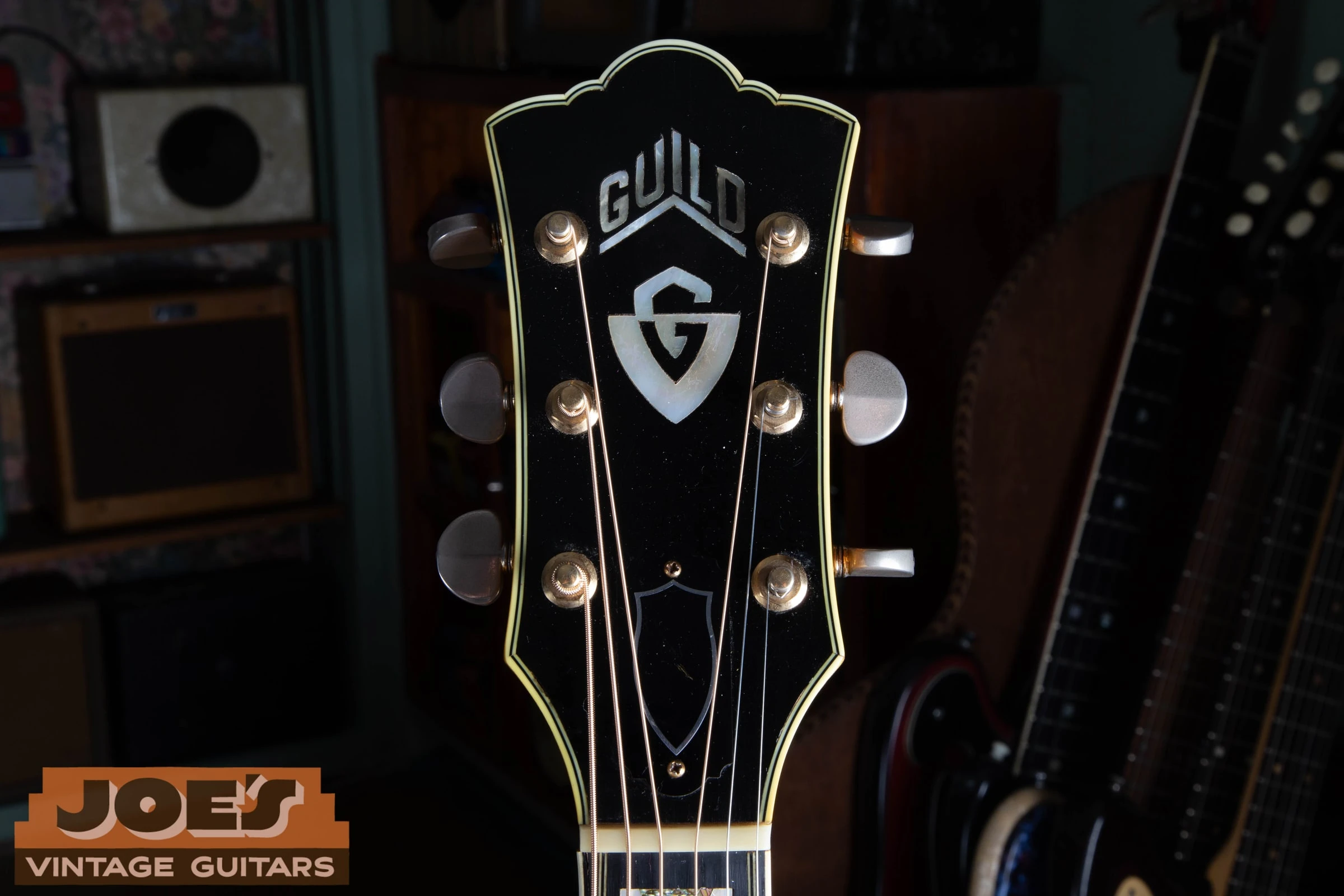
The F48 has the Guild name with a crown and vertical decorative inlay. The F50 shown here uses a shield-style emblem below the name. These are useful visible differences between the examples, but neither logo alone supplies an exact year.
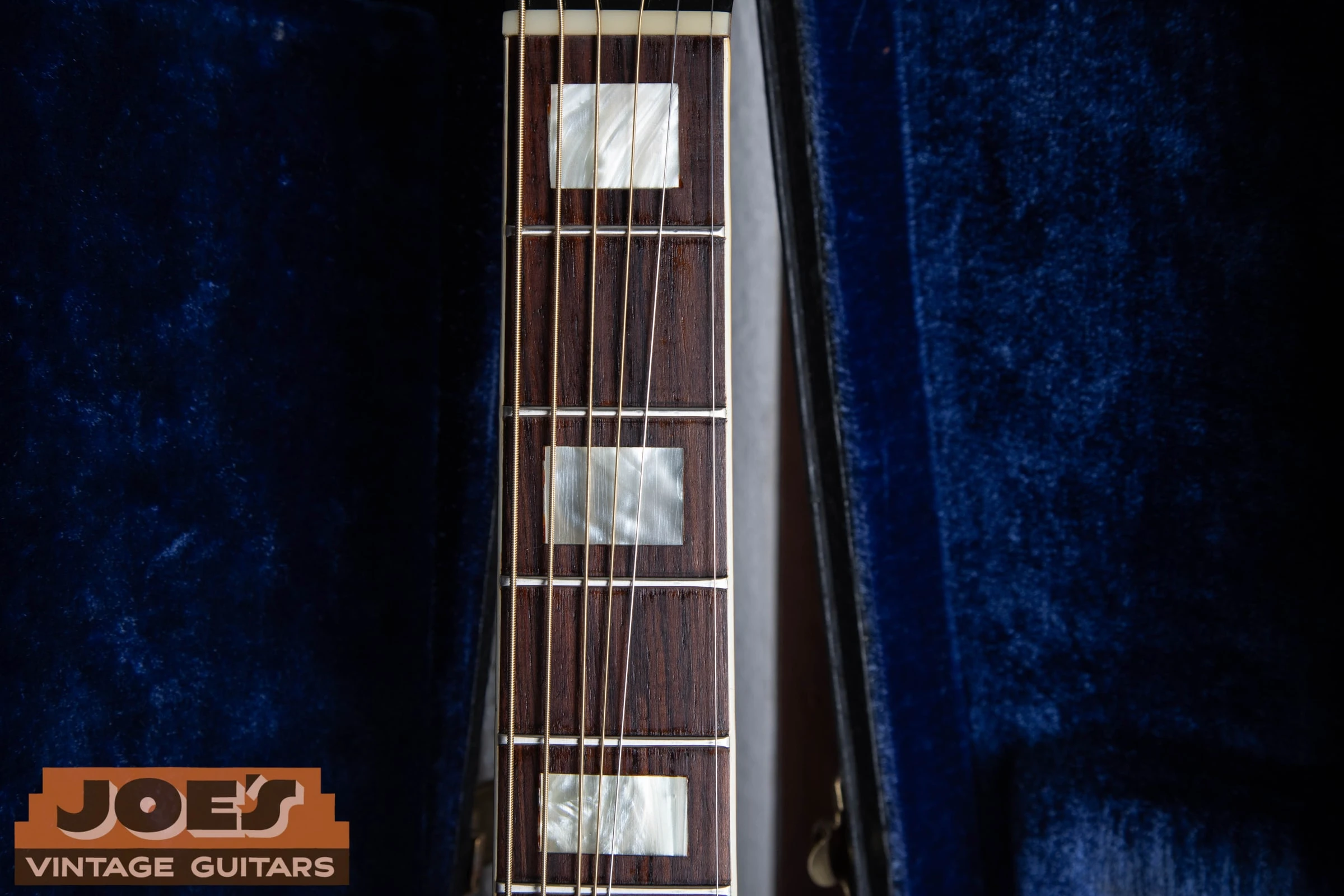
Compare the inlay shapes, their fret positions, the headstock outline and the truss rod cover. A replaced cover is easier to change than an inlaid logo, yet even an old-looking logo can appear on a later model. Use several features together with the factory and serial context.
A clear fingerboard photograph also records fret wear, replacement frets and binding condition. Those details matter to an appraisal even when they don't narrow the year. Don't confuse the decorative material's color in a warm photograph with a precise material identification.
Bridges, Saddles And Neck Condition
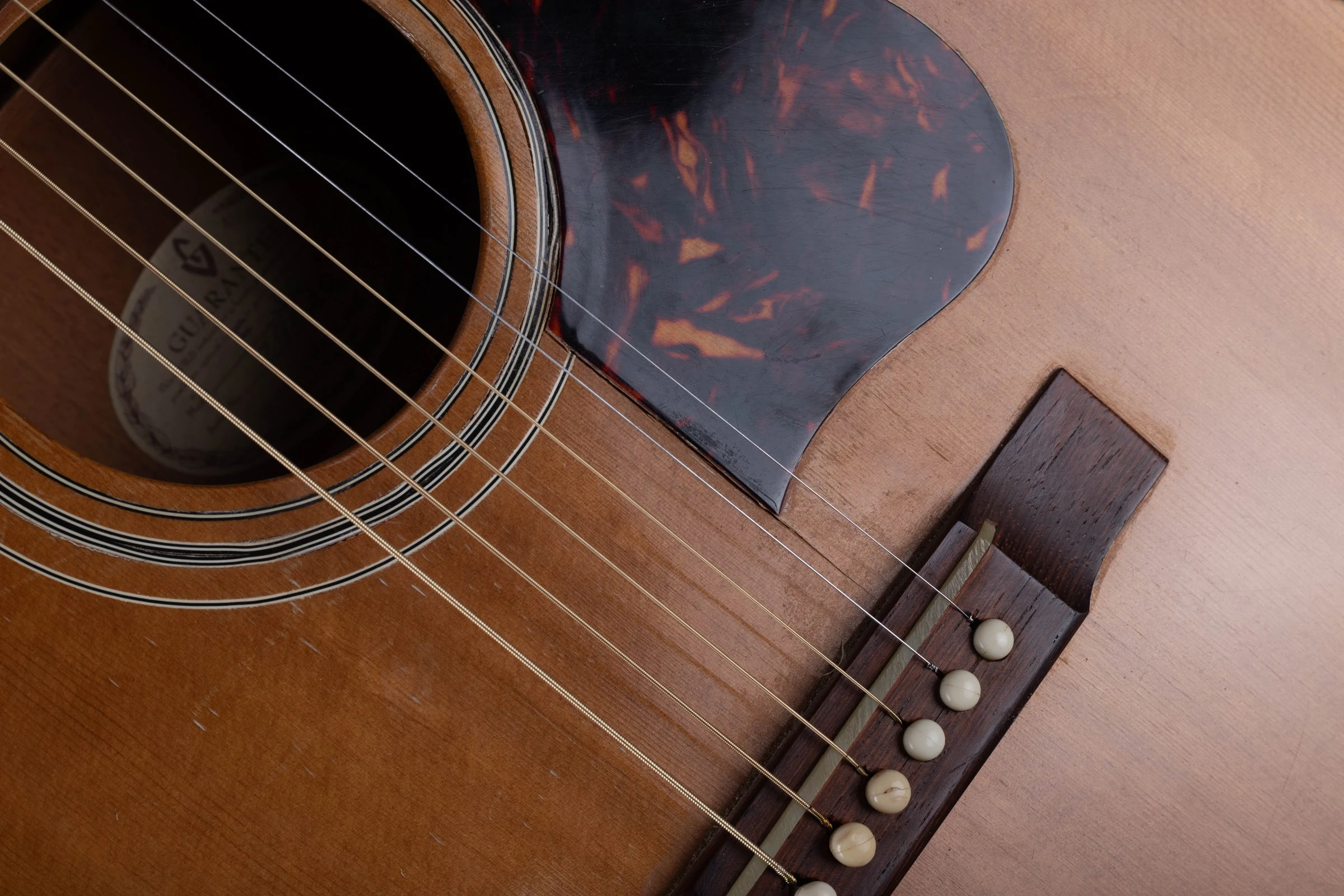
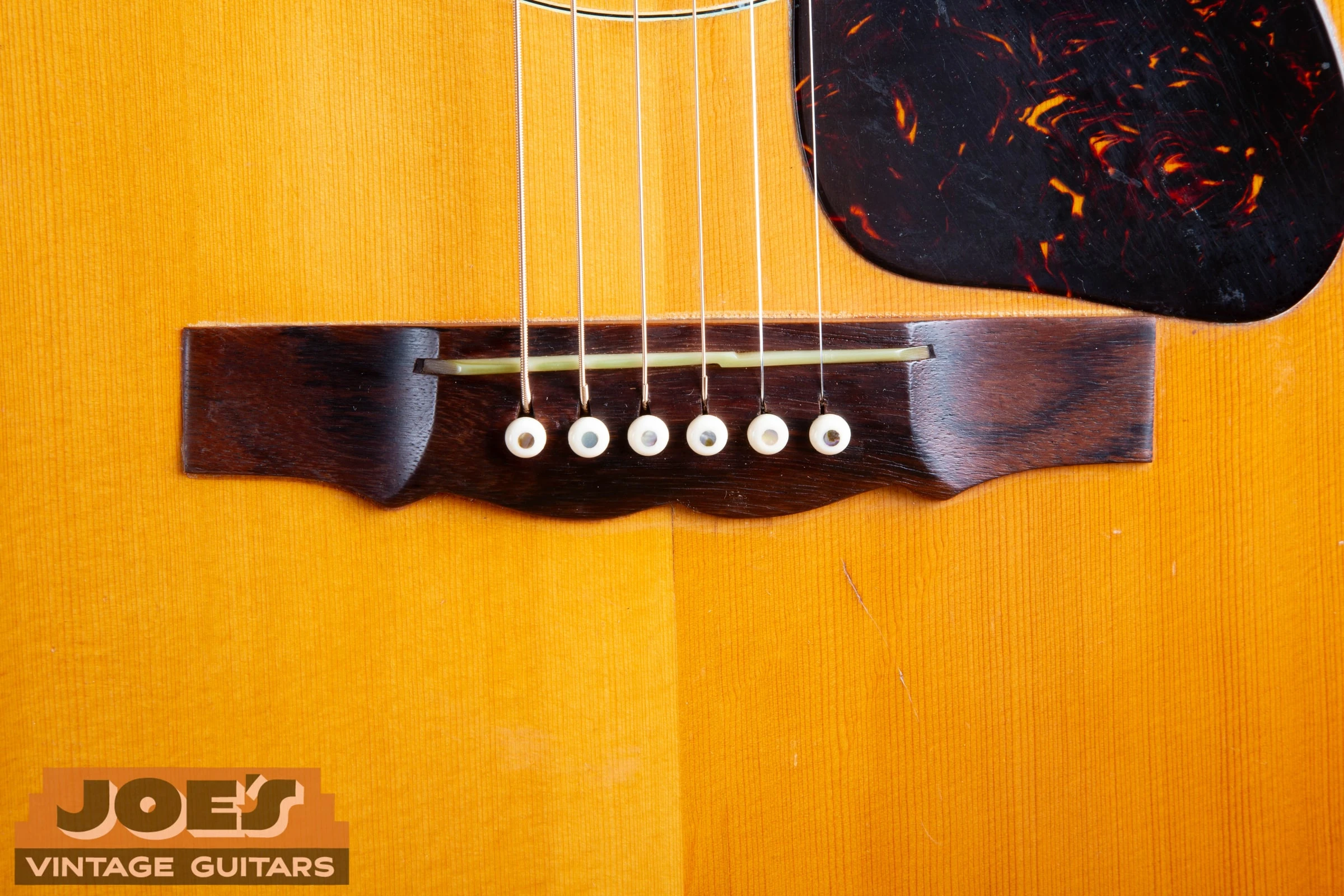
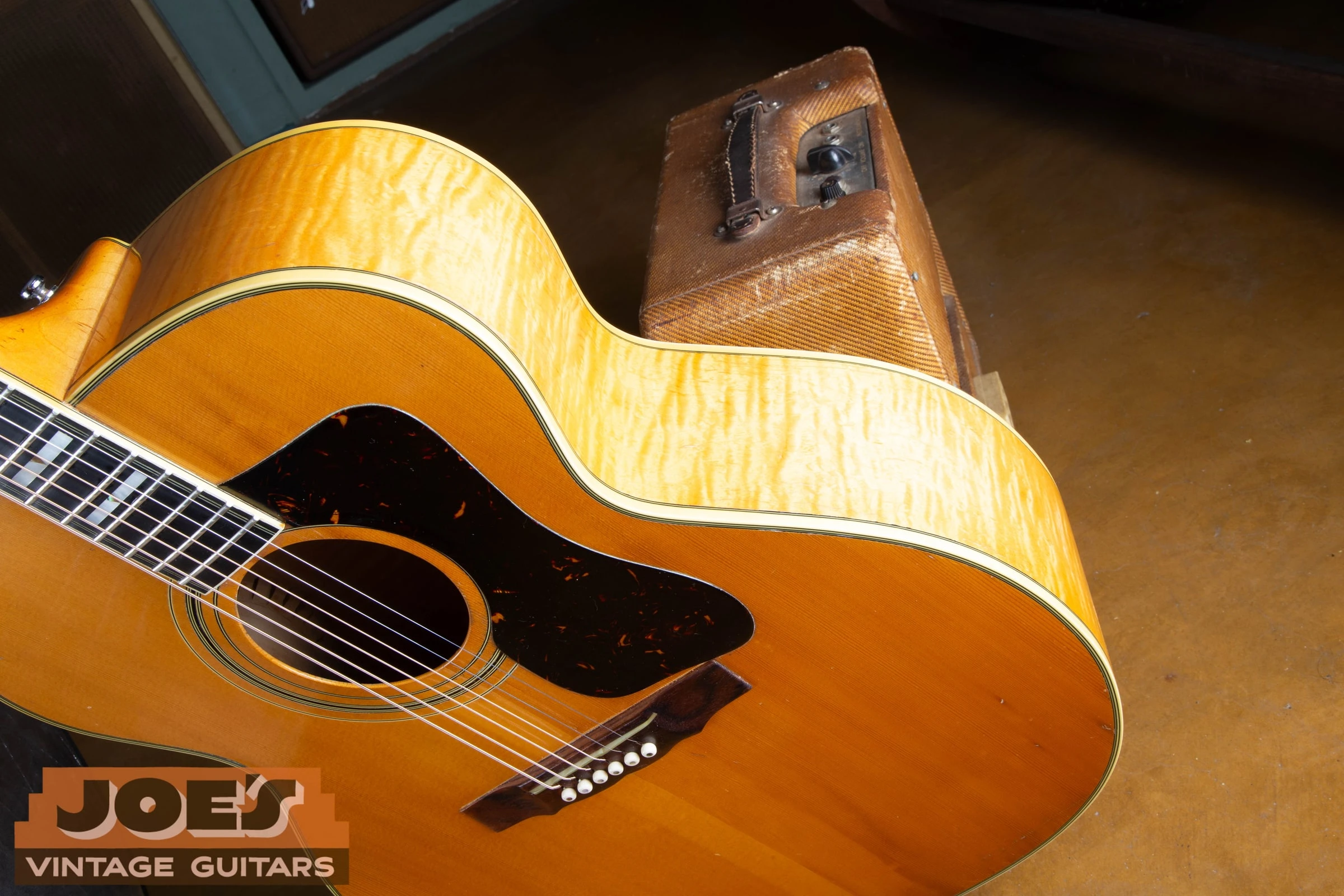
Photograph the bridge from above and from the side. The overhead view records its shape, pin layout and surrounding finish. The side view shows the saddle and whether a gap is visible at the bridge edge. A photograph can show a possible problem, but it cannot establish the condition of the bridge plate inside the guitar.
The F30 close-up shows wear around the top and pickguard. Preserve those details in an appraisal photograph instead of polishing them away. On the F48, the low viewing angle records the bridge and string path. Describe what is visible without declaring a neck reset necessary from a single image.
If the action is high or the saddle unusually low, send measurements with the photos. A guitar repair assessment can distinguish setup needs from structural work. The cost and extent of repairs also affect which examples make sense for a value comparison.

Twelve-Strings And Later Model Names
Count the strings and tuners, then copy the complete model. Guild’s historical charts include F112, F212, F312, F412 and F512 rows. Similar numbers do not make those instruments interchangeable, and a model name reused later doesn't bring its old serial scheme with it.
For a twelve-string, photograph both sides of the headstock, the bridge, the neck heel and the top around the bridge. Include the tuning and string gauge if you know them. A repair history is particularly useful when assessing neck angle, bridge work or a repaired headstock.
The modern Guild acoustic catalog organizes current models by shape and series. Use it for the later model you're examining, rather than applying current naming rules backward to every vintage F-series instrument. The historical model tables retain the older designations.
Photos For An Acoustic Guild Appraisal
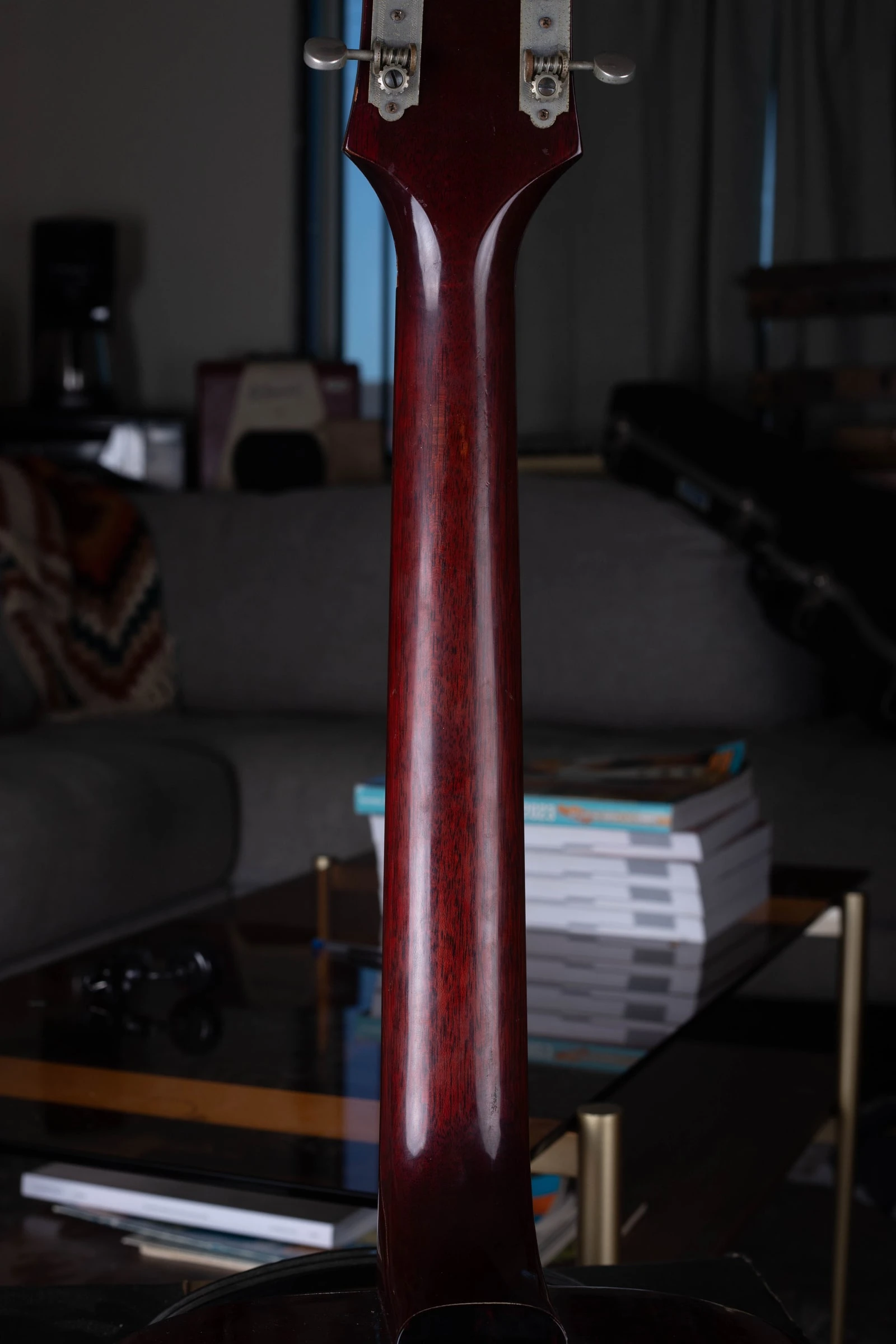
Send the front, back, both sides, headstock front and rear, label and bridge. Add close-ups of cracks, binding separation, overspray or repaired areas. Keep the original resolution so a stamp or label can be enlarged.
Include the case and any receipts, but don't use the case's appearance as proof of the guitar's date. Cases and tuners can be replaced during decades of ownership. The hardware guide explains how to describe those changes separately.
A free Guild appraisal considers the model, date evidence, condition and originality together. If you're ready to sell, the Guild buying page explains how to send those details to Joe.
Sources And Further Reading
- Guild’s Serial Number Records
Compare the manufacturer’s published ranges, annual endpoints and dating notes.
- Guild’s Current Acoustic Models
Compare current body-shape and series names with the model actually on your instrument.
- Guild Electronics Manuals
Identify installed acoustic pickup and preamp systems without assuming they date the guitar.
Get Help Identifying Your Guild
Send the serial, a full front and back view, and close-ups of the feature you want checked. Include any known repairs or replacement parts.
Get A Free Guild AppraisalReturn to the Guild serial lookup and dating library to compare the rest of the instrument.