

Guild Identification Guide
Guild Electric Guitar Identification Guide
Identify the body and model before dating the parts. Guild archtops, Starfires and solidbody designs use different construction and serial records.
Back To The Guild Serial LookupStart With The Body And Model
A single cutaway, two f-holes and two pickups are not enough to identify every Guild archtop. Record the model label, body depth, cutaway outline, pickup arrangement and tailpiece. If a label is partly hidden, use the f-hole photography examples before guessing the model.
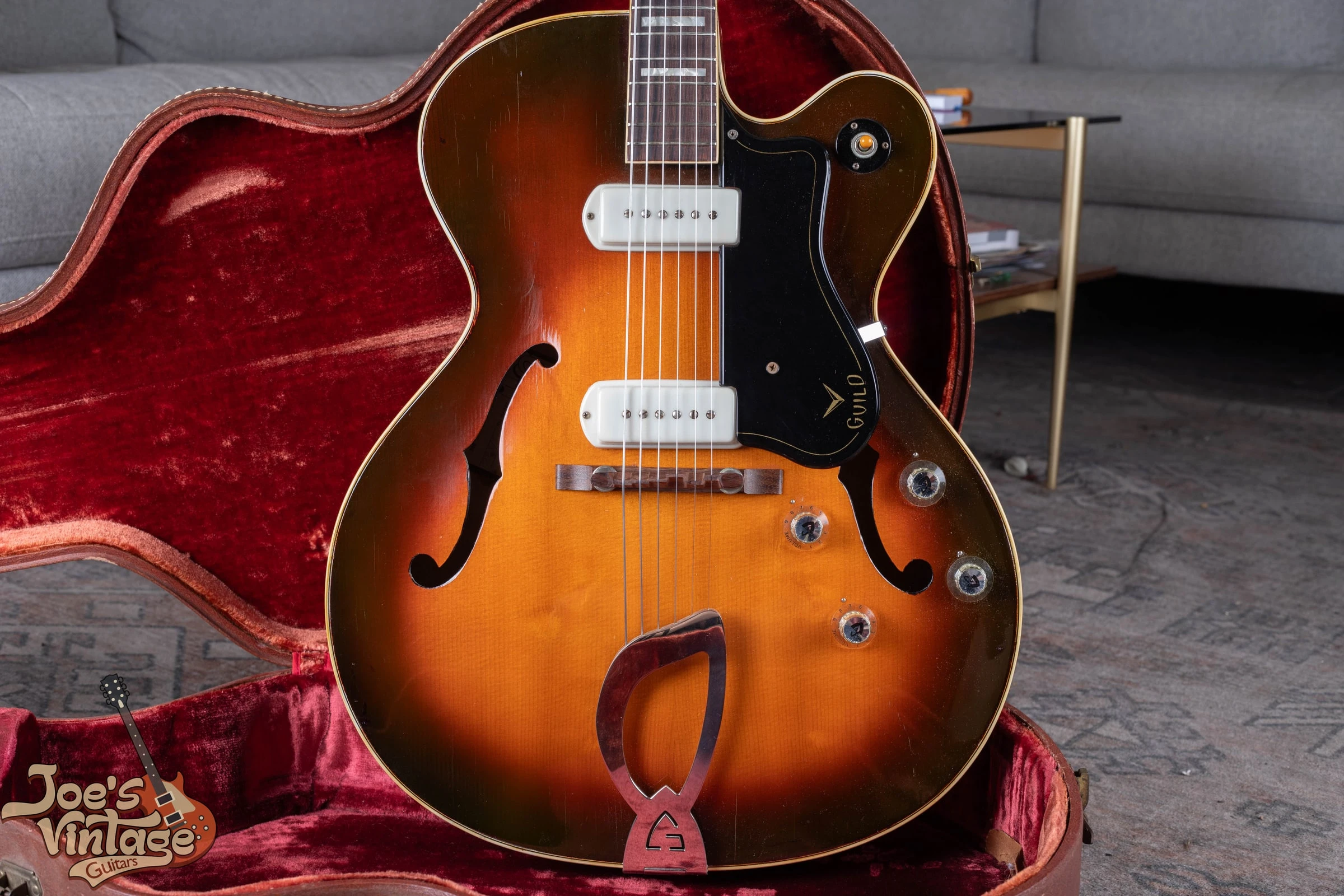
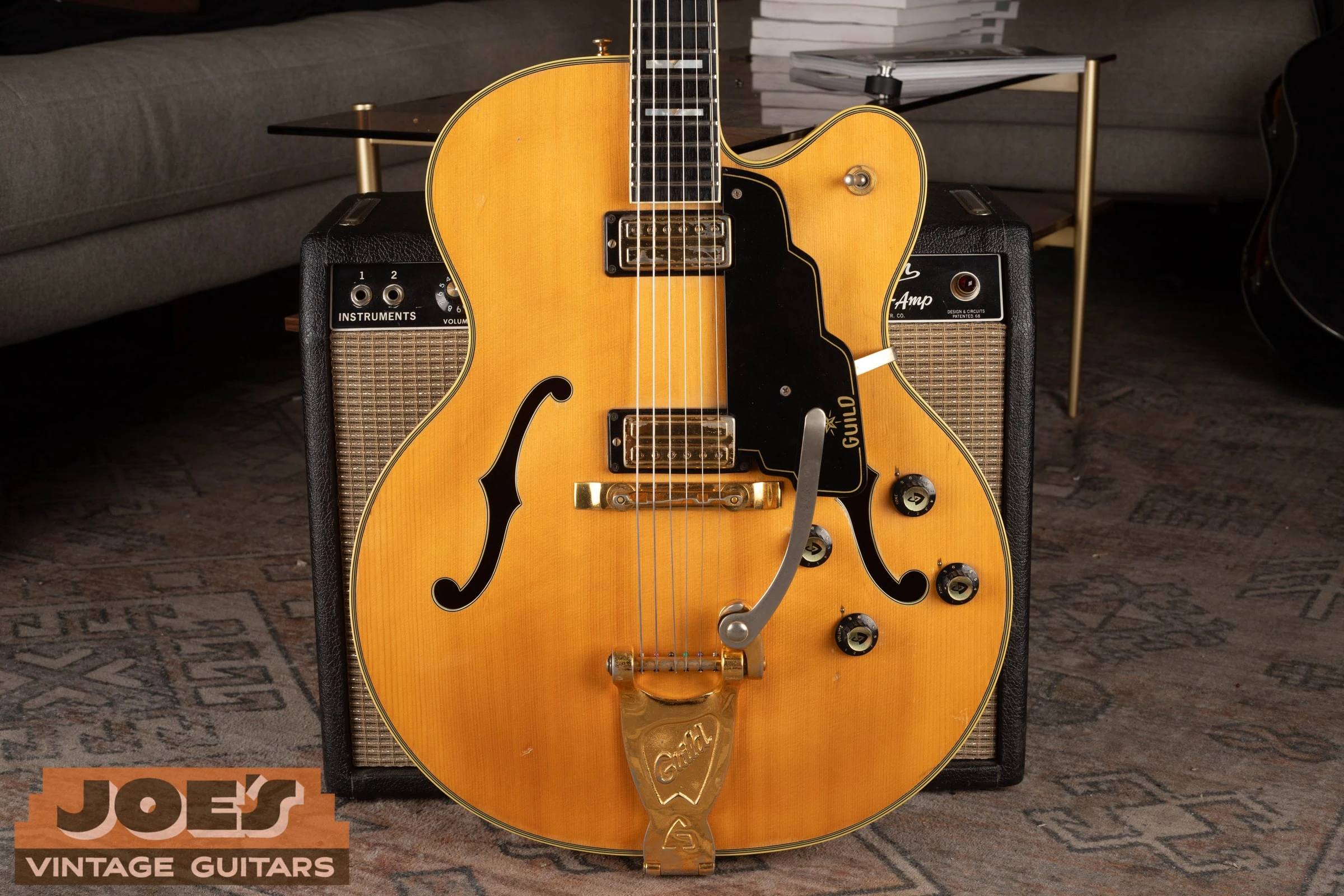
The X-175 and X-500 below show different levels of trim and hardware. The natural X-500 has gold-colored hardware and a Bigsby; that photograph alone doesn't establish when the vibrato was installed. The model's identity, its manufacture date and its present equipment should be recorded separately.
After identifying the model, compare the complete number with the model-prefix charts or the early numeric records. Don't choose a year solely because another guitar with a similar finish was advertised that way.
Compare Two X-175 Examples
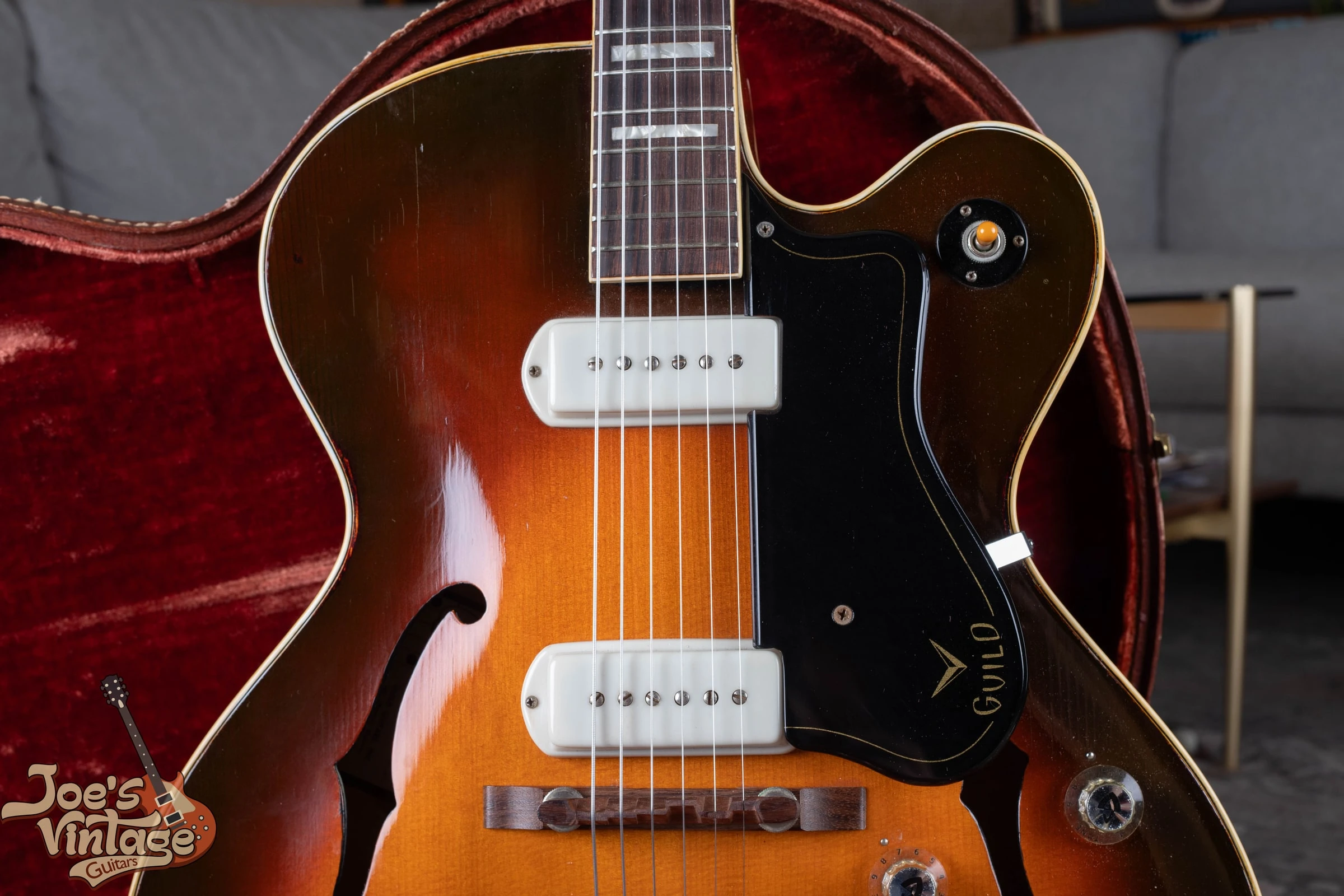
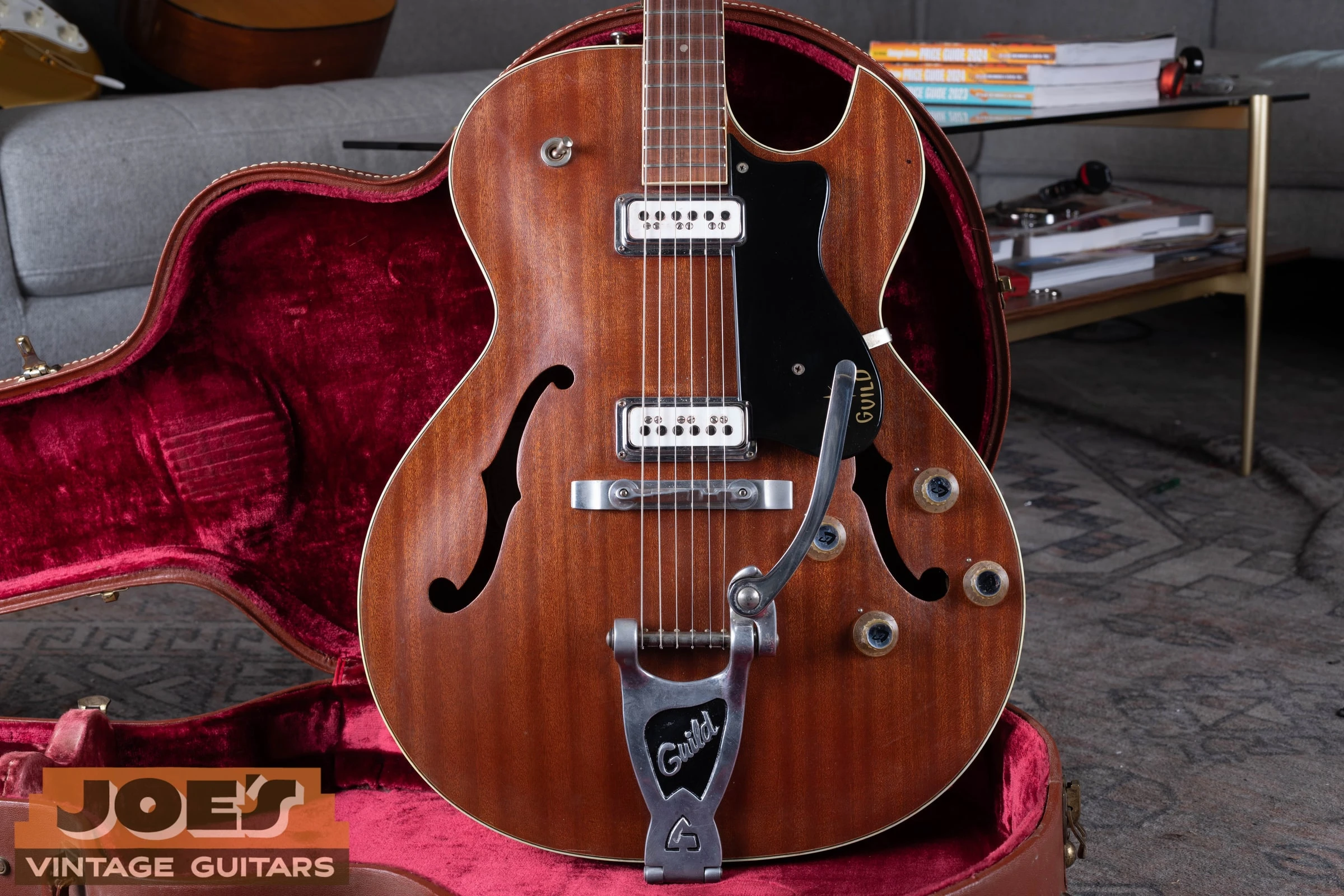
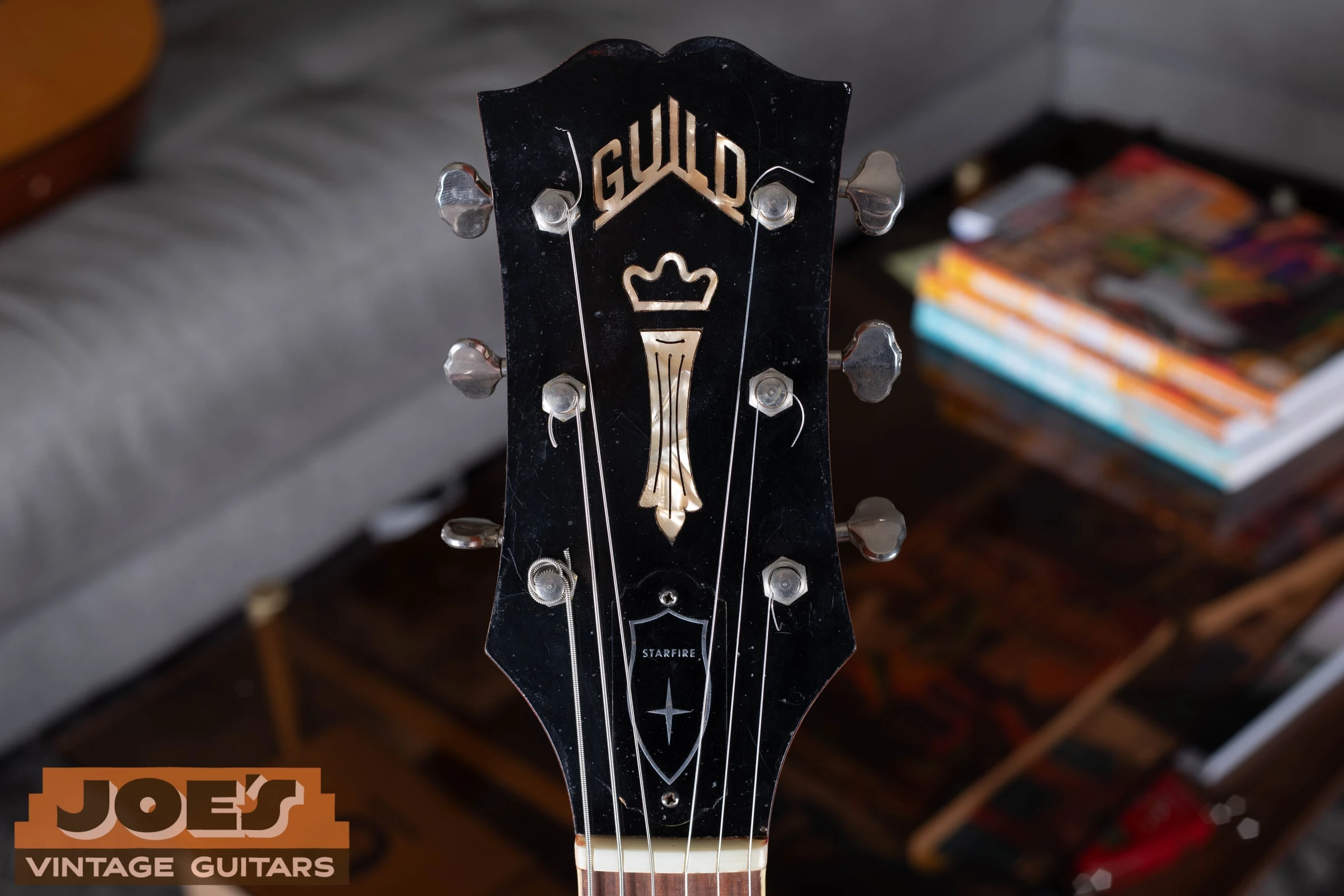
The earlier X-175 has white pickup covers and a headstock stamped 11830. The later archive example has metal-covered pickups and different visible appointments. These photographs make a useful comparison without turning one component change into a universal model-year boundary.
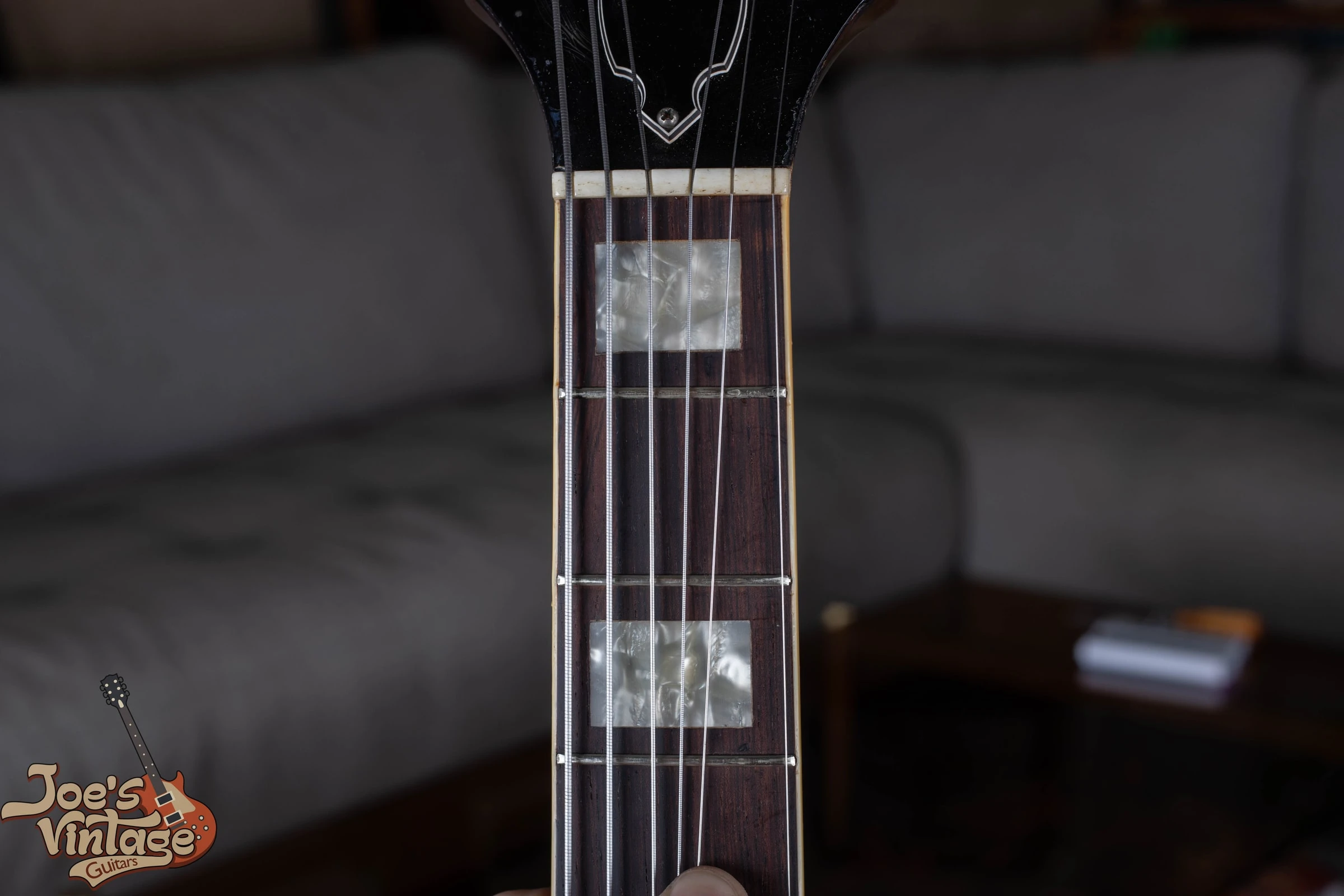
Look at the pickup surrounds, bridge, guard attachment, selector position and knob layout. Then compare the headstock emblem and fingerboard markers. A mixed set of details may reflect repairs or replacements; it needs an explanation rather than an automatic rejection of the serial.
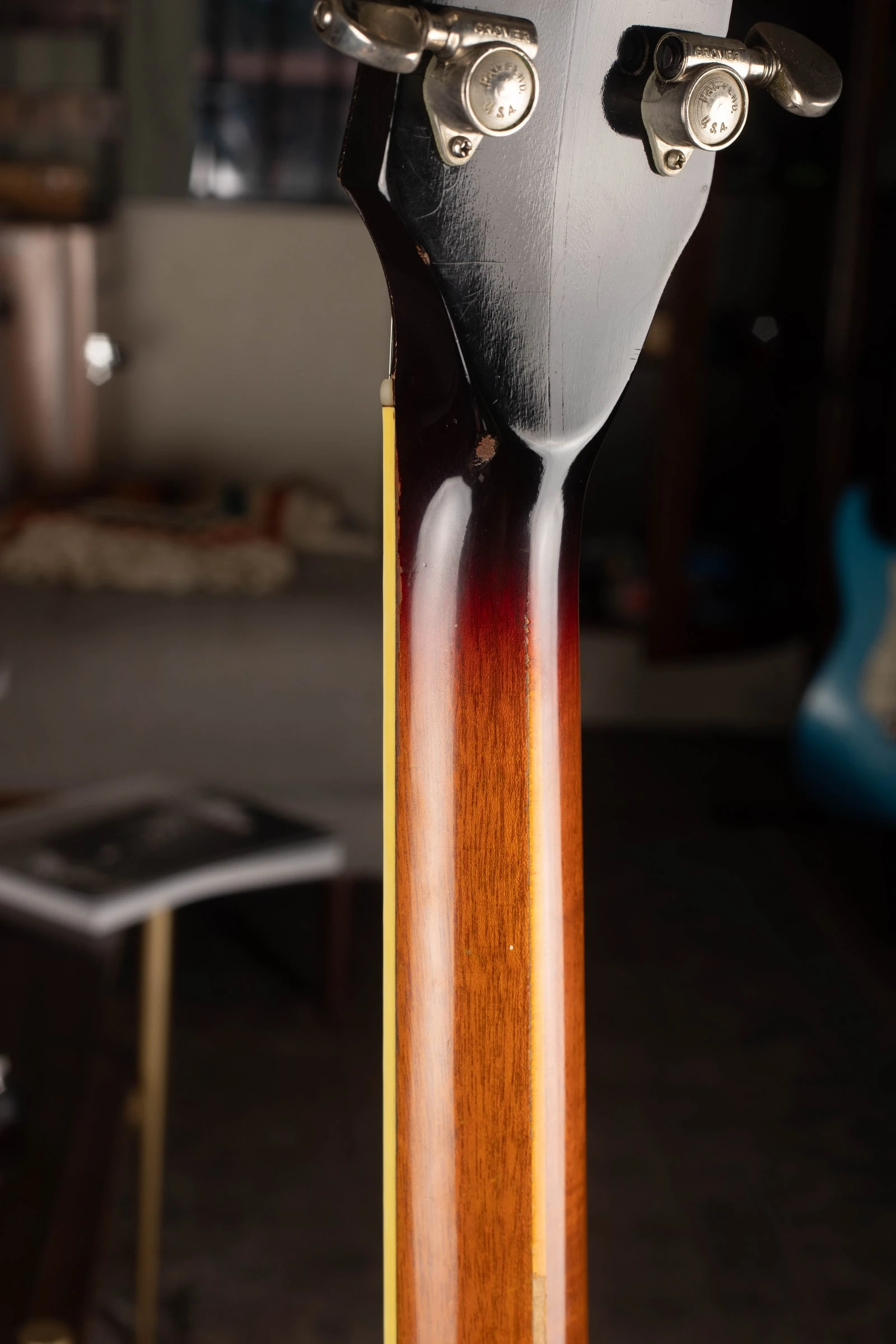
The back of the later example shows contrasting neck laminations and the heel area. Include that view when assessing a repair. A finish line, grain change or reflection is not enough on its own to diagnose a broken neck. Use the hardware guide for closer pickup and tuner comparisons.
Starfire Models Need Their Full Designation
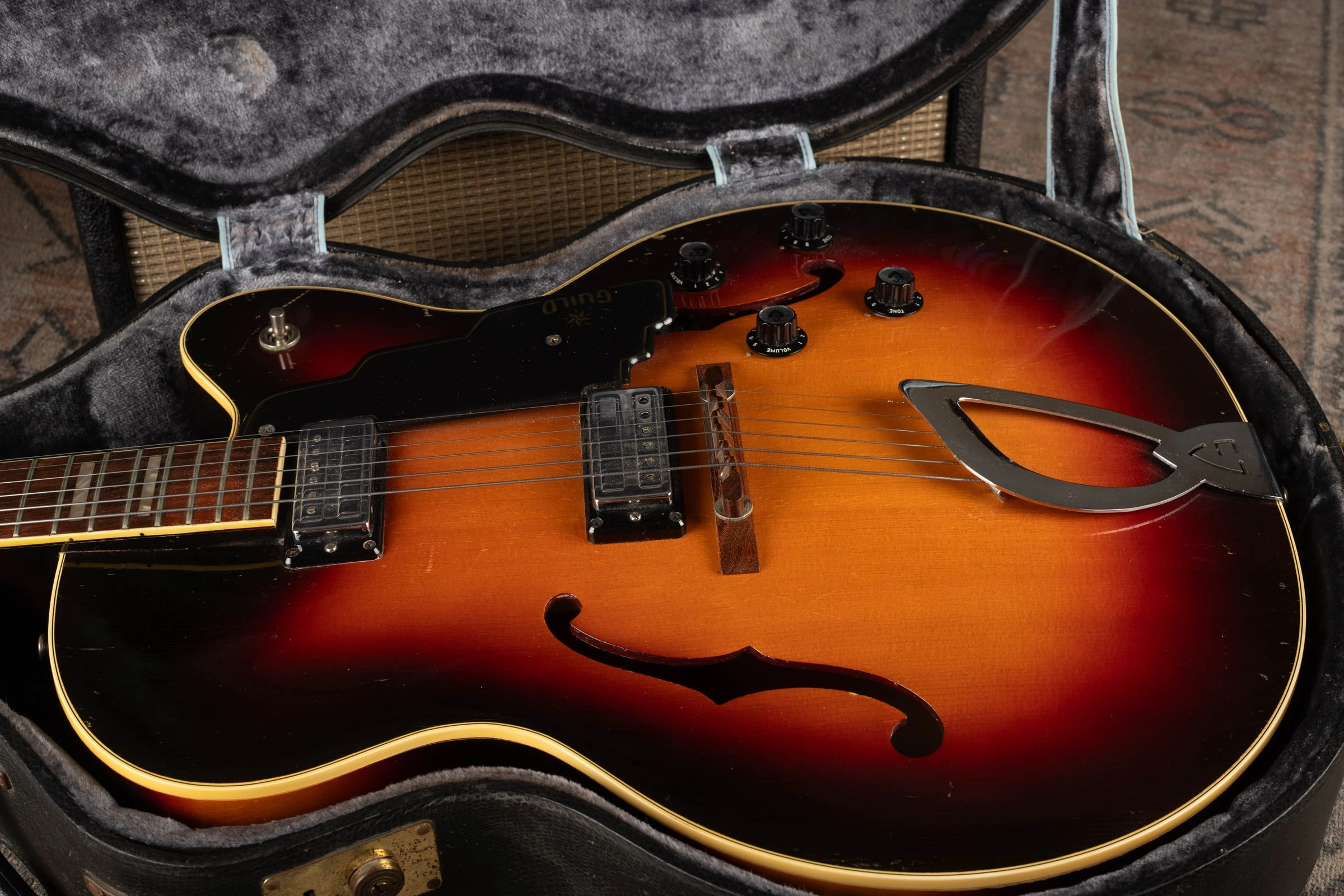
Starfire is a family name. A roman numeral, bass designation or later suffix can change the model you are comparing. Write down the complete name and inspect whether the guitar has one or two cutaways, its body depth and its pickup and control arrangement.
The photographed Starfire III has a single cutaway, two pickups and a vibrato. These features help describe the instrument, but a natural-looking finish doesn't prove a factory natural finish. Refinishing and replacement hardware need separate evidence, such as a repair record, old photographs or an inspection.
Current Starfire models revisit earlier designs. Guild’s manufacturer press material describes later Newark St. versions with modern changes. Use the reissue comparison before treating the word Starfire as evidence of 1960s production.
Artist Award And Larger Archtops
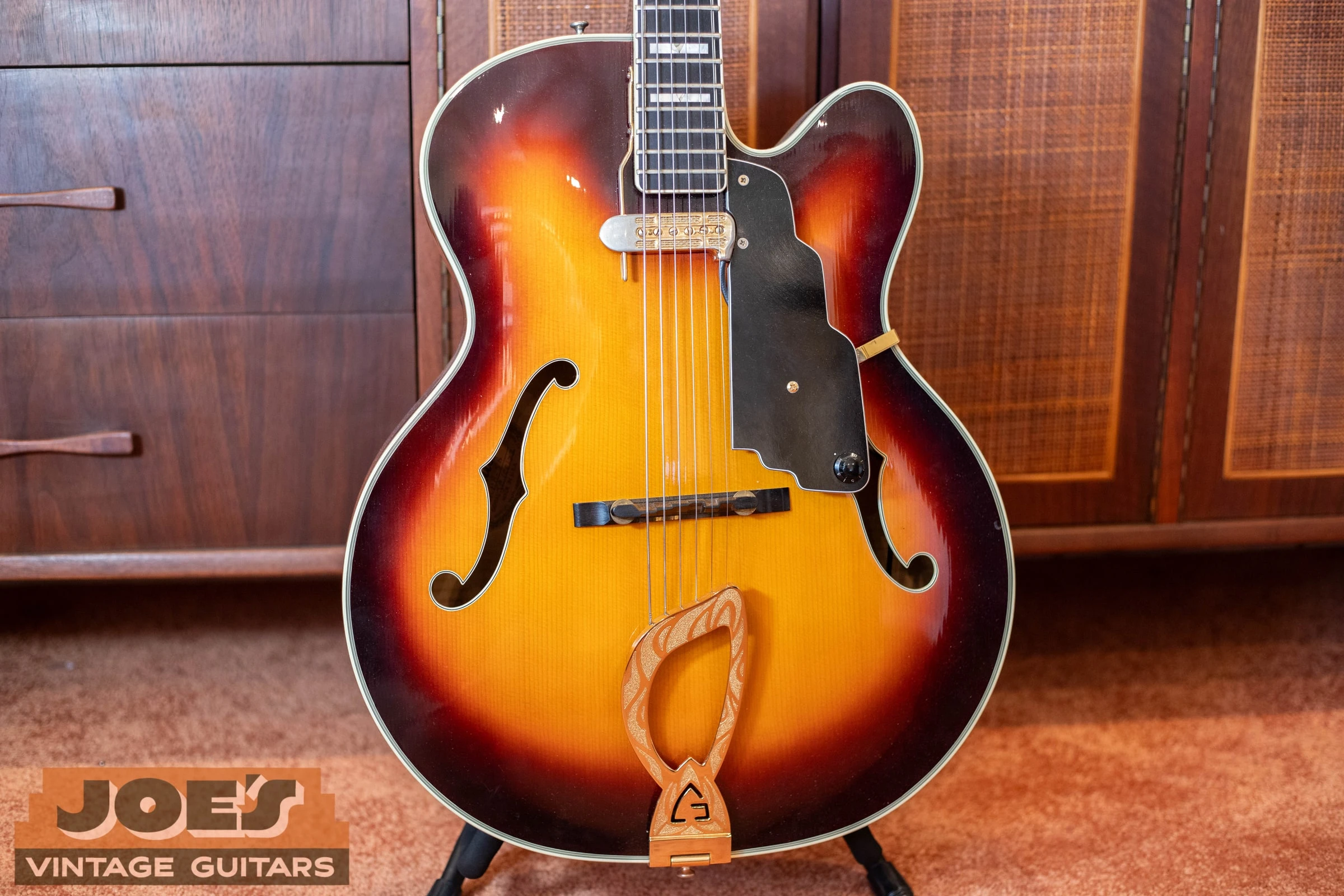
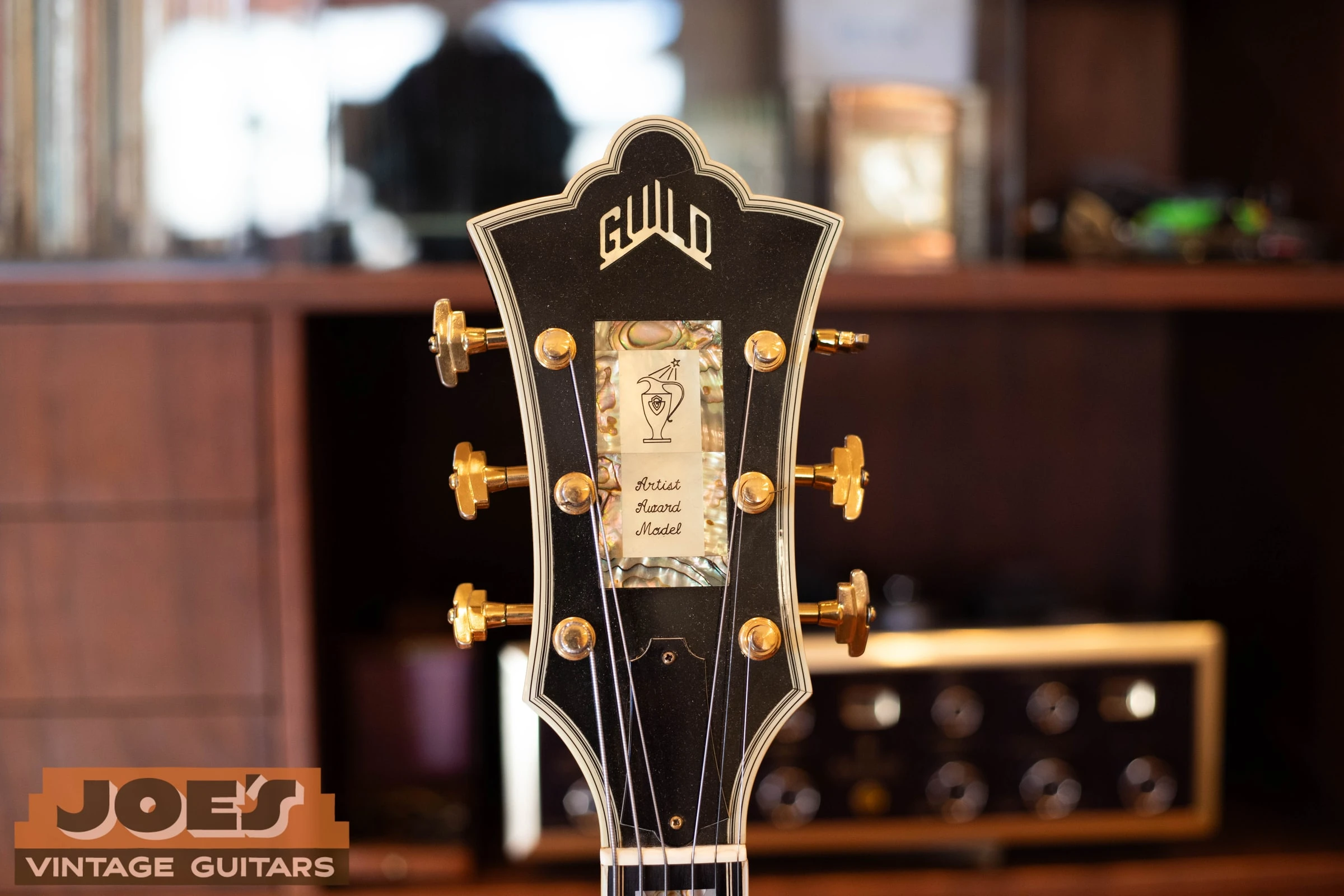
The Artist Award example has a floating pickup near the neck, an ornate headstock and a sunburst archtop body. A floating pickup is mounted differently from pickups set through the top. That distinction matters when comparing an instrument with a model specification or assessing later modifications.
Its JA100123 headstock number belongs to the Artist Award annual-endpoint records. The worked chart example explains the 1984 and 1985 comparison. Read every letter and zero; JA100123 and a shorter AA-prefix number belong to different portions of the records.
Photograph the pickup attachment, pickguard, bridge base, tailpiece and top beneath the strings. Those areas can document equipment changes without removing parts. For a value opinion, include any history of a refret, neck work or top repair.
Thunderbird And Bluesbird Features
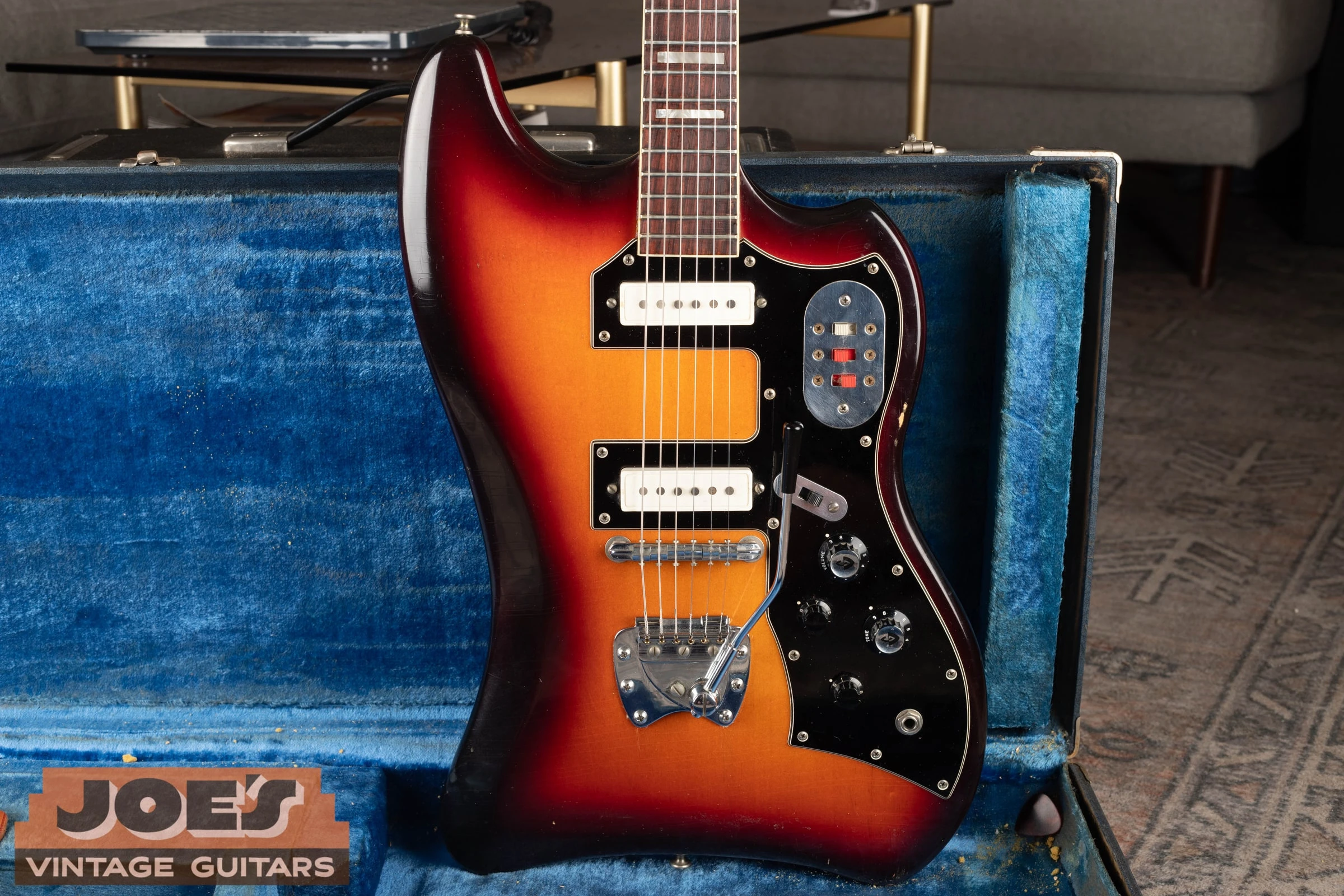
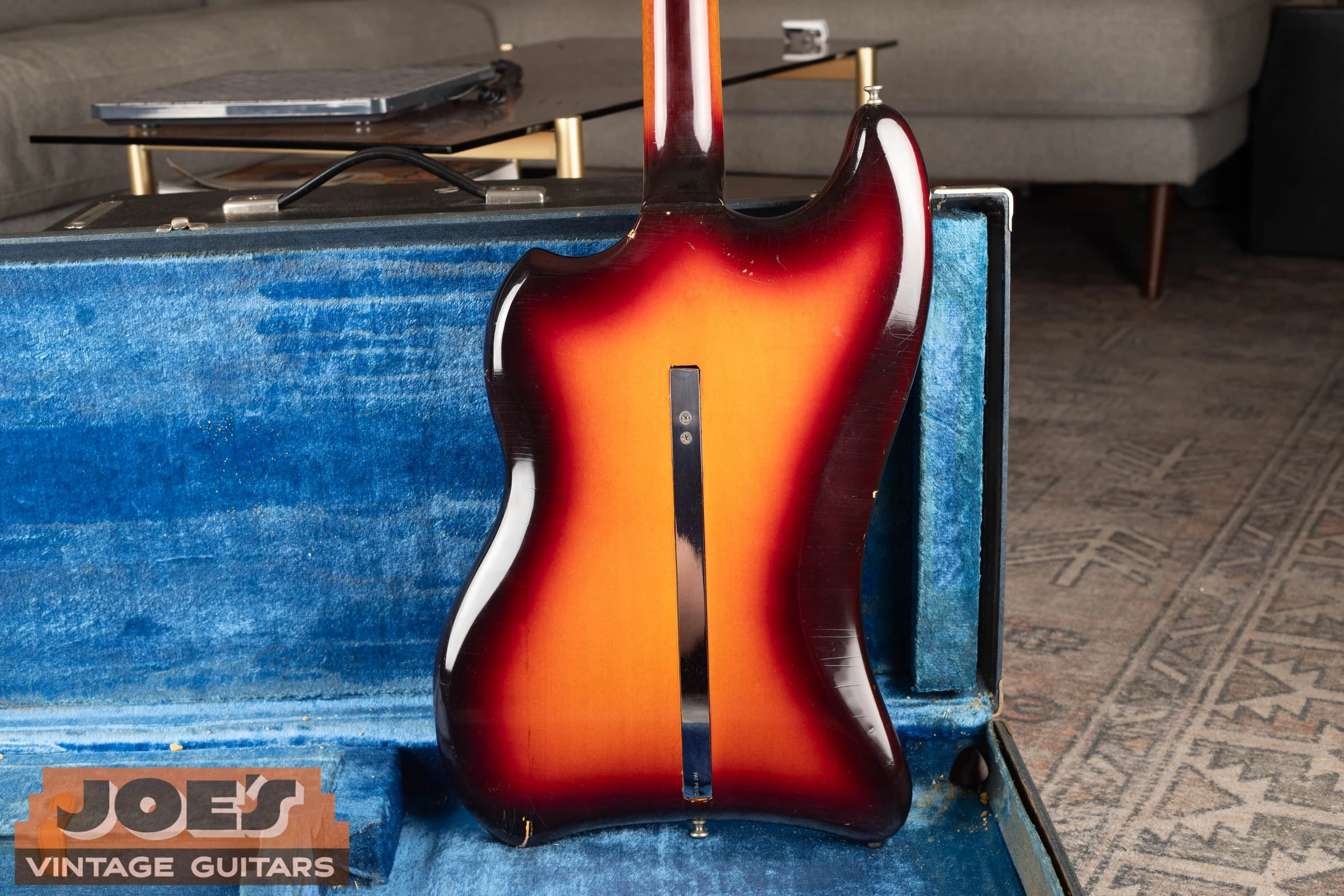
The Thunderbird has a distinctive offset body, a crowded control area and unusual hardware. The back view shows the built-in support mechanism on this example. Photograph those features directly rather than relying on a name attached to a body silhouette.
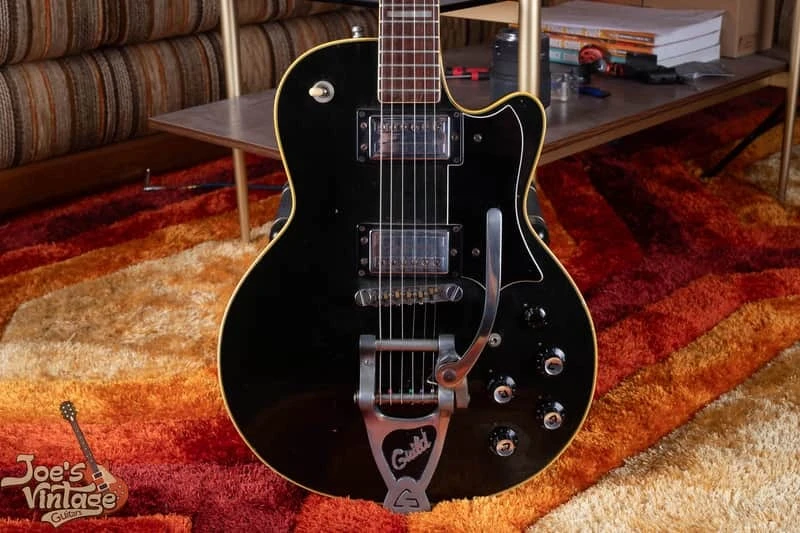
A Bluesbird can also carry changed hardware. Joe’s 1970s black Bluesbird listing explicitly describes an added Bigsby and visible old bridge holes. That is a useful reminder that a branded vibrato can be a later installation on a vintage guitar.
Use the bridge and vibrato guide to document the installation. If you’re preparing to sell a vintage Guild, list known changes with the photographs so the date and originality can be assessed separately.
Sources And Further Reading
- Guild’s Serial Number Records
Compare the manufacturer’s published ranges, annual endpoints and dating notes.
- Guild’s Reissue And Product Announcements
Compare later Starfire and other revived designs with their historical references.
- Joe’s Modified Bluesbird Example
Read the disclosed Bigsby addition and visible mounting evidence.
Get Help Identifying Your Guild
Send the serial, a full front and back view, and close-ups of the feature you want checked. Include any known repairs or replacement parts.
Get A Free Guild AppraisalReturn to the Guild serial lookup and dating library to compare the rest of the instrument.