

Guild Identification Guide
Guild Pickup And Hardware Dating Guide
Hardware can support a Guild identification, but it can also have been replaced. Describe the installed parts before deciding what they prove. The charts below name the pickups and hardware, with typical eras and model examples.
Back To The Guild Serial LookupGuild Pickup Names, Eras And Model Examples
Franz single coils, DeArmond Dynasonics, compact Guild Anti-Hum pickups and larger HB-1 humbuckers belong to different parts of Guild history. Start by identifying that family, then compare the particular model with its serial-number record. A pickup can narrow the comparison without supplying an exact build year.
The eras below describe documented examples and common applications. They aren’t first-and-last serial cutoffs. Models changed at different times, and special orders, leftover parts and later repairs can produce exceptions.
On a small screen, scroll the chart sideways to compare all columns.
| Part Name | Typical Era Or Dated Example | Guild Model Examples | What To Look For |
|---|---|---|---|
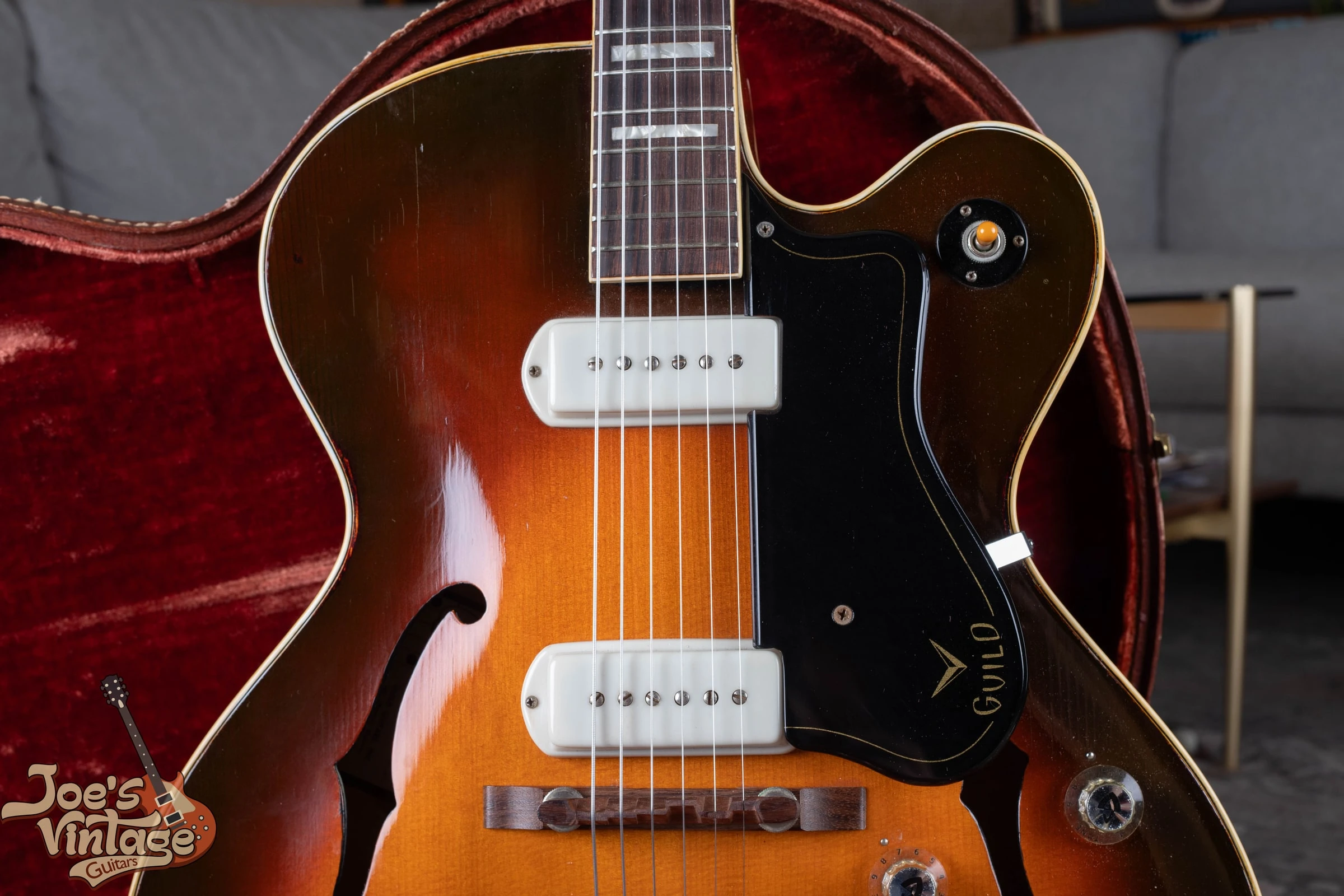
| Franz Single Coil | 1950s to early 1960s; some models retained them longer. | X-50, X-150 and early X-175 archtops; early M-75 Aristocrat. | Broad plastic cover with a central row of adjustable pole screws. Joe’s early X-175 shows the white version. Compare the documented 1957 X-50, 1959 M-75 and 1961 X-150. A similar outline doesn’t make every example a Gibson P-90. |
| DeArmond Dynasonic Single Coil | Early 1960s; documented on 1961 and 1962 Starfire III guitars. | Early Starfire III; compare the exact Starfire version before extending the date range. | Metal surround, contrasting face and six large adjustable magnetic poles. The 1962 Starfire III inspection identifies this type. It differs from the broad Franz cover and from Guild’s later humbuckers. |
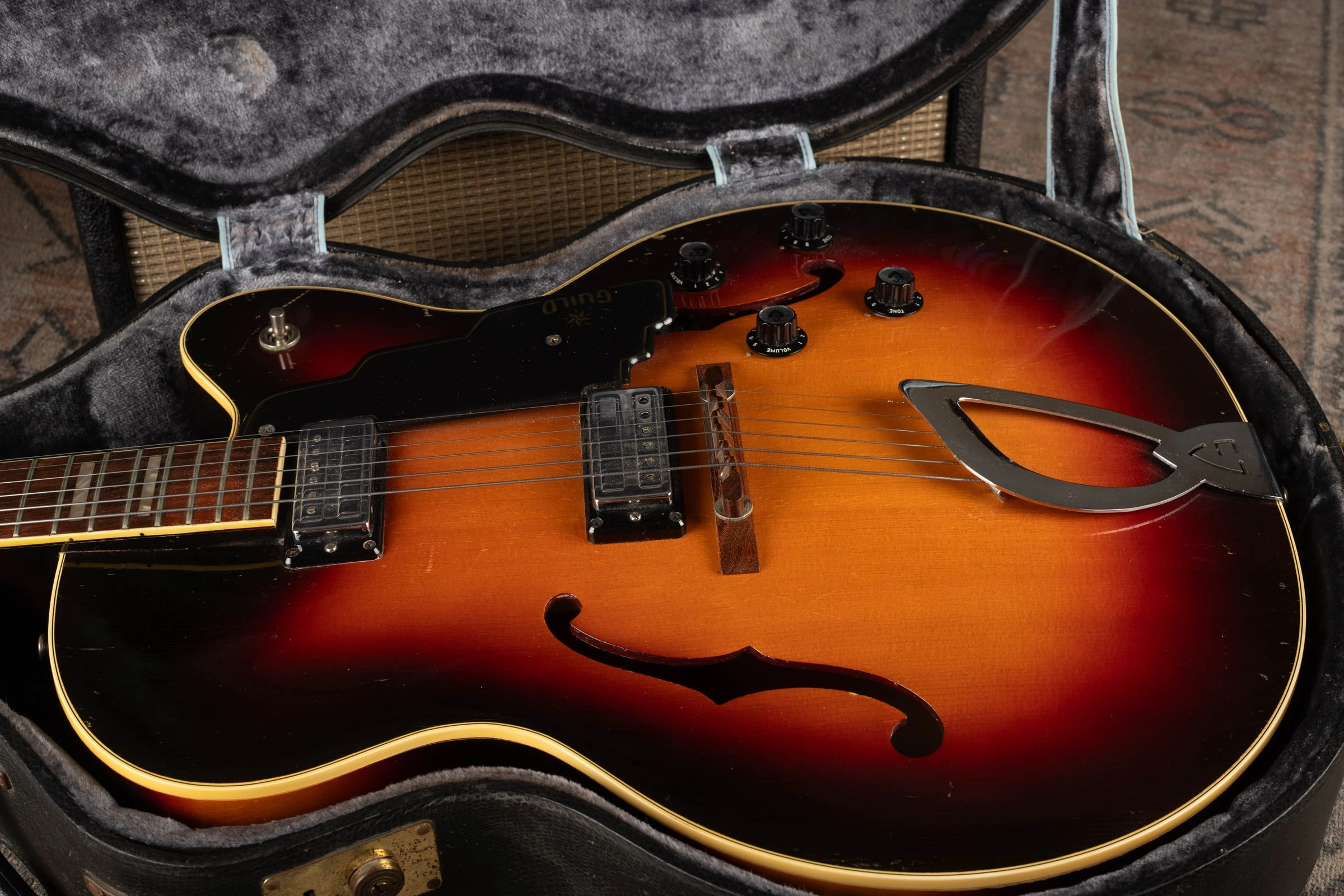
| Guild Anti-Hum Compact Humbucker / Little Bucker Family | 1960s; documented in Guild’s 1966 catalog. | Starfire, X-175 and CE-100D examples in the period catalog. | Compact metal-covered humbucker, smaller than the later HB-1. Compare Guild’s 1966 Anti-Hum pickup illustration with the later X-175 photo below. The later LB-1 Little Bucker revives this family; that modern product name alone doesn’t establish a vintage date. |
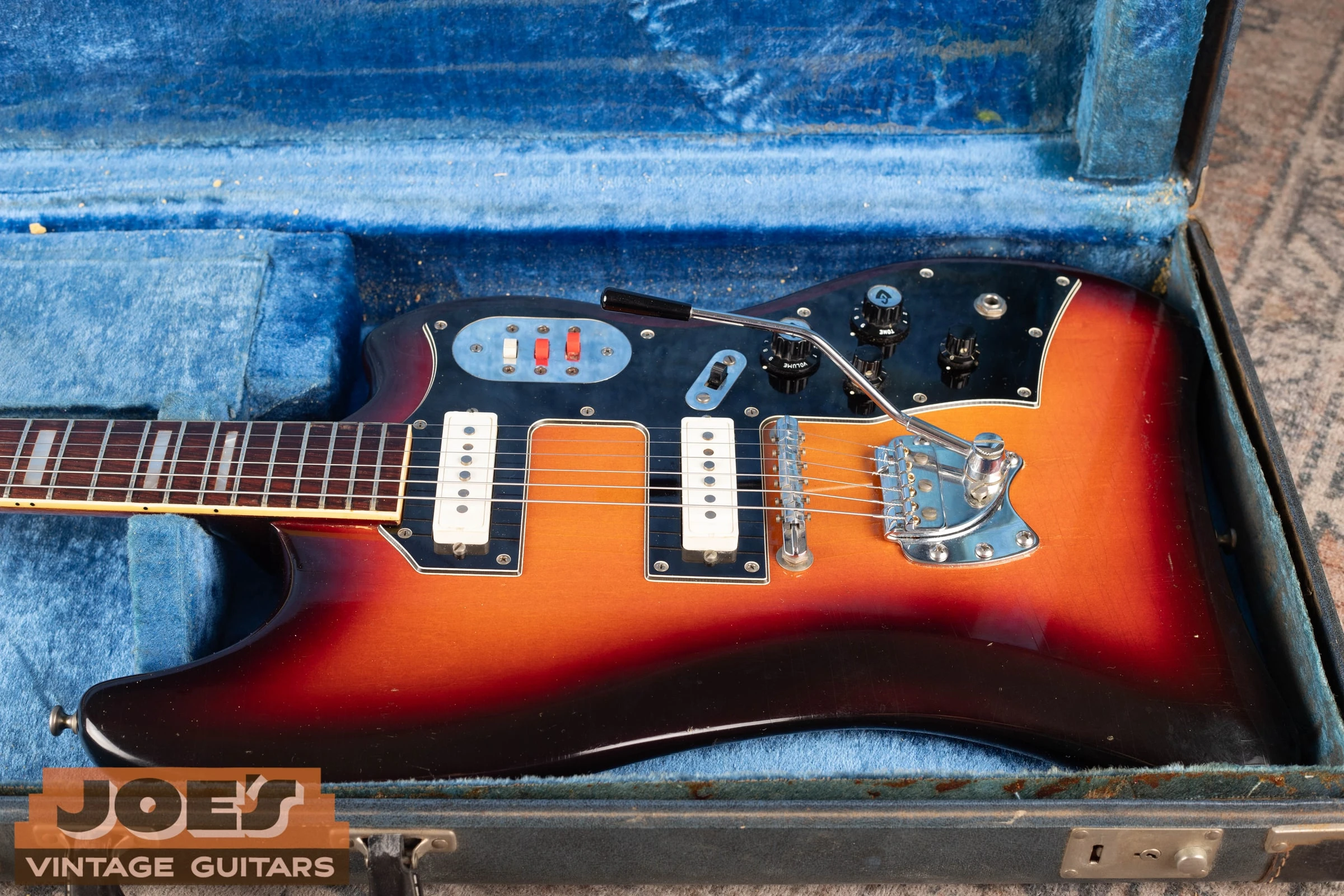
| Guild Narrow “Mickey Mouse” Single Coil | Mid to late 1960s; the T-100D change is documented around 1965. | S-200 Thunderbird and T-100D Slim Jim examples. | Narrow face with six visible poles and projecting mounting ends. Joe’s Thunderbird has the white-covered type. Pickup-component documentation distinguishes it from DeArmond products. The T-100D history separates the earlier adjustable-pole design from this later type. “Frequency tested” was also marketing wording, not a dependable pickup model name. |
| Guild HB-1 Humbucker | Around 1970 onward, with continued use on later Westerly instruments. | X-175, X-500, Starfire IV and S-100; also the S-300 in the 1978 catalog. | Larger metal-covered Guild humbucker with adjustable pole screws. Compare the X-175 transition and a 1976 X-500. Its dimensions and mounting arrangement matter when distinguishing it from the earlier compact pickup or a replacement. |
| DiMarzio PAF And Super Distortion | Late 1970s factory option, documented in the 1978 catalog and 1979 price list. | S-300D and ash-body S-300AD. | PAF at the neck and Super Distortion at the bridge. The model suffix matters: the ordinary S-300 used Guild HB-1s. The S-300AD inspection and period price-list entries document this pairing. A DiMarzio isn’t automatically an aftermarket change. |
| Hagstrom Bi-Sonic Bass Single Coil | 1960s Starfire bass production; compare individual later examples. | Starfire Bass I and II. | Large rectangular assembly with four prominent magnetic poles and separate adjustment screws. A documented 1968 Starfire Bass I shows the pickup and its Hagstrom bridge. Modern Guild BS-1 BiSonic pickups recreate this family and must be distinguished from the originals. |
| DeArmond 1000 / 1100 Floating Pickup | Artist Award chronology: approximately 1961 to 1966 for the 1000; 1967 to 1984 for the 1100. | Artist Award archtops. | Suspended near the fingerboard end rather than installed in a routed top. Artist Award research distinguishes these from the later floating humbucker used in roughly 1985 to 1999 and the Benedetto version around 2000 to 2002. Check the pickup’s construction and attachment before assigning it to one of these periods. |
For a useful comparison, an early X-175 with Franz pickups belongs beside other early X-175s. A 1970s X-175 with HB-1s belongs beside that later specification. Neither should be dated by a modern X-175 reissue photograph. The archtop identification guide adds body, control and label details.
Compare Pickup Faces And Mounting
Start with a straight-on photograph of each pickup. Record the cover shape, number of visible pole pieces, mounting screws and surround. The earlier X-175 shows broad white Franz single coils. The later example has compact Guild Anti-Hum humbuckers, consistent with the 1960s specification. Compare their width, pole layout and mounting arrangement before grouping them with the larger HB-1.
Don't identify a pickup's internals solely from its cover. Covers and complete assemblies can be replaced, and later reproductions may imitate an older appearance. If a repairer has already removed a pickup, clear photographs of its underside and wiring can add evidence. There is no need to dismantle a fragile guitar simply to complete a photo checklist.
Compare the installed pair with the exact model and period in the electric identification guide. A serial dates the instrument's record; it doesn't prove that every part was installed at the factory.
LB-1, HB-2 And Modern Pickup Reissues
A pickup name can survive long after the original production period. Guild’s later LB-1 recreates the compact Little Bucker design. Modern Franz P-90 versions appear on instruments such as the T-50 Slim, while later Starfire Custom guitars use DeArmond Dynasonic single coils. Those specifications describe later guitars even though the designs have older roots.
HB-1 and HB-2 also need separating. Guild’s Kim Thayil Polara uses HB-1 pickups in a guitar inspired by his 1978 S-100. The Surfliner Deluxe pairs an HB-2 bridge humbucker with DeArmond Aerosonic single coils; Guild describes the HB-2 as a standard-size interpretation of its earlier humbucker sound. An Aerosonic isn’t the same pickup as a vintage Dynasonic.
Record the full model name, country marking and serial before assigning a date from any of these names. The Newark St. and reissue guide explains how revived model names fit the later production lines.
Controls And Potentiometer Codes
The Thunderbird control area includes more switches than a typical two-pickup archtop. Photograph the entire arrangement, including the guard and labels, before naming each control. A missing switch, changed knob or extra hole can affect the originality description even if the circuit still works.
Stove Knobs And Guild Logo Knobs
The tall black knobs often called stove knobs occur on late-1950s X-50, X-150 and X-175 examples, as recorded in the X-50 inspection. Later black skirted knobs with metal Guild-logo tops appear on the Thunderbird photographed here and in the 1978 electric catalog. These give a period comparison, but a knob is easily replaced and its logo doesn’t identify the guitar’s year.
Read The Pot Code Alongside The Harness
For a seven-digit EIA pot code, the first three digits identify the maker, such as 137 for CTS. The next two digits identify the year, and the last two the week of production. Six-digit codes can leave the decade ambiguous. The pot-code guide explains the shared component-dating method with additional examples.
A pot code dates that component, not the completed Guild. Parts may have sat in inventory before assembly or been installed during a later repair. Read the code alongside solder work and the rest of the harness if a qualified repairer already has access. Don't pull a hollowbody harness through an f-hole just to chase an exact year.
Tuners And Headstock Details
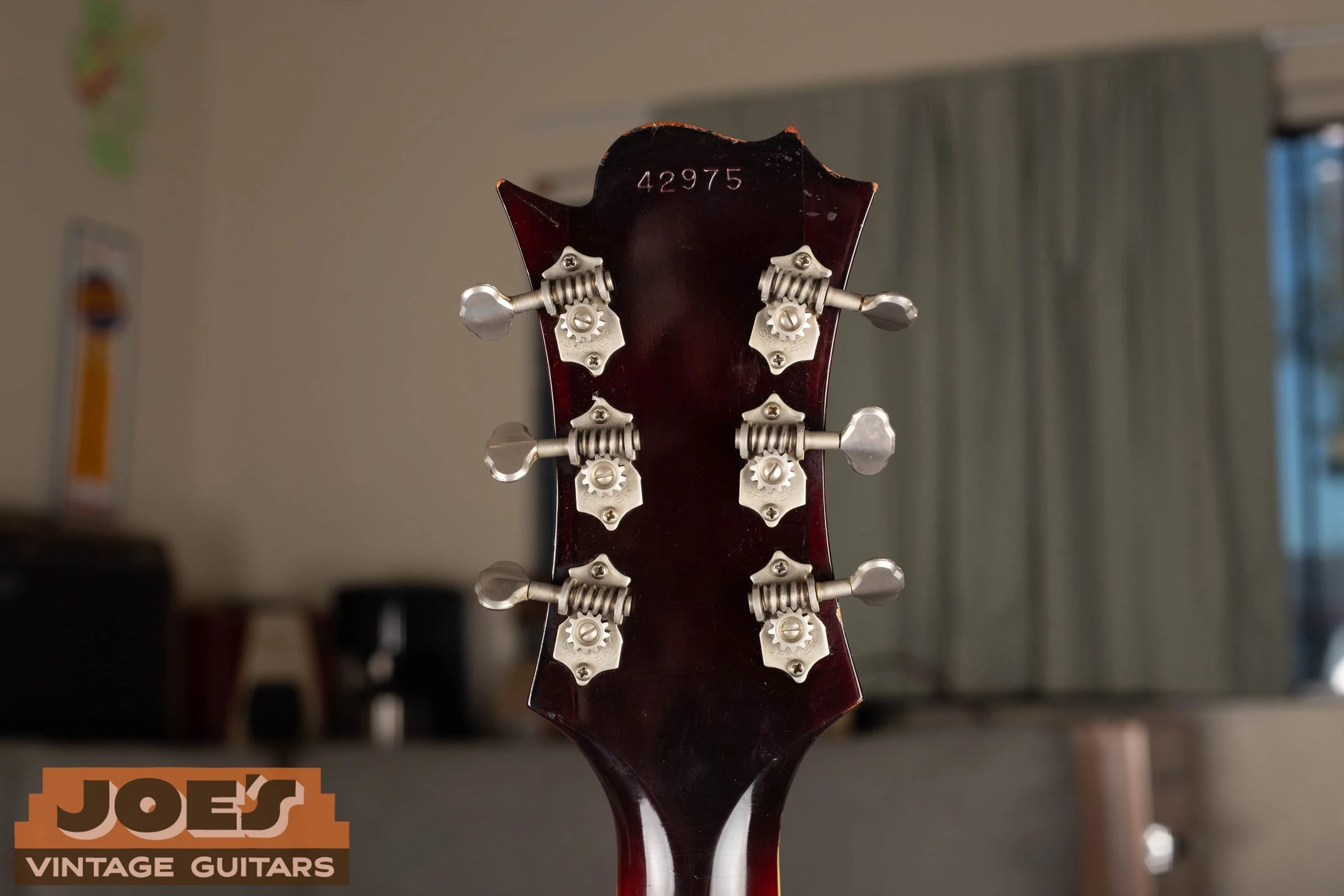
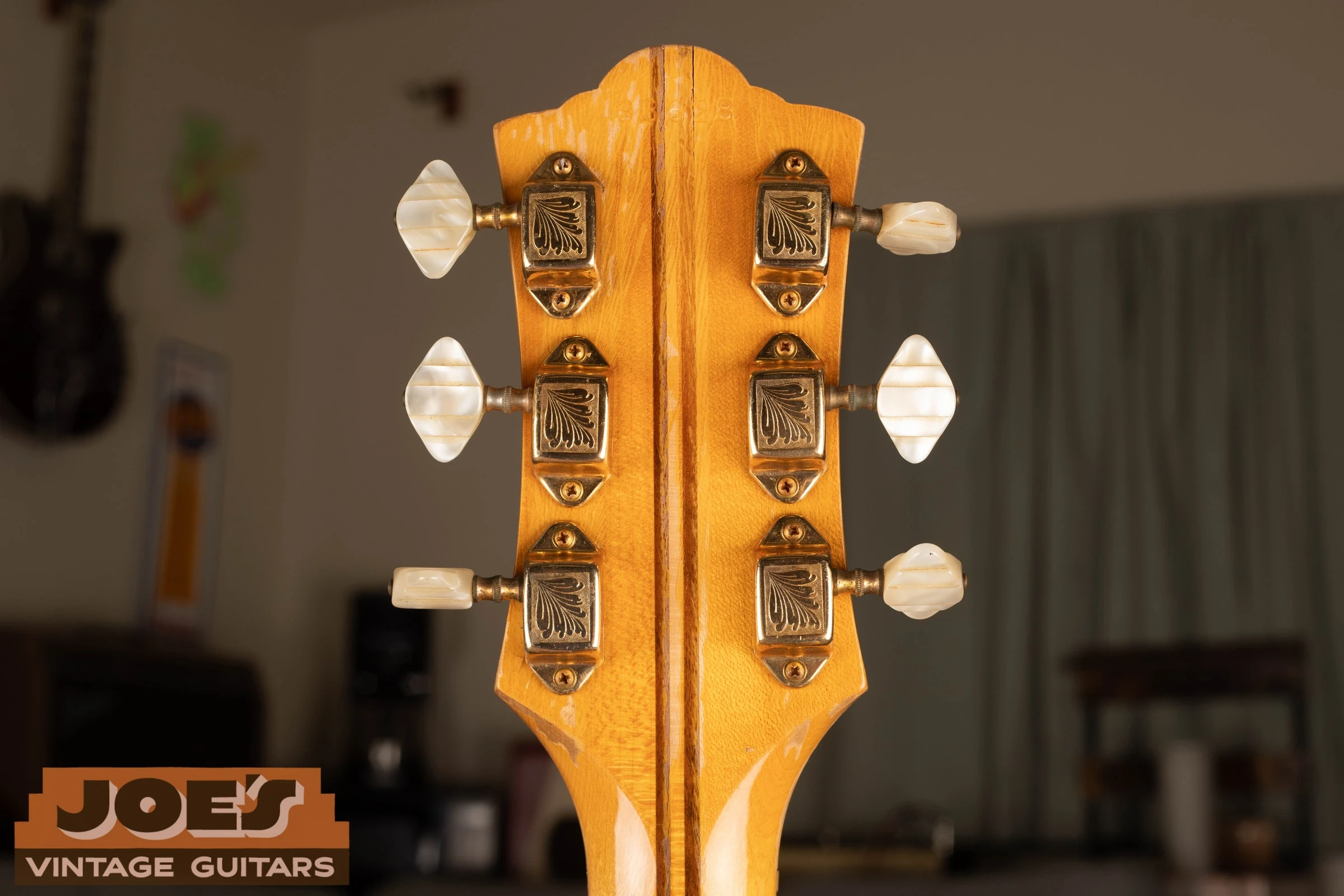
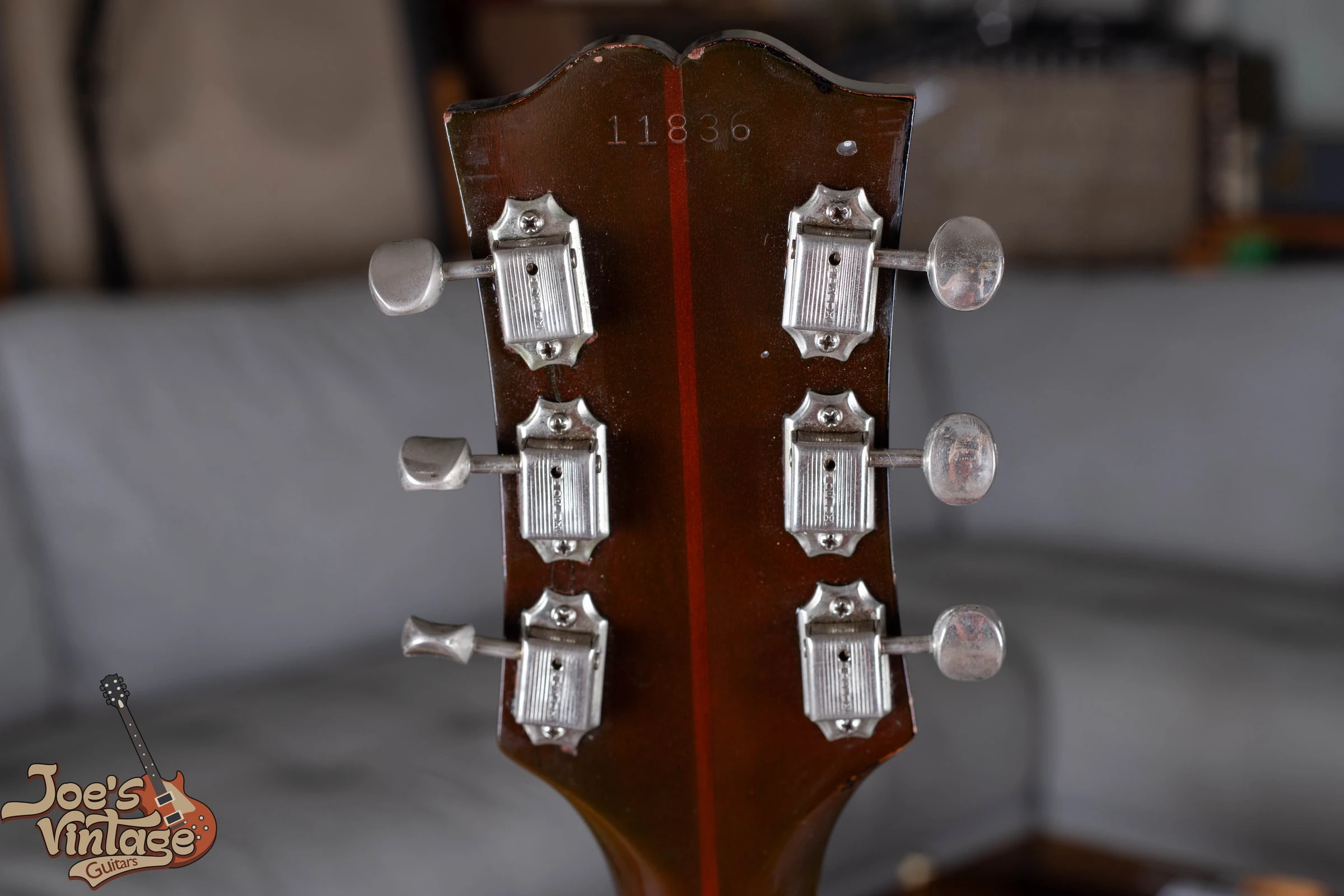
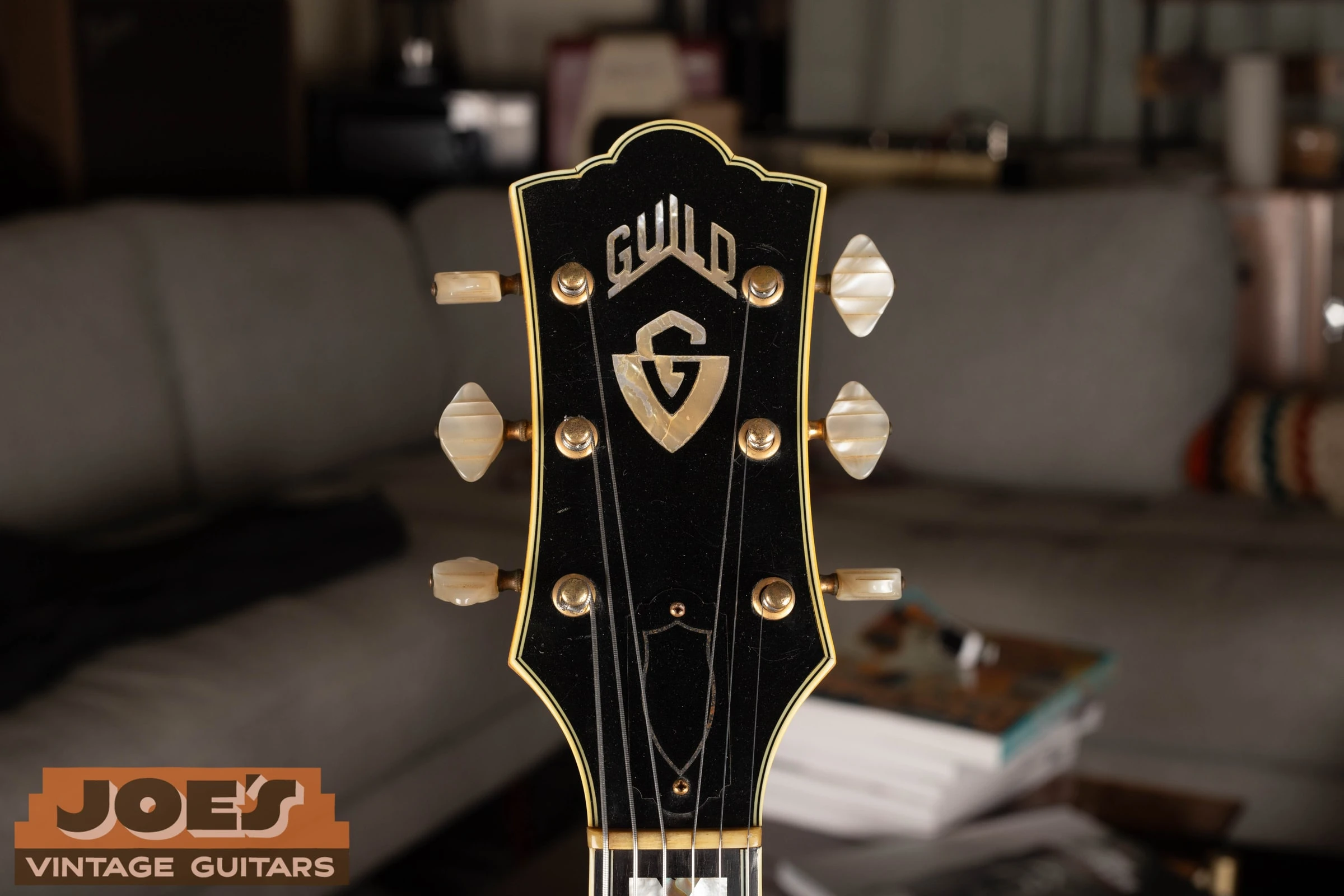
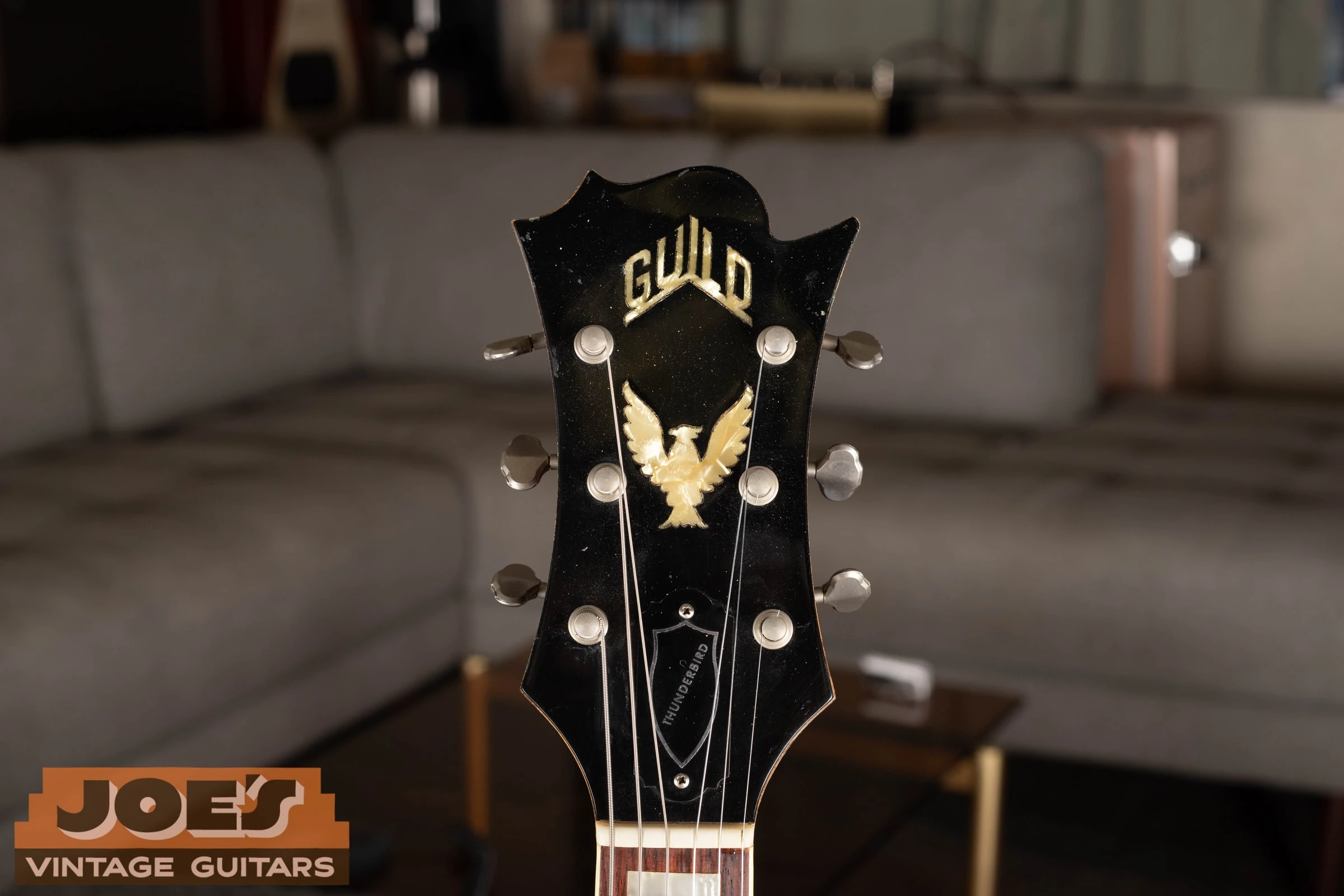
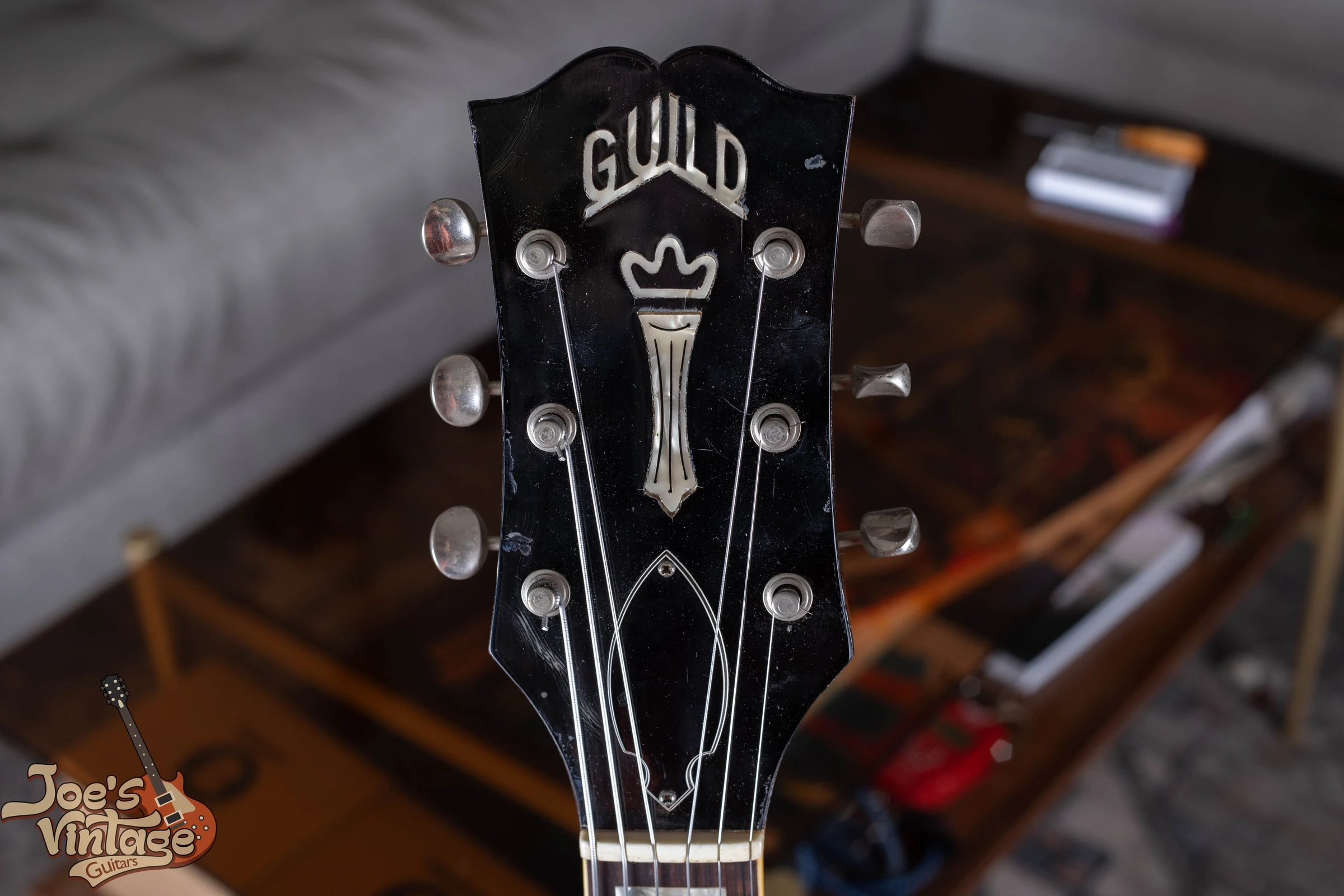
Photograph both faces of the headstock and the tuner backs. Look at the tuner housings, buttons, bushings and screw positions. Unused holes, outlines in the finish or mismatched screws can suggest a changed set, but they need a close inspection before a definite conclusion.
The natural X-500 example shows ornate covered Kolb tuners with pearloid buttons. The early X-175 uses a different arrangement. Their differences are useful for documenting the examples; they aren't a universal timeline that applies to every Guild model.
Logos and headstock emblems also vary by model and can recur on later instruments. Compare the shield, crown and Thunderbird bird designs with the serial and label, then check the later-production context where needed.
On a small screen, scroll the chart sideways to compare all columns.
| Part Name | Typical Era Or Dated Example | Guild Model Examples | What To Look For |
|---|---|---|---|
| Waverly Open-Gear | 1950s example. | 1957 X-50. | Exposed gear and worm rather than a sealed housing. The X-50 inspection identifies Waverly machines. Open gears alone do not identify the maker. |
| Grover Sta-Tite | Early 1960s examples; also offered on modern models. | 1961 X-150 and 1961 to 1962 Starfire III; later T-50 Slim. | Open-gear machines. Compare the vintage X-150 with the later T-50 specification: the same family name spans separate production periods. |
| Kolb Covered Tuners | 1960s examples, including an inspected 1960 X-500. | X-500 and some X-175 guitars. | The ornate covers and pearloid buttons in Joe’s X-500 photo are the Kolb pattern. Compare the German-made gold machines on this 1960 X-500. Inspect the mounting screws and footprint before calling a photographed set factory original. |
| Grover Rotomatic | 1960s into early 1970s on X-175; later exceptions exist. | X-175 and some Starfire IV guitars. | Enclosed gear housing. X-175 research records the transition to Schaller machines. Use the housing, maker mark and mounting pattern together rather than dating by button shape. |
| Schaller M6, Often Guild-Branded | Mid 1970s examples; approximately 1975 to 1981 on Starfire IV. | X-175, X-500 and Starfire IV. | Sealed machines, sometimes carrying Guild’s name. Compare a 1976 X-500 and the Starfire IV chronology. These are model-specific windows, not a whole-company changeover. |
| Gotoh And Schaller Mini | Early 1980s transitions. | Starfire IV and late original-run X-175. | Starfire IV research places Gotoh around 1981 and Schaller Mini around 1982 to 1986. X-175 changes differ, so don’t transfer those dates to every archtop. |
| Grover Imperial / Super Rotomatic | Artist Award example: Imperial before the 1989 change to Super Rotomatic. | Artist Award. | Compare the complete tuner with the model history. Artist Award documentation records the change. Buttons are replaceable, so a stepped or ornate button alone is insufficient. |
The 1976 acoustic catalog lists Grover, Schaller and Guild machines across the flat-top range. That overlap is why a brand name alone can’t separate all 1970s acoustics into exact years. Match the model specification and screw pattern, including any traces of a previous set.
Bridges, Tailpieces And Added Bigsbys
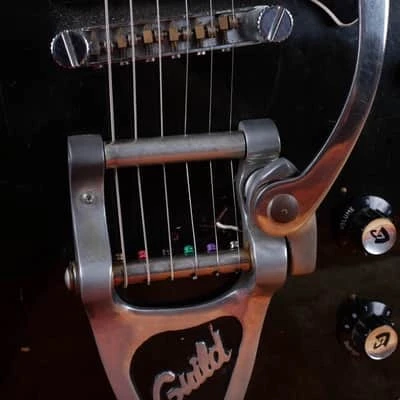
Look at how the tailpiece attaches, the position of the bridge and any unused mounting holes. A Guild-branded vibrato can be original equipment on one example and a later addition on another. The brand on the metal is not a record of its installation date.
Joe’s Bluesbird listing states that its Bigsby was added and that the old bridge holes and ground wire remain visible. Keep that disclosure with the photograph. A later part doesn't change the guitar’s build date, but it does change an “all original” description.
On an acoustic, inspect the bridge outline and surrounding finish for a changed footprint. On an archtop, a movable bridge base can shift without a permanent modification. Describe the mounting evidence before assuming that every unusual bridge position means the guitar was rebuilt.
On a small screen, scroll the chart sideways to compare all columns.
| Part Name | Typical Era Or Dated Example | Guild Model Examples | What To Look For |
|---|---|---|---|
| Guild Harp Tailpiece | 1950s and 1960s archtops; continued through later production. | X-150, X-175, X-500 and Artist Award. | Recognizable open harp outline. A 1961 X-150 has the chrome version; the 1978 catalog specifies an engraved gold harp for X-500 and Artist Award. Modern reproductions also exist. |
| Bigsby B-6 / Guild-Branded Bigsby B-2 | Early Starfire III examples around 1960 to 1962. | Starfire III; other Guild models require their own specification check. | Starfire III research documents the early B-6 and the switch to the Guild-branded assembly during 1961. Compare hinge, frame and bridge, rather than identifying the unit from the arm alone. |
| Hagstrom Tremar Vibrato And Adjustable Bridge | 1960s original Thunderbird/Polara family. | S-200 Thunderbird and early-body S-100 Polara. | Surface-mounted spring-and-lever vibrato with a separate adjustable metal bridge. Compare Joe’s photo with this inspected 1964 S-200 and its Hagstrom Tremar. It differs from a Bigsby and from later S-100 stop-tail hardware. |
| Guild No. 10 Adjusto-Matic Bridge | Documented in the 1978 electric catalog. | S-300, S-300D and S-60 family. | Six individually adjustable saddles. The S-300 specification names the bridge and its string-spacing, height and intonation adjustments. Preserve that identification rather than calling every metal Guild bridge a generic Tune-o-matic. |
| Guild Solid-Body / Compensated Stop Tailpiece | 1970s solid bodies; later Polara versions repeat the idea. | S-100 Polara and S-300 family. | Fixed metal tailpiece behind a separate bridge, with an angled string layout. Compare the period S-300 with the later Kim Thayil Polara. A fixed tailpiece is distinct from a vibrato even when both carry Guild branding. |
| Floating Rosewood Or Ebony Archtop Bridge | Used across multiple decades. | Rosewood on X-175 and CE-100D; ebony on X-500 and Artist Award in 1978. | Wood base rests on the top, with height-adjustment wheels. The 1978 archtop specifications identify the woods. The saddle or entire bridge can be changed without dating the guitar’s body. |
A useful model-specific distinction appears in Starfire IV research: early-1970s examples used a Hagstrom bridge on a floating wood base, while later examples used a Muller bridge on body-mounted studs. The approximate change is around 1971. Check the base and mounting method as well as the saddle shape.
Barcus-Berry Hot-Dots And Later Acoustic Pickups
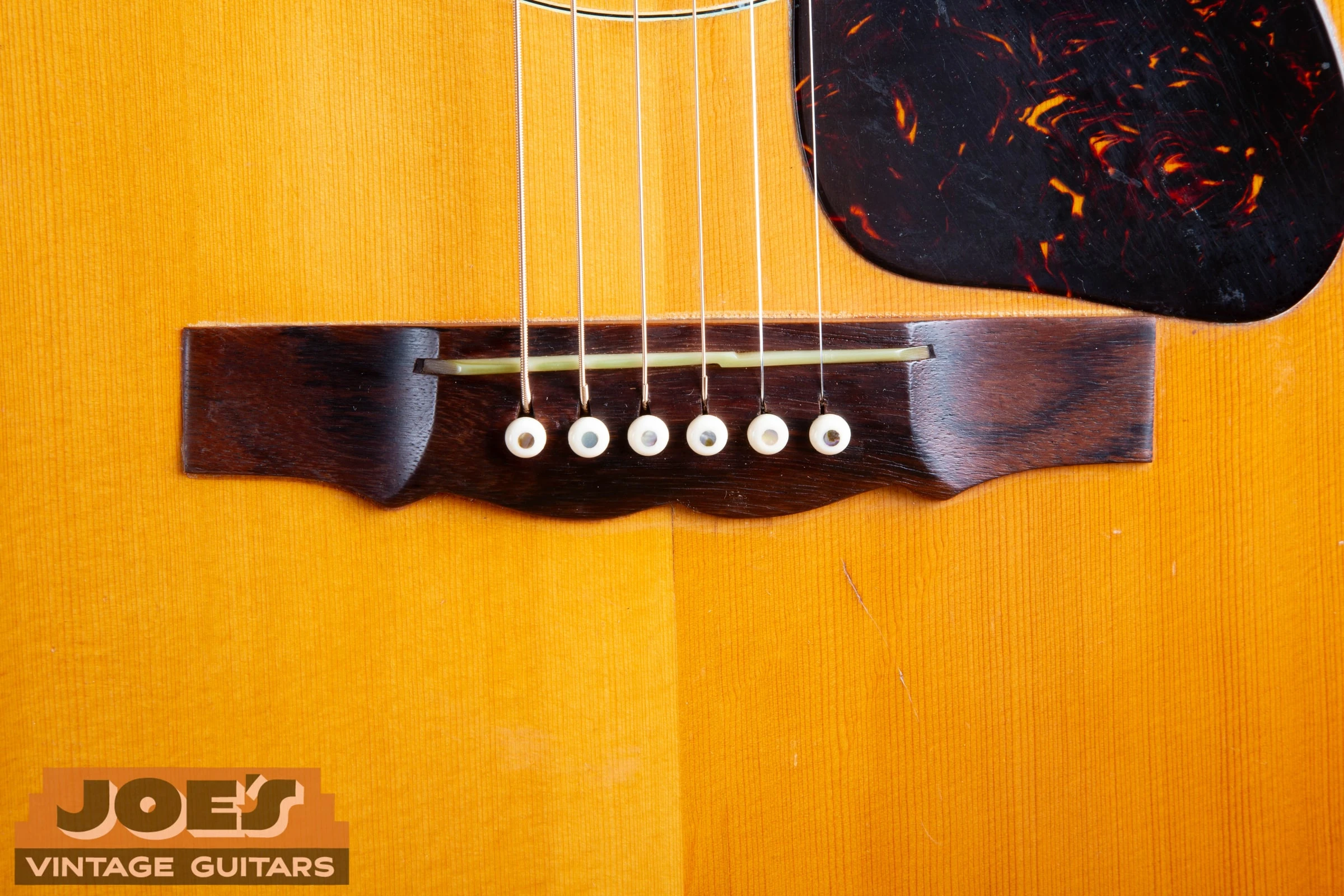
Guild’s 1976 acoustic catalog, page A-19, offered factory Barcus-Berry Hot-Dot transducers for flat-tops, 12-strings and classical guitars. The transducers sat inside the bridge, with a pearl dot visible on either side of the saddle. The installation included an endpin jack and external Hot-Dot preamp. That is a named period option worth checking on a 1970s acoustic; an output jack by itself does not identify it.
Later systems need their own model specifications. Guild lists a Fishman-designed GT-1 system for the modern M-240E Natural and a DeArmond Tone Boss magnetic soundhole pickup for the M-240E Troubadour. Neither system supplies a vintage build date merely because it is installed in an older guitar.
Photograph the bridge, jack and any visible pickup or preamp label, and include installation receipts when available. The acoustic identification guide covers the body and model evidence that should accompany the electronics.
Finish, Binding And Repair Evidence
Vintage Guilds used nitrocellulose lacquer, which often develops fine “weather checking” lines over time. Checking is useful condition information, but a later finish can also check. Its presence does not prove an untouched factory finish.
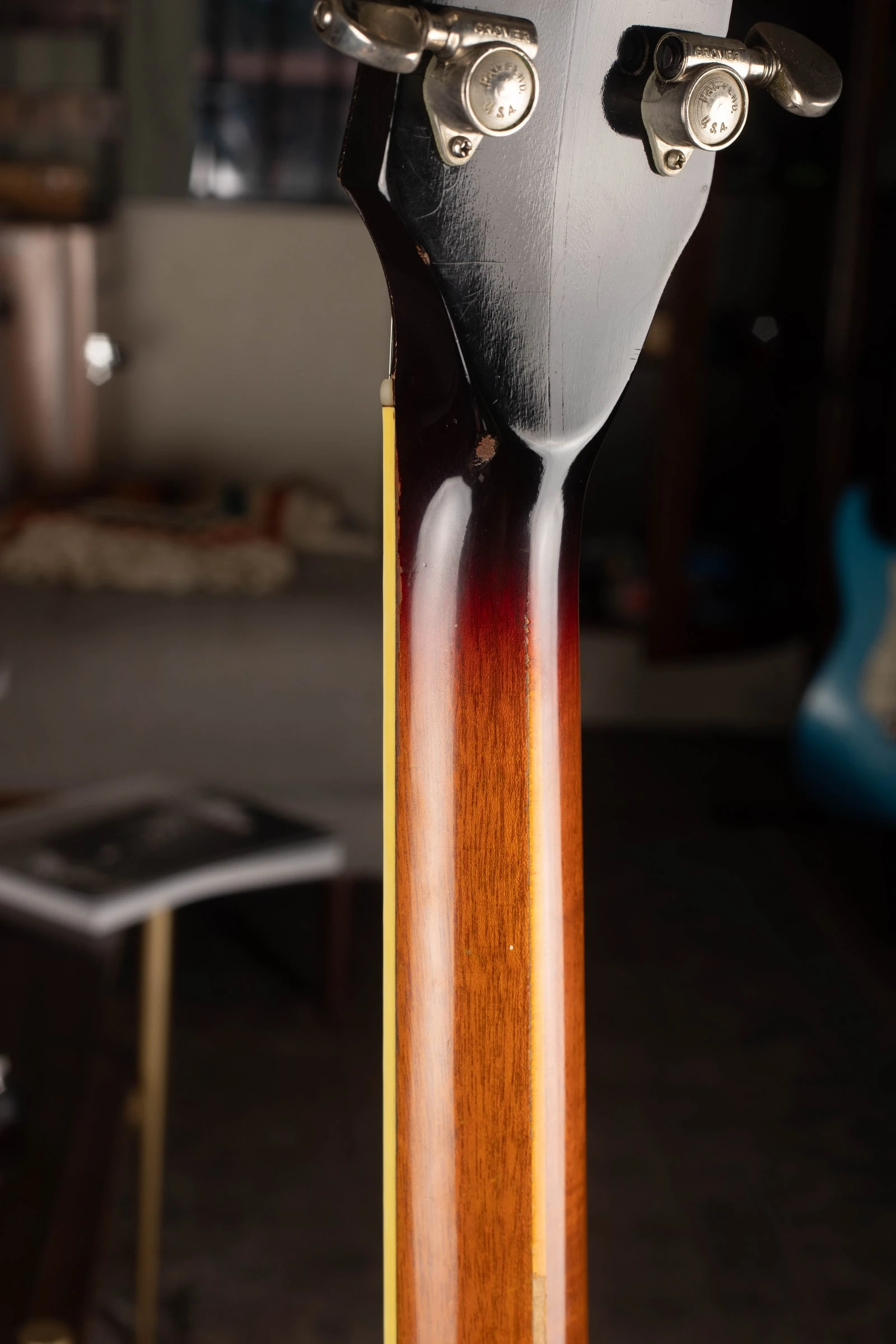
Binding can shrink, separate or be repaired. A small gap needs a close photograph, not a conclusion that the guitar is either original or beyond repair. Compare the neck heel, headstock joints, body edges and any areas where the color or surface texture changes.
The later X-175 neck view records the laminations and finish around the heel. The early X-175 headstock records a different logo and tuner arrangement. Keep each instrument’s evidence together. For an appraisal, list known repairs and send full views as well as close-ups. The article on what a serial number cannot tell you explains why condition and originality need their own assessment.
Sources And Further Reading
- Guild’s 1978 Electric Catalog
Read the S-300 pickup options, named bridges and archtop hardware specifications.
- Guild’s 1976 Acoustic Catalog
See the factory Hot-Dot option and overlapping tuner suppliers.
- Starfire IV Feature Chronology
Compare model-specific pickup, tuner and bridge changes; dates are approximate.
- Guild’s Serial Number Records
Compare the manufacturer’s published ranges, annual endpoints and dating notes.
- Guild Electronics Manuals
Identify documented pickup and preamp systems on later acoustics.
- Joe’s Bluesbird With An Added Bigsby
Compare a disclosed hardware change with the visible installation.
Get Help Identifying Your Guild
Send the serial, a full front and back view, and close-ups of the feature you want checked. Include any known repairs or replacement parts.
Get A Free Guild AppraisalReturn to the Guild serial lookup and dating library to compare the rest of the instrument.