

Guild Identification Guide
Guild Labels And Serial Number Locations
Photograph the complete label and both sides of the headstock. The words around a serial can matter as much as the number.
Back To The Guild Serial LookupWhere To Find A Guild Serial Number
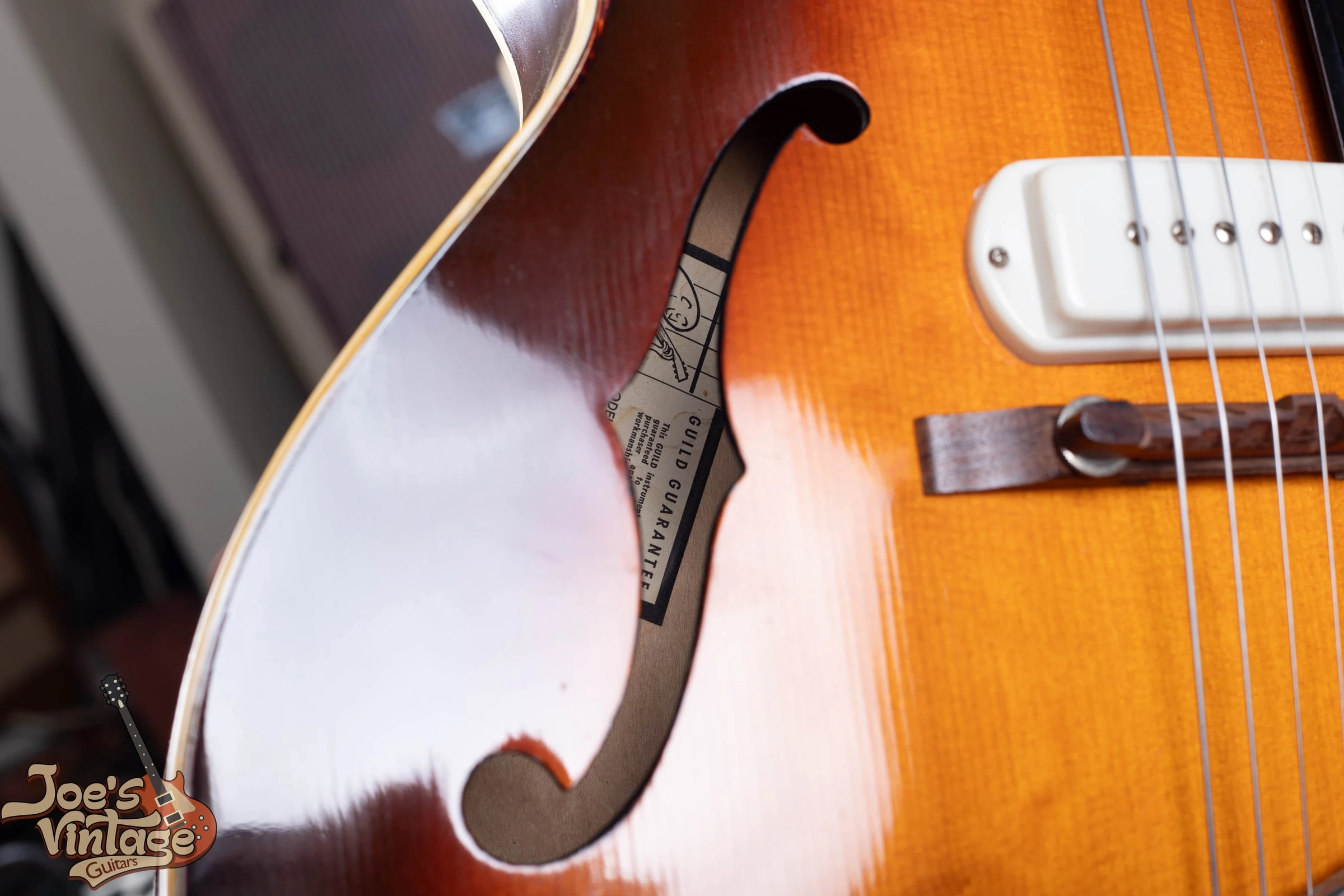
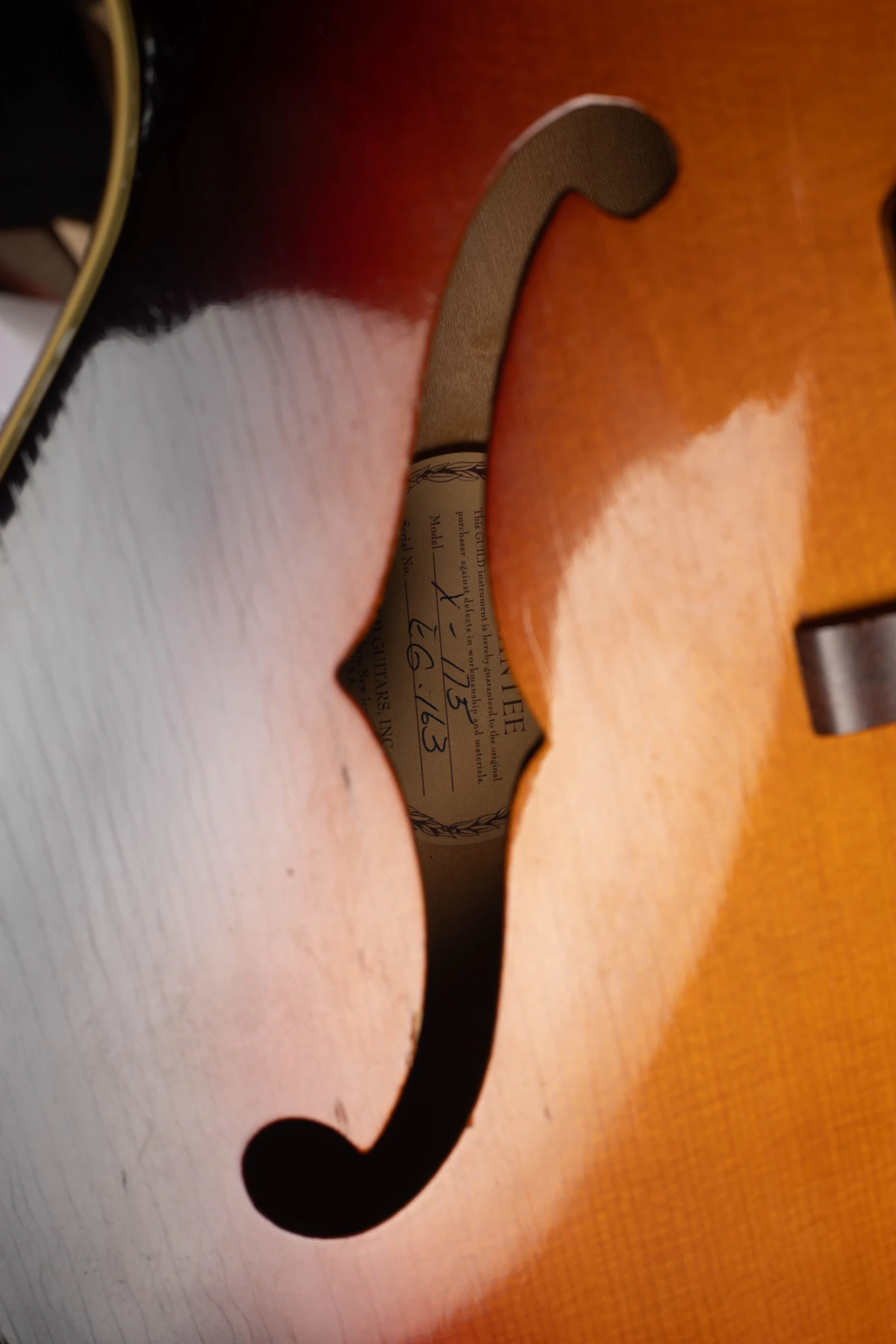
It depends on the era. Look on the back of the headstock, on a label inside the soundhole or body, or stamped on the neck block. Electric and acoustic models can differ, so check all three spots. An archtop label may be visible through an f-hole; an acoustic label is usually easier to photograph through the soundhole.
Start with the locations you can see without removing anything. Hold a small light outside the opening and change the angle until the model and serial lines are readable. Avoid putting adhesive, chalk or pencil on a stamp to darken it. If the label is loose, leave it in place and photograph its condition.
Use the Guild decoder after recording the full marking. Keep a typed transcription beside the photographs, including any uncertain character. A close-up of four digits without the model or prefix can send you to the wrong chart.
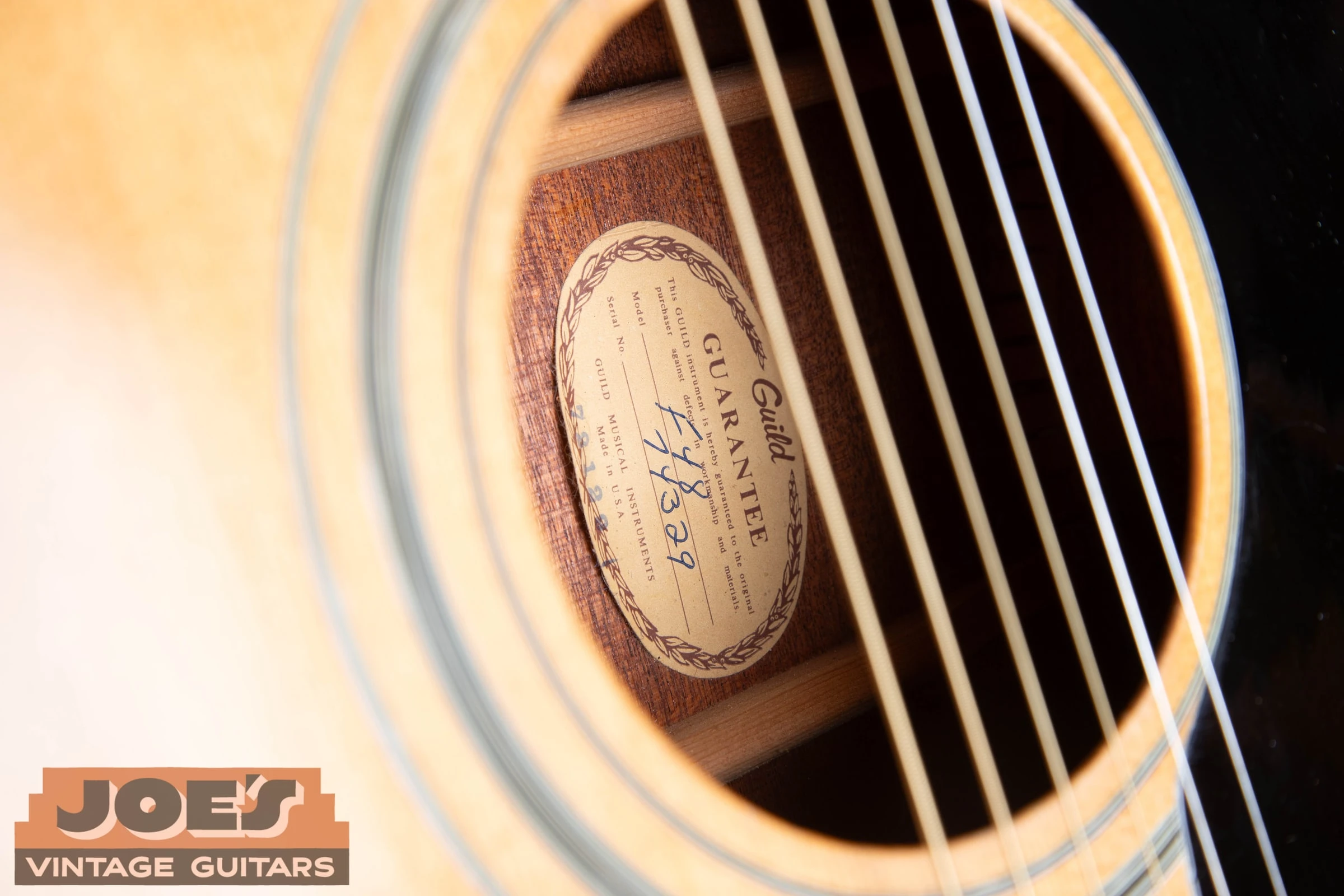
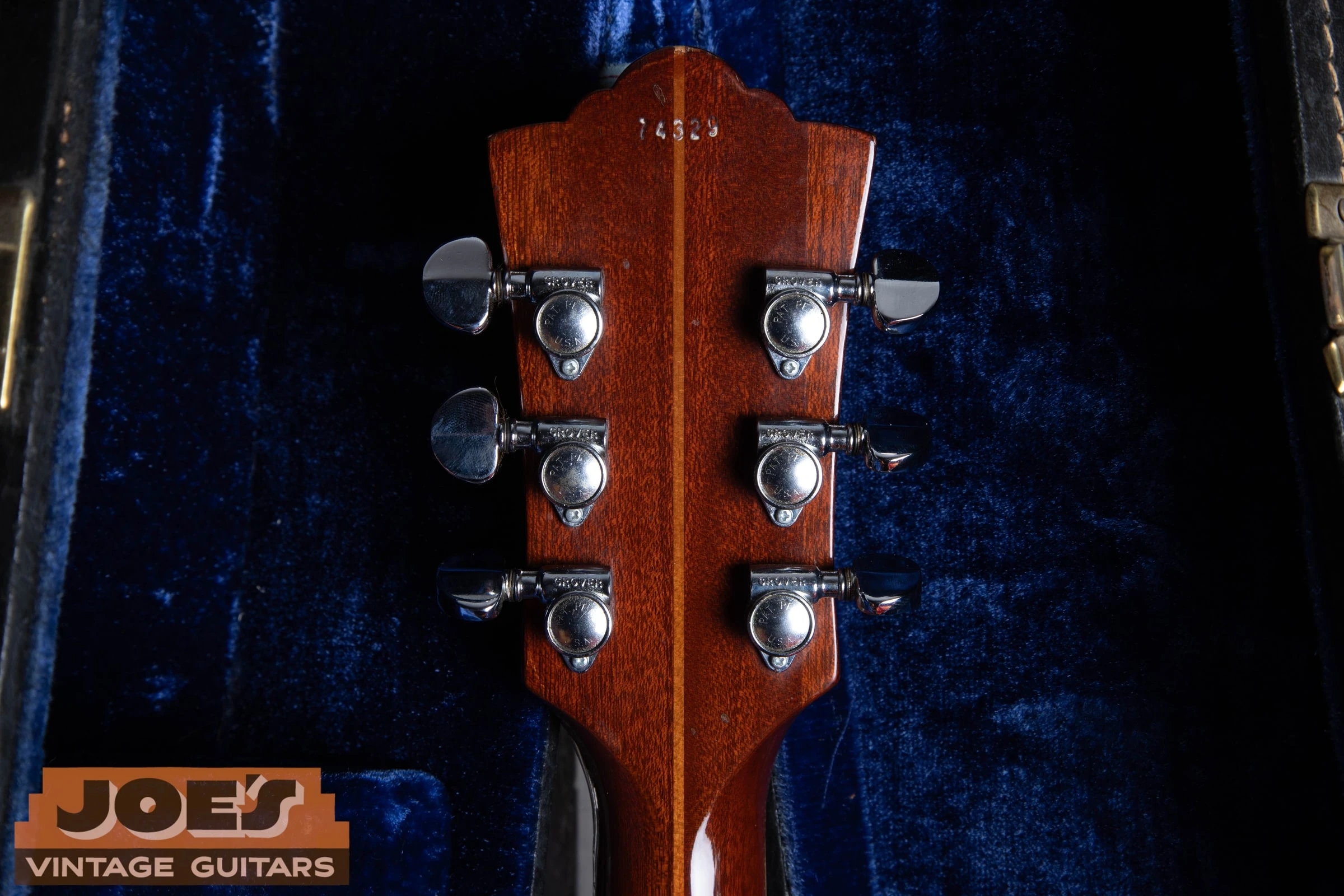
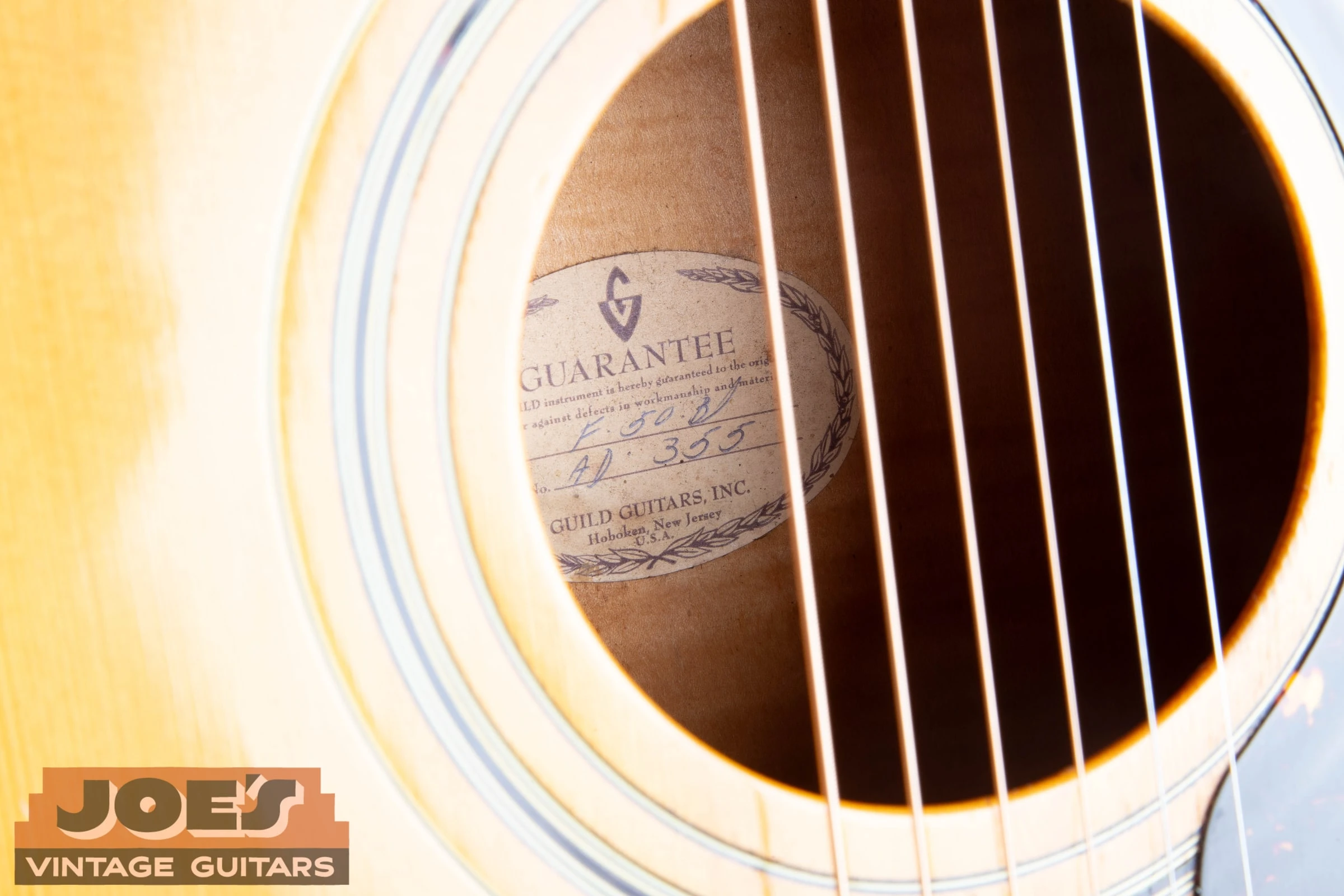
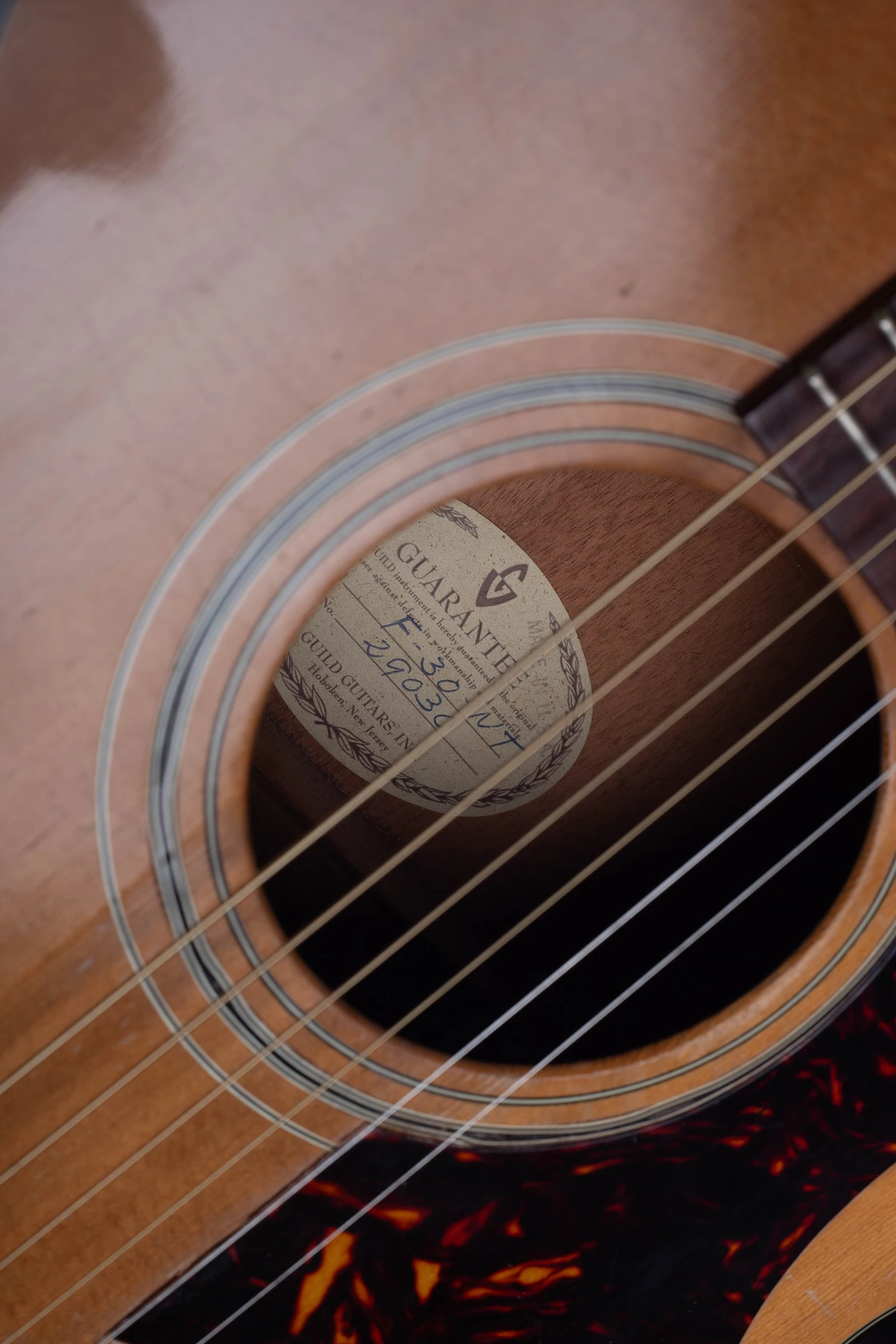
Read The Model, Address And Serial Separately
The F50 label below reads AD355 and carries a Hoboken, New Jersey address. In Guild’s model records, AD292 through AD355 belong to F50 production in 1968. Guild’s Westerly history dates the relocation to 1967. Those facts show why a printed address should not be treated as a precise assembly-date stamp.
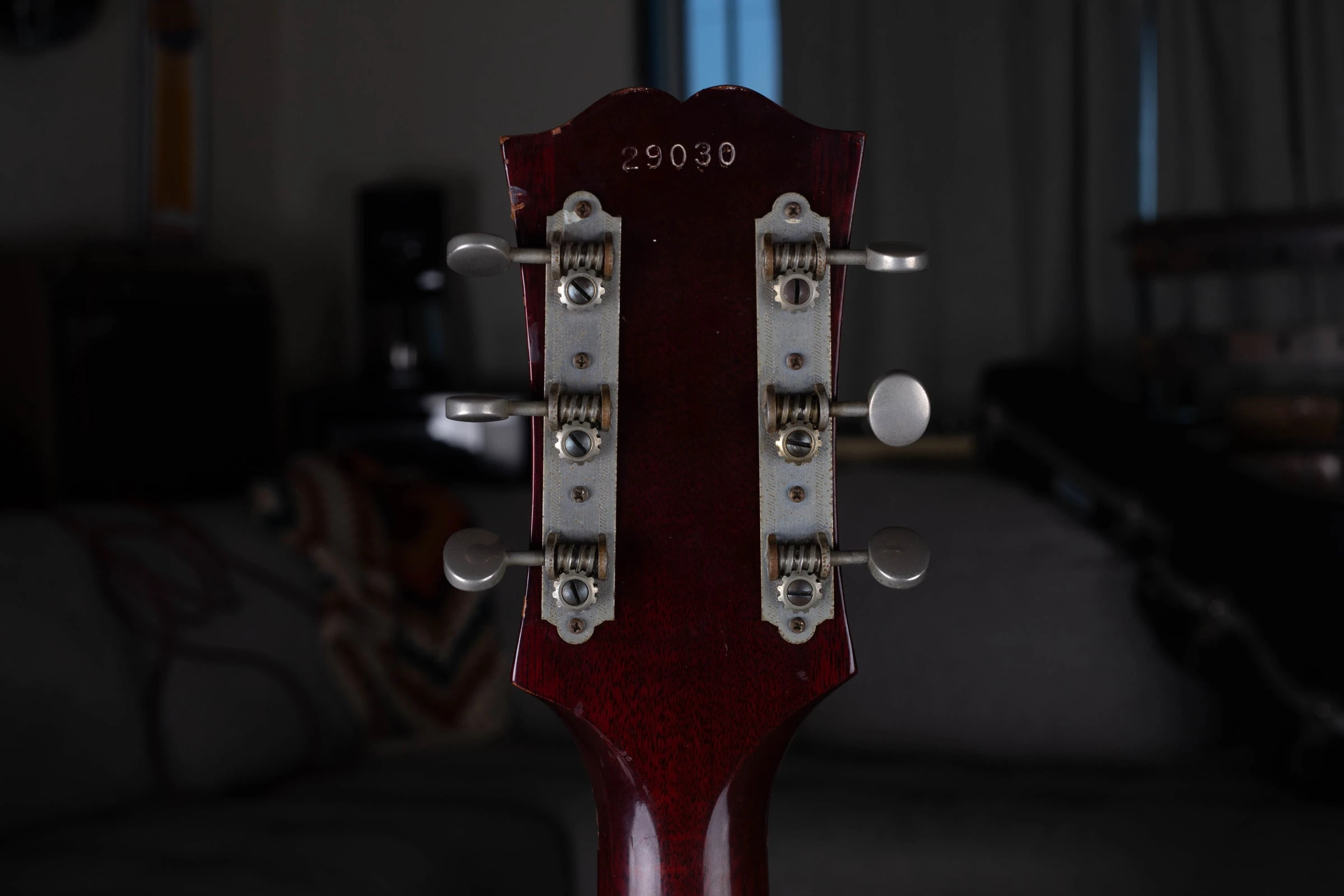
The F30 example is different: its label and headstock carry 29030, a plain number in the 1964 range. The model line reads F30, followed by a finish notation. The 30 in F30 is not a year, and the letters beside the model shouldn’t be merged with the serial.
Paper color is a weak shortcut. Aged white stock, warm lighting and a yellowed finish can all make a label appear tan. Read its wording and layout before comparing the factory eras. The 1965 to 1969 model chart is the right next step for the F50 example.
Labels Inside Archtops And Hollowbody Electrics
A narrow f-hole can hide part of a label even when the guitar is well lit. Take one photograph showing the label in the body and another aimed through the opening. The wider view establishes where the label sits; the closer view records its writing. Don’t fill in a hidden digit from a seller’s date estimate.
The earlier X-175 example has white pickup covers and a short numeric headstock stamp. The later example has metal-covered pickups and a partly obscured paper label. Use the electric model guide to compare the whole instrument rather than assuming every X-175 shares one serial format.
If the paper is missing, describe it as missing and continue with the headstock, construction and repair history. A lost label limits the evidence; it doesn't by itself establish a counterfeit or prove a particular year.
Photograph A Faint Headstock Stamp
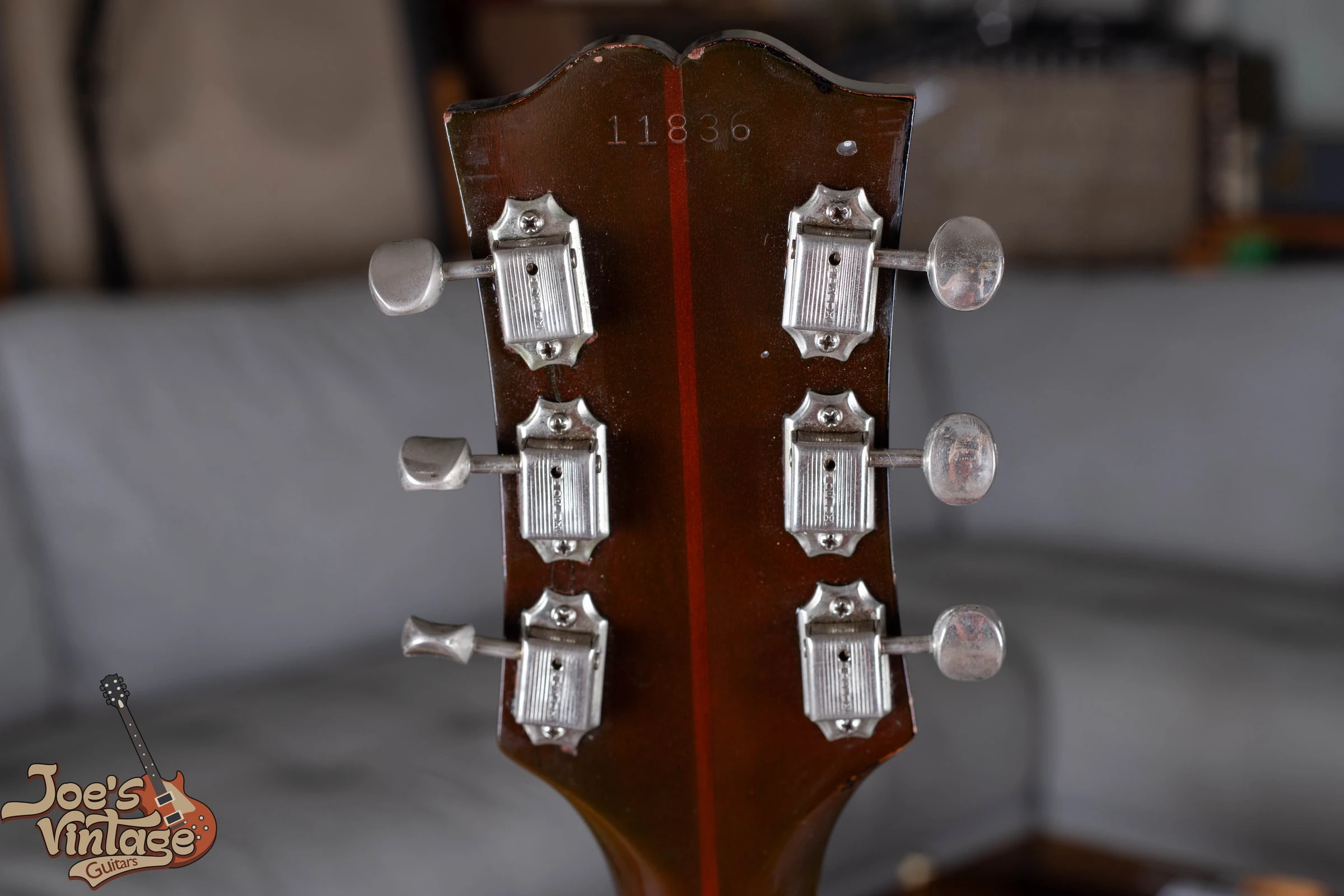
Try daylight from the side rather than flash straight at the finish. Take a square-on frame and a second frame with the light crossing the stamped grooves. Keep the entire headstock in the first image, then move closer for the number. A sharp original file is more useful than a digitally sharpened screenshot.
The early X-175 stamp below reads 11830, which fits the approximate late-1950s sequence. The F30 reads 29030, which fits 1964. Those are two different examples, so their tuner arrangements should not be combined into one imagined specification.
Record any plugged screw holes, finish disturbance or tuner changes without removing the hardware. The tuner and headstock comparisons explain what those details can add to a serial reading.
Modern Labels And Country Markings
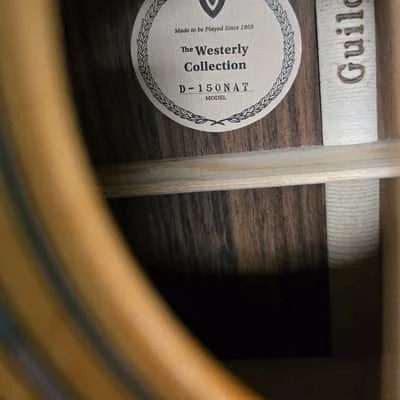
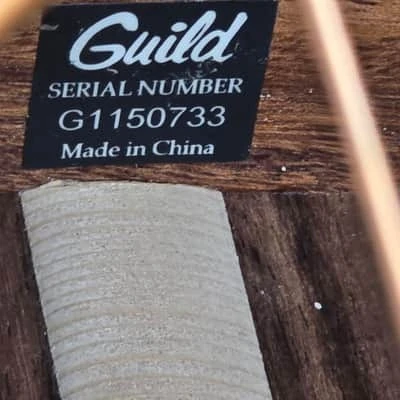
Joe’s D-150NAT listing shows a Westerly Collection label and a separate serial marking that reads G1150733, Made in China. The word Westerly here is the collection name. It does not mean the guitar was built at the old Rhode Island factory.
Keep the model label and country mark together when you ask for help. This example should not be run through the short numeric 1960s table or the Tacoma Julian system. The vintage versus reissue guide explains why familiar names and logos return on later instruments.
If the number remains unresolved, send the complete front and back, headstock, model label and serial to a Guild appraisal. Include repairs and ownership history you know, without guessing at missing details.
Sources And Further Reading
- Guild’s Serial Number Records
Compare the manufacturer’s published ranges, annual endpoints and dating notes.
- Guild’s Factory And Model FAQ
Check the manufacturer’s explanation of factory moves, series names and record limitations.
- Guild’s Westerly Collection Introduction
Read the manufacturer’s explanation of the modern series and its historical name.
Get Help Identifying Your Guild
Send the serial, a full front and back view, and close-ups of the feature you want checked. Include any known repairs or replacement parts.
Get A Free Guild AppraisalReturn to the Guild serial lookup and dating library to compare the rest of the instrument.