

Starfire I Through VI, XII And Bass · Hoboken And Westerly
Guild Starfire Value Guide
Match the model, period and equipment before putting a value on a Starfire guitar or bass.
A vintage Guild Starfire can be worth from about $1,300 to $4,000 across the main original six-string groups priced here, in excellent, original condition with a case. The family includes different body styles, pickup configurations, twelve-strings and basses, so a single “Starfire value” conceals too much. Later Westerly revival rows are also separated in the chart. For example, Joe’s estimate for a 1960 to 1966 Starfire III is $2,650 to $3,950, while a 1966 to 1969 Starfire XII is $1,900 to $2,850. Identify the complete model before comparing those figures. The Starfire authentication guide explains the model branches and the serial systems that distinguish their production periods.
This Is An Estimate Of Market Value, Not An Offer To Buy And Not A Guarantee. Market Values Fluctuate; Have Your Specific Item Appraised.
Joe’s Estimates In U.S. Dollars
Guild Starfire Values By Model
| Model | Years | Configuration | Estimated Value |
|---|---|---|---|
| Starfire I | 1960 to 1961 | One pickup | $1,300 to $1,900 |
| Starfire I | 1962 to 1964 | One pickup | $1,300 to $1,900 |
| Starfire II | 1960 to 1961 | Sunburst | $2,150 to $3,200 |
| Starfire II | 1962 | Emerald green | $2,050 to $3,100 |
| Starfire II | 1962 to 1966 | Special colors | $2,250 to $3,450 |
| Starfire II | 1962 to 1966 | Sunburst or Starfire red | $2,050 to $3,050 |
| Starfire II | 1967 to 1969 | Sunburst or Starfire red | $1,950 to $2,900 |
| Starfire II | 1970 to 1976 | Sunburst or Starfire red | $1,700 to $2,600 |
| Starfire II | 1997 to 2001 | Westerly reissue | $1,200 to $1,800 |
| Starfire III | 1960 to 1966 | Vibrato | $2,650 to $3,950 |
| Starfire III | 1967 to 1974 | Vibrato | $2,500 to $3,750 |
| Starfire IV | 1963 to 1966 | Double cutaway | $2,650 to $4,000 |
| Starfire IV | 1967 to 1975 | Double cutaway | $2,450 to $3,700 |
| Starfire IV | 1976 to 1987 | Double cutaway | $2,150 to $3,250 |
| Starfire V | 1963 to 1966 | Double cutaway, vibrato | $2,650 to $4,000 |
| Starfire V | 1967 to 1973 | Double cutaway, vibrato | $2,450 to $3,650 |
| Starfire V | 1997 to 2001 | Westerly reissue | $1,300 to $1,900 |
| Starfire VI | 1964 to 1966 | Deluxe appointments | $2,600 to $3,850 |
| Starfire VI | 1967 to 1975 | Deluxe appointments | $2,400 to $3,600 |
| Starfire VI | 1976 to 1979 | Deluxe appointments | $2,200 to $3,350 |
| Starfire XII | 1966 to 1969 | Twelve string | $1,900 to $2,850 |
| Starfire XII | 1970 to 1973 | Twelve string | $1,950 to $2,950 |
| Starfire Bass | 1965 to 1969 | One single-coil pickup | $1,950 to $2,800 |
| Starfire Bass | 1970 to 1975 | One humbucking pickup | $2,000 to $2,900 |
| Starfire II Bass | 1967 to 1969 | Two single-coil pickups | $2,000 to $2,850 |
| Starfire II Bass | 1967 to 1969 | Black finish | $2,450 to $3,100 |
| Starfire II Bass | 1970 to 1978 | Two humbucking pickups | $1,950 to $2,800 |
U.S. dollars. These are estimated values, not purchase offers. Repairs, replaced parts, finish work and market changes require an individual assessment.
Every figure assumes the stated configuration in excellent, original condition with its case. A changed pickup system, altered body, missing hardware or repair can put an instrument outside that basis. These estimates are not purchase offers, and they don't promise what a particular seller will receive.
Later Starfire III, IV and Bass II instruments outside the chart need an individual appraisal. A missing row doesn't mean the model has no value. It means Joe needs to assess the instrument separately instead of assigning a figure from a different production group.
Different Instruments Under One Name
Choose The Starfire Branch Before The Year
Single-Cutaway I, II And III
Pickup count and the factory tailpiece arrangement distinguish these related versions. A III comparison shouldn't be applied to a II simply because someone fitted a vibrato. Establish the original model and record how the installed equipment differs.
Double-Cutaway IV, V And VI
These models have their own trim, controls and hardware. More decoration doesn't produce a fixed price multiplier. The chart separates the models and periods so an ornate example is still compared with the right production group.
XII And The Bass Models
A twelve-string and a bass have different playing and repair considerations from a six-string. Photograph the complete headstock and bridge, and use the correct row. String count alone doesn't make an instrument rarer or more valuable than another Starfire.
Factory context needs care as well. “Hoboken” and “Westerly” can be useful descriptions, but a label address isn't an exact assembly-date stamp. Joe’s Guild factory guide explains the 1967 relocation and why printed labels and serial systems don't all change on one date. Keep the full number and model with the factory description.
Later Westerly-built revivals belong to their own period. They should not be priced as 1960s instruments simply because the model name returned. Conversely, a newer replacement bridge on an older body doesn't move the whole guitar into a later production row. Identity and installed parts need separate descriptions.
Original Equipment And Alterations
How Pickup And Hardware Changes Affect A Comparison
The early Starfire III photographs show DeArmond-style pickups and a Guild-branded vibrato. Later Starfires use other pickup families, so “two Guild pickups” isn't a sufficient appraisal description. Include straight-on views of the covers and surrounds. If a pickup was replaced, say whether the opening or mounting points were altered.
Some replacements leave little visible evidence from the front. A changed bridge may fit existing hardware, and a control can be replaced under its old knob. Repair receipts or photographs taken during service can add useful context without requiring another disassembly. Don't pull a hollowbody harness just to answer an initial value question.
An Added Vibrato
Record the model label and the tailpiece installation together. An added vibrato can leave holes, an earlier footprint or a different string path. It may suit a player well while changing how the instrument compares with an original factory version. A Guild logo on the part doesn't establish when it was fitted.
A Changed Pickup Route
An enlarged opening is a different alteration from a replacement pickup that uses the existing mount. Show adapters, surrounds and any visible cut edges. If the earlier pickups survive, photograph them separately and explain their documented connection to the guitar.
Don't apply a flat deduction for every modification. A reversible part change, a repaired break and an extensive refinish are different situations. Joe’s appraisal process can consider the quality and extent of the work alongside the model and period. That is more useful than treating all changed guitars as one condition category.
The cherry 1964 II and blonde 1977 IV have different body designs and production contexts. Match the model and year before comparing condition.
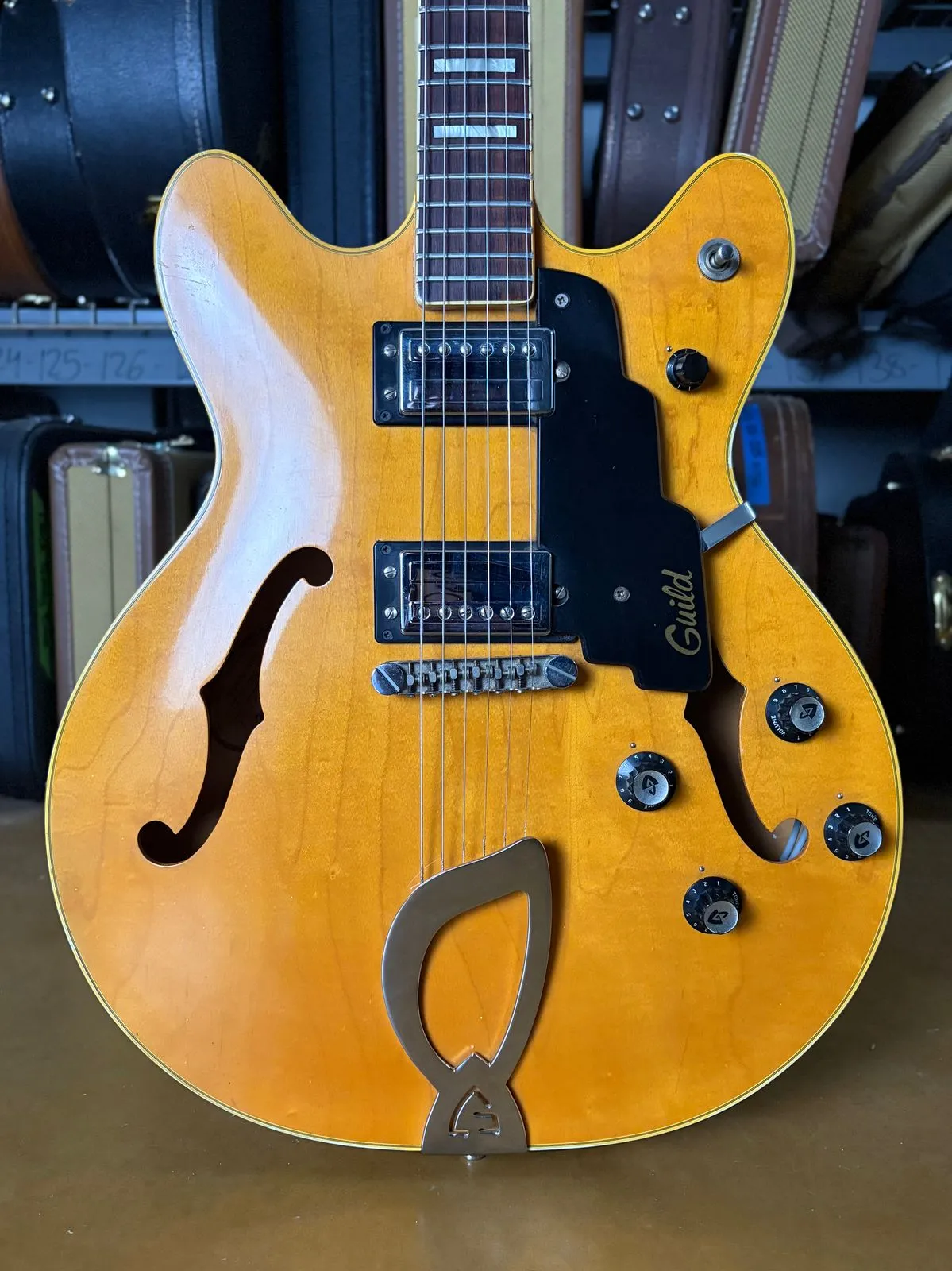
Photo Timeline
Starfires From Joe’s Photo Archive
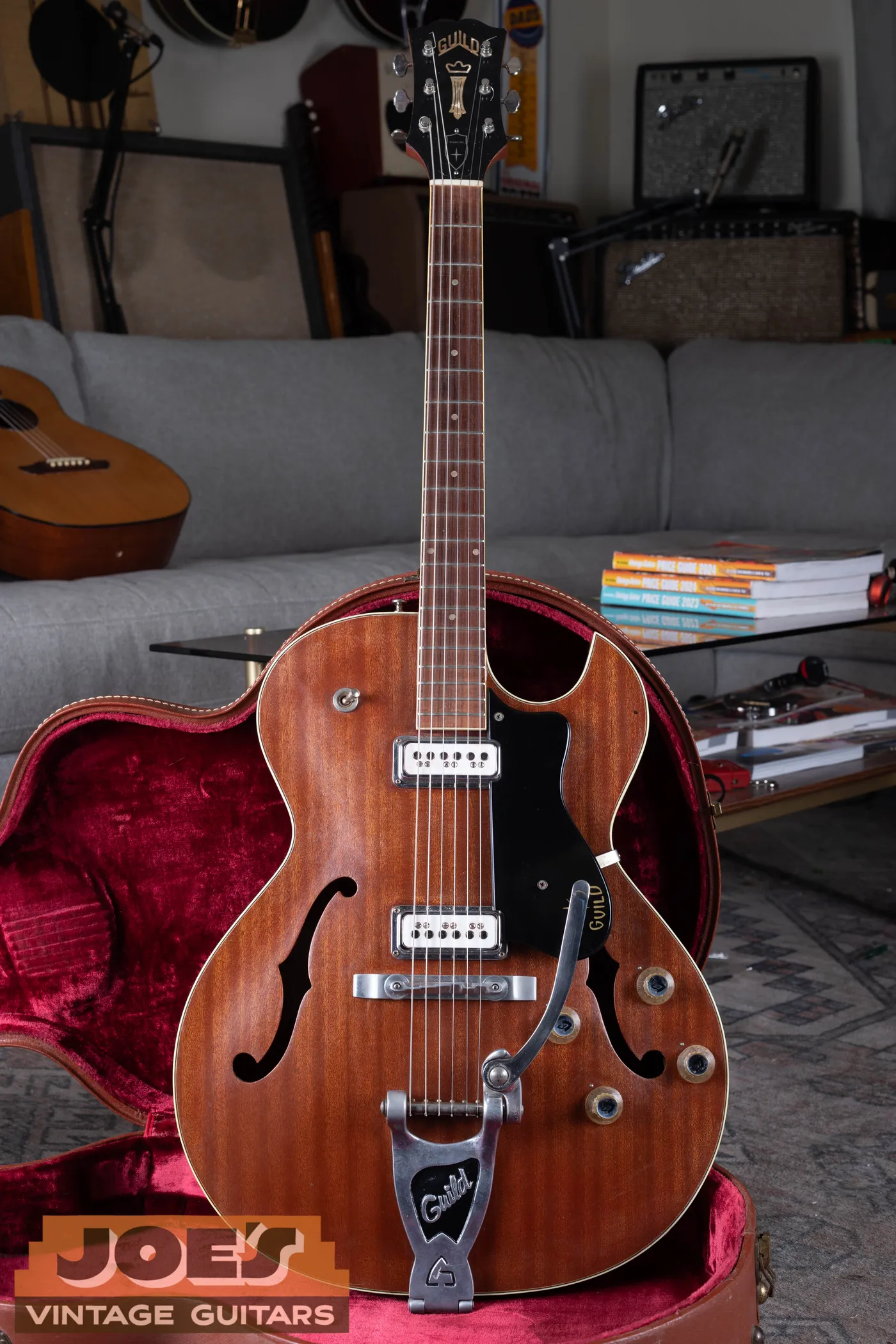
Early 1960s · Starfire III
A Single Cutaway With A Vibrato
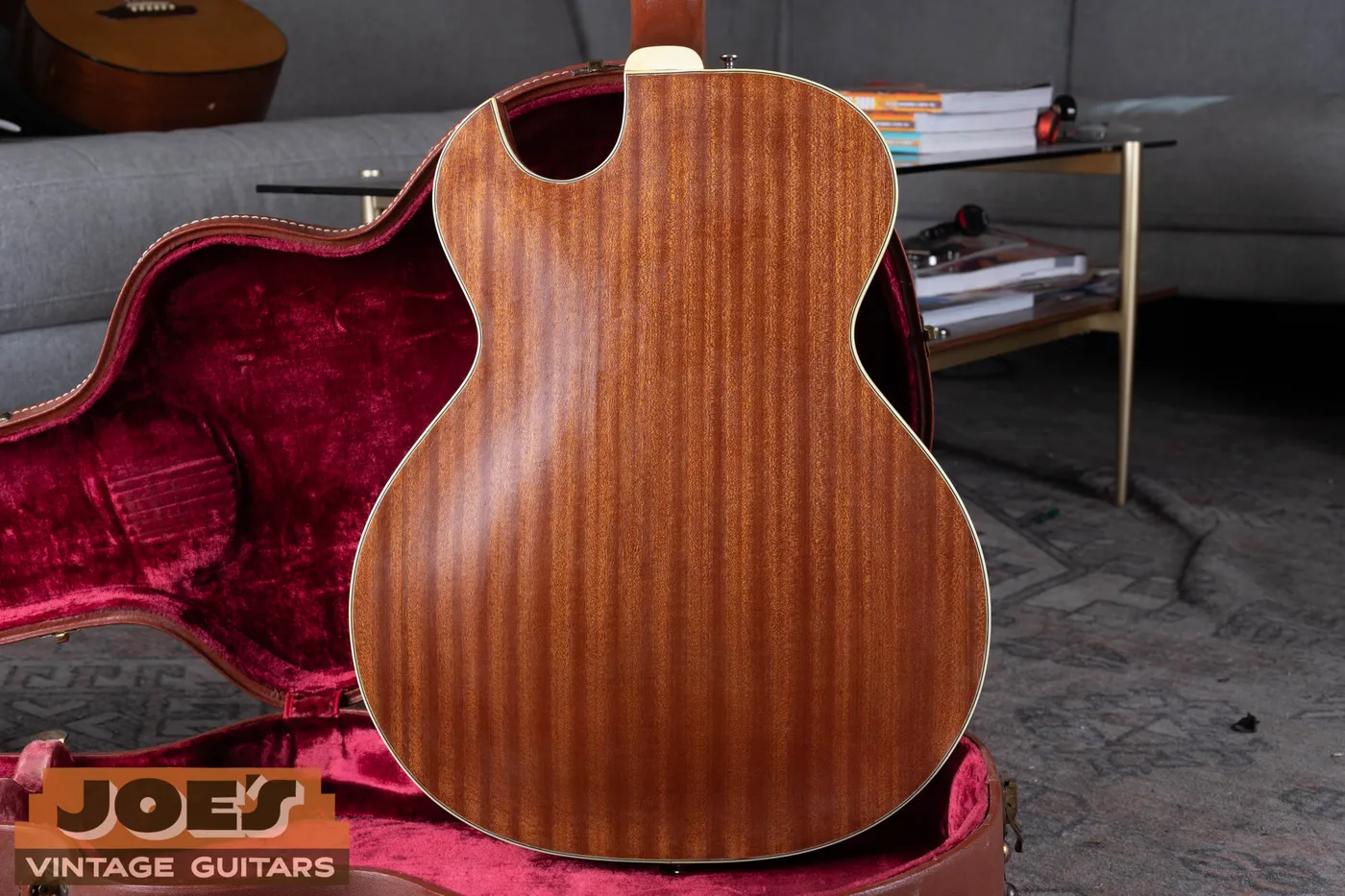
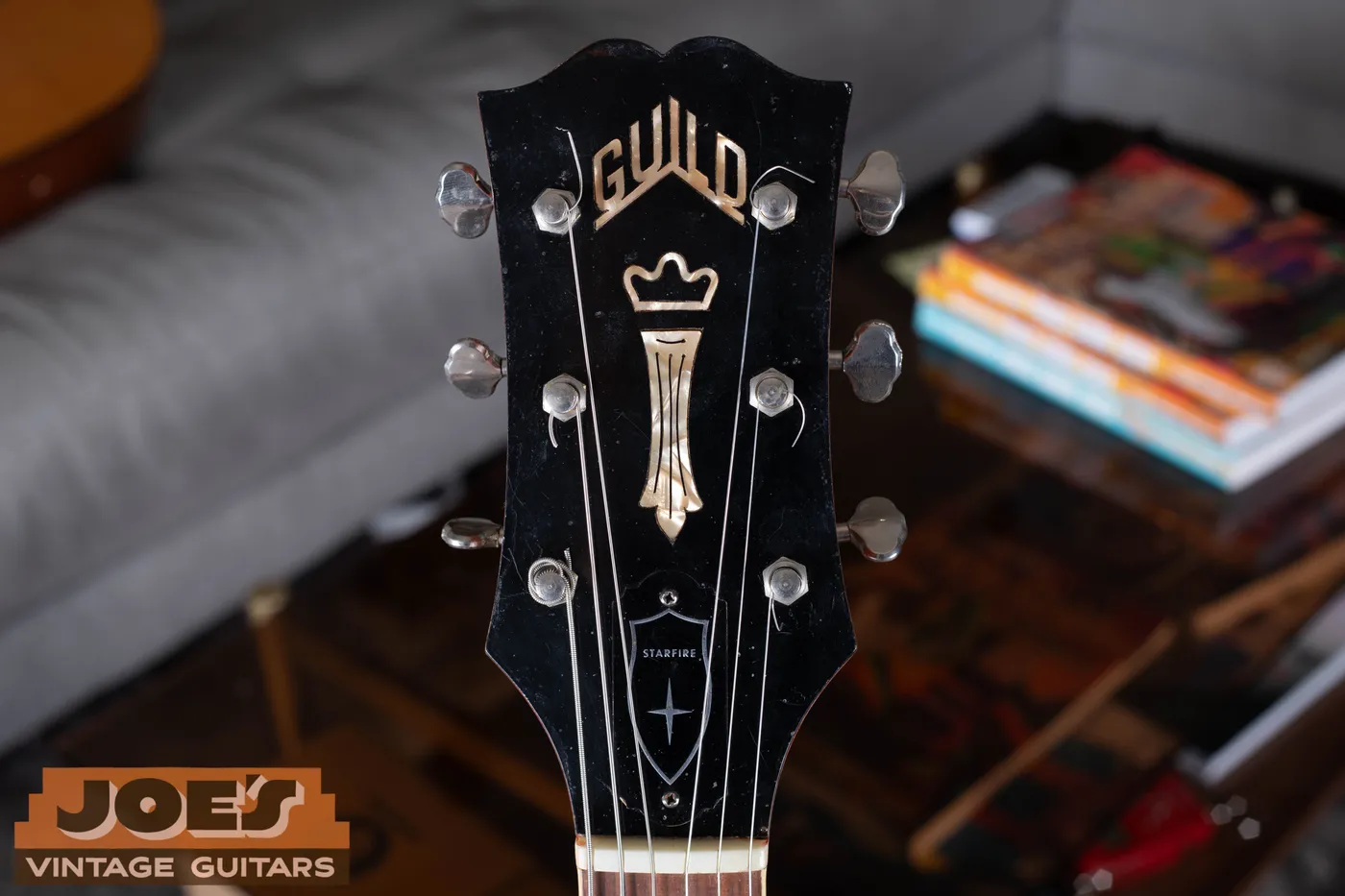
This archive guitar provides a clear view of the two pickup installations, bridge and vibrato. Its rear and headstock views help record finish and tuner condition. The images are instrument references with the details visible on those instruments.
Its exact production year remains unconfirmed. A preliminary valuation should retain that limit and include any repair history supplied with the guitar.
1964 · Starfire II
Cherry Hollowbody With A Fixed Tailpiece
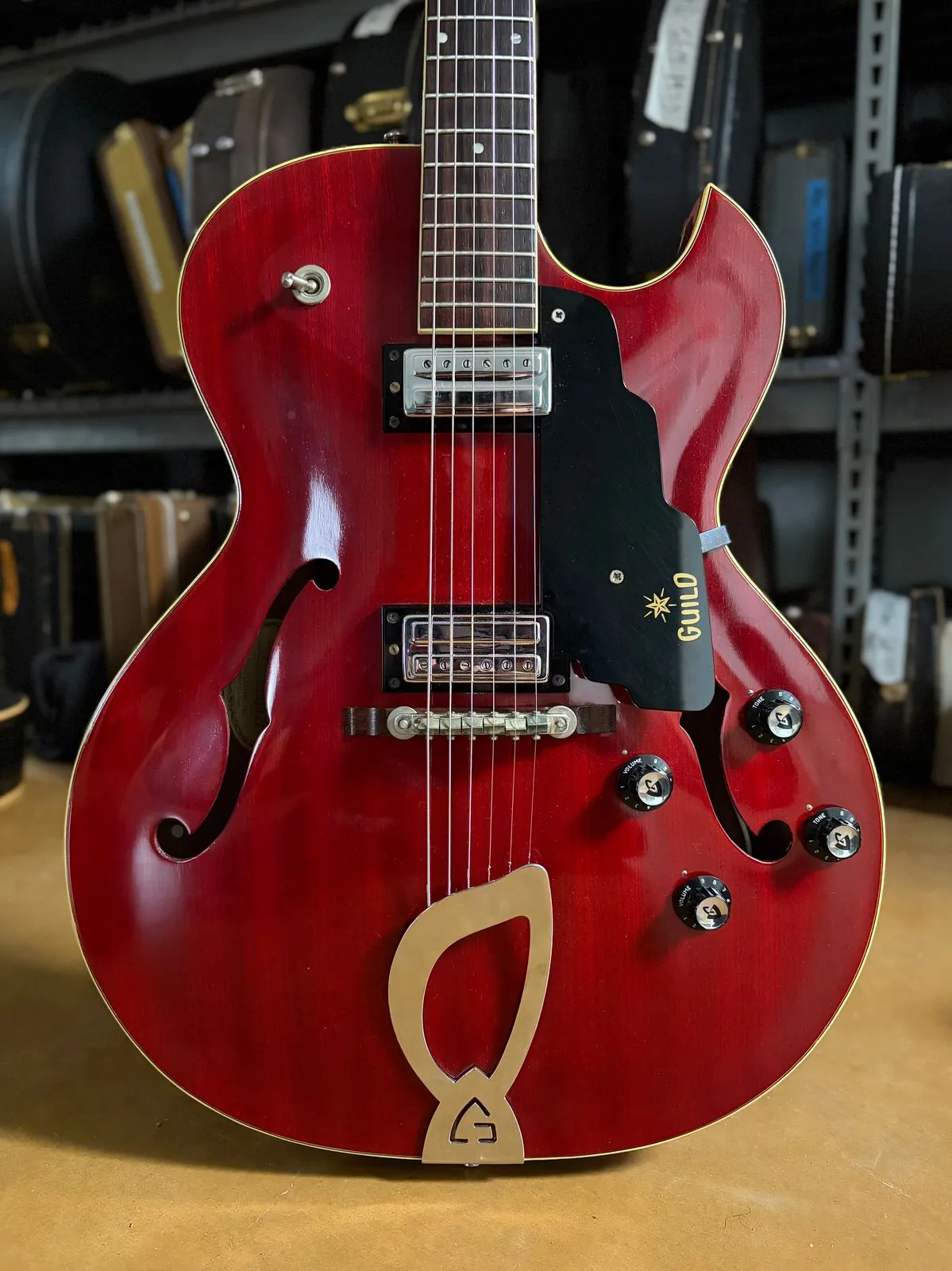
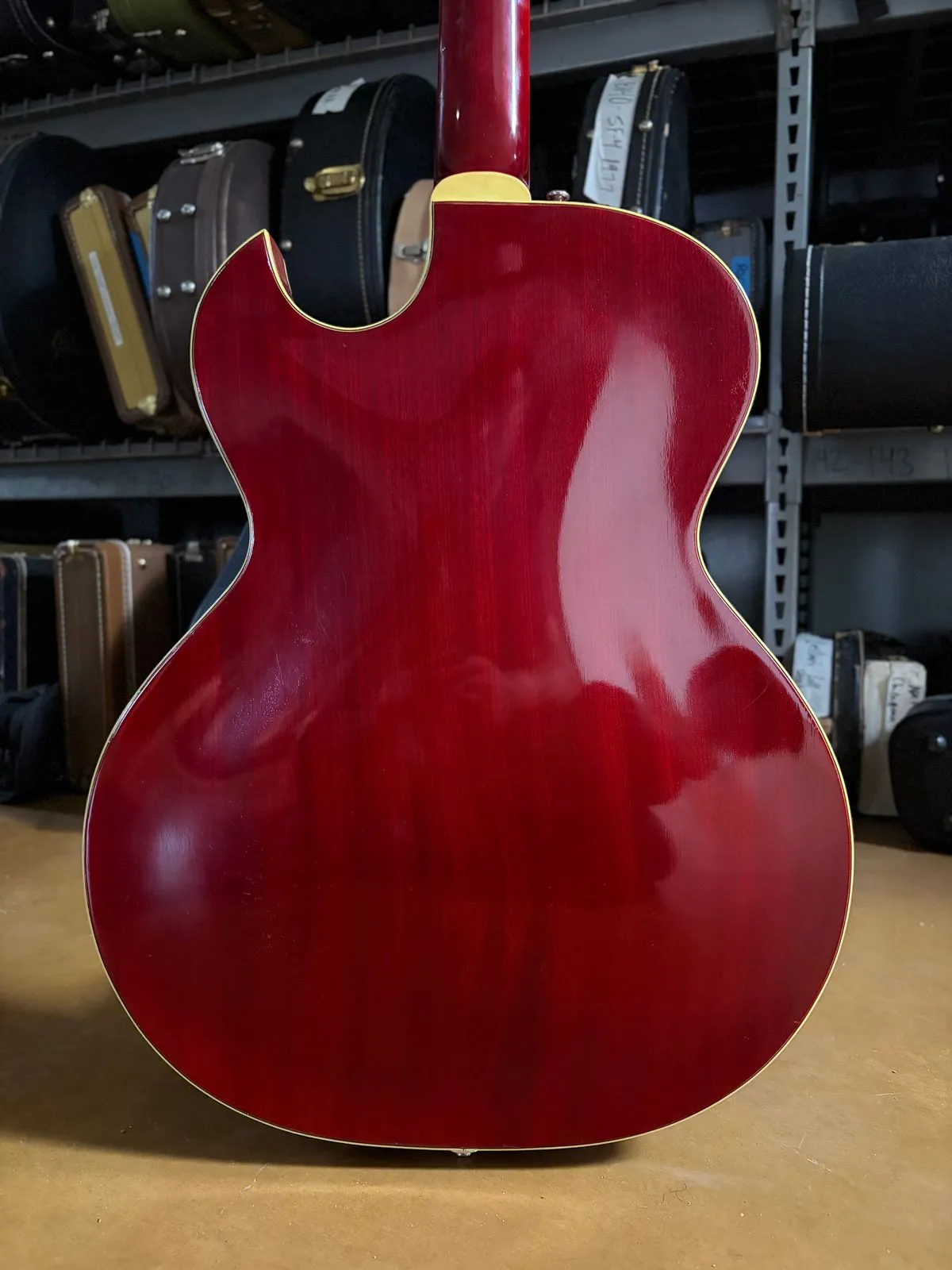
This 1964 Starfire II has a cherry-red single-cutaway body, two covered humbuckers and a Guild harp tailpiece. Its front and back views show the finish and body edges for a condition comparison. The fixed tailpiece separates this example from the vibrato-equipped III already shown.
Joe’s listing discloses a neck-pickup tone control that does not change the tone. A value assessment should include that fault and the diagnosis or repair needed. Exterior photographs document appearance; they cannot demonstrate that every control works.
1966 · Starfire V
Sunburst Finish And Factory Bigsby
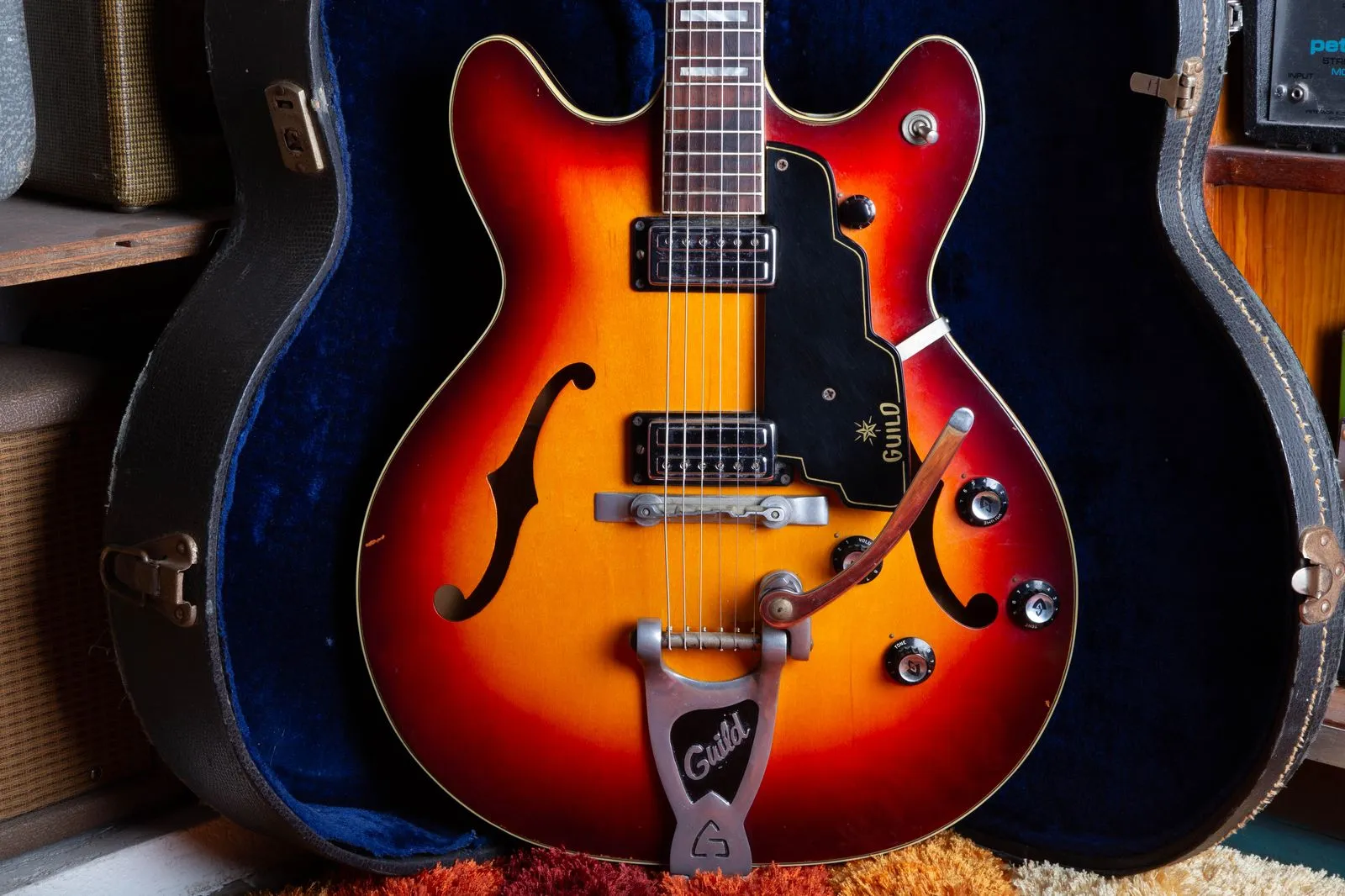
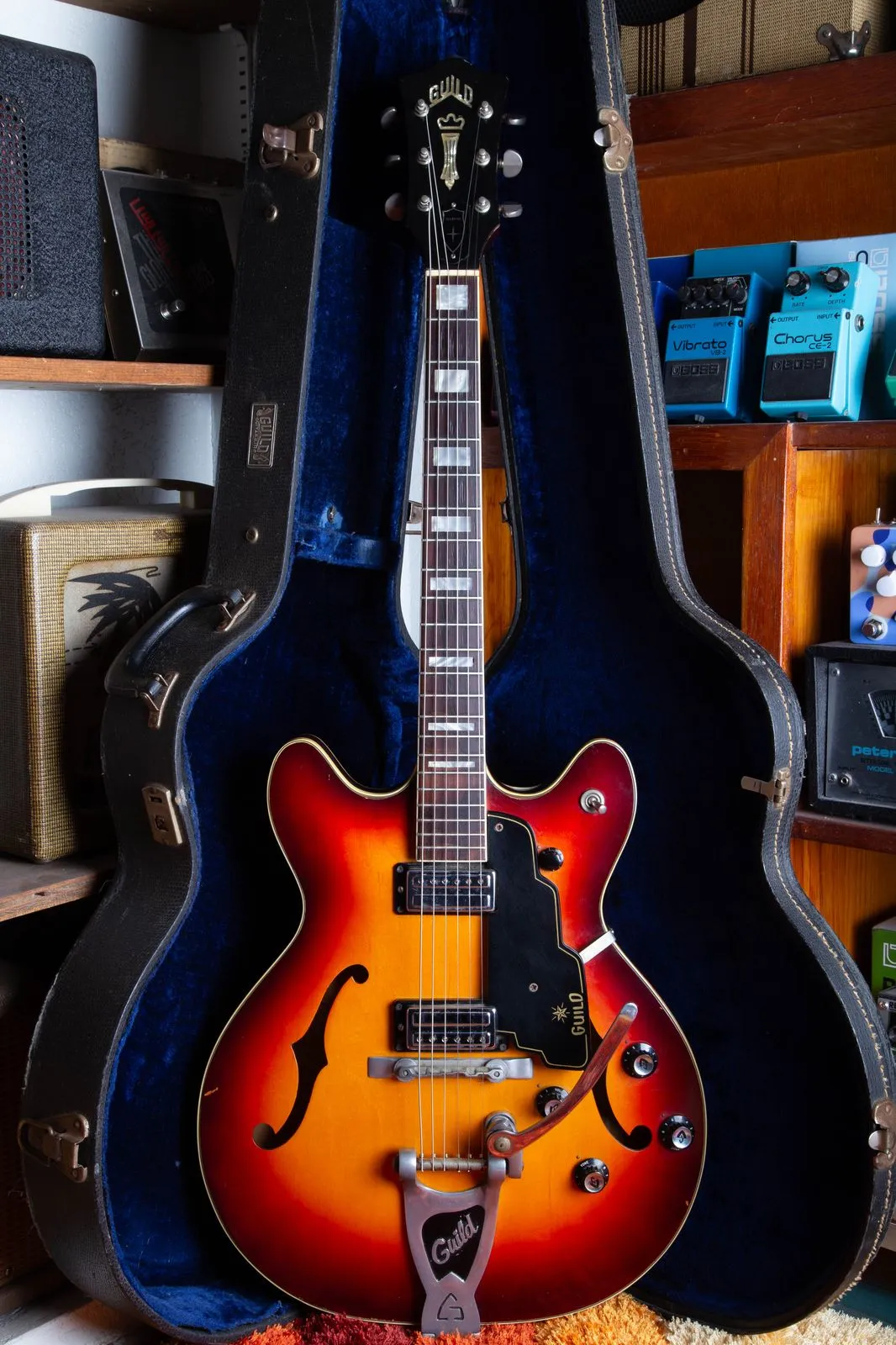
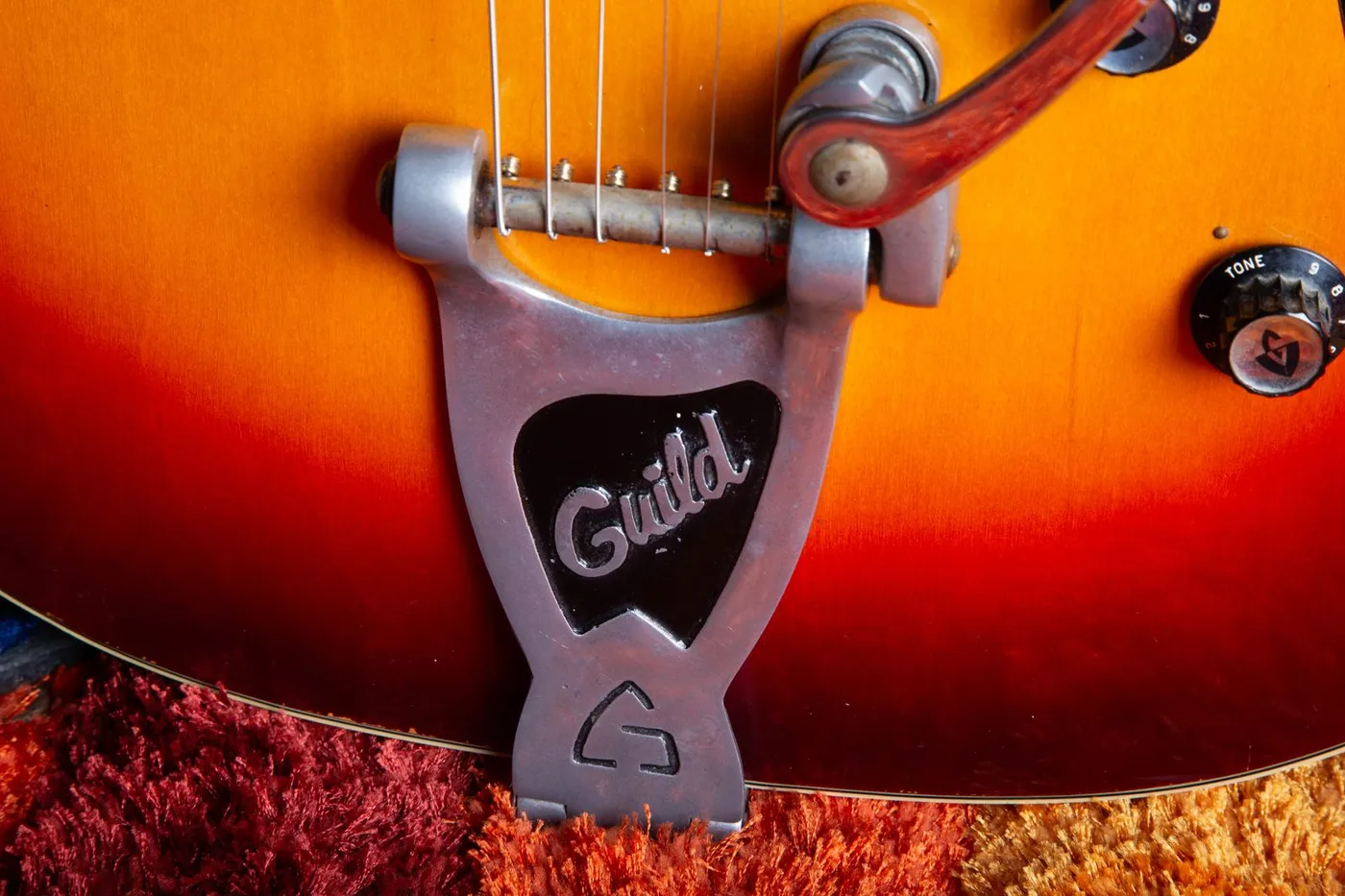
The sunburst 1966 Starfire V is the featured guitar at the top of this guide. Joe’s listing identifies its factory Bigsby and aluminum bridge. Use the V’s own chart row when comparing this double-cutaway guitar, keeping its equipment separate from an added-vibrato example.
The complete view places the hardware in context, while the tailpiece close-up records the installed vibrato. For an individual estimate, add photographs of the fret wear, binding and headstock surface, along with any repairs. A factory feature does not establish the condition of the rest of the instrument.
1966 · Starfire XII
Twelve Strings And A Readable Model-Prefix Serial
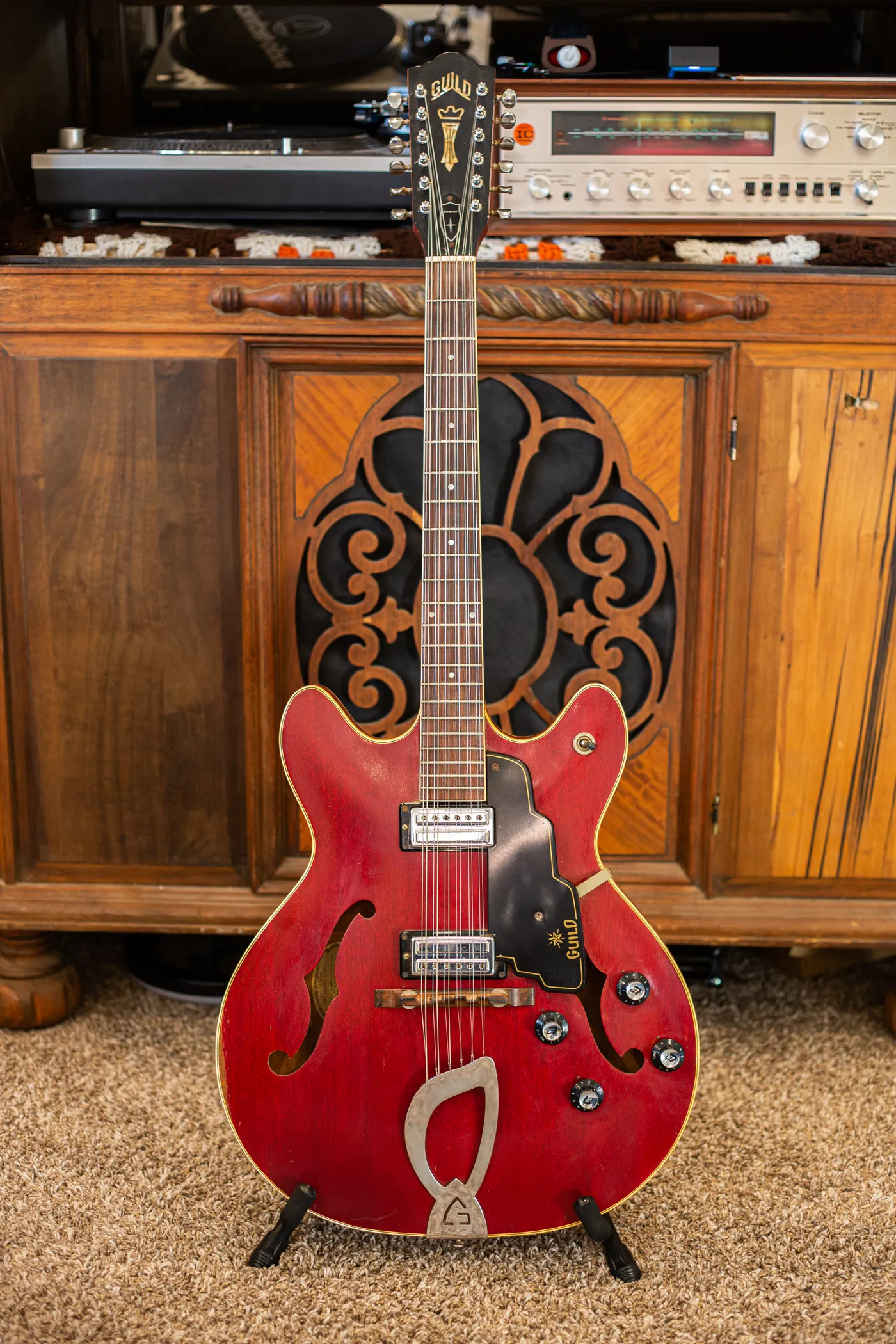
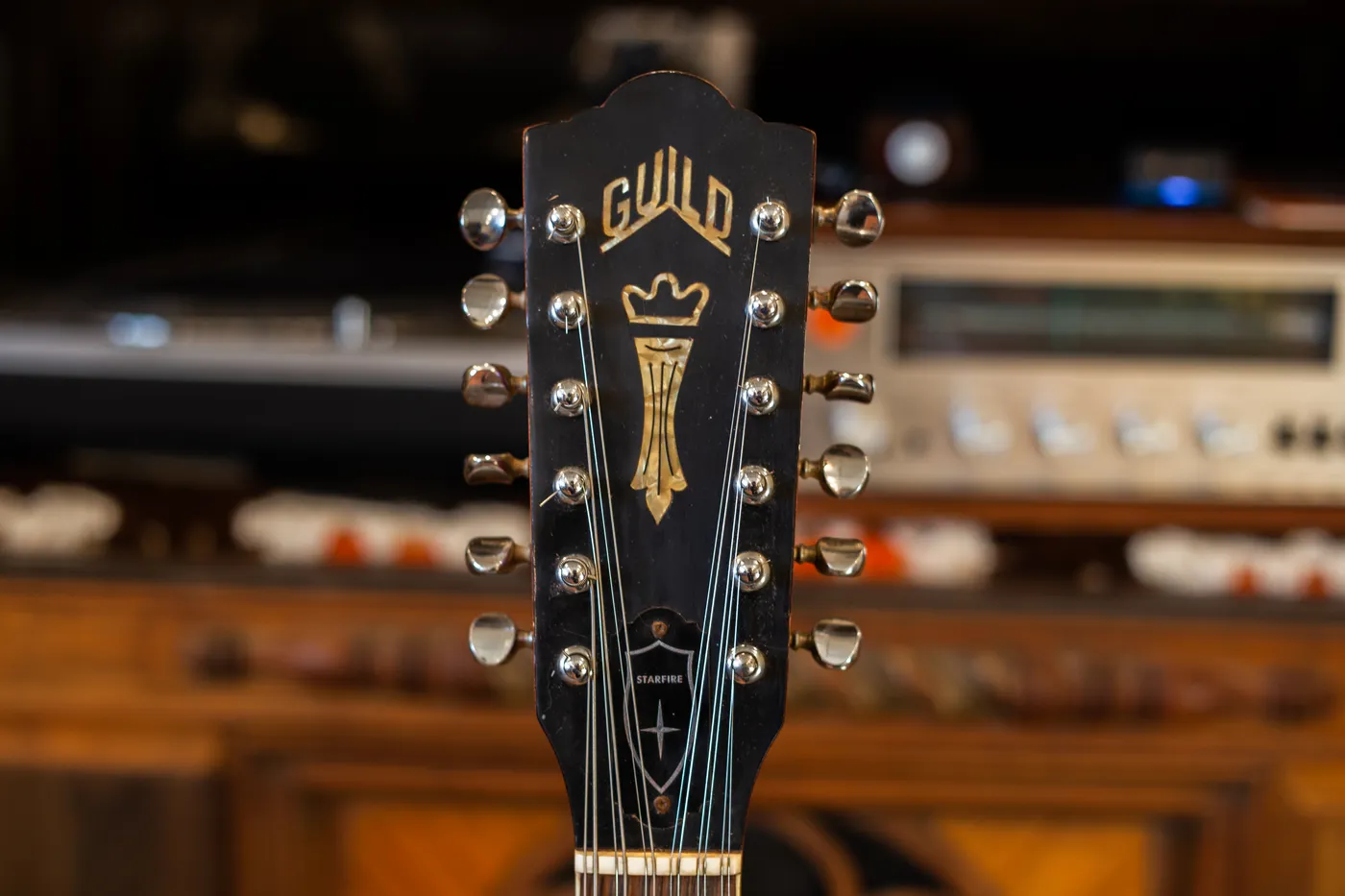
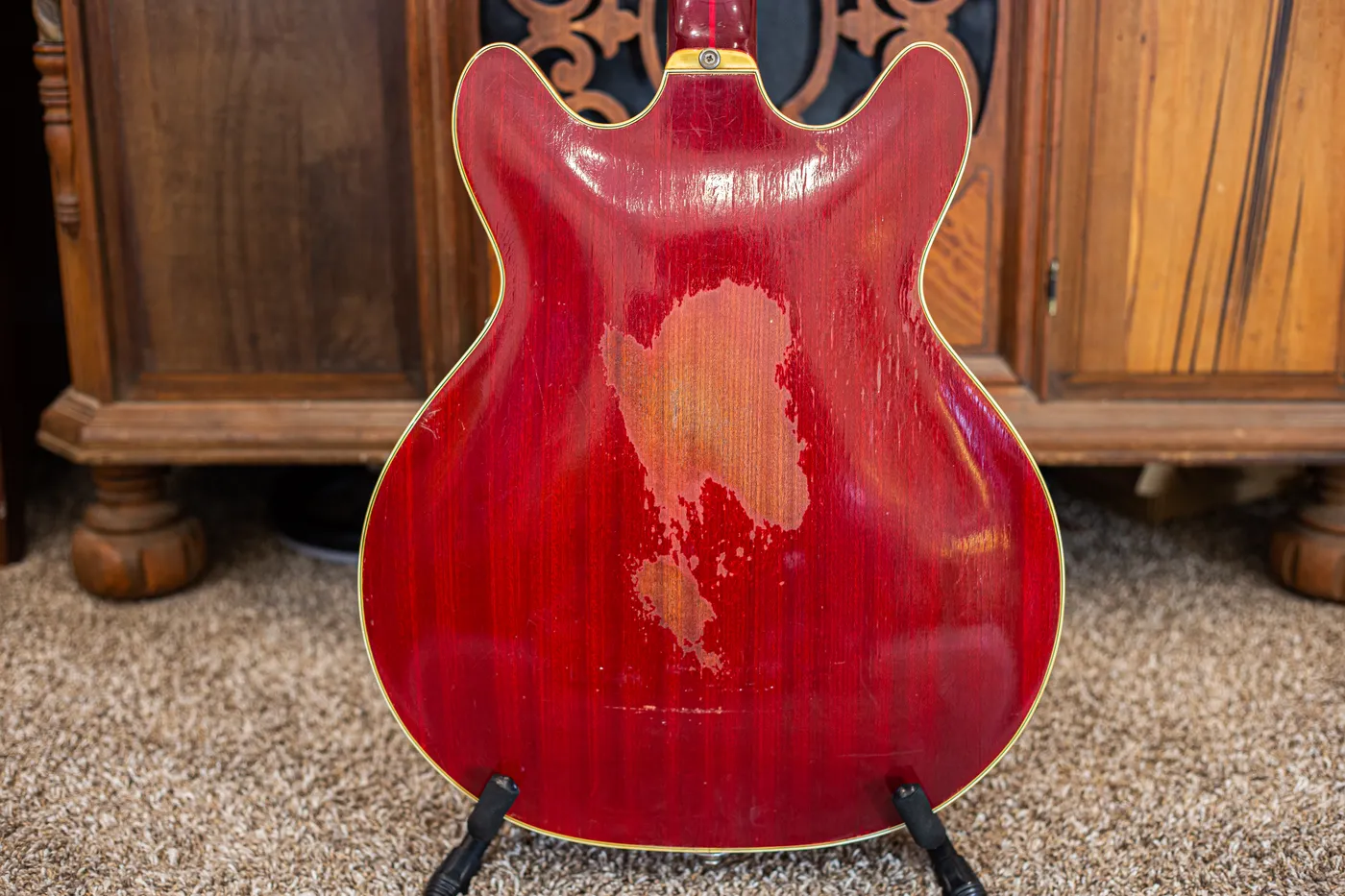
The XII archive set includes the complete headstock, body and rear wear. Its DC347 serial supports the 1966 model-chart reading described in the authentication page. The additional tuners and paired strings are visible in the same set as the condition details.
For a twelve-string appraisal, show the neck heel and bridge as well as the face. A clean-looking top doesn't establish the action, neck angle or condition of every tuner.
1977 · Starfire IV
A Blonde Westerly Example
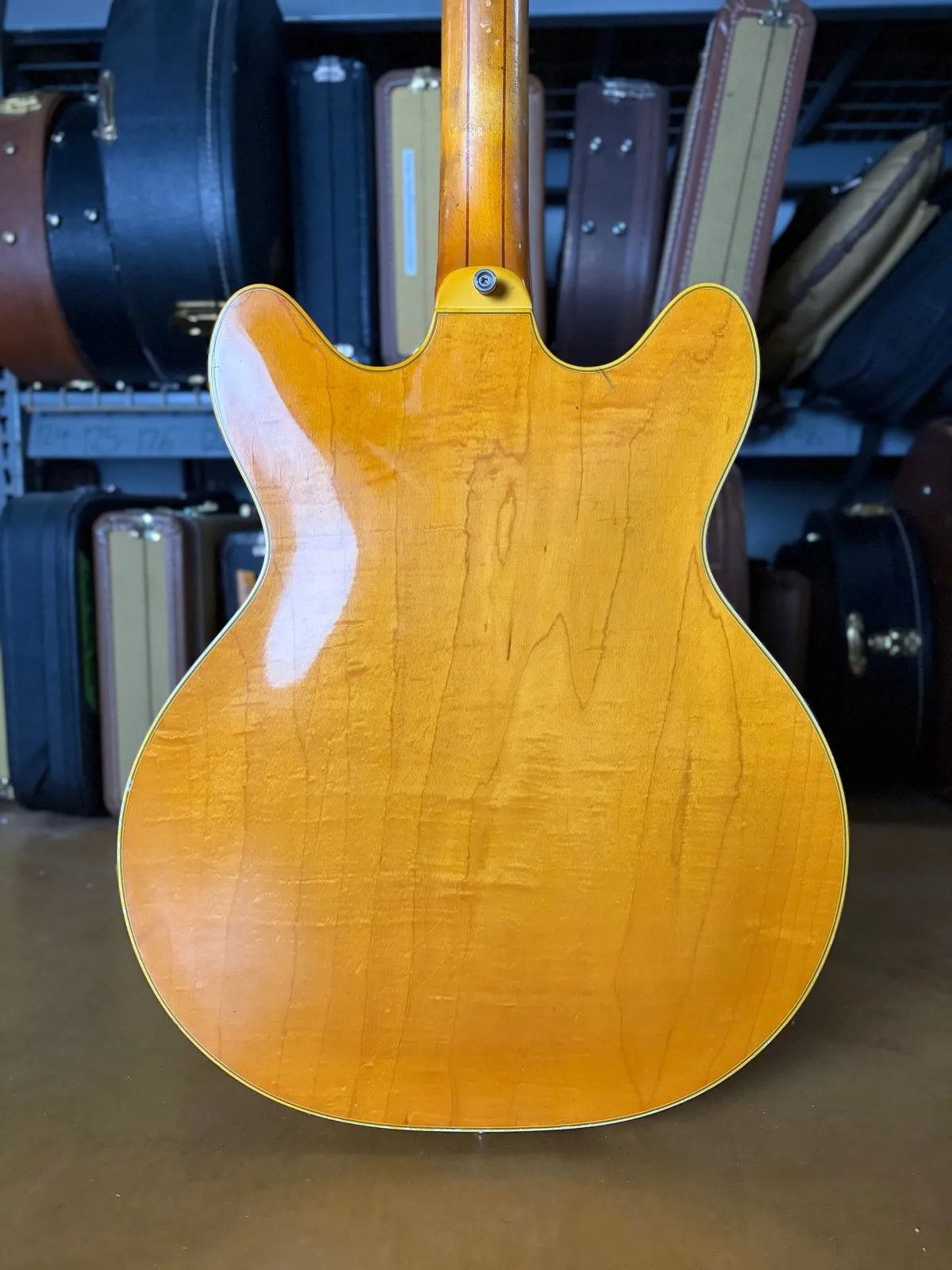
This 1977 Starfire IV is a later Westerly comparison in a blonde finish. Its double-cutaway body, covered pickups and fixed harp tailpiece distinguish the pictured configuration from the sunburst V. The rear photograph adds the body binding and neck joint to the condition record.
Finish wear and repair history belong with the model and year when choosing a comparison. A bright front photograph can leave the back and edges undocumented. Show those surfaces together and describe known changes rather than assigning the top of a range from color alone.
Read The Whole Instrument
Playing Wear, Repairs And Collector Condition
Supported Original Condition
Use the chart as a starting comparison when the model is established, finish and equipment are supported and the structure is sound. Normal wear should still be visible in the photo set rather than concealed by selective framing.
A Serviced Working Instrument
A refret, replacement nut or electronics service can keep a Starfire playable. Describe the actual work and its quality. A service history does not automatically mean a guitar was extensively modified.
A Repair Project
Neck damage, unstable joints, altered pickup openings or major finish work require a separate estimate. Include the repairer's written findings if available. Don't reduce a complex repair question to an unsupported percentage.
For a bass, record the pickup count, bridge assembly and any changed electronics. A replaced pickup can affect both tone and collector interest, and the original unit may be difficult to assess from an old cover alone. For a XII, explain whether the instrument is presently strung and playable, and mention any known headstock work.
A case and associated parts should be inventoried without assuming they all began together. Photograph the case fit, its hardware and loose accessories. An older case containing newer paperwork can reflect decades of ordinary ownership. Preserve the documents and let their dates speak for themselves.
Separate a Starfire’s maintenance from changes to its construction. Joe’s guides explain condition and originality, refinishing, replacement pickups, and restoration before selling. Describe work already done and ask about proposed repairs before spending money to prepare the guitar for sale.
Model Details Joe Can Use
Prepare A Starfire Value Request
Copy The Entire Model
Include the Roman numeral, XII or bass designation. Photograph the label rather than relying on a handwritten case tag.Include The Serial Prefix
Keep every letter and digit, plus the headstock and label views that show where the marking appears.Show The Current Equipment
Photograph pickups, bridge, tailpiece, controls and tuner backs. Add the neck heel and any repairs or missing parts.
Send The Evidence
Ask Joe What Your Starfire Is Worth
Send the photographs with the history you know and the questions you still have. If you plan to sell, list the case and any removed components included. Joe can assess a specific Starfire more usefully when the model, date evidence and current condition arrive together.
Questions AboutGuild Values
Is A Starfire III Worth More Than A II With An Added Bigsby?
Are Starfire Bass Values Included?
Does A Hoboken Label Guarantee An Earlier Price Group?
Are The Westerly Revival Models Priced As 1960s Guitars?
The Last Word
A Value For Your Guitar
A Starfire estimate should name the exact model and the condition being compared. Keep the numeral, serial prefix and repair history attached to the photographs. If the instrument falls between the listed groups, ask Joe for an individual appraisal rather than forcing it into a convenient row. For model and date checks, see the Guild Starfire authentication guide.
This Is An Estimate Of Market Value, Not An Offer To Buy And Not A Guarantee. Market Values Fluctuate; Have Your Specific Item Appraised.