

The useful comparison is another guitar of the same model and period, with similar wear and playing condition. An untouched museum example and a heavily played guitar don't start at the same value, even before you look for repairs.
Common Changes And Their Effect On Value
These are reference allowances as of October 2026. They're a starting point for an assessment of the whole instrument, rather than amounts to subtract from the highest asking price you can find.
Scroll The Table To See Every Column
| Change | Typical Value Loss | What Changes The Assessment | Deeper Guide |
|---|---|---|---|
| Full Professional Refinish | 40 to 60 percent less than a comparable original | Wood removed, quality of work, original surfaces and parts retained | Refinish value loss |
| Professionally Repaired Headstock Break | 40 to 50 percent less than a comparable original | Break location, repair quality, stability and visible work | See Breaks And Structural Repairs below |
| Proper Acoustic Neck Reset | Almost no penalty | Correct neck angle, preserved bridge and clean work | Neck resets and acoustic value |
| Professional Refret | 5 to 10 percent less than a comparable original | Workmanship, fret choice and fretboard condition | See What Doesn't Hurt Much below |
| Replaced Pickups Without Routing | About 25 percent less than a comparable original | Which pickups are missing and whether the originals survive | Pickup swaps and routing |
| Routed For A Different Pickup | 35 to 40 percent less than a comparable original | Removed wood, altered pickup openings and remaining original parts | See Pickups And Electronics below |
| Replaced Tuners | 10 to 15 percent less than a comparable original | Missing originals, extra screws and enlarged post holes | Identifying Gibson tuners |
A refret means replacing the metal frets across the neck. A neck reset means adjusting the angle where an acoustic guitar's neck meets its body. Routing means cutting away wood to make a different part fit. Those jobs change very different things, which is why I don't put them all under one label such as restored.
The pickup allowances are a broad starting point drawn from vintage Les Paul comparisons. They aren't a promise that every Fender, acoustic or rare pickup configuration responds the same way. I check what the instrument originally carried before applying any comparison.
Some changes don't have a useful general percentage. A small finish touch-up, a missing switch tip, a repaired acoustic crack and a replacement bridge need their own assessment. Giving each a neat deduction without knowing the guitar would suggest a precision that isn't there.
The Finish
The original finish is part of the instrument a collector is buying. It records the factory's materials and work, along with the wear the guitar acquired afterward. A new finish can look tidy and protect the wood while still removing something the buyer can't replace.
For a full refinish, use 40 to 60 percent less than a comparable original. The comparison is with the finish that guitar actually left the factory wearing. Painting a sunburst guitar a desirable custom color doesn't make it an original custom-color example.
Workmanship affects where a guitar sits within that comparison. Heavy sanding can change contours and soften edges; thick replacement finish can cover evidence that would otherwise help identify the instrument. A careful repaint doesn't undo the loss of the first finish, but it leaves a different guitar from a poorly stripped and reshaped one.
Touch-up means local work on a damaged area. Overspray means another coat applied over an existing surface. Neither description tells you how much of the original finish remains, so I don't automatically treat a small local repair as a complete refinish or assign it the full-refinish allowance.
A body can be refinished while its neck stays original, or a headstock can be resprayed after a repair. Describe the affected area instead of calling the whole guitar either original or refinished without explanation. My guide to spotting a guitar refinish covers the evidence a seller can photograph without taking anything apart.
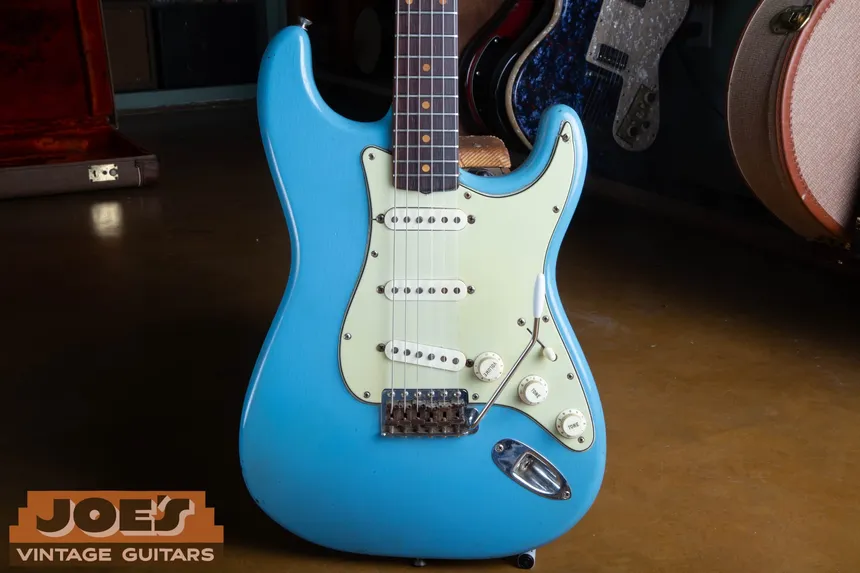
Normal wear isn't a reason to repaint before selling. A worn original surface and a clean replacement surface appeal to different buyers. I want to see the instrument as it stands before anyone decides which kind of guitar to turn it into.
Breaks And Structural Repairs
A professionally repaired headstock break generally means 40 to 50 percent less than a comparable original. The headstock is the end of the neck that carries the tuners. Even when the repair is stable and the guitar plays well, its history still differs from an otherwise similar unbroken instrument.
I look at where the break occurred, how it was repaired and whether the surrounding wood and finish were changed. Repair invoices help explain what was done. A photograph of a smooth, polished neck doesn't by itself establish that the neck has never broken.
A top, back or side crack on an acoustic guitar needs a separate assessment. The location, length, alignment and quality of the repair all affect the comparison. A repaired crack and an unrepaired opening aren't interchangeable descriptions, and neither should be priced from the headstock allowance simply because both involve broken wood.
An acoustic bridge can also have been reglued or replaced. Regluing an original bridge and fitting a different bridge leave different amounts of original material. If wood has been removed to make a repair easier, I need to see that before calling the work routine maintenance.
Ask for the repair history in plain language. A seller may know that the guitar went to a shop without knowing the name of the job. The invoice, any before-and-after photographs and the name of the person who did the work can resolve more than a confident description such as professionally restored.
Pickups And Electronics
A pickup is the part beneath an electric guitar's strings that turns their vibration into an electrical signal. Original pickups can account for a substantial part of collector interest. A modern replacement may sound good while making the instrument a different purchase for someone looking for factory parts.
A pickup swap without routing is about 25 percent less than a comparable original as a broad vintage Les Paul reference. A guitar routed for a different pickup is 35 to 40 percent less than a comparable original. Cutting the opening changes the wood as well as the electronics, and putting the old pickup back doesn't replace the wood.
Keeping removed original pickups with the guitar gives the next owner more information and more options. It doesn't prove those loose parts are the originals, and it doesn't erase disturbed solder or a changed opening. I want to inspect the parts and the instrument together.
A rewind replaces the wire in a pickup's coil. Some original components may remain, but the winding is no longer the factory winding. I describe that separately from a complete pickup replacement and don't assign every rewind a fixed allowance.
Gibson PAF pickups need their own inspection because the construction and surviving components affect authentication. The PAF and Patent Number pickup guide explains those distinctions. Don't remove a sealed cover just to get a better identification photo.
Pots are the controls behind the volume and tone knobs; capacitors are parts of the tone circuit. Replacement controls, altered wiring and resoldered connections can affect originality even when the pickups remain. A later control date can point to service work without dating the entire guitar to that later year.
I also separate what I can see from what still needs checking. An original-looking pickup cover is evidence about the cover, not a complete account of what's inside it. That distinction prevents a small visible part from carrying more weight than it should.
Hardware And Extra Holes
Replaced tuners generally mean 10 to 15 percent less than a comparable original. A replacement set that uses the existing holes is a different case from one fitted after drilling or enlarging the headstock. I look behind the headstock as well as at the tuners themselves.
A bridge or tailpiece can be changed without the guitar becoming obvious to a non-player. Those are the parts that support or anchor the strings at the body. The right question is whether the replacement used the existing mounting points and whether the old part is still present.
Adding a vibrato system can involve new screw holes or a larger opening. A vibrato is hardware that changes string tension to vary pitch. Removing it may leave a visible footprint, and replacing the original bridge doesn't make the added holes disappear.
Plugged holes are repairs, even when they are difficult to see. I don't advise filling or coloring them before an appraisal. The buyer needs a clear account of the change, and concealing it can make the rest of the description harder to trust.
A period-correct part means a part suitable for the model and era. It doesn't necessarily mean the particular part left the factory on this guitar. Keep that distinction in any description, especially if someone has collected old hardware to make a changed guitar look complete again.
Cases, Paperwork And Small Parts
An original case helps document and complete an instrument. A missing case can affect what a collector will pay, but there isn't one sensible deduction that works across every model and period. Some cases are much harder to replace correctly than others.
Keep the case even if its handle is damaged or its covering looks rough. A modern case may be useful for protection while the old one remains part of the package. Don't throw away an original case because it doesn't look ready for a shop window.
The same principle applies to pickguards, knobs, switch tips and the paper items people call case candy. Receipts, instruction sheets and tags can support identification or ownership history. Their absence doesn't make a guitar worthless, and their presence doesn't authenticate every other part.
If a loose part came with the guitar, say that rather than declaring it original. A bag of hardware may contain parts from several instruments. Keeping it labeled with what you actually know is more useful than fitting something because its age looks plausible.
What Doesn't Hurt Much
A good refret generally means 5 to 10 percent less than a comparable original. I treat it as accepted maintenance on a guitar that has been played. It may no longer be a museum example with untouched frets, but that doesn't put it in the same category as a stripped or routed instrument.
A properly done acoustic neck reset carries almost no penalty. The work restores the relationship between neck angle, bridge and string height without using a shaved bridge as a shortcut. An instrument still needing that work is a different comparison from one where it has already been done well.
A sympathetic setup deals with playability while preserving the guitar's original material. The name alone doesn't describe the work, though. A request to make it play better should never be a blank instruction to replace hardware, file wood or change a finish.
If you're preparing to sell, read what to consider before restoring a guitar before authorizing work. Establishing its condition first lets you distinguish something necessary from a cosmetic change a future buyer might not want.
Several Changes Don't Simply Add Up
I don't add every allowance in this table and subtract the total from an original guitar. The effects overlap. A routed pickup swap is already a different comparison from a swap that left the wood intact, so applying both as separate deductions would count part of the same change twice.
Each additional change can reduce the group of collectors who want the guitar. After several major changes, I compare it with other similarly altered instruments instead of treating an untouched example as an exact price calculator. The remaining original parts, sound and structural condition still need to be assessed.
The other factors behind vintage guitar value remain in play. A rare model, a common model and a later reissue don't start from the same market just because they share a familiar name.
What Player Grade Means
Player grade usually describes a vintage guitar whose wear, repairs or changes make it more appealing as an instrument to use than as an untouched collectible. It isn't a standardized condition certificate. Ask what the seller means by it and which changes the guitar actually has.
A changed vintage guitar can still be desirable and valuable. Original wood, surviving components and a good playing instrument don't vanish because someone fitted different tuners. The description needs to explain the tradeoffs clearly so the buyer knows what is being offered.
For model-specific context, use the Gibson model value guides or the Fender model value guides. A serial number alone can't settle originality; my explanation of what a serial number can't tell you covers that limit.
Questions About Changes And Value
Does A Refret Hurt Value?
A quality refret generally means 5 to 10 percent less than a comparable original. I treat it as accepted maintenance, while checking the workmanship and the condition of the fretboard.
Does A Professionally Repaired Headstock Still Hurt Value?
Yes. A professionally repaired headstock break generally means 40 to 50 percent less than a comparable original. Stable, careful work helps the guitar remain useful, but it doesn't erase the break.
Should I Put The Original Parts Back On Before Selling?
Keep removed parts with the guitar and explain what was changed. Don't reinstall them to make the guitar appear untouched. An assessment first can establish what belongs with it and whether any further work makes sense.
Does A Missing Case Matter?
It can, particularly when the correct original case is difficult to find. I assess the case with the guitar instead of applying one fixed deduction to every instrument.
Can A Modified Vintage Guitar Still Be Worth A Lot?
Yes. The model, period, surviving original material, repairs and playing condition all contribute to the assessment. A clear description of the modifications lets it be compared with the right guitars.
Does A Refinish Always Erase Collector Interest?
No. A fully refinished guitar generally means 40 to 60 percent less than a comparable original, but it can still interest buyers. The work, remaining original parts and underlying instrument determine the comparison.
If you'd like help sorting out the changes on your guitar, my free photo appraisal is a place to start. Include any repair history and removed parts you already have.