

The original surface is something a collector can't buy back later. A refinished guitar can still be a good instrument and a worthwhile purchase, but a fresh coat of paint doesn't put it back into the original-finish market.
For other changes, my guide to what lowers vintage guitar value puts repairs and replacement parts in context. If the finish itself is still in question, start with how to tell whether a guitar has been refinished before applying an allowance.
Refinish Value Loss At A Glance
These comparisons are current guidance as of October 2026. Each assumes a full refinish and an otherwise similar original guitar of the same model and period. They don't substitute for identifying what was actually repainted.
Scroll The Table To See Every Column
| Guitar And Work | Value Comparison | What To Compare |
|---|---|---|
| Vintage Gibson Electric, Including The 1950s And 1960s | 40 to 60 percent less than a comparable original | Same model, period, parts and structural condition |
| Pre-CBS Fender Refinished In Its Original Color | 40 to 60 percent less than a comparable original | Factory color, original contours and surviving components |
| Fender Repainted In A Different Custom Color | 40 to 60 percent less than a comparable original | The guitar's original specification, without a factory custom-color premium |
A touch-up, a layer of overspray and a complete strip and repaint aren't the same job. I don't attach a separate numerical band to those partial treatments without establishing their extent. The full-refinish comparison shouldn't be applied automatically to a small repaired area.
A factory refinish also needs its own assessment and documentation. It means the maker did the later work; it doesn't mean the finish is the one applied when the guitar was first built. I distinguish it from both an untouched original and an aftermarket repaint.
The table isn't a schedule of repair costs. Paying more for a new finish doesn't mean that amount is added to the guitar's resale value. The cost of skilled labor and the market's preference for original material answer different questions.
Start With The Right Original Guitar
The phrase comparable original does a lot of work here. It means a guitar whose model, era, construction, parts, repairs and general condition make it a reasonable comparison. It doesn't mean the cleanest example ever advertised or a famous owner's instrument.
If your guitar started as a sunburst Stratocaster and was later painted blue, an original custom-color Stratocaster isn't automatically the right starting point. The new color describes its current appearance. It doesn't establish that Fender shipped it with the specification that earns the original custom-color premium.
The same care applies within Gibson's range. A Les Paul Junior and a Les Paul Standard share a family name, but their construction, hardware and collector demand aren't interchangeable. Determine the model first, then compare guitars whose other features are reasonably alike.
The Stratocaster value guide and Les Paul market value guide provide model and year context. Their original-guitar ranges are reference points, not automatic offers for an instrument whose finish or parts have changed.
An asking price is also different from a completed deal. A striking advertised guitar may stay unsold, and the short description may leave out repairs. I don't treat a seller's most optimistic listing as the amount your guitar would bring if it had never been refinished.
Once the comparison is sound, a full refinish means 40 to 60 percent less than a comparable original. If the guitar has other major changes, the next task is to compare the complete instrument with similarly changed examples, not keep subtracting unrelated allowances.
What The Work Left Behind
I look at the original material that survived. A careful finish job can leave the body contours, edges and identifying details intact. Aggressive sanding can change those things before the first new coat goes on, and paint can't restore removed wood.
Rounded edges, altered contours or changes around a neck joint affect the instrument being assessed. They also make it harder to compare the guitar with an untouched example. A description that says only professionally refinished doesn't answer those questions.
Overspray means a later layer applied over an existing finish. Sometimes original material remains beneath it; sometimes the word is being used loosely for a much larger job. I want the area, extent and history described rather than assuming that the term guarantees a light treatment.
A local touch-up can be limited to a chip or repair. That is different from stripping the entire body, and I keep that distinction in the description. Treating every new spot of finish as a full refinish can misrepresent the guitar just as much as ignoring a complete repaint.
Don't try to remove a later layer yourself to see what is underneath. The first finish may be damaged in the process, and an uncertain question can turn into an irreversible change. Photographs and an inspection are a better next step than solvents, scraping or polishing.
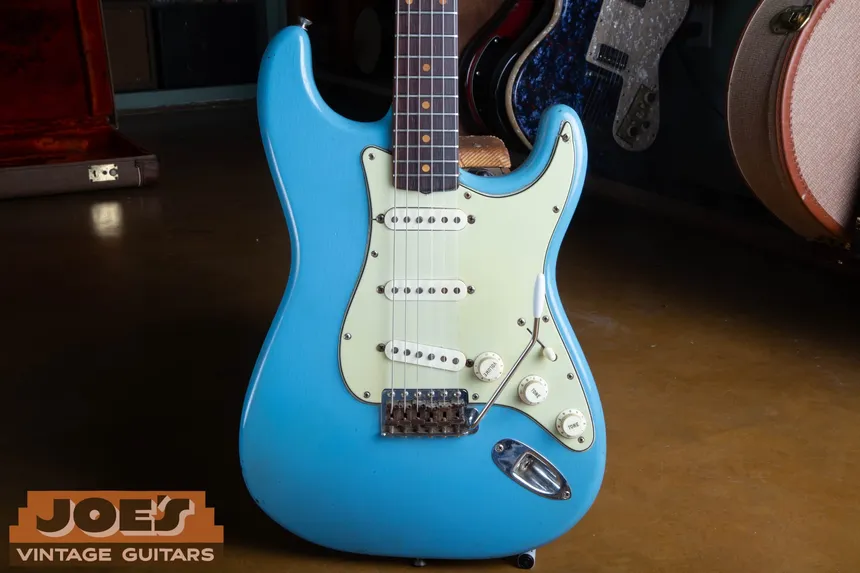
The pictured Stratocaster is already identified as refinished in my custom-color guide. Its photograph illustrates the category; it isn't a price comparison with a particular original guitar. I don't assign a value to a specific instrument from the color visible in a photograph.
The Body, Neck And Headstock Are Separate Questions
A guitar doesn't have to be refinished everywhere. Its body may have been repainted while the neck stayed untouched. A headstock face may have received new finish during another repair, with the rest of the instrument left alone.
That is why I ask which surfaces were worked on. A seller who knows only that the guitar was refinished shouldn't have to guess at the details. Say what you know, keep any invoice and let the examination establish the rest.
On the vintage Fender headstocks discussed in my finish guide, the water-slide decal was applied over the clear coat, last. A decal buried beneath lacquer indicates the headstock was resprayed. Whether the original headstock face and decal survived is part of the assessment, even if the body has clearly been repainted.
An intact old dealer decal can provide supporting evidence because those decals also sit on top of the finish. It isn't a certificate covering every surface of the instrument. The neck and body may have different work histories, and each needs to be described accurately.
My Fender custom-color authentication guide covers the factory finish sequence and repair-department evidence in detail. Those checks belong to identification; they shouldn't be replaced by a guess based on how bright or old the guitar looks.
Original Parts Still Have A Place In The Assessment
A repaint doesn't make the remaining original parts irrelevant. Pickups, controls, hardware and the neck can still be part of what a buyer wants. I assess them separately instead of assuming that a refinished guitar must also have been rebuilt.
The opposite assumption is just as unhelpful. A guitar may retain its first finish but have replacement pickups or enlarged openings hidden under a pickguard. Its finish category doesn't tell the whole story about its originality.
If the guitar was repainted during a larger modification, describe both jobs. My guide to replacement pickups and altered pickup openings explains the difference between changing a removable part and cutting into the body. Keeping that history clear makes the comparison more useful.
Keep removed original parts with the instrument. Don't refit them simply to make photographs look more original. A buyer needs to know that the parts were changed, and an old component beside the guitar can be examined without disturbing it again.
A receipt for the work can establish what the repairer was asked to do. It may identify the finish used, the affected surfaces and any parts supplied. It doesn't, by itself, prove that every unmentioned component remained original.
Factory Refinishes Need Their Own Description
Fender operated a repair and refinish service. Those guitars could receive the same materials and process marks as new production, while still carrying a finish applied after their first sale. Good factory workmanship can therefore resemble original production work closely.
The repair department's identifying marks and the history of the work help separate the two. A mark that matches the documented service process is evidence to examine, not a reason to skip the rest of the guitar. The features of the finish also need to make sense for the period when the work was done.
I describe a documented factory refinish as a factory refinish. That preserves its history and distinguishes it from an undocumented repaint. It should never be advertised simply as original finish because the later paint also came from Fender.
There isn't a separate automatic factory-refinish percentage in this guide. The documentation, surviving parts and condition need individual comparison. That prevents a broad full-refinish allowance from being presented as a precise valuation of an unusual documented instrument.
Acoustics, Archtops And Later Instruments
On a flat-top acoustic, establish whether the work affected the top, the whole body, the neck or only a local repair. A top-only treatment and a full-body strip aren't interchangeable. I also want to know whether repairs to the bridge, bracing or cracks accompanied the finish work.
Archtops need the same separation between appearance and construction. A refinished surface may hide the extent of earlier work around edges or repaired areas. The assessment should describe what was changed rather than treating a clean-looking surface as proof that the wood beneath is untouched.
For later instruments, start with the demand for the exact model and specification. A later production guitar doesn't automatically share the collector market of a much earlier one. Age alone doesn't establish a different deduction, and I don't invent a smaller numerical band simply because the guitar is newer.
The Gibson model guides and Fender model guides help identify the appropriate comparison. Where the work is partial or the specification unusual, an individual assessment is more useful than forcing the guitar into a table row.
Should I Refinish It To Make It Look Better?
No, not as preparation for a sale. A worn original guitar may be exactly what a buyer wants. Refinishing spends money while permanently changing the surface the buyer would otherwise have had the option to preserve.
If you're keeping the instrument to play, that is a different decision with different goals. My guide to restoration before selling separates necessary work from changes made only to improve its appearance. Find out what you have before choosing either.
Refinished Guitars Can Still Be Good Buys
A refinished guitar can offer a player an older instrument without the same demand from collectors seeking untouched finish. Look for stable repairs, suitable parts and a clear description of the work. The lower comparison doesn't excuse hidden problems, and a repaint doesn't tell you how the guitar feels or sounds.
Questions About Refinish Value
How Much Does A Full Refinish Lower Value?
A full refinish generally means 40 to 60 percent less than a comparable original. Compare the same model and period with similar parts, wear and structural condition.
Does A Professional Refinish Avoid The Loss?
No. A professional full refinish still generally means 40 to 60 percent less than a comparable original. Good workmanship helps preserve the remaining instrument, but it doesn't replace the first finish.
Is Overspray The Same As A Full Refinish?
No. Overspray adds finish over an existing surface, while a full refinish may remove or replace much more material. The extent of the work and what survives underneath need to be established before making a comparison.
Does A Custom Color Repaint Add The Original Color Premium?
No. A later custom-color repaint doesn't establish that the guitar left the factory in that color. Compare it with its actual original specification and describe the later finish clearly.
Is A Fender Factory Refinish Original Finish?
No. A factory refinish is later work by Fender. Its documentation and repair-department evidence can distinguish it from an aftermarket repaint, but it is still different from the guitar's first finish.
If you know the guitar was repainted but aren't sure how to describe it, send what you have through my free guitar appraisal. Existing photographs and repair paperwork are enough to start the conversation.