

Those are broad vintage Les Paul reference allowances, not a deduction that fits every electric guitar. The model, the pickups it originally carried and whether those originals survive all affect the comparison.
My guide to what lowers vintage guitar value covers the wider instrument. If a pickup change accompanied a repaint, use the separate guide to refinish value loss to understand that part of its history.
Pickup Changes And Their Value Effect
As of October 2026, these are the general comparisons I use to explain the difference between a removable change and a change to the body. A particular guitar still needs to be identified and inspected.
Scroll The Table To See Every Column
| Change | Value Comparison | What The Comparison Assumes |
|---|---|---|
| Replaced Pickups Without Routing | About 25 percent less than a comparable original | A vintage Les Paul reference; verify which originals are missing and any surviving loose parts |
| Routed For A Different Pickup | 35 to 40 percent less than a comparable original | A change such as enlarging a P-90 opening for a humbucker; original wood was removed |
I don't add those rows together for one routed pickup swap. The second comparison already includes a more invasive kind of change. Counting the replacement and the same routing as unrelated deductions would describe the job twice.
There isn't one separate allowance here for originals retained in the case, rewound coils, opened covers or missing PAFs. Those situations need more detail than a universal number can give. A surviving original pickup can be useful without making a changed guitar untouched again.
My Les Paul market value guide is the model context for these broad allowances. They shouldn't be transferred automatically to a later reissue, a different Fender model or a guitar that never had the pickups a seller assumes it did.
Sound And Originality Answer Different Questions
A pickup uses magnets and coils of fine wire to turn string vibration into an electrical signal. Replacing it can change how an electric guitar sounds through an amplifier. That can be a useful choice for a working player while still reducing the appeal to a collector looking for factory components.
A good replacement isn't a bad part just because it isn't original. The question for a sale is what the buyer is being offered. A guitar with modern pickups should be described that way, even if its owner prefers the sound to the original set.
I separate a claim about tone from a claim about identity. Saying the guitar sounds like an old Les Paul doesn't authenticate its pickups. A familiar cover, an aged screw or a convincing decal doesn't establish everything underneath it either.
Original means the component that belongs to the guitar from the factory. Period-correct means a component appropriate to the time and specification. A period replacement may help complete a guitar, but it shouldn't be represented as a part that was never changed.
If you inherited the guitar, you may not know any of that history. Describe what you were told and keep the parts or paperwork that came with it. You don't need to identify the winding or date a solder joint before asking for help.
Routing Changes The Body
Routing means cutting a cavity in the wood, usually to fit a different part. A guitar that left the factory with P-90 pickups may have had its openings enlarged for humbuckers. The replacement pickup can be removed later, but the original wood cannot simply be put back.
That is the distinction behind 35 to 40 percent less than a comparable original for the routed comparison. A neat job and a rough job aren't identical, but both need to be disclosed. A pickguard or pickup ring may hide the opening during ordinary use.
Don't assume every unusual cavity is an aftermarket modification. Factories used different routes for different instruments and periods. The opening has to be compared with the construction of the actual model, not with a photograph of another guitar that happens to look similar from the front.
Work around a pickup can also affect screw holes or the way a guard fits. Those details belong in the description. Calling the whole change reversible because the old pickup still fits over the opening leaves out what happened to the body.
Leave the pickguard and pickups in place for an initial photo appraisal. Old wiring can be short or fragile, and removing parts just to look underneath can create a new problem. A specialist can decide what needs to be opened after seeing the guitar.
Why Gibson PAFs Need Their Own Assessment
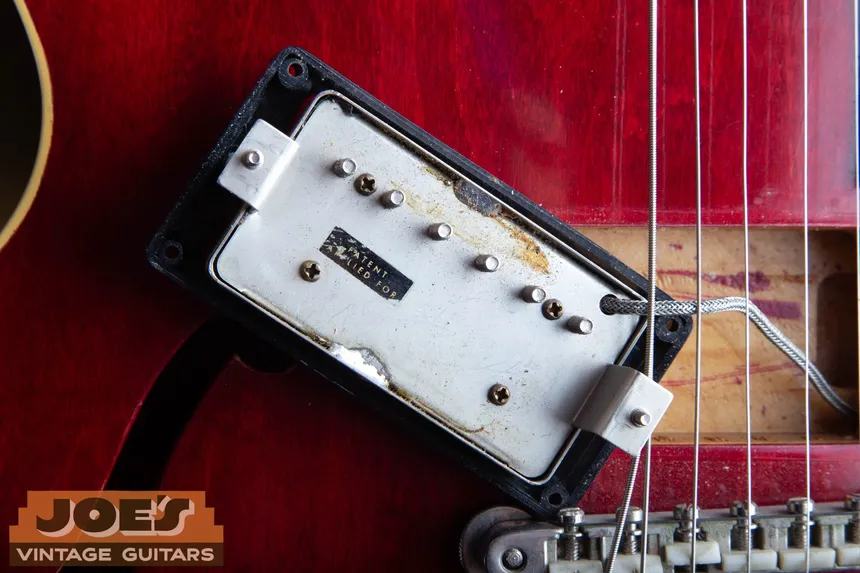
PAF is the familiar name for Gibson's early humbucking pickups carrying a Patent Applied For decal. They are part of the identity of many sought-after Gibson guitars. The particular construction and surviving components need to agree with the guitar and with the pickup being claimed.
A valuable early Gibson with missing original pickups can be a different comparison from a more ordinary guitar with a routine replacement. I don't flatten those cases into the same automatic allowance. The PAF and Patent Number pickup guide explains the construction and inspection evidence.
The cover alone doesn't settle the question. Parts can be mixed, and some work is hidden beneath a sealed cover. Don't remove one simply to find out whether the bobbins look right; opening it changes the evidence and risks damaging the pickup.
A loose pair described as original needs inspection too. It may be the set removed from this guitar, a period replacement or a set assembled from other parts. Keep any history connecting the pickups to the instrument rather than assuming their age proves the connection.
For an ES-family guitar, the ES-335 value guide supplies model context. It is more useful to establish the guitar's actual year, specification and surviving parts than to start with a standalone pickup price and subtract it from a complete guitar.
What A Rewind Changes
A rewind replaces the fine wire wound around a pickup's coil. It can be a repair to a pickup that no longer works properly. Depending on the job, original bobbins, magnets, baseplate and other components may remain, but the coil is no longer carrying its factory winding.
For a collector, that distinction needs to be recorded. A functioning rewound pickup isn't the same description as an untouched functioning pickup. For a player, a well-repaired original pickup may be more useful than a silent one, so the reason for the work also deserves a plain account.
Retaining original components can make a rewind preferable to throwing the whole pickup away. It still doesn't justify calling the pickup untouched. I ask what failed, who did the work and which components were retained, rather than treating the word restored as a complete answer.
A repair invoice can help distinguish a rewind from a smaller lead-wire repair. A lead is the wire connecting the pickup to the rest of the circuit. Replacing or repairing that connection doesn't necessarily mean that the coil itself was rewound.
I don't assign every rewind a percentage here. The pickup type, the extent of the work, surviving evidence and the guitar it belongs to all need to be considered. Where that history is unknown, I would rather describe it as unknown than certify a factory winding from appearance alone.
PAF Decals And Factory Sanding
Sanding scratches beneath a Gibson pickup decal aren't automatically a warning. On PAF and Patent Number baseplates, scuffing in the sticker area helped the decal adhere. Lengthwise brushing across the plate is also normal factory work.
The warning is fresh, bright abrasion cutting through older patina beneath a new-looking decal. Patina means the aged surface that develops over time. The age and relationship of those marks matter more than the mere presence of scratches.
Don't scrape, polish or peel a decal to test it. That can destroy the very surface needed for an assessment. A sharp photograph under ordinary light is a better starting point, with any cover removal left to someone qualified to judge whether it is necessary.
A replacement decal doesn't turn a pickup into a PAF. The construction, materials and work have to agree. Equally, a worn or damaged label isn't enough on its own to discard an otherwise plausible original pickup.
If a pickup has been opened or re-stickered, say so. An uncertain history can remain uncertain in the listing. The goal is to give the next owner an accurate account, not to choose the most valuable label that might fit.
Evidence Of A Pickup Change
Disturbed solder, changed controls and altered openings can point to work on the electronics. None should be read in isolation. A repair to a switch may disturb solder without replacing the pickups, while old components can be moved into a different guitar.
Pot codes are markings on the backs of the volume and tone controls. They can help date those parts, but they don't automatically date the whole instrument. My Gibson pot-code guide and Fender pot-code guide explain how to read them in context.
Fender pickup details also vary by period. Use the Fender pickup dating reference for that evidence rather than assuming that every dark bobbin, pencil mark or wire color means the same thing. The dates and construction need to agree with the rest of the instrument.
Photographs already taken during a past repair can be helpful. Keep the original files and the invoice together so the images have a known context. You shouldn't need to repeat the disassembly merely because an older photograph wasn't included with a sale listing.
Finish work can sometimes be part of the same modification history. If you suspect that, the guide to recognizing refinish evidence describes what to photograph. A pickup change by itself doesn't establish that the guitar was repainted.
A full refinish generally means 40 to 60 percent less than a comparable original. If the guitar also has changed pickups, assess the whole instrument against similarly altered examples rather than adding the allowances together.
Keep The Original Pickups With The Guitar
If the originals are in the case, leave them with the instrument and describe how they came to be there. Keep their screws, covers or other loose pieces together without trying to assemble them. A repairer or buyer can then examine the actual package.
Don't reinstall the pickups to make the guitar appear unchanged. Returning a component can be a legitimate repair decision after an assessment, but it doesn't erase the replacement history. The next owner should know that the wiring was disturbed and which parts were refitted.
If you are keeping the guitar, tell the repairer that preserving the original components is part of the job. If you're selling, get the instrument assessed before paying for another round of work. There is no need to decide what to reinstall just to obtain an initial opinion.
Questions About Replaced Pickups
Do Replaced Pickups Lower Vintage Guitar Value?
A swap without routing can mean about 25 percent less than a comparable original as a broad vintage Les Paul reference. The model, missing pickups and surviving original parts need their own assessment.
Does Routing Hurt More Than A Simple Swap?
Routing for a different pickup can mean 35 to 40 percent less than a comparable original. The change removes wood, so putting the old pickup back doesn't restore the original body.
Are Rewound Pickups Bad?
A rewind can make an original pickup usable again while retaining some original components. It should be disclosed because the factory winding has changed. The quality and extent of the repair need to be assessed.
Do Scratches Under A PAF Decal Prove It Is Fake?
No. Factory scuffing in the decal area and lengthwise brushing are normal. Fresh, bright abrasion through older patina beneath a new-looking decal is the warning that needs closer inspection.
Should I Reinstall The Originals Before Selling?
Keep them with the guitar and get an assessment first. Reinstalling parts doesn't erase the work history, and the buyer should be told what was changed and what survives.
If you have a changed guitar and a bag of old parts, include both when asking for a free photo appraisal of the guitar. Tell me what you know and leave the unknown parts of its history open.