Compare real Kluson, Gibson Deluxe, waffleback, Sealfast and Grover tuners, then check the button and mounting evidence to see whether the hardware fits the guitar.
An original tuner can be an excellent dating clue because the casing stamps and button designs changed over time. It still dates the hardware, not automatically the guitar. Gibson used overlapping stock, tuner choice varied by model, and players commonly replaced worn Klusons with Grovers or newer sealed gears.
This chart follows the common Kluson sequence found on many Gibson electrics. The dates are working ranges, transition-year guitars can carry mixed stock, and premium models often follow their own tuner sequence.
Approximate Use
Tuner Style
How to Read It
Late 1940s on some models
Open-back Kluson Deluxe
Some late-1940s Gibsons used an earlier open-back design. This sits outside the later closed, ribbed Kluson sequence, and premium archtops could use another family entirely.
About 1949 to early 1952
Early closed single-line Kluson
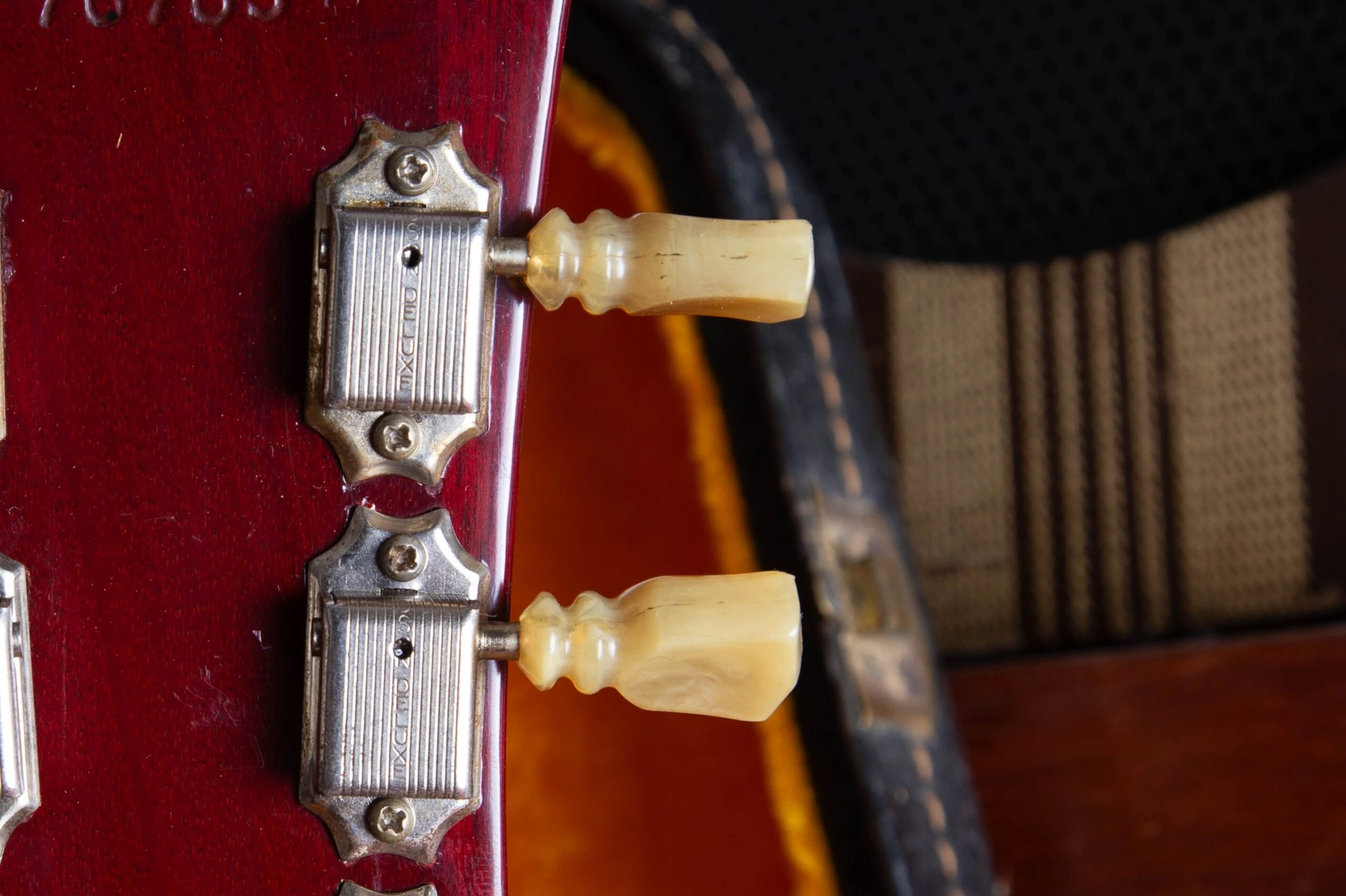
The closed casing has one vertical Kluson Deluxe line, no worm-shaft opening and PAT. APPLD. on the cover edge. It is different from the later single-line version.
About 1951 or 1952 to mid-1956
No-line Kluson, single-ring button
The closed, ribbed casing has no maker name. A side opening for the worm shaft appears around 1953. No-line and single-line sets overlap during the mid-1950s.
Mid-1950s to late 1950s
Single-line Kluson, single-ring button
One vertical Kluson Deluxe line appears on the casing. Many examples carry 2356766 PAT. APPLD. underneath, and factory overlap with no-line sets is documented.
About 1957 or 1958 to mid-1960
Single-line Kluson, single-ring button
The visible casing stays similar while D-169400 PATENT NO. begins appearing underneath. Mixed underside stamps occur during the transition.
Mid-1960 to about 1964
Single-line Kluson, double-ring button
The casing still has one Kluson Deluxe line, while the plastic button changes to two molded rings near the shaft.
About 1964 or 1965 to 1969
Double-line Kluson, double-ring button
Kluson and Deluxe appear as two vertical lines. Many 1964 Gibsons still have single-line tuners, so the transition overlaps.
Late 1968 or 1969 through the late 1970s on some models
Gibson Deluxe
Gibson replaces Kluson in the casing stamp. Kluson Deluxe overlaps into the early 1970s, while Gibson Deluxe remains on some models through 1980. Button style still depends on the model.
Three Real Examples
Kluson And Gibson Deluxe Tuners By Era
Enlarge each original photograph and read the vertical stamp on the ribbed metal cover. Then check the button separately.
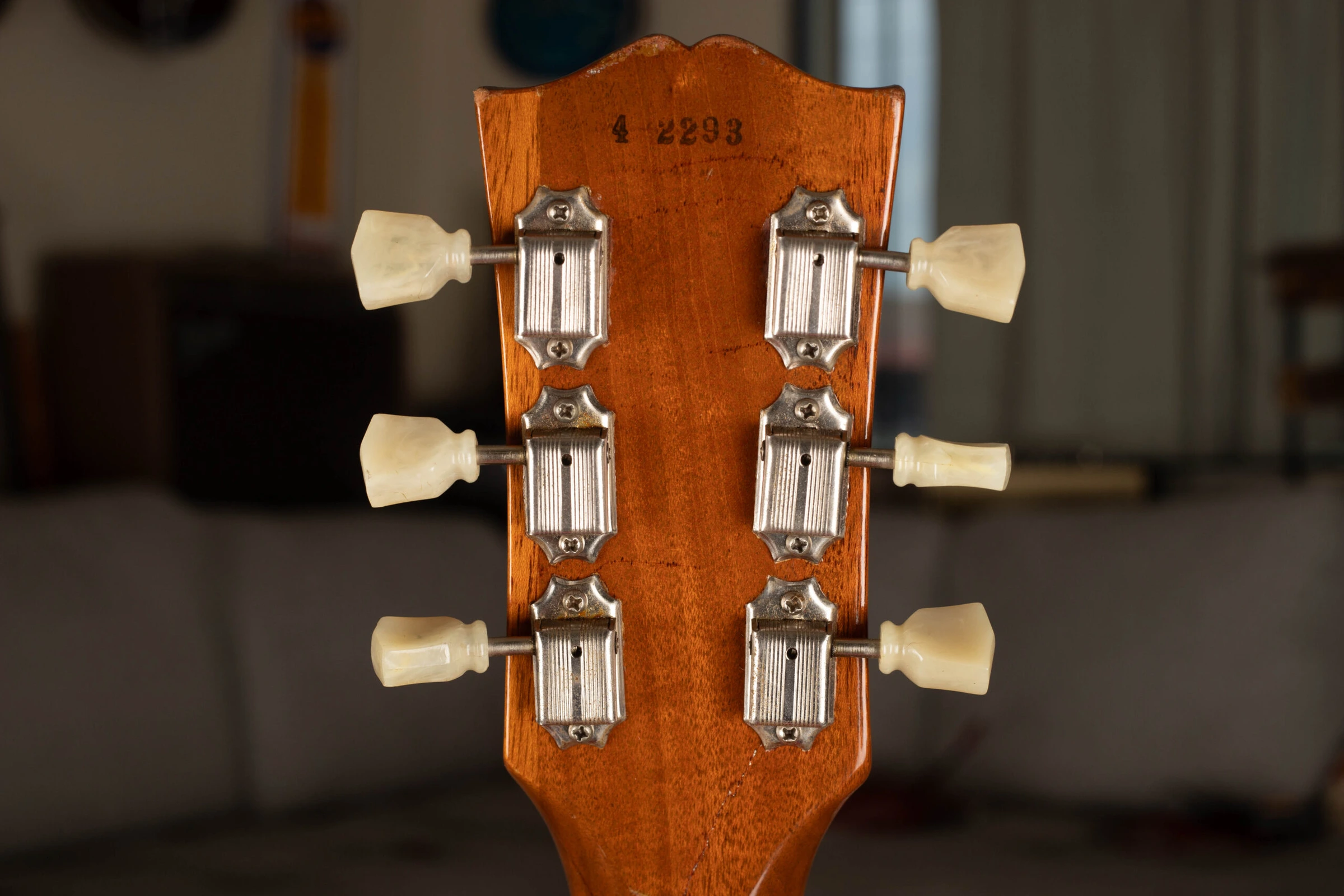
Enlarge photoAbout 1951 or 1952 to mid-1956: No-Line Kluson
Original no-line Klusons on a 1954 Les Paul Goldtop. The ribbed covers have no Kluson Deluxe name stamped into them.
Style 01
About 1951 or 1952 to mid-1956
No-Line Kluson
The no-line Kluson is the familiar early 1950s version. Its closed, ribbed metal casing has no Kluson Deluxe wording. The earliest examples lack a side opening for the worm shaft, while examples from about 1953 onward normally have it.
No-Line Identification Clues
Closed, ribbed casing
No maker name on the cover
Usually a single-ring plastic button
Dating limit: No-line supports an early to mid-1950s date only when the tuner belongs on that model and the mounting pattern is untouched.
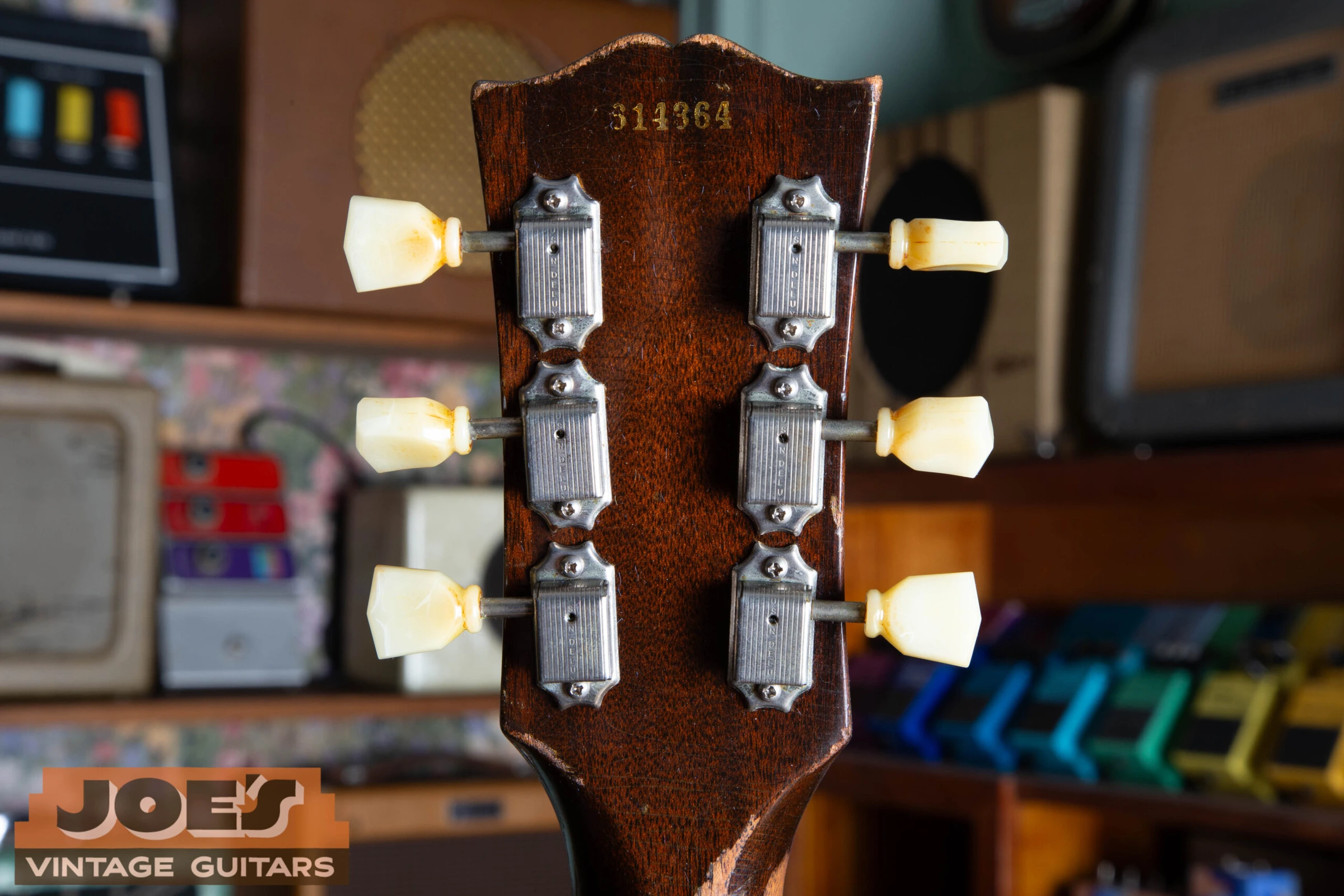
Enlarge photoMid-1950s to about 1964: Single-Line Kluson
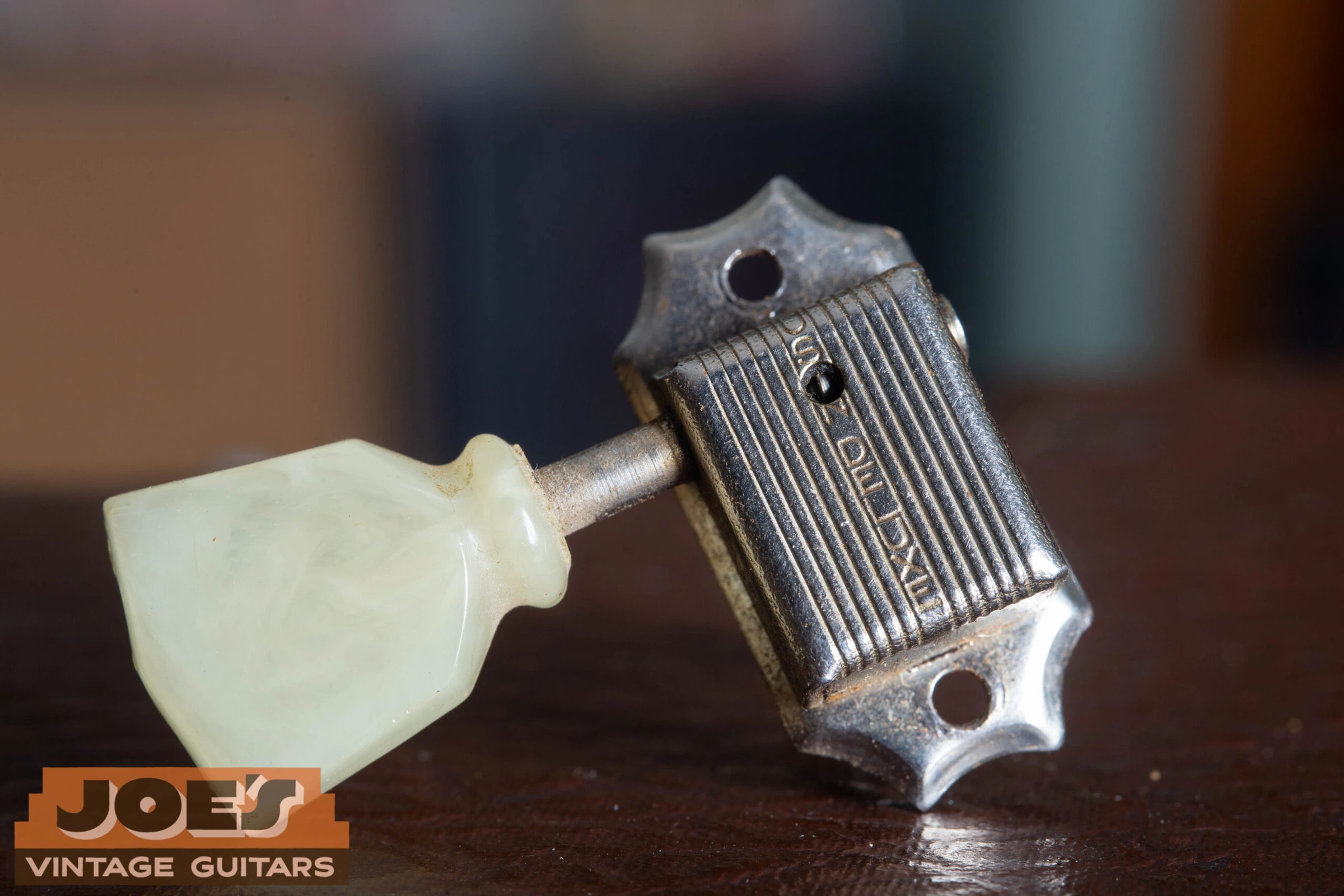
A single-line Kluson from a 1956 Les Paul Model. Kluson Deluxe is stamped in one vertical line on the ribbed cover.
Style 02
Mid-1950s to about 1964
Single-Line Kluson
The later single-line casing appeared during the mid-1950s and overlapped no-line sets into 1955 and 1956. Early versions use a single-ring button. The underside stamp changes during the late 1950s, and the visible button changes to the double-ring form around mid-1960.
Single-Line Identification Clues
One vertical Kluson Deluxe line
Single-ring or double-ring button
Underside patent separates versions
Dating limit: The line count alone spans two button styles and two underside markings. Use all three clues before assigning a narrower range.
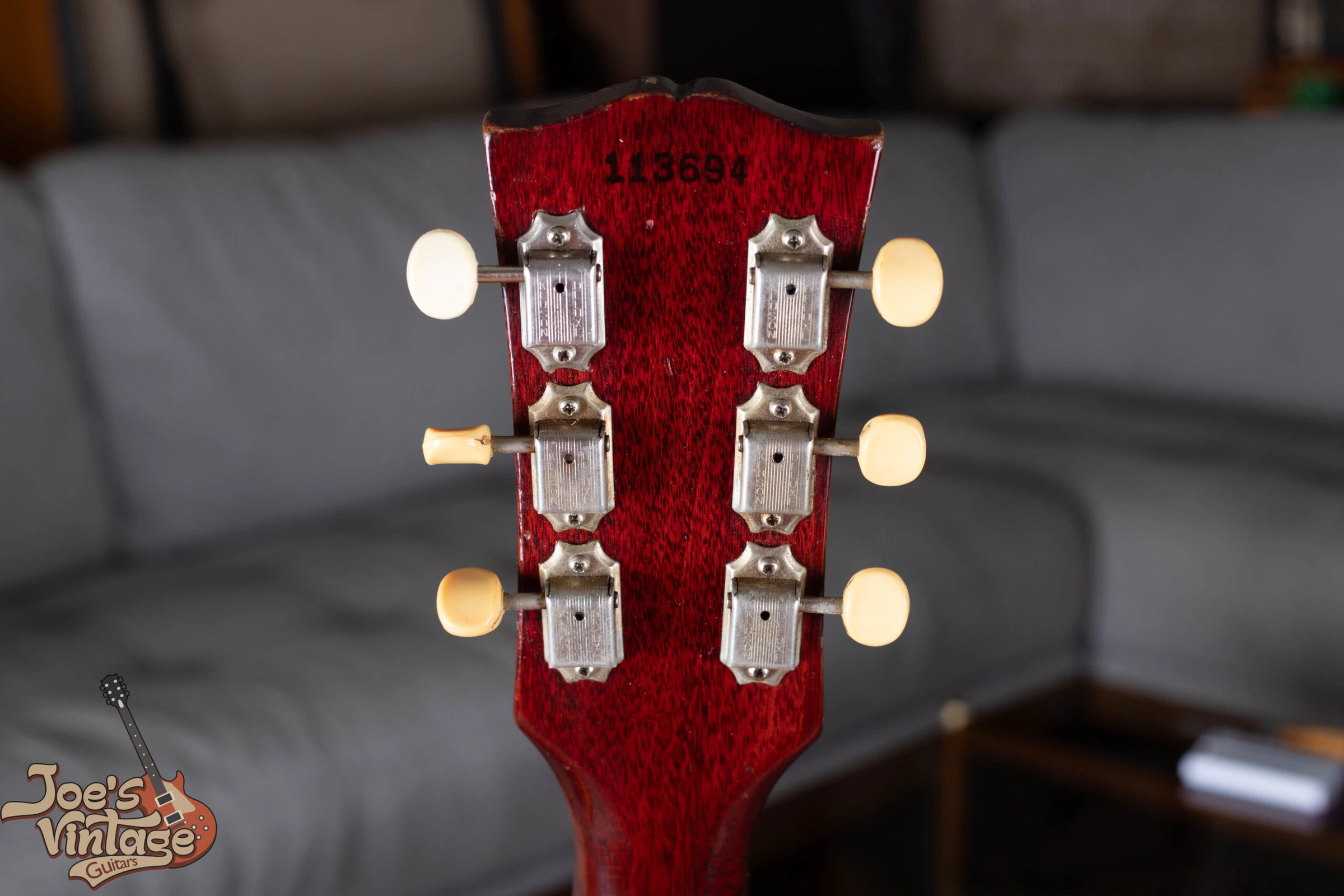
Enlarge photoAbout 1964 or 1965 to 1969: Double-Line Kluson
Double-line Klusons under serial 113694. That reused number can read as 1963 or 1967, while the double-line tuner style supports 1967.
Style 03
About 1964 or 1965 to 1969
Double-Line Kluson
The double-line stamp began appearing around 1964 and became common during 1965. It is normally paired with double-ring buttons. Gibson used remaining single-line stock on some 1964 instruments, so the change was not a clean factory-wide cutoff.
Double-Line Identification Clues
Two vertical words
Double-ring plastic button
Common on mid-to-late 1960s Gibsons
Dating limit: A double-line tuner can support a 1960s date, but vintage Klusons were frequently installed on other guitars and have been reproduced.
A Separate Dating Clue
Single-Ring Versus Double-Ring Kluson Buttons
The ring name refers to the molded ridges at the base of the plastic button, not the lines stamped into the metal casing. Combining both clues produces the useful date range.
Two molded rings appear at the base of each plastic button. This change occurred around mid-1960 and overlapped by model and stock.
Single-Line Plus Single-Ring
Most often mid-1956 to about mid-1960. The underside patent wording helps separate the earlier and later part of this range.
Single-Line Plus Double-Ring
Most often about mid-1960 to 1964. Some 1964 Gibson guitars still used this combination.
Double-Line Plus Double-Ring
Most often about 1964 or 1965 to 1969, before the casing stamp changed to Gibson Deluxe.
Model-Specific Families
Waffleback, Sealfast And Grover Tuners
Premium Gibson models don’t always follow the standard Kluson Deluxe timeline. These tuner families identify an equipment type first. The guitar model determines how tightly that evidence can be dated.
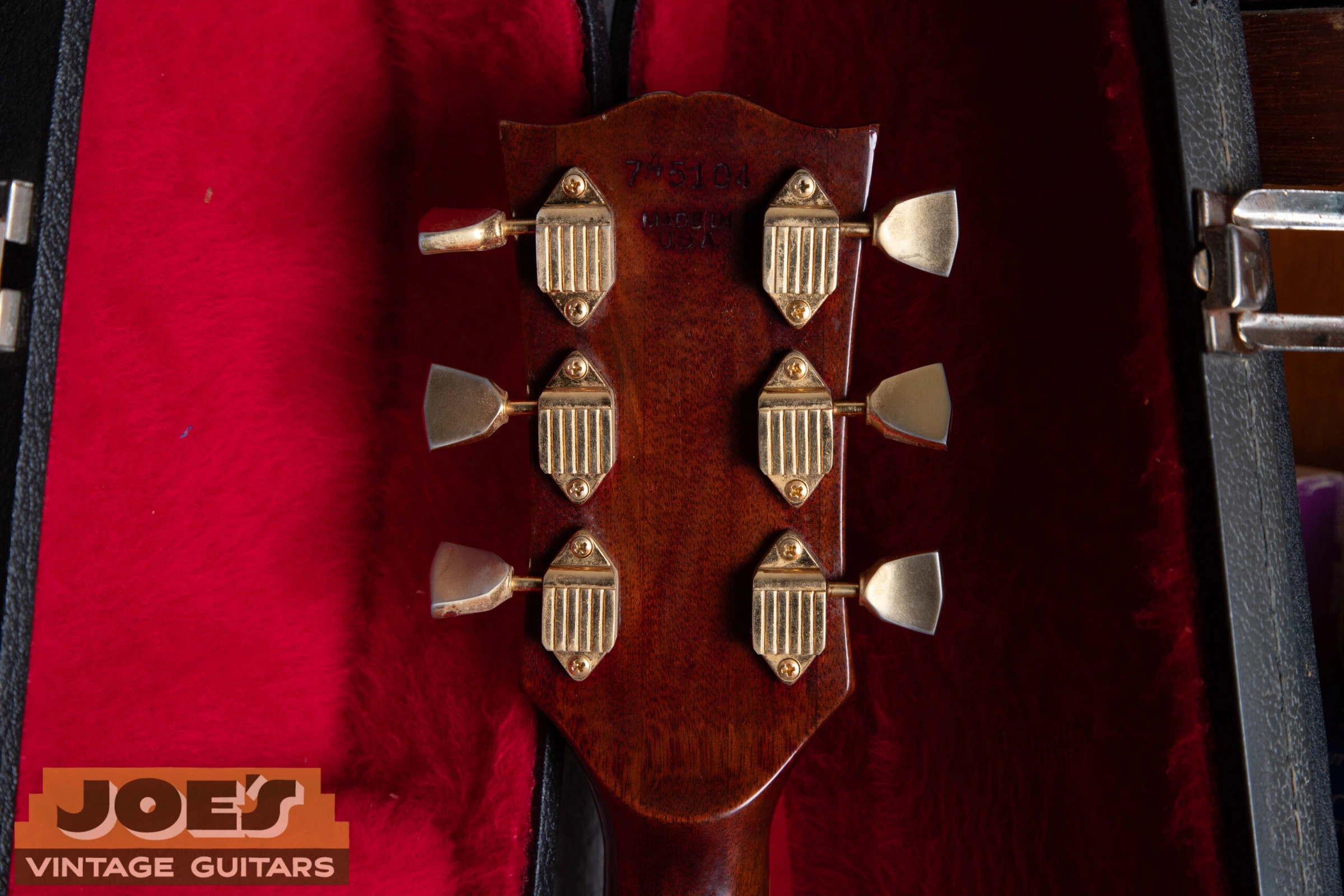
Gold waffleback tuners on a 1972 SG Custom. The deep vertical ribs create the waffleback nickname.
Family 01
Model-Specific Use
Kluson Waffleback Tuners
The Kluson Super is also called the Waffleback or Radiator Back. Gold versions appeared on selected premium Gibsons in more than one period, including early Les Paul Customs and ES-355s from late 1963 onward.
Waffleback Identification Clues
Large rectangular cover
Lengthwise raised ribs
Usually gold on premium models
Dating limit: There is no single universal waffleback date range. Compare the exact version with the model, plating and other hardware.
Enlarge photoHigh-End Model Evidence: Kluson Sealfast Tuners
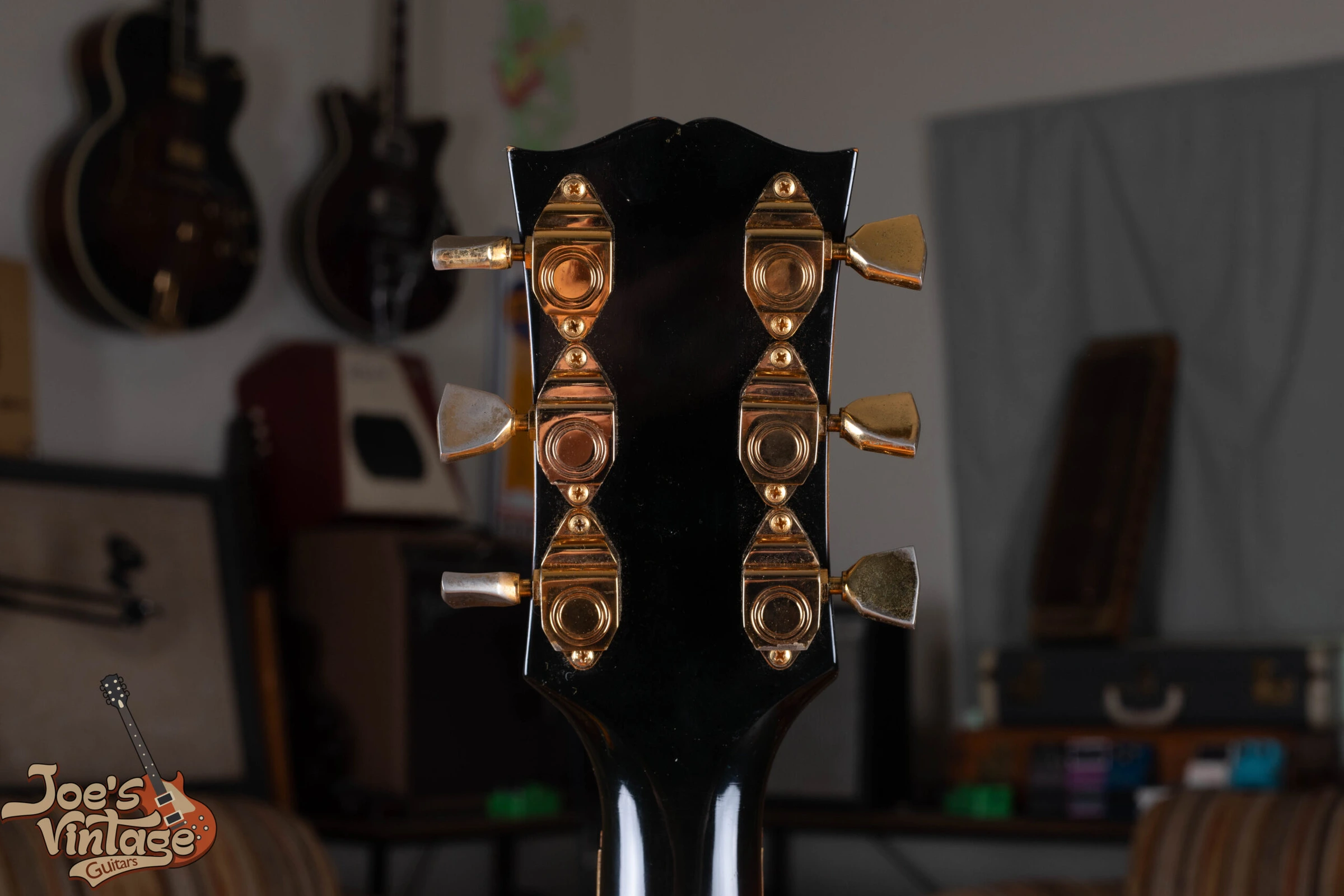
Gold Kluson Sealfast tuners on a high-end Gibson. The round center housing makes them easy to separate from wafflebacks.
Family 02
High-End Model Evidence
Kluson Sealfast Tuners
Sealfast tuners were premium enclosed gears used on high-end models such as the Super 400, Johnny Smith and Byrdland. Their presence can confirm the expected specification, but the family spans too much time to date a guitar narrowly by itself.
Sealfast Identification Clues
Boxy housing
Round ringed center on the back
Commonly gold plated
Dating limit: Treat Sealfast as a model and trim-level clue. Check a model-specific reference before using it as date evidence.
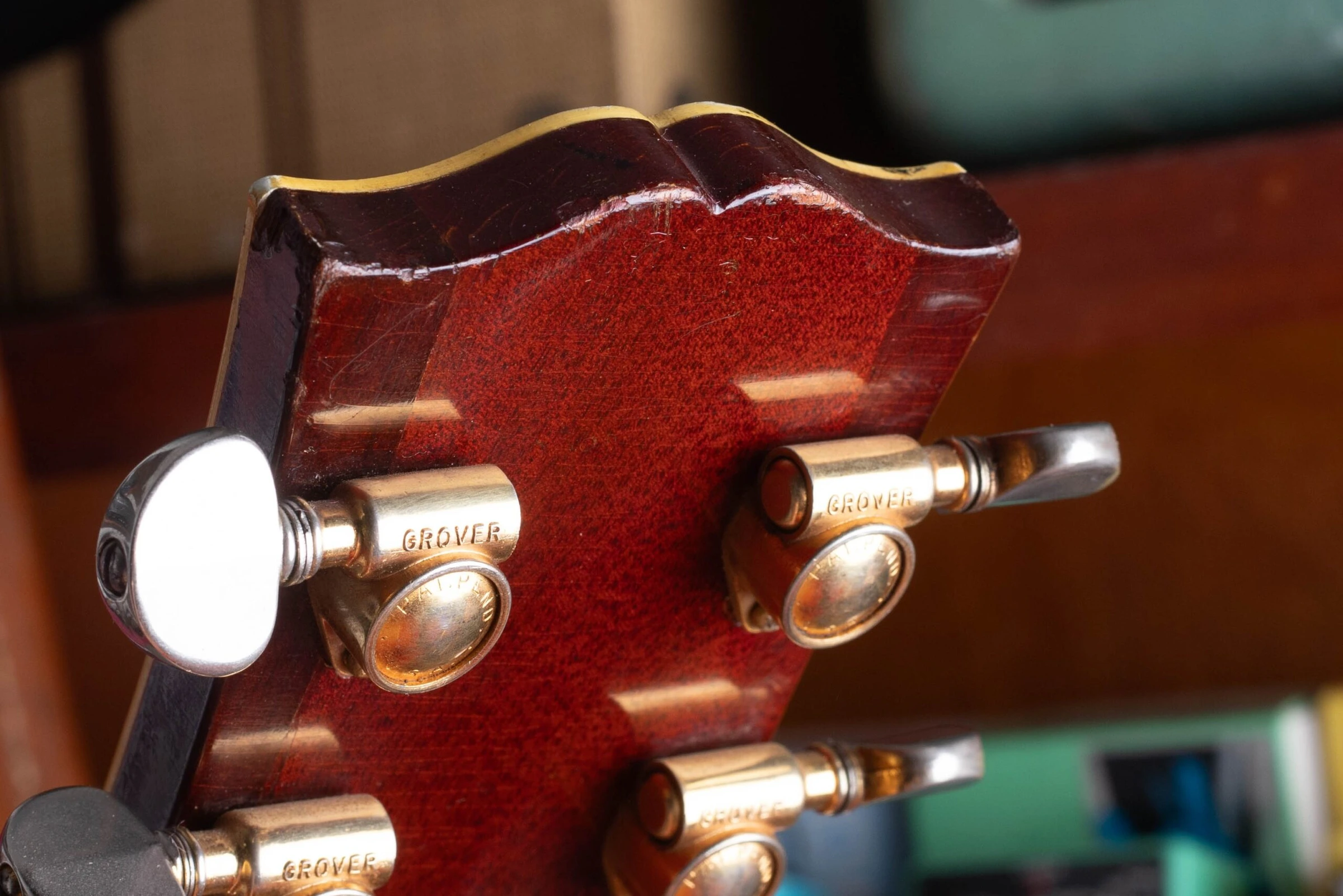
Gold Grover Rotomatics on a 1959 ES-355. GROVER appears on the barrel, PAT. PEND. appears on the round gear cap, and the metal buttons have a kidney-bean shape.
Family 03
Late 1950s Onward
Grover Rotomatic Tuners
Grover Rotomatics were standard factory equipment on several premium Gibsons by the late 1950s, including early ES-355s. They also became one of the most common tuner upgrades fitted by owners.
Early Grover Identification Clues
Milk-bottle cast housing
PAT. PEND. on the round gear cap
Kidney-bean metal button
Dating limit: Grovers do not automatically prove factory originality. Extra holes, enlarged post holes and the old tuner footprint can reveal a conversion.
Premium Gibson Tuner Sequences By Model
These model sequences prevent a correct gold tuner from being judged against the standard nickel Kluson chart.
Model
Approximate Use
Factory Tuner Evidence
ES-345
1959 to 1964
Gold single-line Kluson Deluxe tuners with single-ring buttons.
ES-345
1965 to 1969
Gold double-line Kluson Deluxe tuners with single-ring buttons. The gold ES-345 kept single-ring buttons after most nickel sets changed.
ES-345
1969 to 1980
Gold Gibson Deluxe tuners with single-ring buttons.
ES-355
1958 to late 1963
Gold Grover Rotomatics with PAT. PEND. on the gear cap.
ES-355
Late 1963 into the early 1980s
Gold Kluson Super or waffleback tuners with metal buttons.
Early Les Paul Custom
1950s
Gold Kluson Super or waffleback tuners are documented on early Customs. Later Customs require a year-specific comparison because Grovers and wafflebacks both appear.
Super 400, Johnny Smith And Byrdland
Model-specific use
Gold Kluson Sealfast tuners are expected on many examples, but the family spans too many years to supply a narrow date.
Three Tuners on One Plate
Gibson Strip Tuner Dating Clues
Many acoustic and lower-priced electric Gibsons used strip tuners, also called three-on-a-plate tuners. Their three gears share one metal base plate instead of using six independent units.
Closed-back Kluson strips follow a similar cover-stamp progression, but the changes can arrive later than they do on individual tuners. Many 1950s strips have oval plastic buttons and unplated brass posts. Plate shape, screw placement, posts, buttons and the exact Gibson model all matter.
This photo shows two three-on-a-plate strips, not six individual tuners. Each cover is stamped Gibson Deluxe under serial 917516, a late-1960s serial reading.
There isn’t one factory-wide tuner timeline for late-1970s and early-1980s Gibsons. Gibson used model-dependent combinations of Gibson-branded enclosed tuners supplied by Schaller, Grover Rotomatics and remaining Kluson-style units. Some Gibson-branded Schallers have a flower or leaf motif, while other enclosed versions use a plainer casing.
Read the maker mark, country stamp, mounting screw position, bushing and footprint before assigning a date. Reverse Firebirds are another separate family: the 1963 to 1965 reverse models used rear-projecting planetary banjo-style tuners, while the later non-reverse guitars used conventional tuners. See the Gibson Firebird guide for that model-specific construction.
Inspect Before You Trust the Date
How To Check Whether Gibson Tuners Are Original
1
Look for extra screw holes. Filled or unused holes often show that a different tuner was installed before.
2
Check the bushing and post hole. Vintage Kluson-style press-fit bushings commonly use an 11/32-inch hole, while many enclosed Grovers require about 10 mm or 13/32 inch. Measure before assuming the hole was enlarged.
3
Study the footprint. Finish shadows, washer rings or a mismatched outline can reveal the previous casing.
4
Compare all six tuners. Mixed plating, screws, stamps or wear can indicate a partial replacement, although factory-mixed transition sets also exist.
5
Separate buttons from tuners. A fragile original gear may have a replacement button while the rest of the tuner remains original.
6
Check the model specification. The same year can use Klusons, Grovers or premium gears on different models.
Don’t Remove Tuners Just To Read A Hidden Mark
If a tuner is already off during careful service, photograph the underside patent wording and the untouched mounting area. Otherwise, leave it installed. Unnecessary removal can chip brittle finish, loosen a bushing or break a deteriorated plastic button.
A replaced tuner doesn’t make the guitar bad. It simply means that tuner shouldn’t be used as dating evidence. Other clues, especially pot codes and undisturbed construction details, may be more useful.
They describe the maker stamp on the metal cover. A single-line tuner puts Kluson Deluxe in one vertical line. A double-line tuner separates Kluson and Deluxe into two vertical lines.
What Do Single-Ring And Double-Ring Buttons Mean?
They describe the molded rings where the plastic button meets the metal shaft. Single-ring buttons are typical before about mid-1960 on nickel Klusons. Double-ring buttons appear around mid-1960. Gold ES-345 tuners are an important exception because they kept single-ring buttons.
Can Tuners Date A Gibson To One Exact Year?
No. Original tuners can support a date range, but transitions overlapped and tuners are commonly replaced. Match the casing, button, model and mounting evidence with the serial number, FON and pot codes.
Are Grover Tuners Original On A Vintage Gibson?
Sometimes. Grovers were standard factory equipment on selected premium models, including early ES-355s, and later examples can be factory or special order. They were also a very common owner upgrade, so the mounting holes and model specification matter.
Should I Remove A Tuner To Read The Patent Mark?
Only if it is already off during careful service. The underside mark is useful, but unnecessary removal can chip finish, disturb bushings or damage a fragile button.
What Should I Do With Crumbling Kluson Buttons?
Don’t force them. Some original plastic buttons shrink and deteriorate with age. An experienced repairer can preserve the original parts and fit sympathetic replacement buttons or tuners for safe use.