
Carved Top
Les Paul Model, Goldtop And Standard
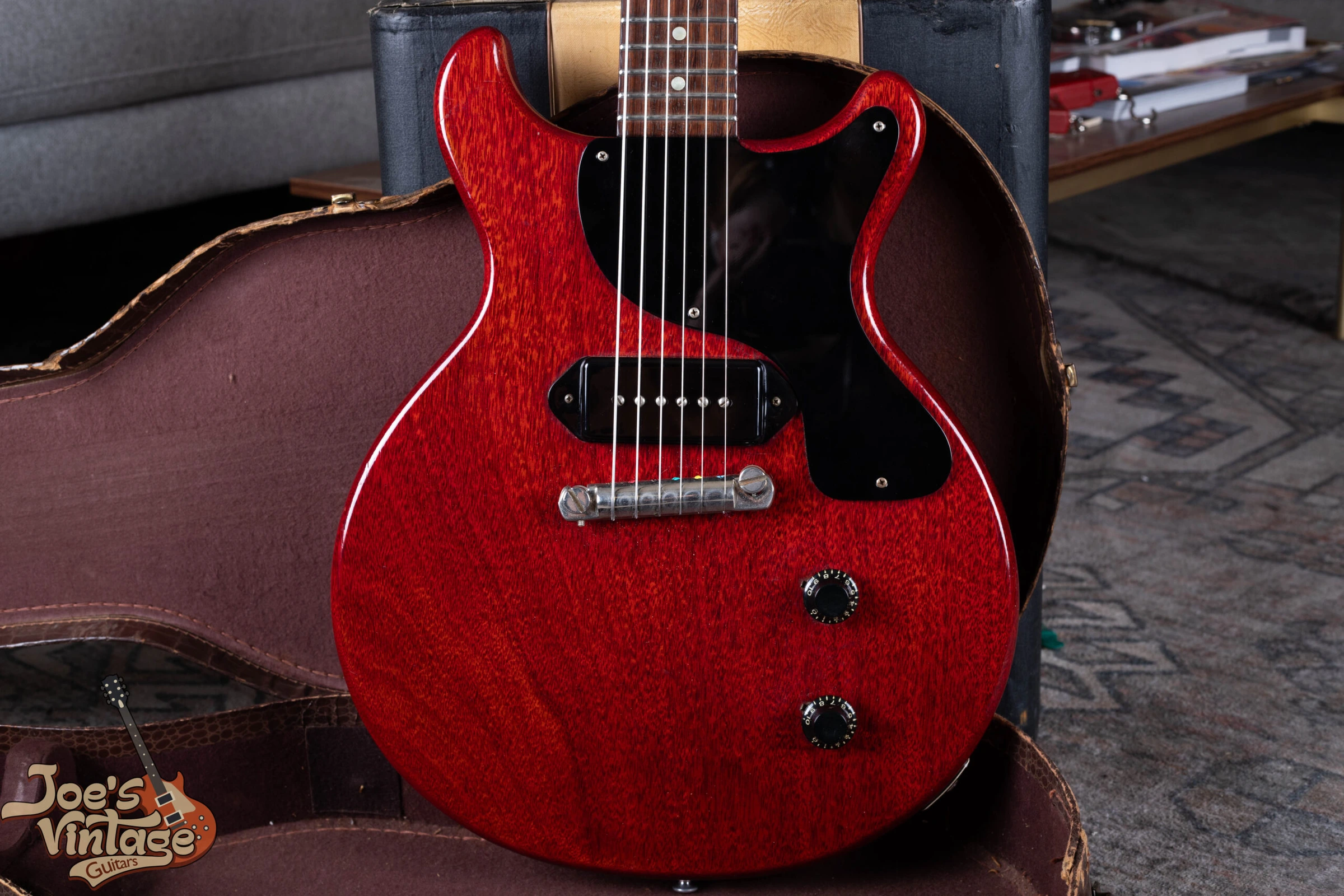
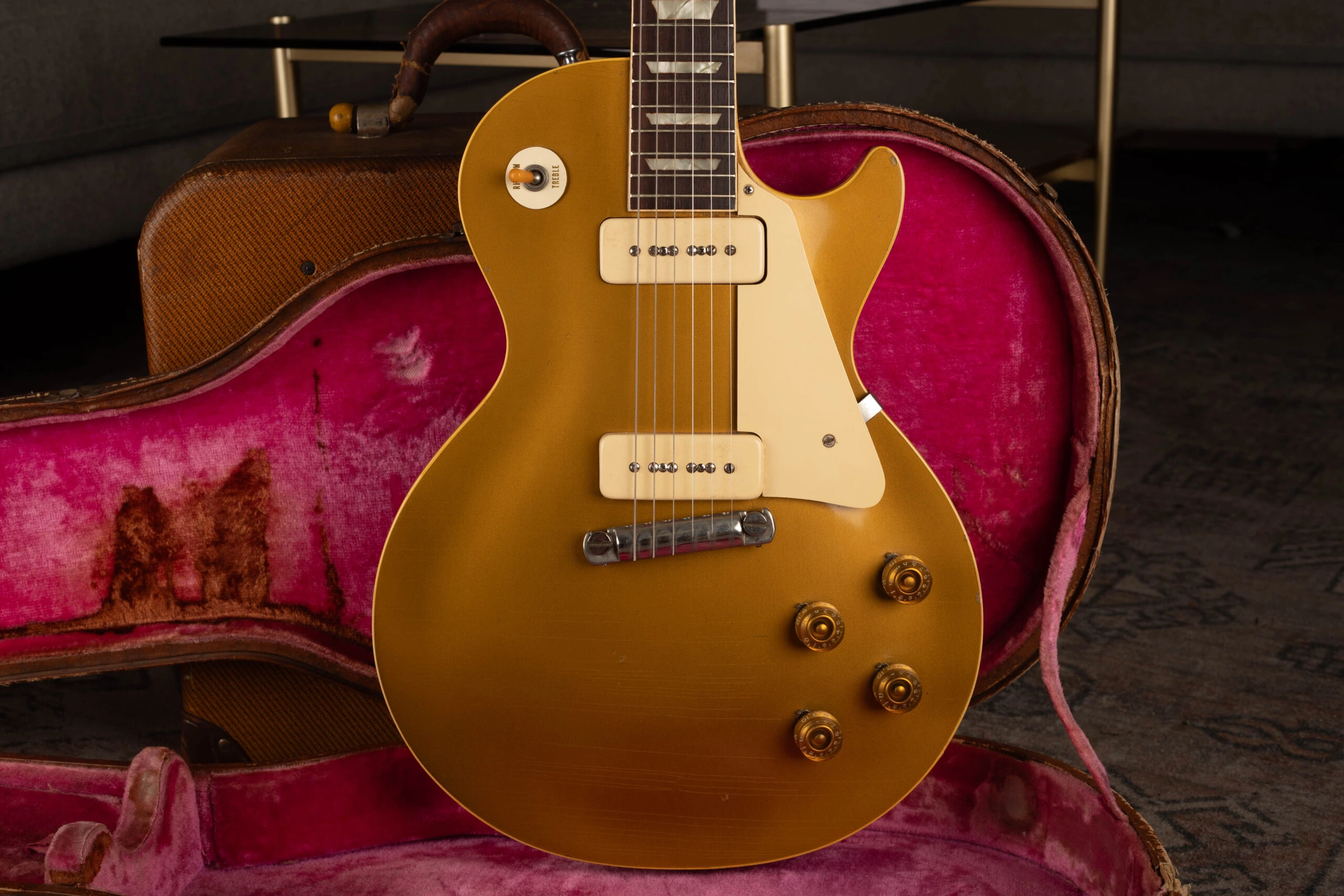
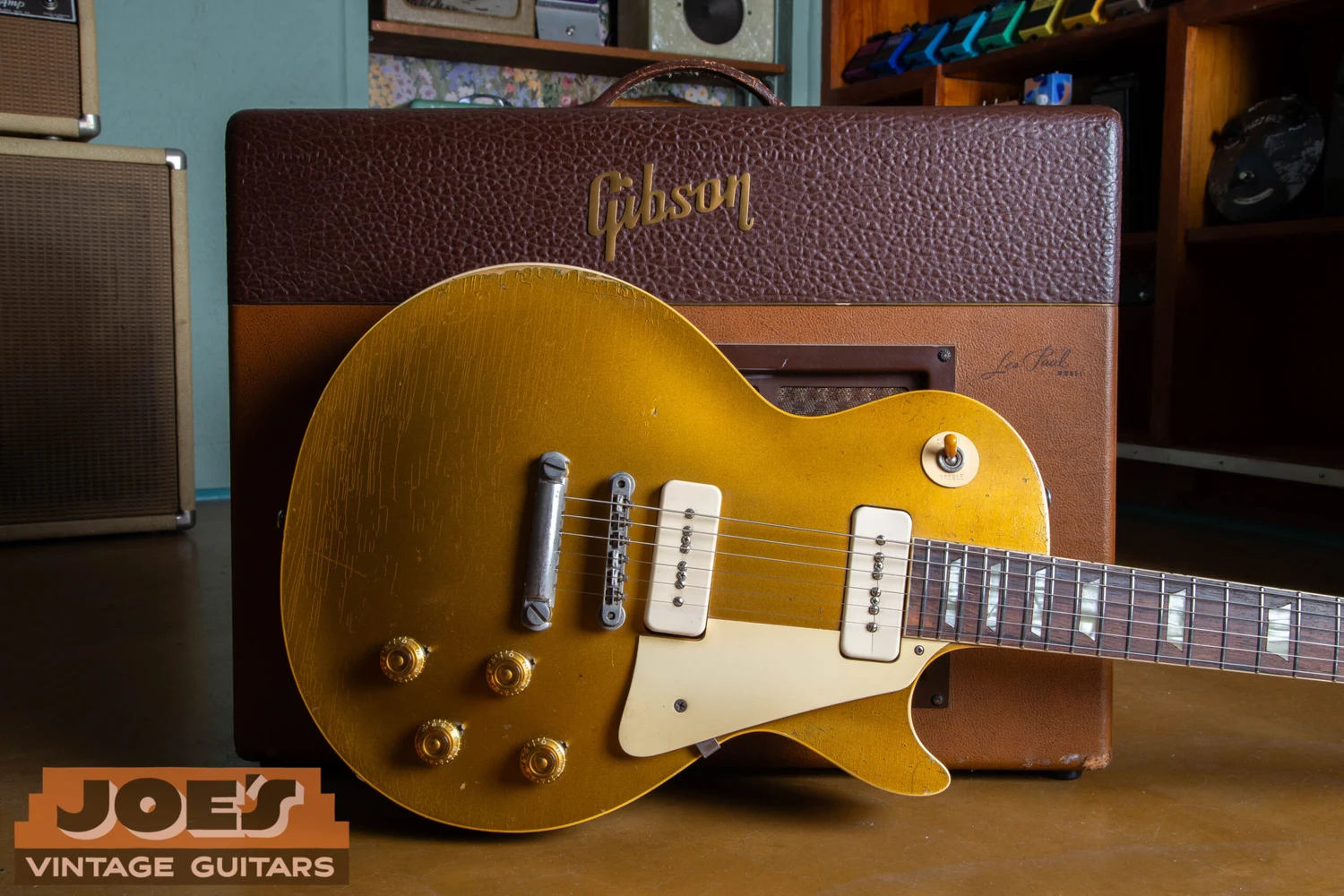
Two pickups, cream body-top binding and trapezoid inlays. Bridge and pickup type identify the period: trapeze, wraparound, P-90 ABR-1, PAF Goldtop or Cherry Sunburst Standard.
See this model’s changesGibson Model Dating Guides
Identify the Les Paul model first, then date it with the serial number, body construction, pickups, hardware and electronics that belong to that branch.
Start With the Model
Gibson reused serial ranges, built vintage-style reissues and gave some limited editions a second run number. The same serial format can appear on very different Les Pauls. Before dating one, decide whether it is a Standard, Custom, Deluxe, Junior, Special, low-impedance model, early reissue or later production branch. The vintage Gibson Les Paul family guide gives a shorter identification and history overview; this page follows the year-by-year dating changes.
Need help identifying yours? Send photos to Joe’s Vintage Guitars for a free guitar appraisal. If you are considering a sale, see how to sell your Gibson to Joe.
Read the Body Carved maple top, flat slab body or an unusual low-impedance shape?
Count the Pickups One dog-ear, two soapbars, mini-humbuckers, full humbuckers or low-impedance units?
Check the Trim Binding, inlays, headstock ornament and hardware separate the model levels.
Date the Guitar Make the serial, pots, pickups, bridge, tuners, knobs and construction agree.
At-a-Glance Identification
This chart covers the major production branches and historically important offshoots. Gibson also made dealer exclusives, artist signatures, one-year variations and limited colors. Those are dated from the parent model, exact model records and any Certificate of Authenticity.
| Model or Branch | Main Era | Quick Identification |
|---|---|---|
| Les Paul Model, Goldtop or Standard | 1952 onward, with interruptions | Carved maple top, two pickups, trapezoid inlays and body-top binding. Pickup, bridge and finish place it within the line. |
| Les Paul Custom | 1954 onward, with a 1961 to 1967 single-cut gap | Luxury trim, ebony fingerboard on most eras, block inlays, split-diamond headstock and gold hardware. Two- and three-pickup versions exist. |
| Les Paul Junior | 1954 onward, with interruptions | Flat slab body, one dog-ear pickup, two knobs, dot inlays and no fingerboard binding. |
| Les Paul TV Model | 1954 first examples; 1956 to 1961 catalog era | Junior construction with a pale limed finish and a TV MODEL headstock silk-screen. |
| Les Paul Special | 1955 onward, with interruptions | Flat slab body, two P-90s, four knobs, a selector switch and a bound fingerboard on the 1950s originals. |
| Les Paul Deluxe | 1969 to the 1980s core run, with later reissues | Carved top and two mini-humbuckers in cream P-90-size surrounds. Many were Goldtops, but other finishes are normal. |
| Personal And Professional | 1969 to 1973 shipments | Large low-impedance pickups and a crowded control layout. The Personal adds upscale trim and a microphone input. |
| Recording | 1971 to about 1979 | Low-impedance pickups with phase, impedance and Decade controls. The control arrangement changed during the run. |
| Les Paul Bass And Triumph Bass | 1969 to about 1979 | Short-scale low-impedance basses. The Triumph replaced the first Les Paul Bass name during 1971. |
| Artisan | 1976 to the early 1980s | Ornate hearts-and-flowers inlays, gold hardware and commonly three pickups, although two-pickup examples exist. |
| Artist | 1979 to the early 1980s | A Les Paul with active Moog electronics and a control layout that should not be confused with the passive Standard or Custom. |
| The Les Paul and The Paul | 1976 to early 1980s | The Les Paul is an ornate premium model. The Paul is a simpler walnut, flat-top working guitar. They are unrelated despite the similar names. |
| 25/50 and Anniversary Models | 1978 to 1979 and later editions | Distinctive anniversary inlays or markings. Some also carry a separate edition number that isn’t the manufacturing date. |
| Heritage 80, Dealer Reissues and Pre-Historics | Late 1970s to 1993 | Early attempts at a 1959-style Les Paul. Dealer runs and Gibson factory reissues use different vintage-looking serial systems. |
| Studio, Classic, Traditional and Tribute | 1983 onward by model | Later production branches. Trim level, model records and the correct serial system matter more than one universal feature. |
The Original Family
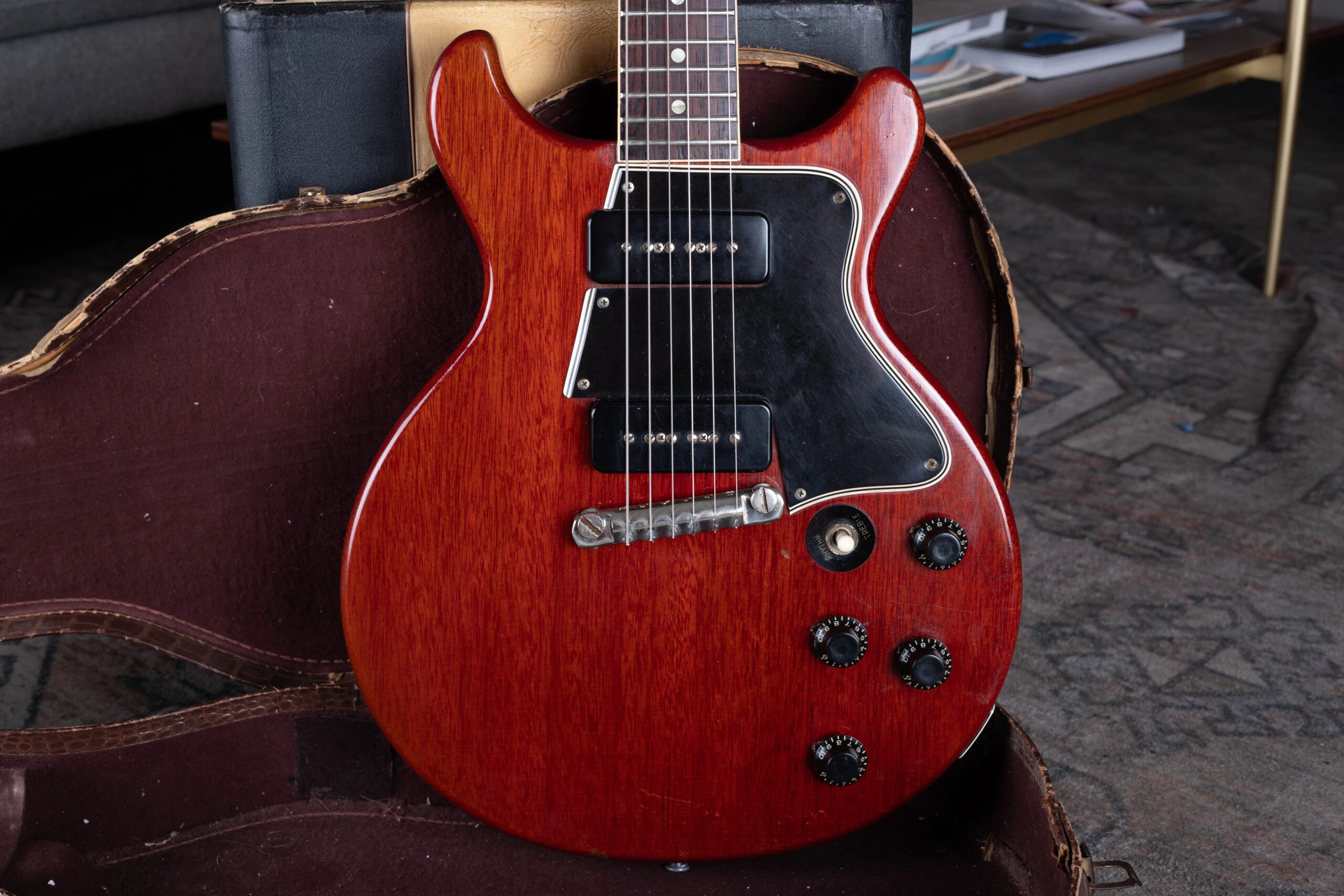
The quickest reliable split is carved top versus flat slab body. The Les Paul Model or Standard and the Custom have carved tops. The Junior, TV Model and Special use simpler flat mahogany bodies. Pickup count and fingerboard trim then identify the exact model.
Two pickups, cream body-top binding and trapezoid inlays. Bridge and pickup type identify the period: trapeze, wraparound, P-90 ABR-1, PAF Goldtop or Cherry Sunburst Standard.
See this model’s changes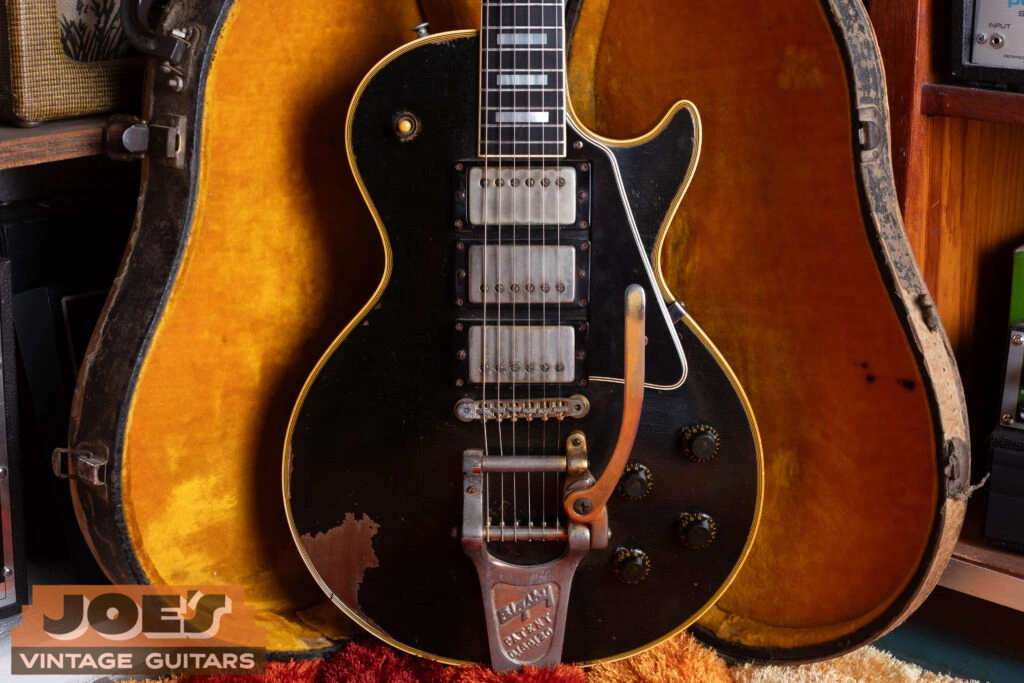
Ebony Black Beauty finish, extensive binding, block inlays, split-diamond headstock and gold hardware. The 1950s Custom has an all-mahogany body and its own pickup sequence.
See this model’s changes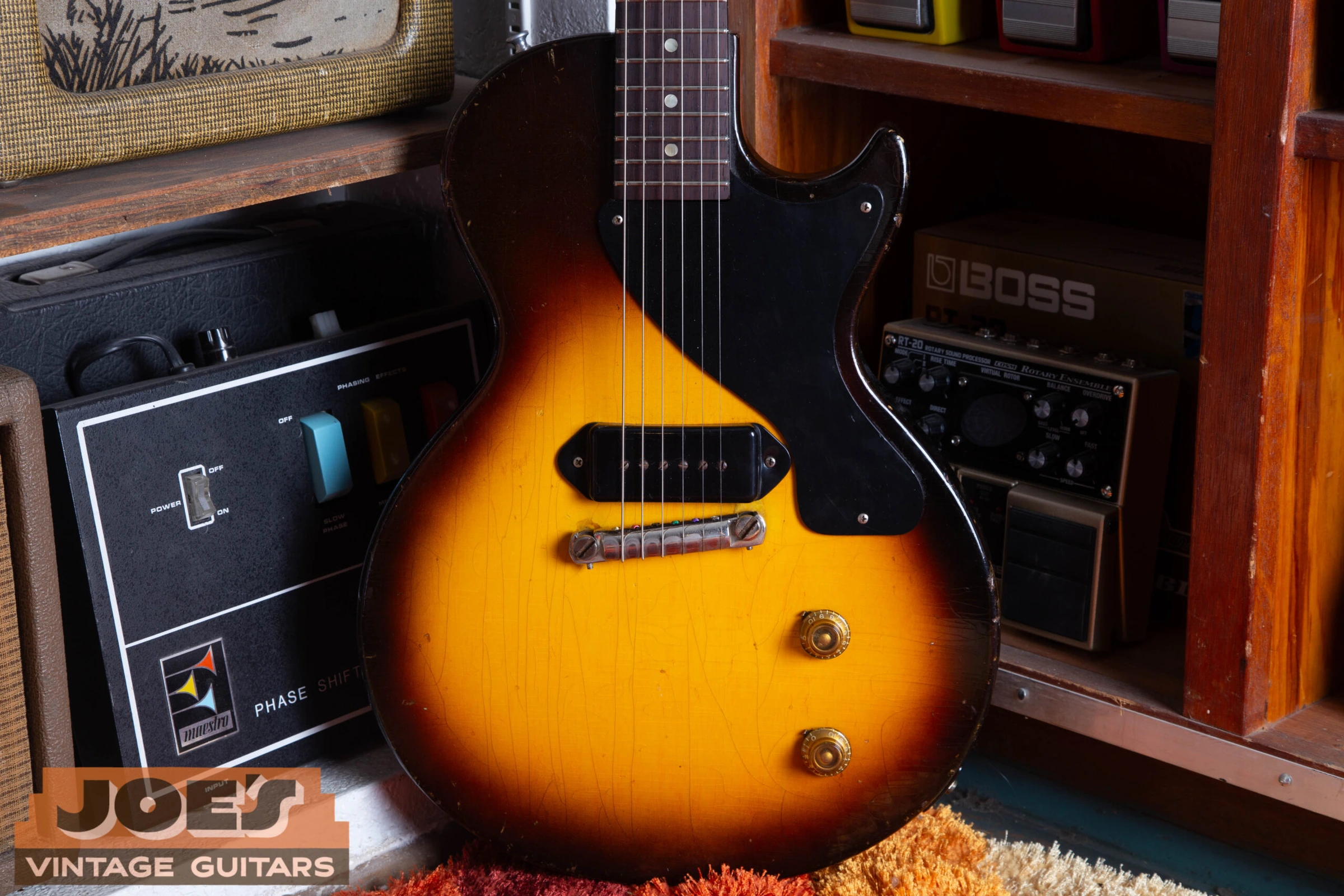
One dog-ear P-90, one volume, one tone, dot inlays and no fingerboard binding. Single-cut comes first, followed by the double-cut body during 1958.
See this model’s changes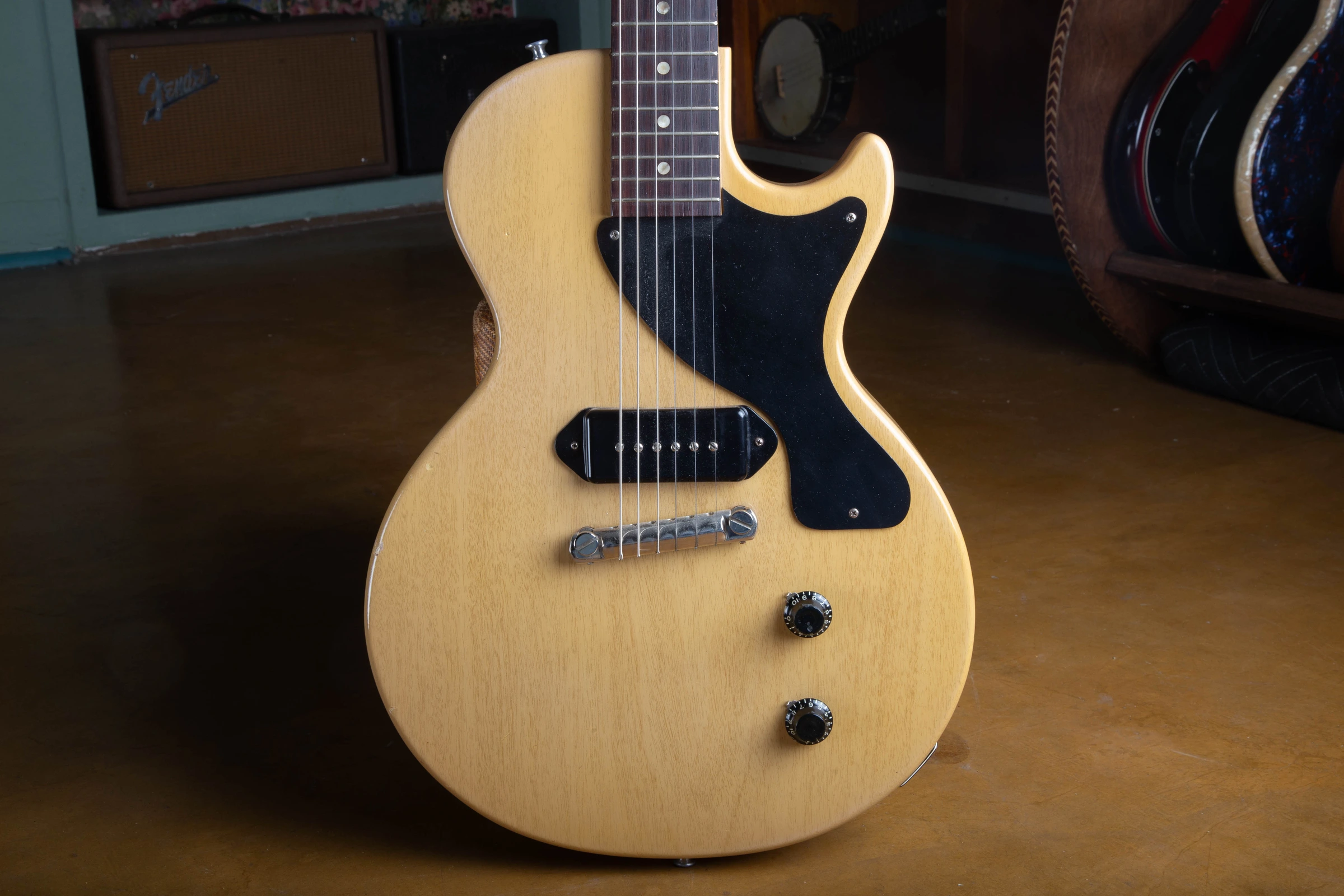
Junior construction with a pale limed mahogany finish and TV MODEL beneath the Les Paul headstock script. Yellow color alone doesn’t prove the model.
See this model’s changes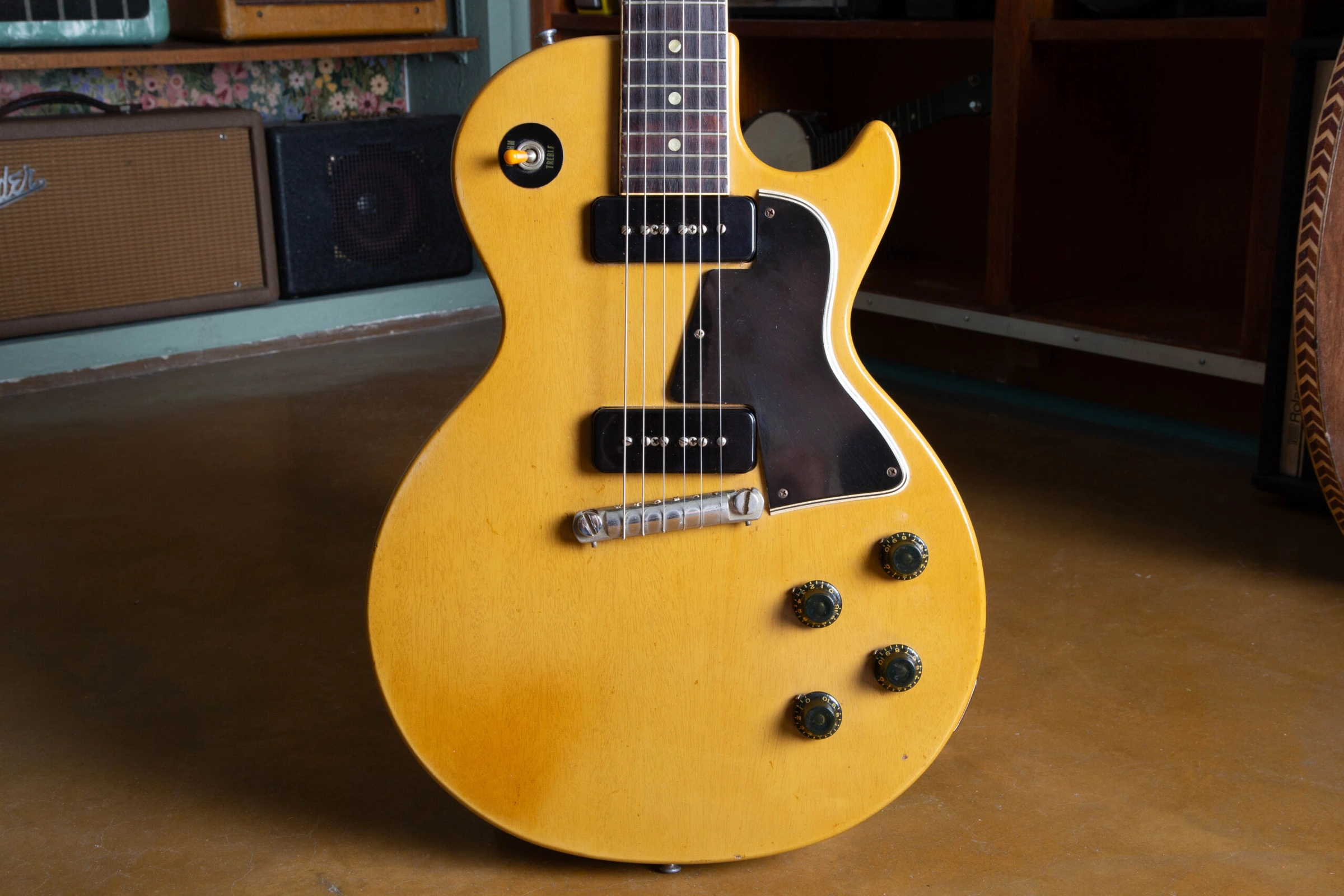
Two soapbar P-90s, four controls, a selector switch and a bound fingerboard. Single-cut and double-cut versions require different neck-joint checks.
See this model’s changesModel-by-Model Dating
This carved-top branch has the most useful hardware sequence in the Les Paul family. The bridge, pickups, knobs and finish can quickly narrow the period, but those rules belong to this model. They should not be transferred to a Junior, Special or early Custom.
1952 to Early 1953
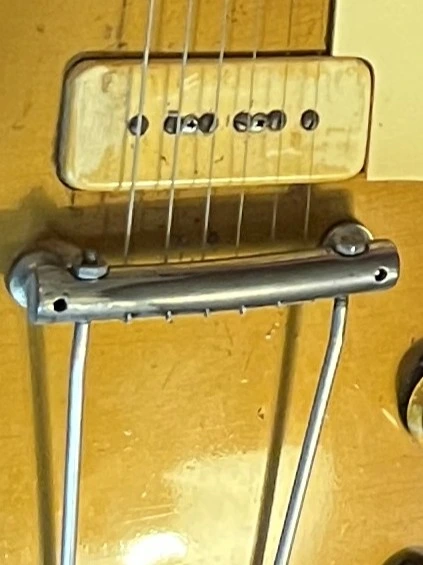
The first Goldtops have two cream soapbar P-90s and a trapeze tailpiece with the strings passing under the bar. The shallow neck angle makes the bridge sit unusually low. Some of the very earliest 1952 guitars also have an unbound fingerboard.
Earliest Goldtop Evidence: A factory trapeze and shallow neck set identify the first Les Paul Model. A later bridge conversion doesn’t erase the original neck geometry or filled mounting evidence.
Early 1953 to Late 1955
The stud-mounted wraparound began replacing the trapeze in early 1953, and the two versions overlap. A steeper neck set followed later in 1953. The guitar still has two cream P-90s, gold speed knobs through late 1955 and a carved maple cap that remains visible at the cutaway edge.
Wraparound Goldtop Evidence: The wraparound places an original carved-top Goldtop after the first trapeze version and before the late-1955 ABR-1 change. The visible maple layer confirms that it isn’t a slab-body Junior or Special.
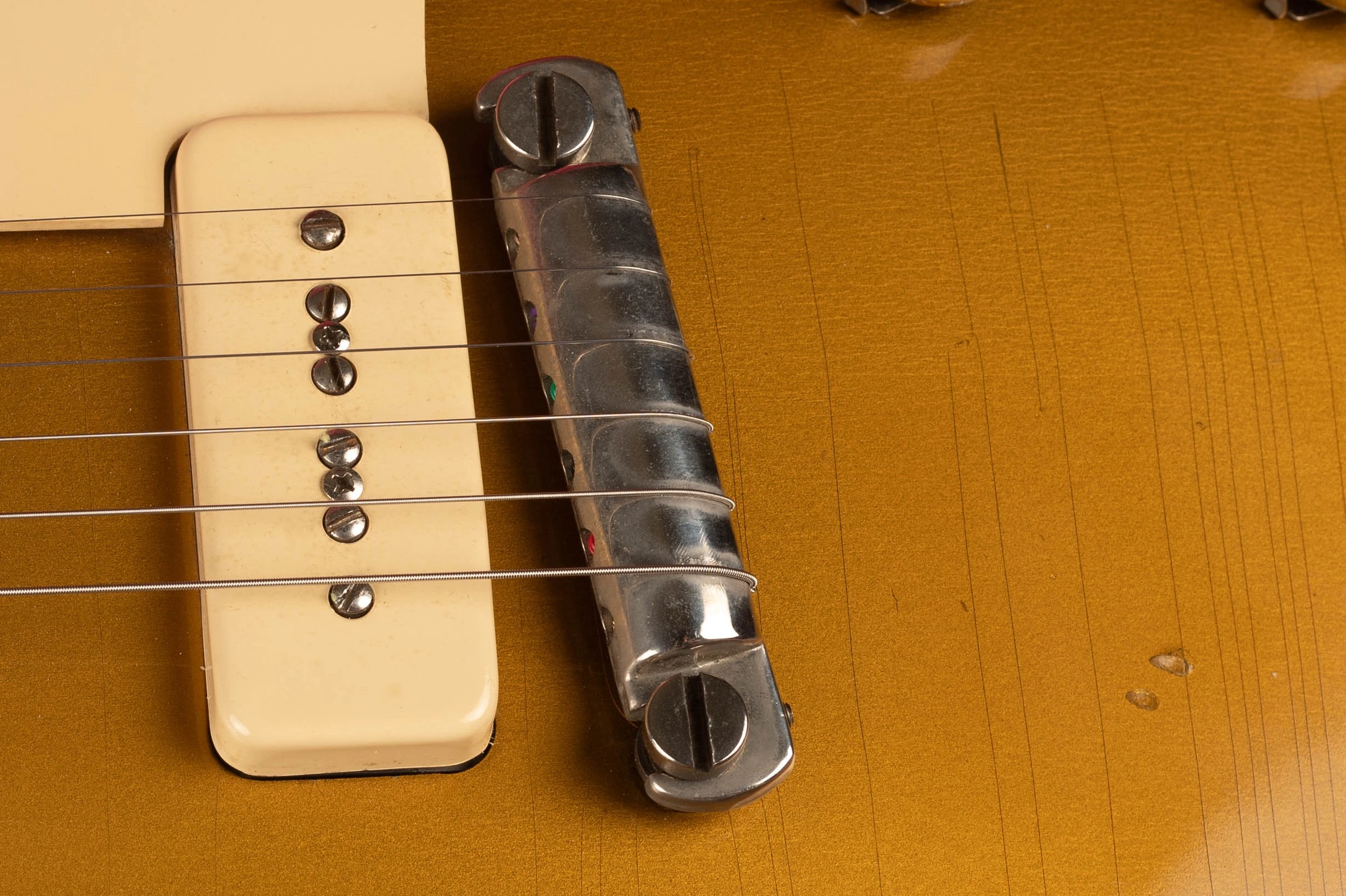
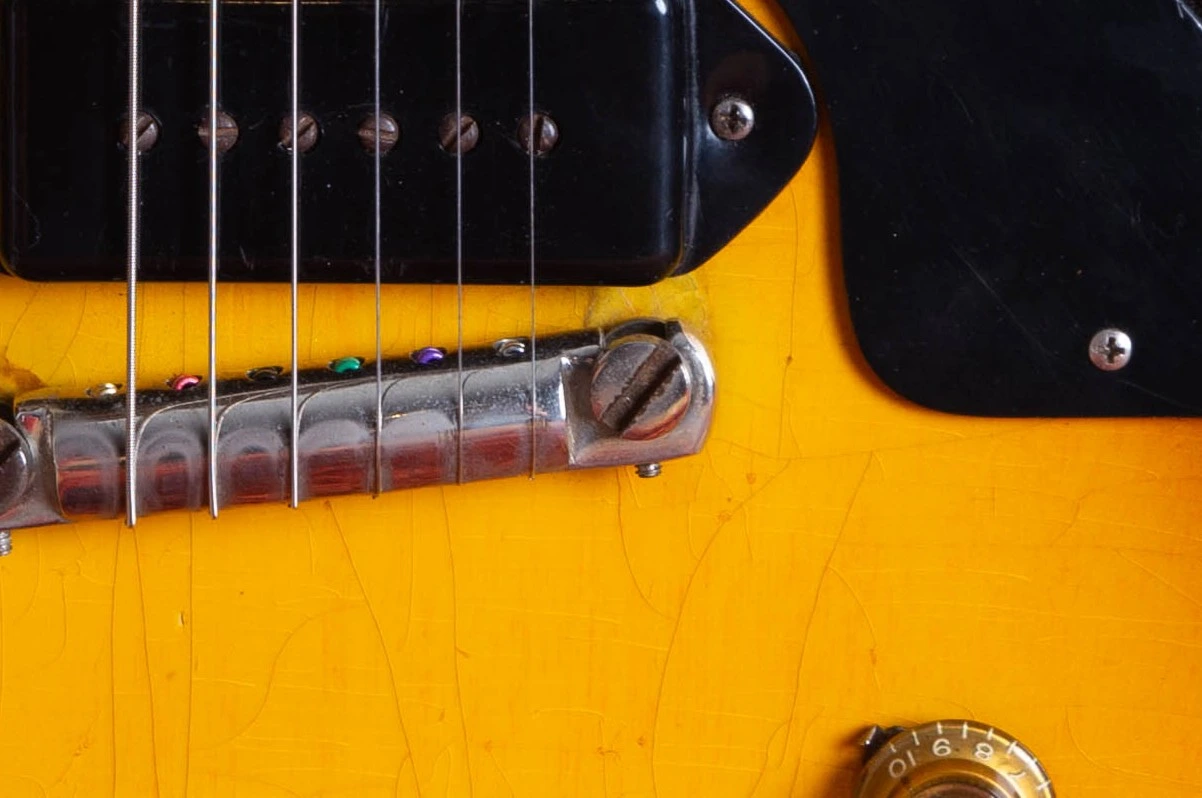
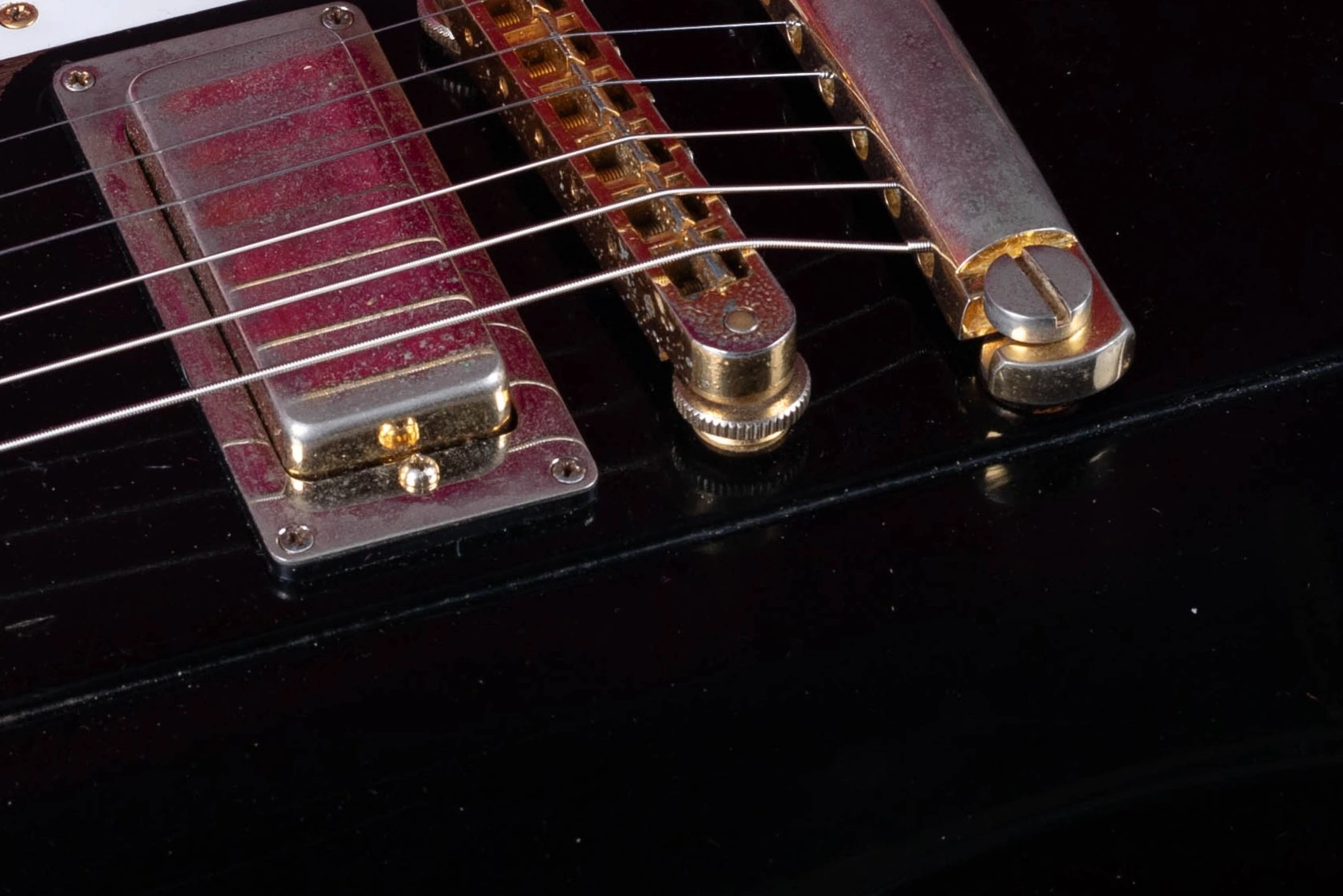
This one-piece bridge and tailpiece is the key 1953 to 1955 Goldtop hardware arrangement.
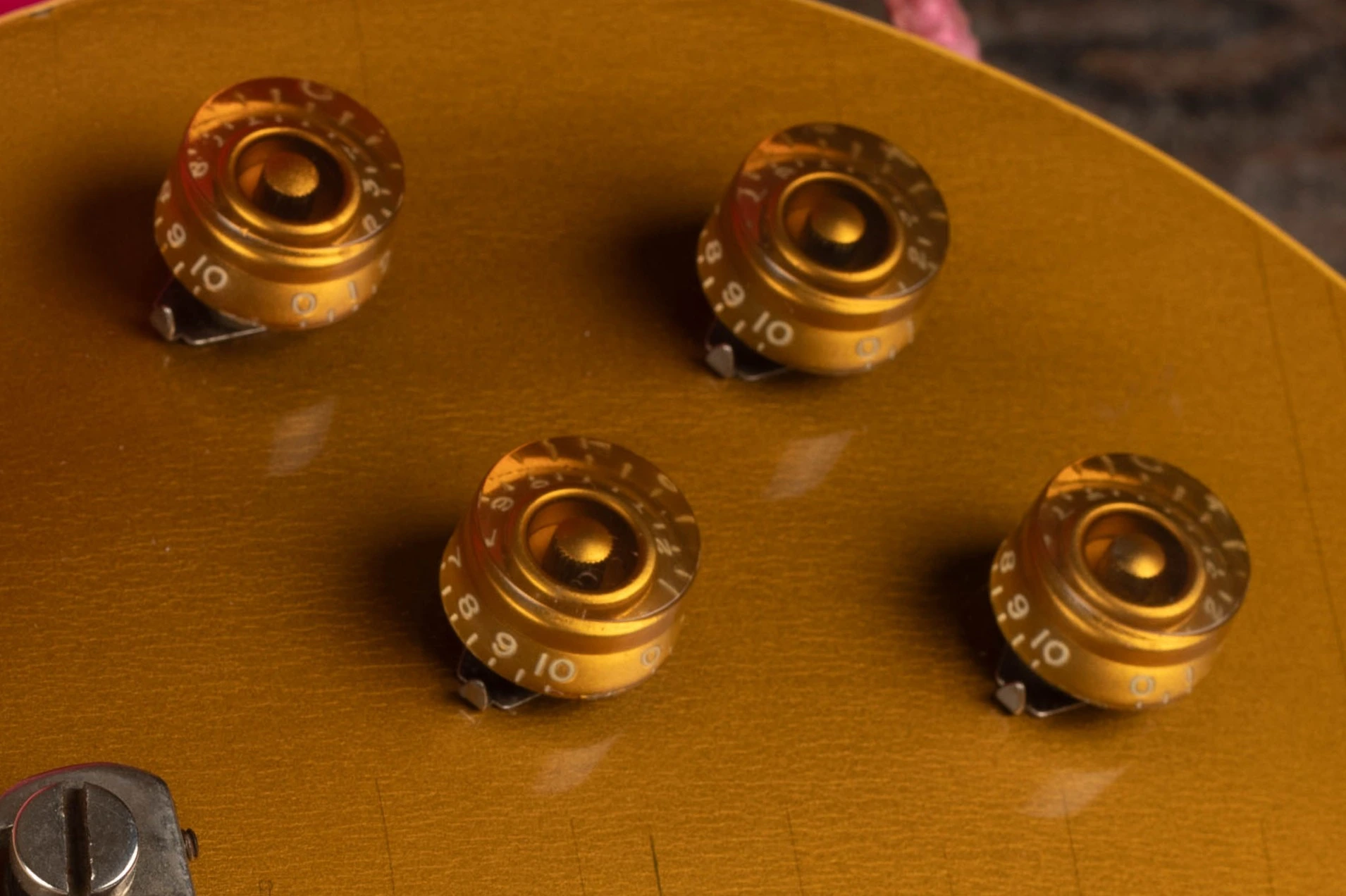
Four low cylindrical gold knobs support an early Goldtop date when the bridge, pickups and serial agree.
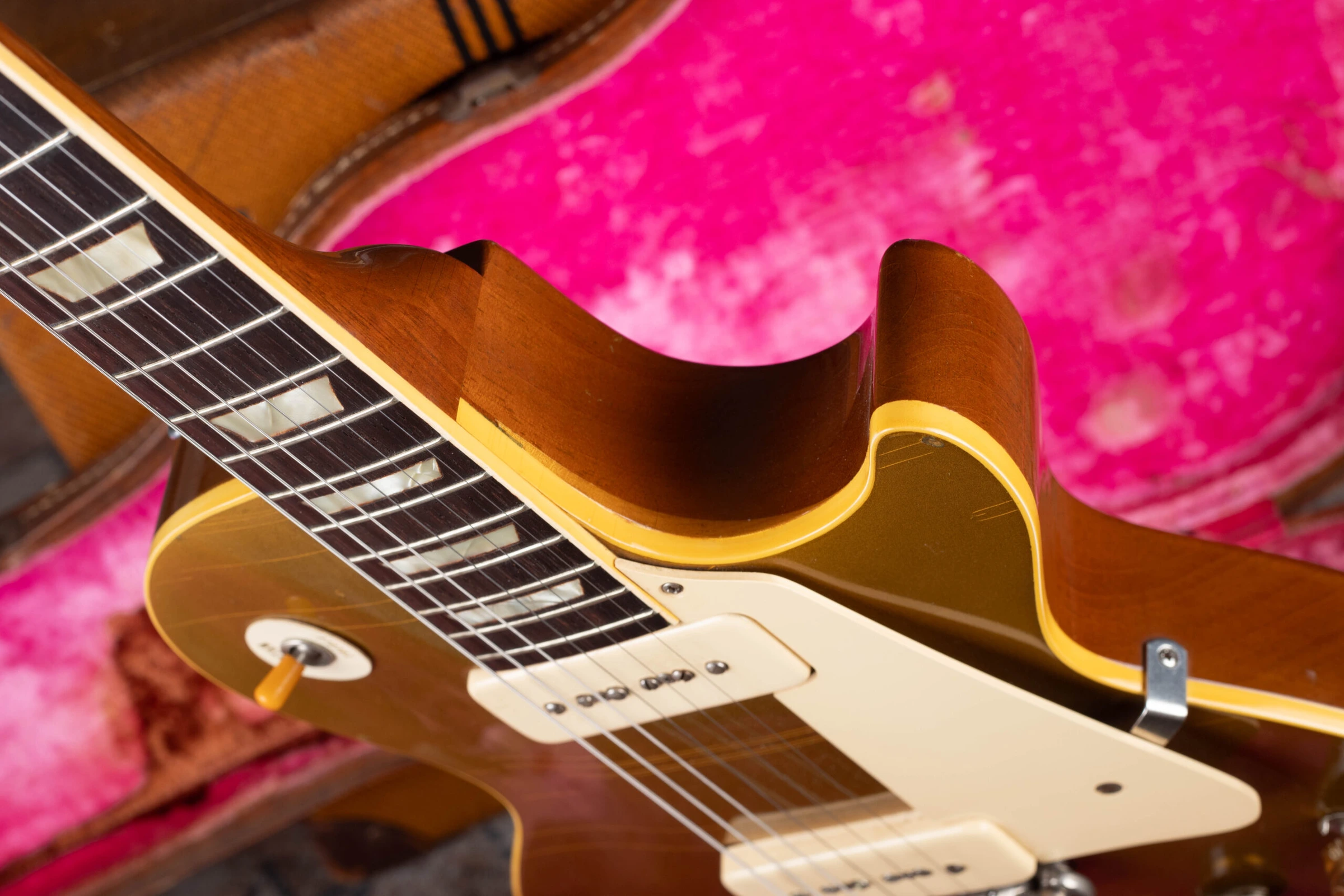
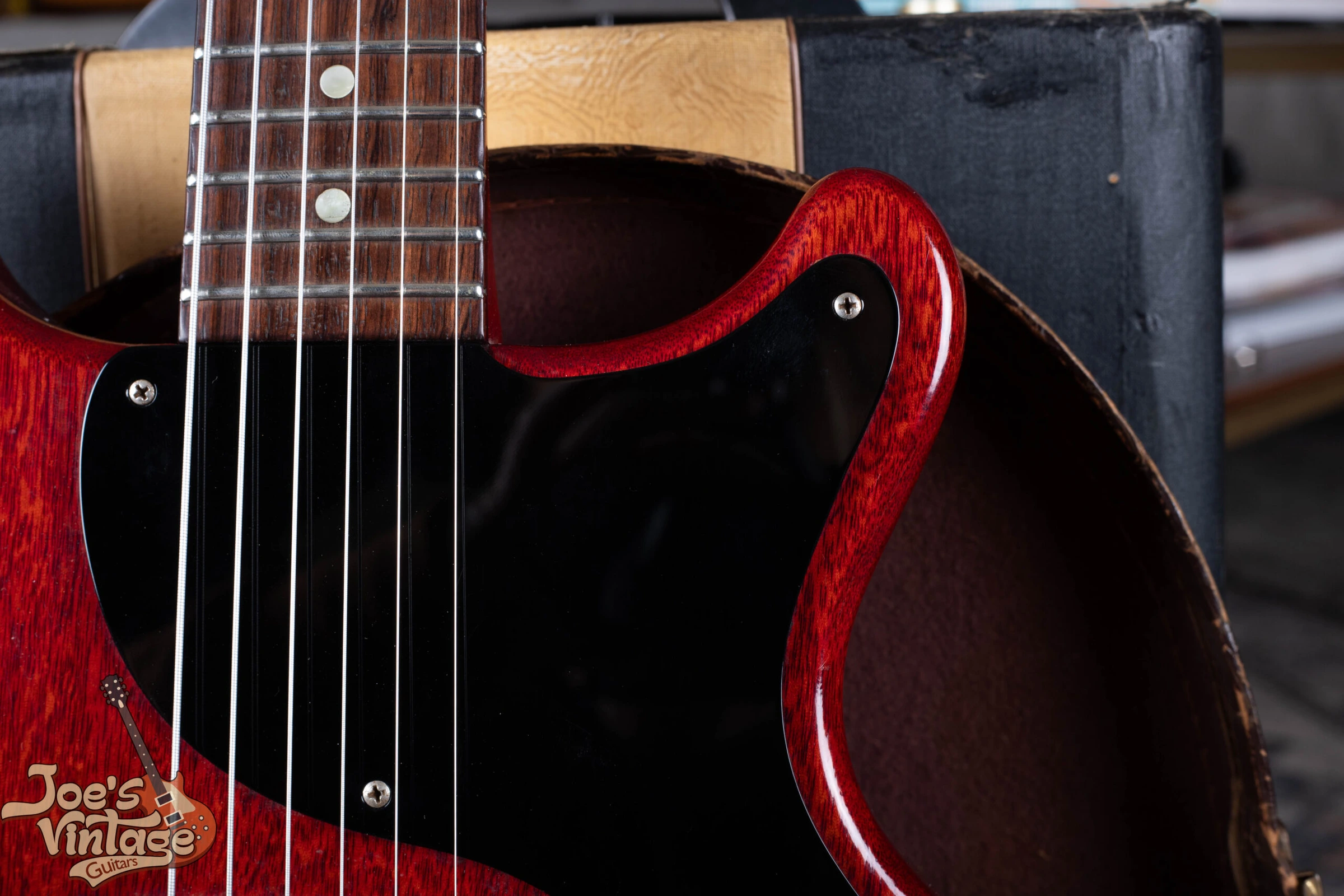
The pale maple layer inside the cutaway is a construction clue specific to the carved-top professional model.
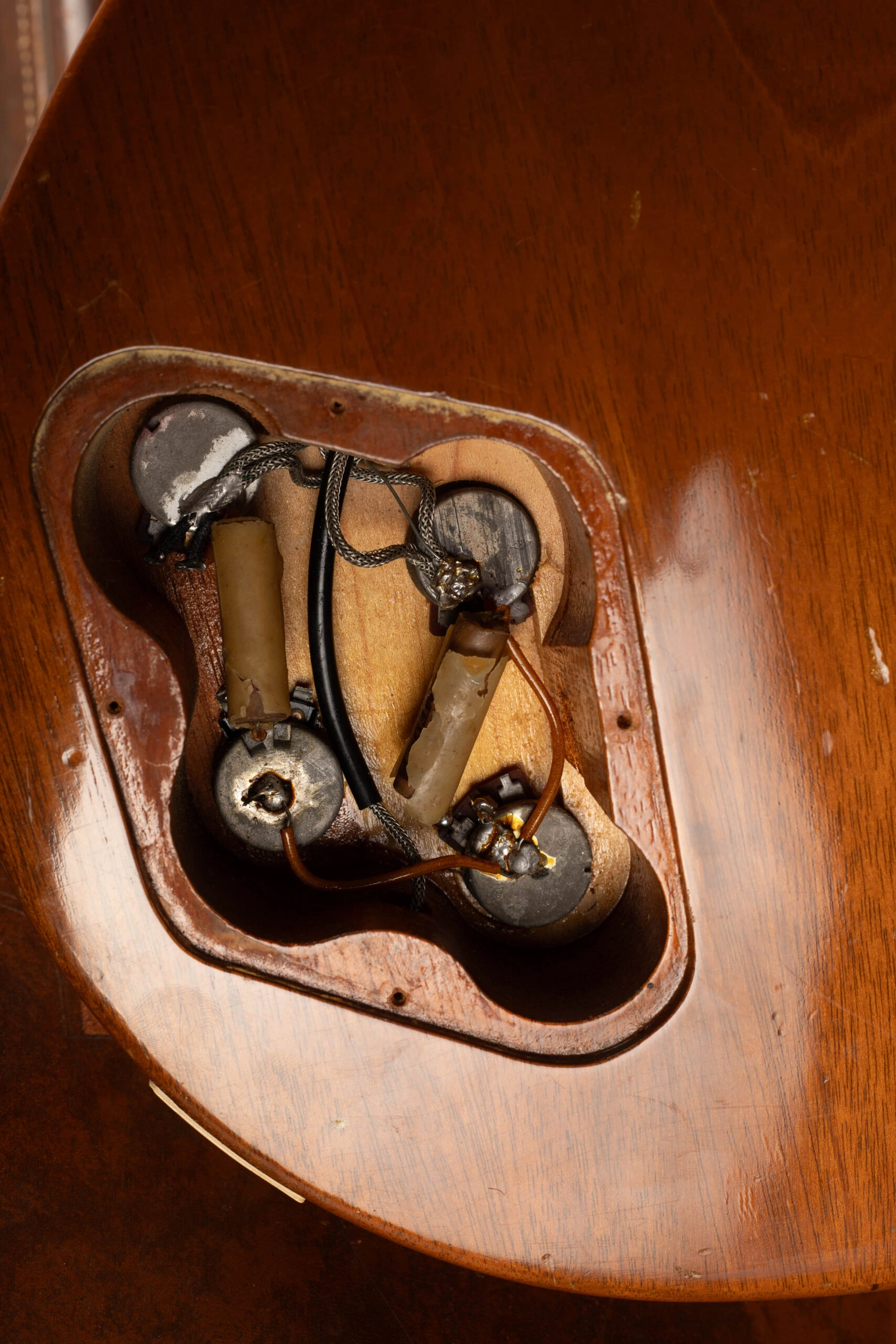
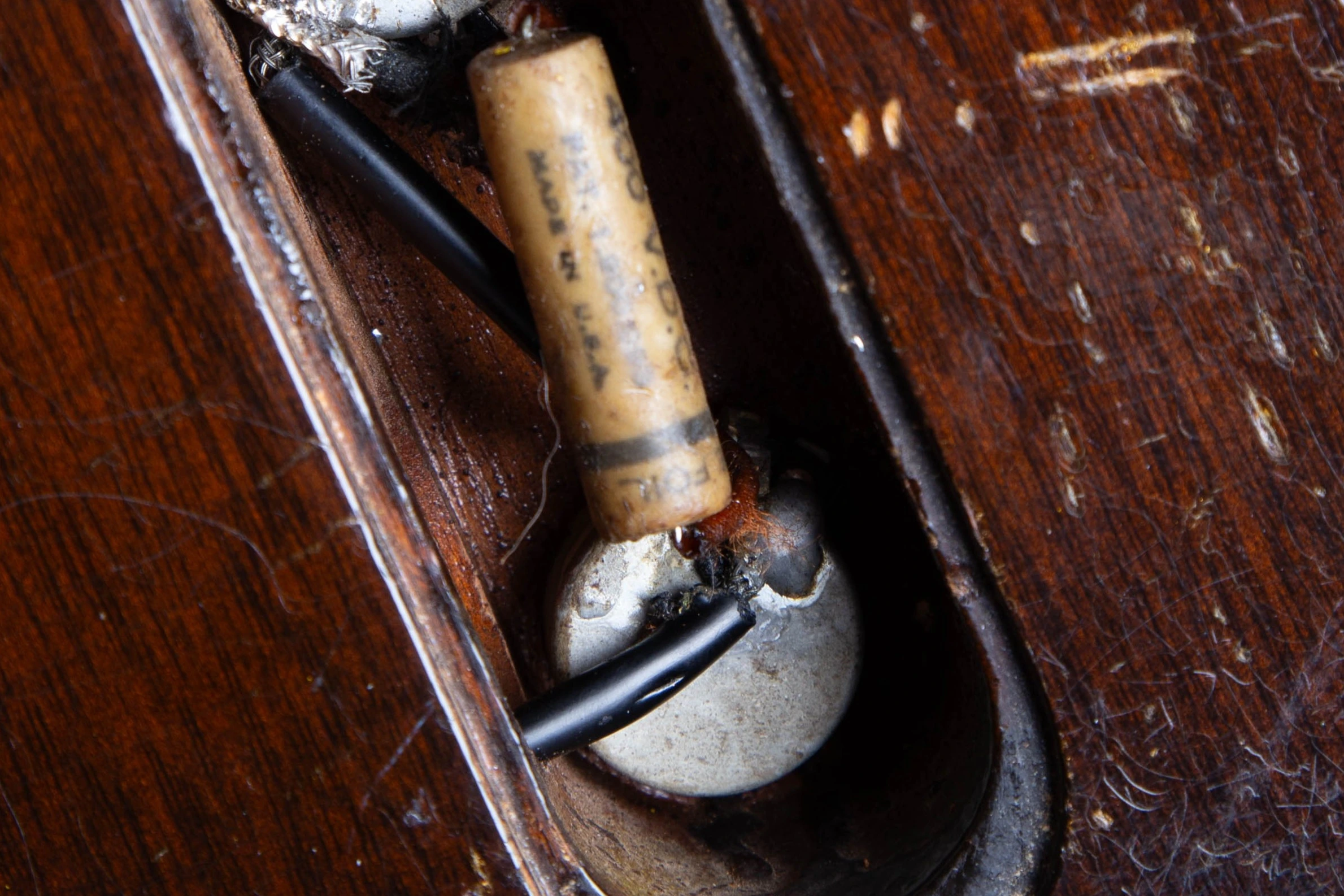
Pot codes, early capacitors, braided wire and untouched solder can confirm the period after the bridge and pickup layout identify the model.
Late 1955 to Mid-1957
The no-wire ABR-1 Tune-o-matic and separate lightweight stopbar begin appearing late in 1955, around the 510xxx serial range, while the Goldtop still carries two soapbar P-90s. Gold bonnet knobs arrive with this bridge change. No-line Klusons continue on some guitars as single-line Kluson Deluxe tuners become more common.
Late-1955 To 1957 Evidence: Two P-90s with a factory ABR-1 and stopbar identify this transition, but they don’t make every example a 1956. The ink serial, pots and tuner details narrow the year.
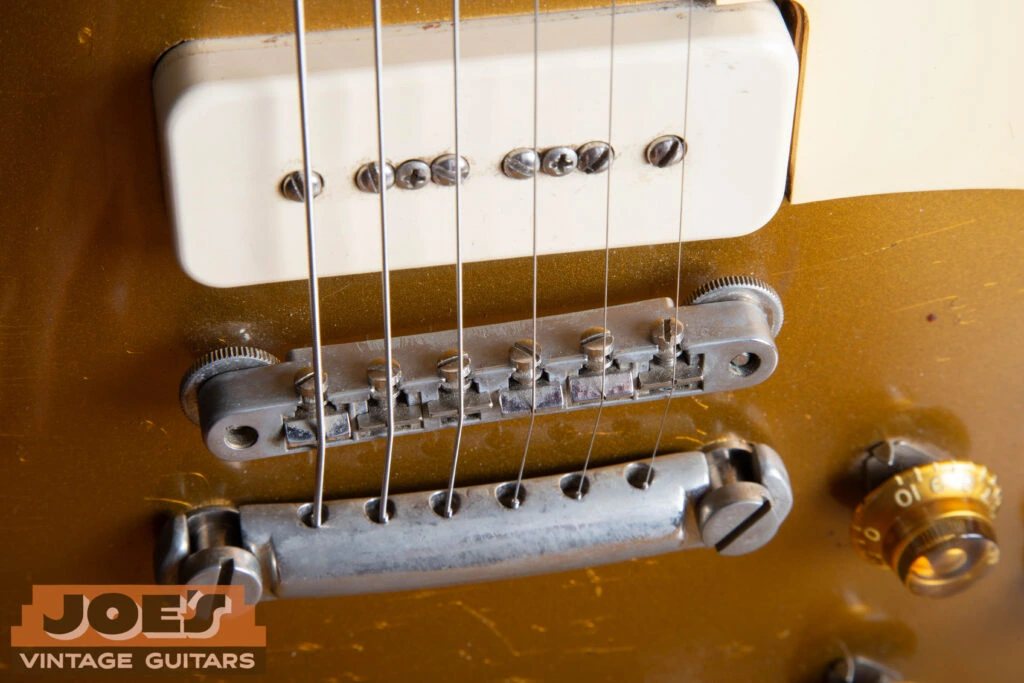
The separate bridge and stopbar appear while the Goldtop still carries P-90 pickups.
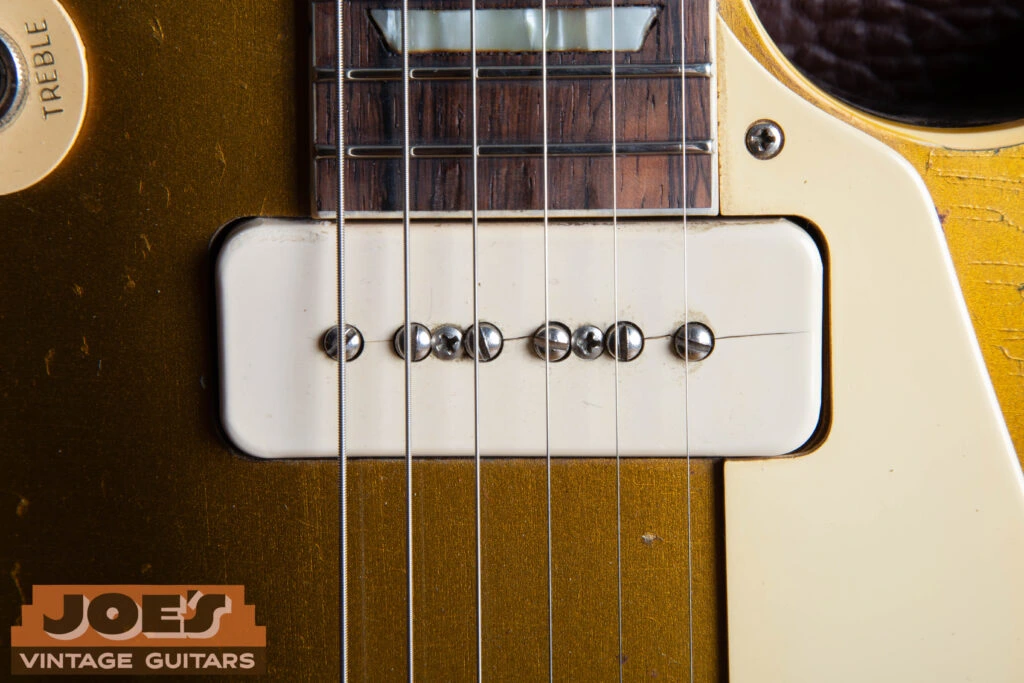
Two cream soapbar P-90s belong with the new ABR-1 setup in 1956.
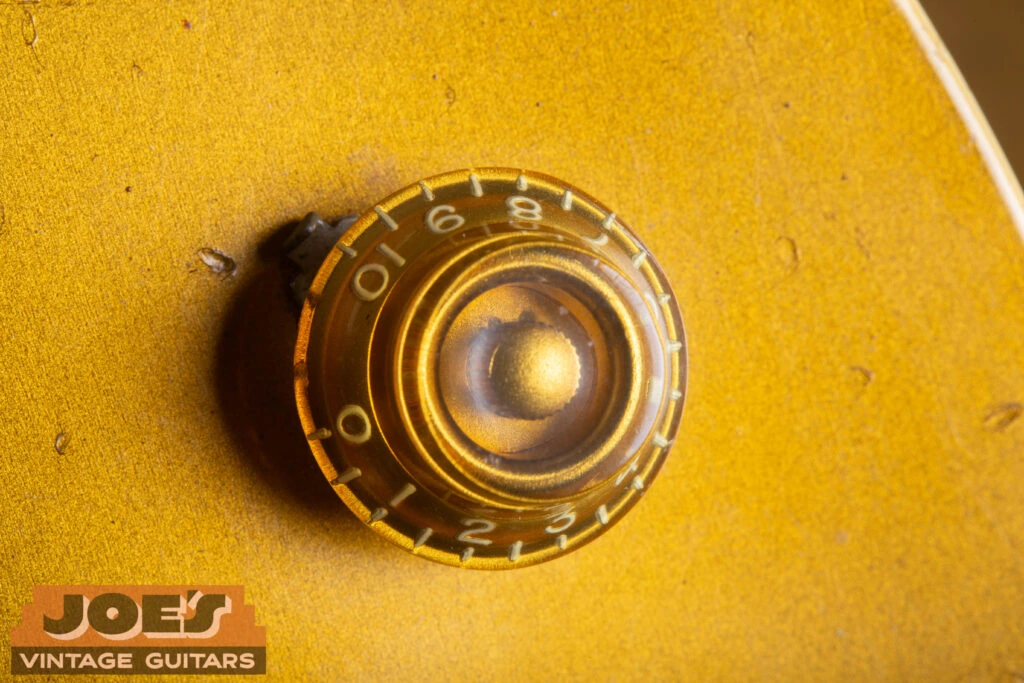
The narrower waist and raised center separate this late-1955-onward bonnet style from the earlier cylindrical speed knob.
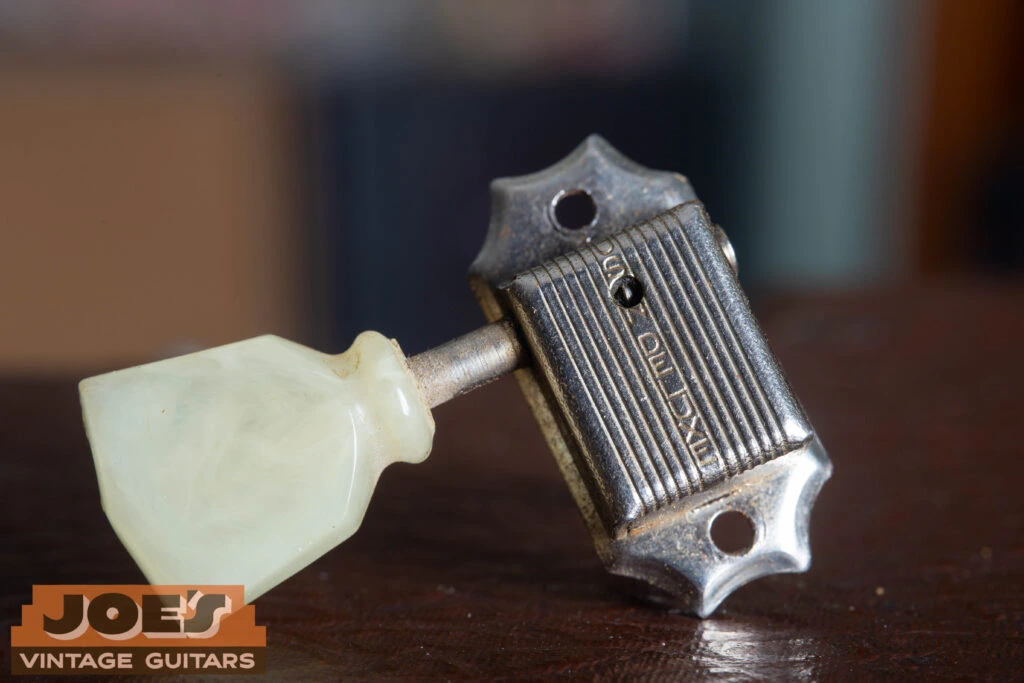
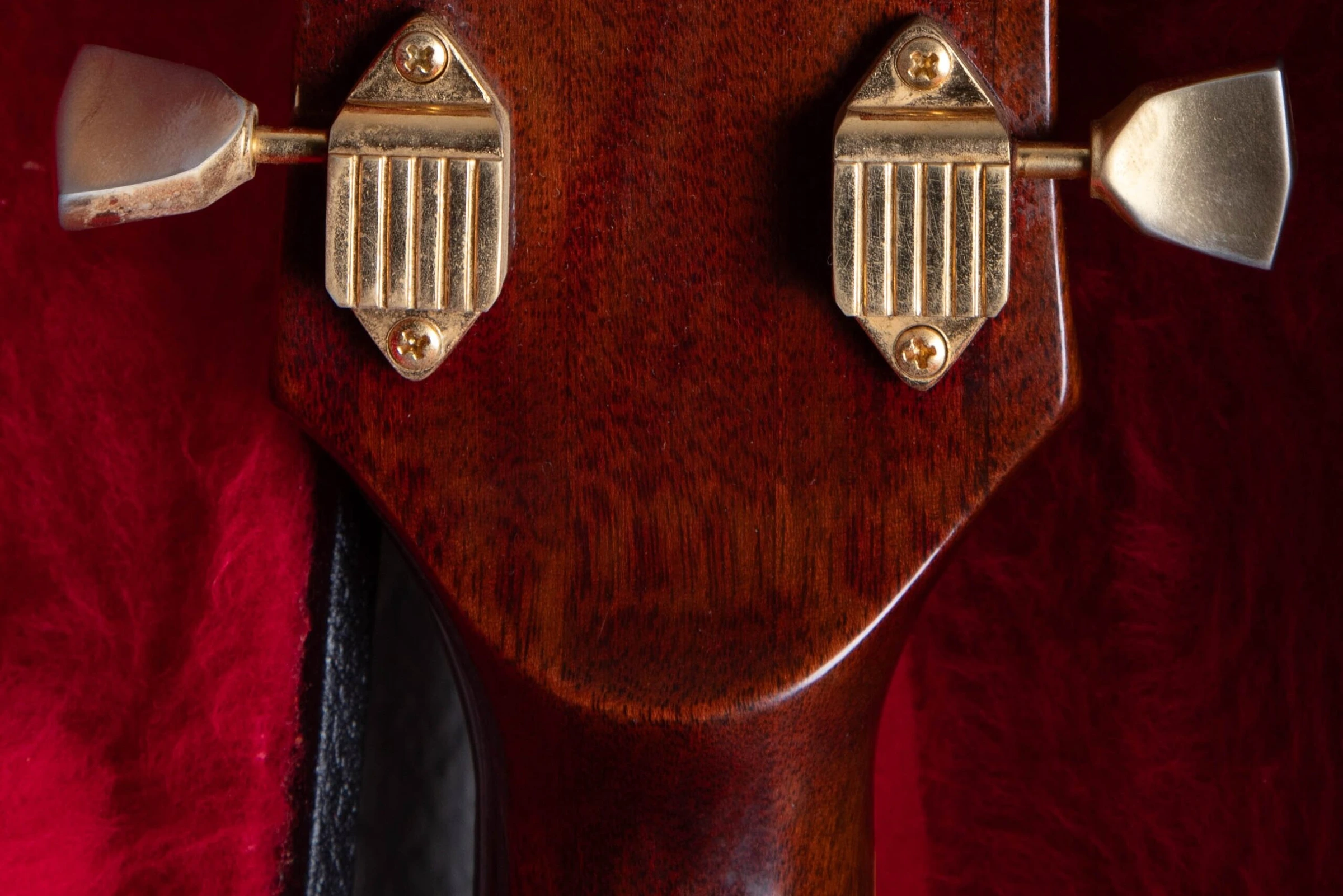
The back reads Kluson Deluxe in one vertical line. No-line tuners overlap this period, and replacements are common, so inspect the screw holes and impressions too.
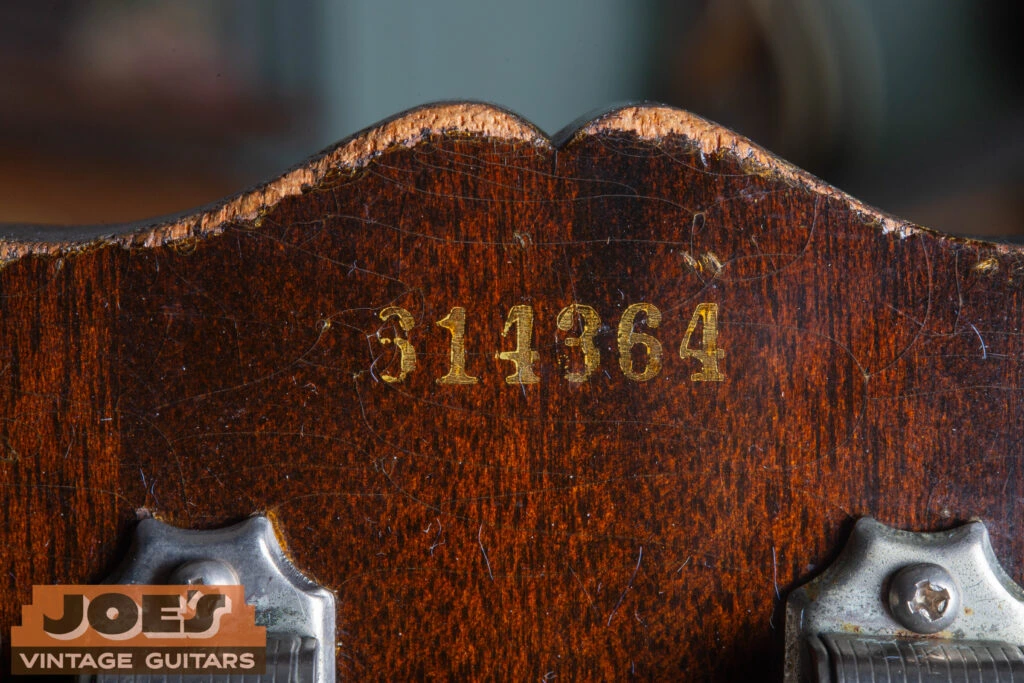
The first digit is worn in this photograph, so the image shows period ink, font and spacing rather than proving one exact year.
Mid-1957 to Early 1958
The ABR-1 and stopbar stay, but two PAF humbuckers replace the soapbar P-90s. Sweat and wear can reach the bronze powder beneath the clear coat, producing green oxidation. Some 1956 guitars have dark backs, and the finish becomes more common on 1957 and early 1958 Goldtops, often with a yellow serial and black cavity covers.
Humbucker Goldtop Evidence: A factory humbucker Goldtop belongs in the 1957 to early 1958 transition, not the P-90-only phase. Pickup routes, rings, braided leads, solder and PAF construction must agree before the guitar is called original.
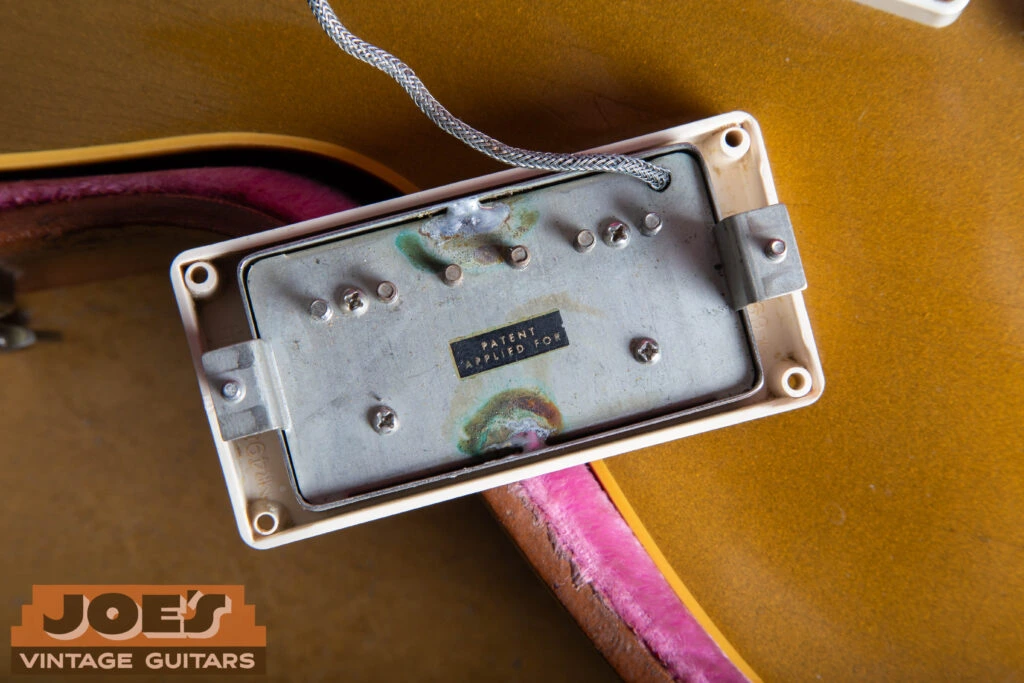
The decal, mounting feet, braided lead and pickup-ring markings are stronger evidence than the cover alone.
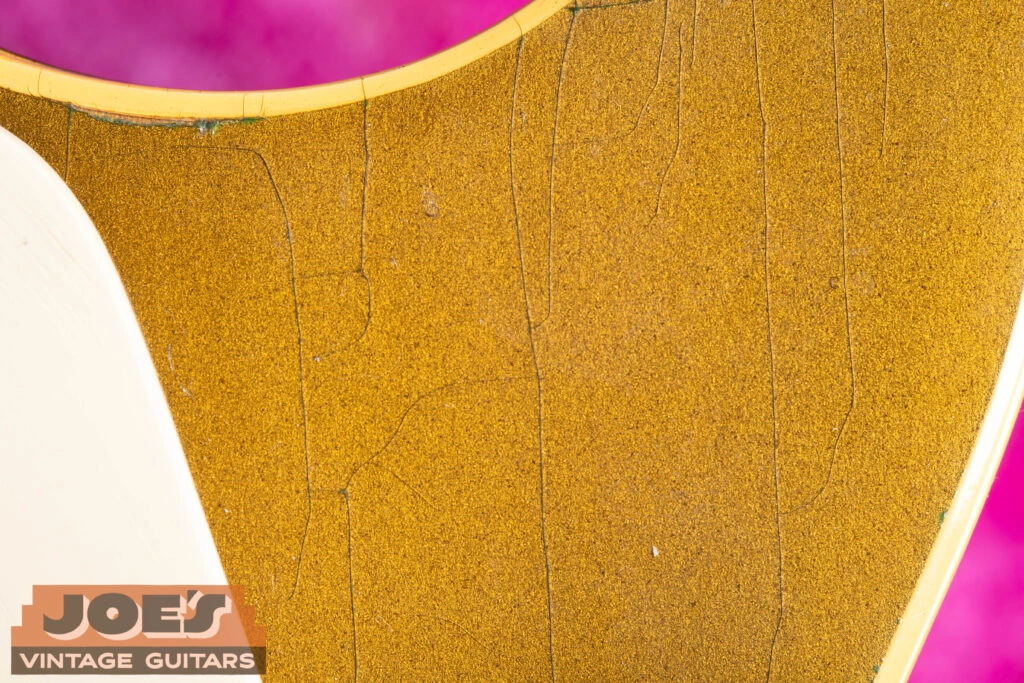
Moisture can oxidize the bronze powder in original gold lacquer, especially around worn or exposed areas.
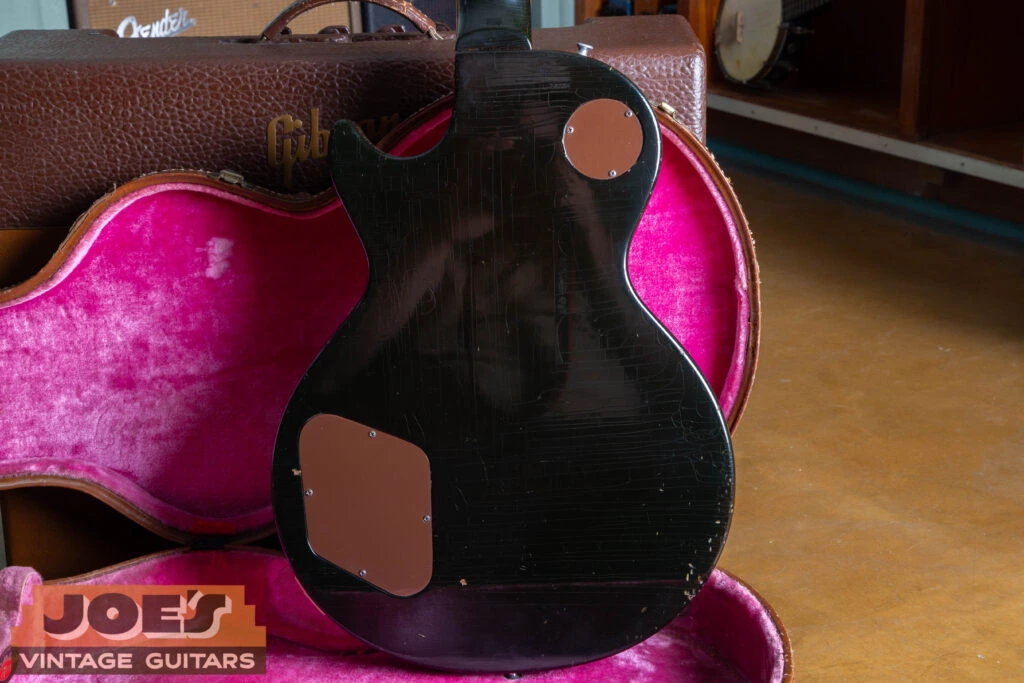
A dark back can be nearly black at first glance, but the mahogany grain should still show through the stain.
1958 to 1960
Cherry Sunburst replaces the gold top while the carved maple cap, two humbuckers, ABR-1 and stopbar remain. The 1958 catalog still calls it the Les Paul guitar or model; the 1960 catalog uses Les Paul Standard. Gold bonnet knobs continue before gold reflector knobs appear during 1960. The red dye can fade heavily, so today’s color isn’t a dependable year by itself.
Burst Dating Evidence: A Burst is the finish stage of the same carved-top branch, not a different body design. Gold reflector knobs can support a late 1960 date, but a replacement set can’t date the guitar. Compare both styles in the Gibson knob dating guide.
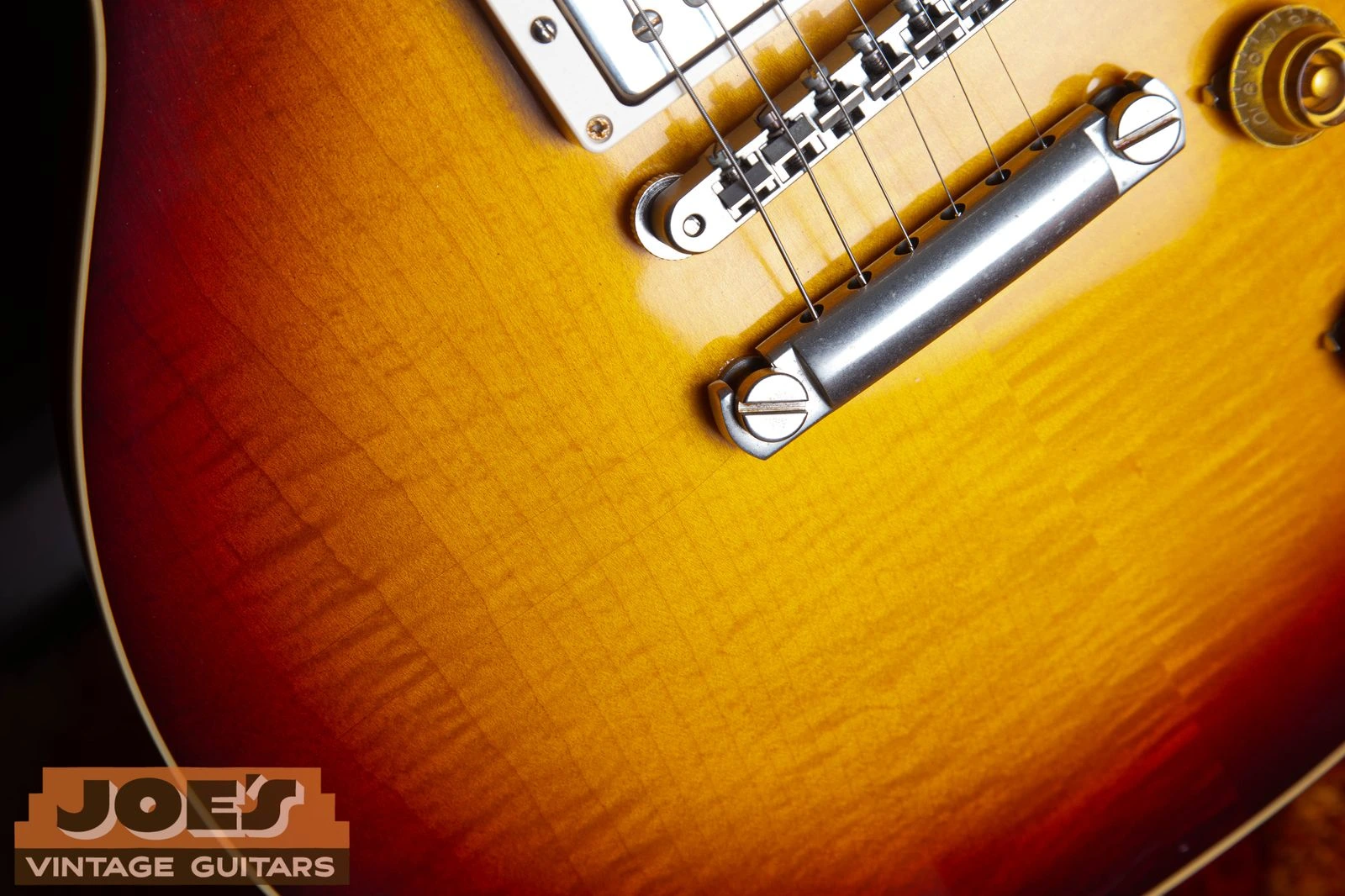
The visible maple figure and shaded red edge identify the Burst finish, while fading can change the apparent color dramatically.
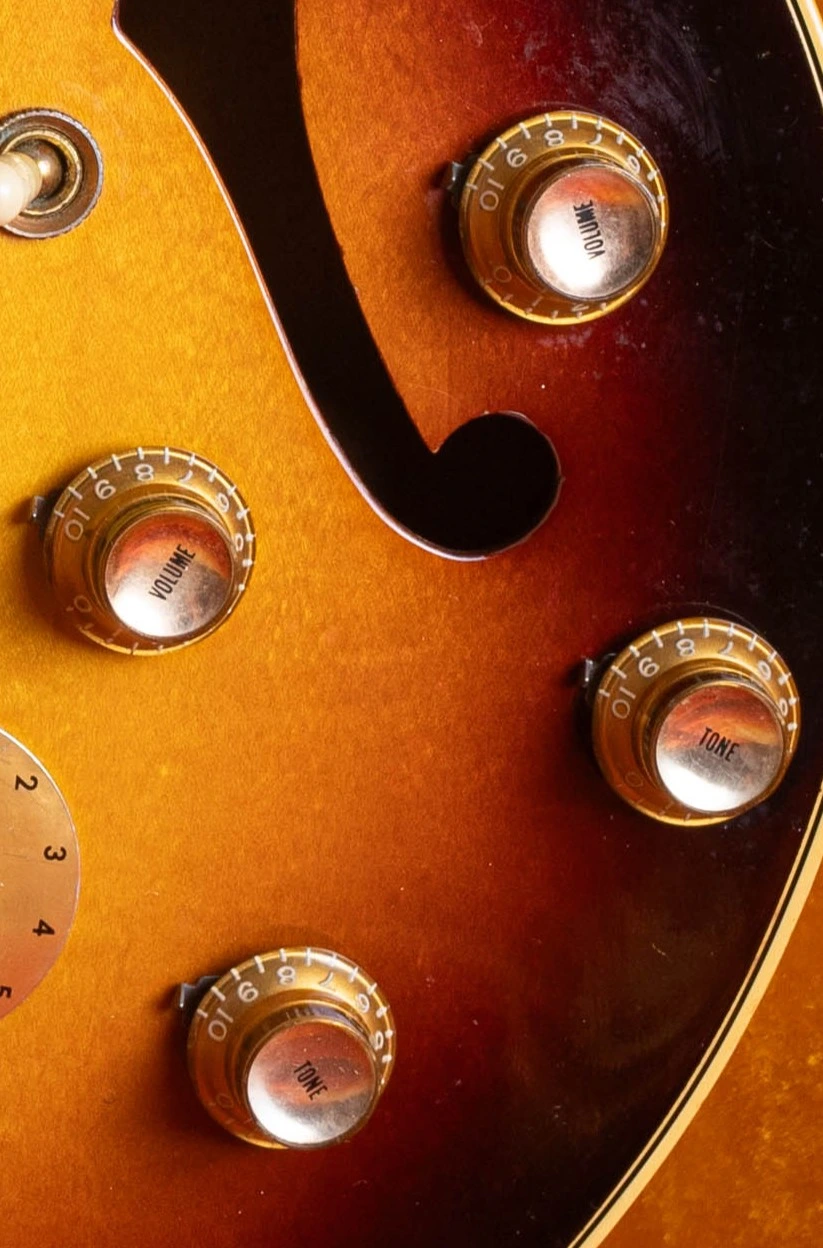
Gold reflector knobs shown on a 1960s Gibson hollowbody. This gold knob style also appears on late 1960 Les Paul Standards.
For closer comparisons, use the 1954 wraparound Goldtop guide, 1956 P-90 Goldtop guide and 1957 PAF Goldtop guide. Each has more photos of the hardware and electronics for that year.
Model-by-Model Dating
The Custom has its own construction and pickup chronology. A black finish isn’t enough: the all-mahogany 1950s body, the staple-and-P-90 pickup pair, later humbuckers and the maple-cap 1968 return separate distinct Custom eras. Use the PAF and Patent Number pickup guide to examine the humbuckers and the Gibson tuner guide to compare the tuning machines.
1954 to Early 1957
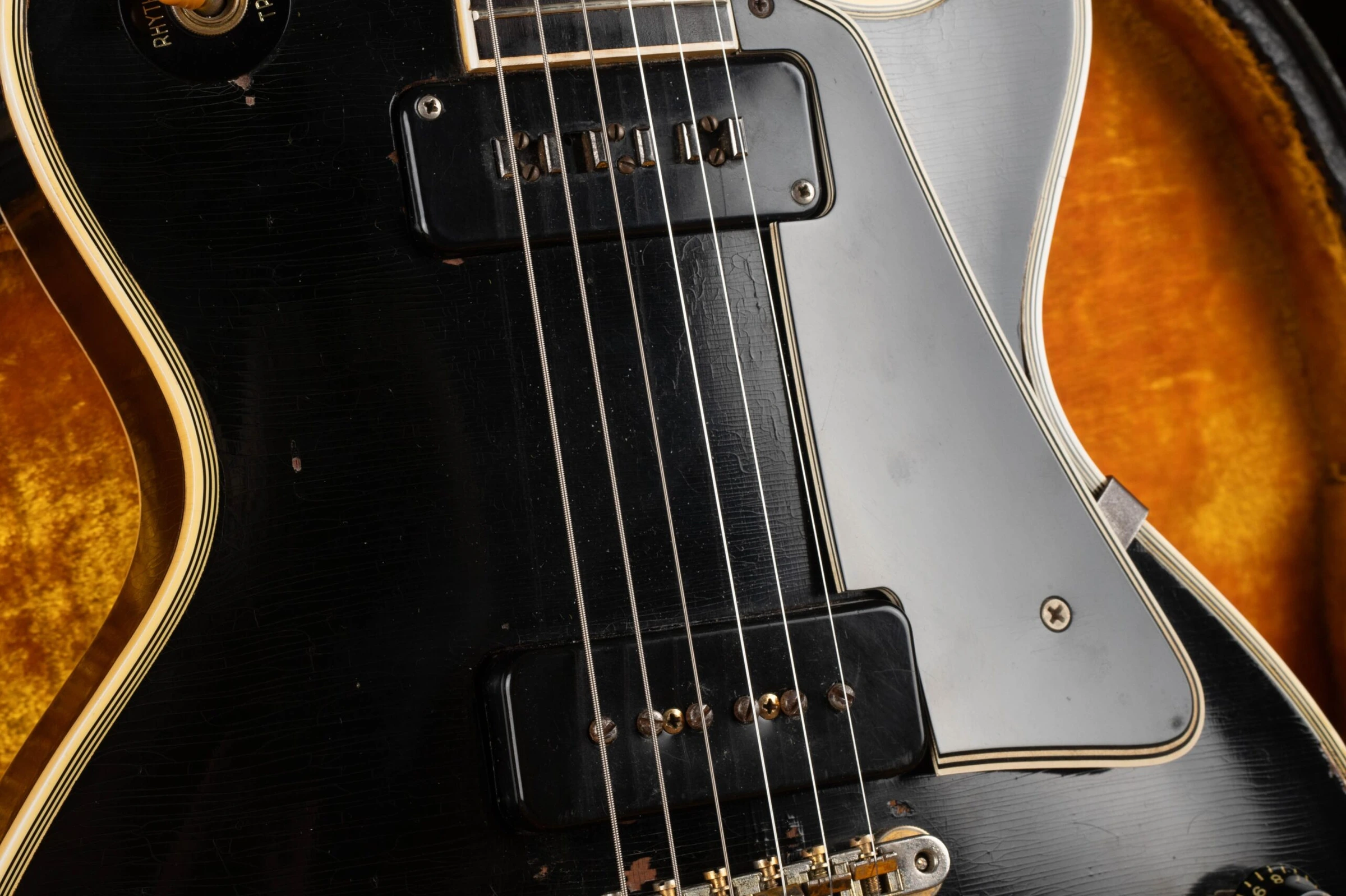
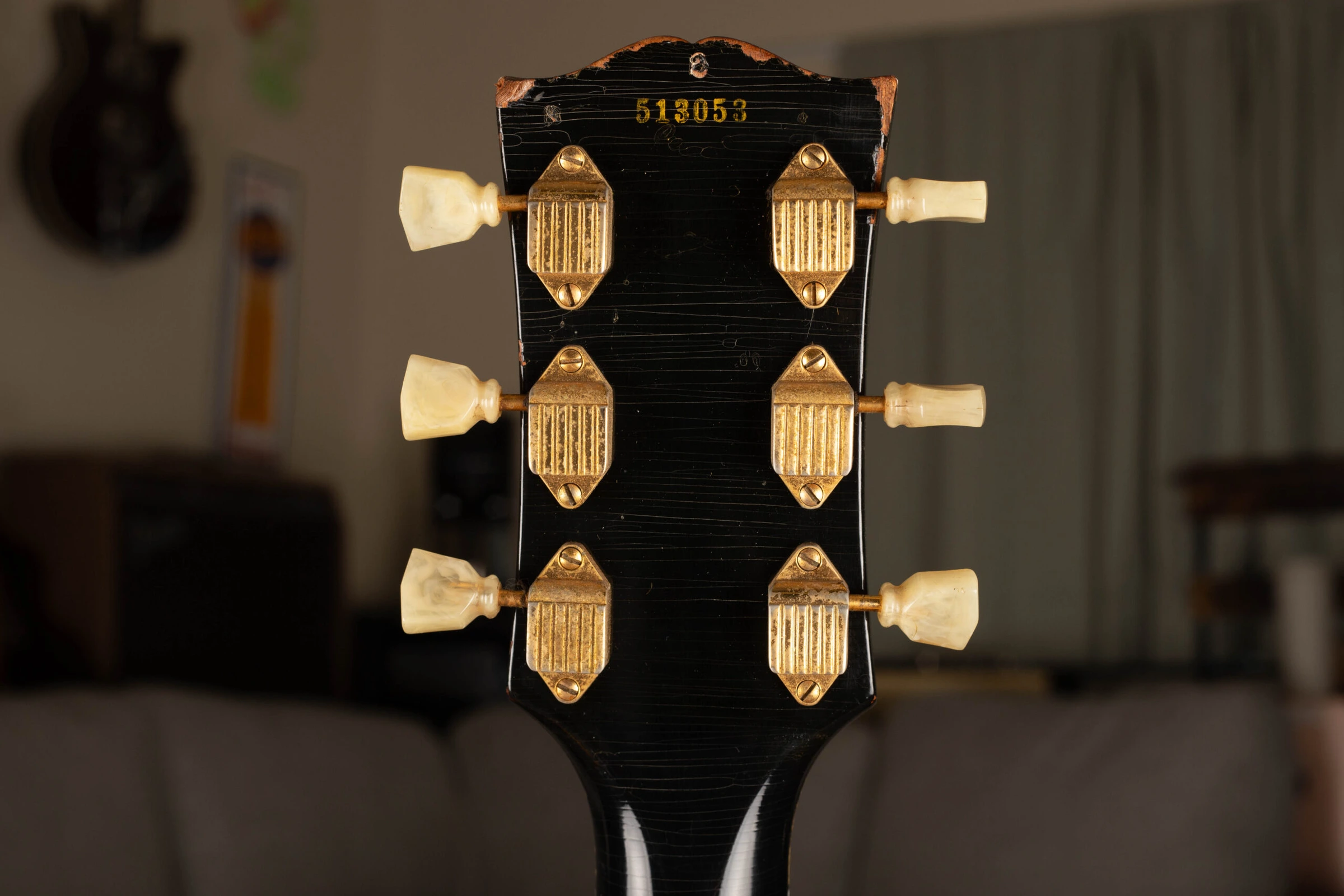
The original Custom uses an all-mahogany body, an Alnico V staple pickup at the neck, a soapbar P-90 at the bridge, gold hardware and an ABR-1 with a separate stopbar. That bridge appeared on the Custom before it reached the Goldtop. The staple-and-P-90 pair continues into early 1957.
Early Custom Evidence: An early Custom shouldn’t be dated from the Goldtop’s bridge sequence. The staple-neck and P-90-bridge combination is correct Custom evidence, and the ink serial belongs with gold Waffleback tuners and the original black finish.
Late 1957 to 1960
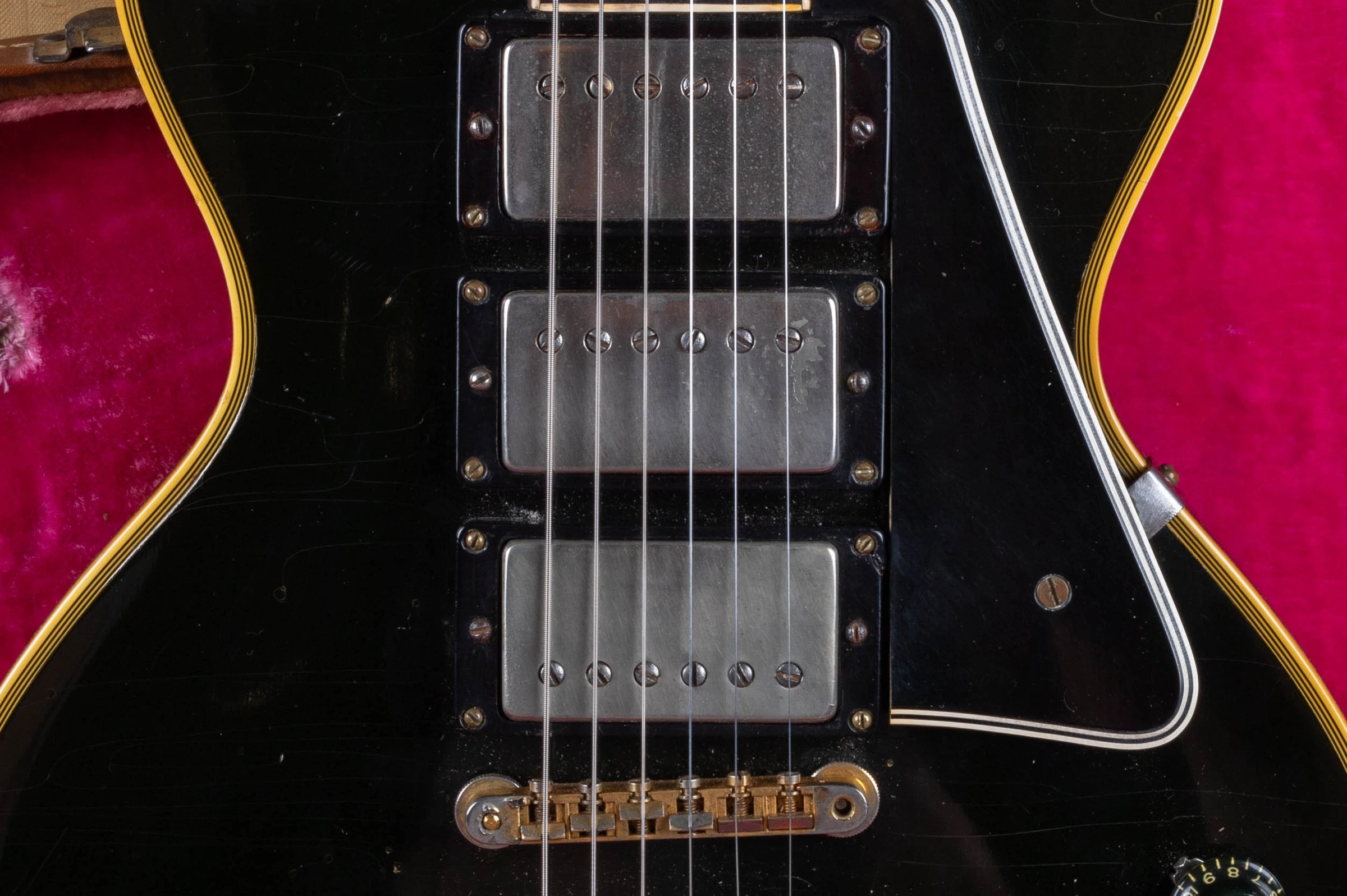
PAF humbuckers replace the staple-and-P-90 pair. Three humbuckers are the standard layout from 1958, although rare two-pickup Customs are known. Grover Rotomatic tuners replace the Wafflebacks during 1958, yellow ink serials continue and factory Bigsby examples exist. The all-mahogany body, ebony board, multi-ply trim and gold hardware remain central.
Later-1950s Custom Evidence: Three pickups support a later-1950s Custom date, but pickup count alone isn’t proof. The routes, switch wiring, covers, rings, solder and serial must show factory work.
1961 to 1963
The thin, pointed double-cut body now known as the SG carried Les Paul Custom branding before the endorsement ended. White was the listed finish. The fingerboard and headstock are bound, but the body isn’t. A Sideways Vibrola belongs to 1961; rare 1962 examples can have the decorative ebony-block vibrato; the Maestro Vibrola follows in 1963.
SG-Body Custom Evidence: A 1961 to 1963 Les Paul Custom isn’t a single-cut Black Beauty. Its body shape and vibrato system must be dated with early SG construction, then checked against the serial and electronics.
1968 Through The 1970s
The returning Custom uses a maple cap over mahogany instead of the 1950s all-mahogany body. Ebony is the return finish. Cherry Sunburst appears around mid-1971, Wine Red in 1974 and white in 1975. Three pickups appear by special order in the early 1970s and as a listed factory option in 1977. Nickel hardware and maple fingerboards also appear on late-1970s examples.
1970s Custom Evidence: Made in USA stamps, volutes, multi-piece necks, pancake bodies, later maple necks and Nashville bridges are normal on a 1970s Custom. Any one of those features rules out a 1950s date, but it doesn’t make the later guitar inauthentic.
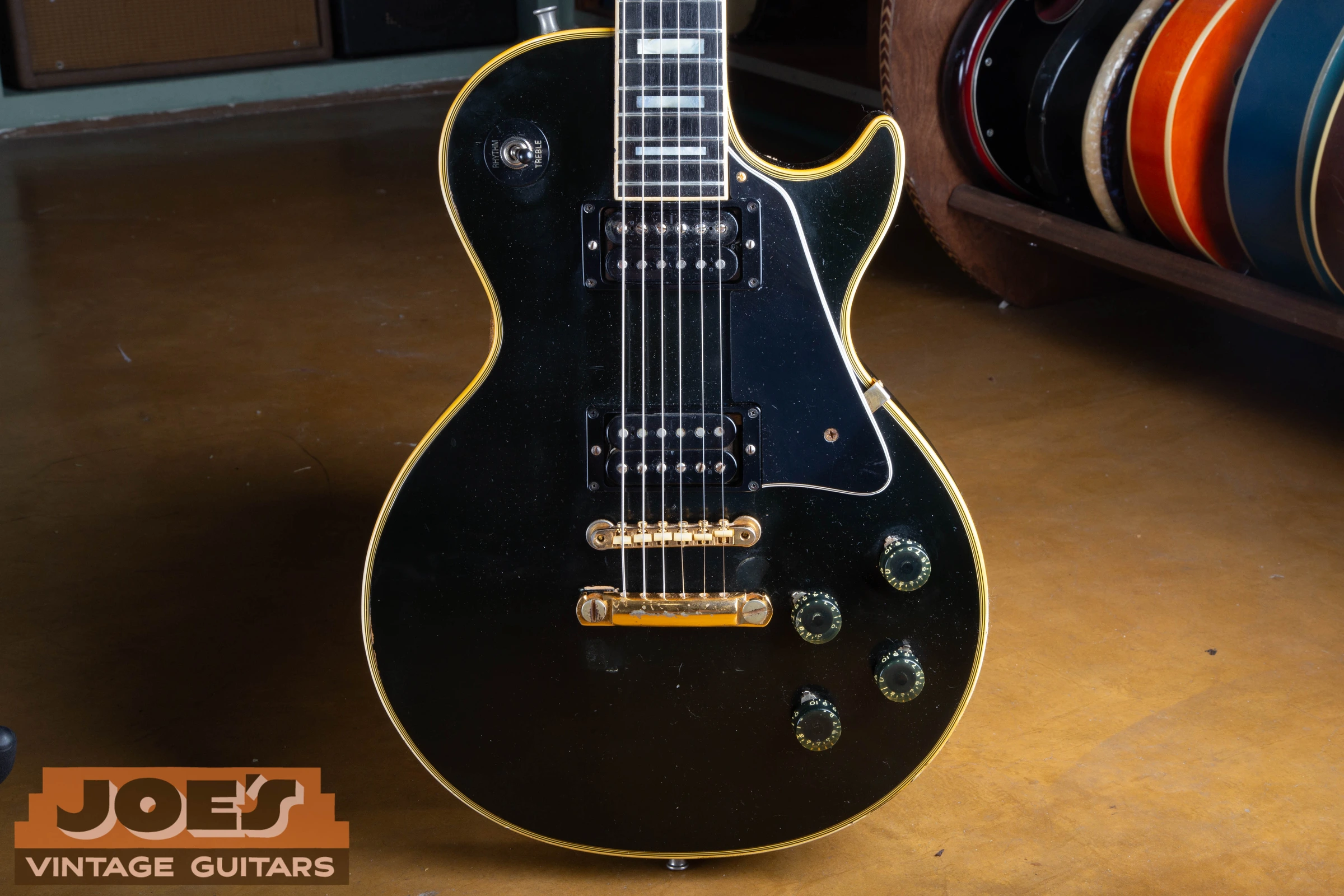
The pickup covers have been removed from this guitar. Date the Custom from its impressed serial, maple-cap body, neck construction, hardware and electronics rather than that modification.
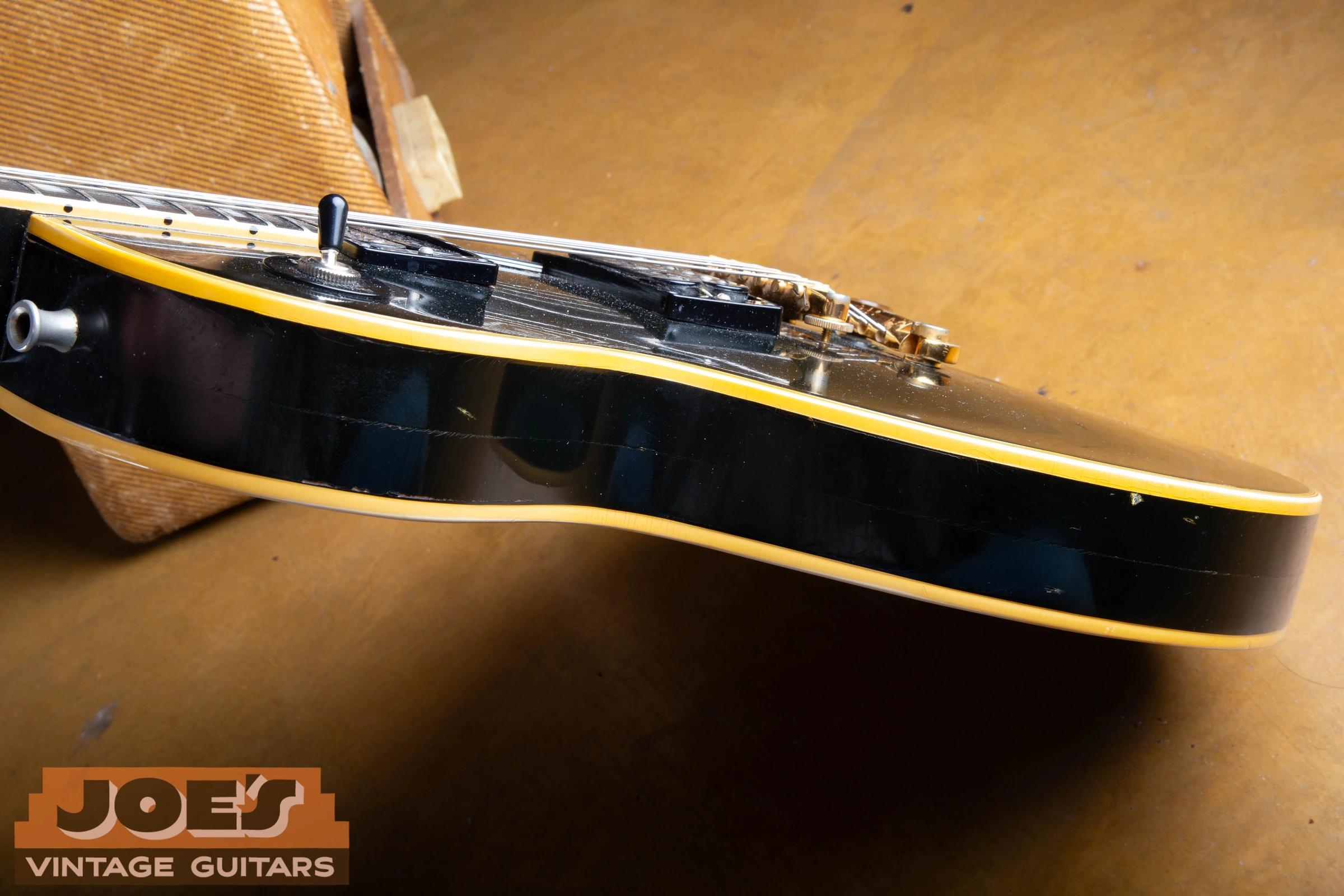
This is a model-independent construction example from a low-impedance Les Paul. The thin crossband can appear as only a faint line around the body edge.
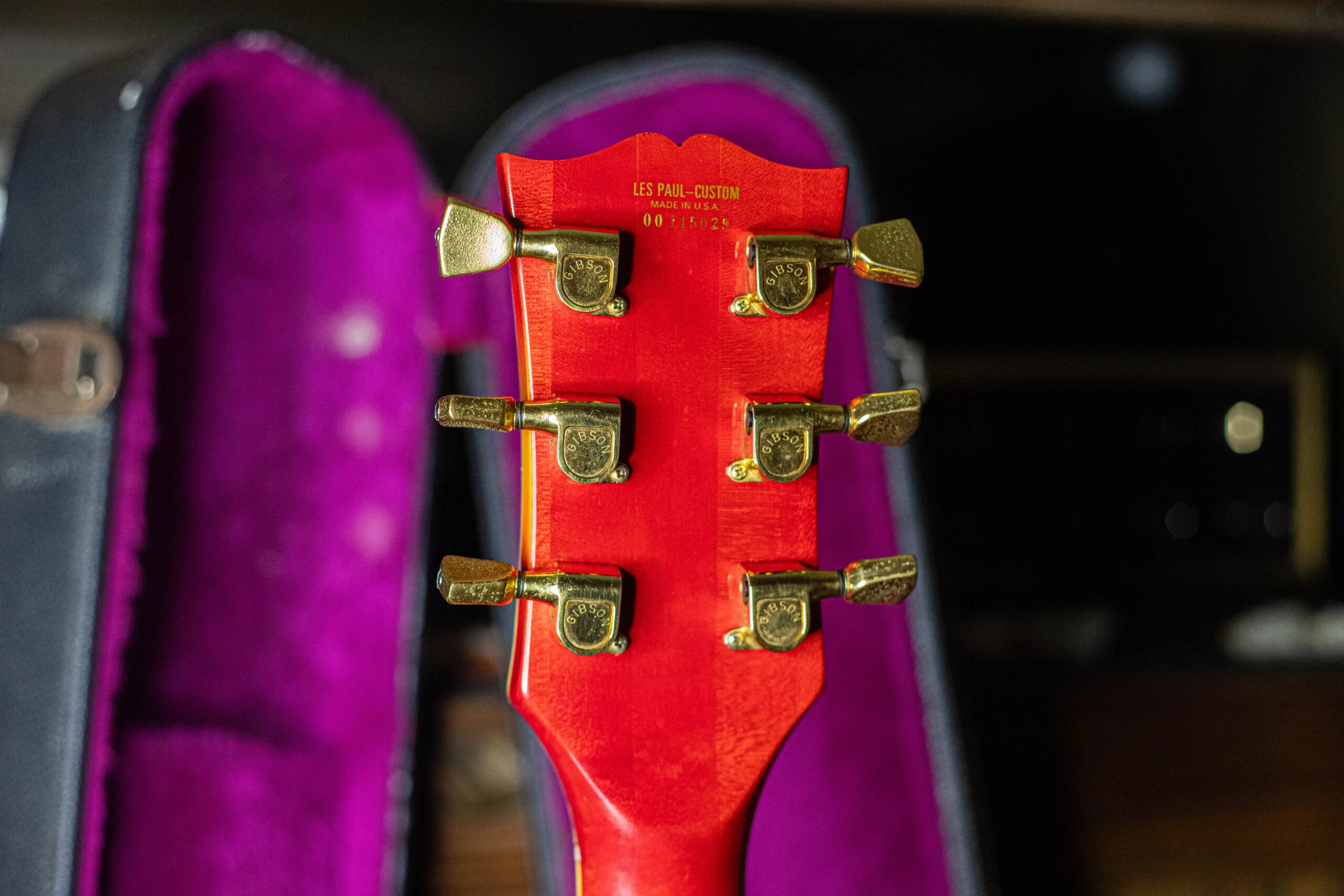
The 00 prefix dates this example to 1976. This narrow Norlin-era serial treatment is a decal, not a 1950s ink stamp.
Model-by-Model Dating
The Junior keeps one dog-ear P-90 and two controls while the pickup position, knobs, capacitor, body outline and bridge evolve. Those changes are useful only after the unbound dot-inlay neck and single-pickup layout establish that the guitar is a Junior. The Les Paul Junior authentication guide has additional examples of pickups, electronics and body shapes.
1954 to Mid-1955
Early Juniors have a single-cut slab body, a dog-ear P-90 placed very close to the wraparound bridge, low speed knobs and a Grey Tiger or similar wax-coated tone capacitor.
Earliest Junior Evidence: The close pickup position is especially useful because it is built into the body. A later replacement knob or capacitor can mislead, but the factory pickup route is harder to change invisibly.
Late 1955 to 1957
The single-cut body remains, but the P-90 moves slightly farther from the bridge. Black bonnet knobs begin replacing the earlier speed knobs around mid-1955. Bumblebee capacitors arrive later in 1955, while Grey Tiger capacitors can continue into early 1956.
Mid-1950s Junior Evidence: A single-cut Junior with the later pickup location and black bonnet knobs fits the middle 1950s, but the headstock serial, pot codes and solder should confirm the range.
1958 to 1960
During 1958 the Junior moves to a symmetrical double-cut body with rounded horns. Cherry becomes the familiar finish. Tortoiseshell is the standard pickguard color; an occasional original black guard is an exception that needs the screw pattern, finish shadow and age to agree.
Double-Cut Junior Evidence: The double-cut shape establishes a later branch, but it doesn’t automatically make the guitar a 1959. Use the neck joint, serial, pots, guard screw pattern and finish shadows to narrow the date and judge originality.
1961 to 1963
The Junior adopts the thin, pointed SG body in 1961, keeping one dog-ear P-90 and two controls. Early SG-shaped Juniors still use the earlier smooth wraparound bridge on angled studs. Around 1962, Gibson introduces the compensated lightning-bar bridge on this model, with a raised zigzag ridge and studs set in line with each other.
SG-Body Junior Evidence: An SG body with the earlier smooth bridge is a correct early combination. The body and bridge changed at different times. Check the original stud positions, serial and pot codes together; the small early pickguard also predates the large guard introduced in 1966.
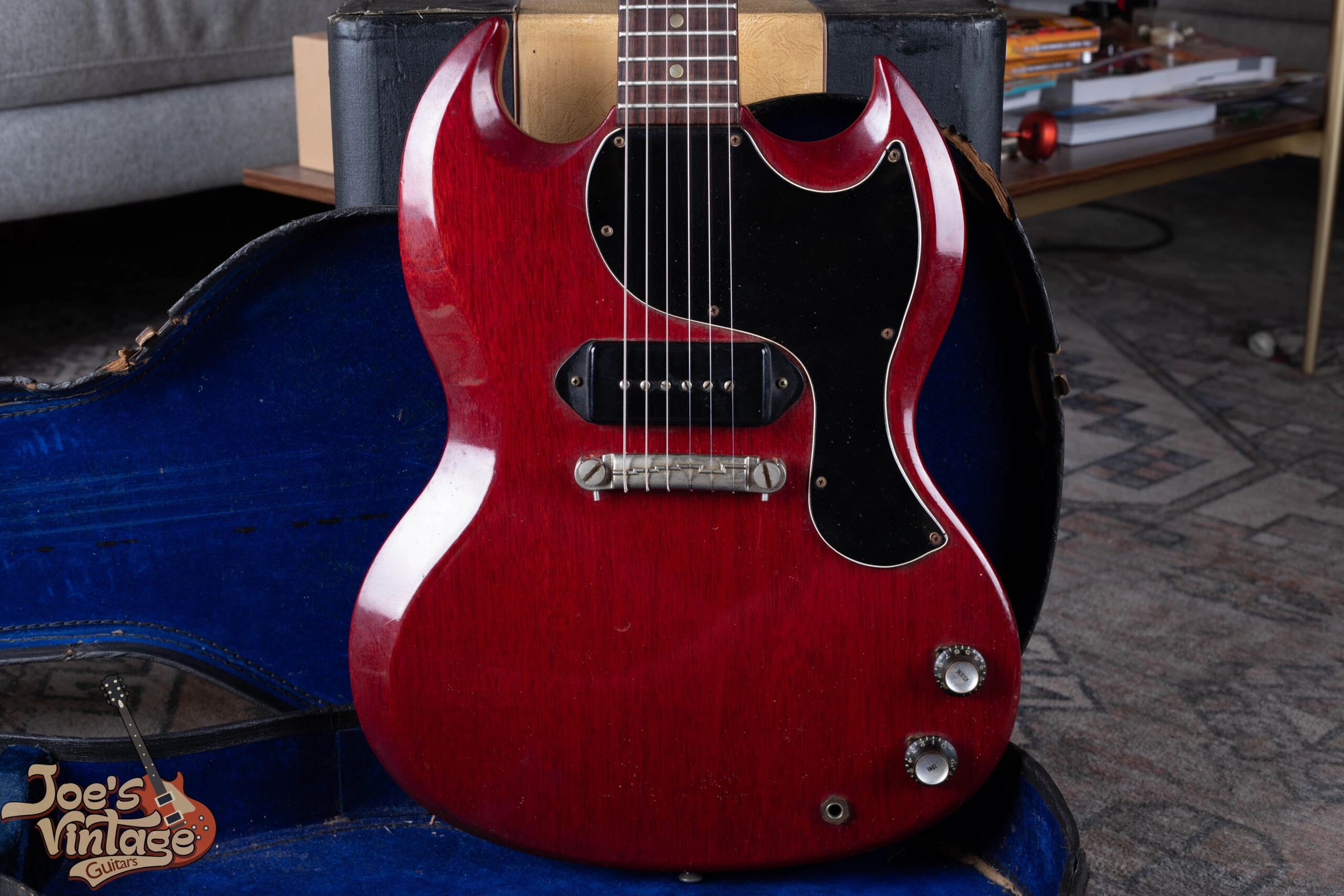
The pointed SG body arrives in 1961. The earliest examples retain the smooth wraparound bridge before the lightning-bar change around 1962.
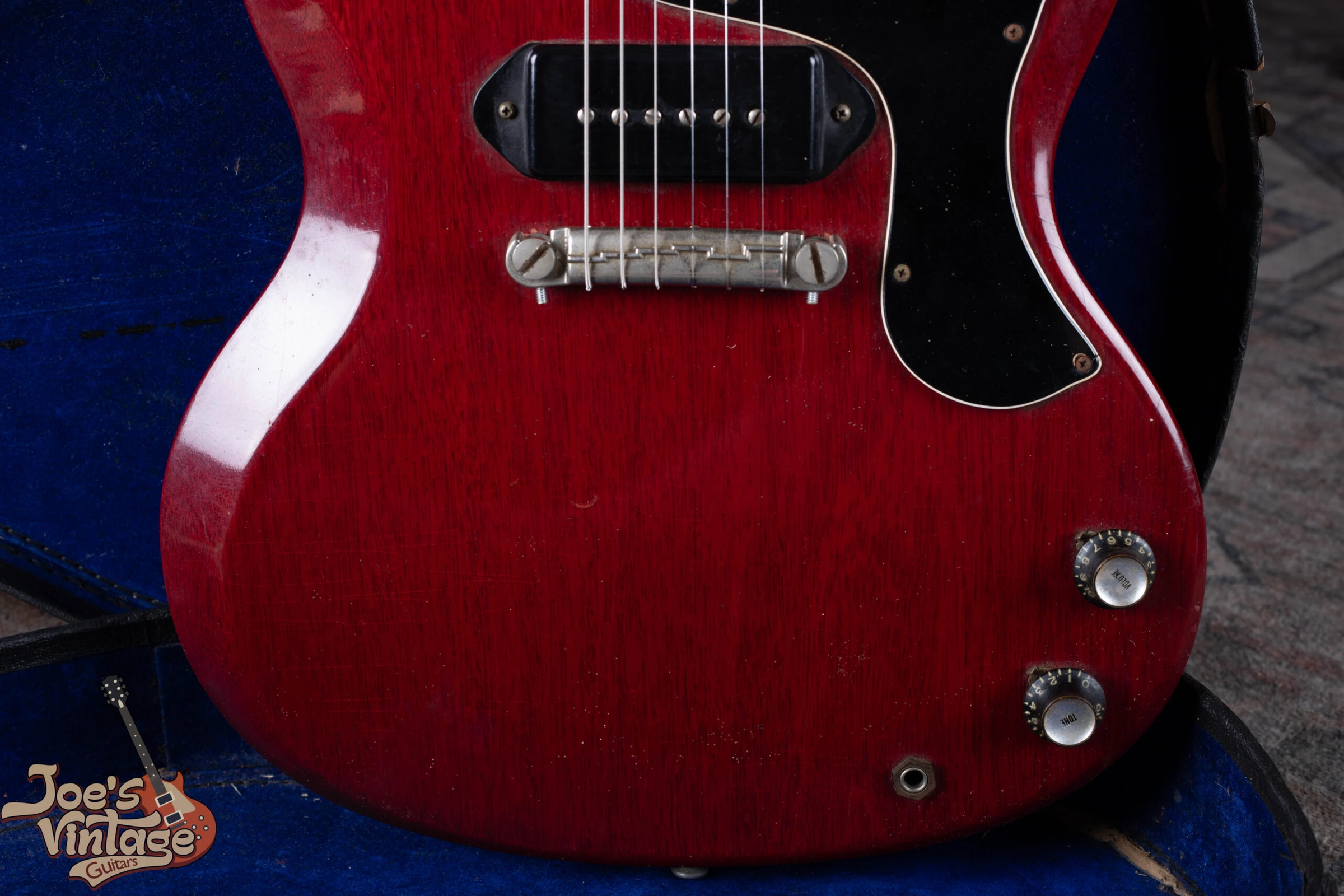
The raised zigzag ridge identifies the compensated bridge introduced on the SG Junior around 1962. The earlier smooth bridge has no raised ridge.
Model-by-Model Dating
The TV Model follows the Junior’s mechanical chronology, but the factory limed mahogany finish and TV MODEL headstock silk-screen are model-specific. A yellow finish without those features doesn’t turn another Les Paul into a TV Model. Compare the finish and markings in the Les Paul TV Model guide and the Gibson headstock logo chronology.
1954 to 1955
Gibson shipped five early TV Models in 1954, including unusual maple-body or three-quarter-scale examples, before the model appeared in the 1956 catalog. The normal version shares the Junior’s single-cut body, close dog-ear P-90, speed knobs, wraparound bridge and strip tuners. Its first limed finishes can look more muted and natural than the brighter yellow seen later.
Earliest TV Model Evidence: The finish should remain translucent over the wood grain, and the headstock should identify the TV Model. An opaque yellow repaint on a Junior isn’t the same guitar.
1956 to 1957
Bonnet knobs replace speed knobs while the single dog-ear P-90, wraparound bridge and Kluson strip tuners remain. The limed finish shows the wood grain, and the gold headstock silk-screen provides the fastest model confirmation.
Single-Cut TV Model Evidence: A 1957-style TV Model should combine the logo, translucent finish, Junior layout, Kluson tuners and a 7-prefix ink serial. If only the color agrees, keep investigating.
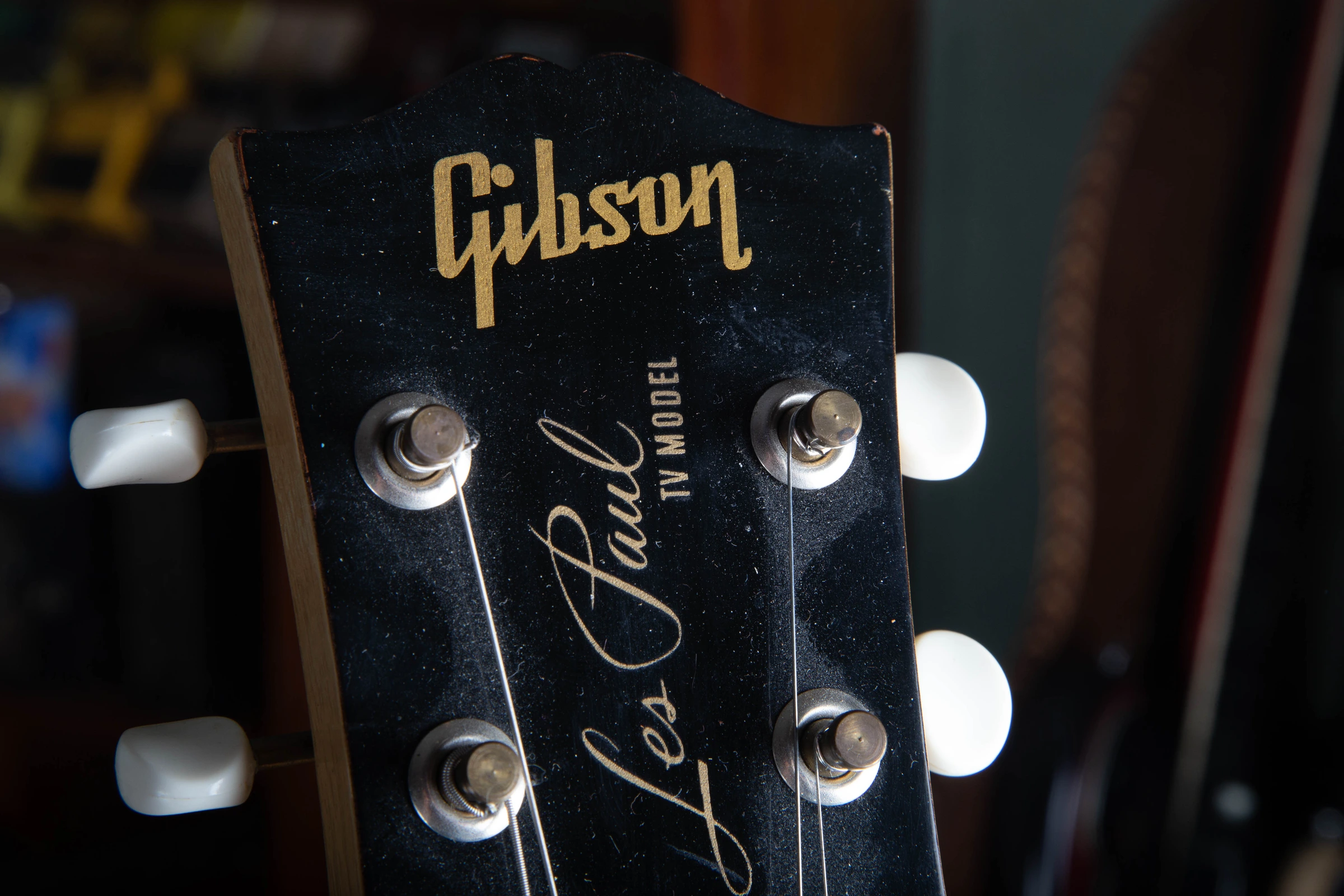
The small TV MODEL line is the quickest model-specific distinction from a normal Junior.
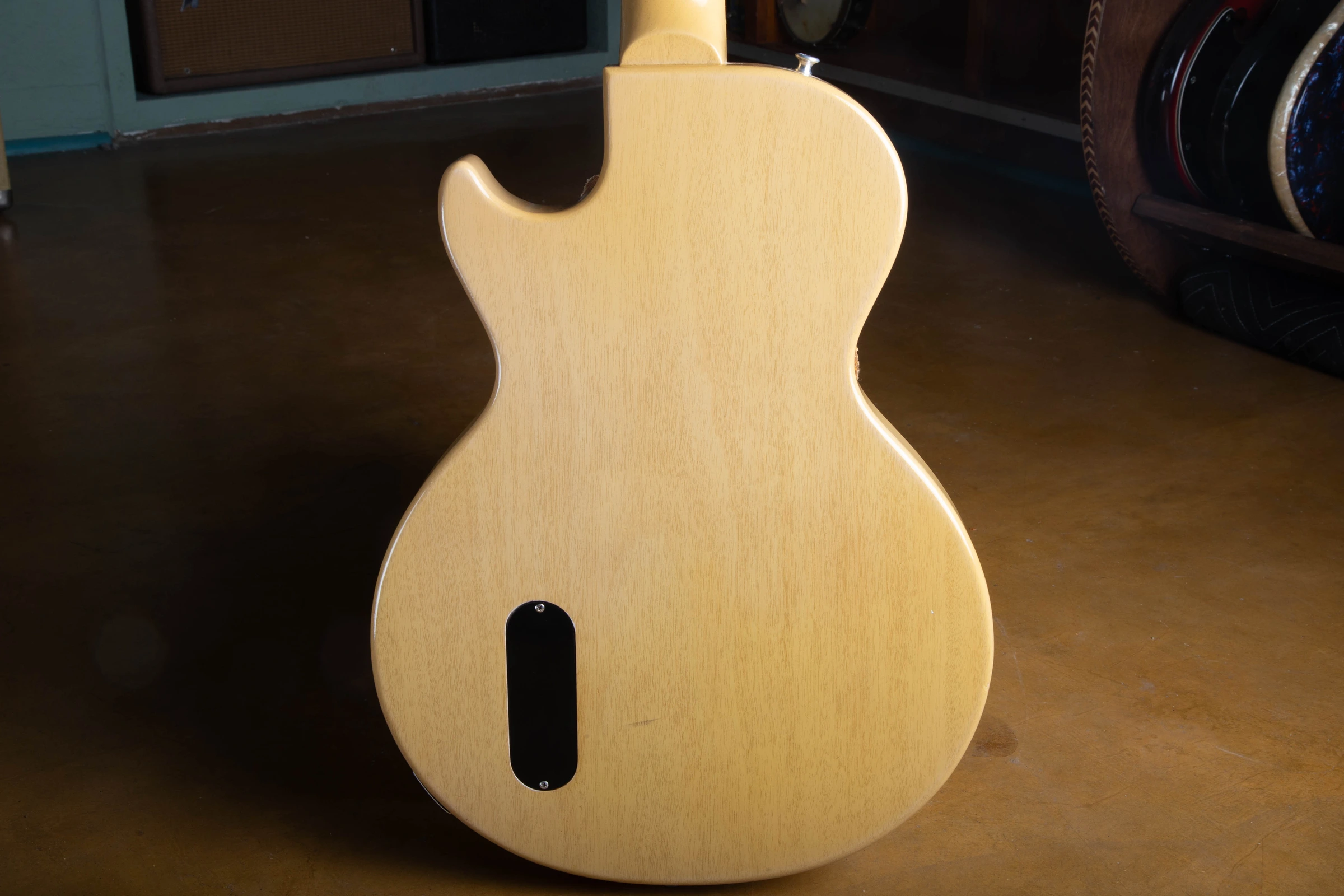
The wood grain remains visible through the finish. Thick opaque color is a reason to check for a refinish.
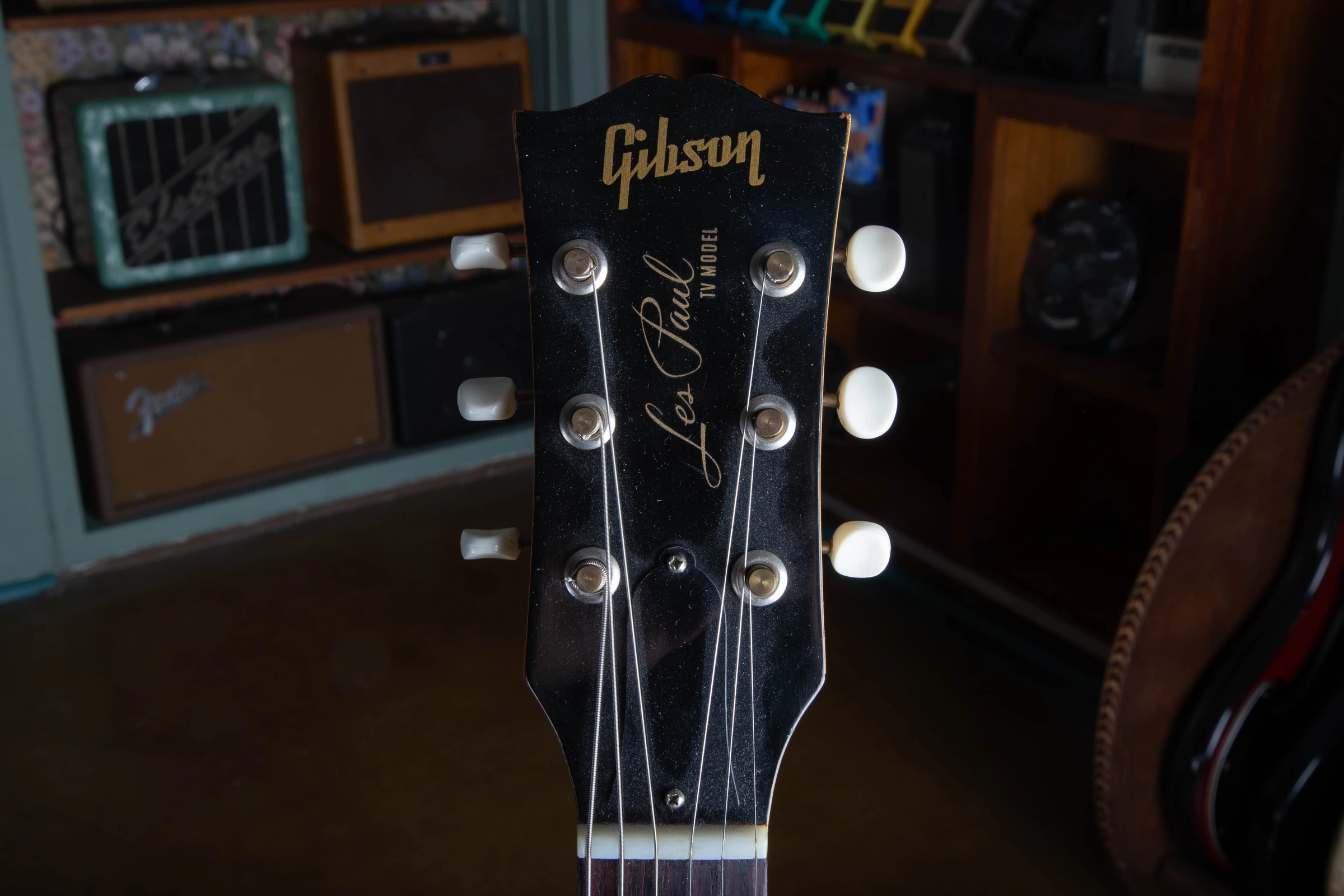
Logo layout, button aging and tuner configuration should agree with the rest of the guitar.
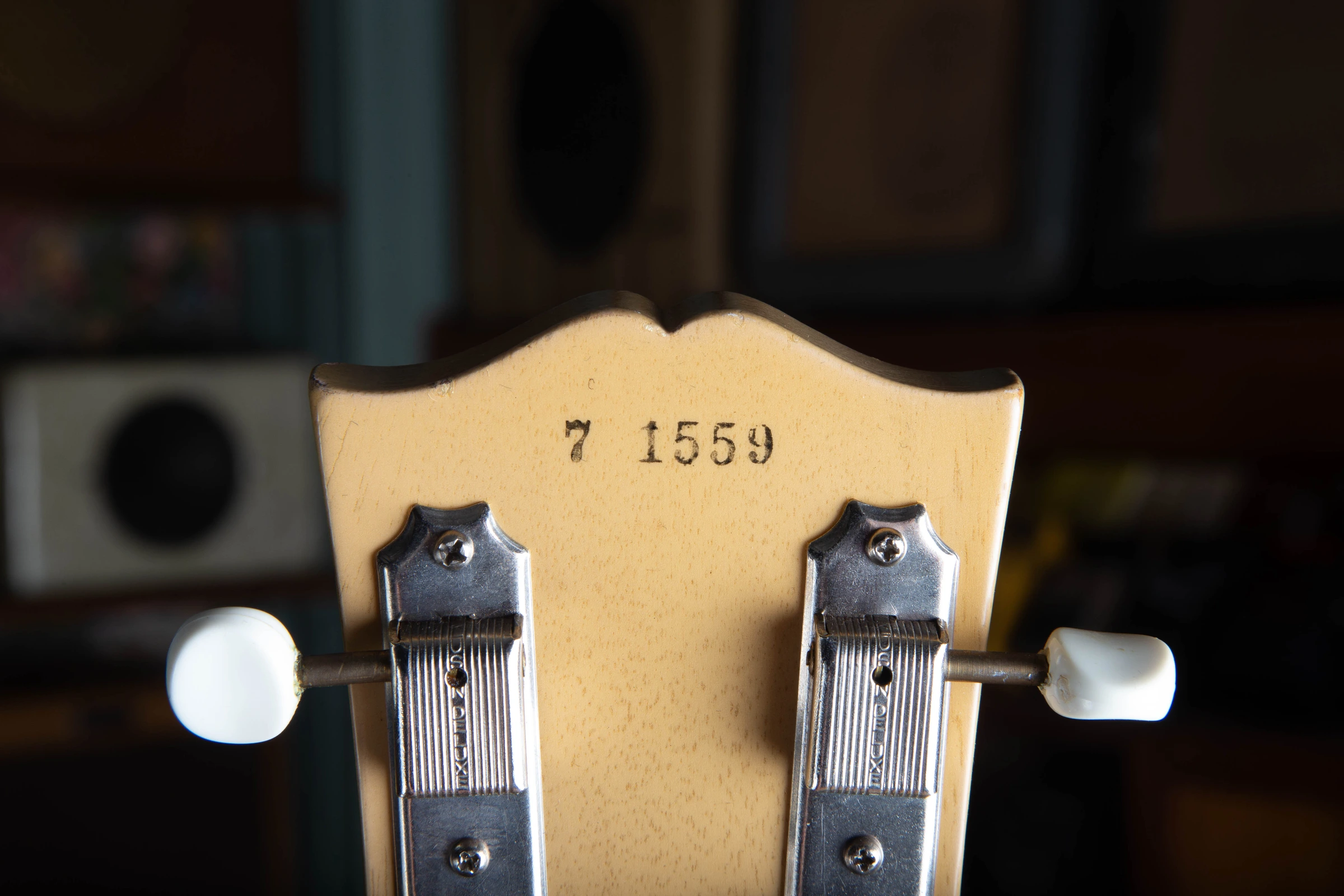
The 7 prefix supports 1957, while the font and untouched surrounding finish help authenticate the stamp.
Late 1958 to Early 1961
The TV Model follows the Junior into the rounded double-cut body late in 1958. The single P-90, two controls, unbound dot-inlay neck and limed finish remain. The color becomes a brighter yellow and a tortoiseshell guard is typical. Gibson’s November 1959 price list calls this rounded-body guitar the SG TV, and production continues at several hundred guitars per year before the pointed SG body arrives.
Double-Cut TV Model Evidence: The guitar should still have the TV MODEL marking and translucent limed finish. Rounded horns identify this phase; pointed SG horns belong to the next body design.
Model-by-Model Dating
The Special is the two-pickup slab-body model. Its wraparound bridge continued after the carved-top Goldtop adopted an ABR-1, so the bridge has to be read inside the Special’s own timeline. See the 1955 to 1958 TV Yellow Les Paul Special guide for more single-cut examples.
1955 to 1956
The original Special combines two soapbar P-90s, four controls, a selector switch, bound neck, multi-ply guard and stud wraparound on a flat mahogany body. Speed knobs and Grey Tiger-style capacitors belong to early examples. Bonnet knobs begin around mid-1955, Bumblebee capacitors arrive later that year and Grey Tigers can continue into early 1956.
Early Special Evidence: The two-pickup layout and bound neck separate the Special from a TV Model before any date is assigned. The Special has an inlaid pearl Gibson logo, while the TV Model uses a gold silk-screen with TV MODEL beneath the Les Paul script.
1957 to Early 1958
The Special keeps its short-seam lightweight wraparound and two P-90s. Hand-guided routes, the visible neck tenon, bound fingerboard with fret nibs and aged nickel hardware provide stronger evidence than any removable plastic part.
Mature Single-Cut Evidence: A wraparound is still correct here even though a 1957 Goldtop has an ABR-1. That apparent conflict disappears when each bridge is judged inside the proper model.
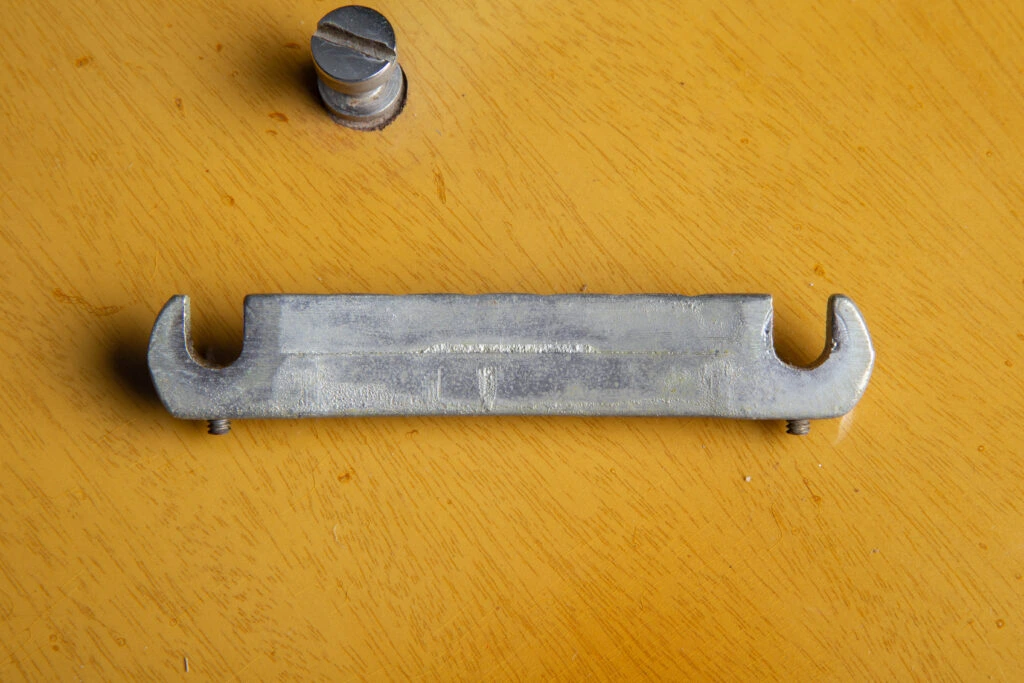
The short seam and light construction fit the original Special. A heavy modern casting is a replacement clue.
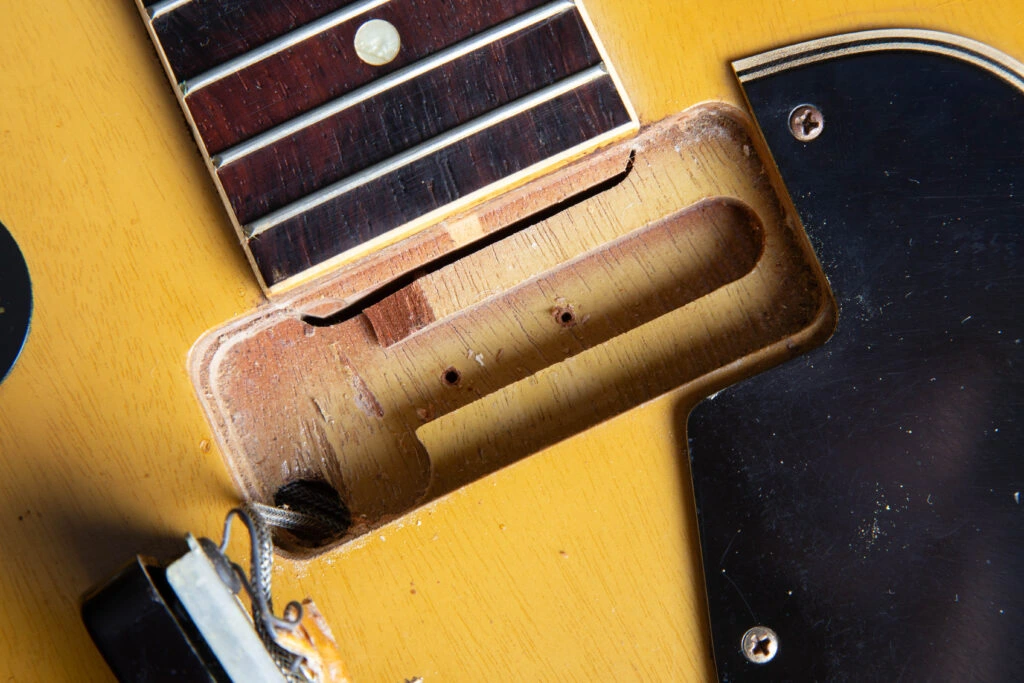
The route shape and visible neck joint help confirm factory construction and expose later pickup work.
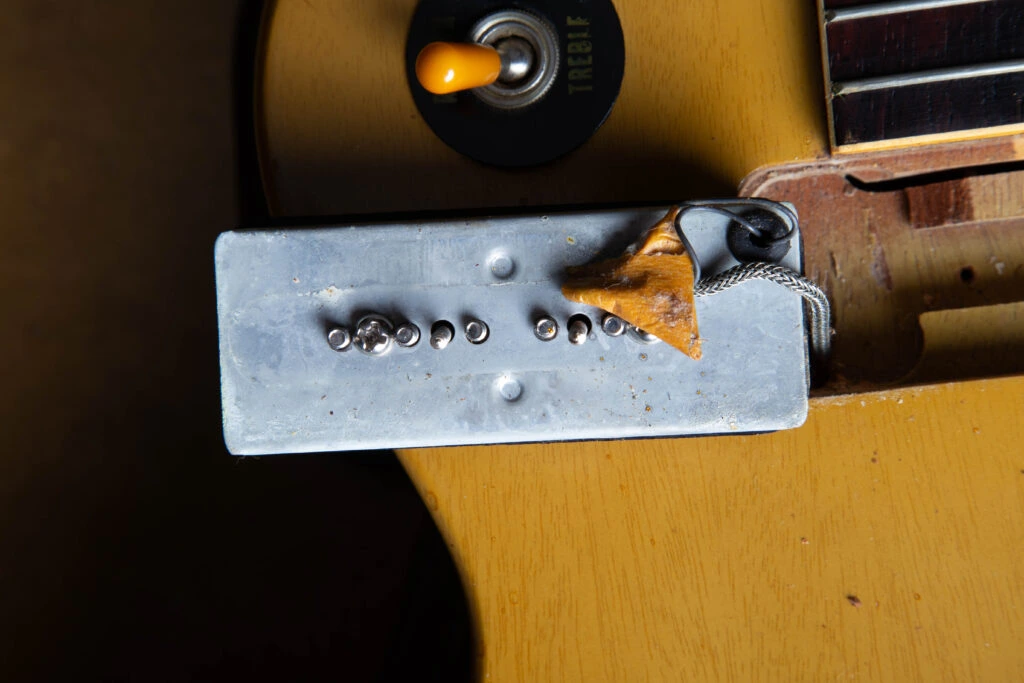
Baseplate, lead, coil, hardware and cavity fit matter more than the black plastic cover.
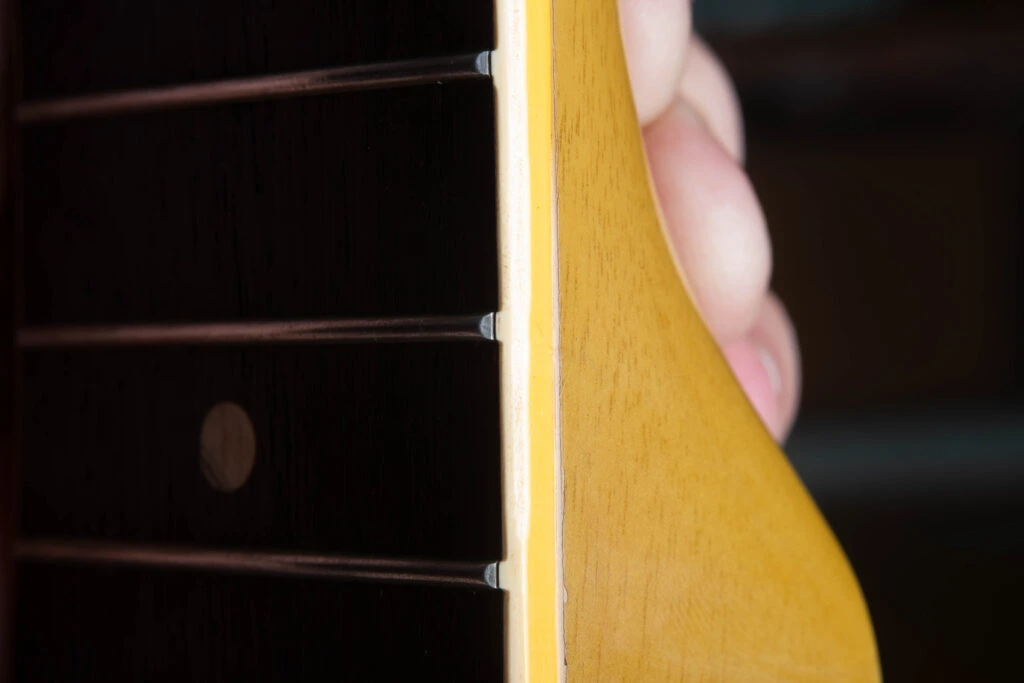
Nibs support original factory fretwork on this bound-neck model. They are usually lost during a conventional refret.
Late 1955 to 1958 Electronics
Bumblebee capacitors become common after late 1955, and period pots carry manufacturer, year and week codes on their cases. The component date is an earliest possible assembly date, not the guitar’s exact birthday.
Special Electronics Evidence: Pot codes and capacitors can support the headstock serial, but only if the solder and wiring show that they belong to the guitar. A later replacement code dates the repair, not the Special.
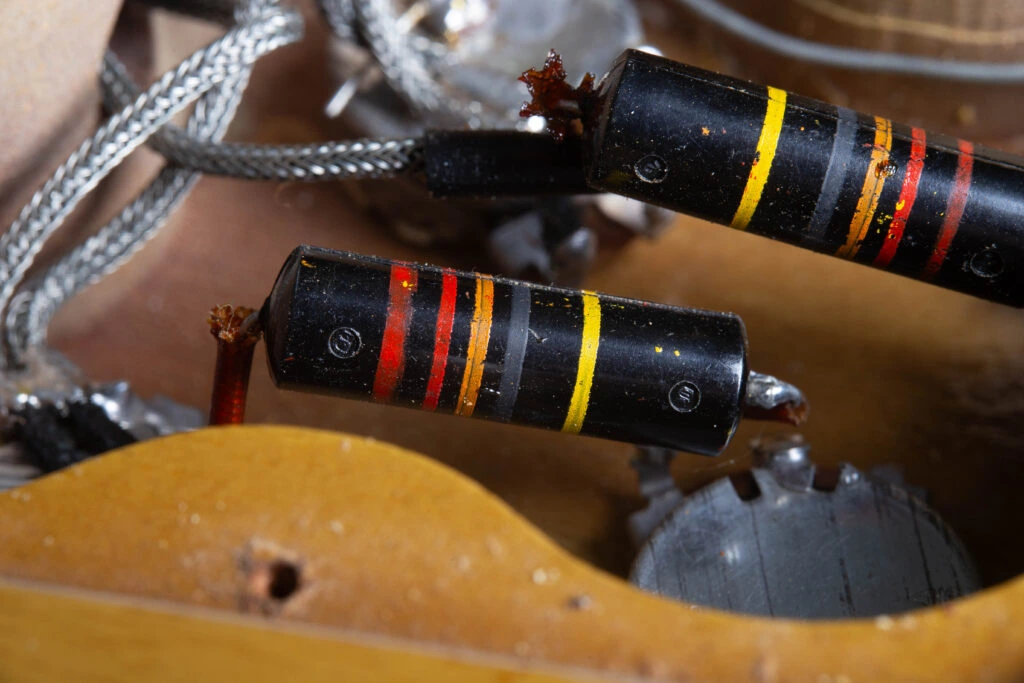
The capacitor type belongs with mid-to-late-1950s Special electronics, but untouched leads and solder are just as important.
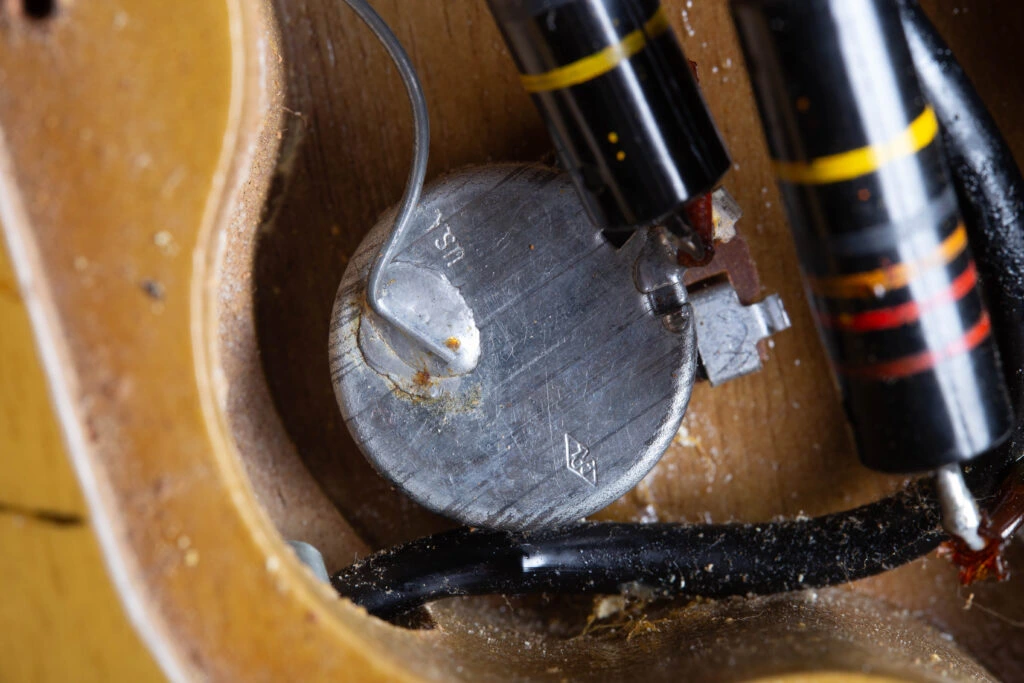
Read the manufacturer, year and week code where it remains visible, then compare it with the serial and assembly evidence.
Late 1958 to Early 1961
The earliest double-cut Specials have the neck pickup close against the end of the fingerboard. Its cavity cuts into the wood supporting the neck joint, leaving that area weak and prone to breaks. Around the start of 1960, Gibson moves the neck pickup roughly half an inch toward the bridge and adds a larger one-piece pickguard. The November 1959 price list already uses the SG Special name for the rounded double-cut body.
Double-Cut Special Evidence: A neck pickup close to the fingerboard points to the earlier layout; the larger gap and revised guard point to the strengthened version. Inspect the heel and pickup cavity for repairs or a relocated pickup before using the spacing to date the guitar.
Each Later Branch Has Its Own Rules
The returning single-cut Les Paul became a much larger family. These models can share serial systems, so the pickup shape, control layout, body construction and factory model identity have to be established before the number is decoded.
1969 to the 1980s core run
Two mini-humbuckers mounted in P-90-size surrounds define most Deluxes. Goldtop is the best-known finish, but sunburst, wine red and other factory finishes exist. Gibson also shipped some Deluxes with factory full-size humbuckers from 1972.
1969 to 1973 shipments
These low-impedance guitars use large pickups and more controls than a Standard. The upscale Personal includes Custom-like trim and a microphone input; the Professional is visually plainer. The Recording replaced both in 1971, but remaining Personal and Professional guitars continued to ship afterward.
1971 to about 1979
The Recording replaced the Personal and Professional with onboard high and low impedance options. Its phase and Decade controls make it easy to separate from a normal two-humbucker Les Paul.
1969 to about 1979
The first low-impedance Les Paul Bass was renamed and revised as the Triumph during 1971. A Triumph isn’t dated by guitar pickup or control rules.
1976 to the early 1980s
Hearts-and-flowers fingerboard and headstock inlays are the Artisan signature. Three pickups were standard at launch. Two-pickup versions followed and were the cataloged configuration by mid-1979, while three pickups remained available.
1979 to the early 1980s
The Artist combines a carved Les Paul body with active Moog electronics. Its switches, control layout and circuit board are central to both identification and originality.
1976 to 1979
The Les Paul is an exceptionally ornate, largely hand-built premium model with extensive curly maple construction and elaborate wooden trim. Only about 77 were built, and it should not be confused with The Paul.
1978 to the early 1980s
The Paul is a simpler flat-top walnut instrument with dot inlays and exposed humbuckers. Its plain working-guitar design is almost the opposite of The Les Paul.
Late 1970s to early 1980s
The Pro Deluxe uses full-size P-90s on a carved Les Paul body. The reintroduced double-cut Special returns to the slab-body branch. Similar names don’t mean the same construction.
Three-piece necks, pancake bodies and the first small volutes begin during 1969. A Made in USA stamp follows in 1970. Maple necks appear on many Les Pauls from 1975 into the early 1980s, pancake construction continues through about 1977 and volutes continue through about 1981. The Nashville bridge arrives later in the decade. These are overlapping windows, not exact changeover days.

The mark supports 1970 or later production, but it doesn’t identify the Les Paul model.
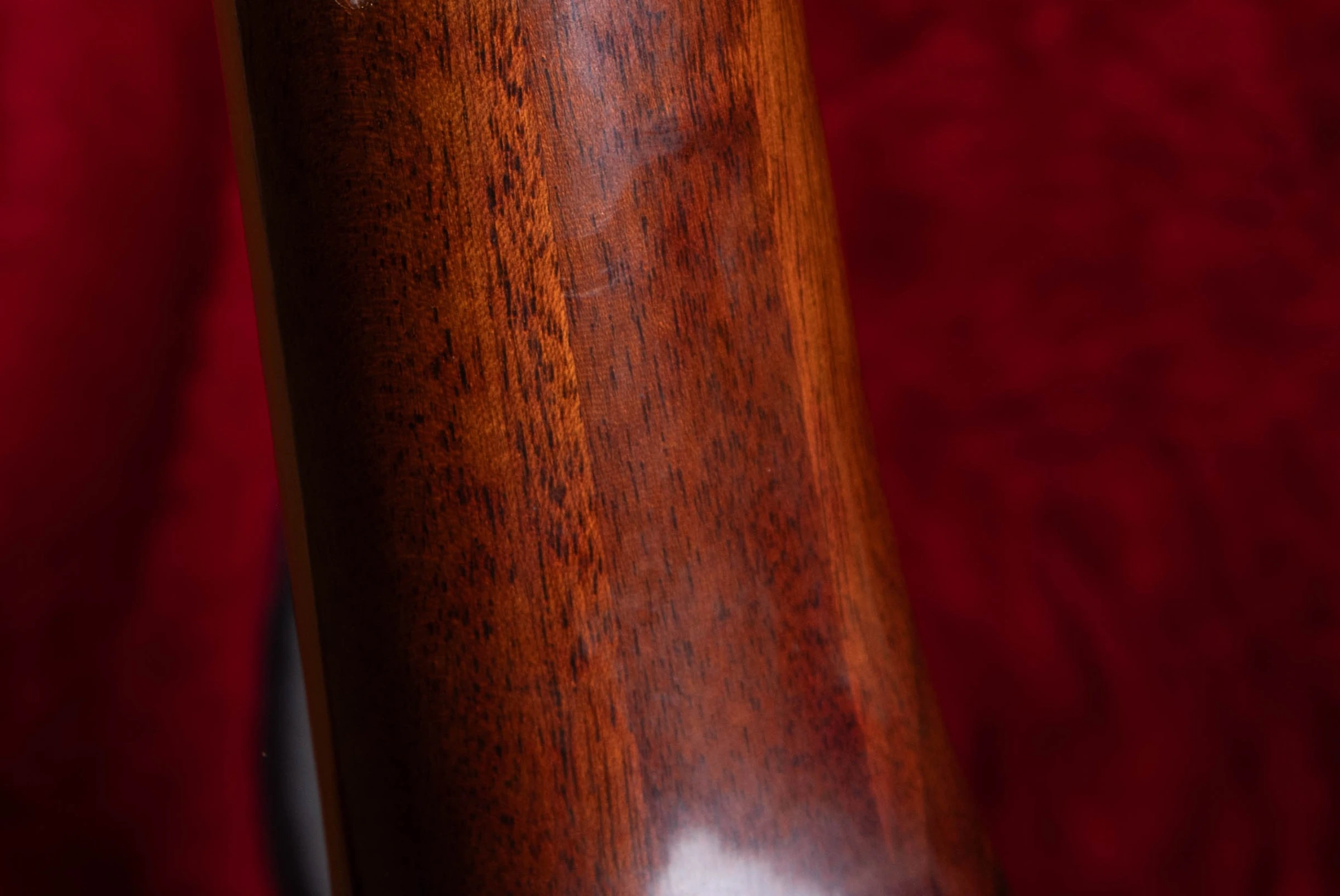
The seams are an early-to-mid-1970s construction clue on the models that used this neck.
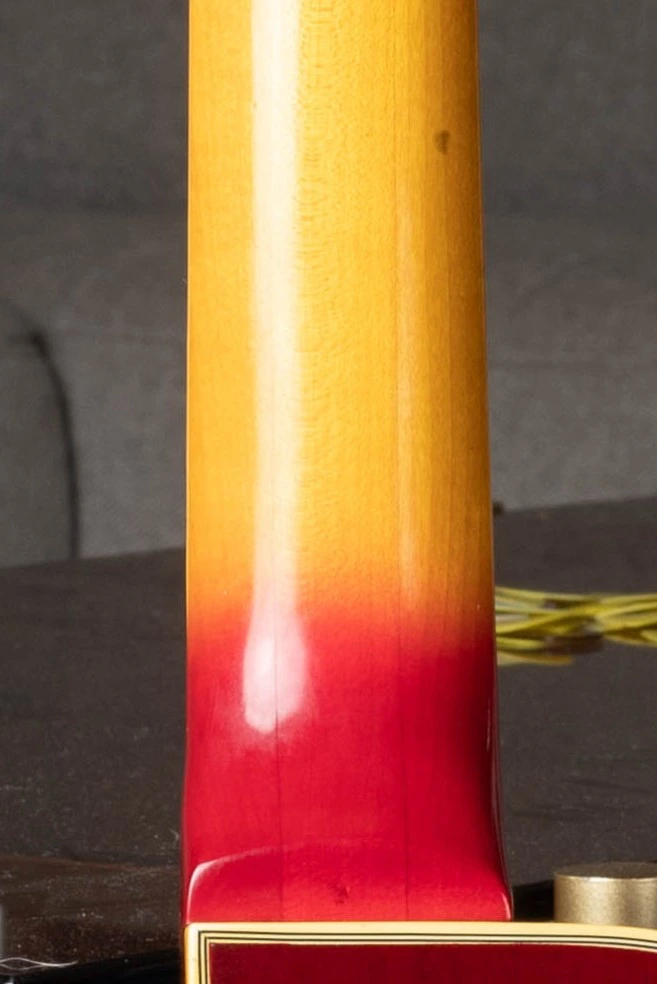
Many later-1970s Les Pauls move to maple necks. Finish color can hide the wood, so inspect grain and exposed areas.
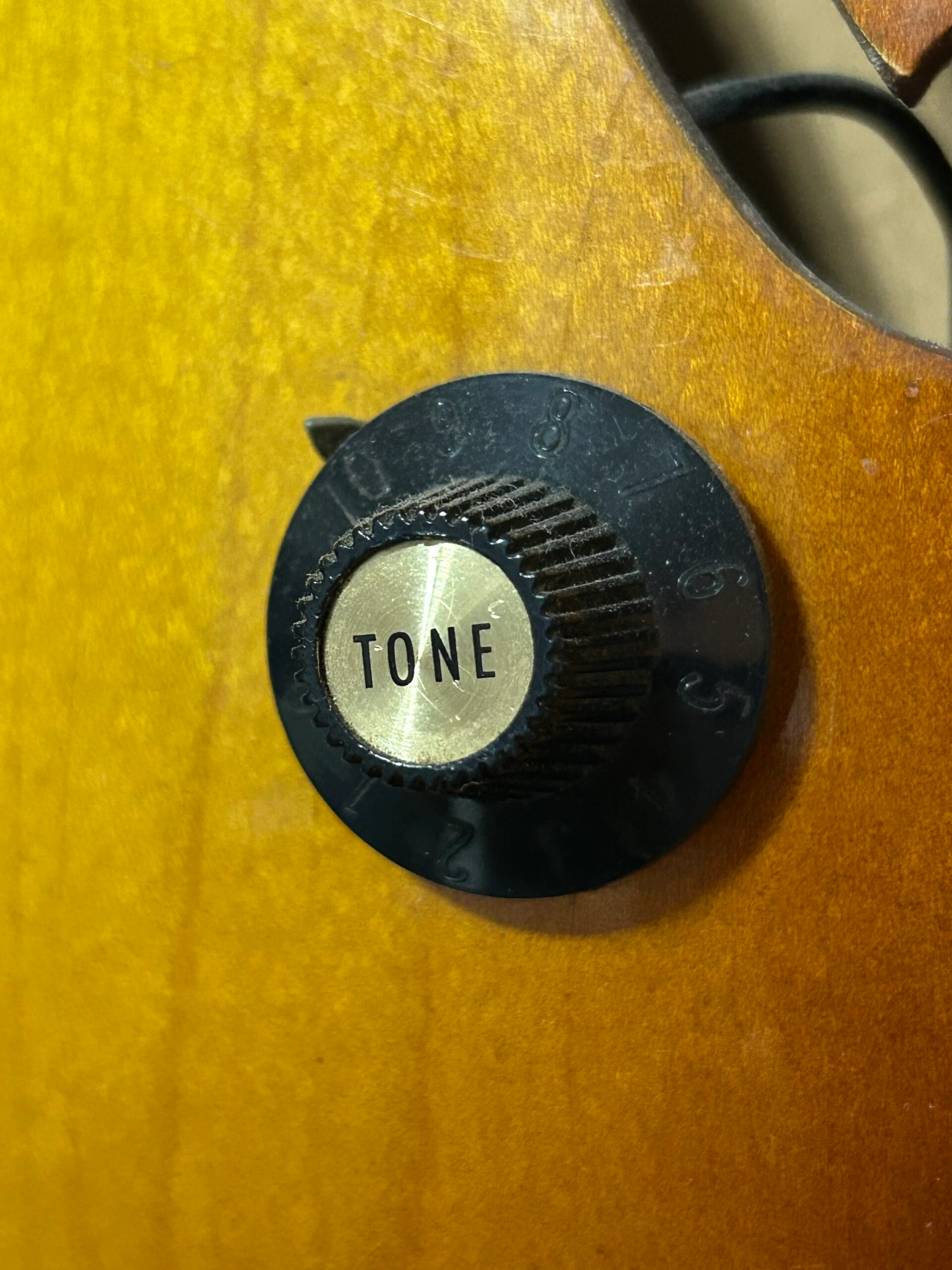
Witch-hat knobs are a broad late-1960s and 1970s clue. Because they are easily replaced, they rank below body and neck construction.
The raised ridge behind the nut supports 1970s construction. Its size changes over time and should agree with the serial.
This model-independent hardware example shows the wider bridge body used later in the 1970s. Confirm the original posts and finish impressions on a Les Paul.
Vintage-Looking Numbers and Limited Editions
These are the guitars most likely to defeat a simple serial lookup. Some copy a 1950s ink stamp, some use a separate edition number and some depend on a Certificate of Authenticity. Identify the run before interpreting the number.
| Model or Run | Main Era | How to Identify and Date It |
|---|---|---|
| Les Paul 25/50 Anniversary | 1978 to 1979 | Distinctive 25/50 headstock inlay, split-block fingerboard inlays, five-piece maple neck, mixed silver and gold trim, TP-6 tailpiece and coil-tap switch. It carries a normal eight-digit Gibson serial plus a separate four-digit edition number. Use the eight-digit serial to date the guitar; the edition number is only its place in the run. |
| Les Paul 30th Anniversary | 1982 to early 1983 | Goldtop finish and a 30th Anniversary marking at the 19th fret. The special serial uses a letter followed by four digits. That sequence isn’t a standard day-of-year serial, so confirm the model and paperwork. |
| Heritage Series Standard 80 | 1980 to 1982 | Gibson’s first factory series aimed directly at recreating a 1959 Standard. A Heritage 80 truss-rod cover, figured sunburst top and early reissue details identify the branch, while the regular serial and model-specific sequence need to be read together. |
| Heritage Series Standard 80 Elite | 1980 to 1982 | A higher-trim Heritage 80 version generally identified by a one-piece mahogany neck, ebony fingerboard and more heavily figured top. Do not assume any 1980s sunburst Les Paul is an Elite. |
| Heritage Series Standard 80 Award | 1980 to 1982 | A very small dealer-award version based on the Elite with gold-plated hardware. Provenance matters because trim parts can be changed. |
| Guitar Trader, Leo’s and Other Dealer Reissues | Early 1980s | Dealer-commissioned guitars moved closer to late-1950s specifications before Gibson had one standardized Historic system. Identify the exact dealer run by construction, known features and paperwork, not only by a vintage-looking ink number. |
| Pre-Historic Les Paul Reissues | 1983 to 1993 factory run | Gibson’s 1983 to 1993 Les Paul Reissue commonly uses an inked serial whose first digit gives the last digit of the production year. Dealer reissues from Guitar Trader, Leo’s and others used their own prefixes or model-year systems, so the factory rule can’t be transferred to every early reissue. |
| Les Paul Spotlight Special | 1983 to 1984 | A figured top divided by a contrasting center strip gives the model its neck-through appearance, although it isn’t neck-through construction. Its inked 83-XXX serial and Custom Shop Edition decal identify the run. |
| Les Paul Classic | 1989 to 2014 original run | Most 1989 to 2007 Classics use a vintage-looking ink serial with no Made in USA stamp. Documented 2008 examples can add Made in USA beneath an inked number, and regular impressed Gibson USA serials appear on later Classics from about 2009. A small group of 2007 Classic offshoots also uses the regular impressed system. This transition overlaps, so confirm the exact model. |
| Historic Collection Reissues | 1993 onward | The common M YNNN format uses the first digit for the reissue model year and the second digit for the production year’s last digit. For example, a leading 9 identifies a 1959 reissue, not automatically a guitar built in 1959. Decade ambiguity still requires paperwork and physical evidence. |
| Artist Signature and Collector’s Choice | Modern limited runs | Initials, CC codes and edition numbers usually identify the artist, replicated guitar or position within a run. They often don’t encode a manufacturing date. Use the Certificate of Authenticity, model records and supporting serial format. |
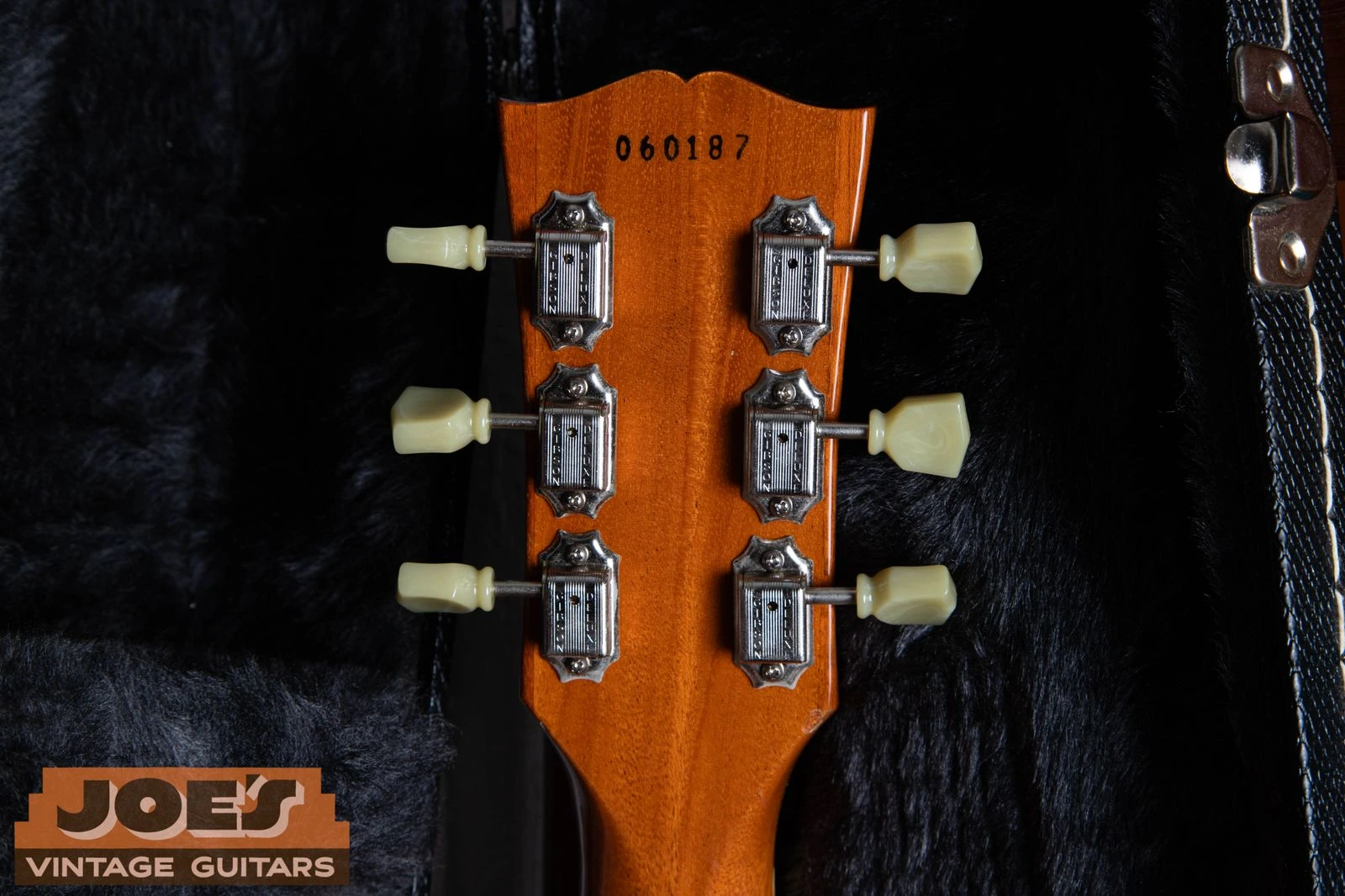
The Classic’s stamp deliberately looks old, but its font and year format differ from a 1950s original. Most examples have no Made in USA stamp.
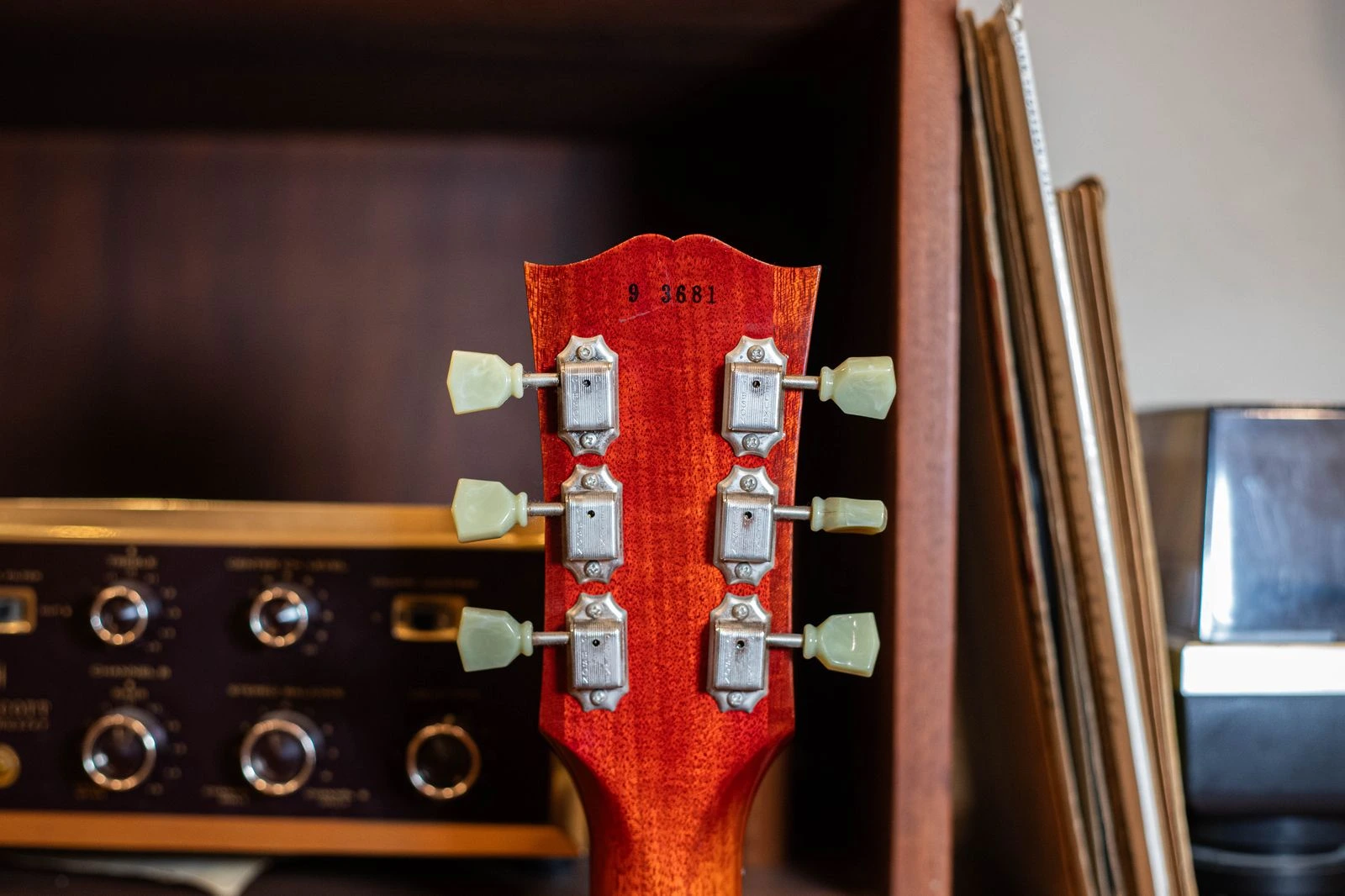
On the common Historic format, the leading 9 identifies a 1959 reissue. It doesn’t by itself mean the guitar was made in 1959.
Later Production Branches
Modern Les Paul specifications can change by model year. A model name is a starting point, not a permanent recipe. Read the factory serial format first, then confirm the exact catalog model from the trim, body construction, electronics and documentation.
Introduced in 1983 as a less ornate working Les Paul. Many have little or no body and neck binding, but early Studio Standard and Studio Custom versions can be bound. Use the serial, body woods, trim and exact model name together.
Built around vintage-style appearance and slimmer neck profiles in much of its original run. The ink serial system through 2014 is the key dating exception, including the separate group of 2007 impressed-serial offshoots.
A later Gibson USA branch intended to retain familiar Les Paul construction while the Standard line adopted newer features. Specifications changed by model year, so the serial and factory model record matter more than the name alone.
A stripped-back production branch with simpler finishes and appointments. Pickup type and trim can change across editions, so don’t use the Tribute name as a single fixed specification.
Later Juniors and Specials can closely copy 1950s features. A modern regular-production serial, Historic serial or Custom Shop marking must agree with the neck joint, hardware, finish and component dates.
These can reproduce vintage ink stamps, no-wire bridges, aged finishes and old-style plastics. The reissue serial, Certificate of Authenticity and factory paperwork are part of the identification, not optional extras.
A Repeatable Inspection
Carved or flat body, pickup count, pickup size, binding and inlays should point to one branch before the serial is decoded.
Use the Gibson serial decoder and charts to separate standard Gibson USA numbers from 1950s ink stamps, Classic numbers, Historic reissue formats, CS prefixes and limited-run sequences.
Check the neck wood and number of pieces, volute, Made in USA stamp, maple cap, pancake seam, tenon evidence and repair history.
Confirm P-90, staple, PAF, Patent Number, T-Top, mini-humbucker, low-impedance or later pickups. Factory routes should fit the model. The PAF and Patent Number pickup guide follows the pickup changes in detail.
Gibson pot codes provide an earliest possible assembly date. Capacitors, wire, solder and control layout should support the model and period.
Bridge, tailpiece, tuners, knobs, plastics and plating help only after you decide whether they have remained with the guitar.
Headstock breaks, refinishes, overspray, routed pickups, replaced electronics and plugged hardware holes affect both certainty and value.
Certificates, dealer receipts, case documents and factory model records can resolve artist, Collector’s Choice and early reissue ambiguity.
Make Every Clue Tell the Same Story.No single serial, pot code, tuner or finish detail authenticates a Les Paul. The strongest date is the range where the model, construction and components converge.
Once the model and year are established, the vintage Les Paul value guide explains the price differences between versions. For an assessment of your guitar’s condition, repairs and originality, request a free appraisal.
Common Questions
Start with the body. Decide whether it has a carved top or flat slab body, then count the pickups and controls. Use binding, inlays, pickup size and headstock trim to confirm the branch before reading the serial number.
Usually not. A standard Gibson serial can date production without distinguishing a Standard, Custom, Deluxe or Studio. Model identification comes from construction, electronics, trim and factory records.
A factory Deluxe normally has two narrow mini-humbuckers mounted in cream P-90-size surrounds. A Standard uses full-size humbuckers. Many Deluxes were routed later, so pickup-cavity inspection is important.
No. The 1950s TV Model has one dog-ear P-90 and Junior-style construction. A yellow Special has two soapbar P-90s, four controls and a bound fingerboard.
The thin pointed double-cut design is the body now called the SG, but early examples still carry Les Paul branding. Date it with early SG construction and serial evidence.
Yes at a glance, because it was made as an early 1959-style reissue. The 1980s serial, truss-rod cover, construction, hardware, pickups and documentation separate it from an original Burst.
No. Classics, pre-Historic reissues, Historic Collection guitars and some special runs use vintage-looking ink numbers. Font, format, Made in USA stamp, model details and decade evidence must agree.
The Les Paul was an ornate premium late-1970s instrument with extensive figured wood and elaborate appointments. The Paul was a simpler flat-top walnut working guitar with dot inlays.
Read its normal eight-digit Gibson serial for the manufacturing date. The separate four-digit edition number identifies its place in the limited run and isn’t a date code.
Photograph the full front and back, headstock front and back, serial, body edge, neck heel, bridge, tailpiece, tuners, pickup cavities, pickup backs, control cavity, pot codes and any extra holes or repairs.