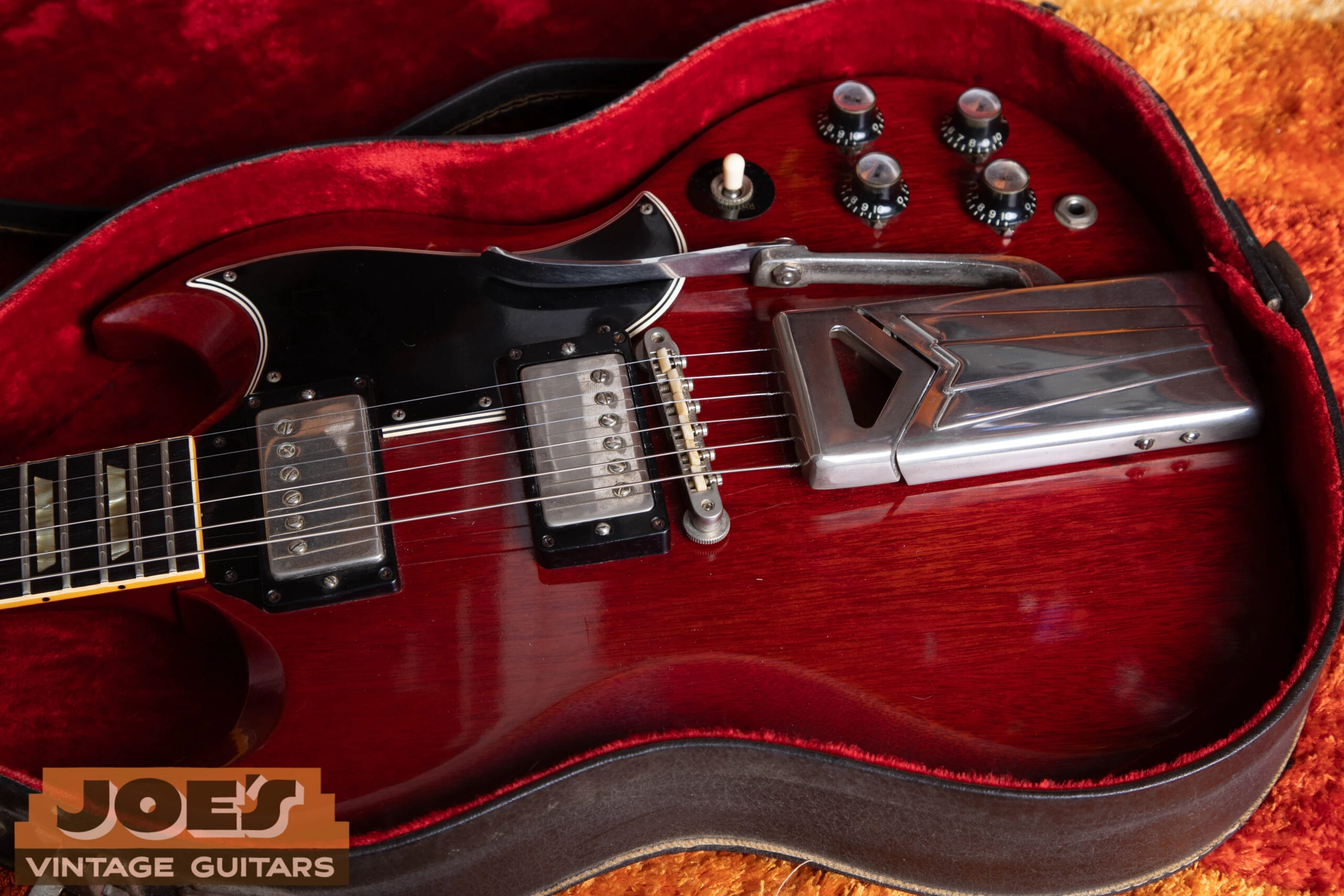
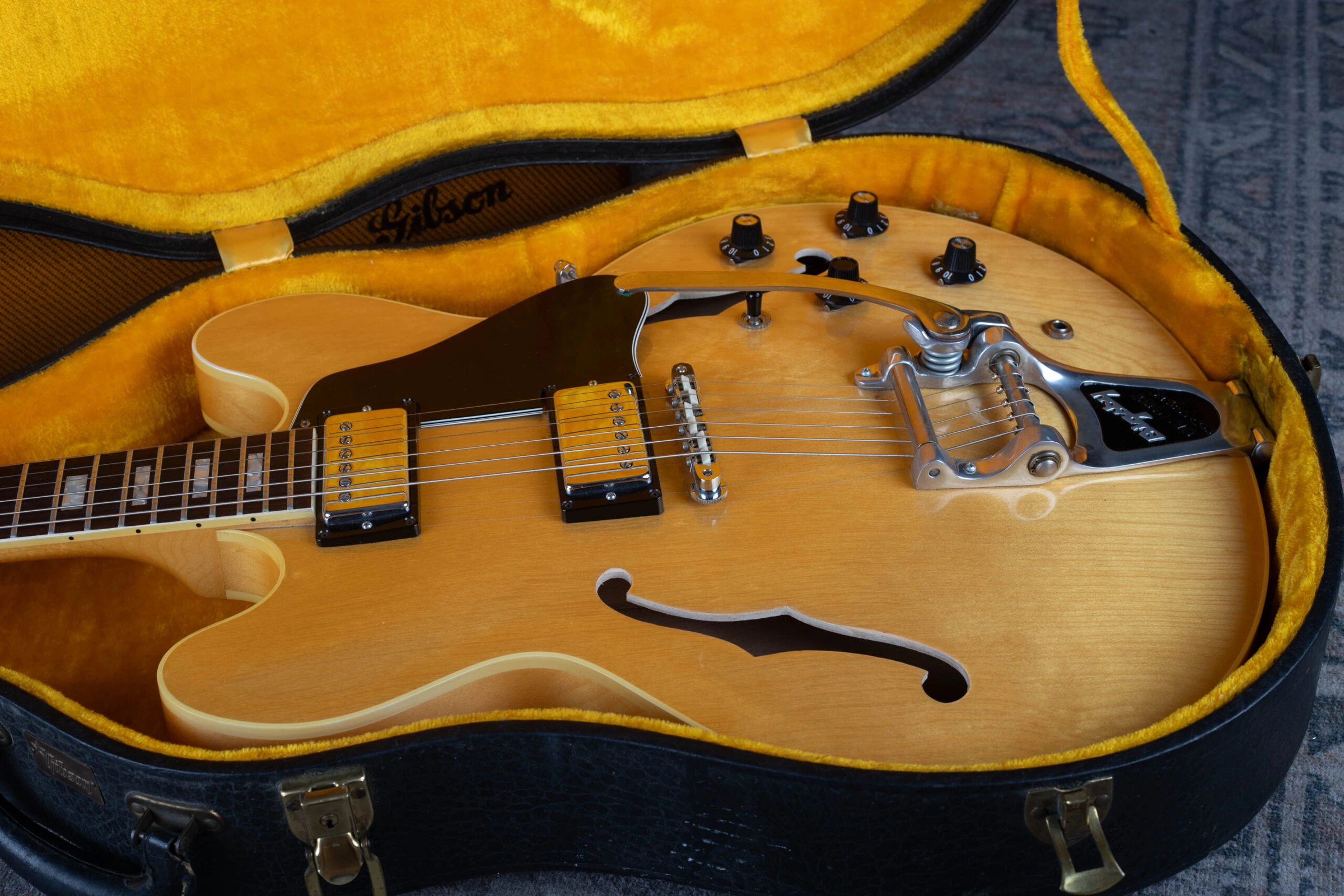
A Gibson serial number is the starting point, not the whole answer. Construction and hardware are most useful when a serial range repeats, a stamp is faint, or a reissue uses a vintage-looking number. Several independent features that agree can narrow the guitar to a practical production period.
The model comes first. A neck laminate that is normal on a high-end archtop can mean something different on a Les Paul. A trapeze tailpiece may be standard on one ES model and evidence of a change on another. Hardware is also removable, so a bridge or tailpiece may date only itself.
Quick Reference
Gibson Physical Feature and Hardware Timeline
These are working ranges for common vintage Gibson electrics. Changes overlapped, old stock was used, and model-specific construction can fall outside the broad pattern.
Approximate Use
Feature
How to Read It
About 1970 Onward
Made in USA Stamp
A strong sign of regular post-1969 Gibson USA production. Historic reissues, Classics, Custom Shop guitars and special formats can be exceptions.
Late 1969 or 1970 to About 1981
Volute
Common on many solidbodies and ES thinlines. Some Customs retained it into 1982, while full-depth archtops adopted it later. Size alone does not give an exact year.
Common Through Early 1969
One-Piece Mahogany Neck
Typical on many Les Pauls and ES solidbody or thinline models before the Norlin construction changes. Later returns and model exceptions exist.
Mid-1969 to About 1975
Three-Piece Mahogany Neck
Two long glue seams can place many Les Pauls and ES-335s in the early Norlin transition. One-piece and laminated examples overlap.
About 1975 Into the Early 1980s
Three-Piece Maple Neck
Common on many Les Pauls, ES-335s and ES-175s. Do not apply the range automatically to SGs, Firebirds or Explorers.
Late 1969 Through 1977
Les Paul Pancake Body
Two thicker mahogany sections are separated by a thin maple crossband. Gibson phased out this Les Paul construction during 1977.
1954 Into 1962
No-Wire ABR-1
The early Tune-O-Matic has no saddle-retaining wire. The change to a retaining wire occurred across late 1962 and early 1963.
1962 Into the 1970s
Nylon Bridge Saddles
Nylon replaced metal saddles during 1962 on many models. Late 1962 and early 1963 examples can combine nylon saddles with a no-wire bridge.
Late 1962 or Early 1963 Onward
Wired ABR-1
A thin wire retains the saddle screws. The wired ABR-1 remained standard until wider bridge designs gradually replaced it on many models.
Late 1971 Into the Early 1980s
Harmonica Bridge
First seen on the Les Paul Recording in late 1971, then on SG models from 1973 and several later 1970s models.
Mid-1970s Onward
Nashville Bridge
A wider Tune-O-Matic with more intonation travel and larger posts. The exact introduction depends on the model.
Early 1965 Through 1967 Transition
Nickel to Chrome Plating
Nickel continued into early 1965. Mixed hardware appears in 1965 and 1966, and chrome was broadly established by 1967.
Back of the Headstock
The Made in USA Stamp and Volute
These two clues often appear together on 1970s Gibsons, but they answer different questions. The stamp is a factory marking. The volute is a raised area of wood behind the nut, intended to reinforce the headstock transition.
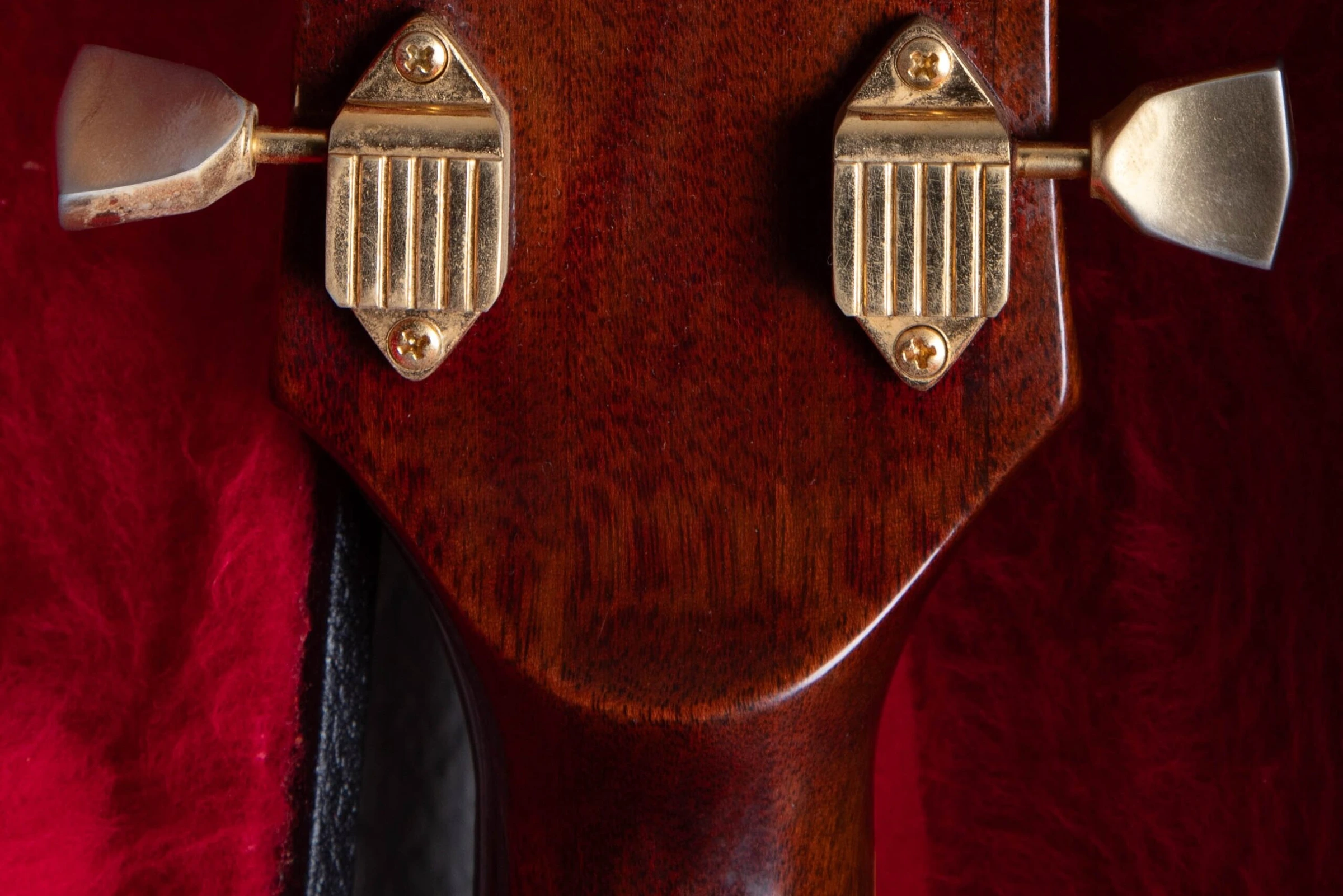
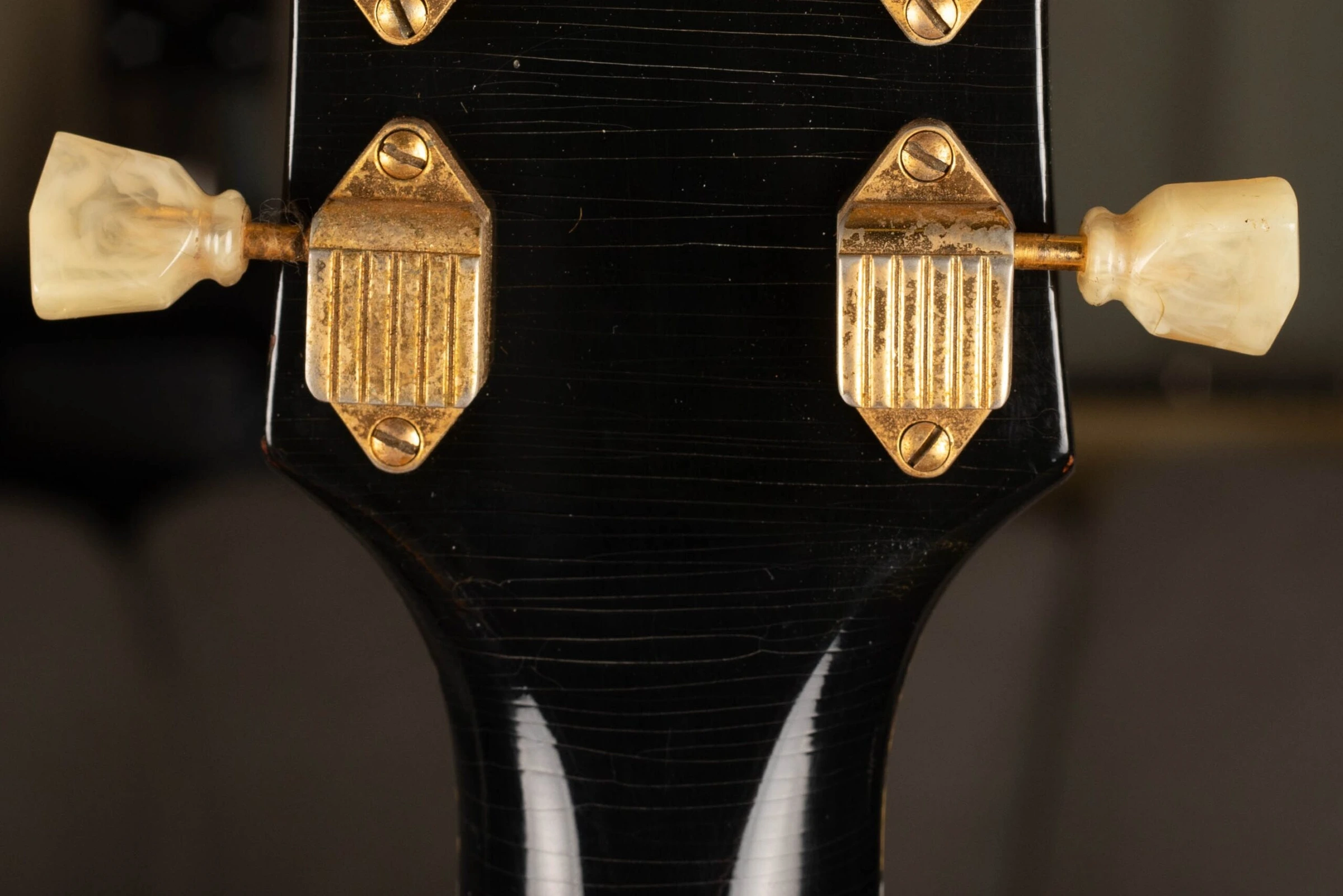
The Made in USA stamp sits alone on the back of this 1971 Flying V Medallion headstock. The Grover tuners are later replacements and should not be used to date it.
This earlier-style neck flows into the headstock without the raised reinforcement seen on many Norlin-era guitars.
How to Read the Stamp
A Made in USA stamp is strong evidence that a regular-production Gibson was made after 1969. It is not a universal rule. Les Paul Classics, historic reissues, Custom Shop instruments and other special formats can omit it or follow period-correct styling.
How to Read the Volute
Many Gibson solidbodies and ES thinlines added a volute around late 1969 or 1970 and retained it to about 1981. Some Customs continued into 1982, while full-depth archtops such as the ES-175 adopted it later. Use its presence with the model and other construction, not its size.
One Piece or Three
Gibson Neck Construction by Era
These three examples describe a common solidbody sequence. Use raking light across the back of the neck and follow suspected glue seams from the heel toward the headstock.
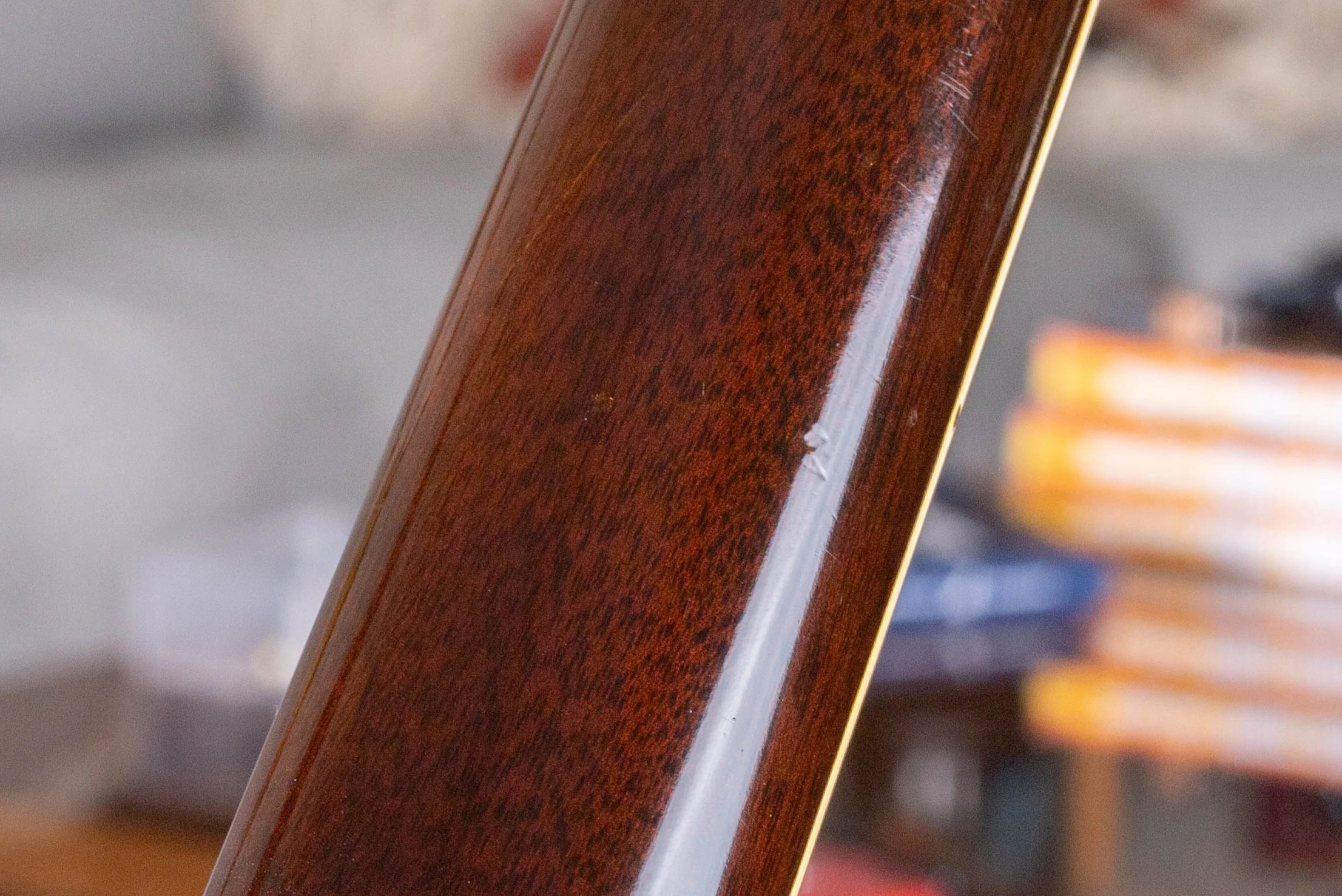
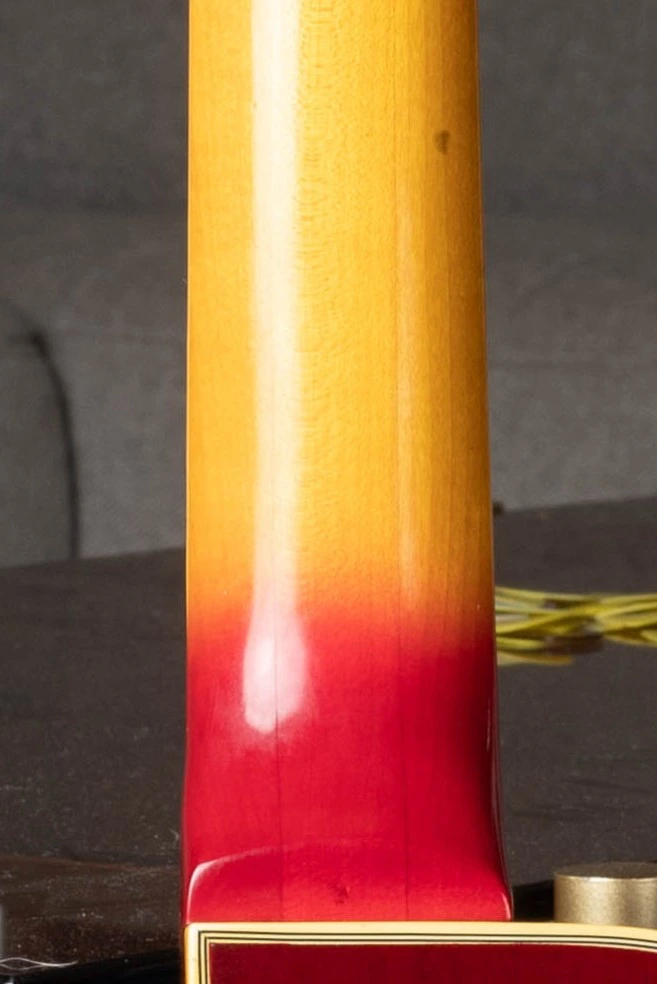
Enlarge photoCommon Through Early 1969: One-Piece Mahogany Neck
The grain continues across the back of this neck without two long laminate seams.
Common Through Early 1969
One-Piece Mahogany Neck
On many Les Pauls and ES solidbody or thinline models, a one-piece mahogany neck supports a date before the mid-1969 construction transition. Look along the full length under raking light. A reflection, grain line or finish check is not automatically a glue seam.
One-Piece Mahogany Neck Details
Continuous grain
No two lengthwise seams
Common on earlier Les Paul and ES models
Where This Range Applies: Full-depth archtops used laminated necks earlier, and one-piece mahogany returned on later reissues and selected models. Identify the guitar before applying the range.
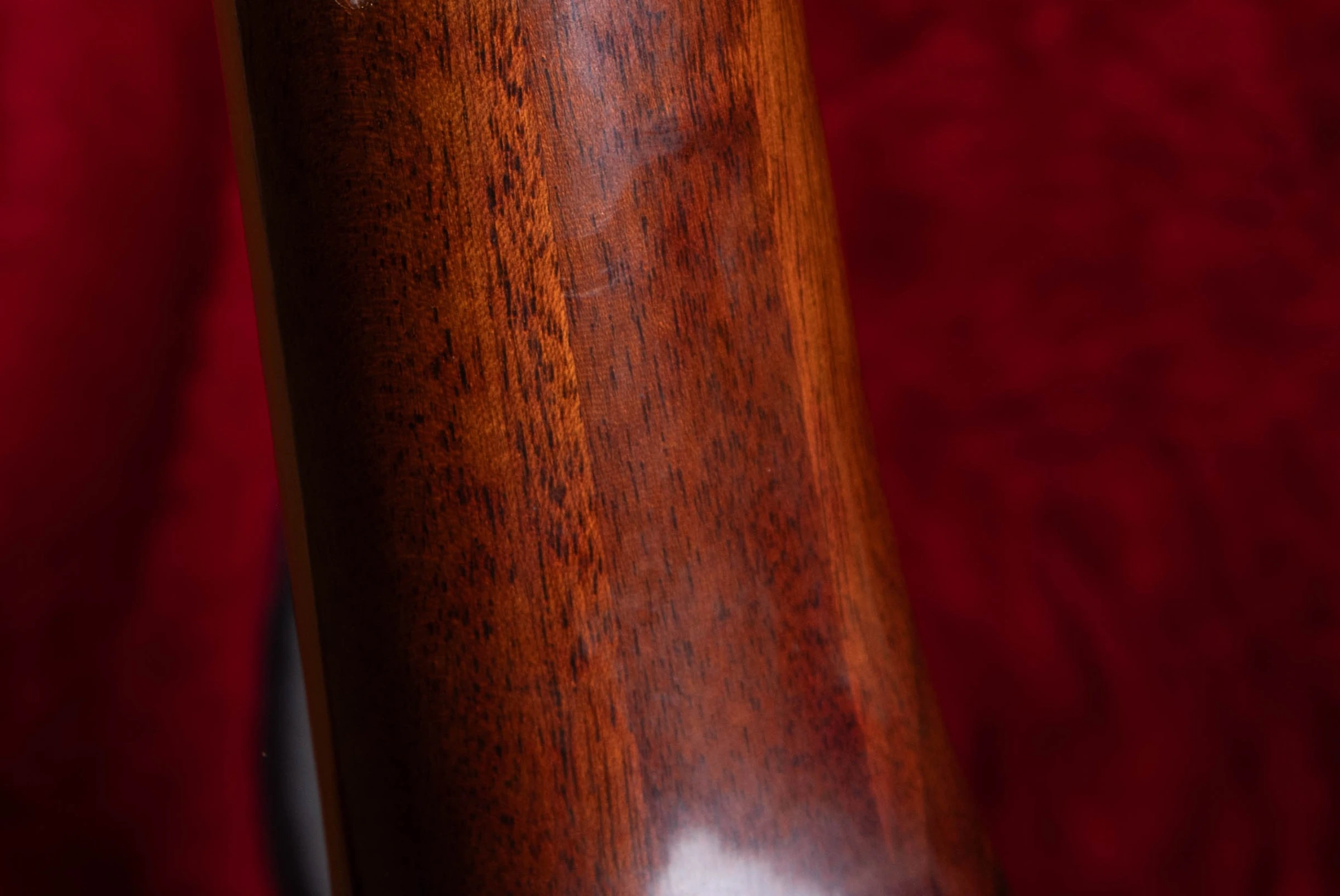
Enlarge photoMid-1969 to About 1975: Three-Piece Mahogany Neck
Two subtle lengthwise seams divide this mahogany neck into three laminated sections.
Mid-1969 to About 1975
Three-Piece Mahogany Neck
Three-piece mahogany necks are an important early Norlin clue on many Les Pauls and ES-335s. The sections can be similar in color, so follow both seams from the heel toward the headstock instead of relying on one short mark.
Three-Piece Mahogany Neck Details
Two long glue seams
Mahogany color and grain
Common early Norlin clue
Why the Date Is Approximate: One-piece and three-piece mahogany necks overlap during the transition, and Gibson did not change every model at once.
Enlarge photoAbout 1975 Into the Early 1980s: Three-Piece Maple Neck
Pale maple and two visible seams identify this three-piece laminated neck.
About 1975 Into the Early 1980s
Three-Piece Maple Neck
Many Les Pauls, ES-335s and ES-175s changed to three-piece maple necks around 1975. Natural or translucent finishes make the paler wood and seams easier to see. Dark finishes may hide both, especially after refinishing.
Three-Piece Maple Neck Details
Paler maple color
Two long glue seams
Common on later Norlin Les Paul and ES models
Models Matter: This is not a universal SG, Firebird or Explorer rule. Mahogany and maple examples also overlap during the mid-1970s transition.
Measure Before You Generalize
Gibson Neck Tenons, Nut Width And Headstock Angle
Neck geometry can separate versions that look similar from the front, but these changes were model-specific. Use measurements and a known comparison guitar rather than judging them by eye.
Les Paul Neck Tenon
Early 1969 Les Pauls can retain the 1950s-style long tenon. Transitional and shorter joints begin appearing from mid-1969 and vary through the 1970s. Reissues can deliberately return to a long tenon, and the joint is usually inspected beneath the neck pickup.
Nut Width
Many Gibson electrics narrowed from roughly 1 11/16 inches toward 1 9/16 inches during 1965, with transitional examples and model exceptions. Measure the nut instead of relying on how the neck feels.
Headstock Angle
A shallower or steeper headstock angle can support an identification when it matches the exact model and period. Refinishing, repairs and camera perspective make visual estimates unreliable, so treat the angle as supporting evidence.
What the Measurements Mean
Tenon, nut and headstock specifications can change at different times on different models. They are strongest when the serial number, neck wood, hardware and model-specific guide point to the same period.
A Les Paul-Specific Clue
How to Identify a Gibson Pancake Body
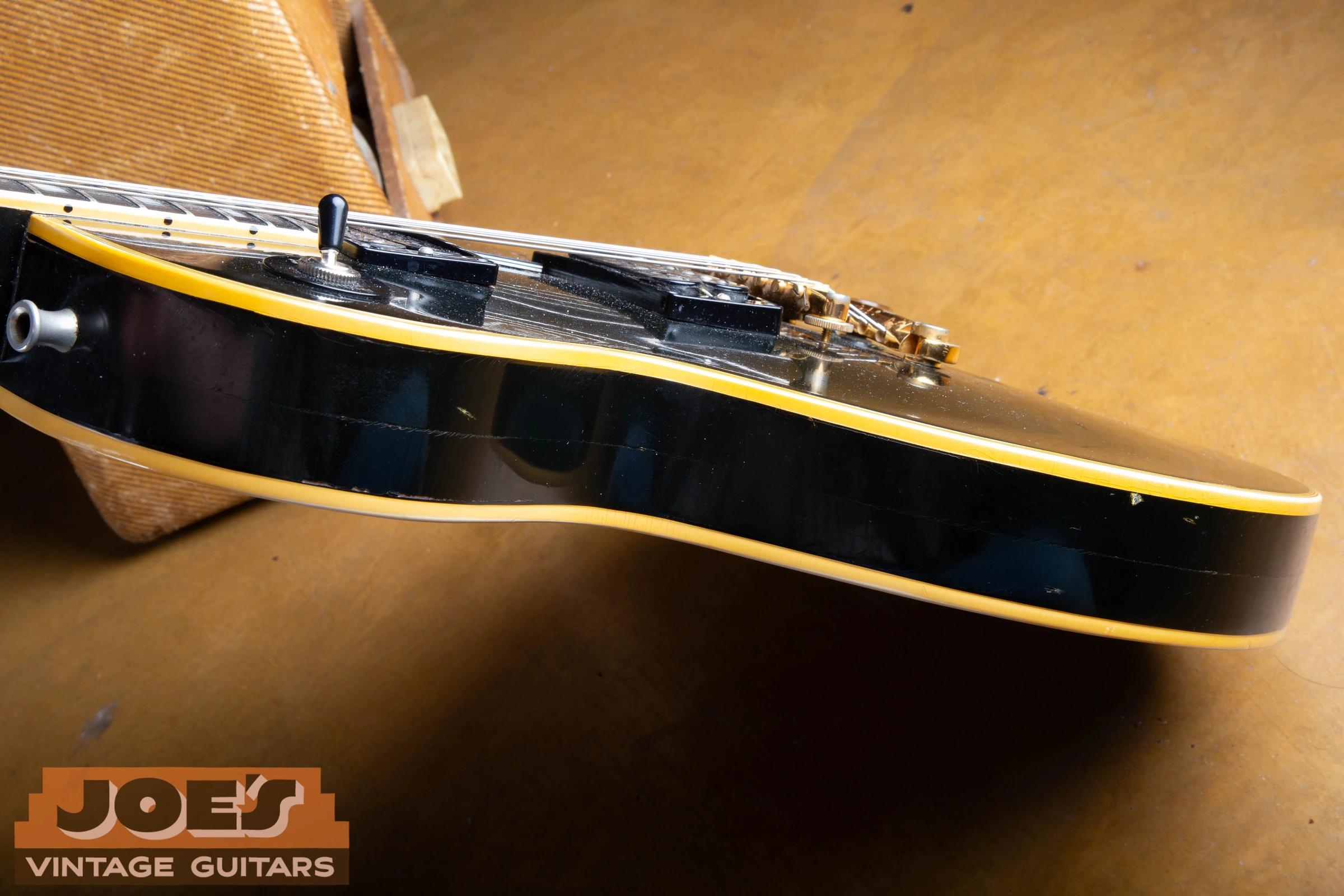
A pancake body is not simply a body made from more than one piece of wood. From late 1969 through the 1977 phaseout, many Les Pauls used two thicker mahogany sections with a thin maple crossband between them. The narrow middle layer can appear as a light line around the body edge.
Look closely at the body edge. The faint horizontal line is consistent with the thin crossband in a pancake body, though a cavity view gives stronger confirmation than finish evidence alone.
Carved Maple Top
Upper Mahogany Section
Thin Maple Crossband
Lower Mahogany Section
Simplified Les Paul body cross-section. Layer thickness and visibility vary.
Where to Look
Inspect the rim near the strap button, jack plate and cutaway under bright side lighting. The thin crossband runs horizontally through the mahogany portion of the body. It is separate from the normal seam between the carved maple top and mahogany back.
What Not to Mistake for It
A multi-piece back joined side to side is not a pancake body. Neither is the visible maple cap on a Les Paul. Finish checking, binding lines and repaired cracks can also imitate a seam in one small area.
Tune-O-Matic Details
No-Wire ABR-1, Wired ABR-1, Harmonica And Nashville Bridges
First identify the bridge family. Then inspect the posts, inserts, saddle screws and finish underneath it for evidence that the original style has been replaced.
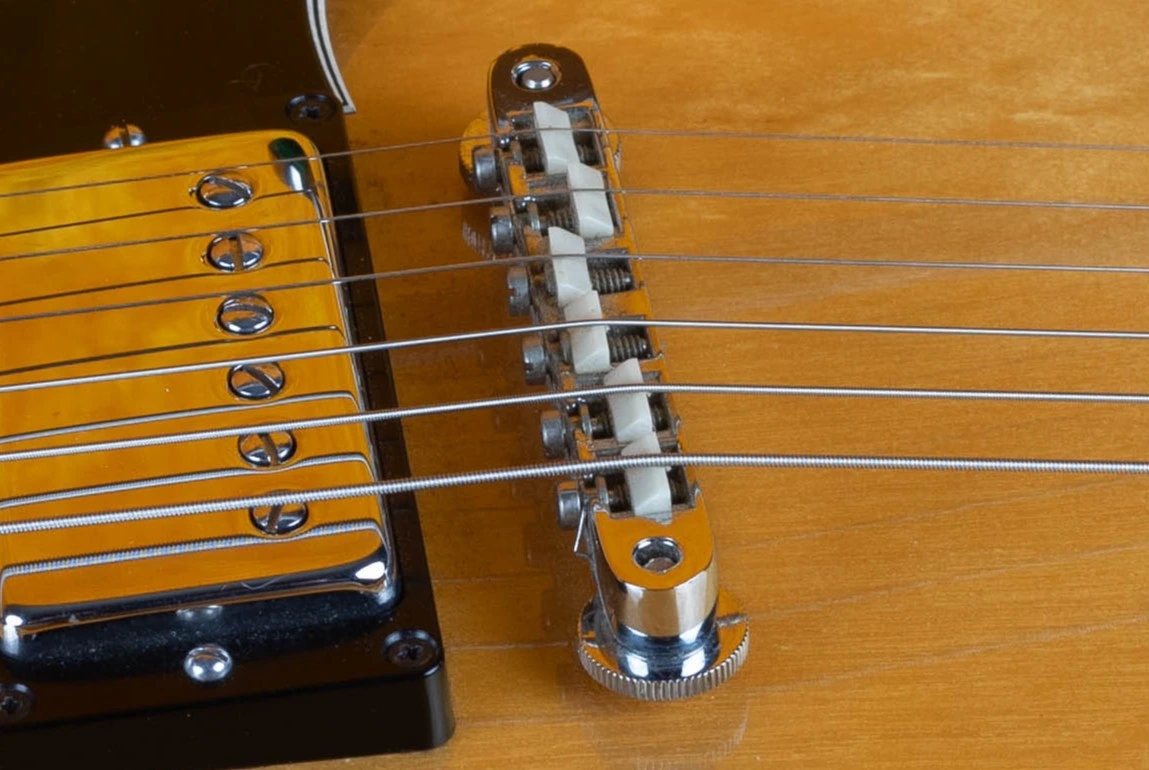
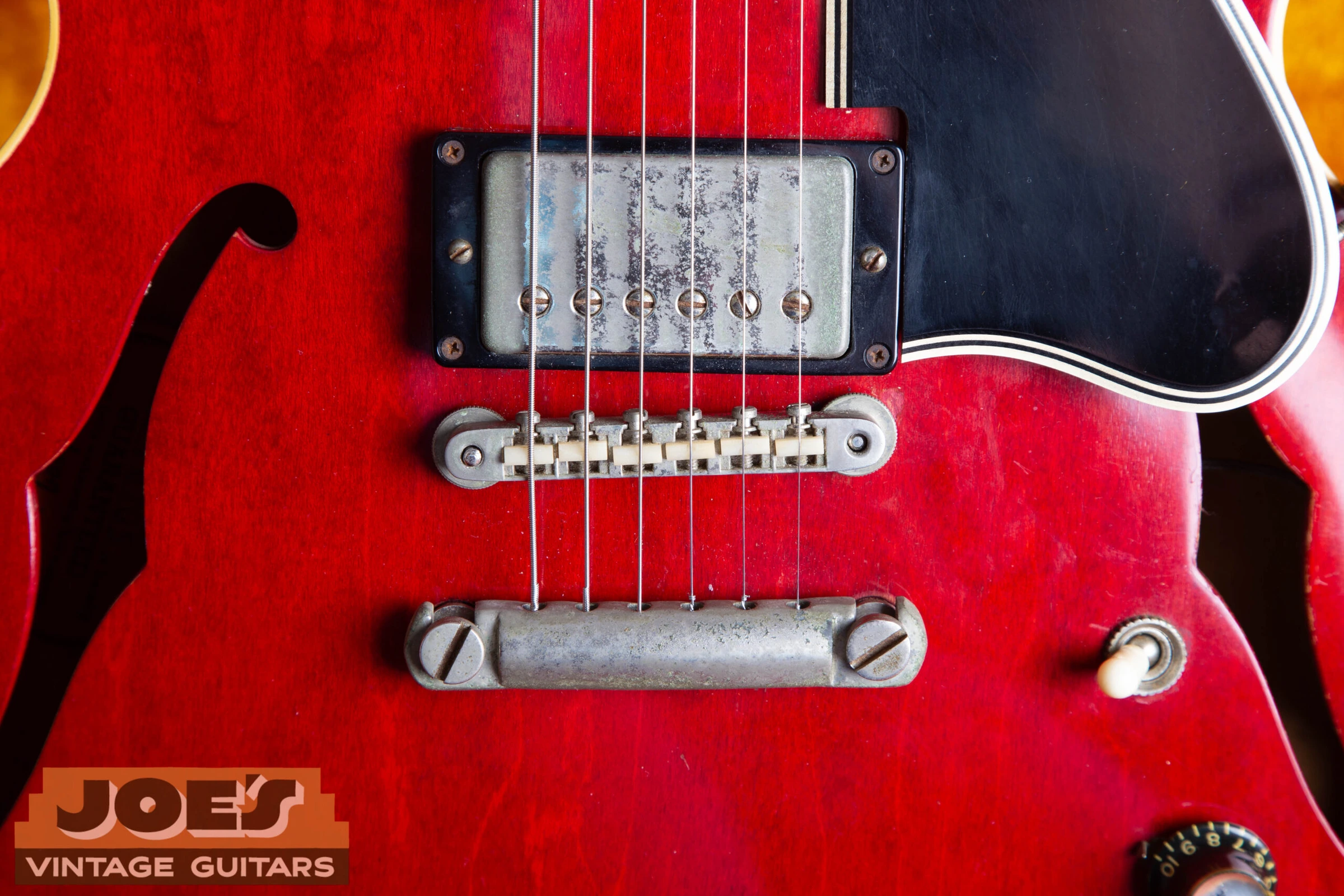
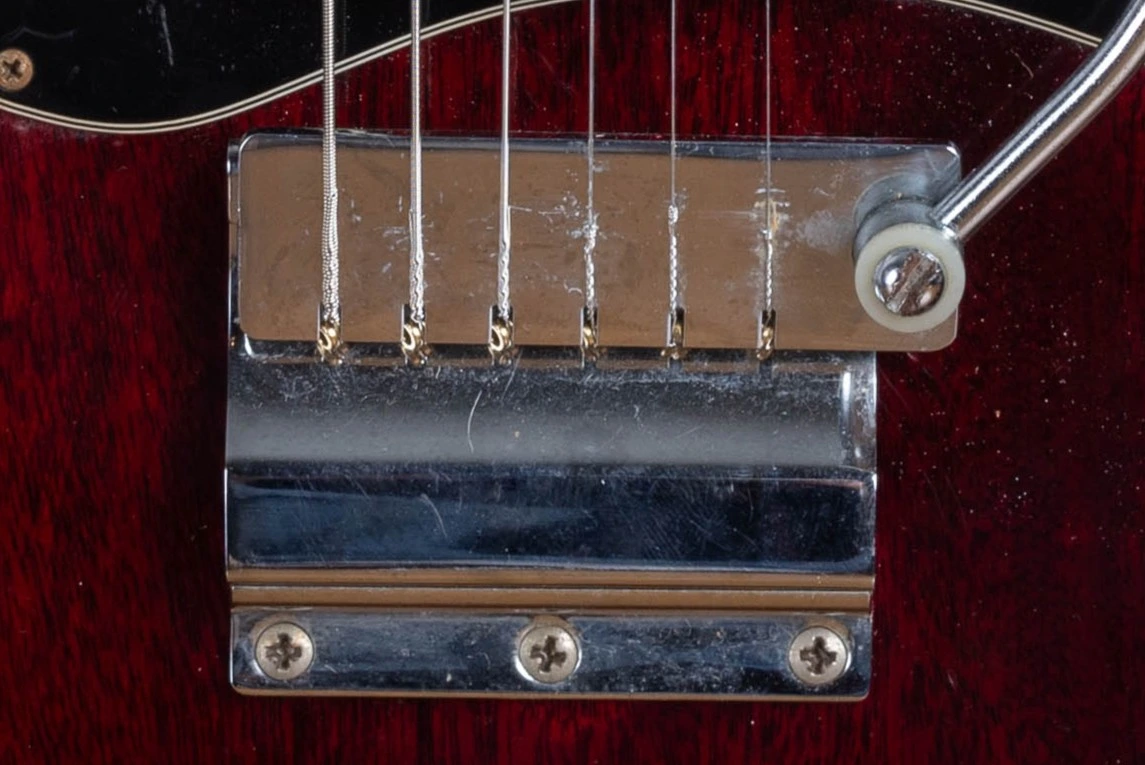
The early ABR-1 has no thin retaining wire running across the saddle screws.
1954 Into 1962
No-Wire ABR-1
The original ABR-1 Tune-O-Matic appeared in 1954. Early examples rely on string tension and the saddle screws without a retaining wire. Gibson moved to the wired version across late 1962 and early 1963, not on one clean factory-wide date.
No-Wire ABR-1 Details
Narrow bridge body
Small threaded posts
No wire across saddle screws
What the Bridge Proves: This dates the bridge style, not automatically the guitar. A wire can be lost, and complete bridges are commonly replaced.
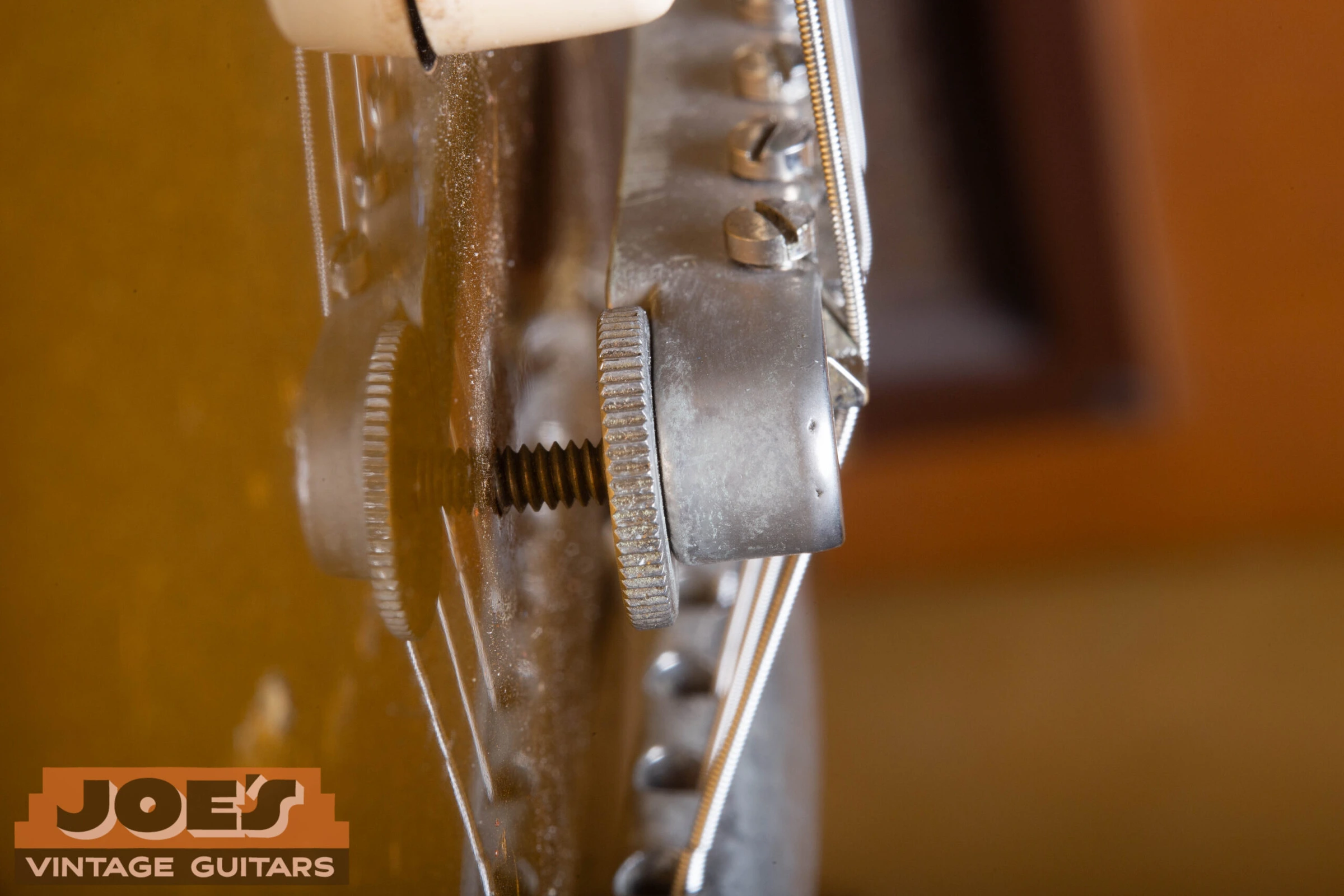
Enlarge photoLate 1962 or Early 1963 Onward: Wired ABR-1
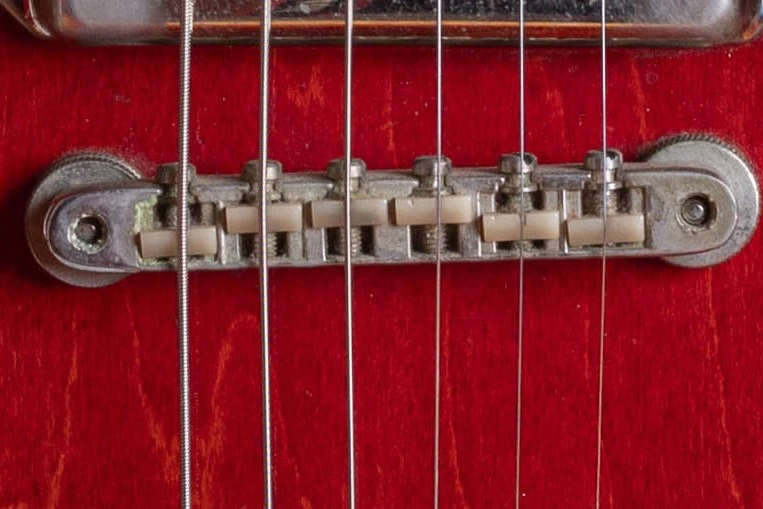
The thin retaining wire is visible along the outside of the saddle screws on this later ABR-1.
Late 1962 or Early 1963 Onward
Wired ABR-1
Gibson added a retaining wire during the late 1962 to early 1963 transition so loose saddles and screws would not fall out during string changes. The wired ABR-1 remained standard on many models until wider designs gradually replaced it, and Gibson still uses ABR-1 bridges on selected guitars and reissues.
Wired ABR-1 Details
Thin saddle-retaining wire
Narrow ABR-1 body
Small posts without large bushings
Check for Replacement: The wire is a useful hardware-era clue, but it does not prove the bridge has stayed with the guitar since new.
Enlarge photoLate 1971 Into the Early 1980s: Harmonica Bridge
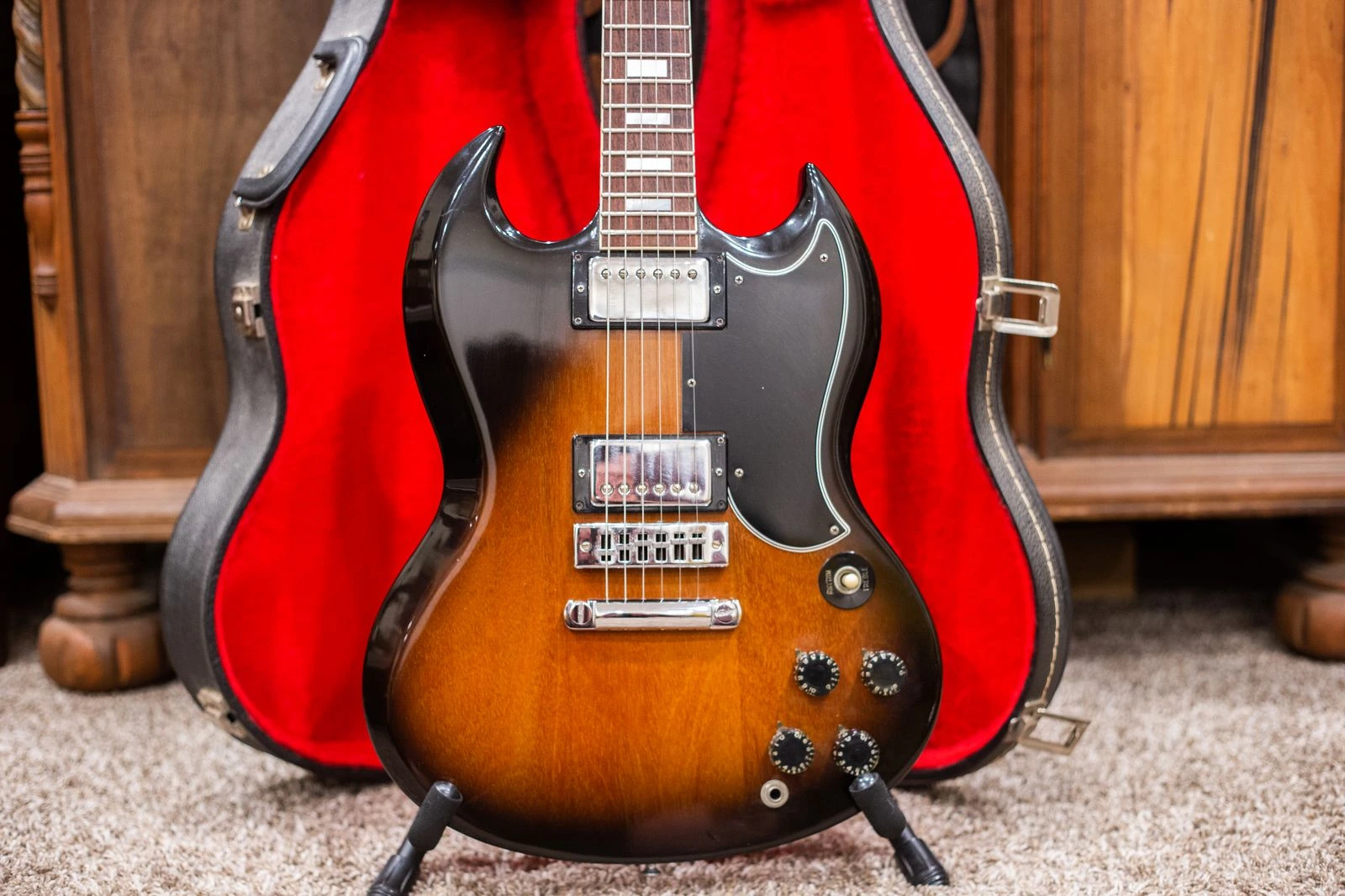
This 1975 SG Standard shows the broad rectangular bridge often nicknamed the harmonica bridge.
Late 1971 Into the Early 1980s
Harmonica Bridge
Gibson first used this wide-travel bridge on the Les Paul Recording in late 1971. It appeared on the SG Custom, Standard and Special from 1973, spread to several other 1970s models and remained on instruments such as the L6-S, Marauder and S-1 into the early 1980s.
Harmonica Bridge Details
Very wide rectangular body
Long saddle travel
Body-mounted inserts
Do Not Date by the Inserts Alone: Large metal inserts also belong to the Nashville system and can be added during a conversion. Identify the bridge body and check the exact model.
A Nashville bridge is wider than an ABR-1 and mounts on larger posts seated in metal body inserts.
Mid-1970s Onward
Nashville Tune-O-Matic
The Nashville Tune-O-Matic gives the saddles more travel for intonation. Its wider body and larger threaded posts are the easiest visual differences from an ABR-1. It became common on many Gibson USA models in the mid-1970s.
Nashville Tune-O-Matic Details
Wider bridge body
Larger posts and metal inserts
More saddle travel
Check the Model First: Gibson continued using ABR-1 bridges on some models, and later owners often changed one bridge type for another.
Gibson began changing from metal to nylon saddles during 1962. This saddle material continued on many models into the 1970s.
Metal And Nylon Saddles Can Overlap
Metal saddles are typical before the 1962 transition. Nylon saddles begin appearing during 1962 and continued for years, so they are not a one-year feature. A small number of late 1962 and early 1963 bridges combine nylon saddles with the earlier no-wire body.
Replacement saddles are common. Check the screw wear, plating, fit and the rest of the hardware before treating the saddle material as original.
Model Context Matters Most
Gibson Tailpiece Types and What They Mean
Tailpieces can separate versions within one model family, but there is no universal Gibson tailpiece chronology. A stopbar, trapeze or wrapover may remain correct for decades on one model while marking a short production period on another.
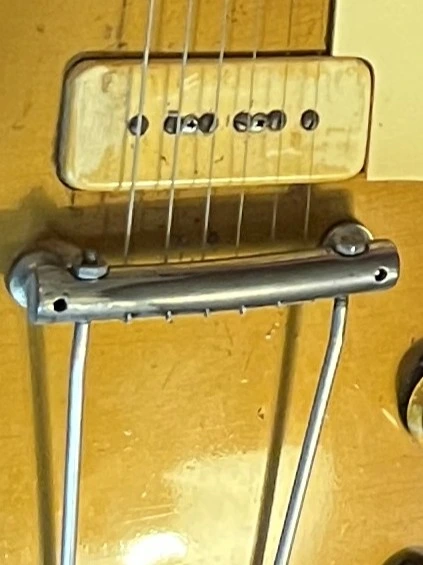
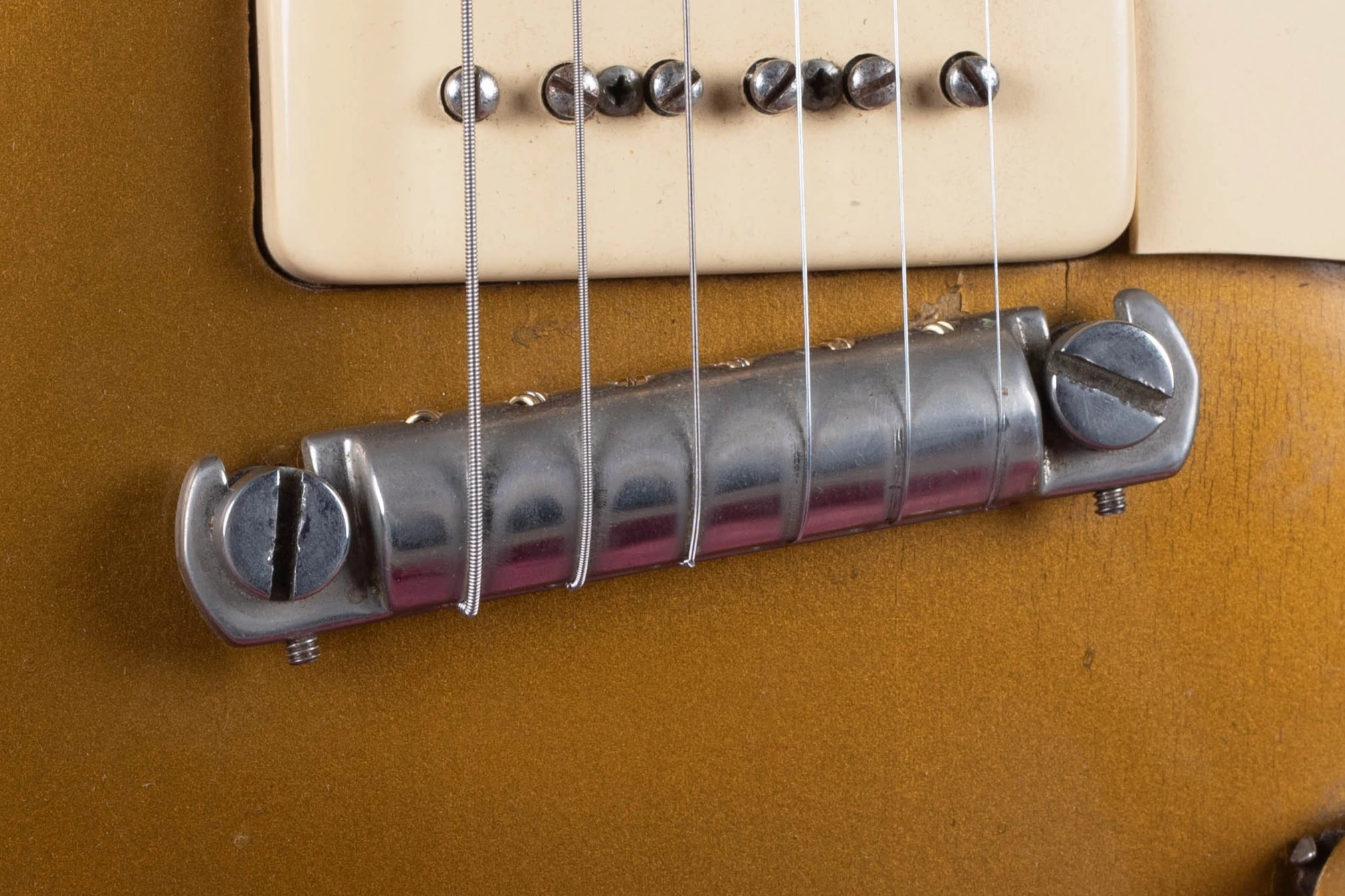
The first Les Paul arrangement sends the strings under the bar. It belongs to the original 1952 design and continued into early 1953 before the neck angle and bridge arrangement changed.
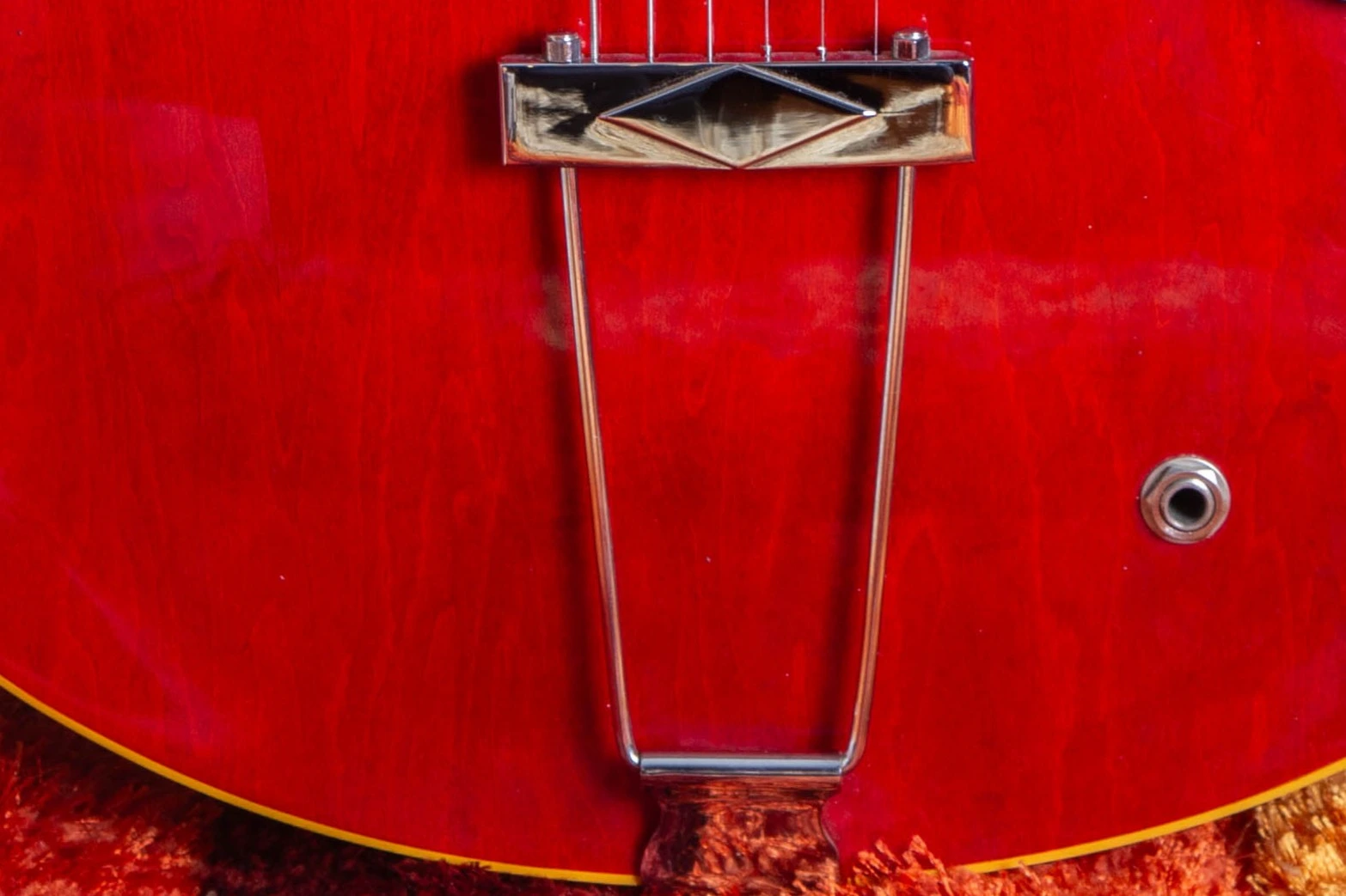
A trapeze anchors at the body rim. It is normal on many archtops and replaced the stopbar on some ES models during the 1960s.
Wrap-Under
A narrow 1952 into early 1953 Les Paul clue. Confirm the shallow neck angle and the first-version construction before treating it as original.
Plain And Lightning-Bar Wrapovers
The smooth wrapover appeared after the wrap-under design and continued on many lower-priced solidbodies. The raised, compensated lightning-bar version arrived on early 1960s models. Exact timing depends on the model.
Stopbar
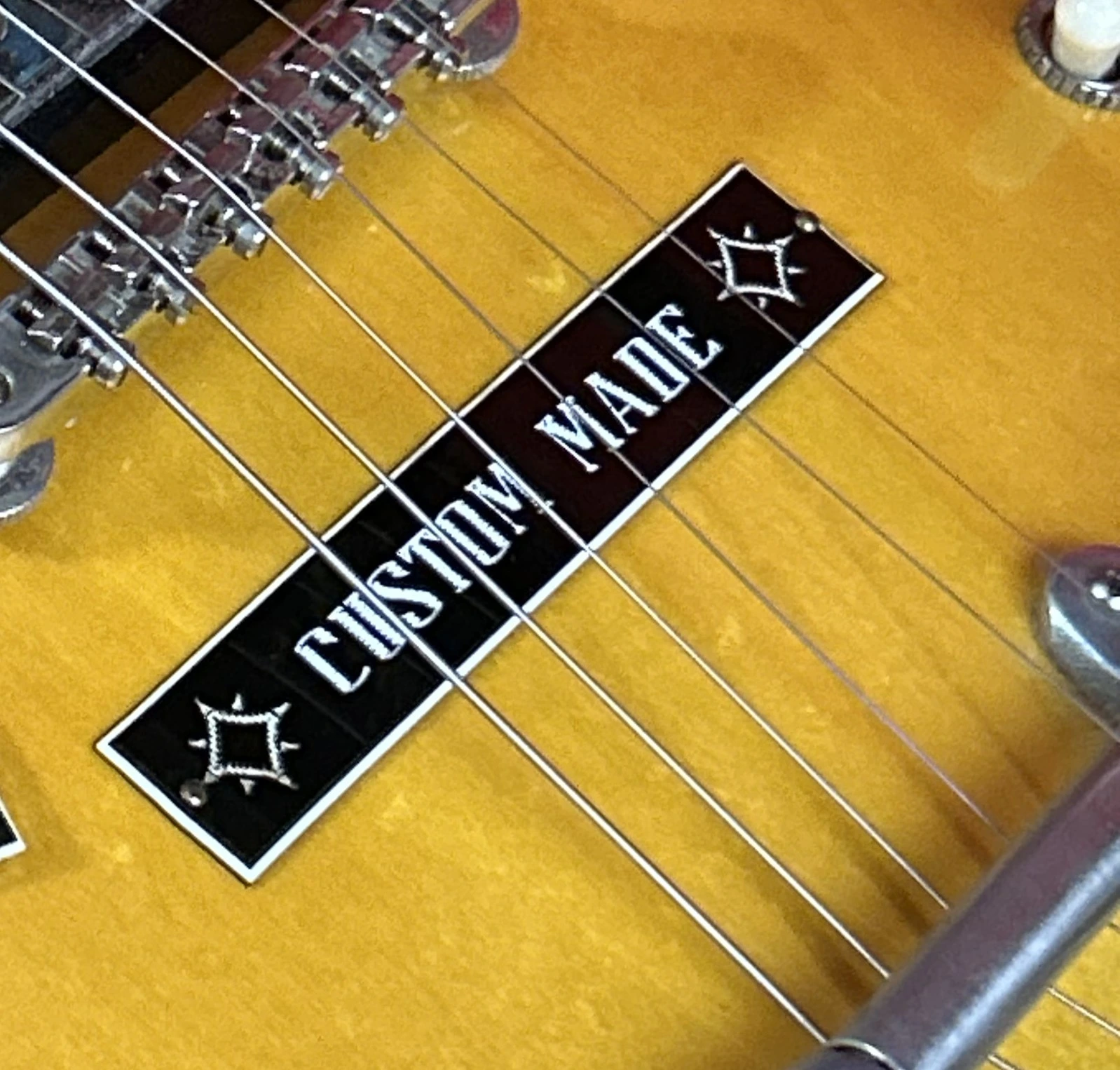
Used with a Tune-O-Matic on many solidbodies and semi-hollows. Removed studs, plugged holes or a Custom Made plate can reveal a conversion or factory vibrato installation.
Trapeze
Common on hollowbody guitars and adopted by some semi-hollow models. Check the rim mounting holes and the model's original catalog specification.
Factory Options And Model Clues
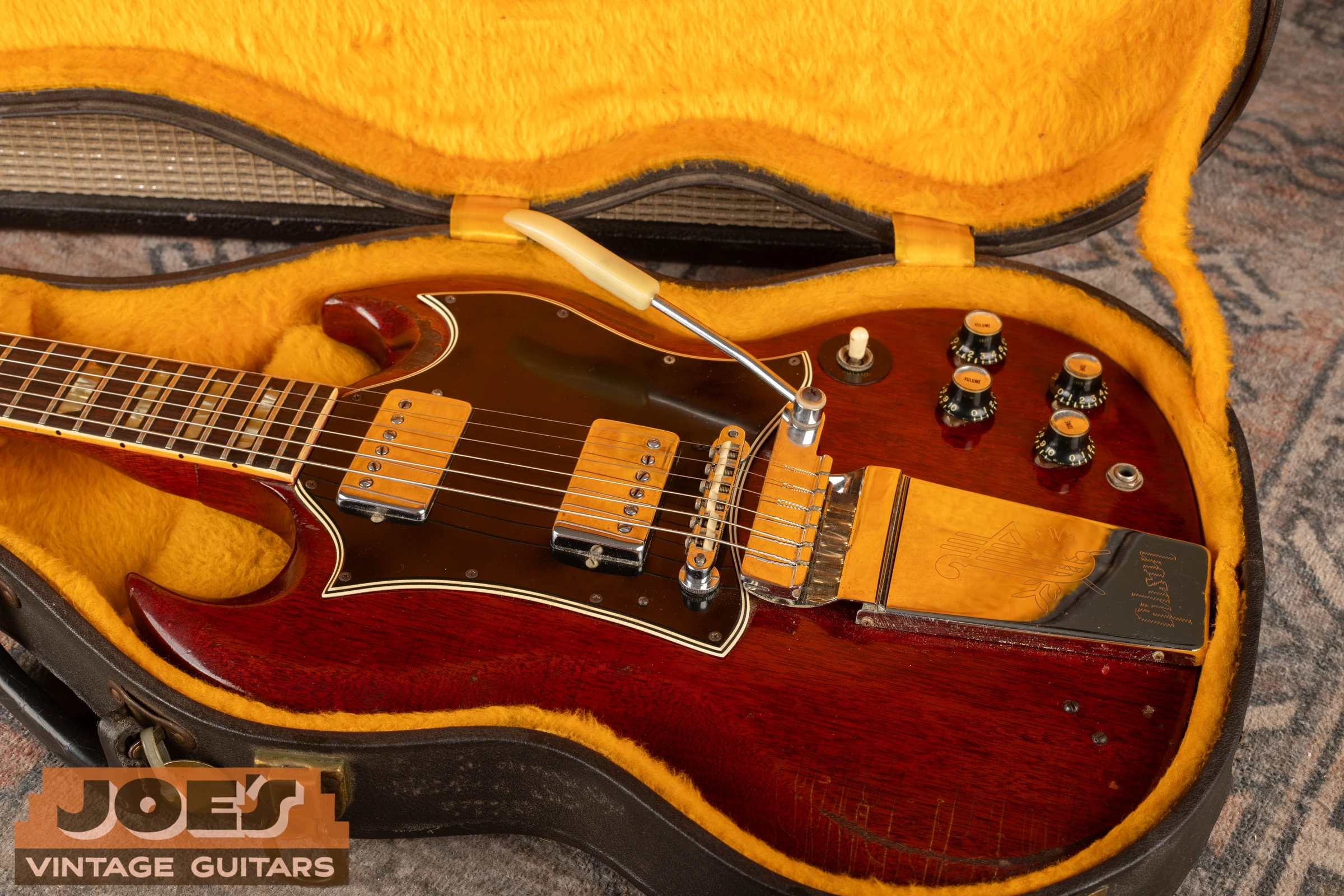
Gibson Bigsby, Sideways, Maestro And Lyre Vibratos
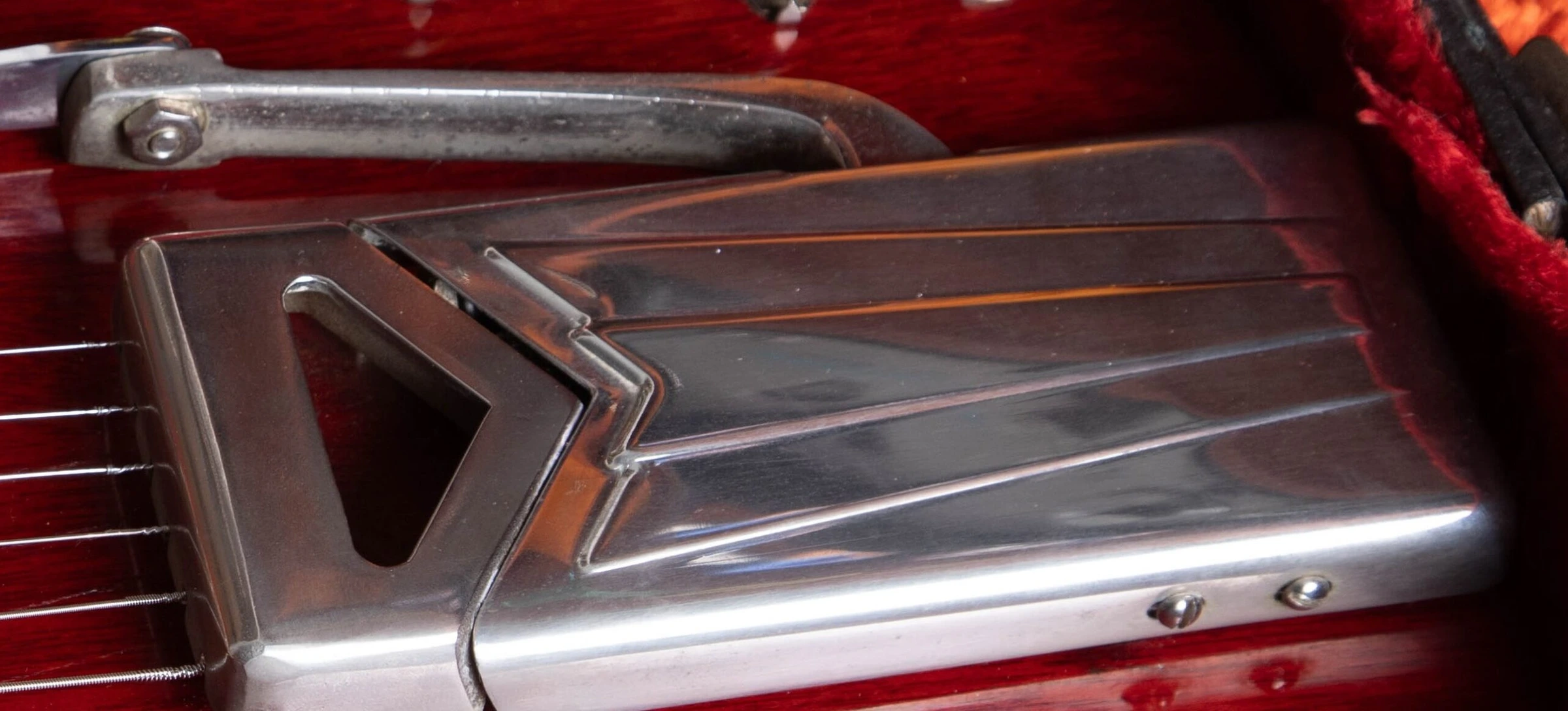
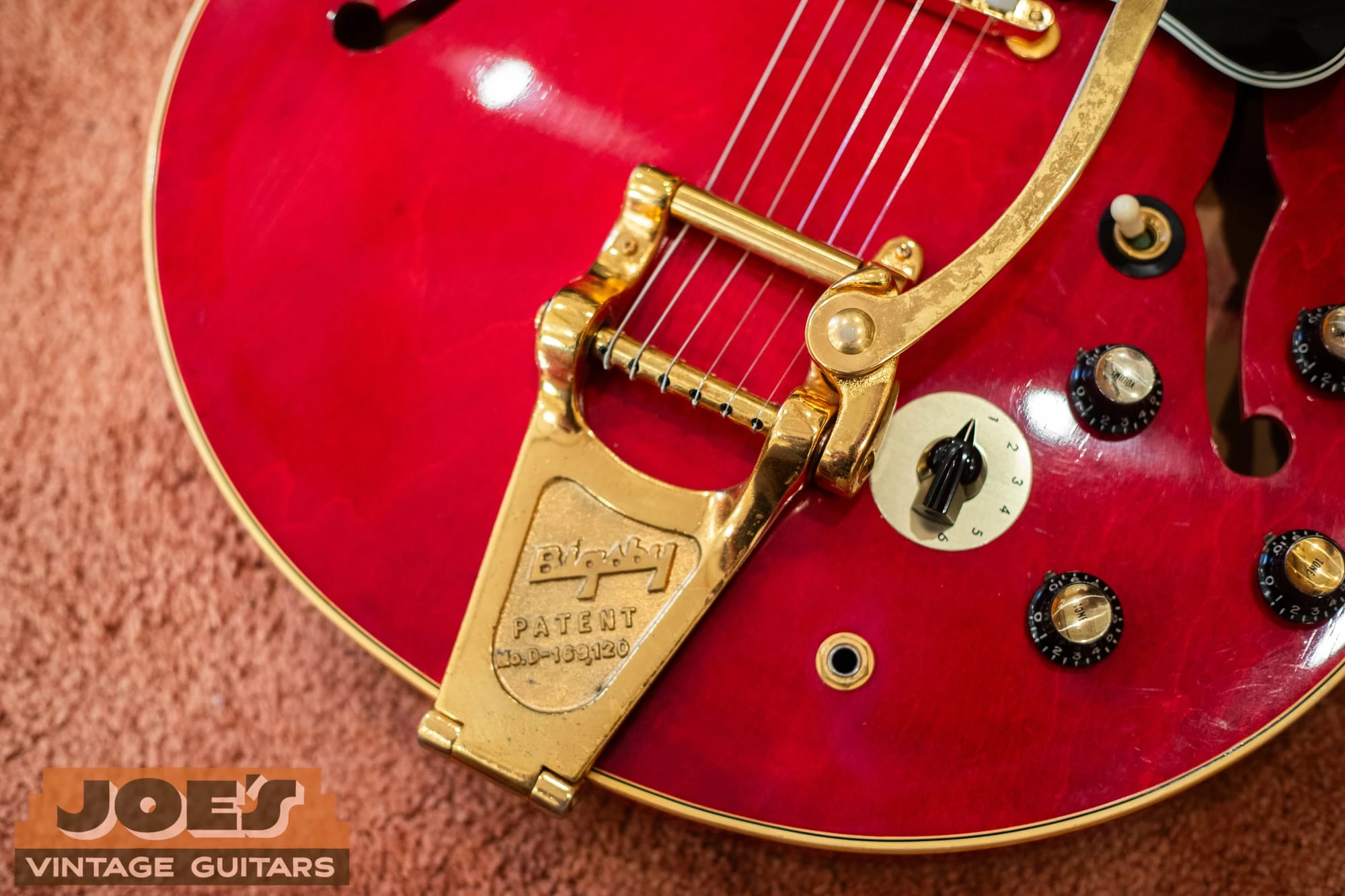
A vibrato can be a strong model-specific clue, but it does not follow one factory-wide timeline. Look for the correct unit, original mounting pattern and nearby finish before deciding whether it was factory installed.
A Bigsby could be factory ordered on several Gibson models. Matching holes, finish shadows and paperwork help separate a factory installation from a later addition.
On some factory vibrato guitars, a Custom Made plaque covers the unused stopbar stud locations. It supports the original layout but should be checked with the model and surrounding finish.
Color, Wear and Model
Nickel, Chrome and Gold Gibson Hardware
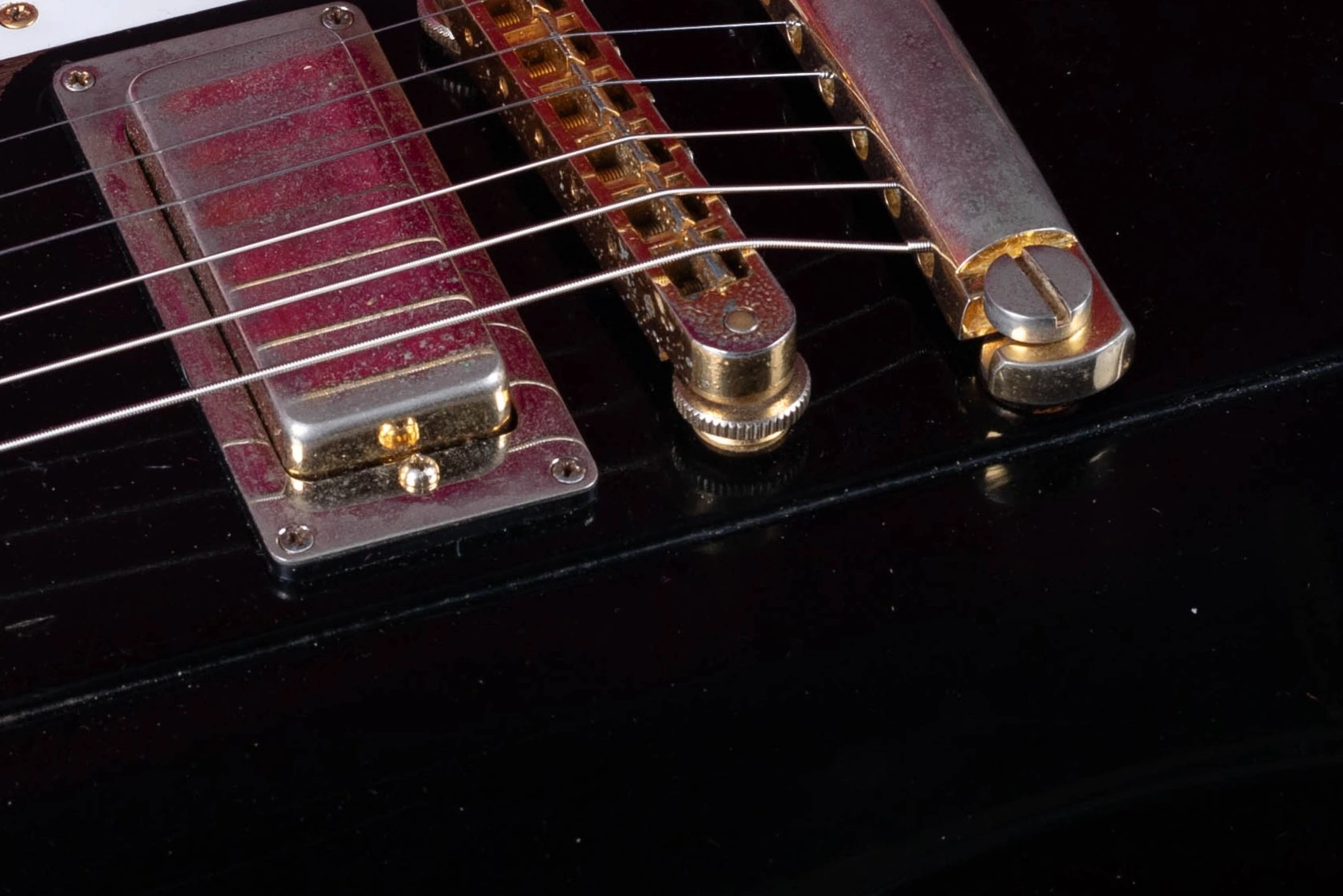
Nickel-plated hardware continued into early 1965 on many Gibson models. The transition can produce mixed nickel and chrome parts during 1965 and 1966, and chrome was broadly established by 1967. Some nickel brackets lingered, and gold-plated models follow their own specifications.
Chrome usually stays cooler, brighter and slightly blue in the same light. On this thinline example, judge the bridge and pickup covers rather than the Bigsby.
Compare More Than One Part
Study the pickup covers, bridge, tailpiece, switch hardware and screws in the same light. One bright part among evenly dulled hardware is more likely to be a replacement than a new dating clue. Do not include Kluson tuner plating in this comparison because nickel tuners continued after other hardware changed to chrome.
Gold Is a Model Specification
Gold plating normally marks a Custom or another upscale model. It wears through quickly at contact points, so exposed nickel-colored metal beneath gold does not mean the guitar originally had nickel hardware.
Supporting Provenance
Gibson Case Identification: Geib, Harptone, Stone, Lifton and Chainsaw Cases
A period-correct case can support the story told by a Gibson’s serial number, construction and hardware. It cannot date or authenticate the guitar by itself because cases were regularly separated from instruments and paired with other guitars. Use the exterior covering, lining, hardware, shape and maker details as supporting evidence.
1930s Into the 1940s
Geib Red Line Case
Look for a black Keratol exterior, a narrow red line around the edge and a deep red or purple plush interior. This is a useful prewar case clue when the size and fit also match the instrument.
Mid-1930s
Geib Tweed Case
The vertical striped airplane-cloth covering resembles material used on early Gibson amplifiers. Confirm the case shape and construction instead of identifying it from the covering alone.
1930s to 1950s
Harptone Double Diamond Case
Two raised diamond shapes on the interior accessory-pocket lid are the most recognizable clue. These well-built cases are commonly associated with higher-grade acoustic instruments.
Late 1950s
Stone Case Company
Stone cases can resemble period Lifton cases from the outside. Lighter hardware, latch construction and the maker badge help separate them. They are seen with late-1950s ES-335, ES-345 and ES-355 models.
Late 1950s
Lifton Brown and Pink Case
The brown exterior and pink or salmon plush lining are strongly associated with late-1950s Les Paul Goldtops and Standards. A Lifton badge may read “Built Like a Fortress.” The correct size and fit matter as much as the colors.
Early to Mid-1950s
Lifton Brown and Green Case
Brown cases with green lining appear with models including the J-45, ES-175 and L-7. This can be a period-correct pairing even though it is less famous than the brown and pink version.
1961 to About 1963
Lifton Black and Yellow Case
A black exterior with yellow lining is a transitional early-1960s style. It can be appropriate for early SG models and instruments from the Les Paul to SG transition.
About 1977 to 1988
Gibson Chainsaw Case
Collectors use “chainsaw” for the boxy molded black case with squared corners. Interior colors vary, with red and black among the common versions. Check the generation, fit and hardware before calling one original to a specific guitar.
Date the Installation, Not Just the Part
How to Check Whether Gibson Hardware Is Original
1
Look for extra holes. Plugged stopbar studs, unused screw holes or a second tuner footprint record earlier hardware.
2
Inspect the finish shadow. Original hardware often leaves a matching outline in faded lacquer, dirt and compression.
3
Compare plating and wear. Mixed colors, sharp new edges or wear that does not match neighboring parts deserve a closer look.
4
Check the mounting system. Large inserts may be correct for a harmonica or Nashville bridge. They suggest a conversion only when the exact model and production period should have small ABR-1 posts.
5
Read tool marks carefully. Disturbed solder, chewed screw slots and fresh witness marks show that a part has been removed, not necessarily replaced.
6
Confirm the exact model. Catalog specification and documented original examples are more useful than a factory-wide rule.
A Replacement Does Not Make the Guitar Bad
Bridges, tailpieces and tuners are working parts. Players changed them to improve intonation, reliability or feel. Record the change honestly and stop using that part as date evidence. Original construction, electronics and untouched mounting areas may still provide a reliable answer.
Can Physical Features Date a Gibson Without a Serial Number?
They can usually narrow a guitar to a period, but rarely to one exact year. The model, serial number or Factory Order Number, pot codes, pickups, tuners, logo and construction should tell the same story.
Did Every 1970s Gibson Have a Volute?
No. Volute size and use varied by model and year. It is common on many Norlin-era Gibsons, but it should not be treated as a factory-wide rule without identifying the model.
Does a Made in USA Stamp Always Mean 1970 or Later?
It is a strong post-1969 clue on regular Gibson USA production, but not an absolute rule for reissues, Classics, Custom Shop instruments or special serial formats.
What Is a Gibson Pancake Body?
It is a layered Les Paul body with two thicker mahogany sections separated by a thin maple crossband. The narrow middle layer can often be seen as a line around the body edge.
What Is the Difference Between an ABR-1 and a Nashville Bridge?
An ABR-1 is narrower and normally sits on small threaded posts. A Nashville bridge is wider and normally uses larger posts mounted in metal inserts in the body.
What Is a Gibson Harmonica Bridge?
It is the wide rectangular bridge Gibson first used on the Les Paul Recording in late 1971. It appeared on SG models from 1973 and on several other 1970s instruments, with some uses continuing into the early 1980s.
Does a No-Wire ABR-1 Prove a Gibson Is From Before 1962?
No. It shows that the bridge follows the earlier style. Bridges are removable, retaining wires can be lost, and modern historic reissues deliberately use no-wire ABR-1 bridges.
Can Nickel and Chrome Hardware Be Distinguished From a Photo?
Sometimes, but lighting can mislead. Aged nickel is usually softer and grayer, while chrome stays brighter and bluer. Inspect several parts in the same light and check whether their wear matches.
Does a Refinish Change How I Date a Gibson?
A refinish does not change when the guitar was built, but it can soften an impressed serial number and hide finish, repair and hardware-shadow clues. Treat the serial as one clue and rely more heavily on construction, electronics and documented provenance.
How Can I Tell Whether a Gibson Is All Original?
Compare the exact model with its expected finish, hardware, electronics, solder joints, screw holes and wear. Replaced parts do not change the guitar’s build date, but they can remove useful dating evidence and affect value. A period-correct case supports provenance but can be switched between guitars.