

The Collector's Field Guide
Vintage Gibson Les Paul Models
Family, History and Identification Guide
Les Paul names an entire family. This guide separates the Standard, Custom, Special, Junior, TV and Deluxe, then follows the construction changes that distinguish a 1950s original from a 1960s reintroduction or a 1970s Norlin era guitar.
The Short Answer
What Belongs to the Vintage Les Paul Family?
The original family is the Les Paul Model or Standard, Custom, Special, Junior and TV Model. The Junior and TV use one P-90. The Special uses two. The carved-top model moved from P-90s to humbuckers, while the Custom added luxury trim. The Deluxe and several low-impedance models widened the family after 1968.
Model Comparison
The Five Core Vintage Gibson Les Paul Models
Start with the body construction and pickup count. Then use the fingerboard trim, hardware and finish to confirm the exact model. A truss-rod cover can be changed quickly. A carved maple cap or factory pickup route cannot.
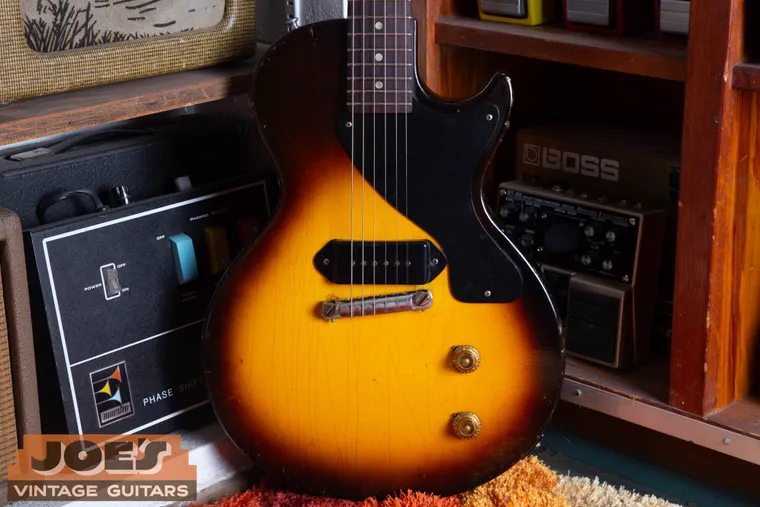 1955 Les Paul Junior · one pickup and two controls
Les Paul Junior
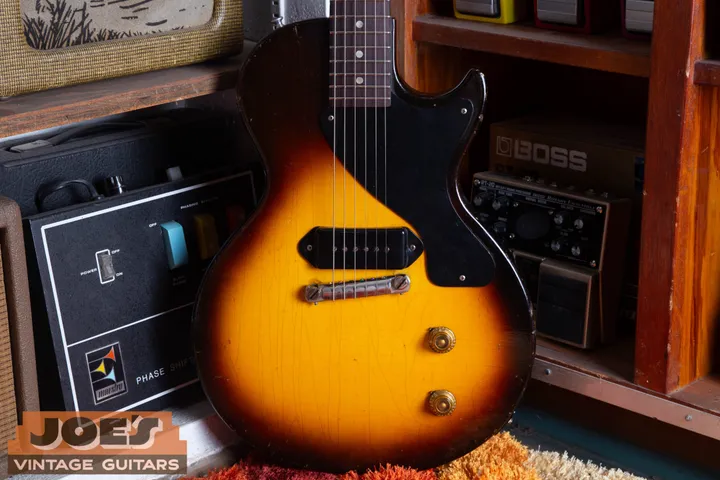
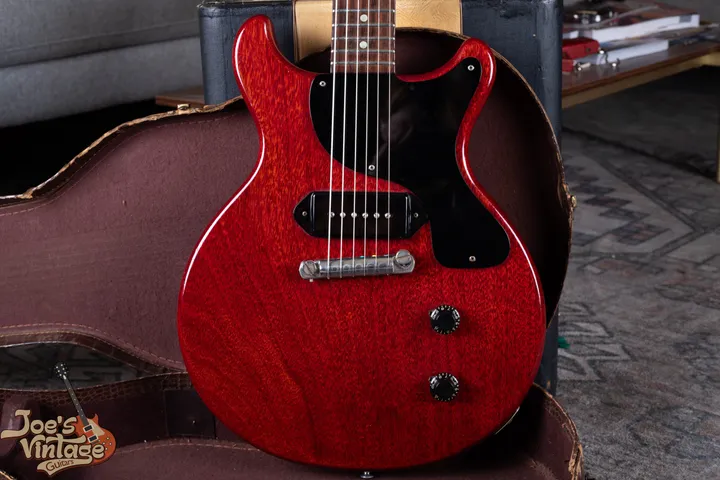
One dog-ear P-90A flat mahogany body, dot inlays, wraparound bridge and two controls. The single-cut body came first, followed by the double-cut body during 1958.
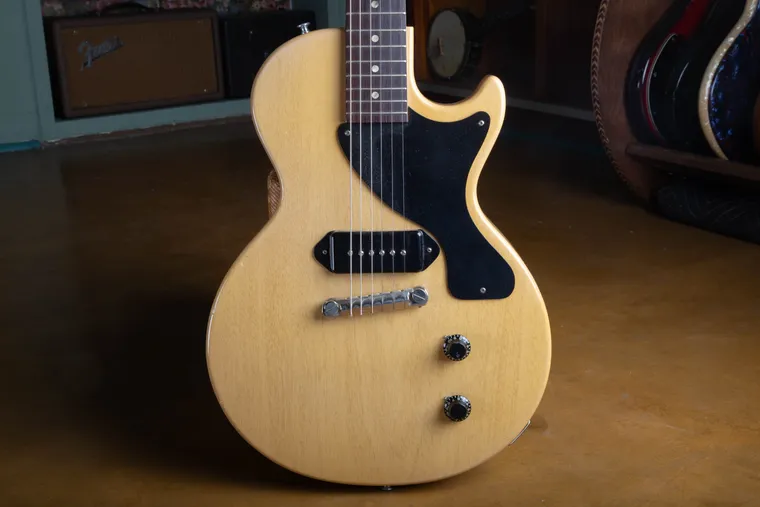 1957 Les Paul TV Model · body and pickup layout
Les Paul TV Model
Junior construction and a limed finishMechanically this is a Junior, but Gibson sold it as the TV Model in a pale limed mahogany finish during the rise of television.
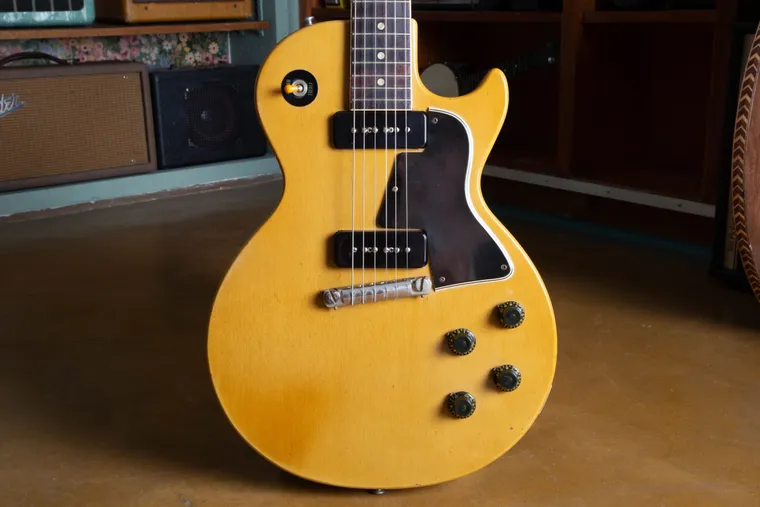 1958 Les Paul Special · straight-on body view
Les Paul Special
Two soapbar P-90sA two-pickup step above the Junior with four controls, a selector switch, a bound fingerboard and a flat mahogany body.
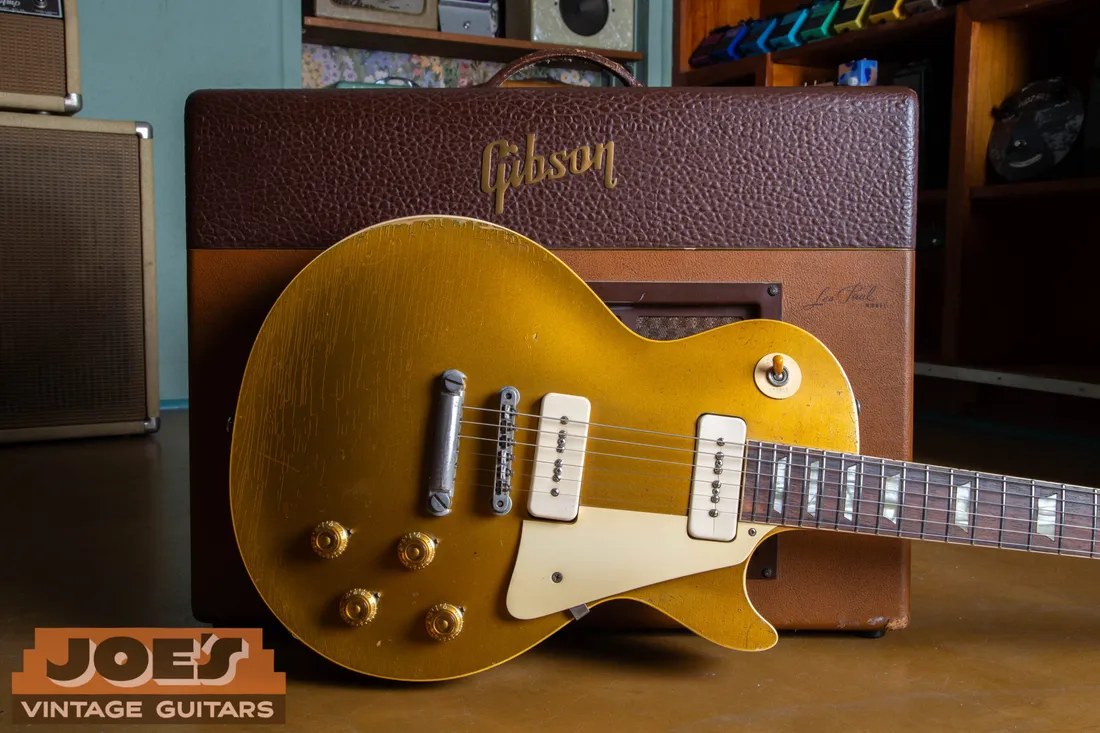
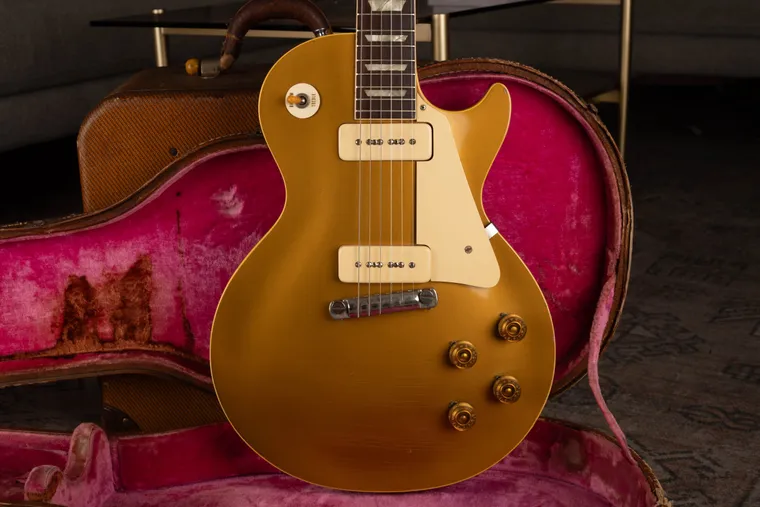 1954 Les Paul Goldtop · carved maple cap and two P-90s
Les Paul Model or Standard
Carved maple top and two pickupsThe original professional model appeared as a Goldtop in 1952. P-90s gave way to PAF humbuckers in 1957, and Cherry Sunburst followed in 1958.
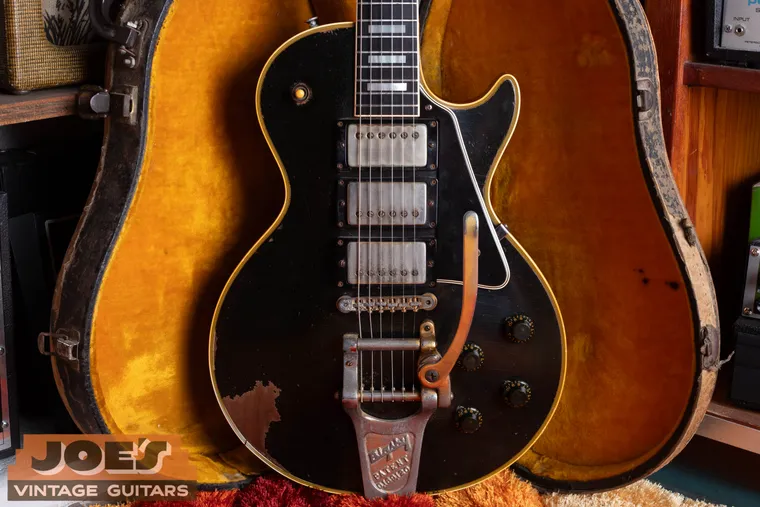 1958 Les Paul Custom · straight-on body view
Les Paul Custom
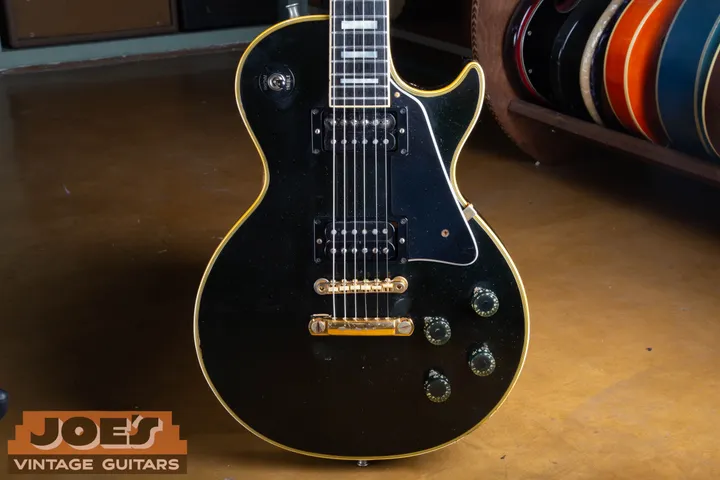
Black finish and luxury trimThe Black Beauty uses an ebony fingerboard, block inlays, multi-ply binding and gold hardware with two early pickups or three humbuckers from 1957.
Model-Specific Evidence
Authenticate the Les Paul Family One Model at a Time
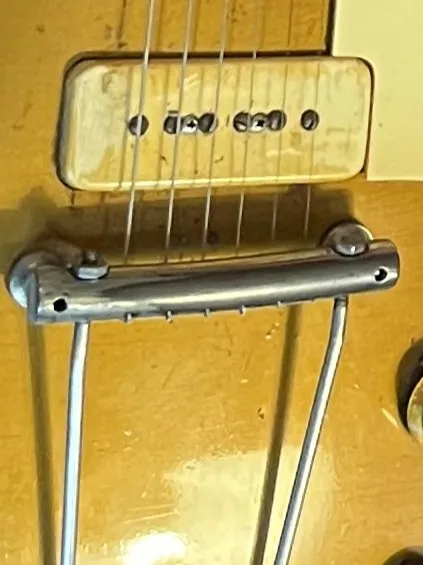
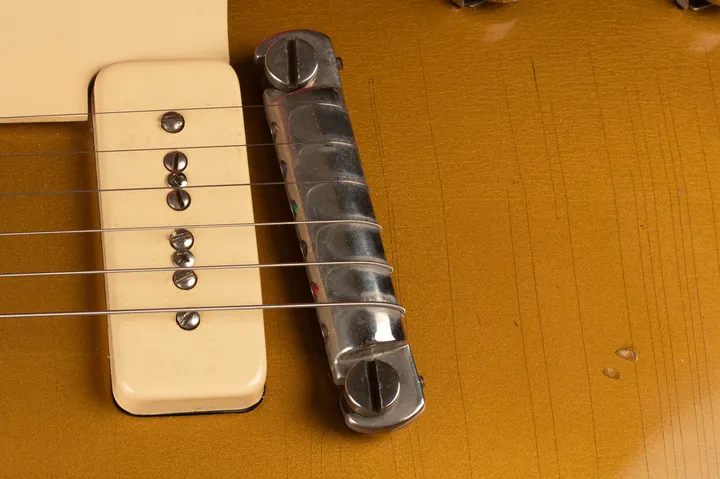
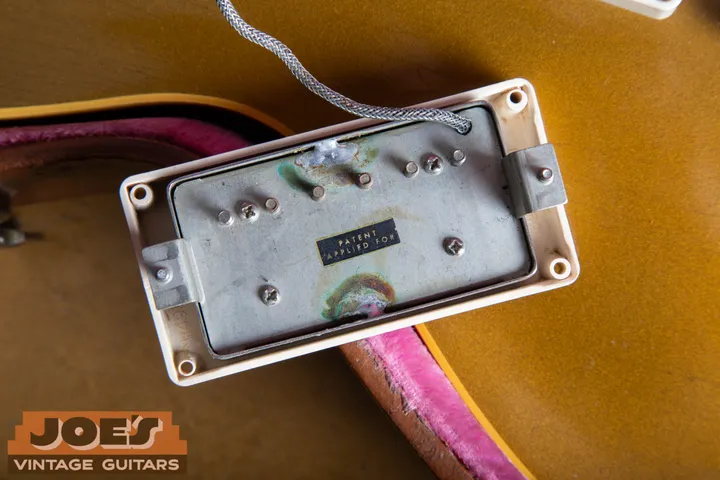
Les Paul specifications are not interchangeable. Identify the model first, then compare its body, pickups, hardware, finish and date codes with the correct branch. Joe's PAF and Patent Number pickup guide covers the decal, baseplate, magnet, bobbin and T-Top sequence. Every photograph below comes from an actual guitar or component handled by Joe's Vintage Guitars.
1952 to 1960 originals
Les Paul Model or Standard
Carved maple cap over a mahogany body- The body has a carved maple cap, mahogany back and cream binding around the top. A thin sliver of maple remains visible inside the cutaway on a 1950s original.
- The finish is bullion gold from 1952 into 1958, then Cherry Sunburst from 1958 through 1960. Greening, checking and fading should follow natural wear and protected areas.
- Two soapbar P-90s are correct through 1956. Two PAF humbuckers arrived in 1957. Routes, rings, leads, decals and solder need to agree with that sequence.
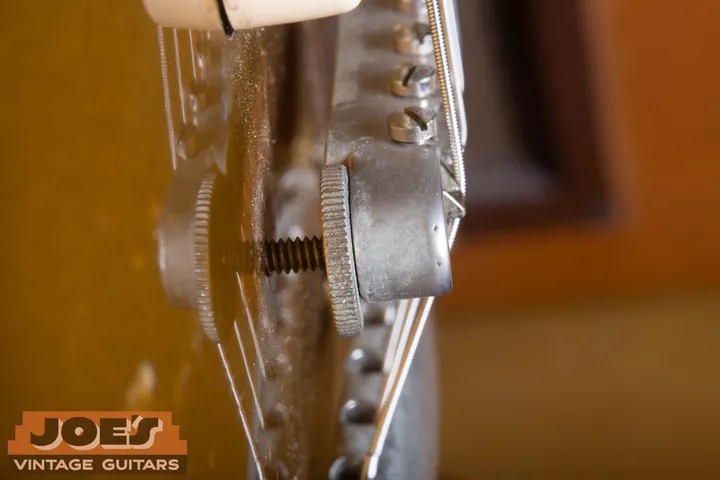
- The tailpiece changed from a wrap-under trapeze to a stud wraparound, then to a no-wire ABR-1 with a lightweight stopbar.
1954 to 1960 originals, returned in 1968
Les Paul Custom
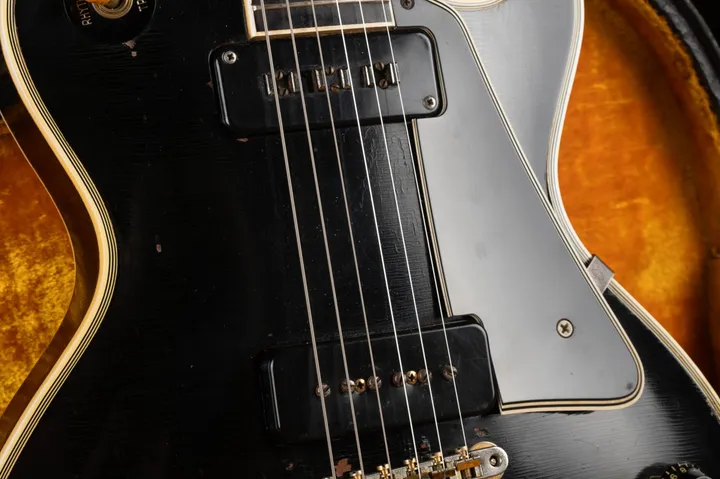
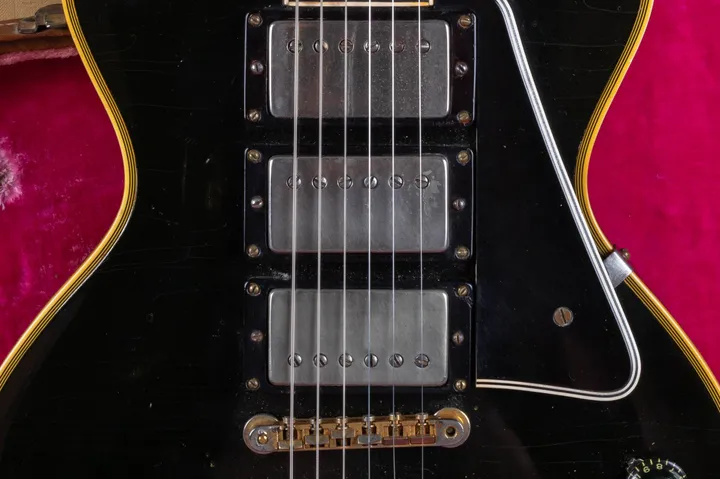
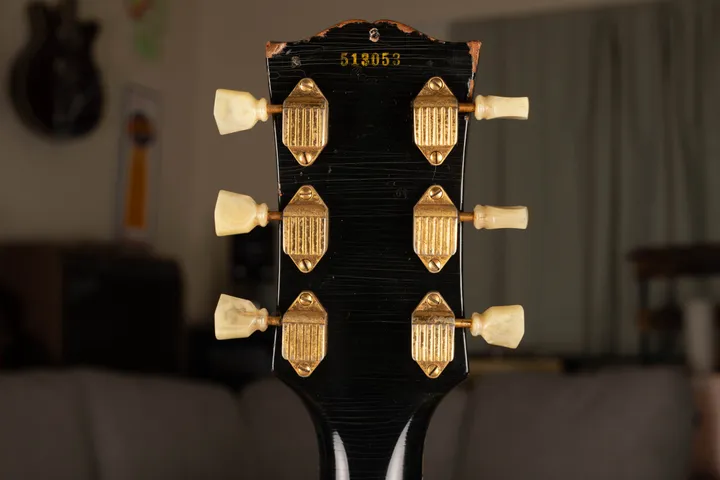
Ebony Black Beauty trim and its own pickup history- The 1950s Custom is all mahogany rather than a maple-cap Standard. Look for ebony finish, multi-ply binding, an ebony fingerboard, block inlays, a split-diamond headstock and gold hardware.
- A 1954 to 1956 Custom uses an Alnico V staple pickup at the neck and a soapbar P-90 at the bridge.
- A 1957 to 1960 Custom can have two or three PAF humbuckers. Confirm the factory routes, gold covers, switch wiring, pickup markings and solder.
- The Custom used an ABR-1 and stopbar from its early run. Gold Waffleback tuners, black plastics, low original frets and age-consistent plating provide model-specific evidence.
1955 to 1960 slab-body originals
Les Paul Special
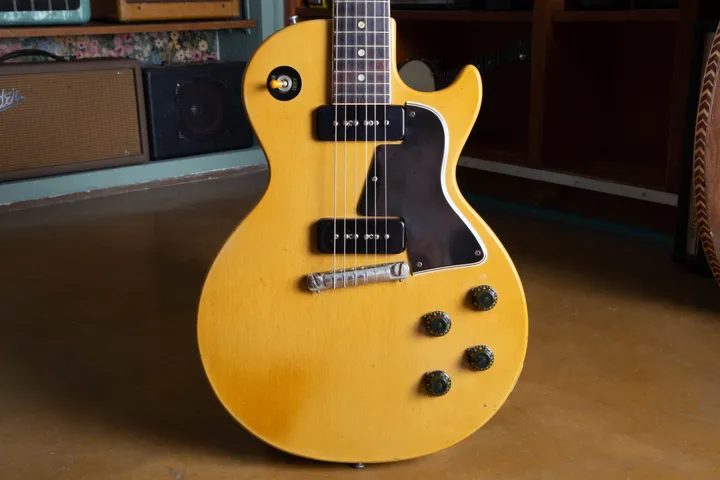
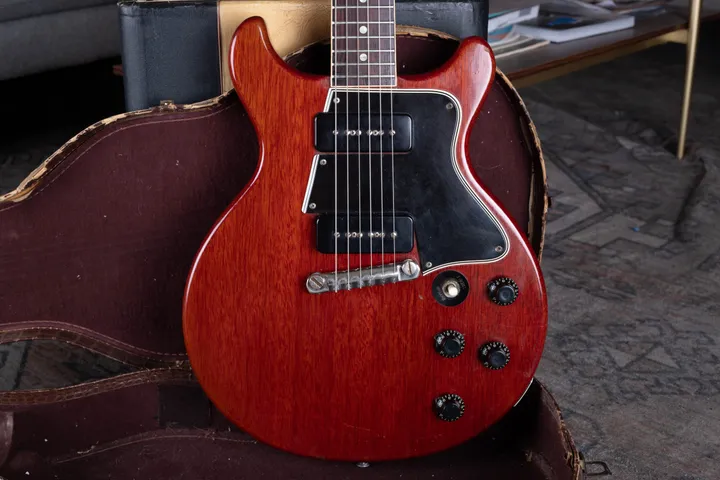
Two soapbar P-90s, four controls and a bound neck- The layout has a flat mahogany body, two soapbar P-90s, four controls, a selector switch, a bound rosewood fingerboard and a multi-ply black pickguard.
- Original TV Yellow is translucent enough to reveal mahogany grain and can age toward wheat, amber or ochre. Cherry appears on later double-cut examples.
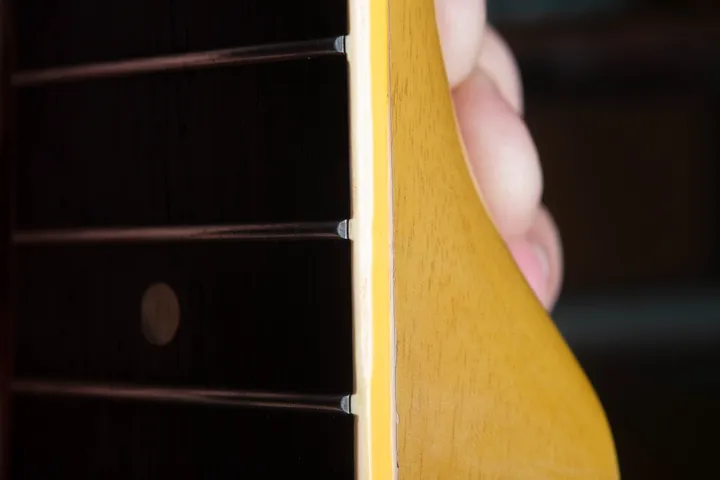
- The single-cut body comes before the late 1958 and 1959 double-cut transition. Match the silhouette, neck joint, serial, pot codes and hardware.
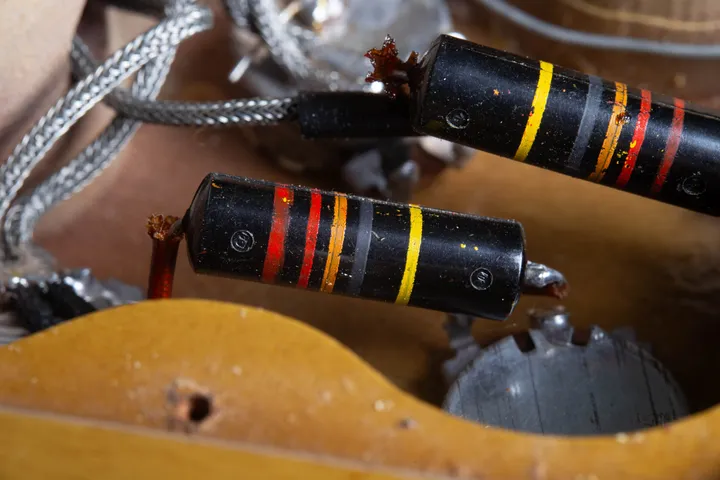
- Look for a nickel short-seam wraparound, hand-guided pickup routes, visible tenon evidence, period capacitors, Centralab pots and original solder.
1954 to 1960 slab-body originals
Les Paul Junior
One dog-ear P-90 and the simplest control layout- The body is flat mahogany with one bridge-position dog-ear P-90, one volume control, one tone control, an unbound dot-inlay fingerboard and a single-ply black guard.
- The single-cut body runs from 1954 into 1958. The symmetrical double-cut follows during 1958. The neck joint and serial should agree with the silhouette.
- The pickup moved slightly farther from the bridge around 1956. Speed knobs changed to bonnet knobs, and Grey Tiger capacitors gave way to Bumblebee capacitors.
- Inspect for humbucker routing, a replaced guard, refinishing, bridge conversions, headstock or heel repairs and disturbed solder.
1954 to 1959 core production
Les Paul TV Model
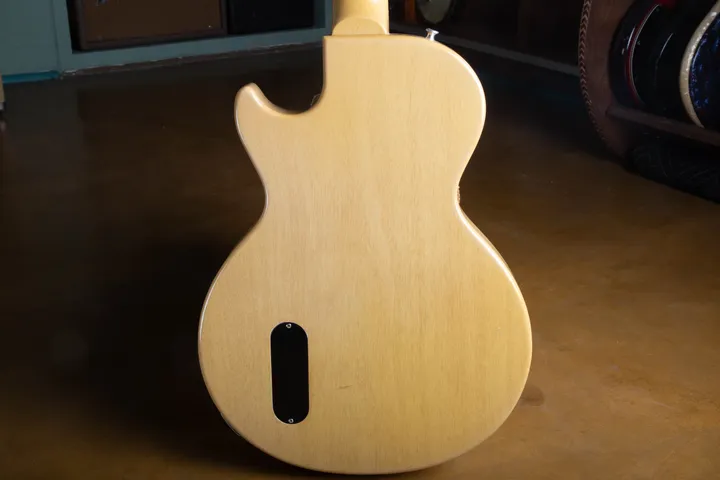
Junior construction plus a model-specific finish and logo- The construction matches a Junior with one dog-ear P-90, two controls, an unbound dot-inlay fingerboard, a slab mahogany body and a wraparound bridge.
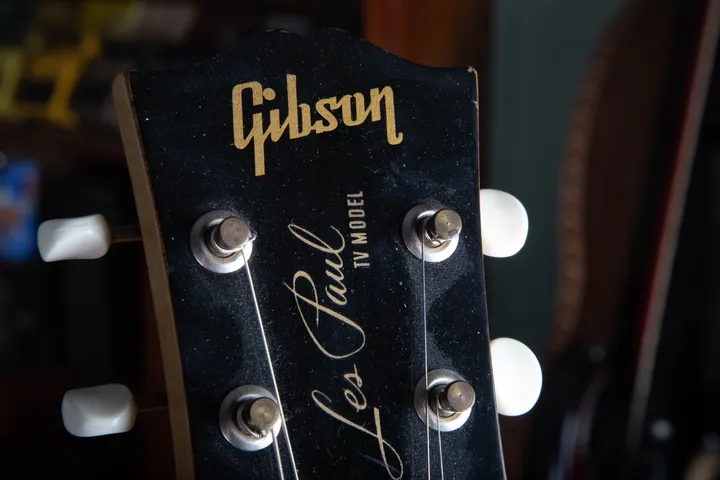
- The gold headstock silk-screen reads TV MODEL. That line separates the model from a refinished Junior when the hardware is otherwise identical.
- A true limed mahogany finish uses pale grain filler under translucent yellow lacquer. The mahogany grain remains visible in protected areas.
- Single-cut and double-cut changes track the Junior. Confirm the body, knobs, pickup position, serial, factory order number, pot codes, routes and solder together.
1968 to 1979 focus
Les Paul Deluxe and Norlin Era Single-Cuts
Mini-humbuckers and later construction evidence- Two narrow mini-humbuckers in P-90-size mounting surrounds define the Deluxe pickup layout. Full-size humbuckers can indicate a Standard, Custom, factory variation or later routing.
- Many 1970s examples have layered pancake bodies, multi-piece necks and eventually maple necks. Read seams and wood species before comparing them with a 1950s body.
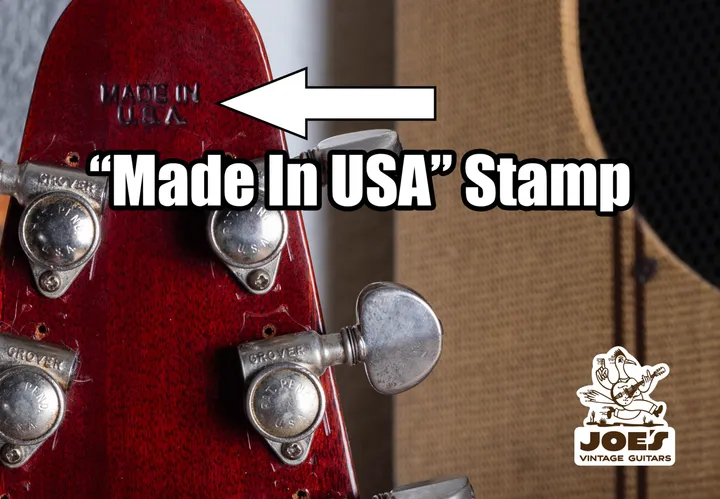
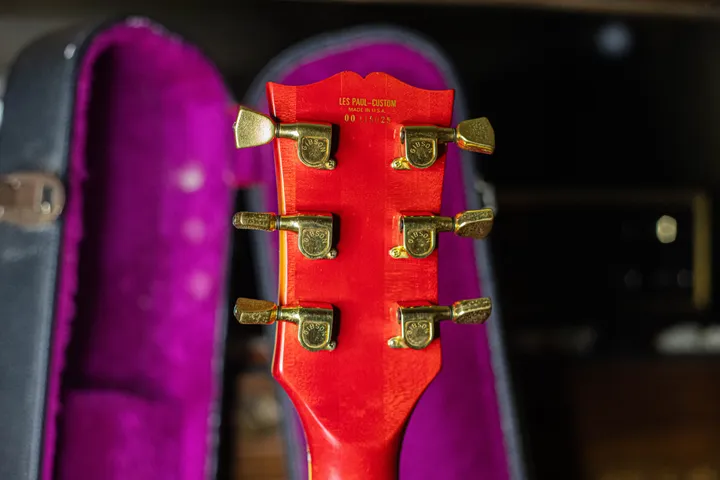
- A volute develops from 1969 through the 1970s, and the Made in USA stamp appears from 1970. Both are normal period clues.
- Impressed serials, the 1975 to 1977 gold decal, pot codes, pickup markings and the later Nashville bridge need to agree as one dating system.
Year by Year Framework
Vintage Gibson Les Paul Timeline
Gibson changed specifications during production, sometimes inside the same calendar year. Use these periods as a framework, then confirm the individual guitar with its construction, finish, hardware, electronics and serial format.
The First Goldtop
Gibson's first solidbody electric arrived with two P-90s and a trapeze tailpiece. Its shallow neck angle and wrap-under strings identify the earliest examples.
The Family Takes Shape
A corrected neck angle and wraparound bridge transformed the Goldtop. Gibson added the Custom, Junior, TV Model and Special, which created the model ladder collectors still use.
P-90s Meet the Tune-o-Matic
The Goldtop gained the ABR-1 bridge and a separate stopbar while retaining twin P-90s. This core specification makes a 1956 visually and mechanically distinct.
PAF Humbuckers Arrive
Humbuckers replaced P-90s on the Goldtop. The Custom moved to a three-humbucker layout, although transitional two-pickup examples exist.
The Burst and Double-Cut Years
The carved-top model became the Cherry Sunburst Les Paul Standard. Juniors, TV Models and Specials moved to double-cut bodies. Slimmer necks and reflector knobs help separate many late examples.
The Name Moves to the SG Body
Gibson replaced the single-cut carved-top design with the thin pointed double-cut body now known as the SG. Early examples still carry Les Paul branding.
Return, Deluxe and Norlin Expansion
The single-cut Les Paul returned with a Goldtop and Custom. The Deluxe followed with mini-humbuckers, and the 1970s brought Standards plus Personal, Professional and Recording models.
Follow the sunburst years in detail with the 1958 Les Paul Standard Guide, 1959 Les Paul Standard Guide, and 1960 Les Paul Standard Guide.
Visual Identification
How to Identify a Vintage Gibson Les Paul
Work from the large, expensive-to-alter features toward the small removable parts. The goal is to make every clue tell the same story.
Read the Body First
A carved maple cap points toward the professional Goldtop, Standard or many later Deluxe models. A flat slab mahogany body points toward a Junior, TV Model or Special.
Count and Identify the Pickups
One dog-ear P-90 indicates a Junior or TV Model. Two soapbar P-90s suggest a Special or early Goldtop. Full-size PAF and Patent Number humbuckers and mini-humbuckers belong to different branches.
Match the Bridge and Neck Angle
A trapeze, wraparound, ABR-1 with stopbar or later Nashville bridge narrows the date. Extra holes, leaning studs and altered neck geometry can reveal repairs or conversions.
Check Trim and Construction
Binding, inlays, headstock decoration, neck tenon, body layers, volute, neck wood and the Made in USA stamp separate models and broad production periods.
Decode the Serial and Parts
Compare the number with pot codes, pickup markings, tuner style, plastics, finish shadows and solder. Joe's Gibson serial number guide helps date the number, but does not replace the inspection.
Before Buying or Selling
Les Paul Authentication Checklist
Vintage Les Pauls have been played, repaired, refinished, parted out and copied for decades. A modified guitar can still be excellent, but its history needs to be identified before anyone assigns collector value. Joe's dealer inspection guide shows how the serial, hardware footprints, cavities, pickups and finish work together.
A Serial Number Can Date the Story. It Cannot Authenticate the Whole Guitar.Construction, finish, parts and provenance need to agree. Before disturbing original solder, read the PAF and Patent Number pickup authentication guide.
Collector Value
What Makes a Vintage Gibson Les Paul Valuable?
The model and year establish a broad market. Originality, condition, repairs, finish, pickups and documentation determine where an individual guitar belongs inside it. The separate market guide carries current price ranges so this historical guide can stay focused on identification.
Exact Model and Year
A 1957 humbucker Goldtop and a 1956 P-90 Goldtop look related, but they occupy different collector markets.
Original Finish
Goldtop oxidation and Burst fading can be natural. A refinish, overspray or color change is a major value issue.
Pickups and Solder
Original PAFs, P-90s, mini-humbuckers, untouched leads and factory solder joints can carry a large share of the guitar's value.
Breaks and Conversions
Headstock repairs, neck resets, routed pickup cavities, shaved heels and Goldtop to Burst conversions need full disclosure.
Hardware and Plastics
Tuners, ABR-1 bridges, wraptails, knobs, rings, guards, switch tips and covers should agree with the production period.
Case and Provenance
The correct case, receipts, family photographs, repair invoices and a continuous ownership story can strengthen an important guitar.
Go Deeper
Related Les Paul Research From Joe's Vintage Guitars
Follow the PAF, Patent Number and T-Top timeline with the details that help authenticate each pickup.
Read the Guide Vintage Les Paul Market Value GuideSee current value ranges by model and year, plus the deductions that affect the final number.
Read the Guide Gibson Serial Number GuideUse the number as a starting point, then confirm the date with the physical features.
Read the Guide 1957 Les Paul Goldtop GuideIdentify the first PAF Goldtops, M-69 rings, dark backs and correct hardware.
Read the Guide Les Paul Junior GuideFollow the Junior from its 1954 single-cut body through the early SG transition.
Read the Guide TV Yellow Les Paul Special GuideInspect the finish, plastics, electronics and construction of 1955 to 1958 Specials.
Read the Guide Les Paul TV Model GuideCompare the TV Model's logo, finish and Junior-based construction.
Read the Guide Gibson Production and Shipping TotalsCompare recorded Les Paul shipments by model and year from 1952 through the 1970s.
Read the GuideCommon Questions
Vintage Gibson Les Paul FAQ
What Are the Main Vintage Gibson Les Paul Models?+
The core 1950s family is the Les Paul Model or Standard, Custom, Special, Junior and TV Model. The single-cut line returned in 1968, followed by the Deluxe and several low-impedance variants during the 1970s.
When Did a Goldtop Become a Les Paul Standard?+
Gibson introduced the Les Paul in gold in 1952. The transparent Cherry Sunburst version appeared in 1958 and was cataloged as the Les Paul Standard. Collectors also use Standard for the earlier professional Goldtops.
What Is the Difference Between a Les Paul Junior and Special?+
A Junior has one dog-ear P-90, two controls and no fingerboard binding. A Special has two soapbar P-90s, a selector switch, four controls and a bound fingerboard.
Is a 1961 Les Paul an SG?+
The body design is the thin double-cut shape now called the SG. Gibson applied the Les Paul name to this design before the SG name became established.
Can a Gibson Serial Number Prove a Les Paul's Year?+
No. A serial number is one piece of evidence. Construction, finish, hardware, electronics and component date codes need to support the same period.
Which Vintage Les Paul Is Worth the Most?+
Original 1958 to 1960 Sunburst Standards generally lead the market. Originality, repairs, color, figure, condition, pickups, documentation and ownership history can change an individual result.
Research Notes
This family overview connects model identification with Joe's year-specific field guides. Historical cross-checks include Gibson's Les Paul model history, Gibson's pickup history, the surviving 1958 Gibson catalog and Tony Bacon's Les Paul timeline.