

Plectrum Guitars · 1928 To 1941
Martin Plectrum Guitar History And Changes
Martin’s plectrum guitars developed from small size-1 instruments into larger 000 and OM forms, then briefly into archtops. Regular production ended in 1931, although guitars remained on sale afterward and a few later special orders were built. Production dates and catalog dates are different parts of this history.
Comparison Photo: 1927 Martin 5-21 tenor
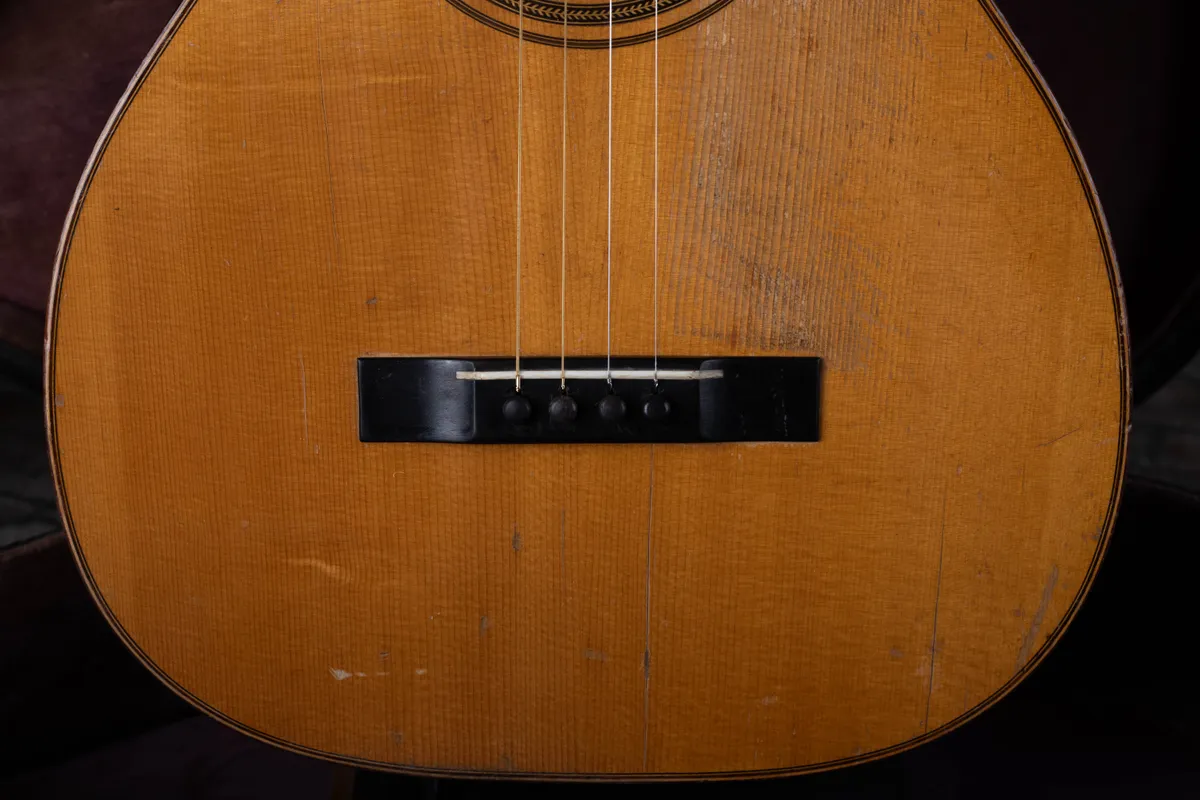
- Early Size-1 Models
- 1928 And 1929
- Larger 000 And OM Models
- 1930
- Regular Production Ends
- 1931
- Later Special Orders
- 1940 And 1941
- String Layout
- Four Strings And A Long Plectrum Neck
Models Covered In This Article
- 1-17P
- 1-28P
- 000-18P
- OM-18P
Model Changes By Year
| Year Or Period | What Changed |
|---|---|
| 1928 And 1929 | Early plectrums used size-1 bodies and long four-string necks. |
| 1930 | The larger 000-18P and 14-fret OM-18P broadened the plectrum range. |
| 1931 | Martin built 65 OM-18Ps during the year and made small numbers of C-1 and C-2 archtop plectrums. |
| End Of 1931 | Regular plectrum production ended. |
| Through 1933 | The OM-18P remained offered for sale after the principal production period. |
| 1940 And 1941 | Two plectrum special orders in 1940 and one in 1941 followed the discontinued regular line. |
1928 And 1929: The Small-Body Plectrums
The early plectrum family used a long four-string neck on a size-1 guitar body. Models such as the 1-17P and 1-28P combined that playing format with different style appointments.
The design addressed plectrum-banjo players. Its long scale separates it from the shorter tenor family, even though both have four strings. A later change in tuning does not represent a factory model change.
1930: Larger 000 And OM Bodies
The 000-18P and OM-18P brought larger bodies to the plectrum line in 1930. The OM-18P used the 15-inch Orchestra Model body with fourteen frets clear, a spruce top, mahogany back and sides, and ebony fittings.
The P suffix kept the long-neck, four-string version distinct from the six-string OM-18. The larger body and 14-fret arrangement were changes in the factory design, while the four-string plectrum format remained.
1931: The Last Main Production Year
Martin’s records show 65 OM-18Ps made in 1931. That is an annual total, not the lifetime total for the model: OM-18P production already existed in 1930.
Small numbers of C-1 and C-2 archtop plectrums also appeared in 1931. These extended the plectrum format into Martin’s new archtop body family, with an arched top and floating bridge arrangement rather than the OM flat-top construction.
1932 And 1933: Sales Continue After Production Stops
Regular plectrum production ended in 1931. The OM-18P nevertheless remained offered for sale through 1933.
A later price-list appearance does not establish a new production batch. This distinction explains why the sales history extends beyond the main manufacturing period without requiring a new model specification for each listed year.
1940 And 1941: Isolated Special Orders
Two plectrum orders followed in 1940, with another in 1941. These were exceptions after the regular line had ended, rather than a sustained revival of the plectrum range.
Later six-string conversions of plectrum guitars belong to individual repair histories. They do not change the original model’s production dates or demonstrate that Martin introduced a six-string replacement under the P designation.
Were All OM-18Ps Built In 1931?
No. Martin’s plectrum records include OM-18P production in 1930 as well as 1931. The often-quoted 65 instruments is the 1931 total.
Does A 1933 Catalog Listing Mean A 1933 Guitar?
No. OM-18Ps remained offered after regular plectrum production ended in 1931. The serial-number guide dates the guitar separately from a catalog or purchase date.
Martin Identification Resources
- Tenor Authentication
Resolve the common tenor-versus-plectrum question with measurements.
- Martin Neck-Block Stamps
Preserve the P suffix when documenting factory identity.
- Martin Serial And Model Numbers
Find the production year from the neck-block serial.
- Martin Construction And Dating
Follow changes in bridges, necks, braces and materials.
- Sell A Martin Guitar
Send Joe the details of a Martin you are considering selling.
Martin Owners On Working With Joe
“feeling no regrets after selling our 1920’s Martin on to these folks”
“they took the time to look at the photos of my Martin D18 and emailed back an appraisal”
Your Martin’s Model, Year And Condition
Send Joe Photos Of Your Martin
Include the front, back, headstock, model and serial markings, and any known repairs.
Photo Credits
Photographs from the Joe’s Vintage Guitars archive. Each caption identifies the instrument shown, including comparison photographs.