

Orchestra Models · 1930 To 1934
Martin OM-18 History And Changes: 1930 To 1934
The OM-18 began in 1930 as the mahogany-bodied Orchestra Model. During its short original run, Martin changed the bridge, enlarged the pickguard, replaced banjo-style tuners and extended the fingerboard markers. In 1934, the name changed to 000-18 before the scale became shorter.
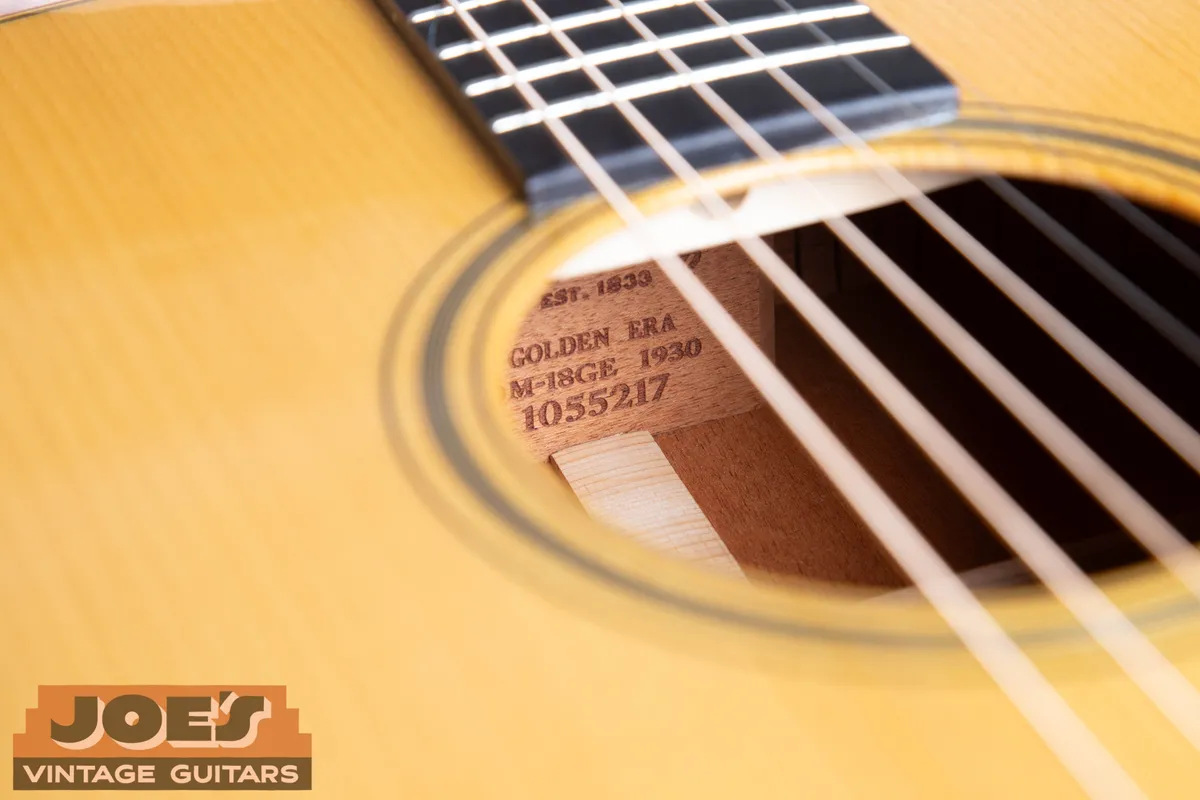
Comparison Photo: 2005 Martin OM-18GE
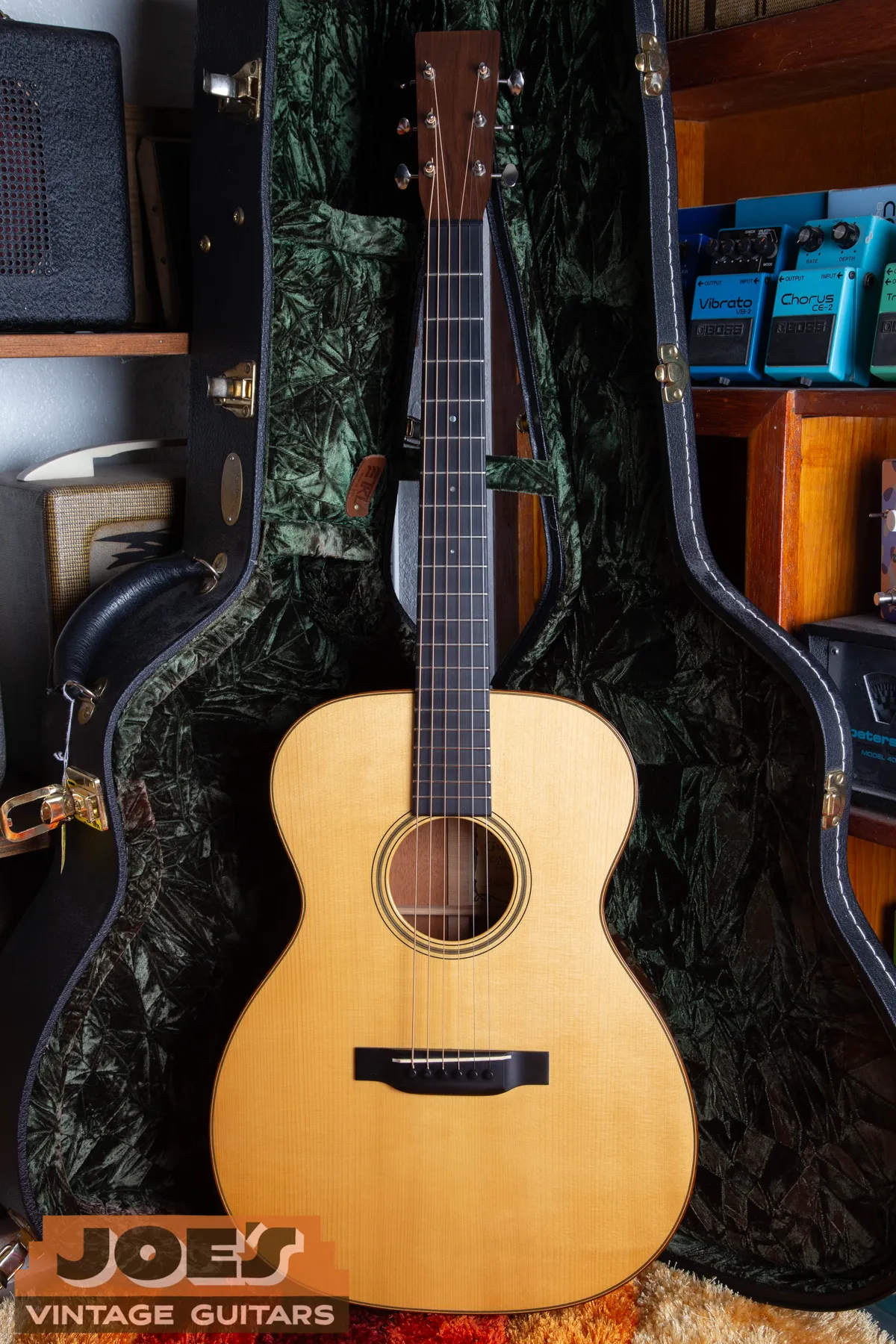
- Original Production
- 1930 To 1933
- Body
- 14-Fret Orchestra Model
- Back And Sides
- Mahogany
- Nominal Scale
- 25.4 Inches
- Early Neck System
- Bar Frets And Ebony Reinforcement
OM-18 Changes By Year
| Year Or Period | What Changed |
|---|---|
| January 1930 | OM-18 production began, bringing mahogany back and sides to the long-scale, 14-fret Orchestra Model. |
| 1930 | The belly bridge replaced the earliest straight bridge form. |
| 1931 | A larger pickguard replaced the small teardrop guard. Open-back guitar tuners replaced the banjo-style machines in a separate transition during the year. |
| Early 1932 | Fingerboard dots extended beyond frets 5, 7 and 9 to include frets 12 and 15. |
| 1934 | The model designation changed from OM-18 to 000-18. Early renamed guitars retained the long scale. |
| Later In 1934 | The 000-18 scale shortened from about 25.4 inches to 24.9 inches. T-frets and steel T-bar reinforcement also arrived in the successor era. |
1930: The Mahogany Orchestra Model
The first OM-18 shop order was placed in January 1930. The design combined a spruce top and mahogany back and sides with a 14-fret neck joint and approximately 25.4-inch scale. Its ebony fingerboard and bridge, simple dot markers and restrained trim distinguished Style 18 from the rosewood OM-28.
The Orchestra Model body was derived from the 000, with a shorter upper body to expose fourteen frets. The original OM-18 neck used bar frets and an ebony reinforcement strip. The later steel T-bar neck system had not yet entered production.
1930: The Belly Bridge Replaces The Straight Bridge
The earliest OM-18 design used a plain straight bridge. During 1930, Martin adopted the belly bridge, widening the bridge behind the pin row. This was a change in the bridge’s footprint, not a change from mahogany to rosewood back and sides.
The bridge transition also affected the OM-28, whose earliest bridge had pyramid ends. Some earlier instruments still in factory stock received the new belly bridge before sale, so the original production sequence can include factory-updated guitars.
1931: Larger Pickguards And Guitar Tuners
The small teardrop pickguard gave way to a larger guard during 1931. Banjo-style tuners, with their mechanisms projecting behind the headstock, were also replaced by conventional open-back guitar tuners that year.
These were separate transitions. A larger guard did not necessarily arrive at exactly the same time as the newer tuner set. Later original OM-18s commonly combine the full-size guard with open-back Grover machines.
1932 And 1933: The Longer Dot Pattern
Early Style 18 fingerboard markers occupied the fifth, seventh and ninth frets. In early 1932, the pattern extended to the twelfth and fifteenth frets. The additional markers are a dated decoration change within the original OM-18 run.
The OM-18 continued through 1933 with the long scale, 14-fret body and bar-fret neck construction. Its mahogany body remained the defining material difference from the OM-28.
1934: The Name Changes Before The Scale
Martin changed the designation to 000-18 in 1934. The earliest guitars under the new name still had the long scale. Later that year, the scale shortened to approximately 24.9 inches.
T-shaped frets and steel T-bar neck reinforcement also entered production in 1934. Those changes belong to the successor 000 era. The Martin small-body guide follows the later 000 family.
Did All Original OM-18s Have Banjo Tuners?
No. Banjo-style tuners belong to the earlier production, followed by conventional open-back guitar machines during 1931. Both types occur in the original OM-18 period.
Is An Early Long-Scale 000-18 An OM-18?
It shares much of the preceding OM design, but Martin designated it 000-18. The 1934 name change and later scale change were separate events, so long scale alone does not supply the factory model name.
Martin Identification Resources
- Martin Headstock Logo Dating
Compare front logos and rear stamps with the period, including evidence of refinishing.
- Martin OM-28 Authentication Guide
Separate rosewood Style 28 appointments from the OM-18's mahogany construction.
- Sell A Martin Guitar
Send Joe the details of a Martin you are considering selling.
- Martin Serial And Model Numbers
Find the production year from the neck-block serial.
- Martin Construction And Dating
Follow changes in bridges, necks, braces and materials.
Martin Owners On Working With Joe
“feeling no regrets after selling our 1920’s Martin on to these folks”
“they took the time to look at the photos of my Martin D18 and emailed back an appraisal”
Your Martin’s Model, Year And Condition
Send Joe Photos Of Your Martin
Include the front, back, headstock, model and serial markings, and any known repairs.
Photo Credits
Photographs from the Joe’s Vintage Guitars archive. Each caption identifies the instrument shown, including comparison photographs.