
Martin Identification / Logo Evolution
Martin Headstock Logo Evolution And Dating Guide
Martin began using gold front logos in 1932, but earlier rear stamps and later pearl lettering overlap with other designs. Check both sides of the headstock, then compare the logo with the model and serial number.
Look Up Your Serial NumberBefore The Early 1930s
Blank Headstocks And Rear Stamps
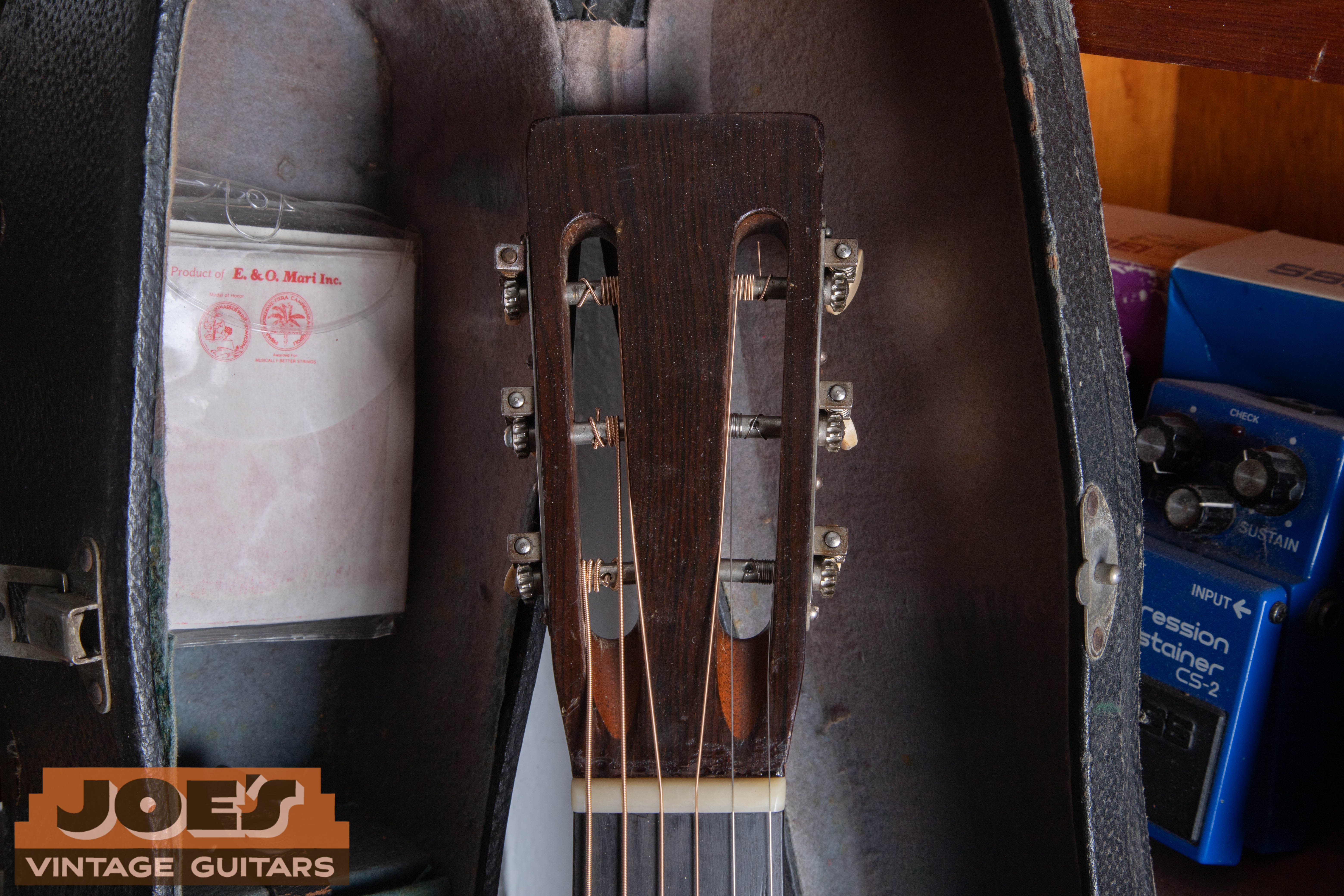
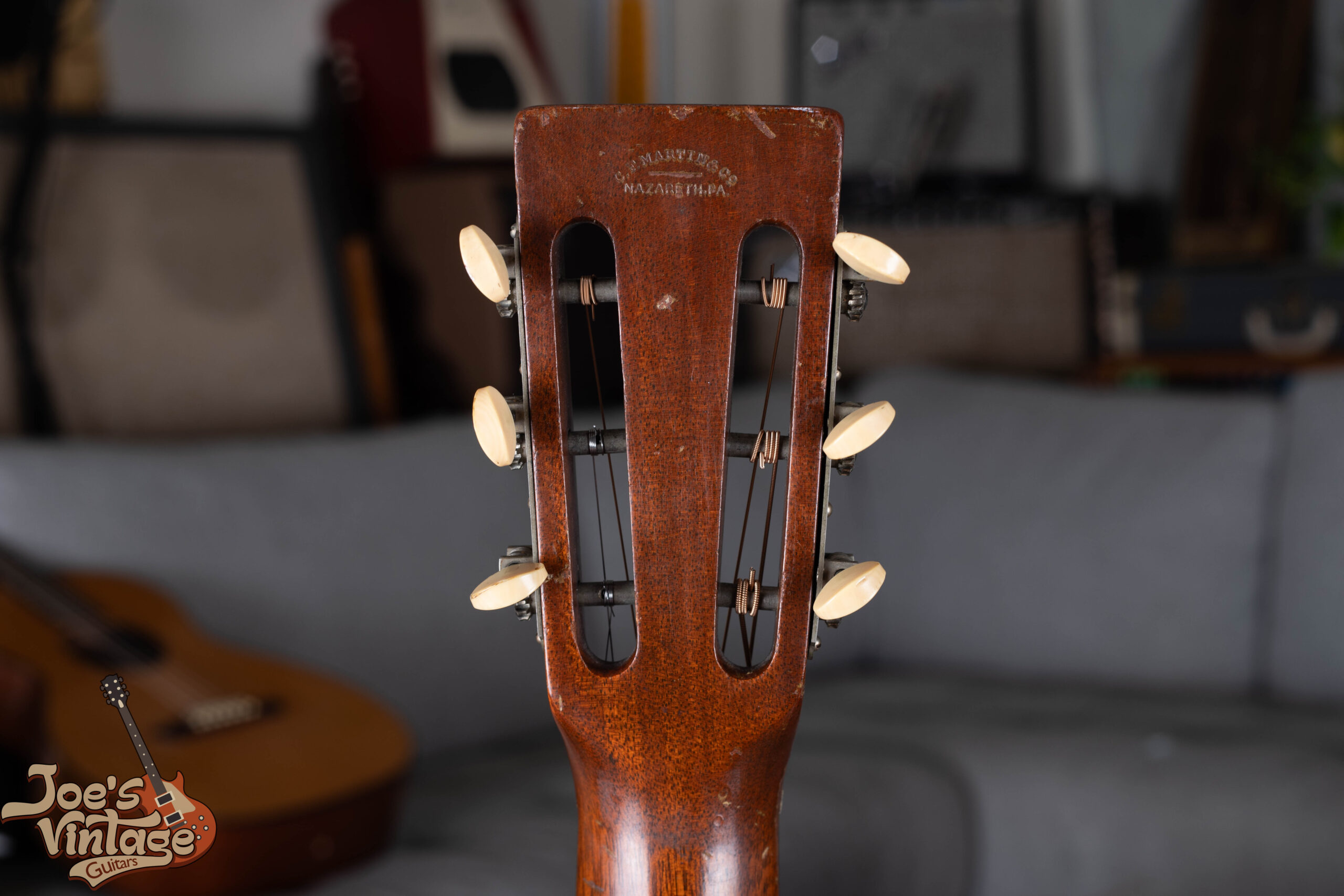
Many early steel-string Martins have a blank headstock face and a maker’s stamp pressed into the wood on the back. Check inside the body for stamps too.
The 1930 0-21 in these photos has no front logo. Its slotted headstock also appears on later 12-fret models, so check the serial before calling a slotted-headstock Martin prewar.
Early To Mid-1930s
The First Gold Front Logos
The first front logos, introduced in 1932, were printed in gold leaf without a black border. The outlined gold decal followed. Front logos overlapped with rear headstock stamps through the 1934 transition.
Amber lacquer and wear can hide the border around gold letters. Use a clear close-up under neutral light; a dark listing thumbnail won’t reliably separate the early versions. Logo size alone won’t give you a factory-wide cutoff year.
- Photograph the complete headstock and a close view of the script.
- Look closely at the letter edges to separate a dark outline from amber lacquer.
- Check the rear stamp and serial before narrowing a transition date.
Mid-1930s And Later
Outlined Gold Script Across Decades
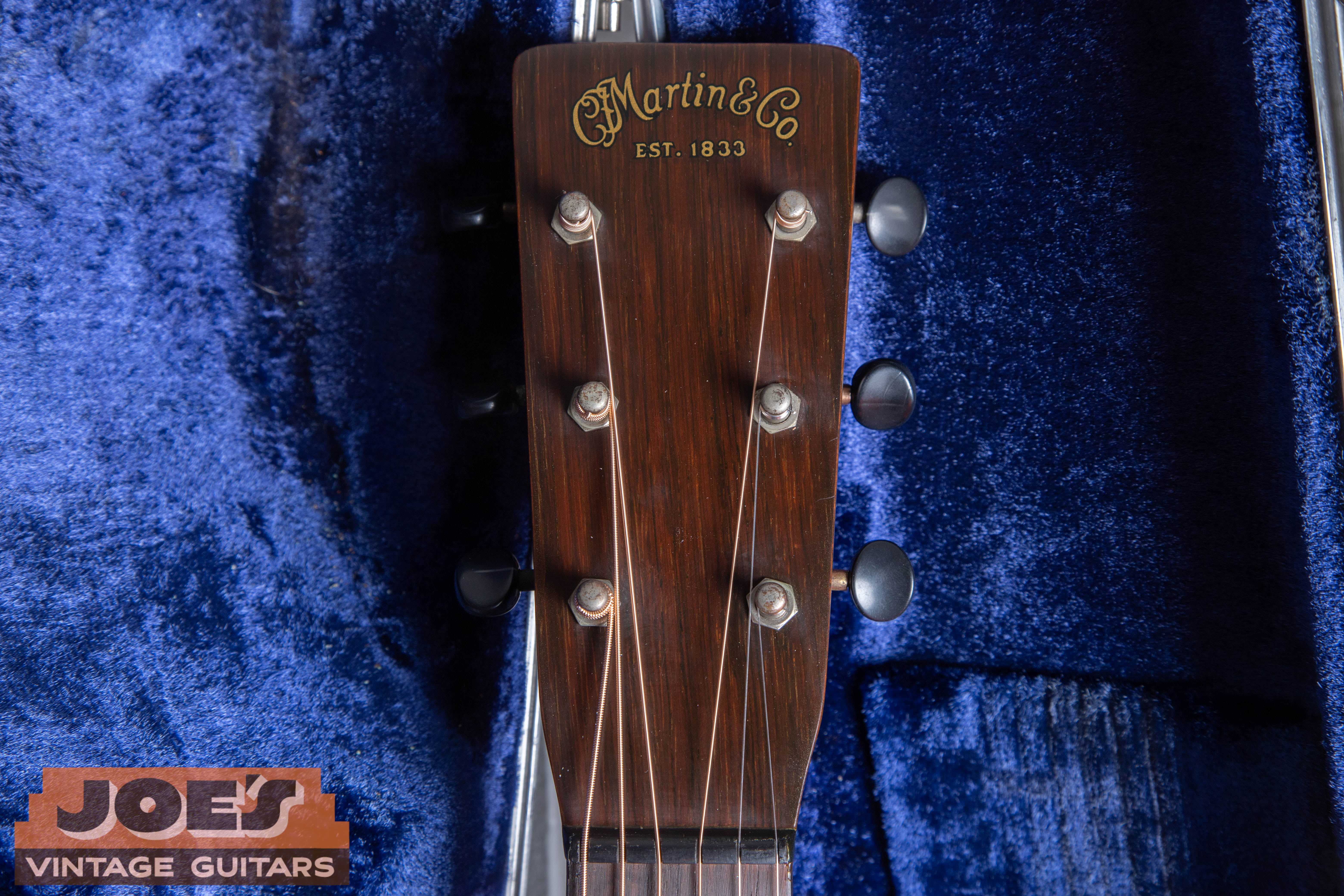
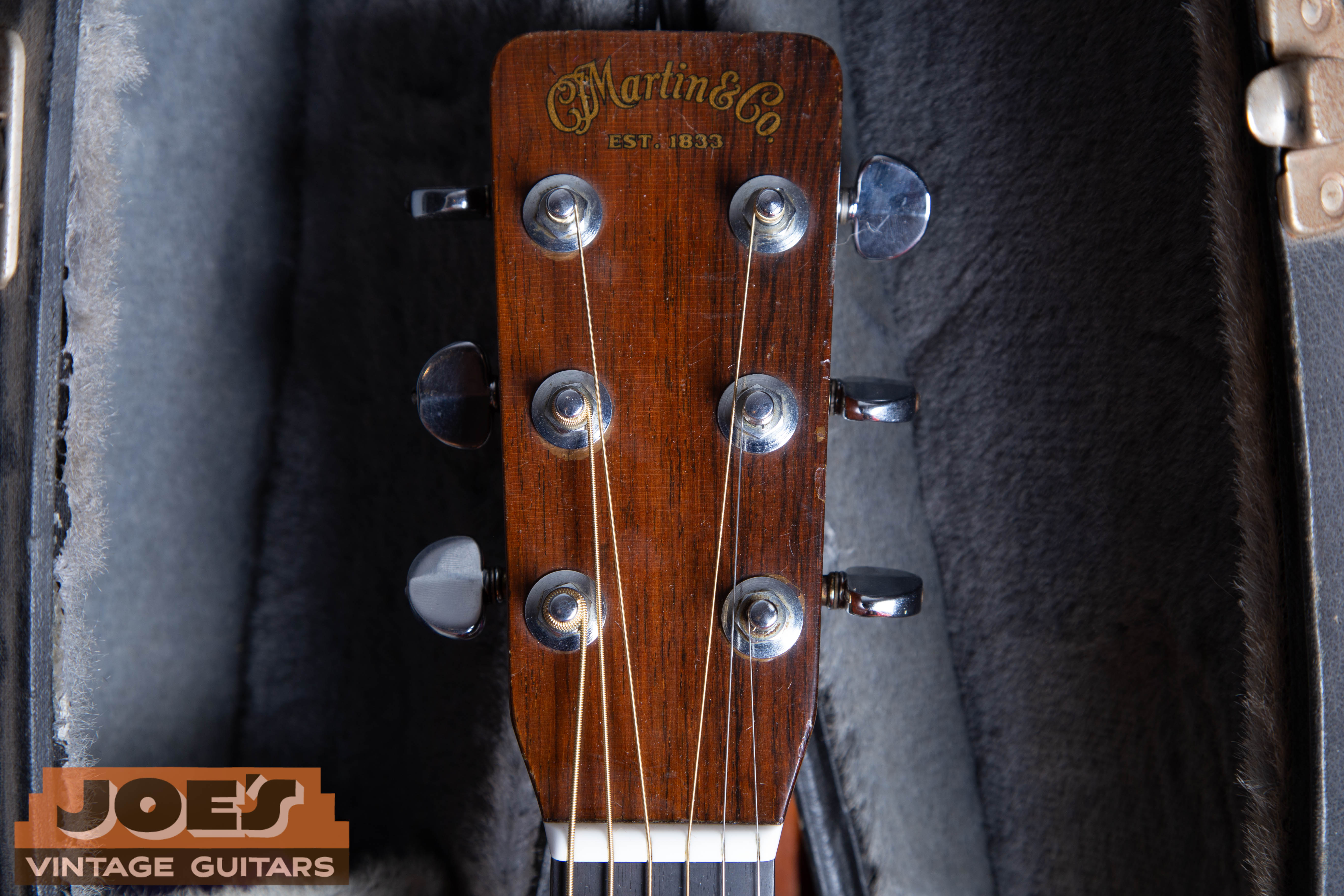
Martin kept the familiar C. F. Martin & Co. script for decades. Outlined gold lettering remained in use across many years, so that design alone cannot separate one year from the next.
Check the headplate, tuner holes and finish around the lettering for repair work. A refinished headstock may have a replacement decal, and a worn original decal may have lost part of its outline.
Compare the script’s width relative to the headstock, including the space between the outer letters and the edges. Logo sizes can differ even on guitars of the same model and year, so size alone won’t establish a date.
Model-Specific, Not One Era
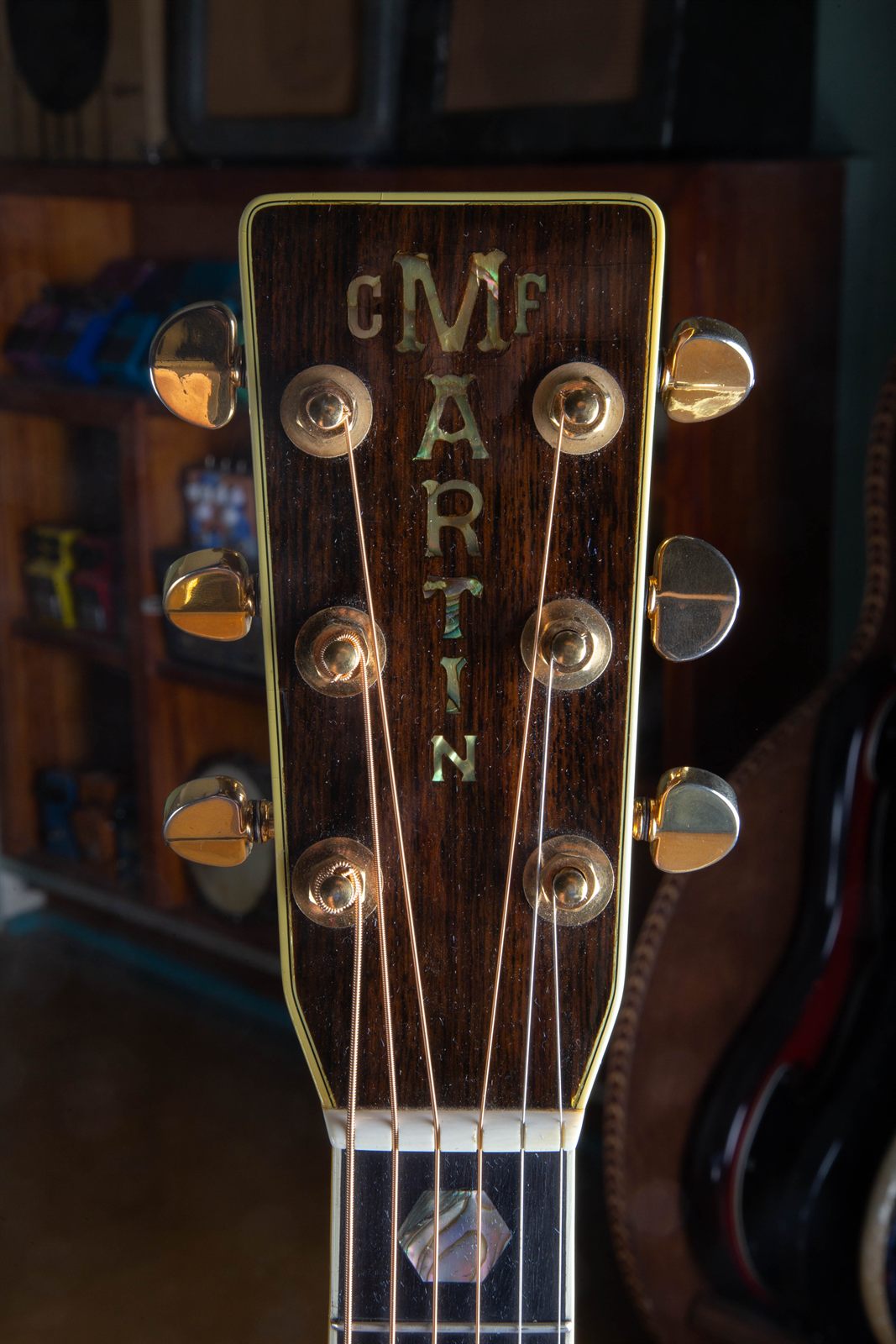
Vertical Pearl Lettering
Vertical C. F. MARTIN pearl lettering appears on selected models alongside the more familiar gold script. It has roots in Martin’s early 1930s archtops, and solid-headstock Style 45 guitars adopted it during the 1930s.
The 1976 000-45 below carries that older design on a later guitar. Torch and other decorative headstock inlays also return on recreations, so check the model and serial before dating one by its pearl work.
An early fern design appears on the 1902 00-42S, followed by torch or flowerpot patterns. The 1931 C-1 archtop prototype has pearl MARTIN lettering; C and F were added in 1932. During the early 1930s, lettering spread to solid-headstock Style 45 guitars while slotted examples retained the torch.
Read the design before trying to date it: a floral torch, separate vertical letters and flowing gold script are three different treatments. Photograph the entire pattern, including its lower end above the nut. A partial close-up can hide the detail that distinguishes them.
Headstock Shape, Slot Ends And The Volute
The small dart behind the headstock is called a volute. On early cedar necks it helped reinforce a separate headstock joint. As one-piece mahogany necks arrived around 1916, the dart continued as decoration on some styles. Its presence does not mean the neck has an adjustable rod.
Rounded slot ends appear on lower styles from 1919, alongside square-ended slots on other models. Some 19th-century Martins have solid headstocks with friction pegs, so a solid headstock doesn’t automatically mean “1930s or later.”
Take a straight-on photograph and a side view. Include the slot ends, headstock corners, rear dart and any joint line. Compare those details with the logo instead of using the headstock outline alone.

Classical Models, Reissues And Repairs
Some nylon-string G and C models have the decal on the back of the headstock. A blank front on those models doesn’t mean the same thing as a blank front on an early steel-string guitar.
Modern vintage-style Martins can combine older script, open gears and period-style trim. Match the serial to the exact model’s specifications. If the headstock has been refinished, repair records may explain a replacement logo.
Frequently Asked Questions
When Did Martin Start Using A Front Headstock Logo?
Gold front logos began appearing in 1932. Early forms and rear headstock stamps overlap, so use the serial and model to resolve the transition.
Does A Vertical Pearl Logo Mean A Martin Is Prewar?
No. The photographed 1976 000-45 has vertical pearl lettering too. Use the model and serial number to date it.
Can A Martin Logo Give Me An Exact Year?
Usually not. Martin used similar script for decades, and reissues and replacement decals repeat older designs. Start with the serial number.
Does A Missing Front Logo Mean My Martin Is Fake?
No. Early guitars can have a blank headstock face, and some nylon-string models place the decal on the back. Compare the model, serial, interior maker’s marks and both sides of the headstock.
How Can I Check A Replaced Martin Logo?
Photograph the letter edges and the surrounding finish in neutral light. Check for refinishing or repair records, then compare a dated example of the same model. A replacement decal does not by itself identify the guitar’s maker.
Related Martin Dating Guides
Use the guides below to compare your Martin’s serial number, model stamp, logo, tuners and construction.
- Martin Tuner Dating Guide: Grover, Kluson And Waverly
- Martin Neck-Block Stamps: Models, Serials And Maker’s Marks
- Martin Guitar Construction Features And Dating
- Prewar Martin Guitar Guide: Bracing And Identification
- Martin Guitar Model Numbers: Body Sizes And Styles
If a stamp, logo or part doesn’t fit the guitar, use the Martin counterfeit identification guide to check the whole instrument.

Talk With
Joe Today
Have a vintage guitar to sell or a question? I’m here to help.