
Martin Identification / Model Numbers
Martin Guitar Model Numbers: Body Sizes And Styles
A traditional Martin model name combines body size with style. D-28 means a dreadnought in Style 28; 000-18 means an Auditorium body in Style 18. The separate serial number gives the year. Read both lines before comparing guitars.
Look Up Your Serial NumberDecode Your Martin Model Stamp
Read the model above the serial number on the neck block. In 000-18, 000 is the body size and 18 is the style. The serial on the next line gives the production year.
This tool explains common codes. It doesn’t confirm that Martin built every possible body and style combination, identify a guitar from its serial, or verify an instrument’s maker.
For the production year, use the Martin serial number lookup.
Martin Body Sizes Explained
Body size comes first in a traditional model name. Measure the body and count the frets clear of it if the stamp is missing. OM is a letter code; 0, 00 and 000 use zeros.
| Code | Body Family | What To Compare |
|---|---|---|
| 0 | Concert | Smaller than 00 and 000. Compare 12-fret and 14-fret versions separately. |
| 00 | Grand Concert | The middle size in the 0, 00 and 000 family. The characters are zeros. |
| 000 | Auditorium | Larger than 00. Many traditional 14-fret examples have a shorter scale than an OM. |
| OM | Orchestra Model | Shares the familiar 14-fret 000 body outline, usually with a longer scale. Check the exact model. |
| D | Dreadnought | The large body family used by the D-18, D-28 and D-45. Both 12-fret and 14-fret versions exist. |
| 5 | Size 5 / Terz | A very small body seen on the 5-18. Martin historically described Size 5 as a Junior model. |
| 7 | Size 7 / Small Dreadnought | A reduced dreadnought body seen on the 7-28. This number identifies size, not the string count. |
For size comparisons, see the 0, 00 and 000 guide and Joe’s photographed 1950 Martin 5-18.
Martin Style Numbers And Trim
The style describes a family of woods and appointments. It is not a quality score or a year. Use these comparisons with the guitar’s date and full model name; special orders and later series can depart from older specifications.
| Style | Typical Appointments | Photo Check |
|---|---|---|
| 15 | Plain trim and a mahogany top are familiar vintage Style 15 features. Modern 15-series materials vary by model. | Look at the top wood, body binding and full model suffix. |
| 16 | Specifications vary widely across the vintage Style 16 and later 16 Series. The number alone does not identify the wood. | Confirm the year, suffix, neck joint and factory specification. |
| 17 | Many 20th-century examples have mahogany tops and modest trim. Other periods include spruce-top versions. | Check the top wood and production period before comparing it with Style 15 or 18. |
| 18 | Spruce top, mahogany back and sides, and relatively plain trim on familiar vintage steel-string models. | Compare the body binding, fingerboard dots and bridge wood for the year. |
| 21 | Spruce and rosewood with less ornate trim than Style 28. Rosettes, binding and fingerboard details changed over time. | The photographed 1956 000-21 shows a model stamp paired with restrained decoration. |
| 28 | Spruce and rosewood with more elaborate trim than Style 21. Early herringbone was followed by other borders. | Herringbone also appears on later HD models, so it does not prove a prewar date. |
| 35 | The familiar D-35 has a three-piece rosewood back and a bound fingerboard. | Check the back seams. The 35 designation does not mean a pearl-bordered body. |
| 40 | Pearl details depend on the model and period. An early 40H and a later J-40 do not share every appointment. | Check where pearl appears: rosette, fingerboard, headstock or body border. |
| 41 | Pearl around the top and rosette on familiar modern examples, without the Style 42 border around the fingerboard extension. | Look closely where the fingerboard meets the top. |
| 42 | Pearl top trim extends around the fingerboard extension. Fingerboard inlays vary with the period. | Check top decoration separately from back and side borders. |
| 45 | Pearl decoration extends to the top, back and sides, with elaborate fingerboard and headstock appointments. | Photograph the body from every side. The 1976 000-45 in this guide shows a later example. |
Model Numbers On Real Martin Guitars
The model is stamped above the serial on these examples. Copy each line separately: 000-21 is a model, while 224411 is a serial. A serial lookup cannot turn one into the other.
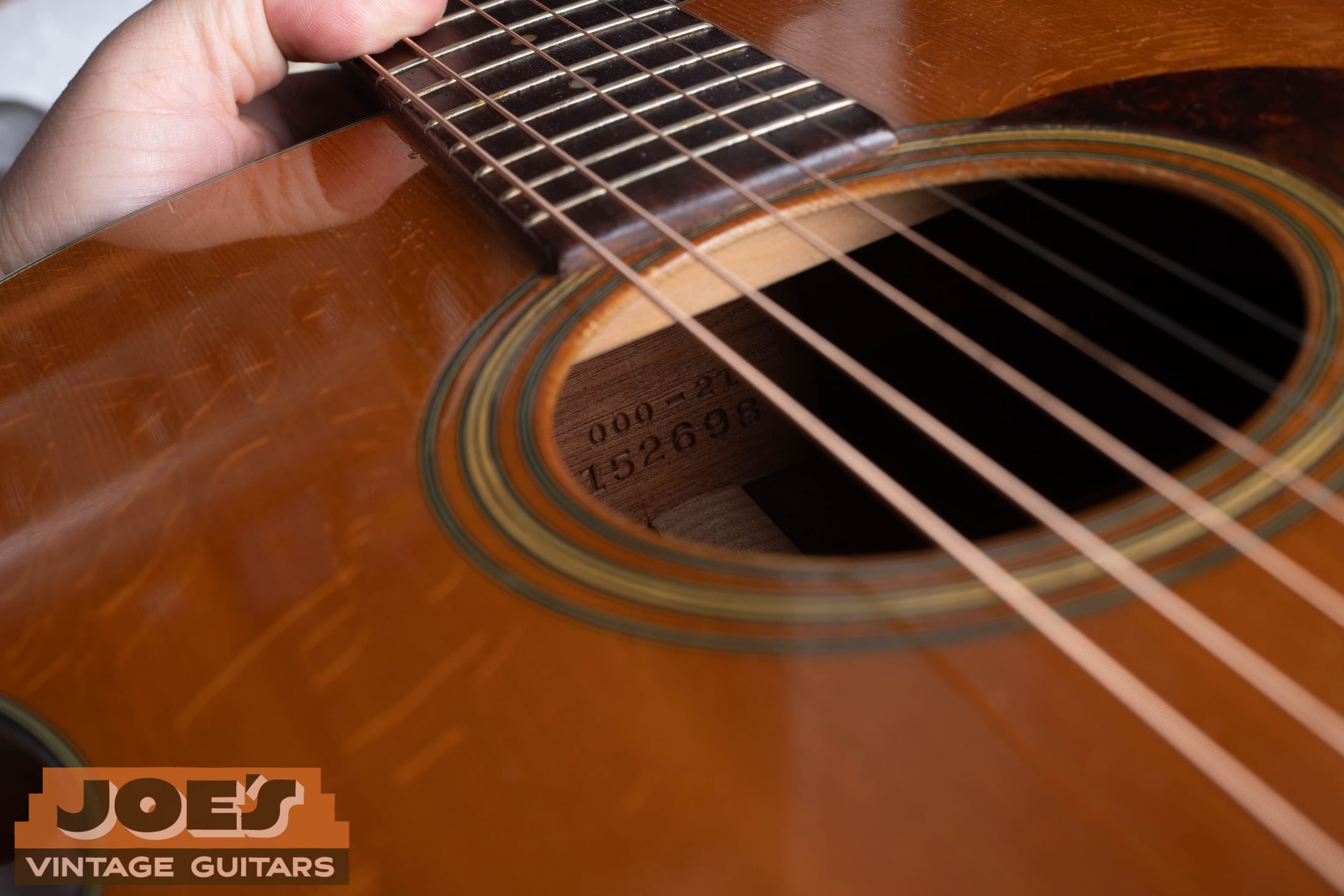
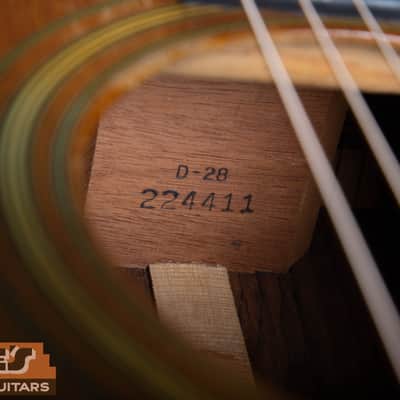
Measure A Body Without A Model Stamp
Measure straight across the widest part of the lower bout, then record the body length, depth and fret where the neck meets the body. Compare the measurements together. A 12-fret and 14-fret guitar can share a size name but have different upper-bout shapes.
The historical measurements below help narrow an unstamped guitar. They are reference dimensions, not machining tolerances. They also explain why an old Size 1 is smaller than an 0: the numbered sizes and zero-size family do not form a simple ascending scale.
| Body Family | 12-Fret Examples | 14-Fret Examples |
|---|---|---|
| 2 1/2 | 11 5/8 inches | Not Listed |
| 2 | 12 inches | Not Listed |
| 1 | 12 3/4 inches | Not Listed |
| 0 | 13 1/2 inches | 13 1/2 inches |
| 00 | 14 1/8 inches | 14 5/16 inches |
| 000 | 15 inches | 15 inches |
Compare Style 17, 21 And 45 Details
Use dated photographs to compare the appointments. The 0-17’s dots and the 000-45’s pearl work show different styles, not a simple progression from old to new. The model’s year still controls which details belong.
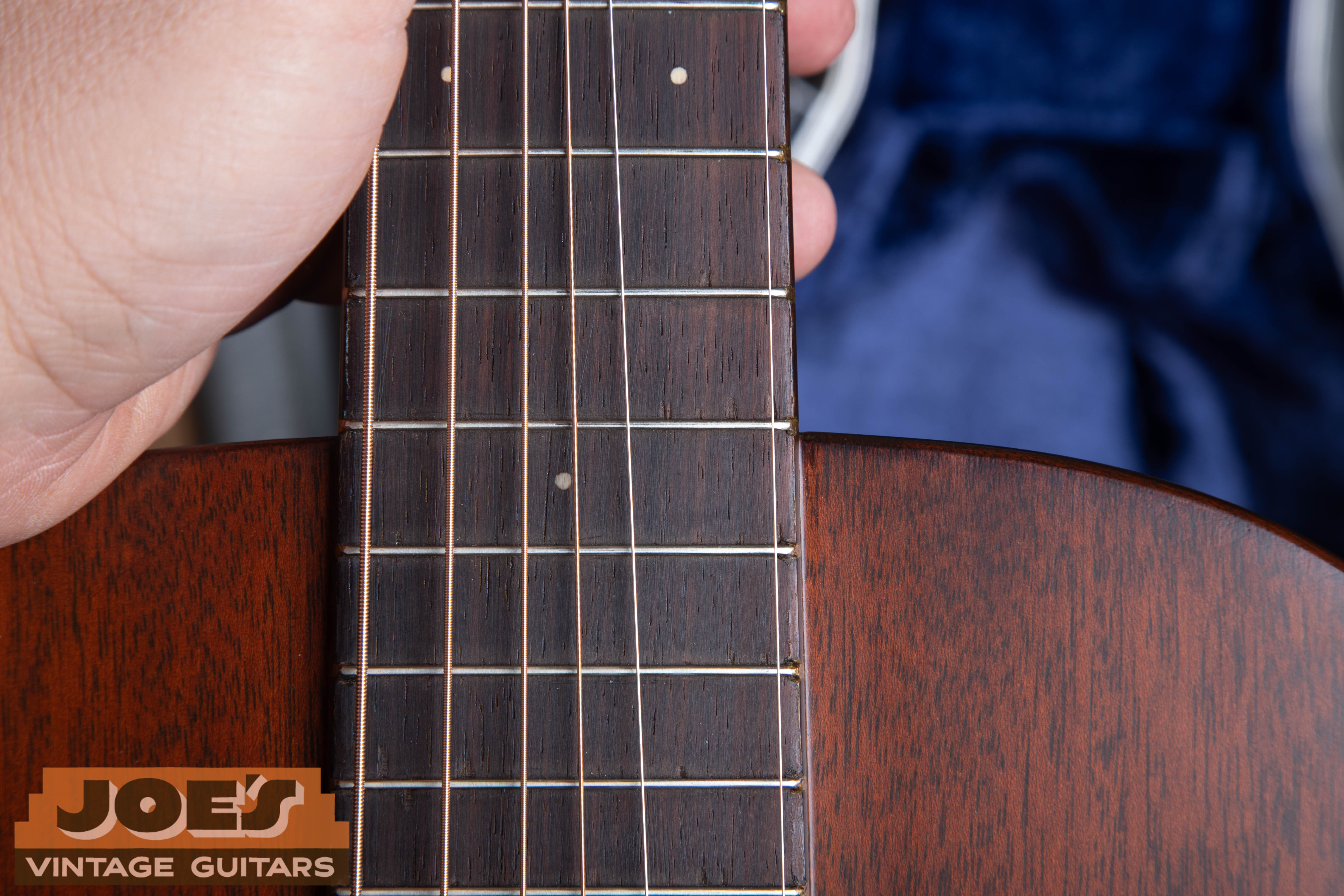
Round fingerboard dots are clearly visible on this 1937 0-17. Compare these plain appointments with the pearl body border on the 1976 000-45 below.
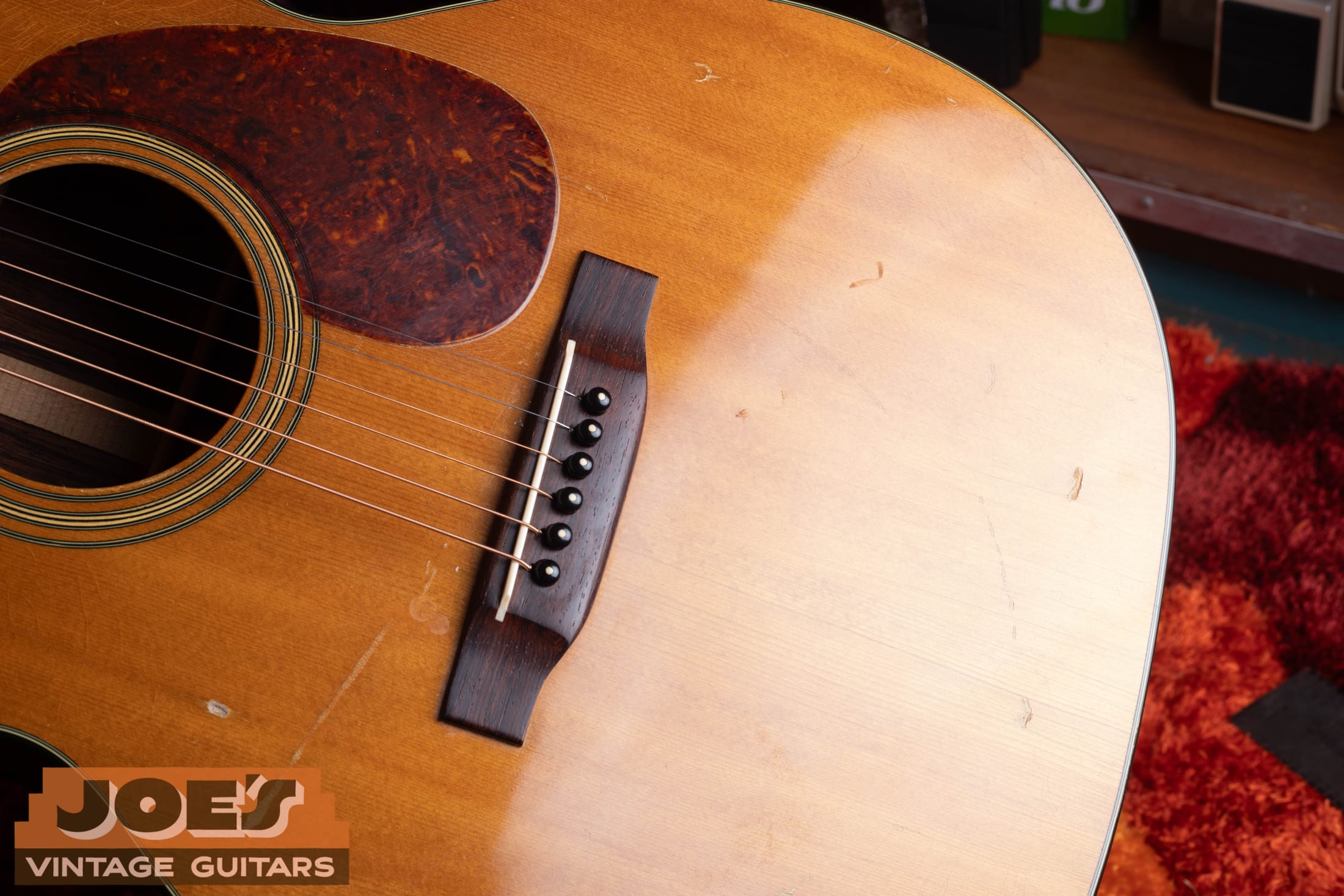
This 000-21 pairs rosewood construction with restrained decoration. Read the neck-block stamp above before using trim alone to identify a style.
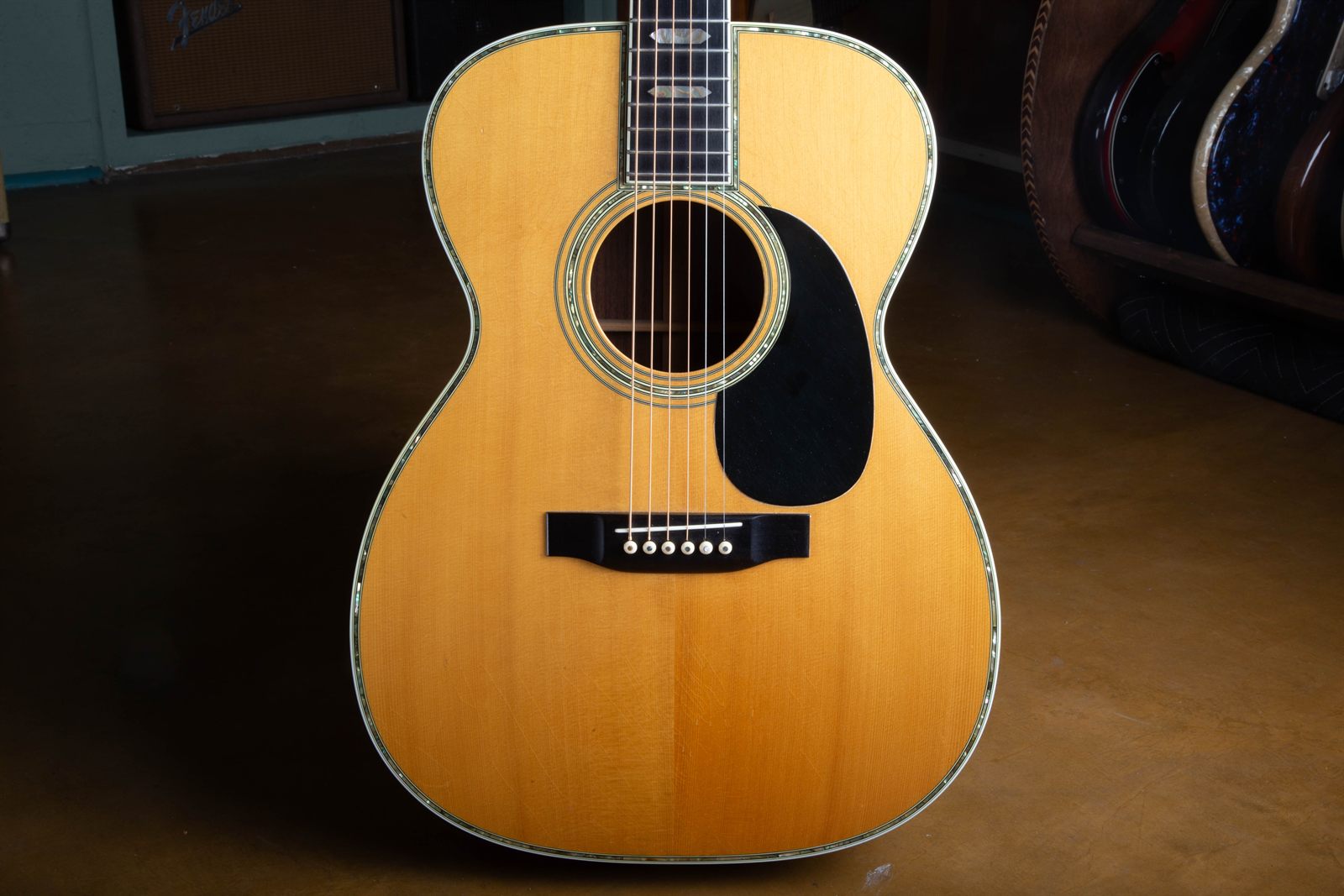
Model Suffixes, CUSTOM Stamps And Reissues
Keep the complete designation, including letters after the style number. E often indicates electronics, but a vintage D-18E and a later acoustic-electric Martin need different specifications. HD-28 adds herringbone to the dreadnought designation.
A CUSTOM stamp needs the build sheet or factory records. X, LX, Junior, artist editions and other modern names do not all follow the vintage body-and-style system. A year printed in a recreation’s model name describes its historical target, not necessarily the year the guitar was built.
Dealer Names And Historical Model Codes
A dealer designation may use a different naming system. Early Ditson guitars, for example, used one, two or three digits for three body sizes and 1, 2 or 3 for trim. A Ditson 111 cannot be decoded as a conventional Martin body number followed by Style 11.
The spruce-top 0-17S was made for Montgomery Ward. That S describes a historical special order; it does not justify applying one modern suffix meaning to all older guitars. Photograph the complete stamp, label and body before trying to shorten the name.
For an unstamped guitar, write down an identification separately from the evidence: “possible 0-21” is a working description, while a measured body width and photographed trim are observations. Factory records or a matching documented example can resolve the remaining question.
Frequently Asked Questions
What Model Is My Martin Guitar From Its Serial Number?
The regular serial sequence identifies a production year, not a model. Read the separate model designation on the neck block. If it is absent or says CUSTOM, use measurements, photographs and factory records.
What Does 000-18 Mean?
000 identifies the Auditorium body-size family and 18 identifies the style. It is not a 1918 date code. The separate serial number supplies the year.
Are The Characters In 0, 00 And 000 Zeros Or Letters?
They are zeros. OM is a separate letter designation for Orchestra Model. Copy the stamp carefully when looking up specifications.
Does A Higher Martin Style Number Mean An Older Guitar?
No. Style numbers describe appointments and model families. A higher number does not give the year, condition or value.
Can I Use One Specification For Every Year Of A Martin Model?
No. Woods, trim, neck dimensions and construction changed while some model names stayed in use. Match the full model name to the serial-number year before comparing specifications.
Related Martin Dating Guides
Use the guides below to compare your Martin’s serial number, model stamp, logo, tuners and construction.
- Martin Headstock Logo Evolution And Dating Guide
- Martin Tuner Dating Guide: Grover, Kluson And Waverly
- Martin Neck-Block Stamps: Models, Serials And Maker’s Marks
- Martin Guitar Construction Features And Dating
- Prewar Martin Guitar Guide: Bracing And Identification
If a stamp, logo or part doesn’t fit the guitar, use the Martin counterfeit identification guide to check the whole instrument.

Talk With
Joe Today
Have a vintage guitar to sell or a question? I’m here to help.