
Martin Identification / Tuner Evolution
Martin Tuner Dating Guide: Grover, Kluson And Waverly
Compare the plate shape, gears, screws and buttons on the back of the headstock, then check the bushings around the string posts on the front. Martin used overlapping tuner designs, and owners often replaced them. A tuner match needs to agree with the guitar’s model and serial.
Look Up Your Serial NumberMartin Tuner Timeline
Martin used several tuner designs at the same time. Match the period and model in the table, then check the mounting holes for evidence of replacements.
| Period | Hardware Family | Detail To Check |
|---|---|---|
| 1800s And Later | Side-mounted strip tuners | Engraving, gear position and shared plates; shown on an 1860s 2½-17. |
| Early 1930s | Grover planetary gears on early OMs | Banjo-style mechanism; check the specific model and year. |
| 1930s | Clipped-end Grovers | Plate bevels, gear details and button seams; the pictured 1937 set has replacement buttons. |
| 1936 To 1941 | Pointed-end Grover G-93 / G-98 | Earlier and later versions differ; compare the photographed 1938 000-18. |
| 1939 To 1942 | Enclosed Grover G-111 on D-28 | Enclosed gears predate Rotomatics. |
| Wartime 1940s | Waverly and Kluson open gears | The 1945 000-21 shows Kluson flat plates and plastic buttons. |
| Postwar 1940s | Kluson Deluxe covered gears | The 1947 D-28 shows rectangular covers with vertical lettering. |
| About 1950 To 1957 | Kluson wafflebacks on D-28 | Raised grid pattern on enclosed housings; other models followed different schedules. |
| Early 1950s | Wide open-gear baseplates | The 1952 00-18 shows octagonal plates with angled corners and raised edges. |
| 1950s | Round-end Waverly open gears | 1955 examples show both metal and plastic buttons. |
| 1950s And 1960s | Postwar Grover pointed-end Sta-Tites | Compare the 1966 0-18 with the prewar pointed-end set. |
| Late 1957 Onward | Grover Rotomatic | Common on 1960s D-28 and D-35; the 1965 D-28 shown here retains its original set. |
| Later Slotted-Headstock Models | Classical and 12-string strip tuners | Compare large aluminum posts on the 1955 00-18G and twelve machines on the 1969 12-string. |
| Later Production | Open and enclosed designs coexist | Check model specifications and replacement footprints. |
Early Guitars And Later 12-Fret Models
Slotted Headstocks And Side-Mounted Strip Tuners
Strip tuners put several machines on one long plate. On a slotted headstock, the string posts cross the slots and the gears sit along the sides. A side photo shows the plate, worm shafts and mounting screws much better than a front view.
The engraved strip on the 1860s 2½-17 shows this arrangement clearly. The 1947 00-21 shows why a slotted headstock doesn’t establish a prewar date: the 00-21 remained a 12-fret model after many other Martins changed to 14 frets.
A shared plate can hold three machines, but that arrangement spans many generations. Early Martin sets include French Jerome machines and later German Seidel types. Early-1900s Dinsmore & Jager and Handel-supplied sets can have similar plate outlines, with decoration and buttons varying by model.
Waverly WG-31 sets appear from about 1925, and related designs continued on later 12-fret guitars. Look at which side of the cog the button shaft sits on, the shape of the shaft support, plate engraving and mounting-screw positions. These details help separate early sets from later versions, including those on 1960s New Yorkers.
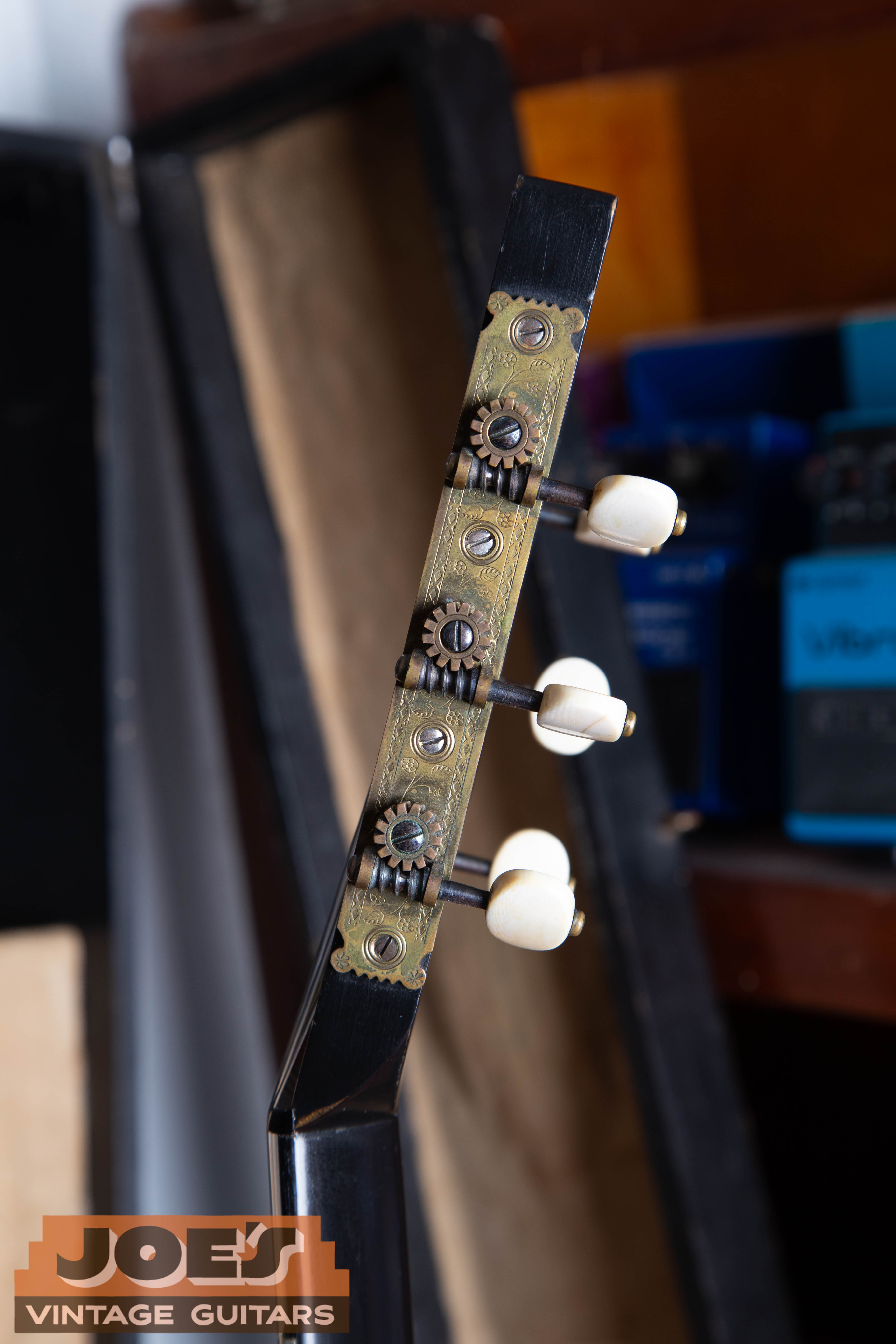
Three machines share one long, engraved plate. The large cogs sit above the worm shafts in this side view. Compare the supports and screw positions with later strip tuners.
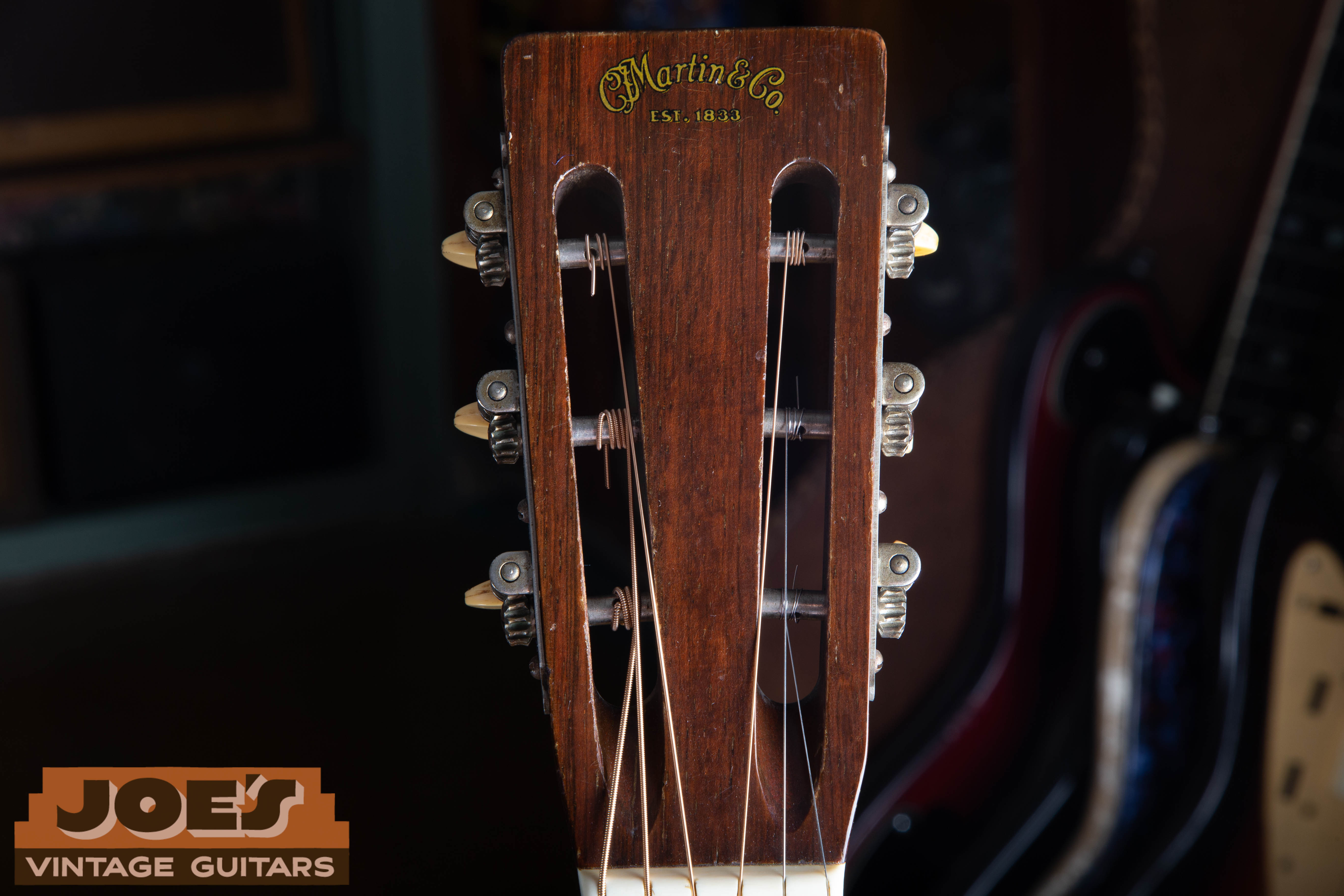
The 00-21 kept its 12-fret body joint when many other Martin models changed to 14 frets. This front view shows the posts crossing the slots and the buttons along the sides; the full strip plates are clearer from the side.
Postwar Slotted-Headstock Examples
Classical And 12-String Strip Tuners
The size and number of string posts help separate these two sets. The 1955 00-18G has Waverly classical tuners with large aluminum posts. Those broad posts are visible inside the slots, even though this angle does not show the complete side plates.
The 1969 12-string has six machines along each side of its slotted headstock, for twelve in all. Count the buttons and posts before comparing a strip set with a six-string guitar.
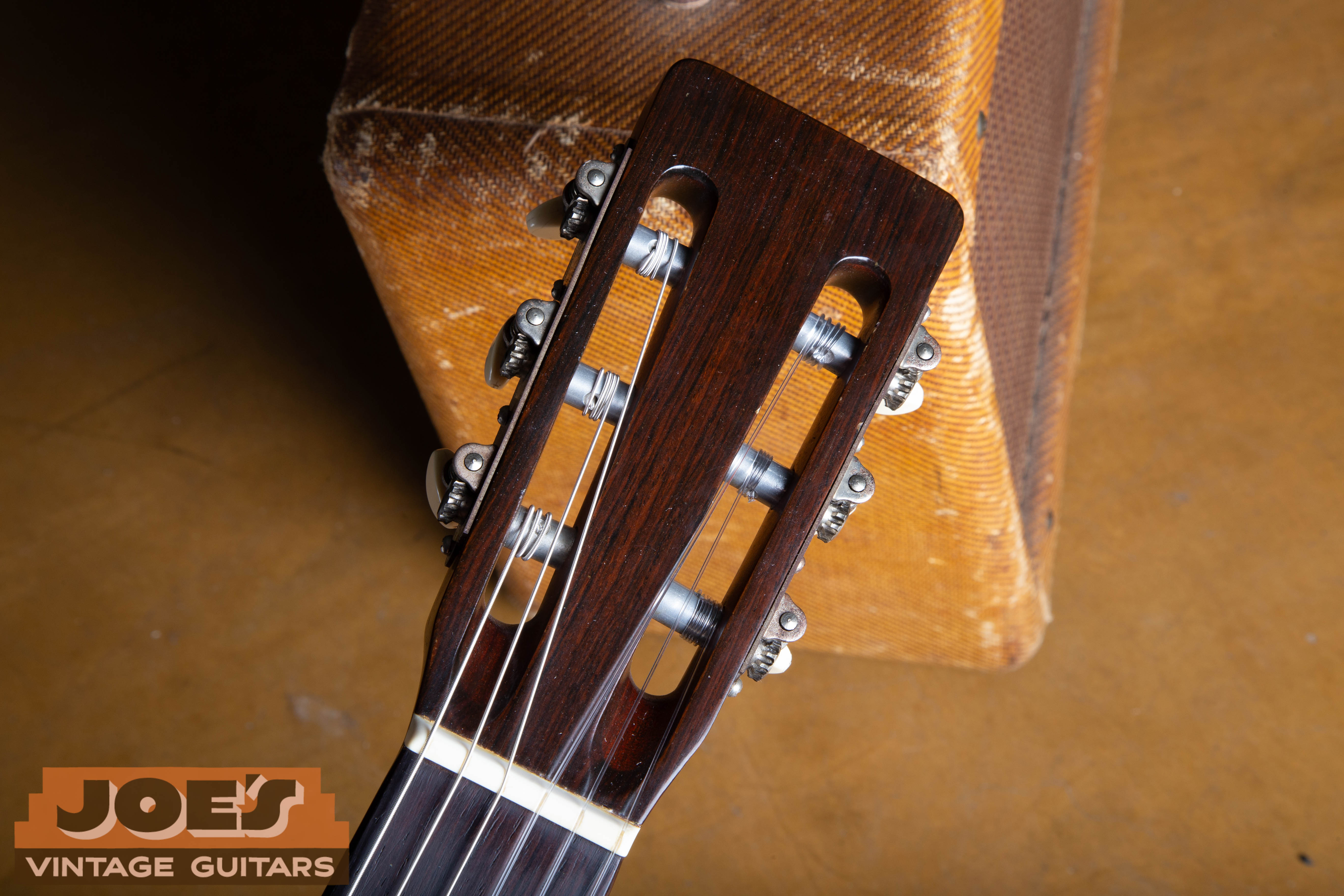
Waverly classical tuners on a 1955 00-18G. Notice the larger aluminum posts across the slots, a useful comparison with the slimmer steel-string posts on the 00-21.
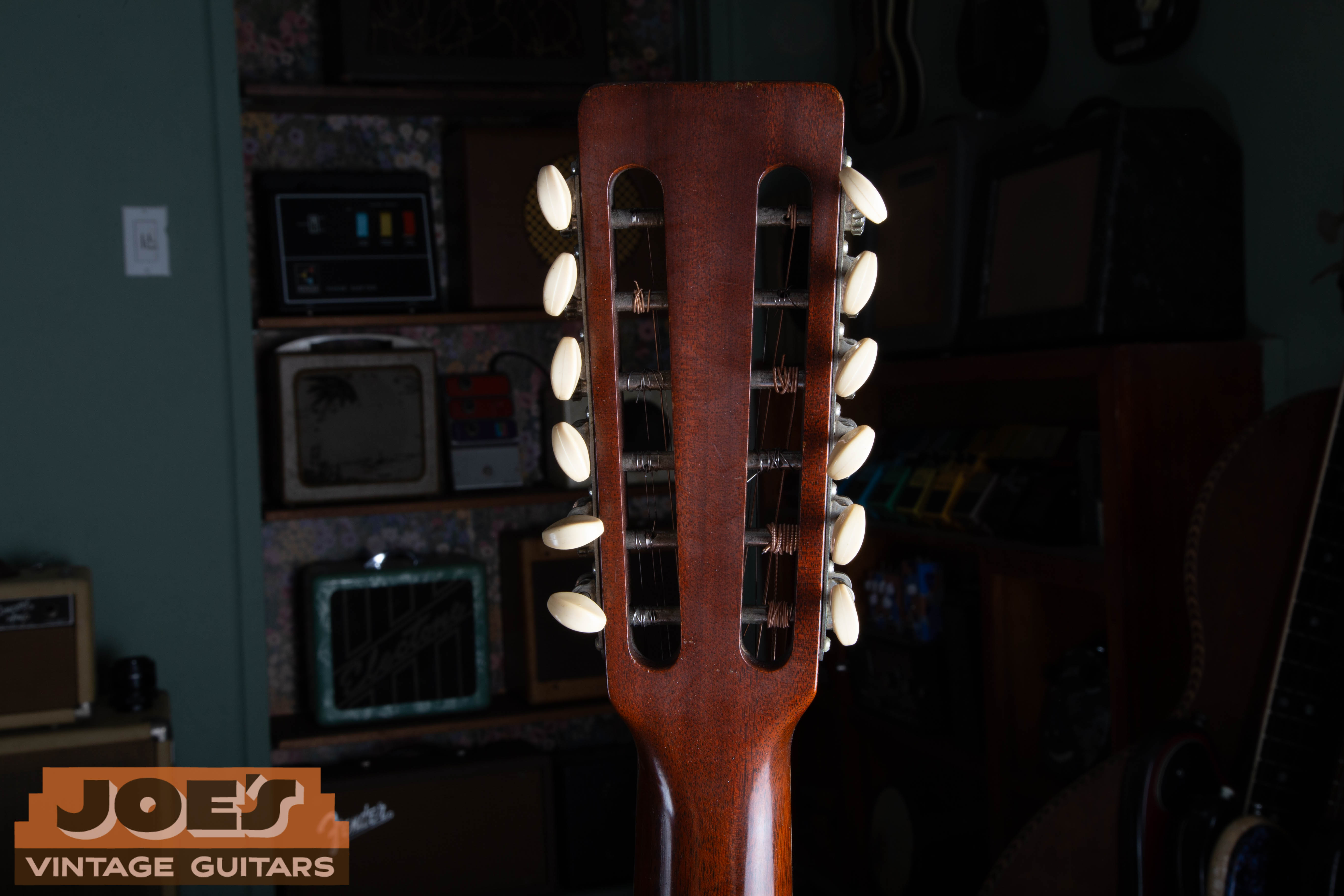
Six machines run along each side of this 1969 Martin 12-string headstock. The rear view shows all twelve buttons and the posts crossing the slots.
1930s Examples
Grover Clipped-End Tuners And Replaced Buttons
Grover, Waverly and Kluson all supplied open gears to Martin. Compare the ends of the baseplate, gear supports, button shape and screw spacing to identify a set. An exposed gear by itself won’t tell you the maker.
Clipped-end plates have short, flattened ends around the mounting screws. The two Grover sets below show that shape. The 1937 0-17 still has its original baseplates and gears, but its buttons have been replaced. A button change doesn’t mean the whole machine was changed.
Early OM guitars used banjo-style planetary tuners before guitar gears for solid headstocks became established. Read the exact model and serial before assigning a tuner design to every OM or every guitar from one year.
The plate bevel, button shape and gear screw help distinguish early clipped-end Grovers from similar unmarked sets. On pointed-end Grovers, prewar and postwar examples differ in button seams and the top of the cog. Photograph these small details squarely; the maker’s name and plate silhouette alone leave too much overlap.
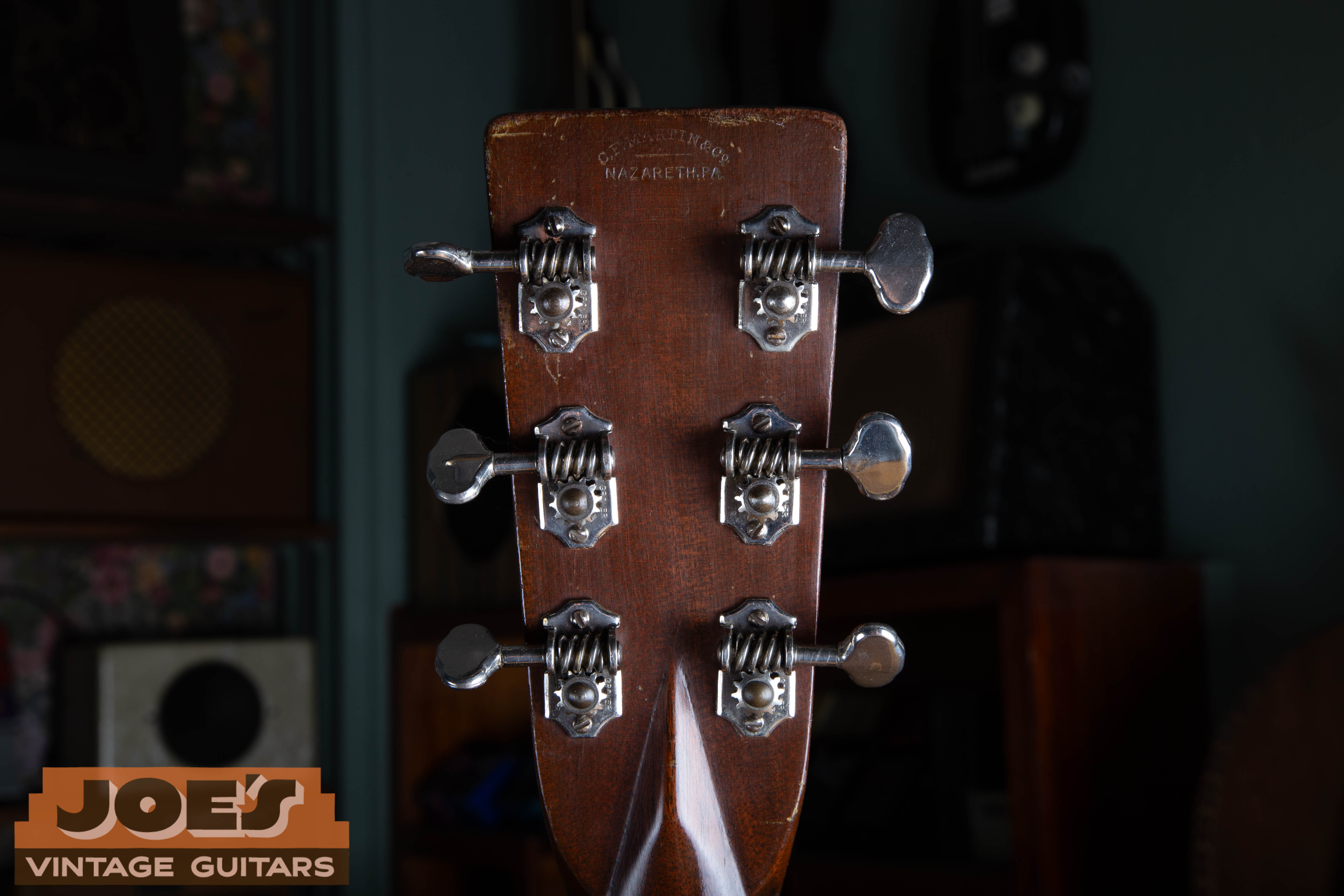
Grover clipped-end tuners on the 1934 OM-28. The plate ends flatten around the mounting screws, and the metal buttons have a scalloped outline. Compare the plates with the 1937 0-17 beside it.
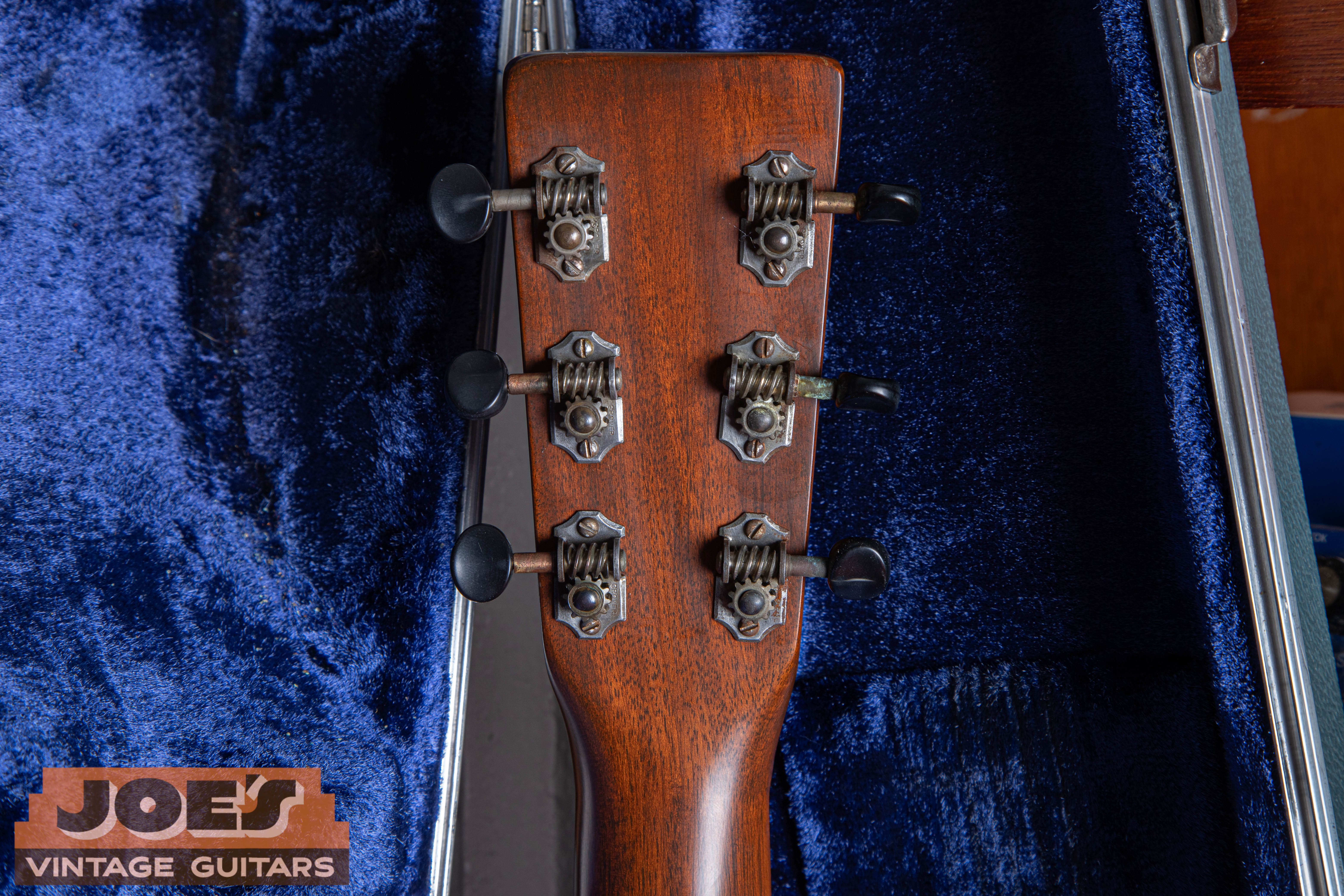
These are Grover clipped-end tuners. The baseplates and gears are original to the 1937 0-17; the tuner buttons have been replaced. Use the plates and gears when comparing the original hardware.
1938 And 1966 Examples
Prewar And Postwar Grover Pointed-End Tuners
The plate ends on these Grovers taper toward the mounting screws. That pointed outline appears on both the 1938 000-18 and the 1966 0-18, so plate shape alone can’t separate prewar from postwar production.
Compare the oval metal buttons on the 1938 set with the scalloped buttons on the 1966 Sta-Tites. Look closely at the gear’s top surface and center screw too. Those details help distinguish sets that look similar in a small photo.
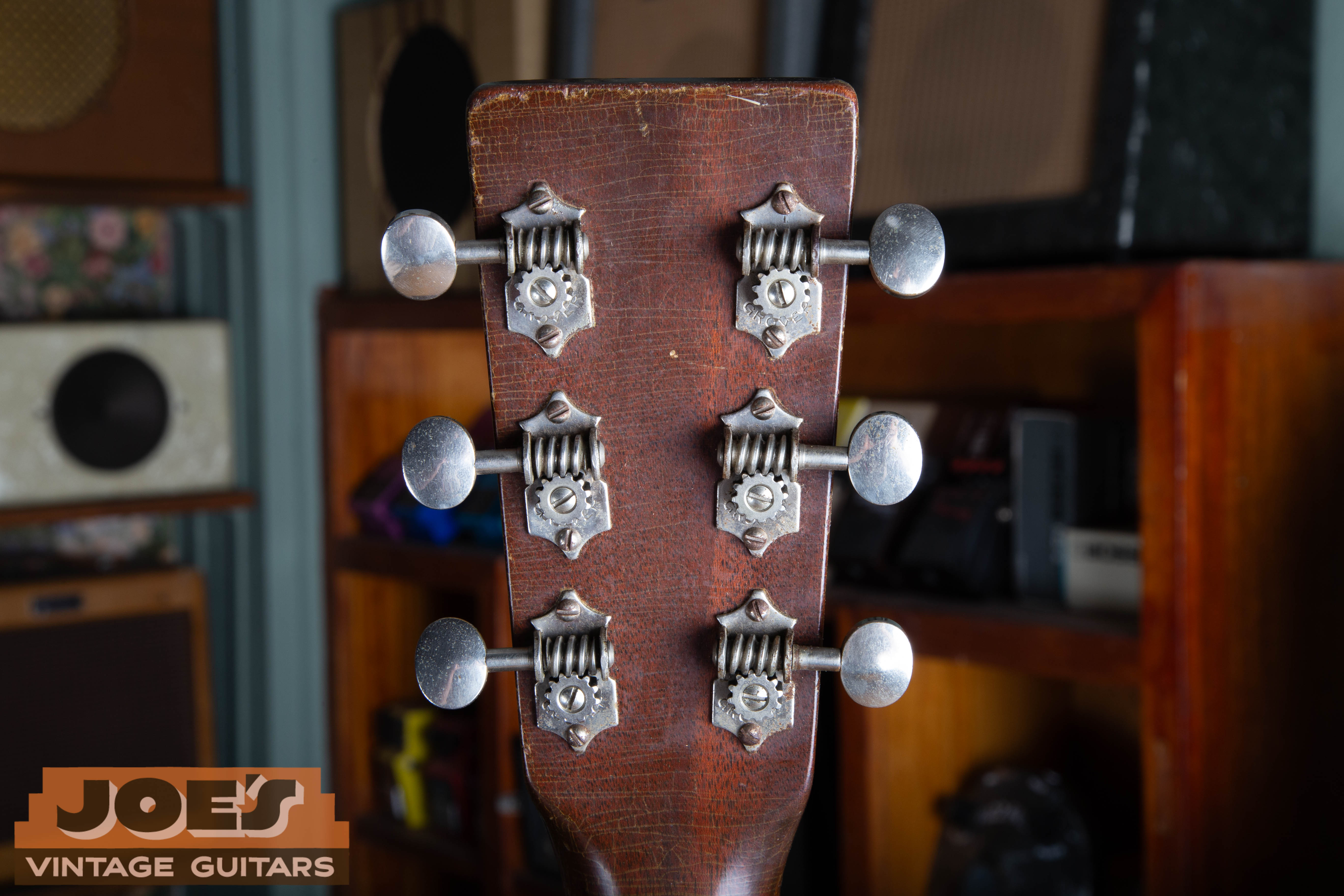
Grover open gears on a 1938 000-18. The pointed plate ends, exposed cogs and oval metal buttons are visible across the complete set.
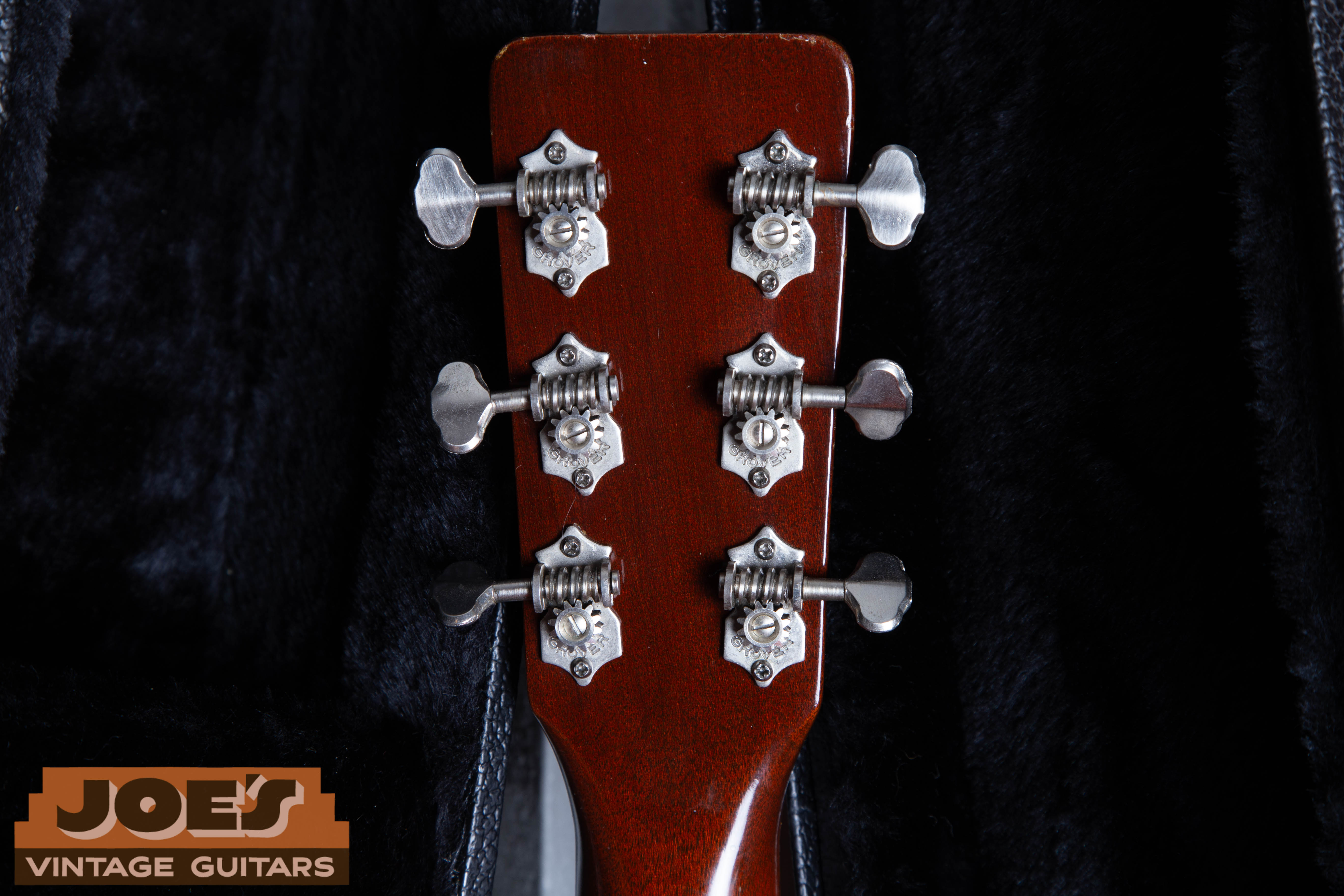
Grover pointed-end Sta-Tites on a 1966 0-18. Compare the scalloped buttons and recessed gear screws with the earlier 000-18 set.
1945 And 1952 Examples
Wartime Kluson Flat Plates And Postwar Octagonal Plates
The 1945 000-21 has Kluson flat-plate tuners with exposed gears and plastic buttons. The 1952 00-18 has broader octagonal baseplates with angled corners and raised edges. Follow the complete plate outline around each gear to see the difference.
Some wartime Martins lack metal bushings around the string posts, but these rear photos cannot establish whether bushings are present. Check a front view as well. Wartime hardware varied, and plastic buttons also appear on postwar guitars, including the 1955 0-15 below.
Kluson sets from 1943 and early 1944 can have unusually thin gears; later wartime versions have thicker, beveled gears. Some Style 17s used three machines on one strip. Record the gear thickness and plate arrangement along with the buttons.
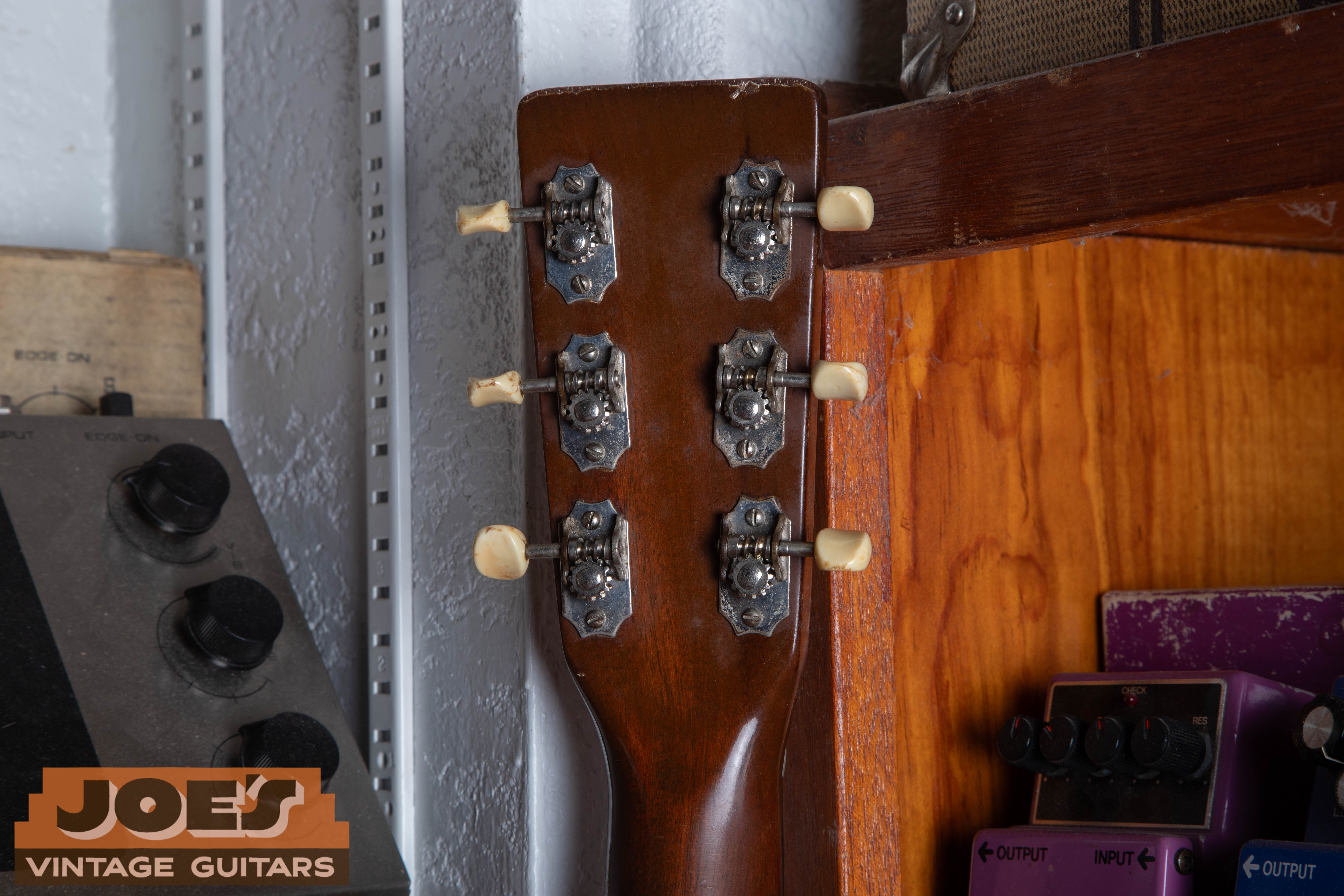
Kluson flat-plate tuners on a 1945 000-21. The exposed gears sit on individual flat plates, with cream-colored plastic buttons. A front photo is needed to check the post bushings.
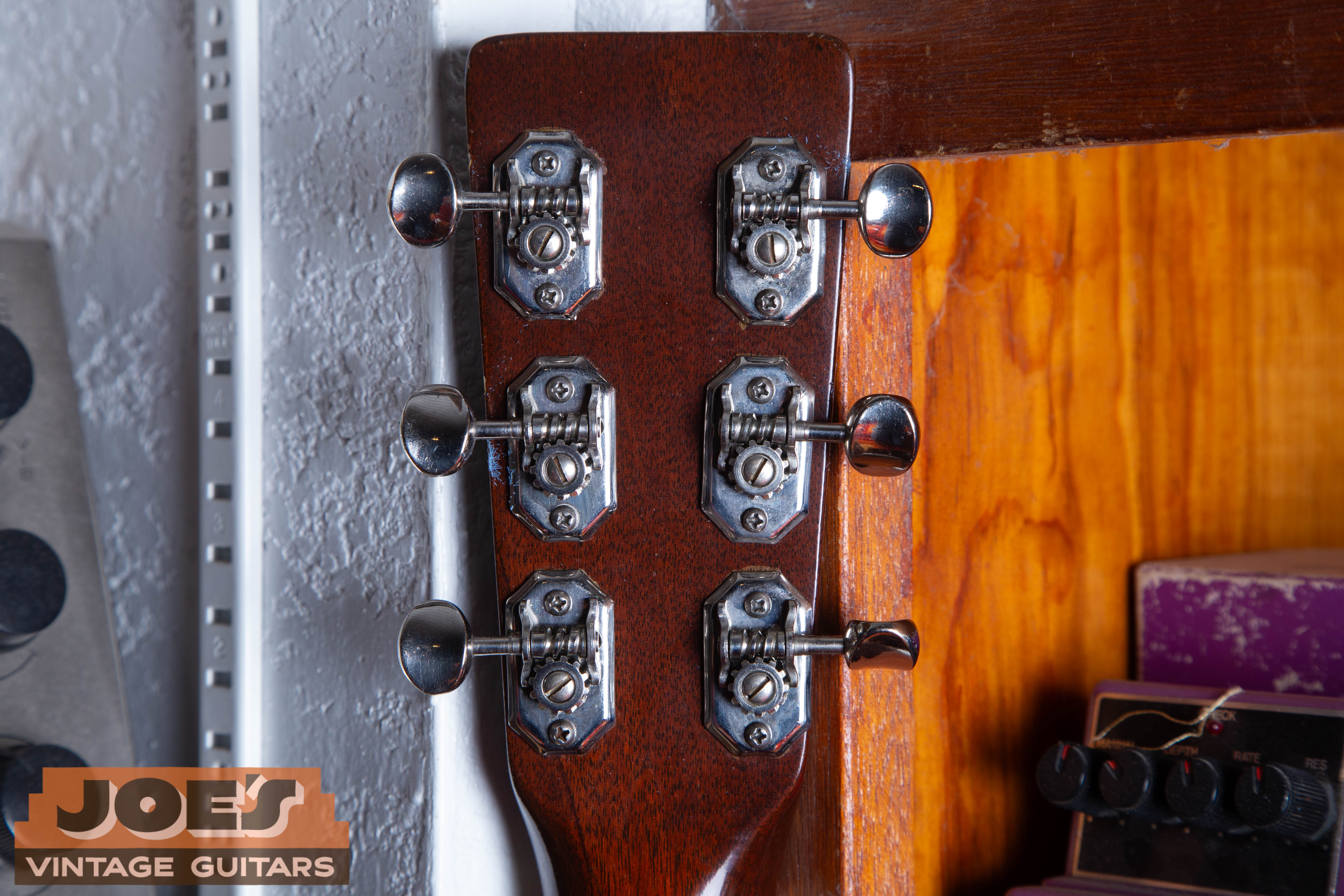
Octagonal baseplate tuners on a 1952 00-18. Look at the flat ends, angled corners and raised plate edges around the exposed gears. These are open gears, with no enclosing housing.
Two 1955 Martins
Waverly Round-End Tuners With Metal And Plastic Buttons
The rounded tabs around both mounting screws distinguish these Waverly plates from the clipped-end Grovers and broad octagonal plates. Both sets have exposed gears, but the buttons differ.
The 1955 000-18 has metal buttons; the 1955 0-15 has plastic buttons. These same-year examples show why button material needs to be checked with the plate design and model. Plastic does not automatically mean wartime.
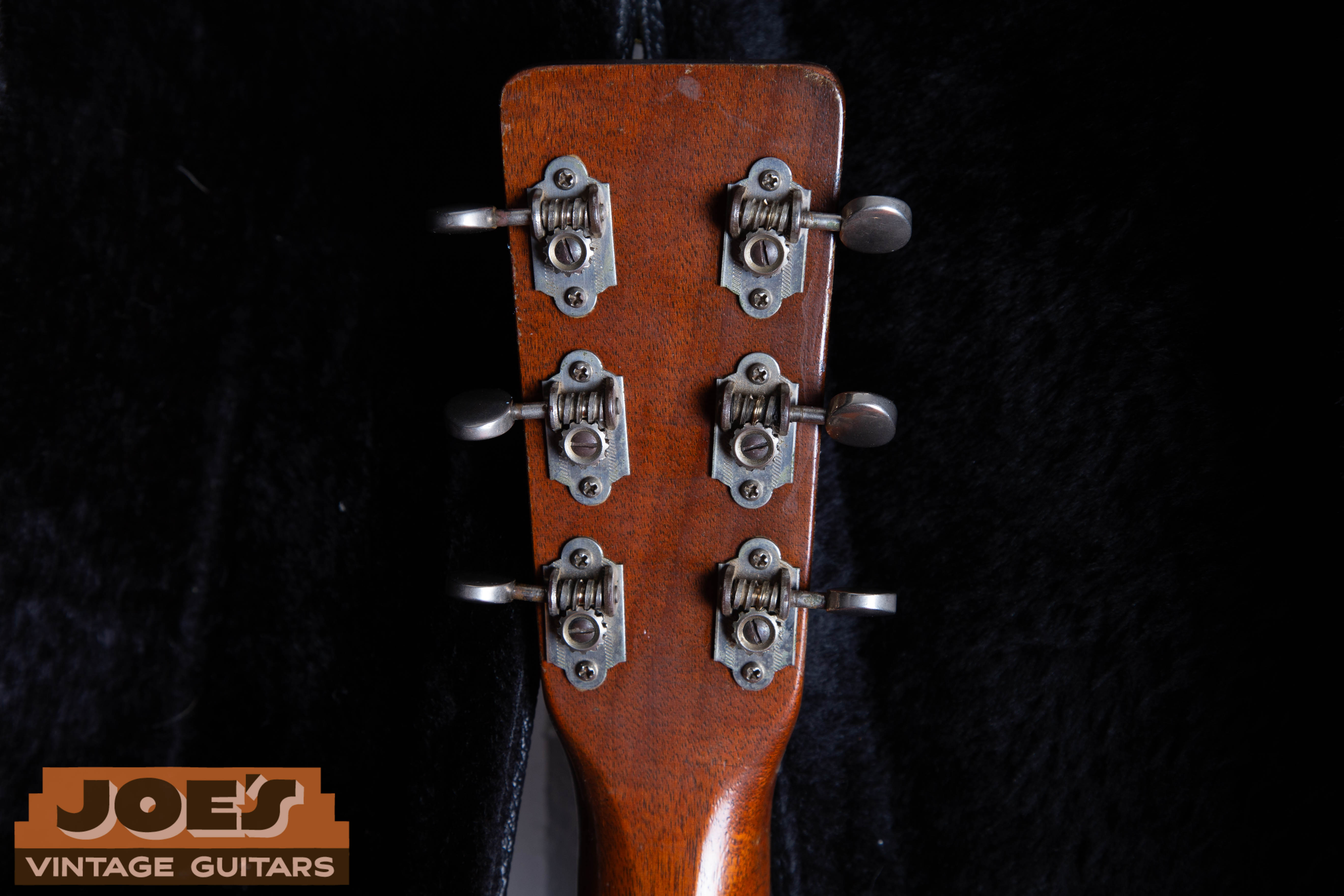
Postwar Waverly round-end tuners on a 1955 000-18. The narrow plates end in rounded mounting tabs, and this set has oval metal buttons.

Waverly round-end tuners with plastic buttons on a 1955 0-15. Compare the similar mounting tabs and different buttons with the 000-18 from the same year.
Postwar D-28 Examples
Kluson Deluxe And Waffleback Housings
The 1947 D-28 has Kluson Deluxe covers with the name stamped along the housings. Compare those rectangular covers with the raised grid pattern of the Kluson wafflebacks. Both enclose the gears, but they are different tuner designs.
Kluson wafflebacks are associated with Martin D-28s from about 1950 to 1957, before the late-1957 change to Grover Rotomatics. Don’t apply the D-28 sequence to every 0, 00 or 000 model.
Enclosed doesn’t automatically mean postwar: Martin used Grover G-111 sets on D-28s from 1939 to 1942. Identify the housing before assigning a Rotomatic date to it.
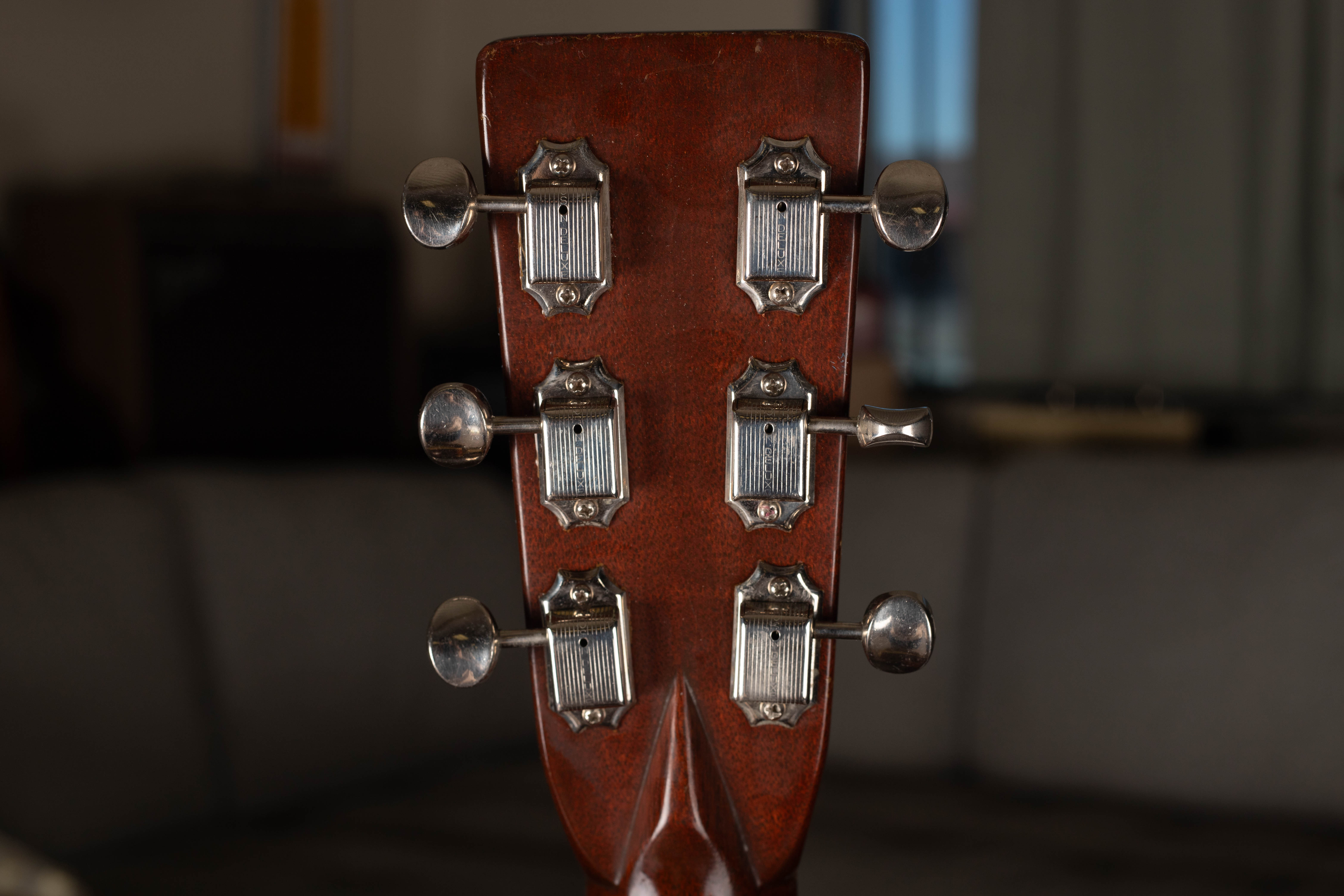
Kluson Deluxe tuners on a 1947 D-28. The vertical KLUSON DELUXE lettering, oil holes and rectangular covers distinguish this set from the waffleback housings beside it.
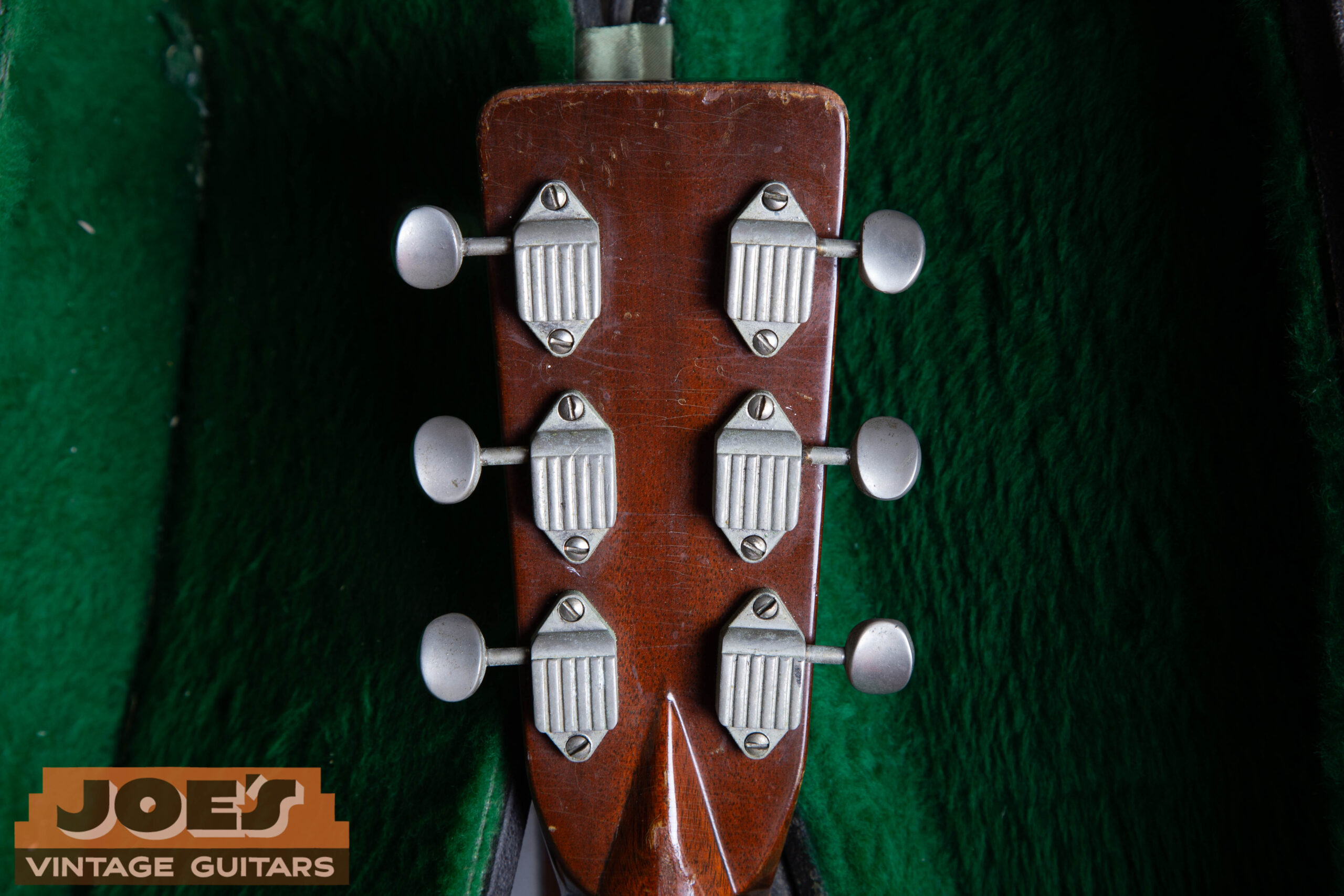
Kluson waffleback tuners, used on Martin D-28s from about 1950 to 1957. The raised grid covers the gears. This is a hardware close-up; the individual guitar’s year is not established by the photo.
1965 D-28 And 1976 000-45
Grover Rotomatics On Later Martins
Grover Rotomatics have rounded enclosed housings and kidney-shaped buttons. The 1965 D-28 below retains its original Grovers. The housings, lower mounting tabs and patent-pending markings are visible in the rear view.
The 1976 000-45 shows gold Grovers on a later pearl-trimmed model. Plating color alone won’t date the tuners. Compare the housing and mounting pattern with the model’s specifications and serial year.
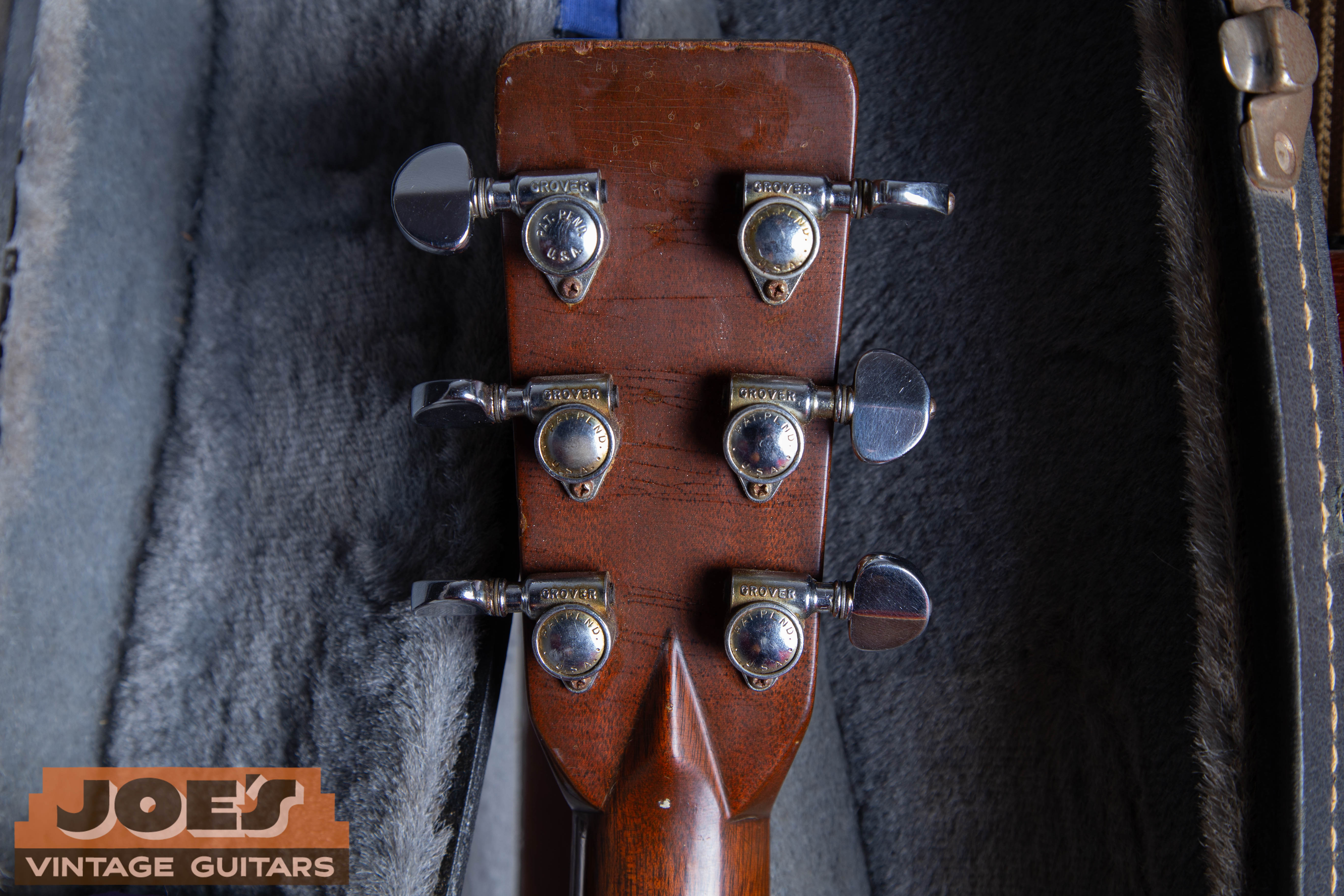
Original Grover Rotomatics on a 1965 D-28. The rounded housings carry patent-pending markings, and each machine has a lower mounting tab and a metal kidney-shaped button.
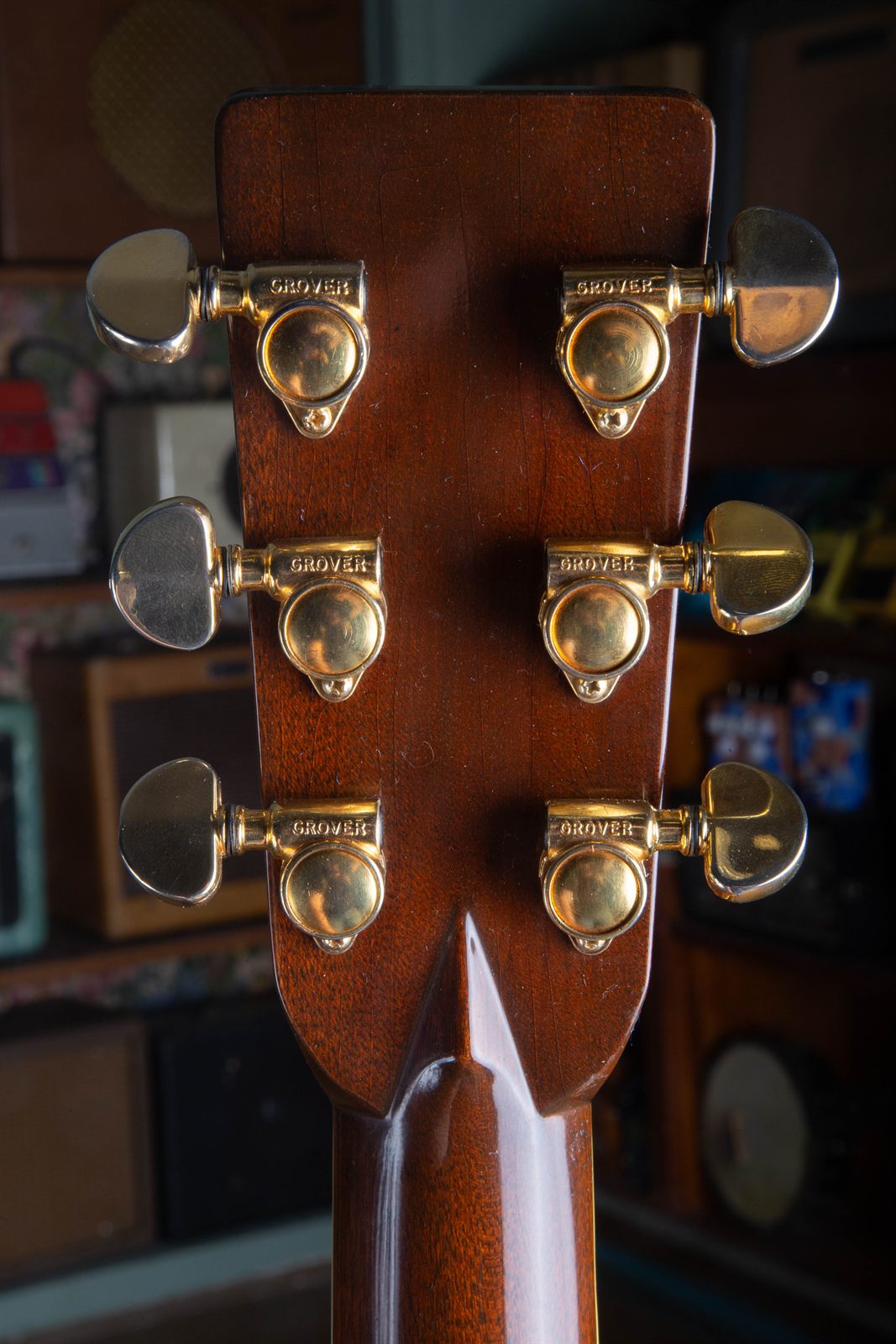
Gold-plated Grovers on the 1976 000-45. Compare the housings and mounting screws with the D-28 set.
How To Compare A Complete Tuner Set
Photograph the complete set, then take one sharp close-up and a matching front view. Include a side view for strip tuners. That gives you the layout, mechanical details and post hardware without removing anything.
- Plate: trace the ends, side notches and screw locations. Include any unused holes beside it.
- Gear: show the top edge, center screw or rivet, and the worm shaft that turns it.
- Button: show its outline and edge, where a seam may be visible.
- Front hardware: include the post, bushing and washer, plus the surrounding finish.
Frequently Asked Questions
Can I Date A Martin By Its Tuners Alone?
No. Martin used overlapping tuner families, and tuners are often replaced. Compare the serial, model, screw holes, plate shape and bushings together.
Do Plastic Tuner Buttons Mean A Martin Is From World War II?
No. Wartime Martins can have plastic buttons, but so can later guitars. The 1955 0-15 shown here has Waverly round-end tuners with plastic buttons. Check the complete tuner design and serial number.
Which Martins Used Kluson Waffleback Tuners?
Martin D-28s used Kluson wafflebacks from about 1950 to 1957, before the change to Grover Rotomatics. Other models followed different tuner schedules.
Are Grover Rotomatics Original On Every Old Martin?
No. The 1965 D-28 shown here has its original Grovers, but other models used different hardware. Compare the housings and mounting holes with the guitar’s model and serial date.
How Can I Tell Whether Martin Tuners Were Replaced?
Look for unused screw holes, old plate outlines, mismatched wear and enlarged washers. Photograph both sides of the headstock. Some replacements reuse the original holes, so a clean fit does not prove originality.
Do Plastic Tuner Buttons Date A Martin To The War Years?
They can support a wartime date when the plates, bushings, model and serial agree. Buttons can also be replaced. Compare the complete set instead of dating a guitar from button material alone.
Are Open-Gear Tuners Always Older Than Enclosed Tuners?
No. Open and enclosed designs overlapped, and later Martins use open gears too. Identify the hardware family and check its mounting evidence against the guitar’s serial date.
Related Martin Dating Guides
Use the guides below to compare your Martin’s serial number, model stamp, logo, tuners and construction.
- Martin Headstock Logo Evolution And Dating Guide
- Martin Neck-Block Stamps: Models, Serials And Maker’s Marks
- Martin Guitar Construction Features And Dating
- Prewar Martin Guitar Guide: Bracing And Identification
- Martin Guitar Model Numbers: Body Sizes And Styles
If a stamp, logo or part doesn’t fit the guitar, use the Martin counterfeit identification guide to check the whole instrument.

Talk With
Joe Today
Have a vintage guitar to sell or a question? I’m here to help.