
Martin Identification / Neck-Block Stamps
Martin Neck-Block Stamps: Models, Serials And Maker’s Marks
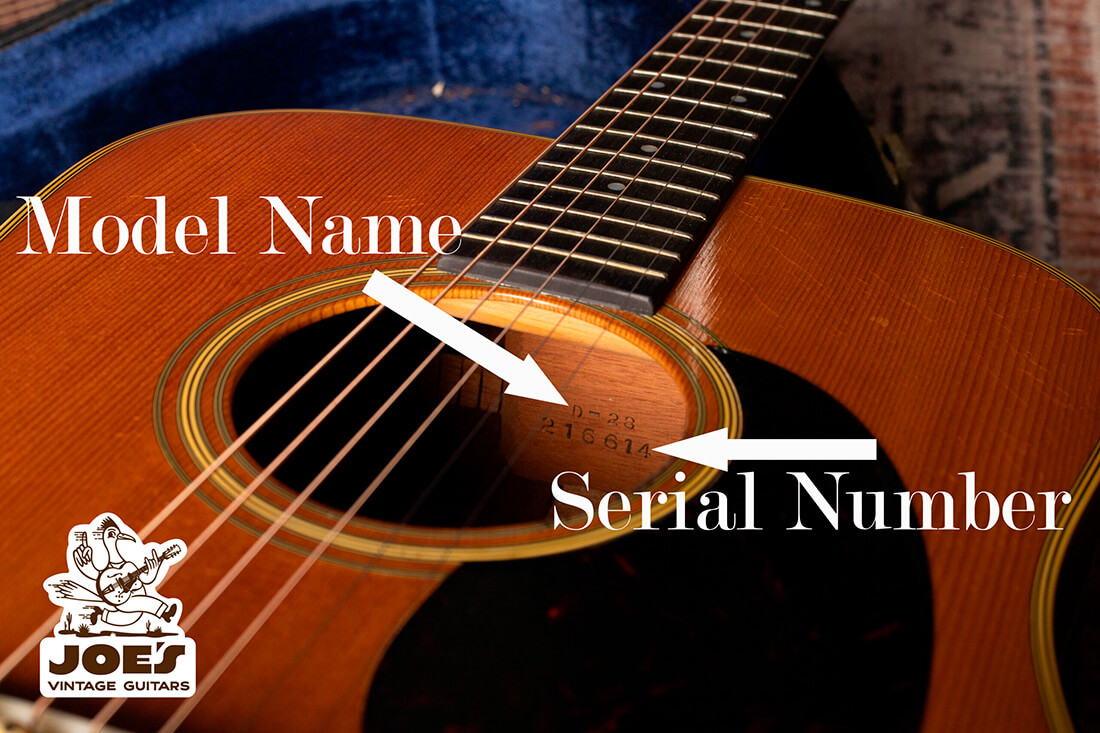
Look through the soundhole toward the neck joint. The serial is stamped on the thick wooden neck block, usually below the model name. Earlier guitars may have the serial alone.
Look Up Your Serial NumberWhere To Find The Neck-Block Stamp
Rest the guitar securely and aim a light through the soundhole toward the neck. Take a photo of the whole block, then a close-up with the light at an angle so you can read the stamped lines.
Copy the serial’s digits exactly. If a string hides one, move the camera slightly. Don’t scrape, wet or darken the stamp, and keep the model name separate from the number you enter in the lookup.
Maker’s Marks Before Routine Model Stamping
Early Maker’s Stamps And Serial Numbers
An early neck block may carry C. F. Martin & Co. and Nazareth, PA above its serial. That wording identifies the maker; it is not the guitar’s model number.
Read the serial separately from the maker’s mark. For example, serial 11825 falls in the 1914 range of 11822 to 12047. The number identifies the year; the body size and appointments help identify a model that has no model stamp.
Before The Model Stamp Became Routine In 1930
Serial-Only Neck Blocks
Martin’s regular guitar serial sequence starts in 1898. An earlier guitar needs to be dated from its maker’s stamps, construction and ownership history.
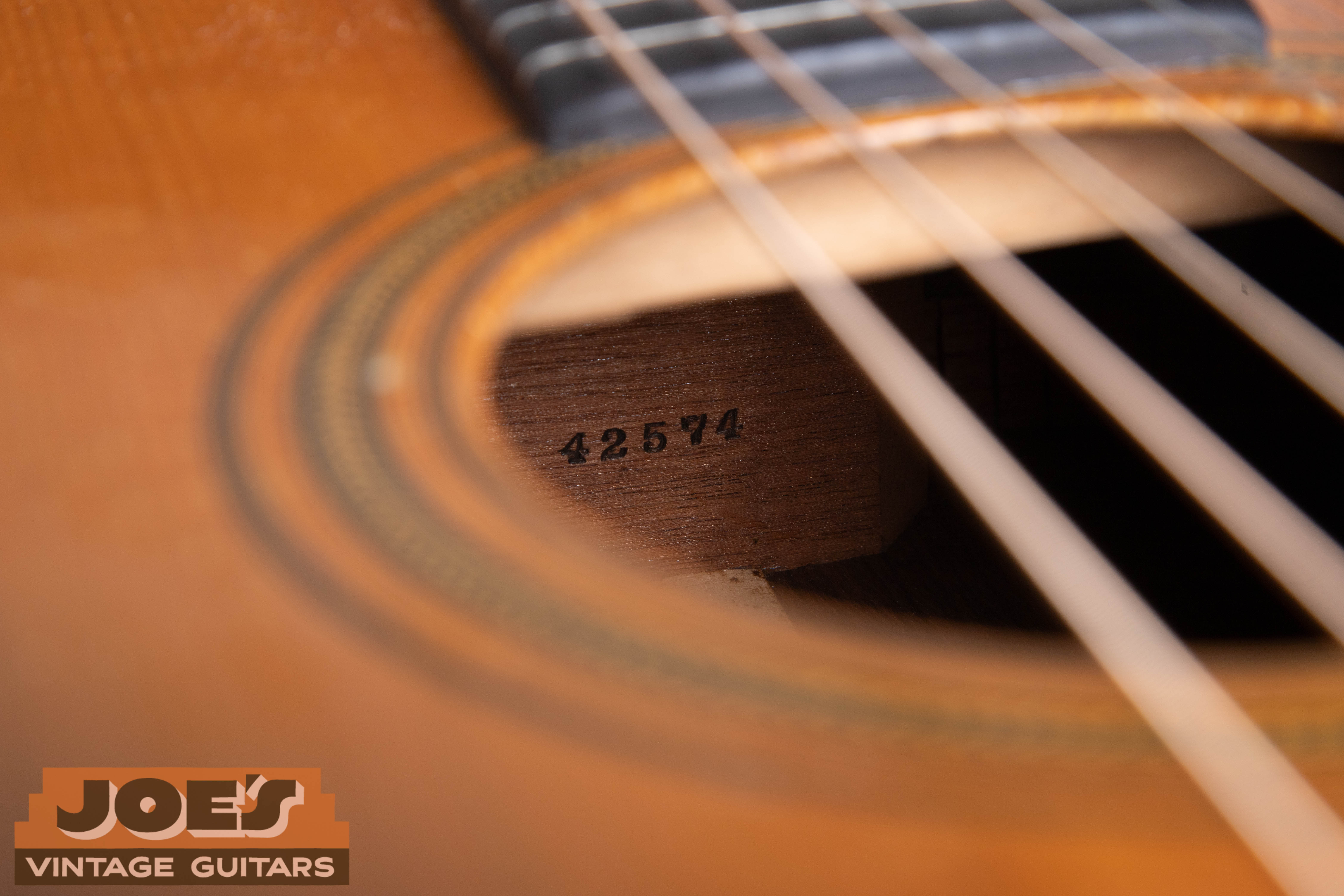
Serial-only neck blocks appear by the late 1910s. Martin began routinely adding the model around October 1930, so an earlier guitar can have a serial with no model above it. The 1930 0-21 below is an example.
From About October 1930
Model And Serial On Separate Lines
On many later vintage Martins, the model sits above the serial. In 000-18, 000 identifies the body-size family and 18 the style. D-28 uses D for dreadnought and 28 for the style; those model digits aren’t a year code.
Hand-applied stamps can vary in spacing and depth. Wood grain and the angle of the stamp affect the impression, so one uneven character doesn’t prove that the marking was altered.
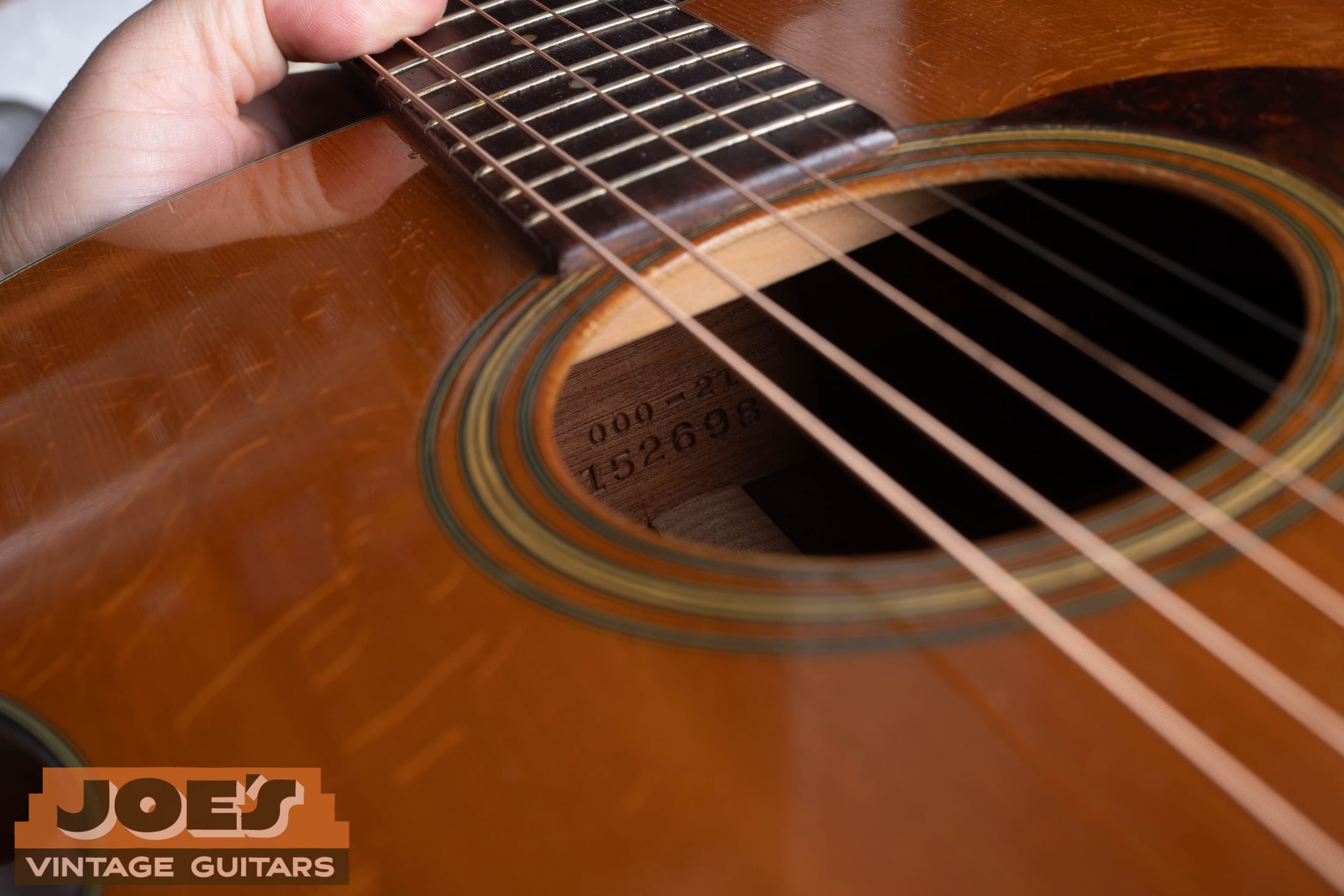
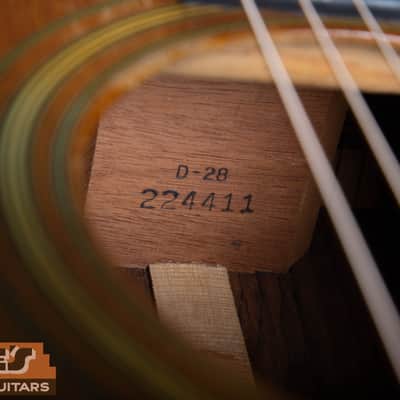
The recorded 1967 change to machine stamping lists 220467 as the last hand-stamped model and serial. The D-28 below, serial 224411, comes after that change. Compare its lettering with the earlier 000-21, but allow for differences in stamp pressure, wood grain and repairs. The typeface helps check the serial date; it isn’t a date code of its own.
Maker’s Stamps On The Body And Headstock
Earlier Martins can have maker’s stamps on the interior center strip, rear headstock and other locations. Photograph the wording and location of each mark along with the neck-block serial.
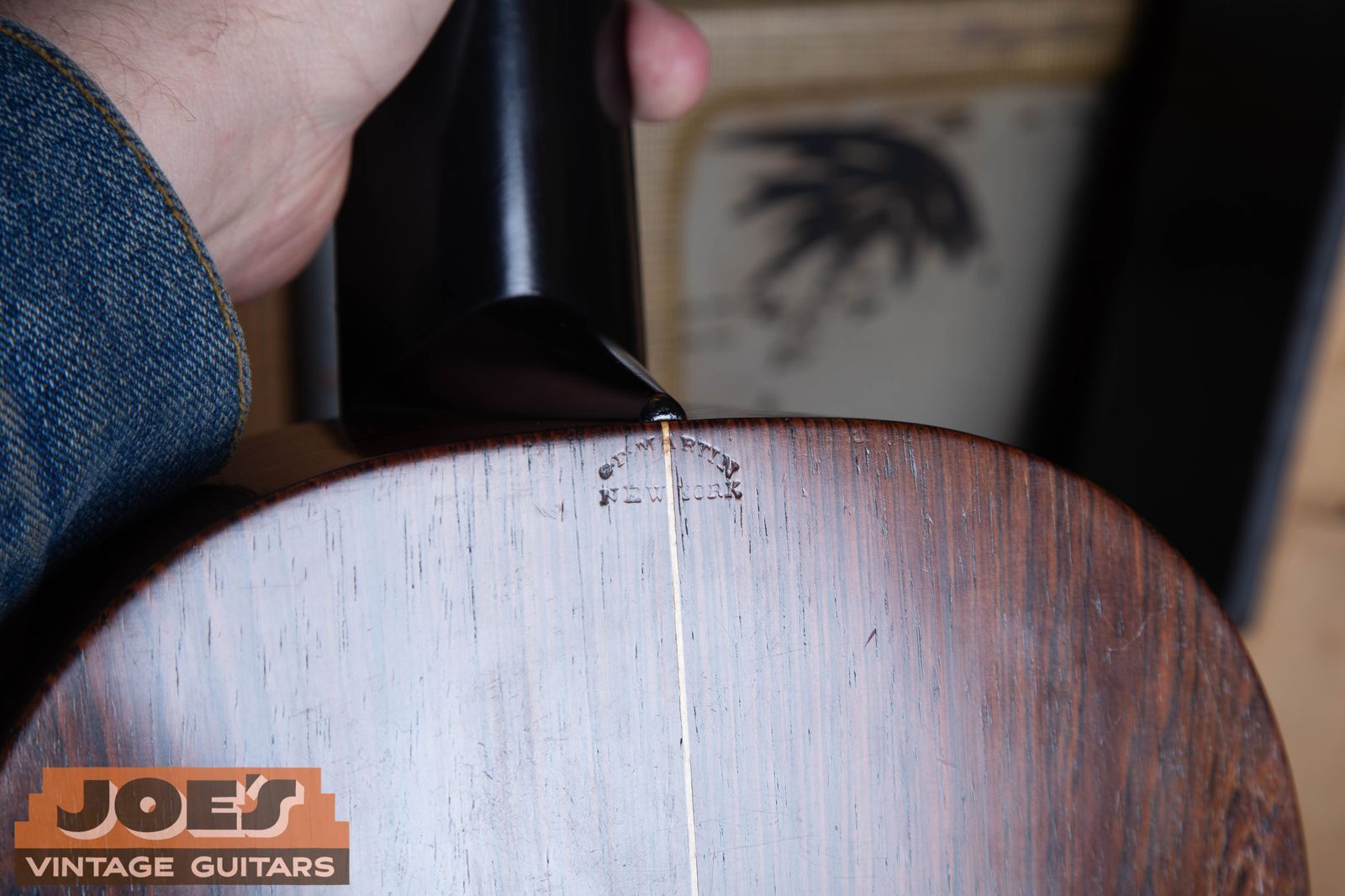
A New York stamp can refer to Martin’s distribution arrangement. It doesn’t necessarily mean the guitar was built before the company moved its workshop to Pennsylvania.
Interior stamps gained “& Co.” after incorporation in 1867 while rear headstock stamps kept the earlier wording. Nazareth generally replaced New York in 1898. Read the location as well as the name.
1960s And Later Examples
Where “Made In U.S.A.” Appears
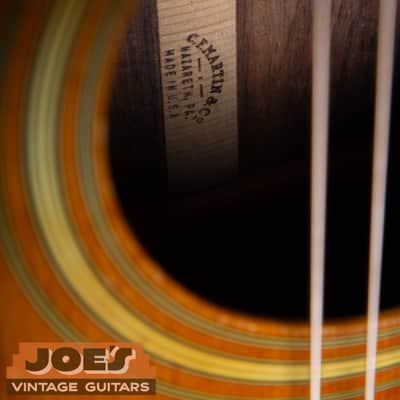
On this 1967 D-28, C. F. Martin & Co., Nazareth, PA and Made in U.S.A. appear on the interior backstrip. The model D-28 and serial 224411 are on the neck block at the other location shown in this guide.
The country mark isn’t part of the serial. Its wording and location can vary with model, export markings and production period, so this example doesn’t establish a factory-wide starting year.
Pencil Dates, Case Labels And Dealer Names
Pencil dates appear beneath many tops from the 1870s into the 1910s, and size/style labels can appear inside coffin-case lids. Photograph the whole inscription: a repair date can record later work, and a case may have been exchanged.
Record each mark separately: where it is, what it says and whether it is stamped, printed or handwritten. Include a wider interior photograph so someone reviewing the close-up can locate it. Keep uncertain digits in your notes instead of silently filling them in.
Unusual Fonts, Labels And Modern Construction
Compare an unfamiliar font, label or neck joint with another guitar from the same series and period. A traditional dovetail model and an entry-level modern Martin can have different markings.
If the stamp doesn’t match the guitar, photograph the body, both sides of the headstock, neck heel, bridge and inside labels. Replaced necks, repair work or altered markings may explain the mismatch. The lookup only matches numbers to a chart; it can’t verify who built the instrument.
Added finish can fill the lettering and soften the edges of an impressed mark. Stamp depth also varies naturally. Inspect the surrounding surface and repair history before treating a shallow letter as evidence of alteration.
Frequently Asked Questions
Why Does My Martin Have A Serial But No Model Stamp?
Routine model stamping began around October 1930. Earlier guitars may have a serial without a model designation. Identify the body size and style from the instrument itself.
Is Made In U.S.A. Part Of The Martin Serial Number?
No. It is a country marking. On the photographed 1967 D-28 it appears on the interior backstrip, while the model and serial are on the neck block.
Does D-28 Mean The Guitar Was Made In 1928?
No. D identifies the dreadnought body-size family and 28 identifies the style. Use the separate serial number to find the production year.
Can A Martin Serial Number Tell Me Which Model I Have?
The regular serial sequence gives a year, not a model code. Read the separate model stamp above it. If that stamp is missing, body measurements, trim and factory records may identify the model.
How Can I Tell If A Martin Serial Number Is Fake?
A valid number can be copied. Compare the stamp’s location and lettering with the full guitar, including its model, construction, logo and hardware. One uneven character is not enough to call it counterfeit.
What If My Martin Neck Block Says CUSTOM?
Photograph the full stamp and serial, and keep the original specification sheet if available. CUSTOM does not identify one standard body-and-style combination; the individual build records matter.
Related Martin Dating Guides
Use the guides below to compare your Martin’s serial number, model stamp, logo, tuners and construction.
- Martin Headstock Logo Evolution And Dating Guide
- Martin Tuner Dating Guide: Grover, Kluson And Waverly
- Martin Guitar Construction Features And Dating
- Prewar Martin Guitar Guide: Bracing And Identification
- Martin Guitar Model Numbers: Body Sizes And Styles
If a stamp, logo or part doesn’t fit the guitar, use the Martin counterfeit identification guide to check the whole instrument.

Talk With
Joe Today
Have a vintage guitar to sell or a question? I’m here to help.