
Martin Identification / Construction Features
Martin Guitar Construction Features And Dating
Match the model and neck-block serial to the guitar’s body joint, bridge, pickguard, woods and trim. These features help check the date, while repairs and later recreations can explain details from another period.
Look Up Your Serial Number12-Fret And 14-Fret Body Joints
Count up to the fret where the neck meets the body, excluding the frets over the top. A 12-fret Martin’s body outline differs from its 14-fret counterpart, and it often has a slotted headstock.
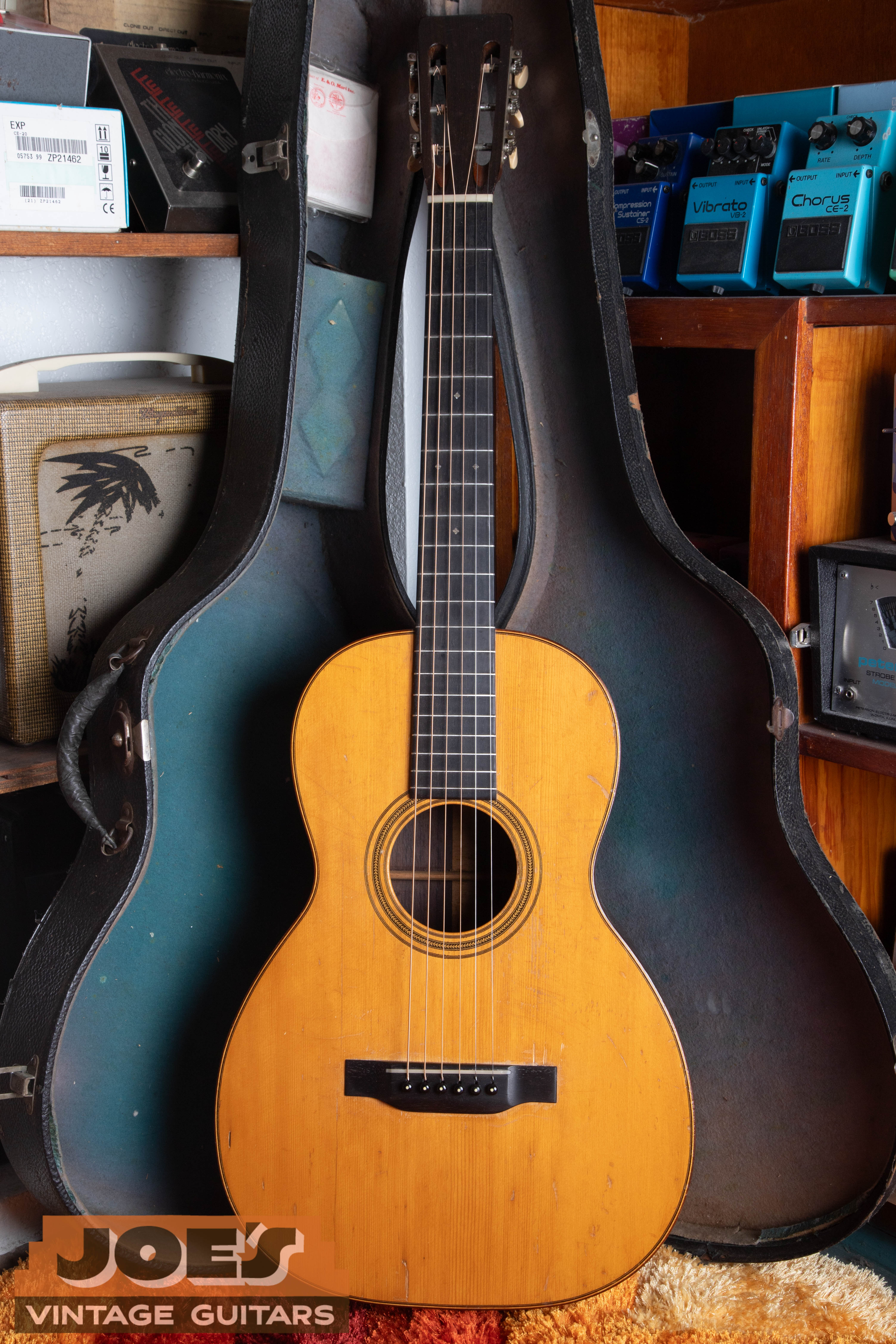
Martin’s OM introduced the 14-fret body joint around 1929, while 12-fret models continued in production. The 1930 0-21 below still has a 12-fret joint. Bar frets and T-shaped frets provide another clue, although a refret can change the fret type.
Model-Specific Changes Around 1930
Rectangular And Belly Bridges
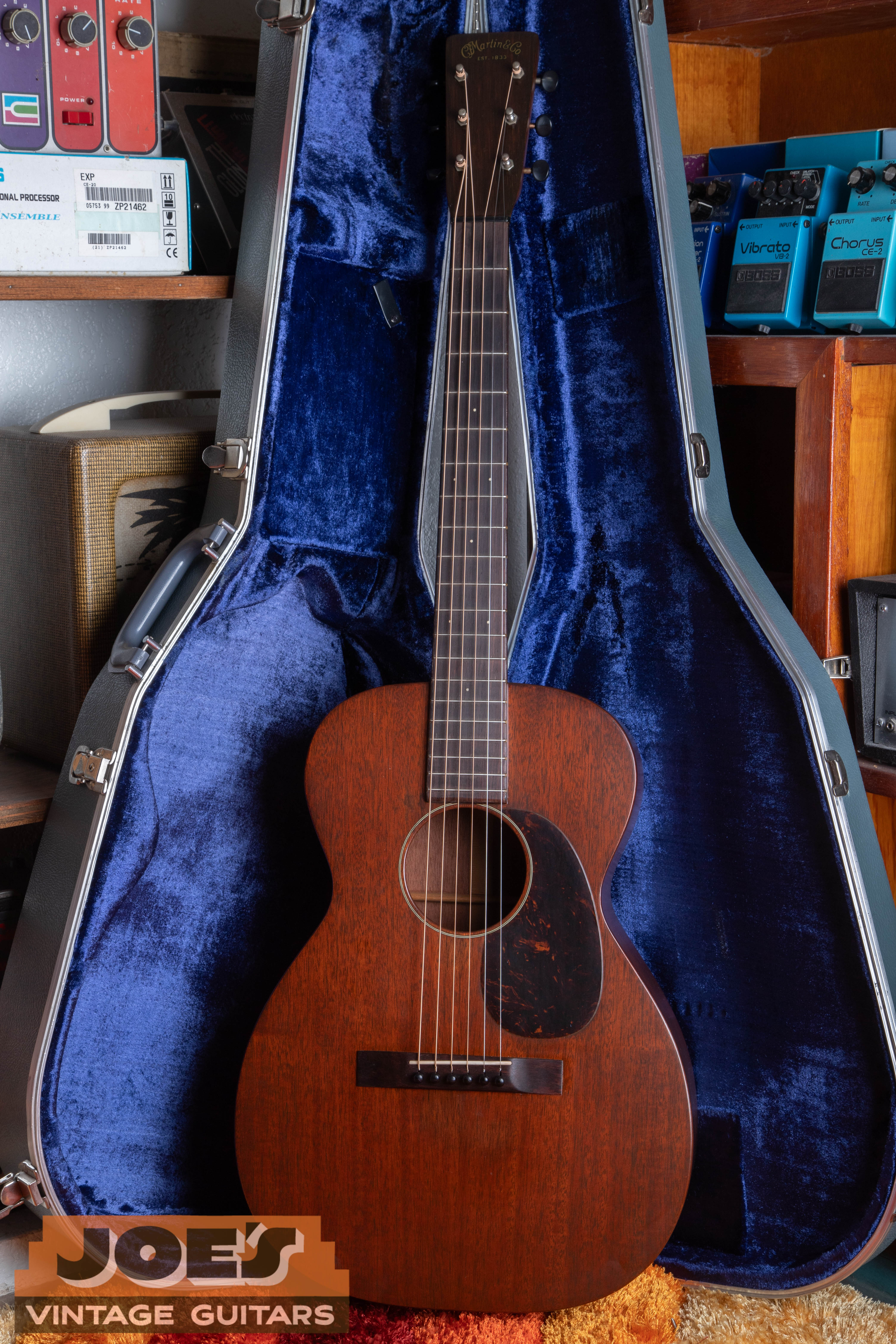
A rectangular bridge has a straight outline across its front and back. A belly bridge adds a rounded extension behind the pins. Pyramid bridges have raised ends. Martin introduced belly bridges around 1930, but the change did not reach every model at once.
The 1937 0-17 below has a rectangular bridge, while the 1930 0-21 has a belly bridge. Compare the visible outlines rather than treating either shape as a cutoff year.
A long saddle extends toward or through the ends of the bridge’s raised center. A short drop-in saddle sits within it. Check for a replacement bridge before using either shape to date the guitar, because repairs and later vintage-style models can repeat older designs.
The move from pyramid ends to plain rectangular wings came on Style 18 in 1926 and Style 21 in 1929. This is a style-specific change before the belly bridge appeared, not one sequence shared by all Martins.
Early bridges can have notched drop-in saddles, long before the familiar mid-1960s return to short saddles. A short saddle on a 19th-century guitar and one on a 1960s guitar need different comparisons. Record the slot ends, saddle angle and bridge footprint as separate details.
Pickguard Shape, Material And Repair Evidence
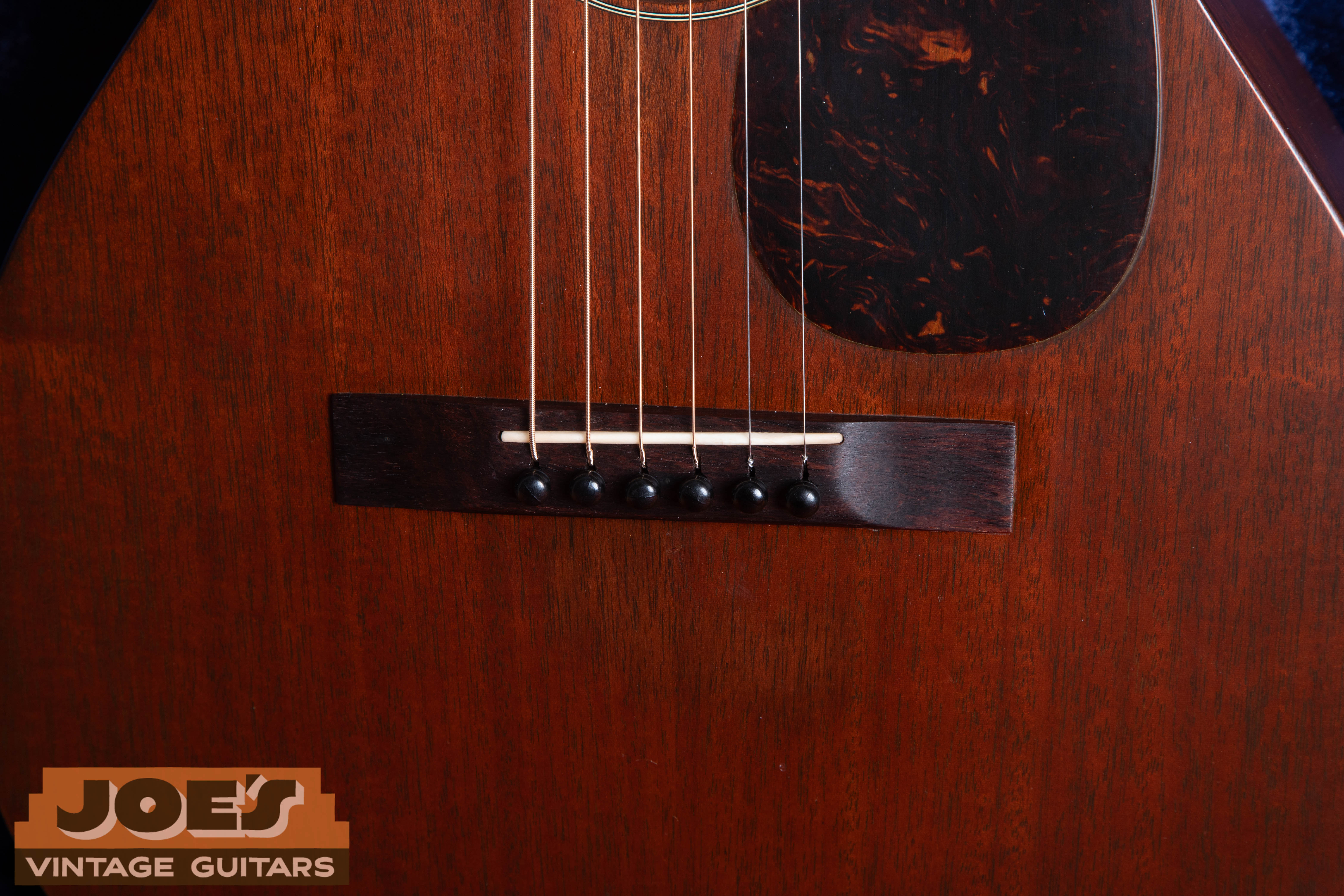
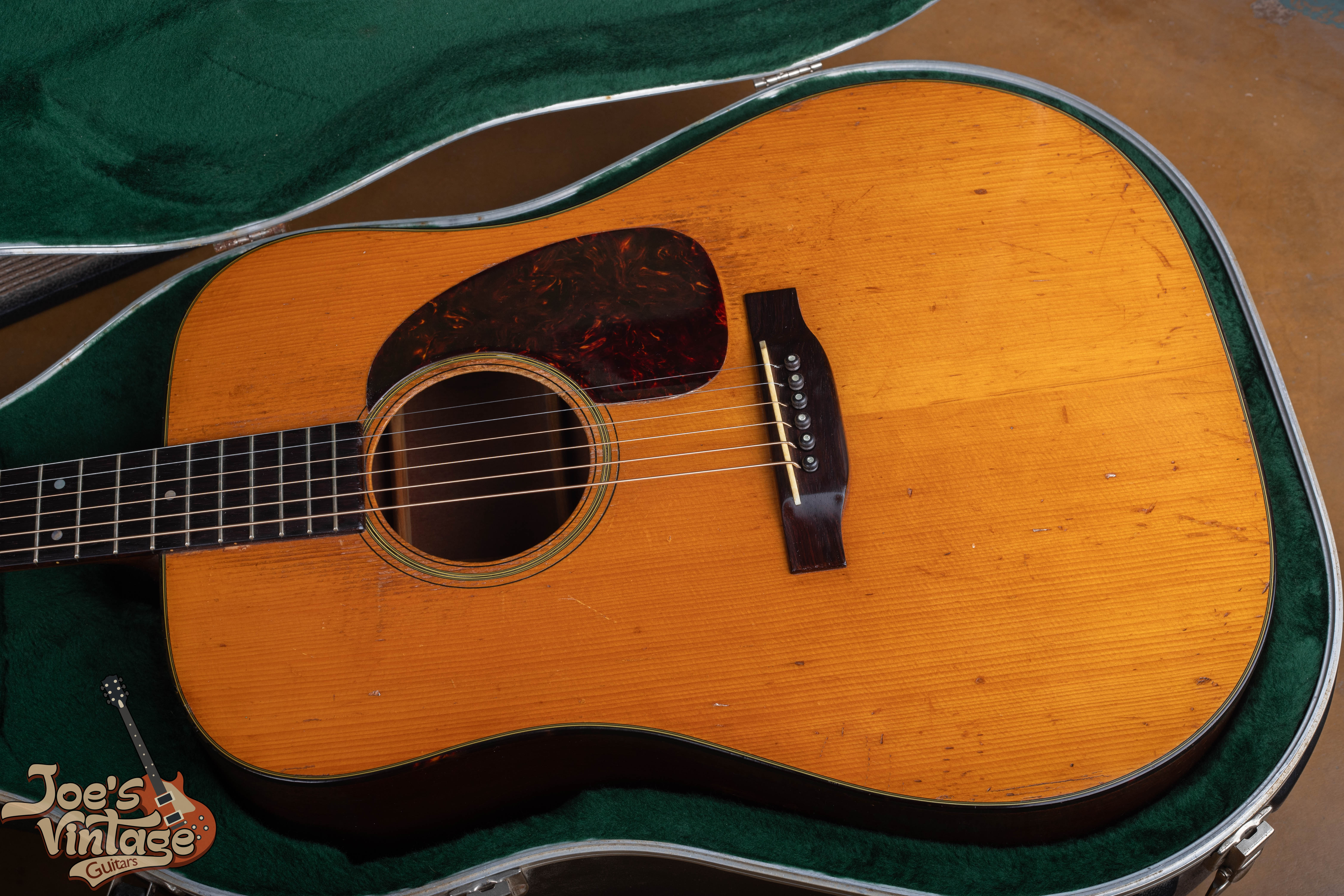
Check the pickguard’s outline, its fit around the soundhole and the pattern in the material. Tortoise-pattern and plain black guards appear in different periods, but replacements and reissues can copy either type.
A finish outline or exposed footprint around the edge can show where another guard sat. Check for cracks beside it too, and leave the guard in place. The 1953 D-18 below shows a tortoise-pattern guard and the surrounding spruce top.
The small early OM guard differs from the larger outline used in 1933. The material varied too: reddish swirls appear on some late-1930s guards as well as on later examples, so that color does not by itself identify a 1960s replacement.
Some dark wartime guards have small clear windows; later patterns include bright orange in 1956 and 1957 and larger reddish swirls into 1966. Black guards became standard in 1967, with exceptions. Compare the whole pattern and outline; one patch of color is too little evidence.
Binding, Purfling And Fingerboard Inlays
Binding covers the body edge; purfling is the decorative border beside it. Style 28 herringbone, Style 18’s plainer trim and Style 45 pearl work help identify the model family. Those patterns also appear on later guitars.
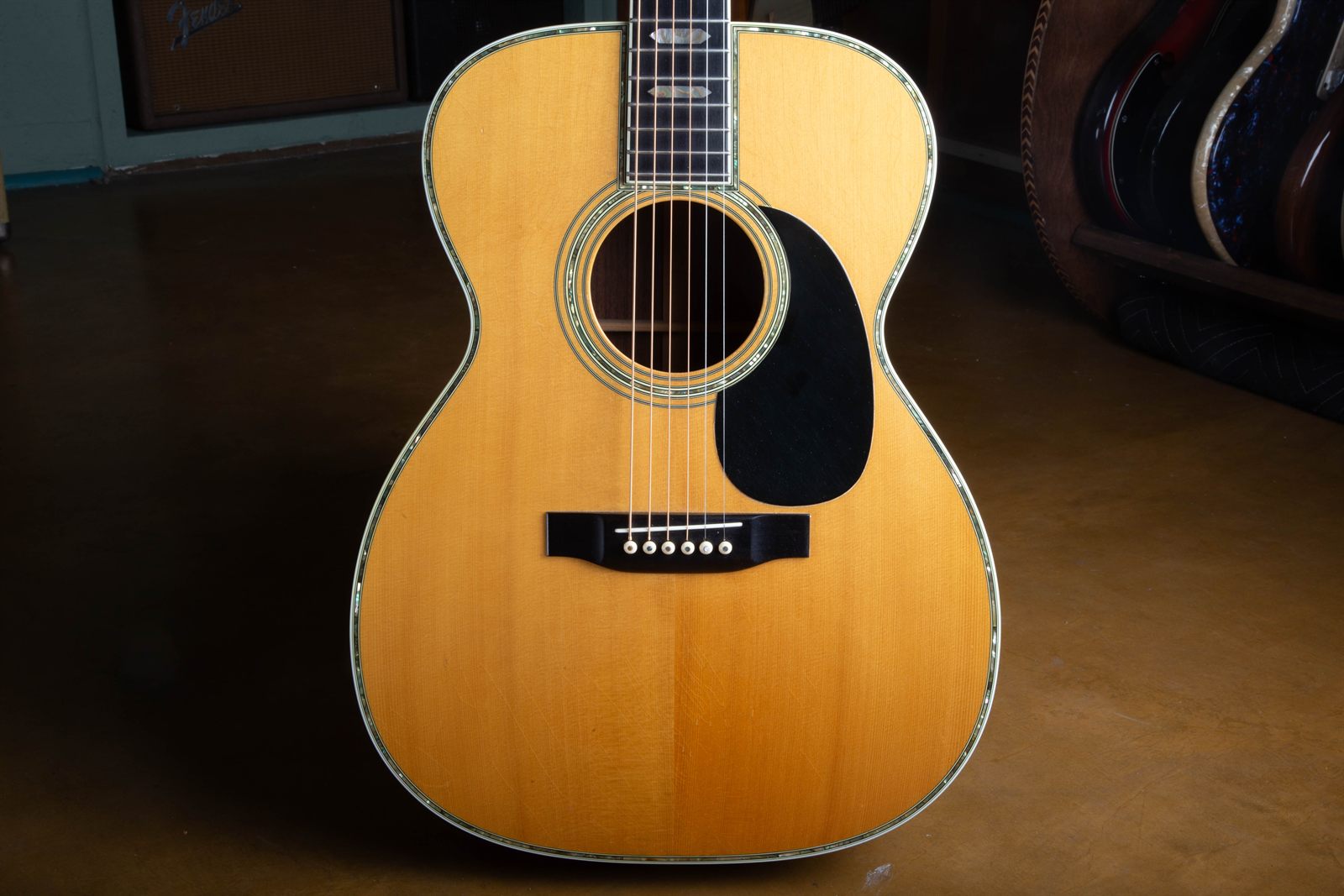
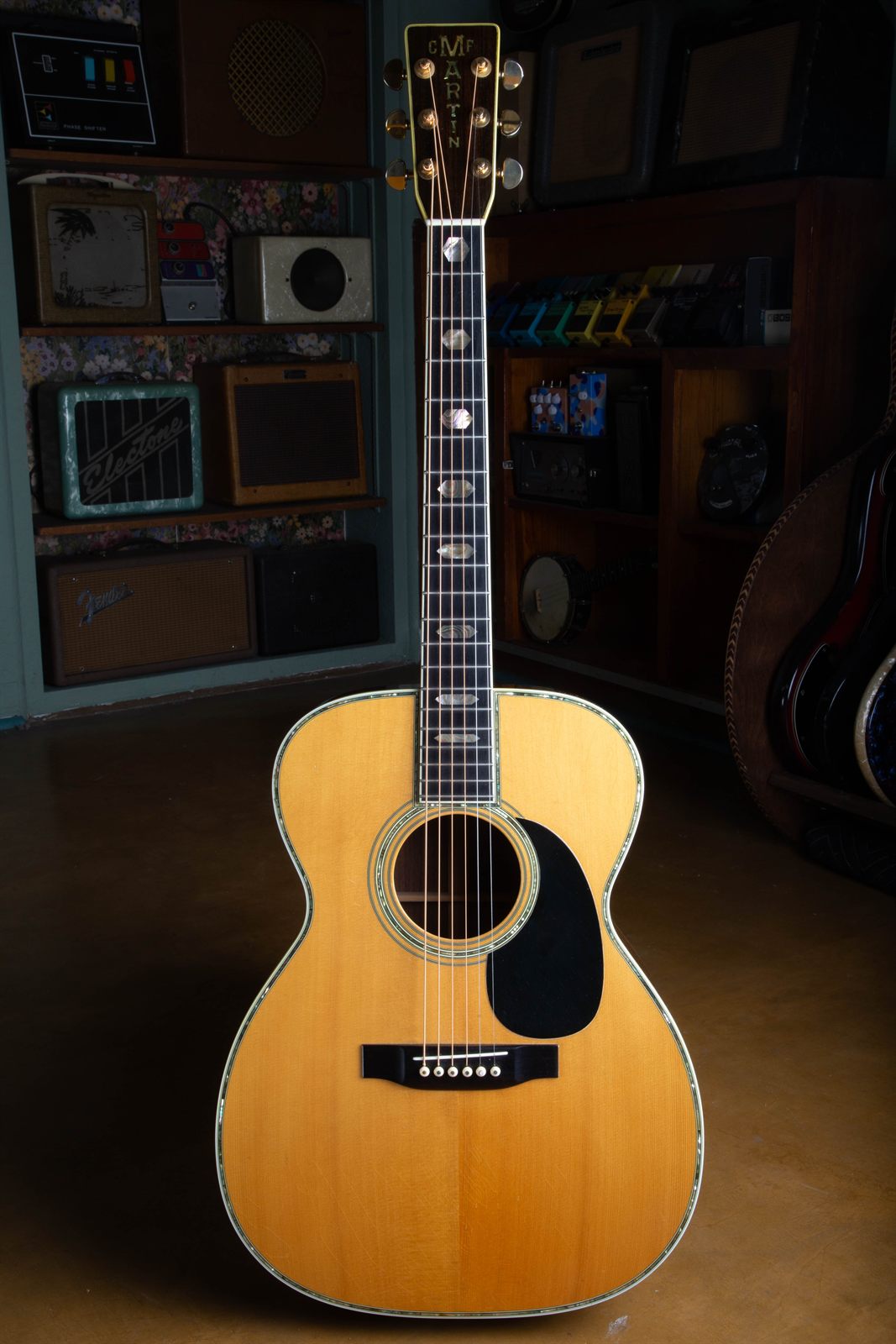
The photographed 1976 000-45 has pearl top borders and a decorated headstock. Modern HD-28s have herringbone and scalloped braces too. Read the full model name before comparing either guitar with a prewar Martin.
The 1937 0-17 has round fingerboard dots, while the 1976 000-45 has large hexagonal pearl markers. Record the shape and fret positions. Dots, diamonds, snowflakes and hexagons vary with the style and period, so more pearl doesn’t mean an older guitar.
On early-1930s examples, Style 17 uses paired dots at the seventh and twelfth frets, while Style 18 uses single dots. That makes dot placement useful alongside the top wood and binding. Count the fret positions and note paired markers; “dot inlays” is too broad a description.
For pearl models, check where the border stops. Historical Style 40 omits the pearl around the fingerboard extension that distinguishes Style 42. Style 45 extends pearl decoration to the back and side borders. A front photograph alone leaves that back and side decoration unverified.
The 1969 Standard-Production Rosewood Transition
Brazilian Rosewood, Indian Rosewood And Mahogany
Martin stopped using Brazilian rosewood for complete back-and-side sets in standard production in 1969. That change concerns rosewood models. The D-18’s mahogany back is a separate specification.
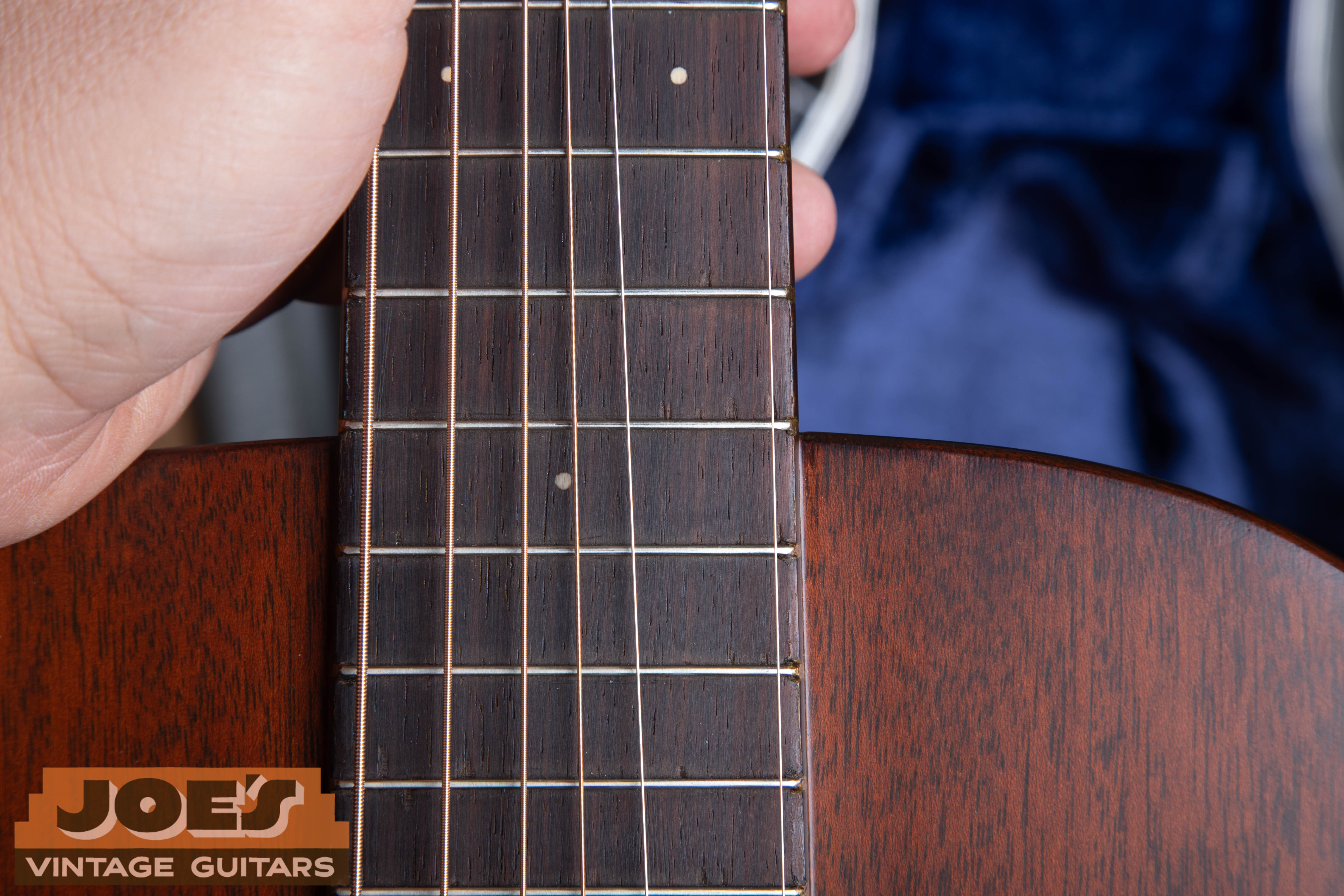
Color and grain alone won’t identify the wood species. Lighting and finish can change how a back looks, and grain varies within a species. Check the model and records for special orders, limited editions or replaced backs. Spruce grain width won’t give you a reliable species or year either.
Style numbers kept their names while materials changed. Early Style 18 guitars had spruce tops and Brazilian rosewood bodies; mahogany backs and sides arrived in 1917. Style 17 was reintroduced as an all-mahogany 2-17 in 1922. Check the period before applying familiar later specifications to an older guitar.
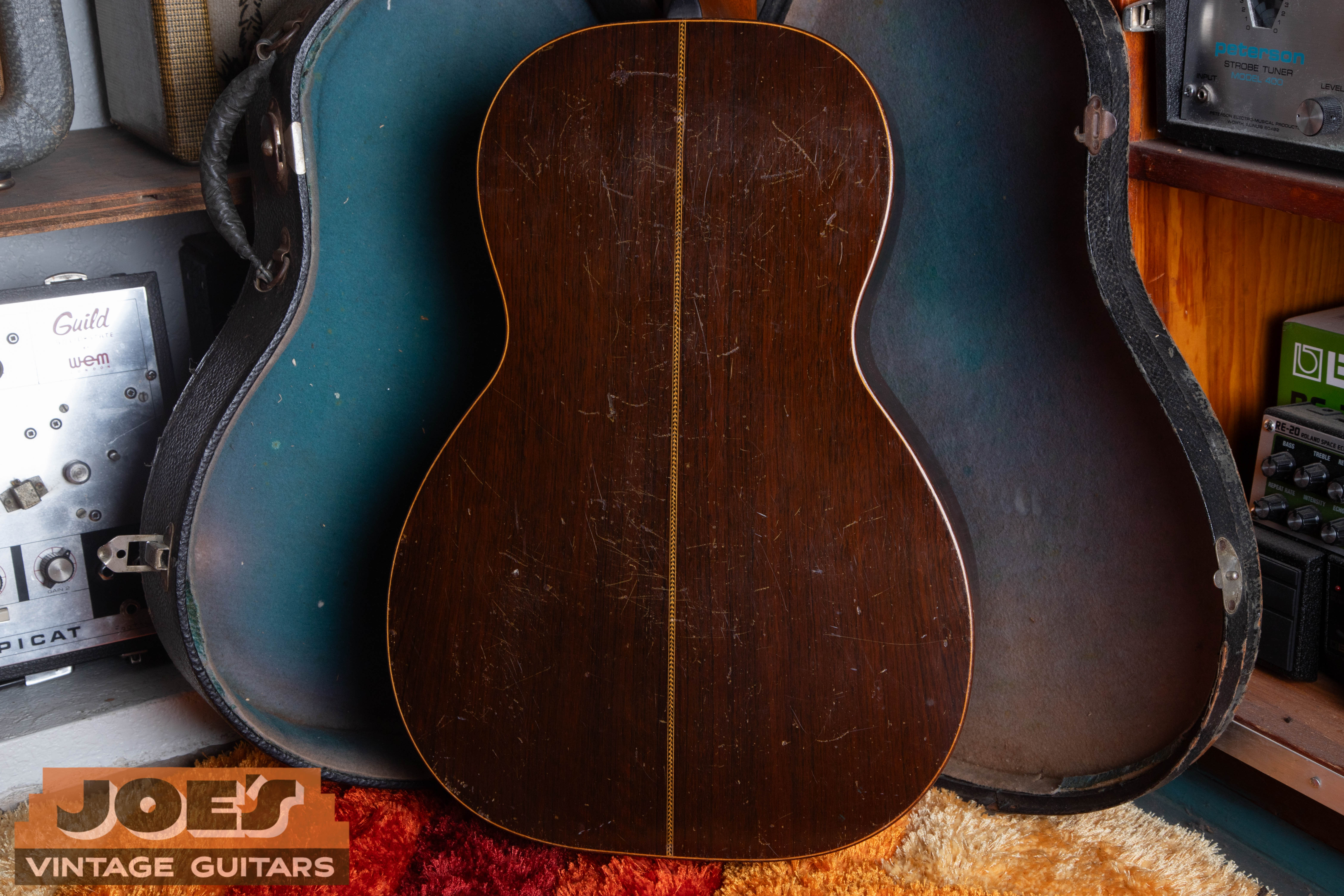
Brazilian rosewood back on the 1930 0-21. Compare its dark grain and center strip with the Indian rosewood and mahogany examples.
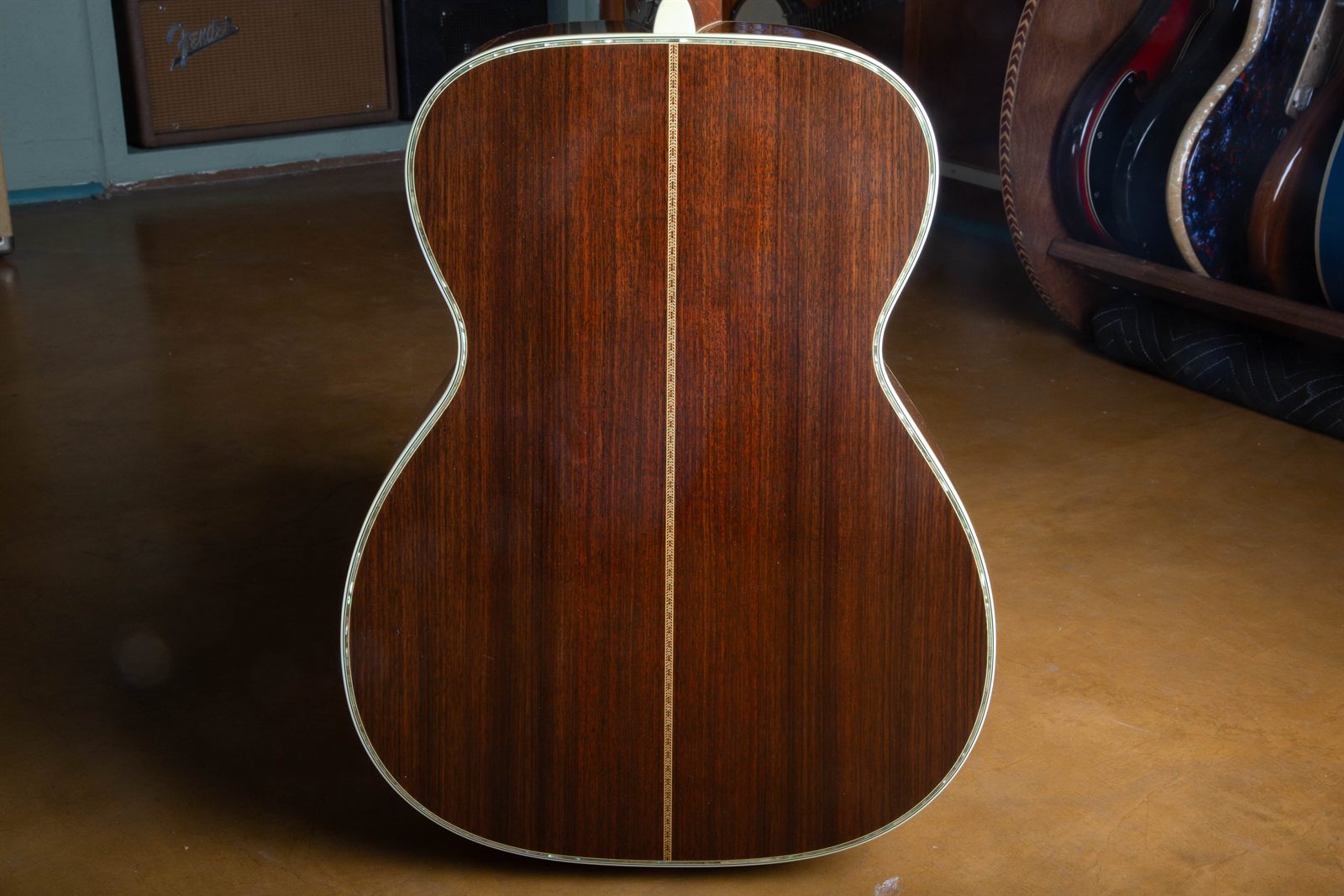
Indian rosewood back on the 1976 000-45. Compare it with the 0-21’s Brazilian rosewood, allowing for lighting and finish differences.
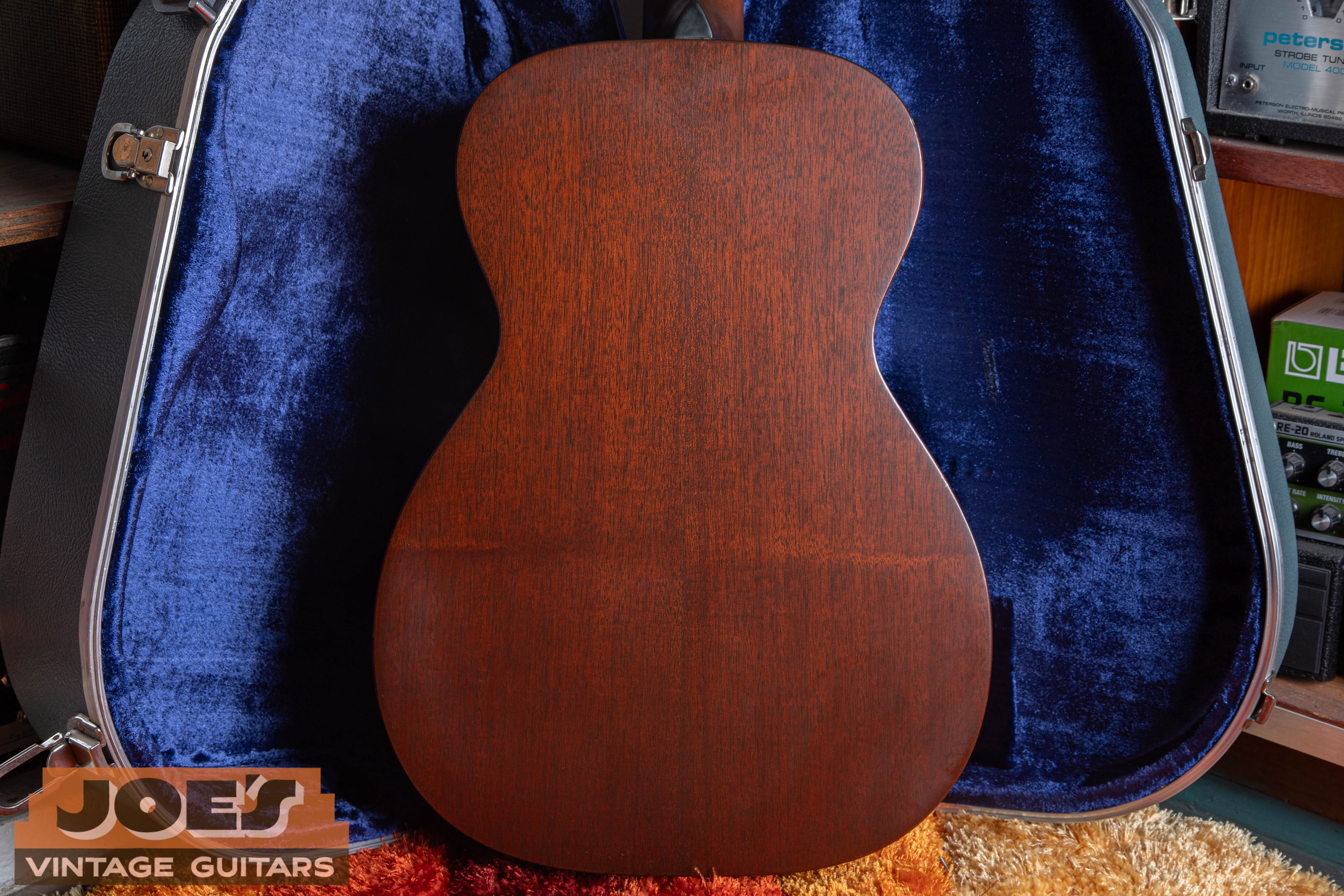
Bracing And Internal Inspection
The braces support the top, and the bridge plate sits beneath the bridge pins. Exterior photographs cannot show the brace profiles, plate repairs or X-brace position. Use an inspection mirror or a repairer’s interior photographs.
For a prewar or wartime Martin, compare the brace layout with the exact model and year. The separate prewar guide covers forward and rearward X-bracing, scalloped and tapered profiles, bridge plates and the 1939 neck changes.
Ebony Bars, Steel T-Bars, Square Tubes And Truss Rods
Martin replaced earlier ebony reinforcement with a steel T-bar in late 1934. Wartime metal shortages brought ebony back on many guitars; steel returned after the war. Regular production moved to a square steel tube in 1967 and an adjustable rod in 1985. Model exceptions matter, especially on 12-fret guitars and later recreations.
The ebony bar, T-bar and square tube are hidden inside the neck. Their shape is not visible in a normal soundhole or headstock photo. An adjustable rod’s access is inside the soundhole toward the neck. Martin’s two-way rod, introduced in 2006, is recessed farther inside.
Use the serial, exact model and repair records to narrow the reinforcement type. A headstock truss-rod cover is not the normal access point on these Martins, and its absence cannot separate an ebony bar from a steel T-bar.
Finish, Sunburst, Endpins And Case Records
Photograph the finish in daylight, including the neck heel, bridge edges, headstock and worn areas. An uneven color boundary or finish over old wear deserves a closer look. Sunburst color and amber lacquer alone do not give a year; later guitars and refinishes can copy an older appearance.
At the tail, photograph the endpin and the wood around it. An endpin jack may record a pickup installation, while an oversized hole or adapter can show earlier work. Endpins are replaceable, so their color or material cannot date the body.
Keep the case, receipts, warranty papers, repair invoices and old photographs together. Match any written model and serial to the guitar. A case can support its ownership story, but a case bought later does not change the guitar’s production date.
The change from French polish and varnish to lacquer came gradually in the 1920s, with exceptions still present in 1930. Gloss alone cannot identify the finish material. Compare wear around the bridge, binding and stamps, and distinguish added finish over an existing surface from a complete refinish.
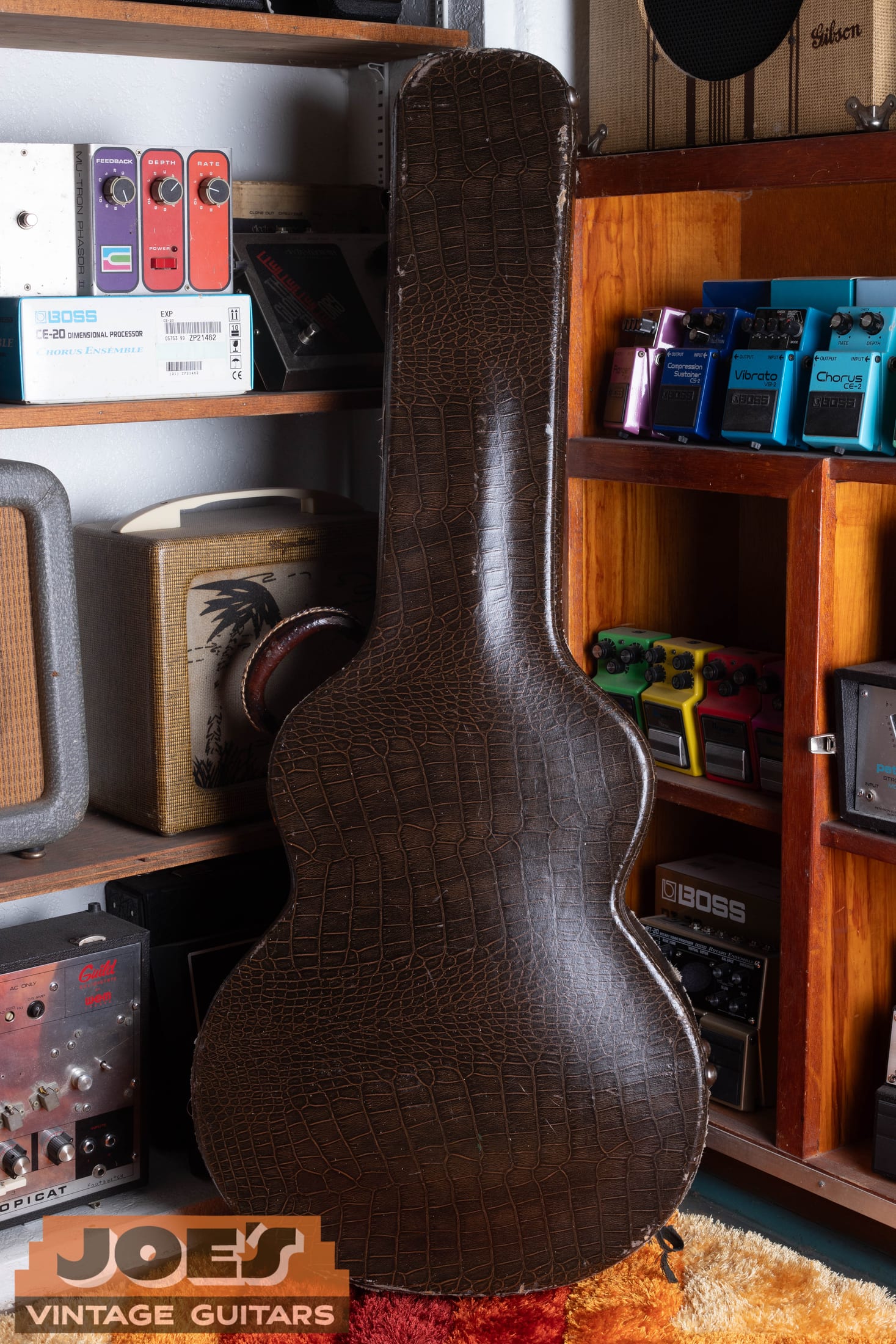
This case was photographed with the family’s 1956 000-21. Its appearance alone does not establish its maker, date or whether it was sold with the guitar new.
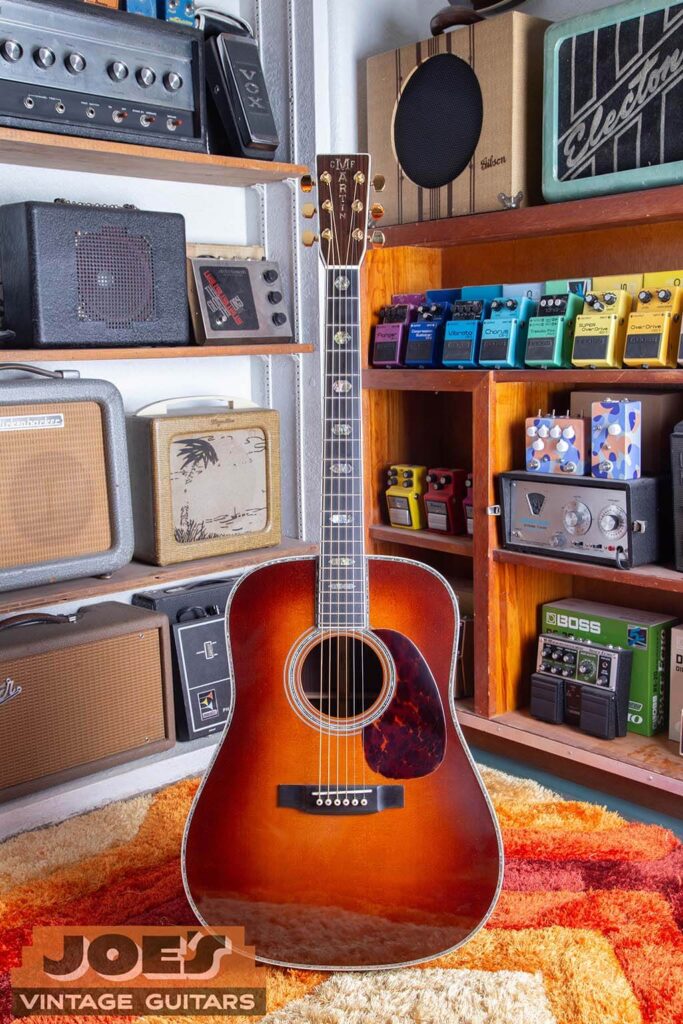
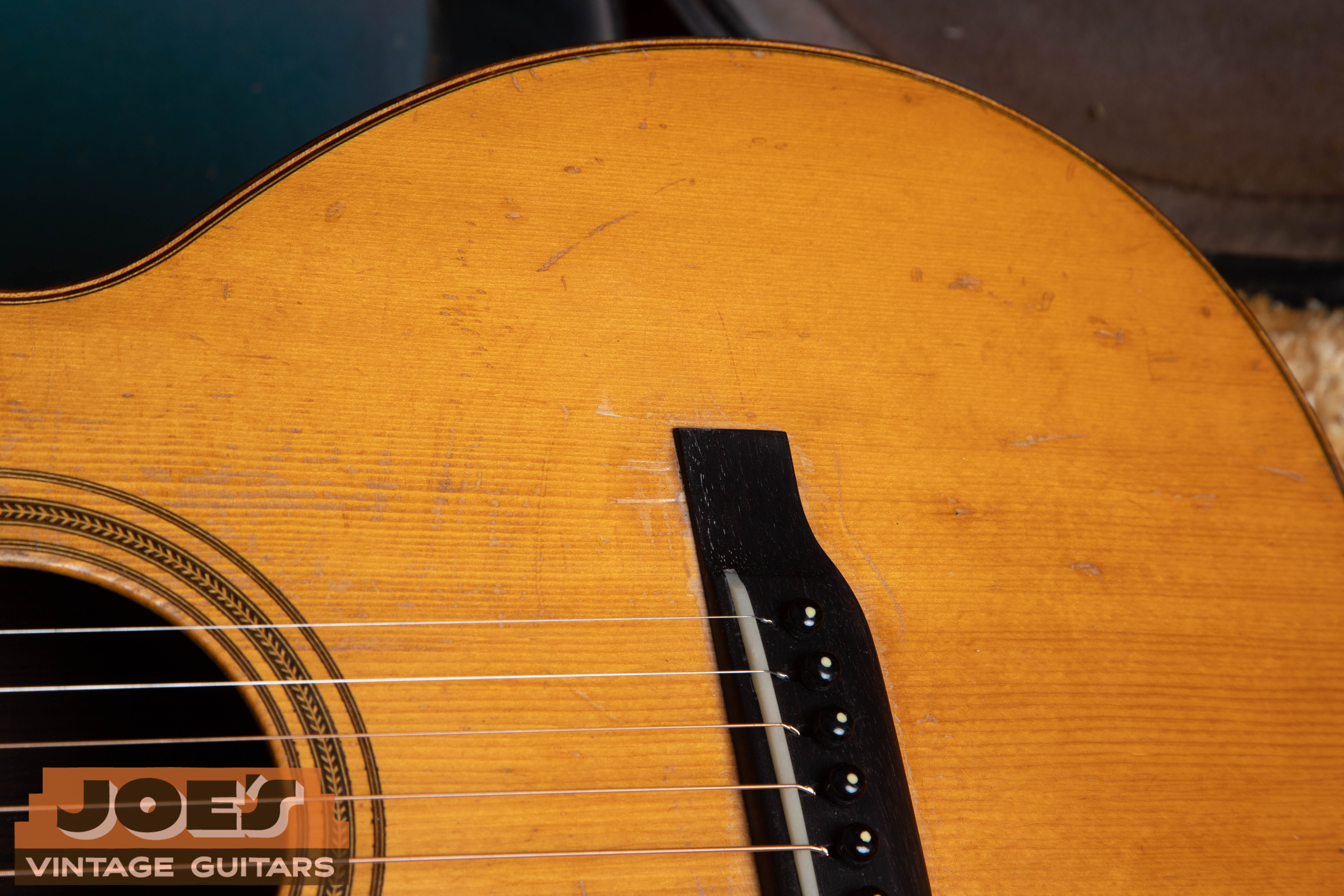
Compare the light center with the darker edge of the top. This photograph shows the color pattern; it does not establish a factory finish date or rule out refinishing.
Martin Construction Timeline
Use this timeline with the exact model’s specifications. Several changes overlapped, and repairs can alter the bridge, braces or other parts you’re comparing.
| Period | Change To Compare | Exceptions And Repairs |
|---|---|---|
| Around 1929 | The OM brings the 14-fret body joint. | 12-fret instruments continue alongside it. |
| Around 1930 | Belly bridges appear; model stamps become routine late in the year. | Rectangular bridges and serial-only blocks overlap the transition. |
| Late 1934 | T-frets replace bar frets on many standard models. | Some Hawaiian models retain bar frets; later refrets can change the evidence. |
| 1938 | Dreadnought X-bracing moves farther from the soundhole. | Compare brace position separately from scalloping; small-body changes followed different schedules. |
| 1939 | Many 14-fret necks narrow from 1 3/4 inches to 1 11/16 inches at the nut. | 12-fret models and later recreations need their own specifications. |
| Late 1944 To Late 1940s | Scalloped bracing gives way to tapered, then straighter profiles. | Inspect the interior; altered braces cannot date themselves. |
| 1946 To Early 1947 | 1946 is the last full year of the original Style 28 herringbone trim; some early 1947 guitars retain it. | Later HD and vintage-style models revive herringbone. |
| Mid-1960s | Shorter drop-in saddles become a useful comparison on standard models. | A replacement bridge can change the saddle arrangement. |
| 1967 | Black guards become common after tortoise-pattern guards. | Model exceptions and replacement guards need separate checking. |
| 1967 | Square steel tubes replace T-bars in regular neck construction. | These are hidden, nonadjustable reinforcements; a soundhole photo cannot identify the cross-section. |
| 1969 | Standard rosewood back-and-side sets change from Brazilian to Indian rosewood. | This is not a change for mahogany models or every later special order. |
| 1976 | The HD-28 revives herringbone and scalloped bracing. | Those features no longer identify an early original by themselves. |
| 1985 | Martin introduces a one-way adjustable truss rod. | Access is through the soundhole; some historical recreations use nonadjustable reinforcement. |
Frequently Asked Questions
How Old Is My Martin Guitar?
Look up the serial on the neck block, then compare the model’s construction with that year. A replaced bridge, tuner set or pickguard may be newer than the guitar. Earlier instruments without a regular serial need a review of their stamps, measurements and construction.
Can A Soundhole Photo Identify An Ebony Or Steel Neck Bar?
No. Those nonadjustable reinforcements are hidden inside the neck. A soundhole view may show adjustable-rod access, but it cannot show the cross-section of an ebony bar, T-bar or square tube.
Does Herringbone Mean A Martin Is Prewar?
No. Herringbone appears on later models and recreations, including the HD-28. Read the model name and serial before comparing the trim with a prewar guitar.
Can A Photo Prove That A Martin Has Brazilian Rosewood?
A photo shows grain and color, but those clues won’t reliably identify the species. Check the model, serial and ownership records, and have the wood examined when its identity is in doubt.
Can I Identify Scalloped Bracing From The Outside?
No. You need an interior view that shows the brace profiles. The top’s appearance or the guitar’s sound won’t confirm their shape.
Related Martin Dating Guides
Use the guides below to compare your Martin’s serial number, model stamp, logo, tuners and construction.
- Martin Headstock Logo Evolution And Dating Guide
- Martin Tuner Dating Guide: Grover, Kluson And Waverly
- Martin Neck-Block Stamps: Models, Serials And Maker’s Marks
- Prewar Martin Guitar Guide: Bracing And Identification
- Martin Guitar Model Numbers: Body Sizes And Styles
If a stamp, logo or part doesn’t fit the guitar, use the Martin counterfeit identification guide to check the whole instrument.

Talk With
Joe Today
Have a vintage guitar to sell or a question? I’m here to help.