

Dreadnoughts · 1955 To 1969
Martin D-21 History And Changes: 1955 To 1969
The original D-21 kept its spruce top, rosewood body and rosewood fingerboard and bridge throughout its short production run. The changes came in its fittings and construction: a shorter saddle in 1965, black trim and new neck reinforcement in 1967, rosewood bridge plates in 1968, and the back-and-side wood transition in 1969.
- Original Period
- 1955 Samples Through 1969
- Body
- 14-Fret Dreadnought
- Back And Sides
- Rosewood
- Fingerboard And Bridge
- Rosewood In Original Specifications
- Closest Comparison
- Contemporary D-28
D-21 Changes By Year
| Year Or Period | What Changed |
|---|---|
| 1955 | Martin built six D-21 samples, combining a rosewood dreadnought body with simpler Style 21 appointments. |
| 1956 | The D-21 entered the regular line. It had a 14-fret neck, rosewood fingerboard and bridge, and tortoise-colored binding and pickguard. |
| 1965 | The bridge changed from the long through-saddle pattern to a short drop-in saddle. |
| 1967 | Black plastic replaced tortoise-colored binding and pickguards. Square steel tube neck reinforcement replaced the earlier steel T-bar during this period. |
| April 9, 1968 | Martin changed its steel-string bridge-plate material from maple to rosewood. This is a construction change separate from the body-wood change the following year. |
| 1969 | Martin recorded D-21 serial 254498 as its first official East Indian rosewood guitar. The original D-21 run ended that year. |
1955 And 1956: A New Rosewood Dreadnought
Six samples preceded the D-21’s public introduction in 1956. Its body followed the 14-fret dreadnought pattern, with a spruce top and Brazilian rosewood back and sides. Style 21 supplied relatively plain decoration and rosewood for both the bridge and fingerboard.
Those fittings separated it from the contemporary D-28, which used ebony for its bridge and fingerboard. The D-21’s rosewood body also separated it from the mahogany-bodied D-18. These were original model specifications, rather than changes introduced partway through the D-21 run.
1956 To 1964: The Original Neck And Bridge
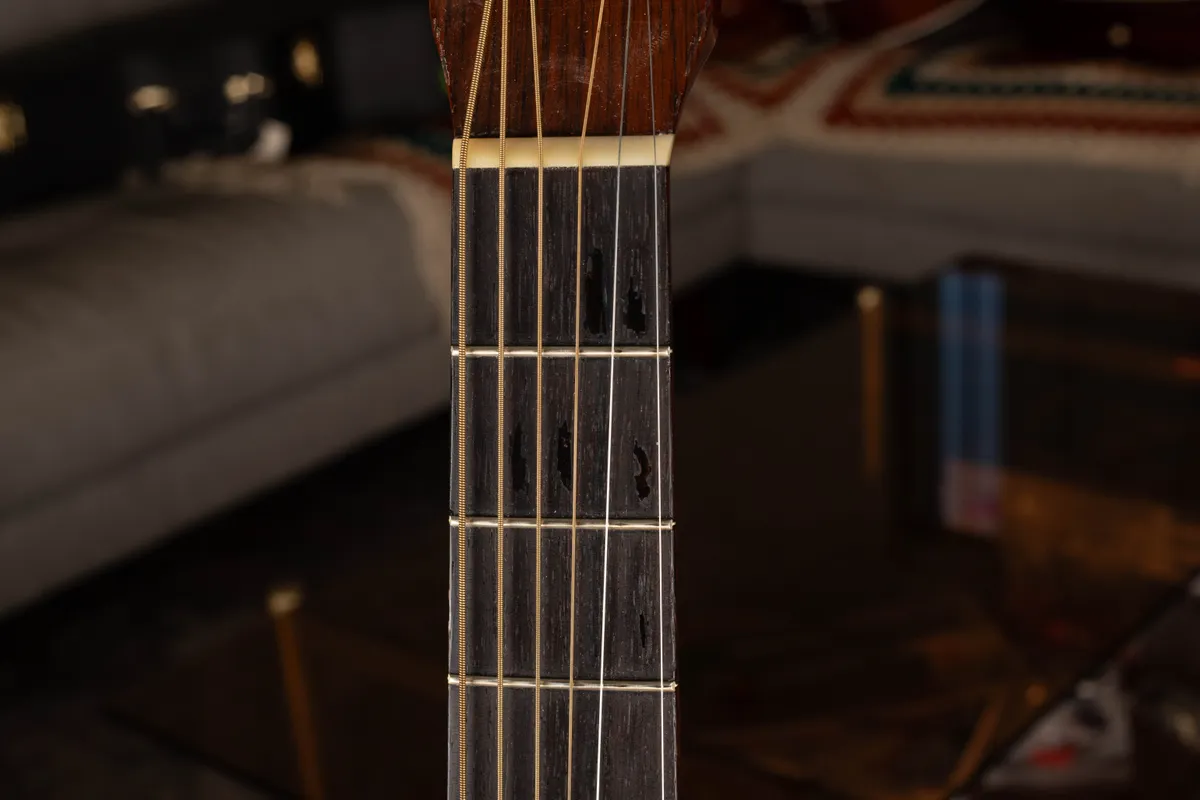
Early D-21s had an unbound fingerboard with dot markers, a rosewood belly bridge with a long saddle, and tortoise-colored body binding and pickguard. The neck contained a nonadjustable steel T-bar. Under the bridge, the top was reinforced by a small maple bridge plate.
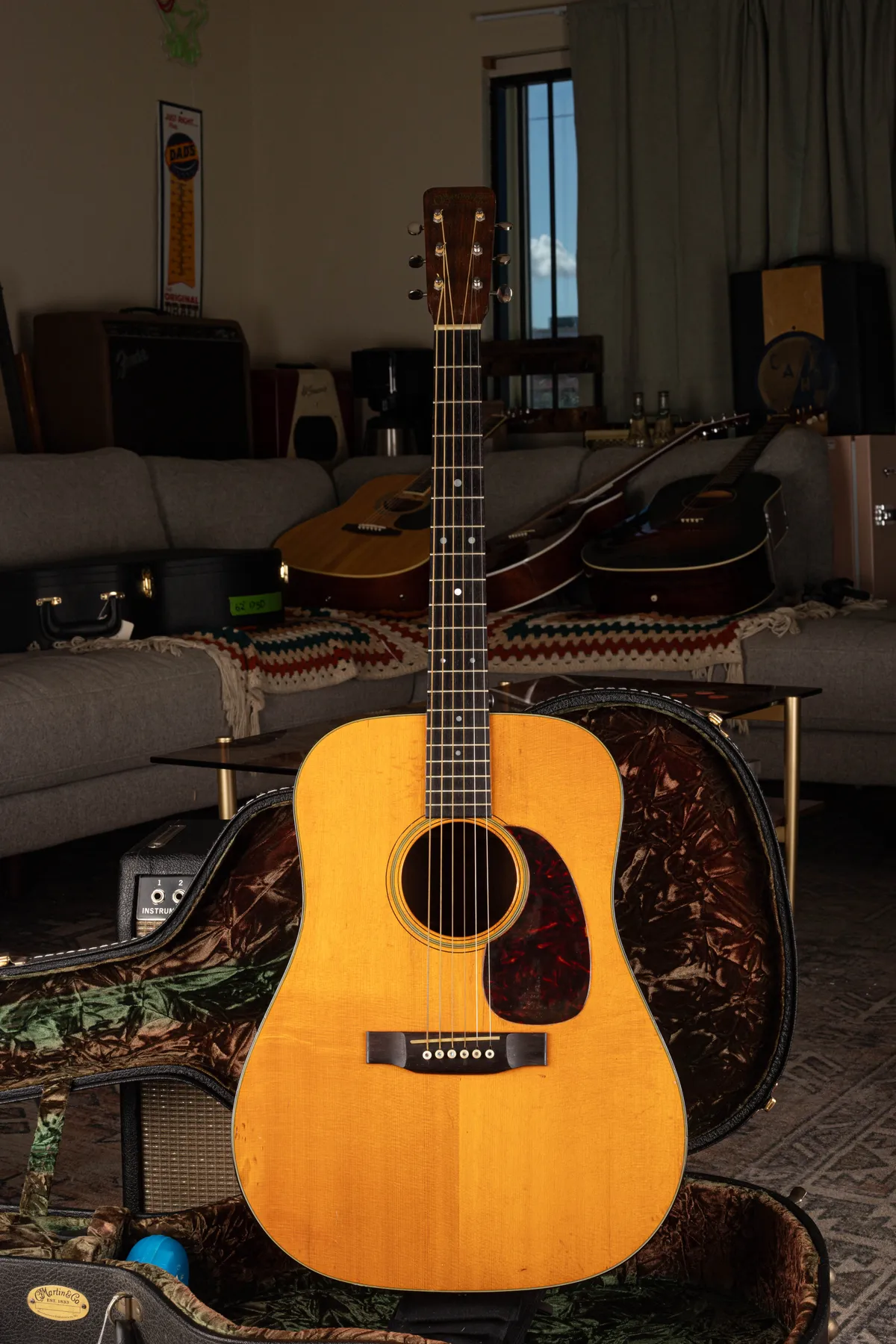
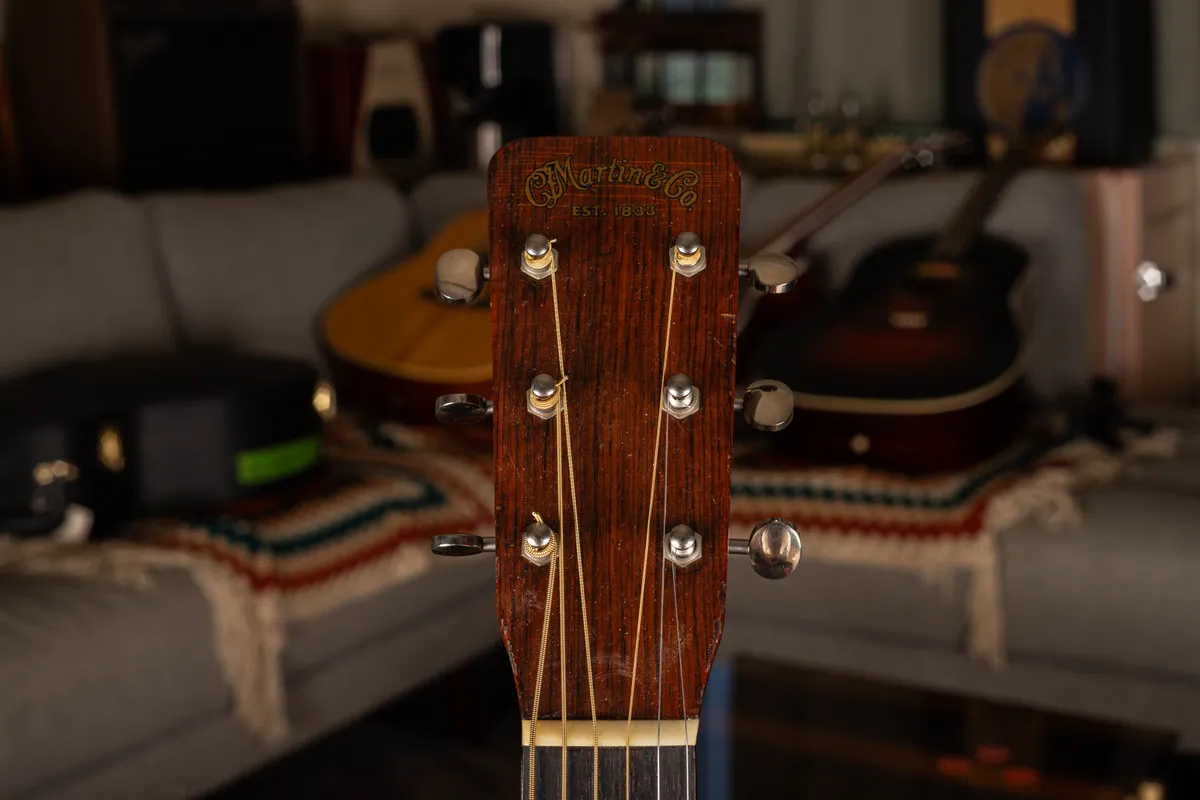
The 1961 D-21 pictured here belongs to this earlier period. Its dot-marked fingerboard and headstock photographs illustrate the model’s plain decoration; the photographs do not establish a separate specification change in 1961.
1965 To 1967: Saddle, Trim And Neck Changes
In 1965, Martin replaced the long through saddle with a shorter drop-in saddle. The bridge remained rosewood. Changing the saddle arrangement did not turn the D-21 into an ebony-bridge model.
The next visible change came in 1967, when black plastic replaced the earlier tortoise-colored binding and pickguards. Martin also moved from a steel T-bar to square steel tube neck reinforcement in 1967. Both neck systems were nonadjustable; this was not the introduction of an adjustable truss rod.
1968 And 1969: Bridge Plates And Body Wood
The factory’s April 9, 1968 bridge-plate change replaced maple with rosewood. The bridge plate sits inside the top, beneath the bridge. Its material is independent of the rosewood used for the exterior bridge, fingerboard, back and sides.
In late 1969, the back-and-side wood changed as Martin moved away from standard Brazilian rosewood production. D-21 serial 254498 is the factory’s recorded first official East Indian rosewood guitar. That milestone belongs to an overlapping material transition, so it does not make every 1969 guitar the same wood species.
When Did The Original D-21 End?
The original D-21 production run ended in 1969. Later guitars bearing D-21 names, including the D-21 Special, belong to later production programs and can have different specifications. The Martin serial-number guide dates the instrument separately from its model name.
Did The D-21 Change To An Ebony Fingerboard?
Rosewood was the fingerboard and bridge specification of the original D-21. An ebony replacement on an individual guitar is a repair or modification, not evidence of a standard late-1960s D-21 specification change.
Martin Identification Resources
- Martin Serial And Model Numbers
Find the production year from the neck-block serial.
- Martin Tuner Dating Guide
Compare the installed machines with period hardware before calling a tuner set original.
- Martin D-28 Authentication Guide
Compare ebony fittings and Style 28 trim with the D-21's plainer specifications.
- Sell A Martin Guitar
Send Joe the details of a Martin you are considering selling.
- Martin Construction And Dating
Follow changes in bridges, necks, braces and materials.
Martin Owners On Working With Joe
“feeling no regrets after selling our 1920’s Martin on to these folks”
“they took the time to look at the photos of my Martin D18 and emailed back an appraisal”
Your Martin’s Model, Year And Condition
Send Joe Photos Of Your Martin
Include the front, back, headstock, model and serial markings, and any known repairs.
Photo Credits
Photographs from the Joe’s Vintage Guitars archive. Each caption identifies the instrument shown, including comparison photographs.