

Dreadnoughts · 1965 To 1969
Martin D-35 And D-35S History And Changes
The D-35 arrived in 1965 with a three-piece rosewood back, a bound ebony fingerboard and lighter top braces than the D-28. Its early history includes small trim revisions, the 12-fret D-35S, and the late-1960s changes to neck reinforcement, bridge plates and rosewood.
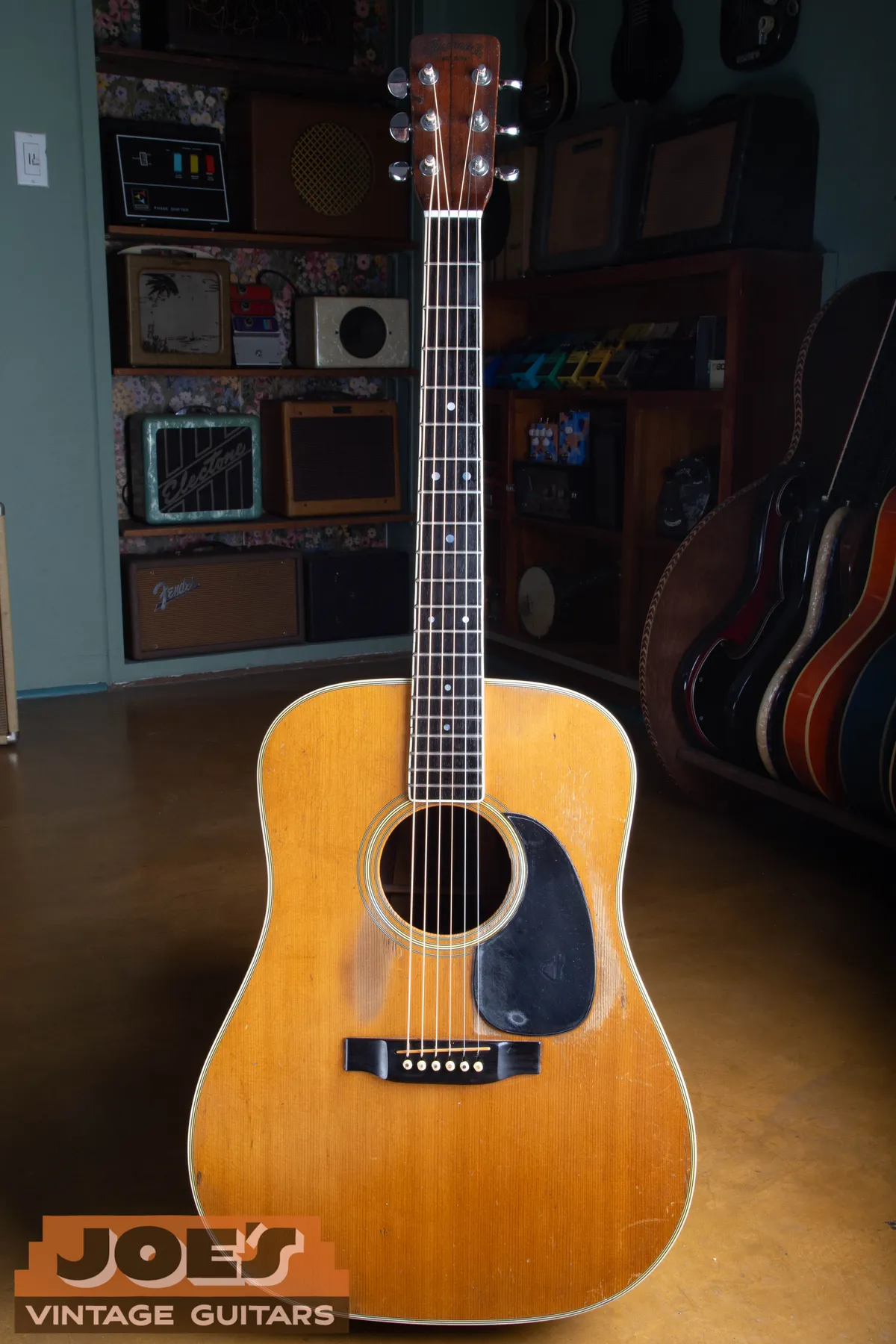
- D-35 Introduction
- 1965
- Back Construction
- Three Rosewood Panels
- Fingerboard
- Bound Ebony
- D-35 Neck Joint
- 14th Fret
- D-35S Neck Joint
- 12th Fret
Model Changes By Year
| Year Or Period | What Changed |
|---|---|
| 1965 | The D-35 joined the line with a three-piece Brazilian rosewood back, bound ebony fingerboard and 1/4-inch top braces. |
| August 1966 | The fingerboard binding changed from mitered corners at its lower end to a simpler joint. |
| 1966 To 1967 | Black pickguards replaced the earlier tortoise-pattern guards during this transition. In 1967, square steel tube neck reinforcement replaced the steel T-bar. |
| January 1968 | A batch of 25 D-35S guitars marked the expansion of the 12-fret version. Earlier special-order 12-fret D-35s preceded this batch. |
| April 9, 1968 | Martin’s steel-string bridge-plate specification changed from maple to rosewood. |
| Late 1969 | East Indian rosewood entered standard production as Brazilian rosewood supplies ran down. The three-piece back remained part of the D-35 design. |
1965: The Three-Piece Back And Lighter Bracing
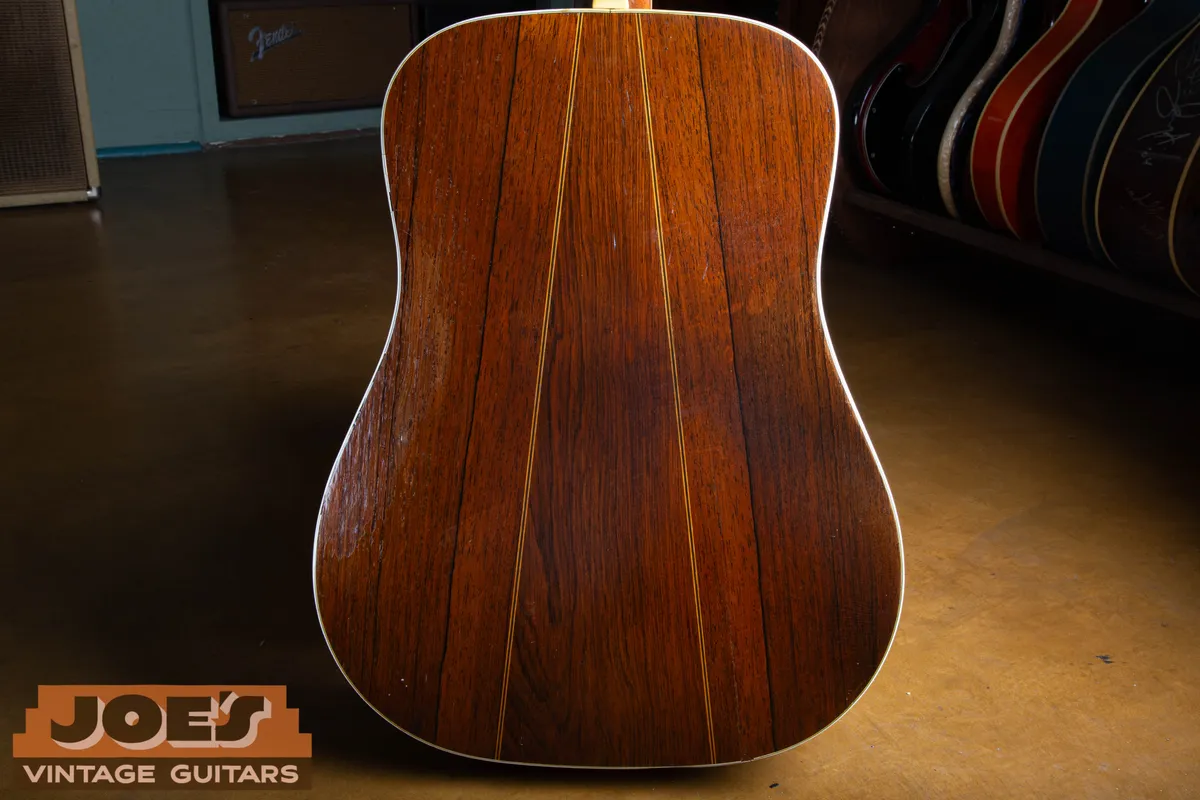
The D-35’s three-piece back allowed Martin to use narrower pieces of Brazilian rosewood than a conventional two-piece dreadnought back required. A center wedge separated the outer panels. White fingerboard binding and extra back seams made the new model visibly different from the D-28.
Inside, the D-35 used 1/4-inch top braces instead of the D-28’s 5/16-inch braces. These early D-35 braces were not scalloped. Brace width and scalloping describe different features: the D-35 was lighter-braced without returning to the carved brace profiles of prewar dreadnoughts.
1966 And 1967: Binding, Pickguard And Neck Revisions
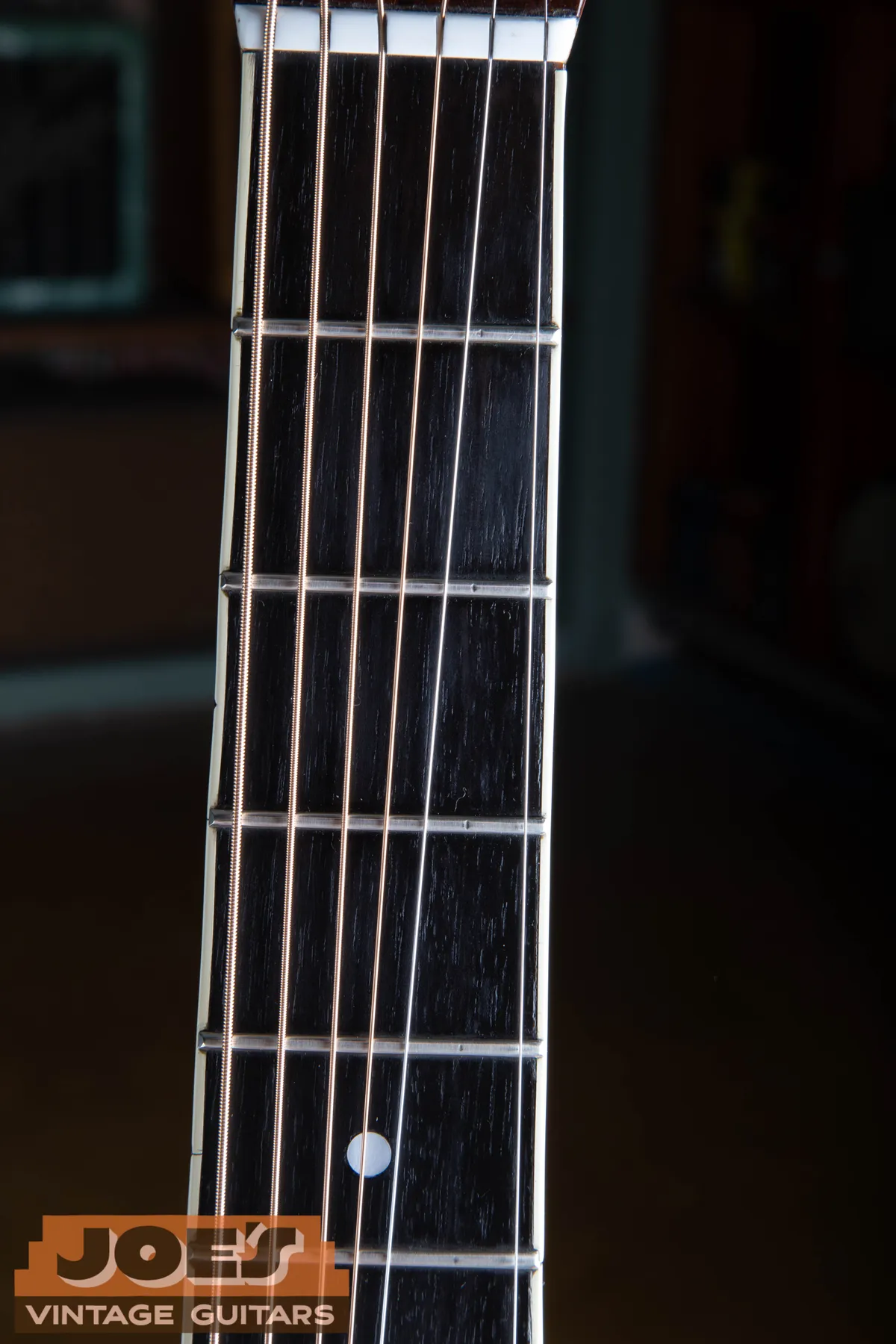
Early fingerboard binding had mitered corners where it turned across the end of the board. That detail changed in August 1966. The ebony board and its white binding remained part of the model.
During the 1966 to 1967 transition, black pickguards replaced the earlier tortoise-pattern material. Martin also changed its nonadjustable neck reinforcement from a steel T-bar to square steel tubing. The 1967 guitar in these photographs shows the three-piece back and bound fingerboard, both features present from the model’s introduction.
1968: The D-35S Becomes A Regular Production Variant
The D-35S used a 12-fret body-and-neck layout, with the neck meeting the body at the twelfth fret rather than the fourteenth. Its longer upper body, slotted headstock and wider neck distinguished it from the standard D-35.
A batch of 25 D-35S guitars was made at the end of January 1968. Special-order 12-fret D-35s existed earlier, so 1968 describes the expansion into regular production rather than the first possible example. The S version retained the three-piece back and Style 35 decoration.
1968 And 1969: Bridge Plates And Rosewood
Early D-35s used a small maple bridge plate. Martin’s factory history dates the steel-string change to rosewood plates to April 9, 1968. The later plate specification belongs to the same original D-35 production era as the earlier maple version.
The exterior wood changed in late 1969 as East Indian rosewood entered standard production. Brazilian and Indian rosewood overlap during the transition; a three-piece back does not identify the species. The D-35 continued beyond 1969 with its three-piece construction intact.
Did The D-35S Replace The D-35?
No. The 12-fret D-35S joined the line alongside the standard 14-fret D-35. It offered a different body-and-neck layout while retaining the three-piece back and Style 35 appointments.
Did The First D-35 Have Scalloped Braces?
No. The original D-35 used lighter 1/4-inch braces with a non-scalloped profile. The combination distinguishes it from both a contemporary D-28 and a prewar scalloped-brace dreadnought. Joe’s Martin construction guide explains the brace and neck changes shared across the period.
Martin Identification Resources
- Martin Neck-Block Stamps
Read the complete model designation and serial without treating either as a condition report.
- Martin D-28 Authentication Guide
Compare Style 28 fittings and construction with the D-35's bound board and three-piece back.
- Sell A Martin Guitar
Send Joe the details of a Martin you are considering selling.
- Martin Serial And Model Numbers
Find the production year from the neck-block serial.
- Martin Construction And Dating
Follow changes in bridges, necks, braces and materials.
Martin Owners On Working With Joe
“feeling no regrets after selling our 1920’s Martin on to these folks”
“they took the time to look at the photos of my Martin D18 and emailed back an appraisal”
Your Martin’s Model, Year And Condition
Send Joe Photos Of Your Martin
Include the front, back, headstock, model and serial markings, and any known repairs.
Photo Credits
Photographs from the Joe’s Vintage Guitars archive. Each caption identifies the instrument shown, including comparison photographs.