

The Mahogany Dreadnought · 1931 to Today
Vintage Martin D-18 Guitar Guide
History, specifications, year-by-year construction changes, authentication, tuners, repairs, collectibility, and value, from the first 12-fret guitars to the modern Standard Series.
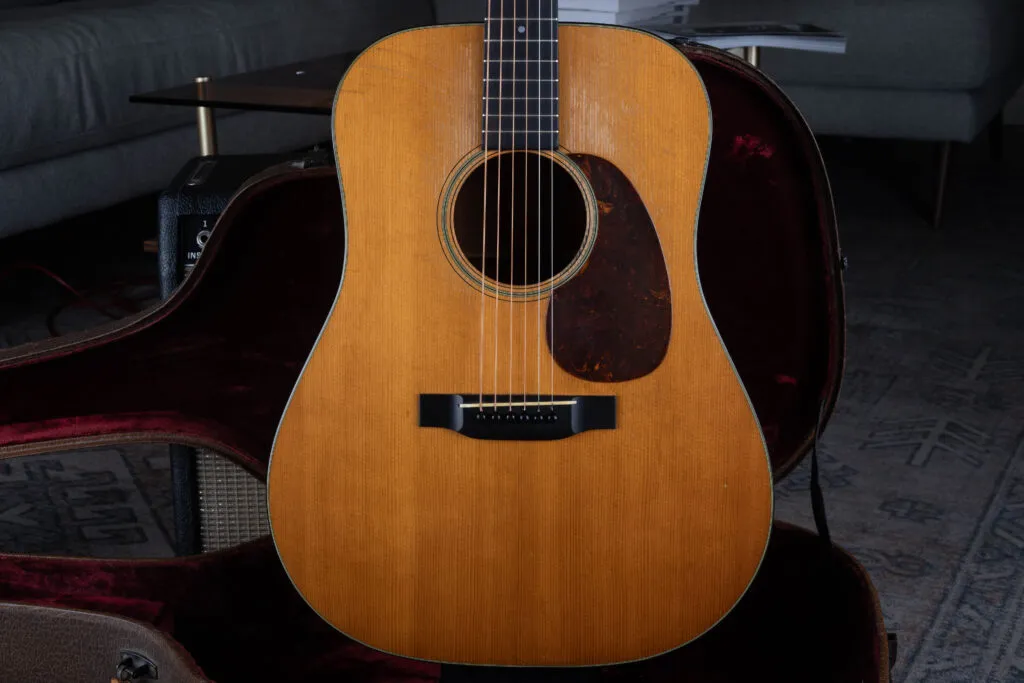
The D-18 is Martin's plain-trimmed mahogany dreadnought, but “plain” is not the same as simple. A 1937, a wartime 1943, a tapered-brace 1945, a 1950s workhorse, and a 1970s D-18 can share the same stamp while differing in top species, bracing, neck reinforcement, bridge plate, tuners, neck shape, and market value. The individual guitar has to be read as a complete system.
From Ditson to Bluegrass
Martin D-18 History
The 12-Fret Dreadnought
Martin's dreadnought story begins with instruments made for the Ditson company before the D-18 name became established; the Martin Museum's online collection traces that lineage to the 1929 Ditson 111. The earliest D-18s retained the long 12-fret body and slotted headstock. Their bridge sits farther into the lower bout than on a 14-fret guitar, changing the way the top is driven.
The 14-Fret Standard
Martin standardized the 14-fret dreadnought body in 1934. The shorter body, solid headstock, and greater upper-fret access created the outline most players now recognize. Country, folk, and bluegrass musicians prized the D-18 because mahogany supplied strong fundamentals and separation without the price or ornament of rosewood Style 28.
Style 18 Identity
The traditional recipe is a spruce top, mahogany back and sides, unbound fingerboard, restrained dot inlays, simple multi-ring rosette, dark backstrip, tortoise-pattern or black body binding depending on period, and nickel tuners. The detailed VintageMartin Style 18 chronology is useful supporting reference, but the interior of the individual guitar tells more of the story.
D-18 vs. D-28
The core construction distinction is mahogany versus rosewood back and sides, with corresponding Style 18 versus Style 28 trim. A D-18 is often described as drier and more direct; a D-28 often has more overtone complexity. Condition and the individual top can outweigh the stereotype.
What the Stamp Should Mean
Martin D-18 Specifications
| Feature | Typical Specification | Vintage Variables |
|---|---|---|
| Body | Dreadnought; 14-fret standard after 1934 | Scarce early 12-fret examples; later D-18S and revival models |
| Lower bout | About 15 5/8 inches | Measure rather than identifying from a photograph |
| Scale | About 25.4 inches | Bridge work and poor measuring can disguise scale evidence |
| Top | Spruce | Red spruce in the prized early period; Sitka normal from 1946 |
| Back and sides | Mahogany | Figure and color vary; special editions may depart from standard |
| Bracing | X-braced | Forward/rear position; scalloped/tapered/straight carving by era |
| Fingerboard and bridge | Ebony early; rosewood after 1947 | Later reissues may restore ebony |
| Nut width | About 1 3/4 inches early; 1 11/16 after mid-1939 | Modern and special-edition specifications vary |
| Neck joint | Dovetail | Neck resets are common maintenance on older guitars |
The Years That Change the Guitar
Vintage Martin D-18 Year-by-Year Changes
The 12-Fret Beginning
The first D-18s belong to Martin's original 12-fret dreadnought tradition: slotted headstock, long body, forward bridge location, mahogany back and sides, and spruce top. Production was small.
The Forward-Braced 14-Fret Era
The 14-fret body becomes standard. Red spruce, scalloped forward-positioned X-bracing, hide glue, a 1 3/4-inch nut, steel T-bar reinforcement, ebony board and bridge, and light construction define the most coveted recipe.
Rear-Shifted, Wide Neck
Martin moves the X-brace intersection rearward for added top stability. The braces remain scalloped and the neck remains approximately 1 3/4 inches at the nut for a short transitional window.
Narrow Neck, Scalloped Braces
The nut narrows to about 1 11/16 inches. A wider upper transverse brace and the so-called popsicle brace appear, while red spruce and scalloped rear-shifted bracing continue.
Wartime D-18
Metal restrictions bring ebony neck reinforcement and lightweight tuner variants, often without post bushings. Red spruce and scalloped bracing remain, making wartime D-18s extremely desirable despite their different neck feel.
Scalloping Ends
The change from scalloped to non-scalloped top bracing occurs during production, not neatly on January 1. Serial number and internal inspection matter more than the calendar year alone.
Tapered-Brace Transition
The earliest postwar braces are tapered rather than the heavier straight braces seen later. Red spruce continues into the transition; Sitka becomes normal during 1946. Some necks still carry ebony reinforcement.
The Postwar Workhorse
The fingerboard and bridge change from ebony to rosewood in 1947. Sitka spruce, mahogany, rear-positioned non-scalloped bracing, and open-gear tuners define a clear, dry, powerful bluegrass favorite.
A Fuller Postwar Build
Pickguard and tuner details evolve, and dreadnought brace geometry changes again around 1958. These guitars remain lightly appointed and musically strong, but generally sell below scalloped or tapered-brace examples.
Short Saddle and Bridge-Plate Changes
A short drop-in saddle replaces the long through saddle during the mid-1960s. Binding and pickguard materials change; the small rosewood bridge plate gives way to maple in 1968 before later plates grow larger.
Heavier Builds and Vintage Revivals
Larger bridge plates and other production choices can make 1970s examples more variable. Later D-18V, Golden Era, Authentic, and limited models deliberately revive selected prewar specifications.
The Reimagined Standard
Martin's 2012 redesign restored forward-shifted scalloped bracing, a 1 3/4-inch nut, open-gear tuners, and vintage-influenced trim. Modern specifications are not evidence of a prewar guitar.
Production changes overlap. Martin did not discard every old part at midnight on December 31. A serial number supplies the year; the guitar itself supplies the specification.
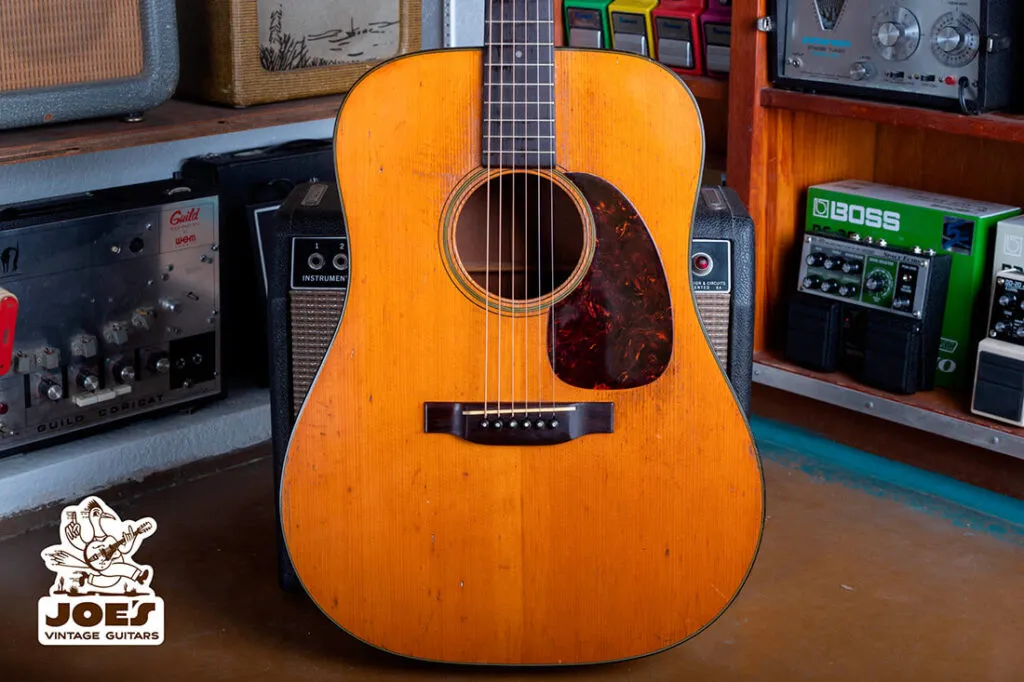
On a D-18, the braces you cannot see from the stage can matter more than the finish you can.Inspect the inside.
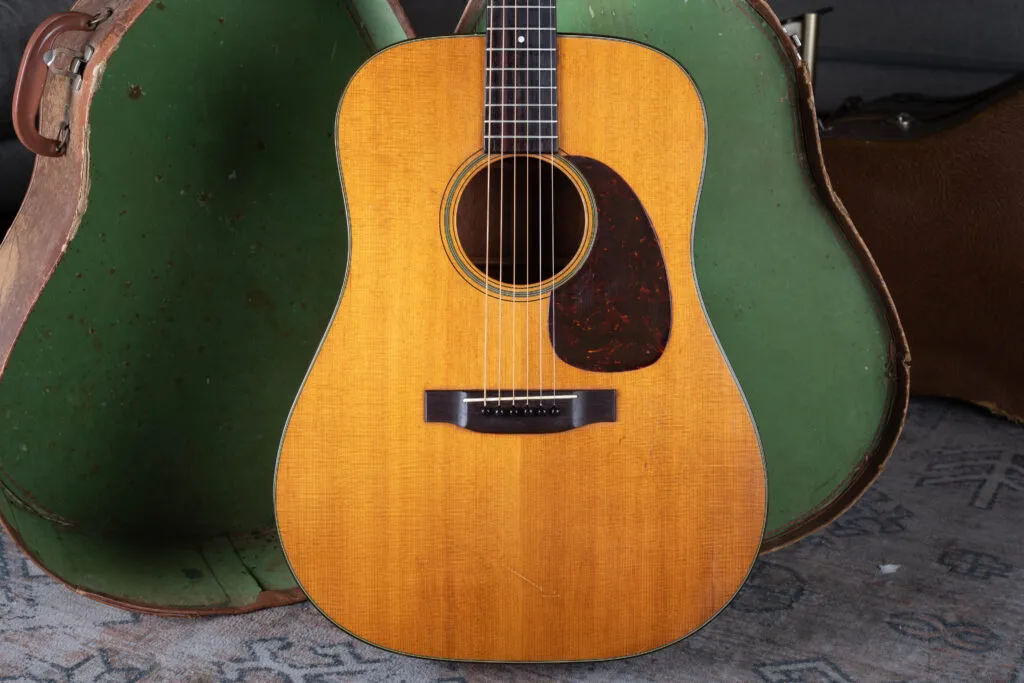
Inside the Top
Martin D-18 Bracing Changes
Forward-Shifted Scalloped
Used on the most coveted mid-1930s examples. The X intersection sits nearer the soundhole, and carved braces reduce mass. These guitars are scarce, powerful, and sensitive to top or brace alteration.
Rear-Shifted Scalloped
The X moves rearward during 1938, while scalloping continues through most of 1944. These are not lesser copies; they are a distinct prewar and wartime voice with exceptional collector demand.
Tapered
Beginning in late 1944 and especially evident in 1945 and 1946, the braces lose full scallops but retain tapered shaping. Many players value their balance of punch and openness.
Straight
Later postwar braces become less tapered and more uniform. Around 1958 the dreadnought X geometry changes again. A modern scalloped D-18 should never be confused with factory scalloping from the 1930s.
Related Stamps, Different Guitars
Martin D-18 Models and Variants
D-18
The standard 14-fret model and the center of this guide.
D-18S and D-18VS
12-fret, slotted-headstock variants with the longer body geometry. The S suffix can also mean special on other Martins, so verify the complete factory specification.
D-18E
The late-1950s factory acoustic-electric with DeArmond pickups, top-mounted controls, altered bracing, and a side jack. It is not a standard D-18 with an aftermarket pickup.
D-18P
A late-20th-century low-profile-neck variant. The suffix affects feel and identification, not merely marketing.
D-18V and D-18GE
Vintage Series and Golden Era recreations that revived forward-shifted scalloped bracing and older styling. A GE is not an original 1930s D-18.
D-18 Authentic
Historically targeted recreations such as the 1937 and 1939 interpretations. Exact year target and production date belong in any appraisal.
Artist and Limited Editions
D-18CW Clarence White, signature models, Custom Shop builds, Modern Deluxe, Satin, StreetLegend, and other limited variants can mix woods, necks, bracing, aging, and trim. Read the neck block and specification sheet.
Junior and Modern Offshoots
A D Jr-10 or D-18 Junior is not the same full-size construction as a standard D-18. Similar naming does not make the market interchangeable.
Small Parts, Strong Evidence
Martin D-18 Tuner and Pickguard Chronology
Tuners and pickguards are useful dating evidence because their materials and installation methods changed, but neither should be read alone. Martin used inventory through transition periods, suppliers changed details, and working D-18s frequently received replacement machines or guards. Compare every part with the serial number, finish, holes, and surrounding wear. The Martin tuner photo guide compares gear plates and replacement footprints. The VintageMartin tuner archive is a useful visual companion.
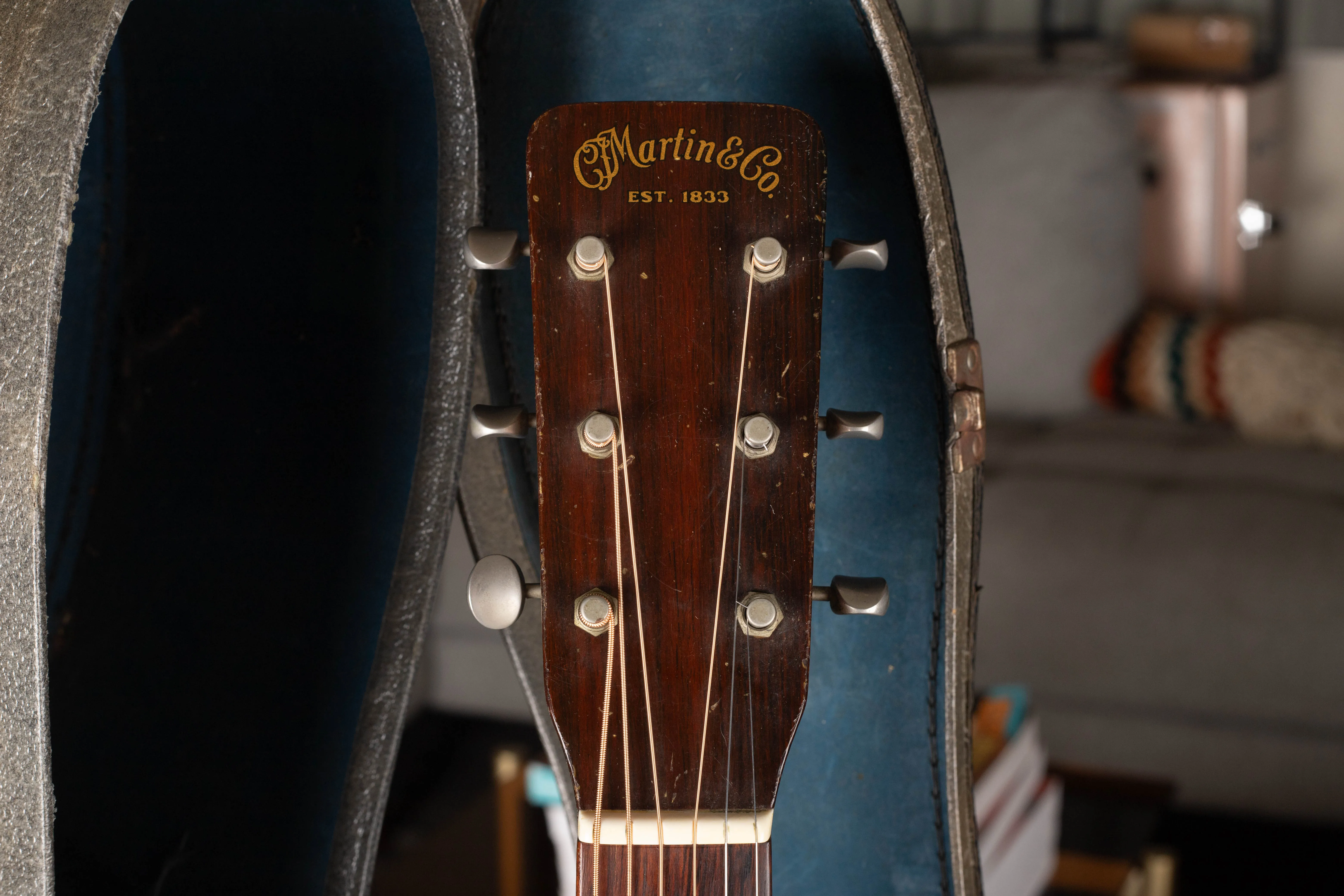
Martin D-18 Tuner Chronology
- Early 1930s: lightweight open-back machines suit the lightly built 12-fret and first 14-fret guitars. Identify them by plate outline, exposed gear, screw location, post, bushing, and button rather than by button color alone.
- Mid- to Late 1930s: open-back Grover and other period-correct supplier patterns appear. Small changes in plate ends, gear attachment, plating, and button shape can narrow the period. Exact changeovers overlap.
- 1942 to 1945: wartime metal conservation brings especially light and plain variants. Thin gears, reduced hardware, plastic buttons, and on some examples the absence of post bushings are meaningful clues. Wartime plastic buttons can shrink or crumble, so old replacements are common.
- Late 1940s and 1950s: hardware becomes more substantial as supply normalizes. Kluson and other open-back patterns occur before enclosed machines become part of the later postwar look. Check whether all six units match in plating, gear wear, and screw placement.
- 1960s and Later: enclosed tuners and changing button shapes become increasingly familiar. A 1960s peghead should show a coherent relationship among the hex bushings, posts, buttons, finish shadows, and mounting holes. Modern replacements often have a larger housing or different screw footprint.
Martin D-18 Pickguard Chronology
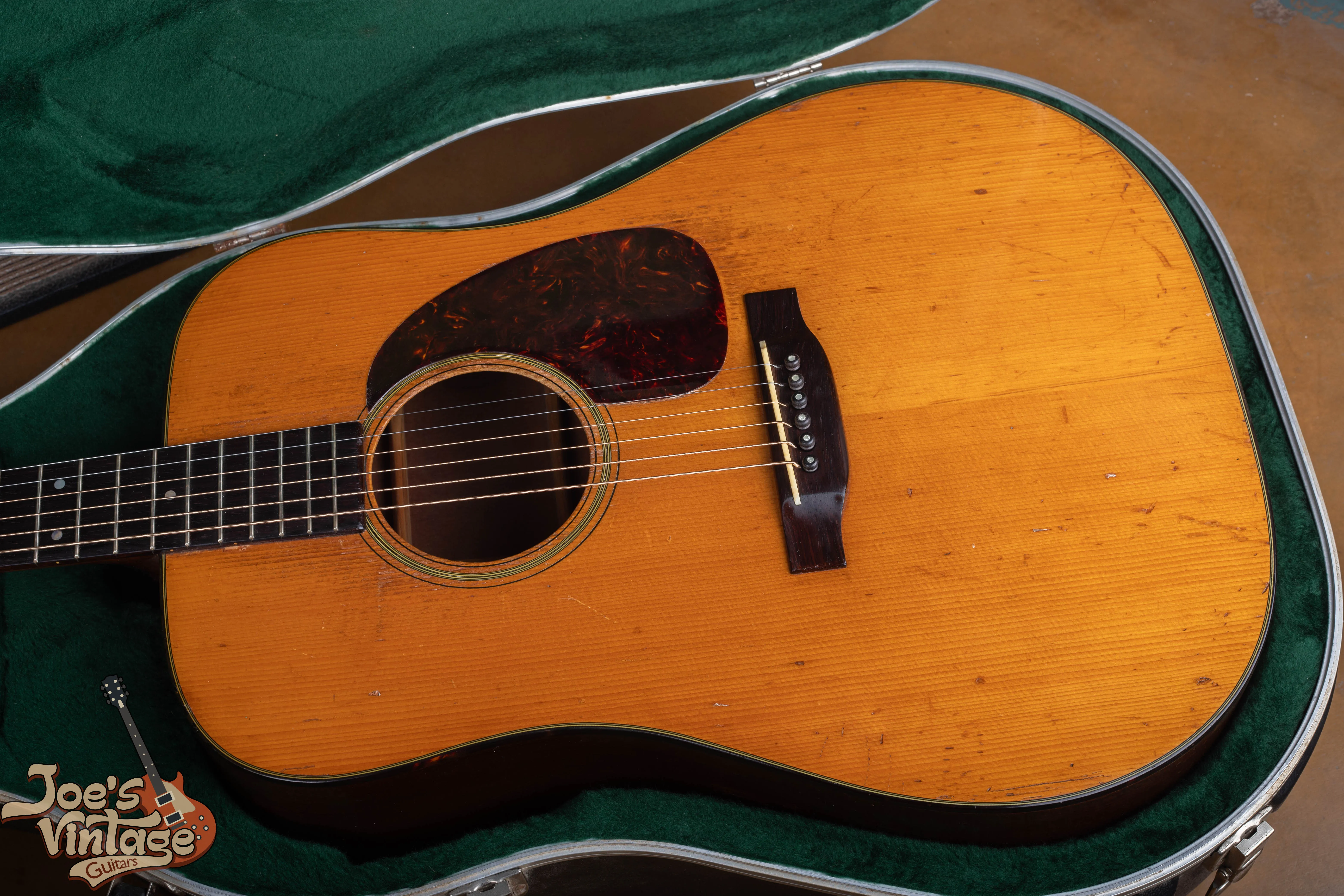
- 1930s Through the Mid-1960s: tortoise-pattern celluloid is the classic D-18 look. Color ranges from brown and amber to dark red with irregular mottling. The guard was installed in a finish relationship unlike most modern self-adhesive replacements.
- Shrinkage Evidence: vintage celluloid can contract while the spruce does not. Curling edges, a line in the lacquer, exposed pale spruce, or the common crack running near the guard are evidence to interpret, not automatic proof of originality.
- Mid- to Late 1960s: black guards replace the earlier tortoise-pattern appearance during the broader period of black trim changes. Transitional guitars should be judged by serial number and construction rather than a calendar-year shortcut.
- Later Factory Guards: material, thickness, bevel, shape, color, and application method continue to change. Later tortoise-pattern material on reissues is not the same evidence as prewar celluloid.
- Replacement Clues: look for an oversized outline, an incorrect rosette gap, a shape that crowds the bridge, finish continuing beneath a newer adhesive guard, sanding, touch-up, or the shadow of an earlier footprint.
Neck Reinforcement
Steel T-bar reinforcement defines much of the 1930s construction. Wartime guitars can return to an ebony rod, producing a larger, lighter neck. Later instruments use steel systems including the square tube, followed eventually by an adjustable truss rod. A magnet is useful, but it is not the entire diagnosis.
Fingerboard and Bridge Woods
Vintage D-18s retain ebony boards and bridges through 1946, then change to rosewood in 1947. Modern vintage-inspired editions may return to ebony, so ebony does not by itself prove an early guitar.
Long and Short Saddles
The long through saddle is a prominent early feature. Martin transitions to a short drop-in saddle during the mid-1960s. Inspect the slot ends, bridge thickness, footprint, and glue line because replacement bridges often copy the wrong period.
Bridge Plates
Small original bridge plates are part of the responsive vintage structure. The plate changes from maple to rosewood in 1968, and later examples can be substantially larger. Added cap plates, splinter repairs, plugged holes, and oversized replacements affect tone, structure, and value.
Collector Hierarchy, With Exceptions
Which Vintage Martin D-18 Years Are Most Desirable?
1934 to Mid-1938
Forward-positioned scalloped braces, red spruce, wide neck, light build, ebony appointments, and very low survival numbers place these guitars at the top.
Late 1938 to 1944
Rear-positioned scalloped bracing, red spruce, wide- or narrow-neck sub-eras, and wartime material changes create several distinct collector categories.
1945 and 1946
Tapered braces, changing top wood, and changing neck reinforcement reward exact inspection. The best examples combine vintage responsiveness with forceful fundamental tone.
1947 Through the 1950s
These are valued as powerful working guitars. Earlier examples, clean originality, excellent neck angle, and strong sound generally bring the premium within the group.
1960s
Still Brazilian-free by definition because D-18 uses mahogany, these are judged through saddle, guard, plate, neck, finish, and repair details. They can be excellent players at a lower entry price.
1970s and Later
Heavier construction, repair needs, and production variation matter. Desirable reissues and Authentic models form separate modern markets rather than inheriting prewar value.
Guitars Joe Has Handled
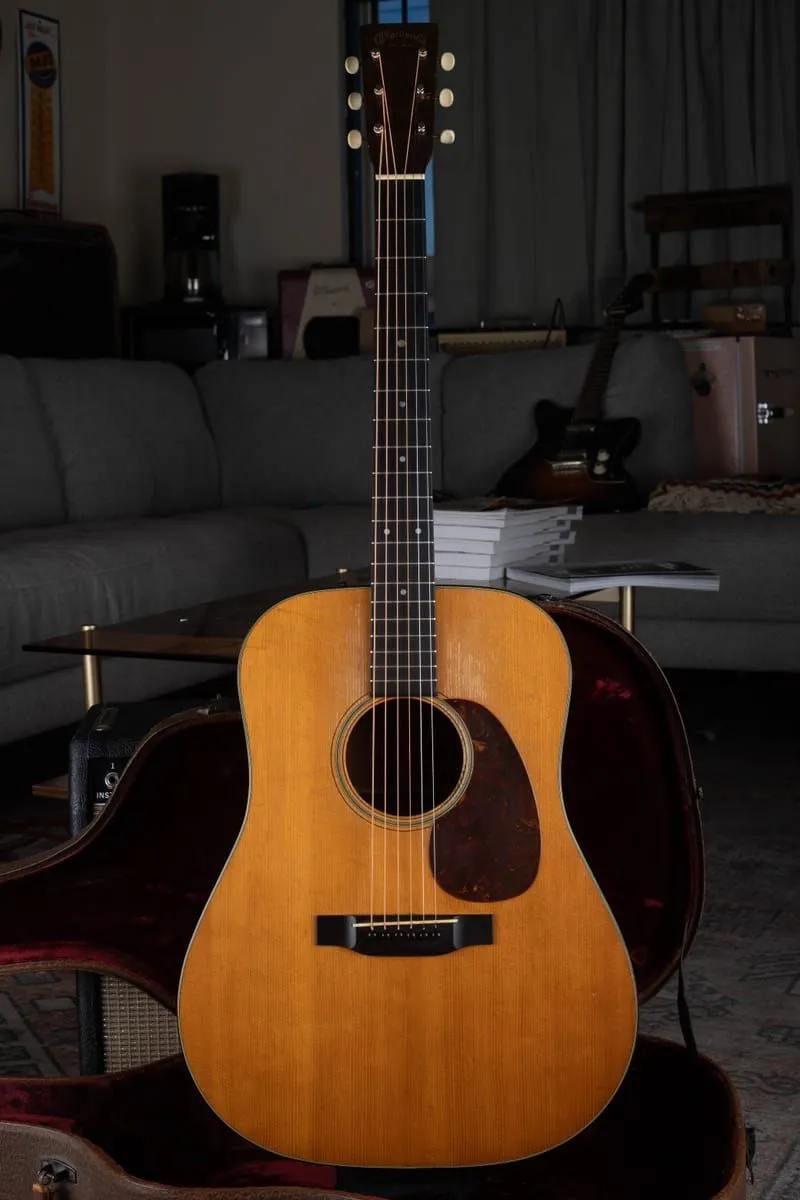
Vintage Martin D-18 Photo Archive
Inspect in Sequence
How to Authenticate a Vintage Martin D-18
Start by dating the neck-block stamp with Joe's Martin serial number guide. Compare the neck-block lettering, headstock logo and brace position and nut width with the expected year.
Model and Serial Stamp
Read both stamps on the neck block and date the serial against Martin's year-end chart. A correct number establishes a production year, not originality.
Top and Back Woods
A standard D-18 should have a spruce top with mahogany back and sides. Identify red versus Sitka spruce from several construction clues, not color alone.
X-Brace Position
Measure the X intersection in relation to the soundhole and inspect the entire brace pattern. Forward and rear positioning changed before scalloping ended.
Brace Carving
Distinguish scalloped, tapered, and straight braces. Later aftermarket scalloping is a serious alteration and should not be represented as factory work.
Neck Reinforcement
Use a magnet and inspection evidence to distinguish steel T-bar, wartime ebony reinforcement, later square tube, and modern adjustable truss rod construction.
Bridge and Bridge Plate
Confirm footprint, wood, saddle slot, pin spacing, thickness, glue, plate size, and repairs. Shaved bridges and oversized plates materially affect function and value.
Pickguard and Finish
Check guard material, shrinkage, finish beneath the guard, lacquer checking, overspray, touch-up, and sanding. A refinish can look cleaner than an original guitar.
Tuners and Footprints
Match plate shape, screw spacing, post holes, bushings, buttons, plating, and finish shadows to the period. Correct-looking replacements remain replacements.
Neck Angle and Frets
A professional neck reset or refret can be appropriate maintenance. Look for heel gaps, altered fingerboard extension, low saddle, excessive action, and poor prior work.
Cracks and Internal Repairs
Inspect the bridge area, pickguard crack, center seam, sides, loose braces, cleats, top distortion, and neck block. Repair quality matters more than the mere existence of an old crack.
Comparable Sales, Then the Guitar
Vintage Martin D-18 Values
These broad market ranges come from Joe's existing Martin dreadnought value guide. They are orientation, not an offer. The same year can move dramatically with originality, top and brace work, finish, neck angle, cracks, provenance, and sound.
Broad Vintage Martin D-18 Value Ranges
Prewar
1931 to 1944
$25,000 to $110,00012/14-fret form, forward/rear X position, neck width, wartime features, originality, and conditionTransition and Early Postwar
1944 to 1949
$12,000 to $45,000Scalloped, tapered, or straight braces; red or Sitka top; neck reinforcement; finish; and repairsPostwar
1950 to 1959
$7,000 to $11,000Condition, originality, neck reset, bridge and plate work, sound, and caseLater Vintage
1960 to 1969
$3,000 to $6,000Saddle, pickguard, bridge plate, cracks, finish, neck angle, and market timingPublic asking prices are not sold prices. For the complete dreadnought comparison, see the Martin D-18, D-28, and D-45 value guide. For an individual guitar, send Joe photographs for a free appraisal.
Vintage Martin D-18Frequently Asked Questions
What years are the most valuable Martin D-18 guitars?
When did Martin stop scalloping D-18 braces?
When did Martin change the D-18 from Adirondack to Sitka spruce?
What is the difference between a Martin D-18 and D-28?
How can I tell if a vintage Martin D-18 is original?
Does a neck reset reduce the value of a Martin D-18?
How much is a vintage Martin D-18 worth?
What do D-18S, D-18E, D-18V, D-18GE, and D-18 Authentic mean?
The Rule That Holds Up
Buy the D-18 in Front of You.
The model stamp opens the file. The year narrows the expected specification. The wood, braces, neck, bridge plate, finish, tuners, repairs, setup, and sound decide what the guitar actually is and what it is worth.