Specific Model Highlights

17 04, 2026

Fender Precision Bass 1957–1959: Identification, Specs & Value

2026-04-17T19:57:38+00:00April 17, 2026|

Defined by its gold anodized pickguard and revolutionary split-coil pickup, the 1957–1959 Fender Precision Bass marked the birth of the modern electric bass. Here's a full breakdown of specs, authenticity markers, and market values for one of the most collectible instruments in the Fender canon — year by year.

13 04, 2026

1968 Gibson ES-335: The Complete Buyer’s & Collector’s Guide

2026-04-14T16:23:32+00:00April 13, 2026|

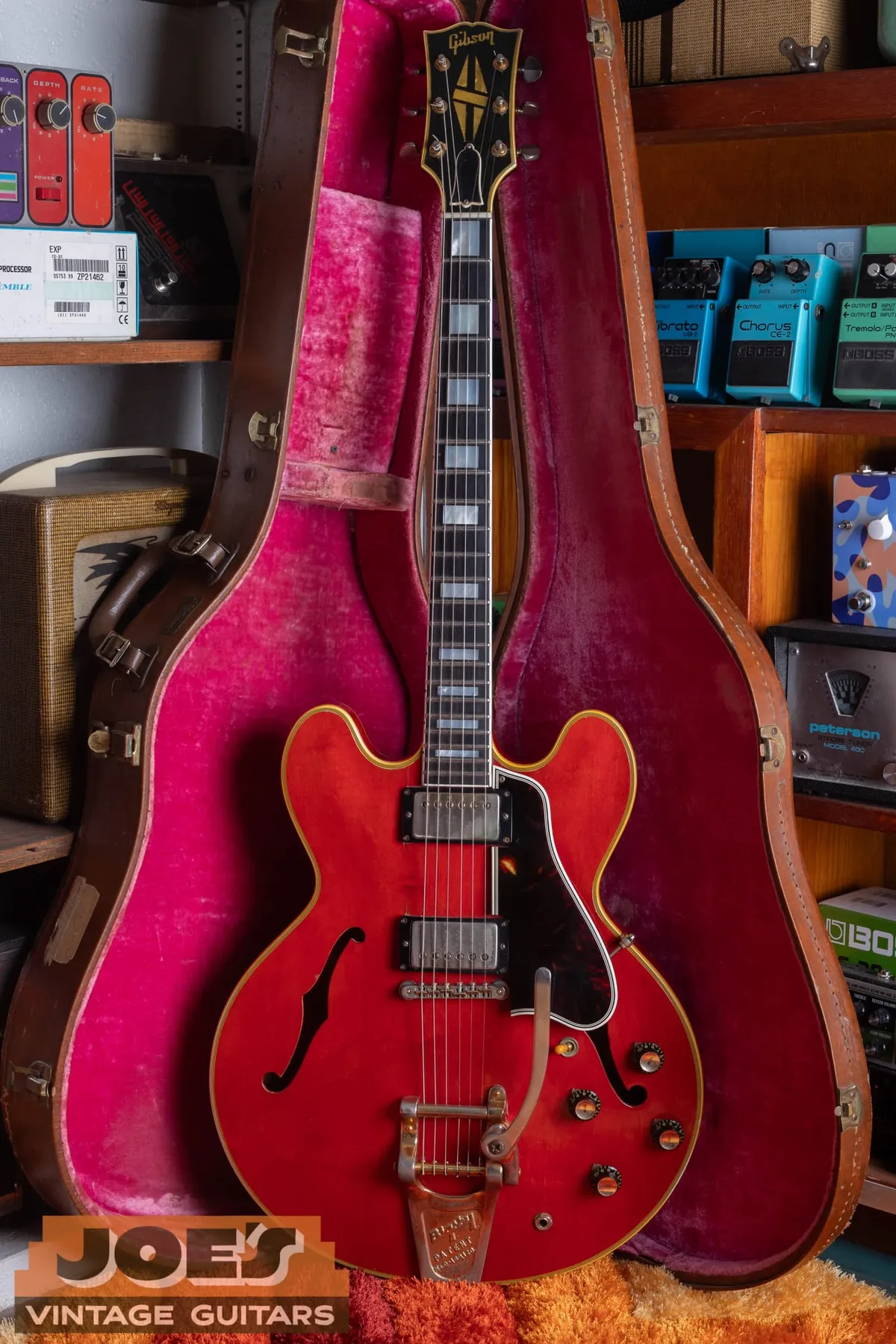
The 1968 Gibson ES-335 marks the final year of Gibson's one-piece mahogany neck and long tenon joint — the last of the true Kalamazoo-era semi-hollows before the construction changes of 1969. This guide covers finish rarity, hardware authentication, pot code dating, and current market values for collectors and sellers.

7 04, 2026

The Original 1968 & 1969 Pink Paisely Telecaster

2026-04-07T21:52:45+00:00April 7, 2026|

Few guitars carry more forensic intrigue than an original 1968 or 1969 Fender Pink Paisley Telecaster. This complete guide covers the Cling-Foil finish chemistry, neck dating, CBS-era hardware, and the "puzzle piece" authentication test every serious buyer needs to know.

26 03, 2026

Complete Dot Neck ES-330 Authentication Guide & Timeline (1958-1962)

2026-04-01T16:45:22+00:00March 26, 2026|

The dot-neck Gibson ES-330 is one of the most misunderstood guitars of Gibson's golden era. Fully hollow, dogear P-90 equipped, and joining the body at the 16th fret — not the 17th, not the 19th — it's a fundamentally different instrument from the ES-335 it's so often compared to. This guide covers every specification of the 1959–1962 dot-neck era in exhaustive detail: neck profiles by year, knob changes, saddle materials, serial numbers, FON dating, cases, pickguard construction, vibrato variants, and every other detail that separates an original example from a modified one — and a 1959 from a 1962.

17 03, 2026

The Complete Fender Jazzmaster Evolution Guide: Every Spec Change from 1958 to 1971

2026-03-24T18:47:49+00:00March 17, 2026|

The Fender Jazzmaster changed more times in its first 14 years than almost any other model in the Fender lineup. This guide documents every spec change year by year — gold guard to tortoiseshell, slab to veneer, clay dots to pearl to blocks, spaghetti to CBS black logo, Klusons to F-tuners, and a complete custom color reference with the correct pickguard pairing for every finish.

17 03, 2026

The Definitive 1966 Gibson ES-335 Authentication Guide: Patent Number Pickups, Trapeze Tailpiece & Every Pre-Norlin Detail

2026-03-24T20:49:09+00:00March 17, 2026|

The 1966 Gibson ES-335 is a pre-Norlin Kalamazoo instrument built to the same standard as the celebrated early 1960s examples — Patent Number humbuckers, ABR-1 bridge with nylon saddles, trapeze tailpiece, and tortoise side dots that most buyers don't even know to look for. This guide covers every authentication detail with close-up photos of a complete mint original, including one of the rarest finds in vintage Gibson collecting: a full set of intact case candy.

16 03, 2026

The Definitive 1962 Fender Stratocaster Authentication Guide: Slab Board, Black Pickups & Pre-CBS Details

2026-03-24T20:51:02+00:00March 16, 2026|

The 1962 Fender Stratocaster sits at the end of the first golden age of Fullerton production — pre-CBS, pre-veneer on early examples, and built to a standard that has never been matched. The defining challenge of authenticating a 1962 is the mid-year slab-to-veneer rosewood transition, but there's far more to it: black-bottom pickups, pot code triangulation, the puzzle piece finish test, nail holes with bare wood inside, and a mint-green pickguard that only original celluloid produces. This guide covers every detail.

16 03, 2026

1959 Fender Telecaster Authentication Guide: Originality & Specs Check

2026-03-24T20:51:33+00:00March 16, 2026|

The 1959 Fender Telecaster is the most transition-dense year in the instrument's history — slab rosewood fingerboard, top-loader bridge reversal, the Telecaster Custom introduction, and a mid-year gap where Fender employees were ordered to stop dating necks entirely. This guide covers every feature change, every dating method, and every detail that separates a genuine 1959 from a reissue or misrepresented example.

Go to Top