

Classical Guitars · 1936 To 1969
Martin Classical Guitars: G, C And N Changes
Martin’s dedicated classical line developed from the G series to the C and N families: G models from 1936, the C series from 1962, and the more Spanish-influenced N series from 1968. These families changed body shape and internal construction, while offering separate mahogany and rosewood versions.
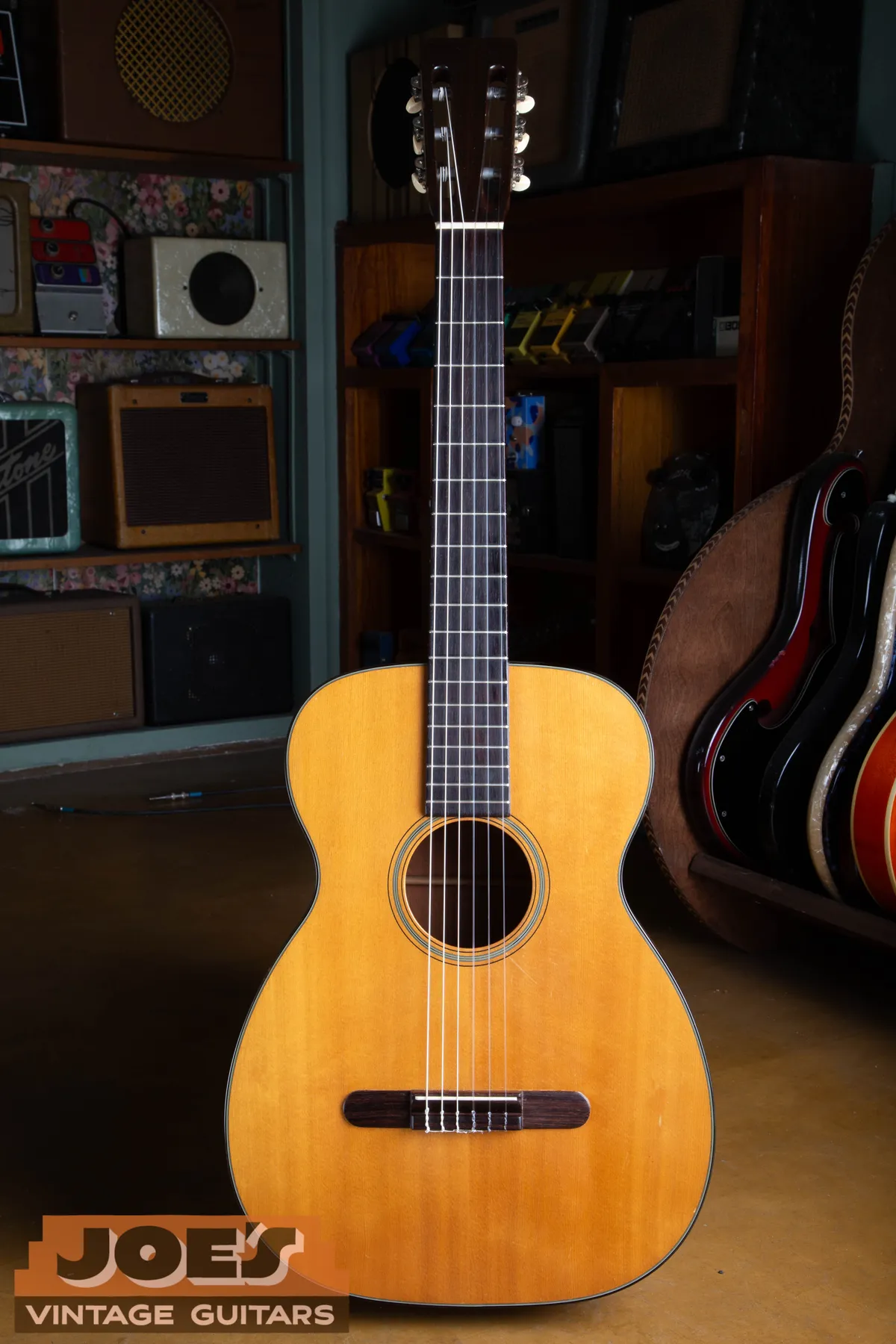
- G Series
- From 1936
- C Series
- From 1962
- 00-28C Added
- 1966
- N Series
- From 1968
- Coverage
- Original Designs Through 1969
Models Covered In This Article
- 00-18G
- 00-28G
- 00-18C
- 00-28C
- 000-28C
- N-10
- N-20
Model Changes By Year
| Year Or Period | What Changed |
|---|---|
| 1936 | The G series established a dedicated gut-string line after the standard guitar range had moved toward steel strings. |
| 1962 | The C series succeeded the G line. The 00-18C used the traditional elongated 12-fret 00 outline, and the 000-28C offered a larger rosewood body. |
| 1966 | The rosewood 00-28C joined the range as a smaller companion to the 000-28C. |
| 1968 | The N-10 and N-20 introduced a more Spanish-style classical body design. |
| 1968 And 1969 | The early N-20 used a 25.4-inch scale, traditional Martin slotted headstock, seven fan braces and no bridge plate. |
| 1969 | The 000-28C’s original run ended. The rosewood classical models reached Martin’s transition away from standard Brazilian rosewood production. |
1936: The G Series Restores A Dedicated Gut-String Line
After Martin’s standard Spanish-playing guitars moved toward steel strings in the 1920s, the G series supplied a separate gut-string design from 1936. Early experiments varied, so the familiar later G configuration should not be assigned unchanged to every first-year instrument.
The 00-18G used mahogany back and sides, while the 00-28G supplied rosewood. Both belonged to the lighter-string classical branch, with their own construction rather than the contemporary steel-string dreadnought timetable.
The Established G Body And Bracing
The later G design combined a 12-fret neck joint with the outline associated with the 14-fret 00 body. That combination placed the bridge differently from a traditional elongated 12-fret 00. A tie bridge secured the strings without the usual steel-string bridge pins.
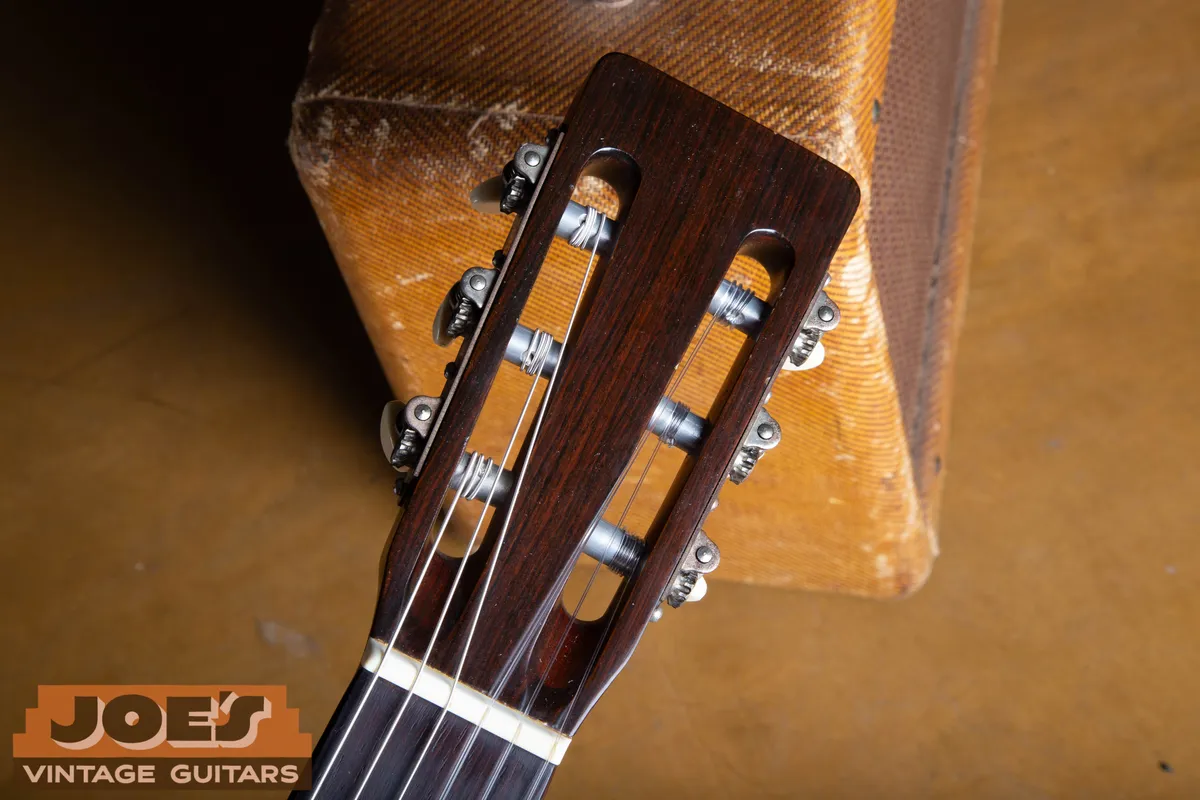
The 00-28G bracing system used three fan struts and a mahogany bridge plate. These internal features distinguish the G design from the later N-20, whose seven-fan system omitted the bridge plate. The 1955 00-18G photographs here illustrate the established G-era string attachment.
1962: The C Series Changes The Body Outline
The C series succeeded the G line in 1962. The mahogany 00-18C used the longer, traditional 12-fret 00 outline with fan bracing. The C designation accompanied this change to the body outline.
The rosewood 000-28C offered a larger body. Its production ran from 1962 through 1969. Size and style still mattered within the classical range: 00 and 000 identified different body families, while Style 18 and Style 28 separated the mahogany and rosewood versions.
1966: The Rosewood 00-28C Joins The Range
The 00-28C added a smaller rosewood classical in 1966, with ebony fittings. It joined the 000-28C rather than immediately replacing it.
Both rosewood C body sizes therefore appear in the later 1960s. Their coexistence prevents a simple rule that every C-series rosewood Martin must be a 000 before 1966 and a 00 afterward.
1968 And 1969: The N Series
The N-10 and N-20 arrived in 1968 with a more Spanish-influenced classical body. The N-10 used mahogany back and sides; the N-20 used rosewood. The early N-20 retained a 25.4-inch scale and Martin’s familiar slotted-headstock form.
Inside, the N-20 used seven fan braces and no bridge plate. That was a structural difference from the 00-28G’s three-strut and plate arrangement. Later N-series redesigns fall outside this guide’s 1969 endpoint.
Rosewood classical models also reached the late-1969 change toward East Indian rosewood. The G, C and N suffixes describe their design families; the wood species still depends on the production period and the actual instrument.
Did The C Series Begin In 1962 Or 1966?
The C series began in 1962. The 1966 date belongs to the smaller rosewood 00-28C’s addition to the range. The larger 000-28C was already in production and continued through 1969.
Are The New Yorker Models Part Of The Classical Series?
The 0-16NY and 00-21NY used 12-fret necks and slotted headstocks, but retained X-bracing. They belong to the small-body and New Yorker history, separate from the fan-braced G, C and N families.
Martin Identification Resources
- Martin Neck-Block Stamps
Document the complete classical suffix and serial separately.
- Small And Early Guitar Authentication
Find the earlier gut-string families that precede the G, C and N designs.
- Martin Serial And Model Numbers
Find the production year from the neck-block serial.
- Martin Construction And Dating
Follow changes in bridges, necks, braces and materials.
- Sell A Martin Guitar
Send Joe the details of a Martin you are considering selling.
Martin Owners On Working With Joe
“feeling no regrets after selling our 1920’s Martin on to these folks”
“they took the time to look at the photos of my Martin D18 and emailed back an appraisal”
Your Martin’s Model, Year And Condition
Send Joe Photos Of Your Martin
Include the front, back, headstock, model and serial markings, and any known repairs.
Photo Credits
Photographs from the Joe’s Vintage Guitars archive. Each caption identifies the instrument shown, including comparison photographs.