

Small And Early Guitars · Early Designs Through 1969
Early And Small Martin Guitars: Changes By Era
Martin’s smaller guitars developed over more than a century, from early European-influenced designs to numbered sizes and styles, then to steel-string and 14-fret models. Changes followed different schedules for different sizes and styles. The dates below name the affected family instead of treating every small Martin as one model.
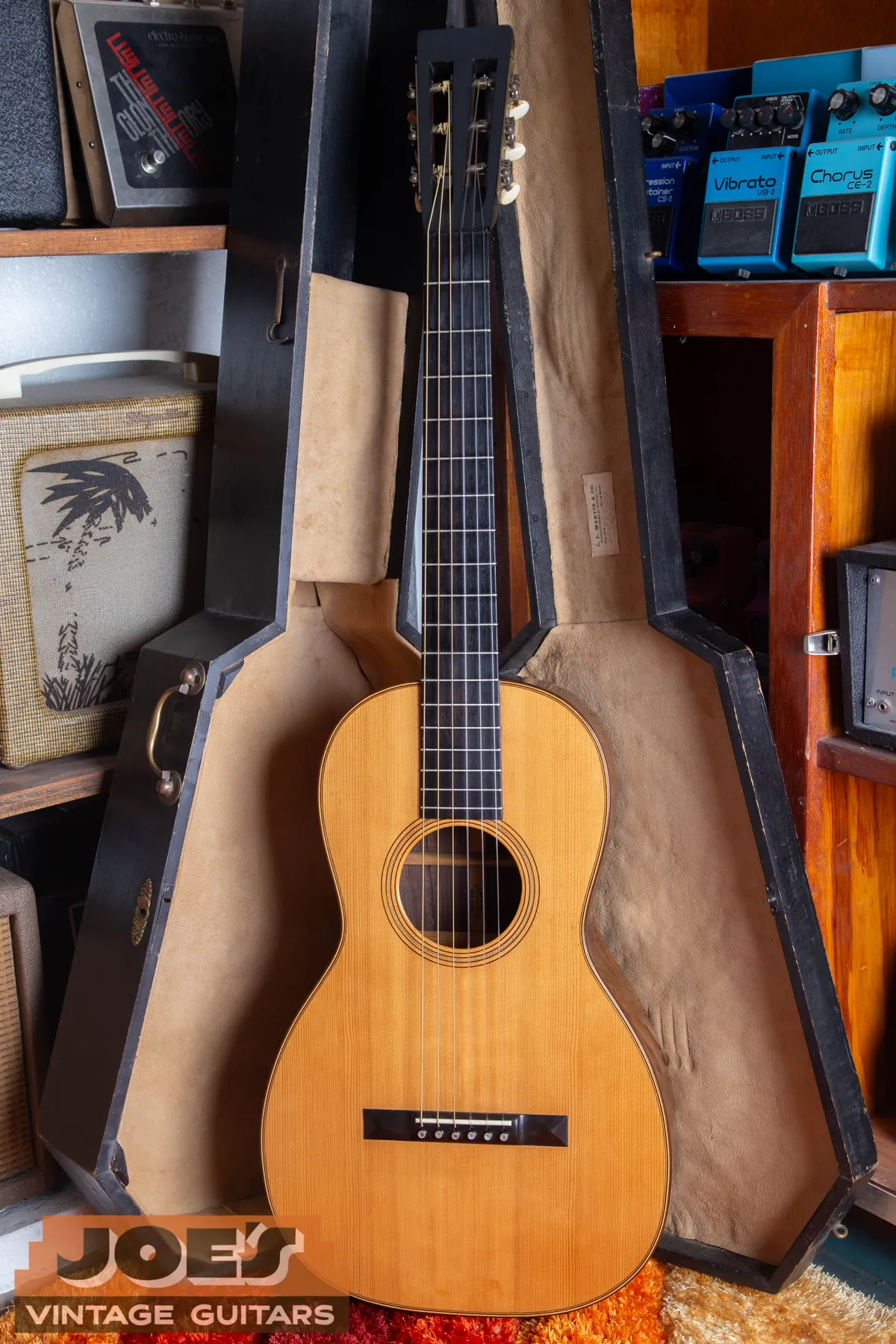
- Scope
- Early Sizes, Small Bodies, Hawaiians And New Yorkers
- Style 18 Becomes Mahogany
- 1917
- Standard Steel-String 2-17
- 1922
- 14-Fret 0-17 And 0-18
- 1932
- New Yorker Models
- 1961
Models Covered In This Article
- 1-17
- 1-18
- 1-21
- 1-26
- 1-27
- 1-28
- 1-42
- 2-17
- 2-18
- 2-20
- 2-21
- 2-27
- 2-34
- 2-40
- 2-42
- 2 1/2-17
- 2 1/2-20
- 2 1/2-24
- 2 1/2-26
- 2 1/2-30
- 5-18
- 5-20
- 5-21
- 5-28
- 1-30
- 2-30
- 5-17
- 00-17
- 00-18
- 00-21
- 00-28
- 00-30
- 00-42
- 00-45
- 0-15
- 0-17
- 0-18
- 0-21
- 0-28
- 0-30
- 0-34
- 0-40
- 0-42
- 0-45
- 0-17H
- 0-18K
- 0-21K
- 0-28K
- 00-18H
- 00-18K
- 00-28K
- 00-40H
- 2-17H
- 0-16NY
- 00-21NY
Model Changes By Year
| Year Or Period | What Changed |
|---|---|
| 1830s To Mid-1800s | Early Stauffer-influenced construction gave way gradually to Spanish-influenced forms and the developing Martin body and bracing patterns. |
| 1850s To 1902 | Style numbers and body sizes became more standardized. Size 0 appeared in the 1850s, 00 in the 1870s, and 000 in 1902. |
| 1916 | Koa Hawaiian guitars supplied to Southern California Music Company established an early steel-string branch. |
| 1917 And 1918 | Style 18 back and sides changed from rosewood to mahogany in 1917. Style 28 body binding changed from ivory to grained celluloid in 1918. |
| 1922 | The all-mahogany 2-17 revived Style 17 as a standard Spanish-playing steel-string model. |
| 1923 And 1926 | Steel strings became standard on Style 18 in 1923 and Style 28 in 1926. Special-order gut-string guitars remained possible. |
| 1926 And 1929 | Style 18 moved from pyramid to plain rectangular bridges in 1926; Style 21 followed in 1929. |
| 1932 | The 0-17 and 0-18 adopted 14-fret body forms. Other small models followed their own schedules. |
| 1930s And 1940 | Small Style 18 models changed binding and fitting materials. Most settled on rosewood fingerboards and bridges in 1940 after earlier variation. |
| 1961 | The 0-16NY and 00-21NY revived 12-fret, slotted-headstock forms with plain fingerboards and no pickguards. |
| 1965 And 1966 | The usual steel-string saddle changed to a short drop-in form in 1965. Style 18 body binding changed to black Boltaron in 1966. |
The 1800s: Designs Become Sizes And Styles
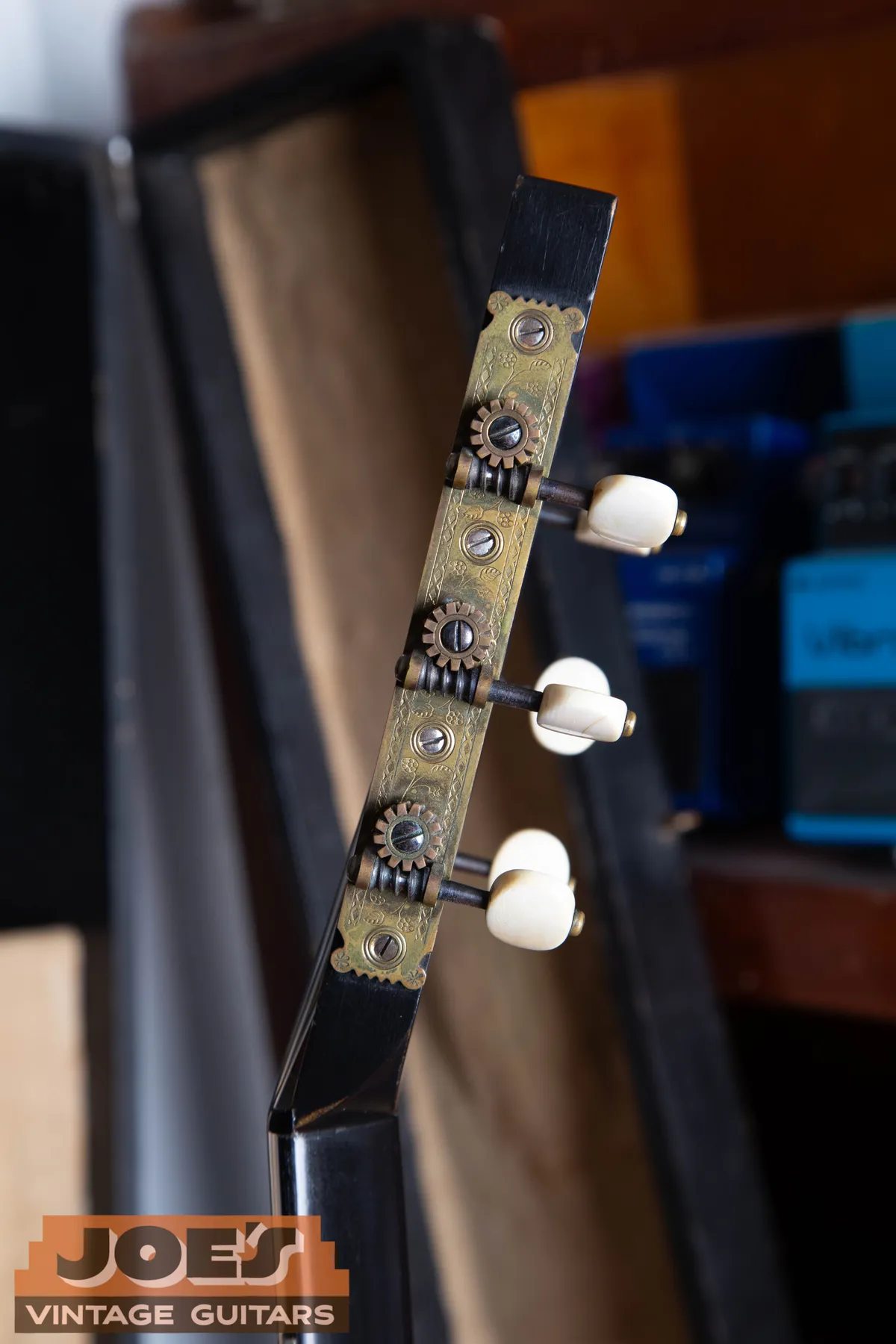
Early Martin guitars included Stauffer-style headstocks with tuners arranged on one side and adjustable-neck construction. Spanish-influenced designs and the developing Martin bracing system followed during an overlapping period of experimentation.
During the nineteenth century, repeatable body sizes and trim styles became more established. Style 28 used a herringbone top border; Style 26 used a half-herringbone border. Size 0 expanded the concert range in the 1850s, size 00 followed in the 1870s, and the larger 000 arrived in 1902. Earlier custom guitars do not always fit the later catalog combinations.
1916 To 1926: Koa, Mahogany And Steel Strings
The koa Hawaiian guitars supplied in 1916 were an early steel-string branch. Their intended playing position and setup differed from ordinary Spanish-playing guitars. That development preceded the broader move to steel strings in the standard line.
Style 18 changed from rosewood to mahogany back and sides in 1917 while retaining a spruce top. In 1922, the all-mahogany 2-17 revived Style 17 as a steel-string model. Steel strings became standard on Style 18 in 1923 and Style 28 in 1926. Gut-string special orders continued, so the transition was not one date for every small Martin.
1926 To 1934: Bridges And Neck Joints Change
Style 18 changed from pyramid bridges to plain rectangular bridges in 1926, and Style 21 followed in 1929. The belly bridge entered the Orchestra Model period in 1930. These are separate design steps, not different names for one bridge.
The 0-17 and 0-18 adopted 14-fret bodies in 1932. Their upper body outlines changed to provide the extra frets clear of the body. Other small models retained 12-fret configurations or changed on different schedules. Martin introduced T-shaped frets and steel T-bar neck reinforcement in its standard steel-string line in 1934; Hawaiian and special-order construction needs its own chronology.
The 1930s And 1940: Style 18 Materials Change
Style 18’s rosewood body binding gave way to black Fiberloid in 1934, followed by tortoise-colored plastic later in the decade. The exact sequence varied with body size.
Fingerboards and bridges also varied. Most smaller Style 18 guitars briefly used rosewood fittings in 1935, then returned chiefly to ebony before changing again to rosewood in 1940. The later D-18 material timetable should not be transferred to every 0, 00 and 000. The 0, 00 and 000 guide follows those families in more detail.
1961: The New Yorker Models
The 0-16NY and 00-21NY returned to 12-fret neck joints and slotted headstocks. Both omitted the usual pickguard and front fingerboard markers. The 0-16NY used mahogany back and sides; the 00-21NY used rosewood.
These guitars retained X-bracing. Their plain appearance and slotted headstocks do not make them members of the fan-braced G and C classical families. The New Yorker designation describes a 1960s design program inspired by earlier Martins, not a nineteenth-century production date.
1965 To 1969: Later Construction Changes
In 1965, the usual Martin steel-string bridge moved from the long through saddle to a short drop-in saddle. Style 18 binding changed from tortoise-colored material to black Boltaron in 1966.
Rosewood-bodied small guitars also reached Martin’s late-1969 transition toward East Indian rosewood. Those wood changes did not alter the distinction between size numbers and style numbers: the size identifies the body family, while the style identifies its appointment and material package.
Did All Small Martins Change To Steel Strings Together?
No. Hawaiian steel-string instruments preceded the regular Spanish-playing steel-string line. The all-mahogany 2-17 appeared in 1922, Style 18 followed in 1923, and Style 28 in 1926. Special orders and earlier instruments require their own construction history.
When Did Martin Begin Using Serial Numbers?
Martin’s regular guitar serial-number sequence began in 1898. Many earlier guitars therefore lack a modern-style serial. Model stamping became common later, around 1930. The serial and model-number guide explains those marking changes.
Martin Identification Resources
- Martin Model Numbers
Separate body size from style and preserve meaningful suffixes.
- Martin Serial And Model Numbers
Find the production year from the neck-block serial.
- Martin Construction And Dating
Follow changes in bridges, necks, braces and materials.
- Sell A Martin Guitar
Send Joe the details of a Martin you are considering selling.
Martin Owners On Working With Joe
“feeling no regrets after selling our 1920’s Martin on to these folks”
“they took the time to look at the photos of my Martin D18 and emailed back an appraisal”
Your Martin’s Model, Year And Condition
Send Joe Photos Of Your Martin
Include the front, back, headstock, model and serial markings, and any known repairs.
Photo Credits
Photographs from the Joe’s Vintage Guitars archive. Each caption identifies the instrument shown, including comparison photographs.