

Twelve-String Guitars · Through 1969
Martin D12-20 And D12-35 History And Changes
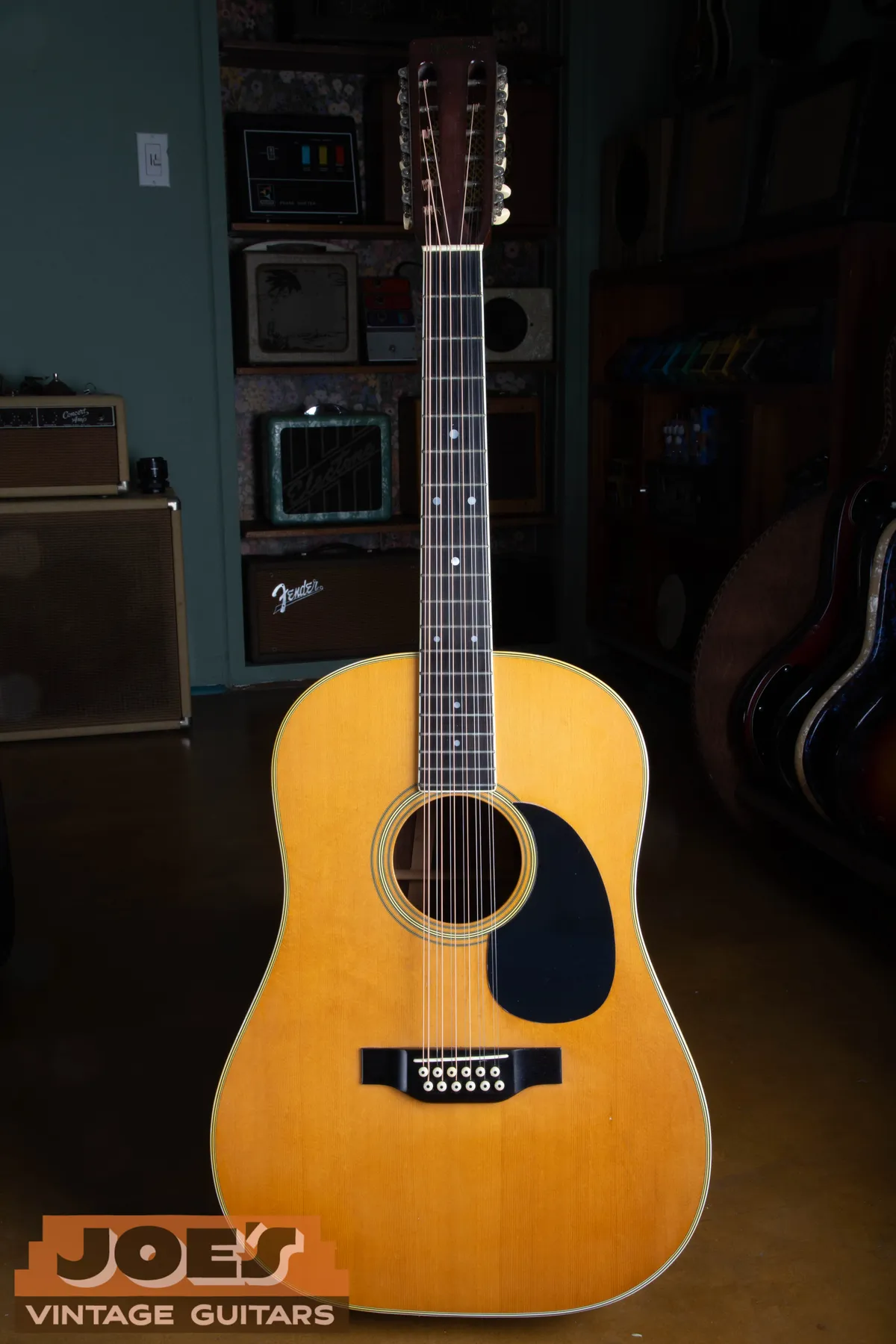
Martin’s regular twelve-string dreadnought line began with the D12-20 in late 1964, followed by the D12-35 in 1965. Both used a 12-fret body and short scale. Their first years brought pickguard and bridge-plate changes, while the D12-35 also reached the late-1969 rosewood transition.
- D12-20 Begins
- Late 1964; Cataloged In 1965
- D12-35 Added
- 1965
- Original Scale
- 24.9 Inches
- Neck Joint
- 12th Fret
- Body Woods
- D12-20 Mahogany; D12-35 Rosewood
Model Changes By Year
| Year Or Period | What Changed |
|---|---|
| 1921 And 1932 | A 1921 twelve-string 00-21 and a 1932 C-2 order were special projects, not a continuous catalog twelve-string line. |
| Late 1964 | The first D12-20 guitars were completed. |
| 1965 | The D12-20 entered the catalog with a spruce top, mahogany back and sides, rosewood fittings, 12-fret neck and slotted headstock. |
| 1965 | The D12-35 added a three-piece Brazilian rosewood back, bound ebony fingerboard and ebony bridge. Both models used a 24.9-inch scale and 1 7/8-inch nut. |
| 1967 Transition | Black pickguards replaced the earlier tortoise-pattern material, with transitional examples retaining the earlier guard. |
| 1968 | Rosewood bridge plates began replacing maple, within Martin’s factory plate-material transition dated April 9, 1968. |
| Late 1969 | The D12-35 reached the change from Brazilian toward East Indian rosewood for standard back-and-side production. |
Before 1964: Special Twelve-String Orders
Martin built occasional twelve-string instruments long before the D12 models. A purpose-built 00-21 was shipped in 1921, and an unusual C-2 archtop order followed in 1932.
Those isolated projects did not establish an uninterrupted twelve-string catalog family. The late-1964 D12-20 marks the beginning of the regular dreadnought program covered here.
Late 1964 And 1965: The D12-20
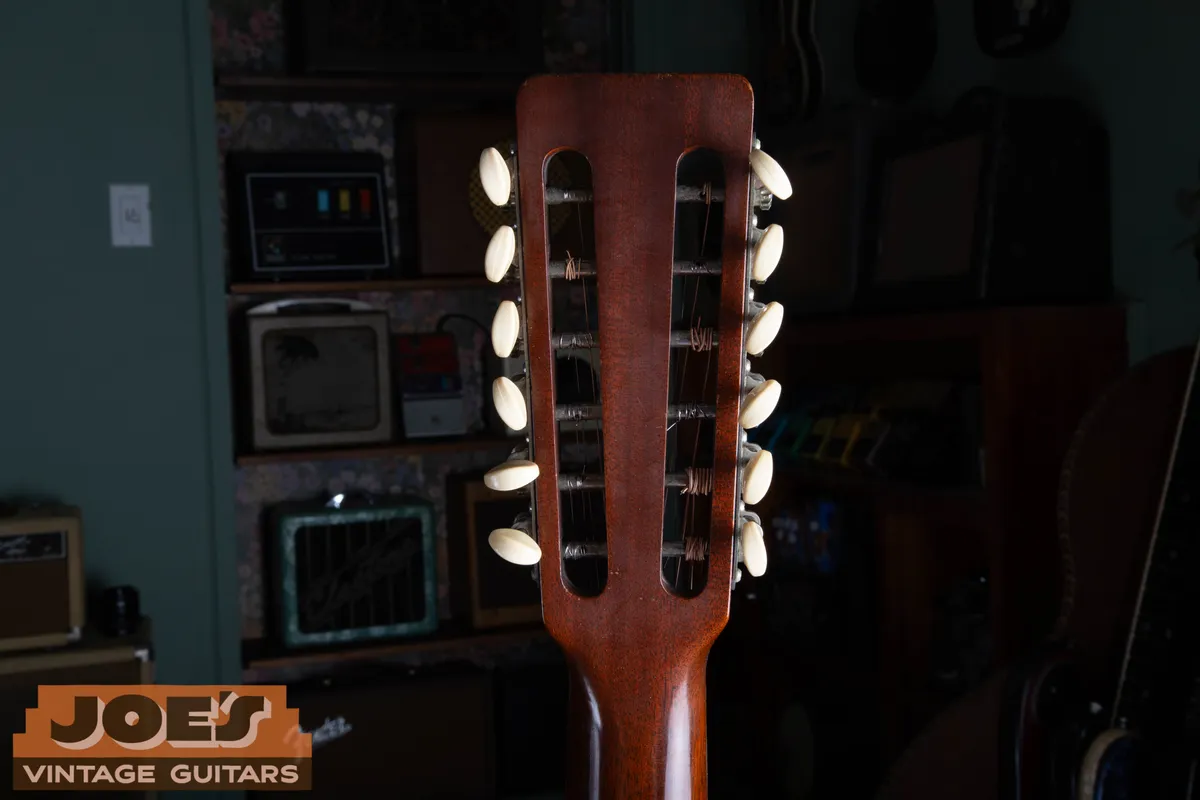
The first D12-20s were completed late in 1964 and appeared in the 1965 catalog. The design used a spruce top, mahogany back and sides, rosewood fingerboard and bridge, and a slotted headstock with six tuners on each side.
The neck joined the body at the twelfth fret. A 24.9-inch scale and 1 7/8-inch nut separated it from the usual long-scale, 14-fret six-string dreadnought. The bridge and headstock were laid out for twelve strings from the start.
1965: The D12-35 Adds Rosewood And Style 35 Trim
The D12-35 joined the line in 1965. Its three-piece Brazilian rosewood back, bound ebony fingerboard and ebony bridge supplied a more elaborate alternative to the mahogany D12-20.
It retained the twelve-string family’s 12-fret neck joint, 24.9-inch scale and 1 7/8-inch nut. The three-piece back connected it visually to the six-string D-35, but the short scale and twelve-string layout made the D12-35 a separate design.
1967: The Pickguard Transition
Early D12-20 and D12-35 guitars used tortoise-pattern pickguards. Black material entered during the 1967 transition.
This was a running production change. Some documented 1967 instruments retain the earlier tortoise-pattern guard, so 1967 should not be treated as a calendar boundary that makes every guitar identical. The mahogany-versus-rosewood distinction between the two models remained.
1968 And 1969: Bridge Plates And Rosewood
Rosewood bridge plates began replacing the earlier maple plates in 1968. Martin’s broader factory change is dated April 9, 1968; a separate exact D12 serial cutoff is not established here. Plate material and plate dimensions are different specifications and need not have changed together.
The D12-35 reached the late-1969 shift toward East Indian rosewood for standard back-and-side production. The D12-20 remained the mahogany-bodied model. A 1969 serial does not, by itself, establish the species of a D12-35’s rosewood panels.
Did The D12-35 Have The Same Scale As The D-35?
The original D12-35 used a 24.9-inch scale. The six-string D-35 used the longer 25.4-inch scale. Their shared Style 35 designation does not mean their neck and string layouts were the same.
Was 1965 The First Year Of The D12-20?
It was the catalog introduction year. The first D12-20 instruments were completed in late 1964. The Martin serial-number chart dates production separately from the year a model appeared in a catalog.
Martin Identification Resources
- Martin Neck-Block Stamps
Keep D12 model marks distinct from similar six-string names.
- Archtop Authentication
Follow the different body and bridge checks for rare carved-top twelve-strings.
- Martin Serial And Model Numbers
Find the production year from the neck-block serial.
- Martin Construction And Dating
Follow changes in bridges, necks, braces and materials.
- Sell A Martin Guitar
Send Joe the details of a Martin you are considering selling.
Martin Owners On Working With Joe
“feeling no regrets after selling our 1920’s Martin on to these folks”
“they took the time to look at the photos of my Martin D18 and emailed back an appraisal”
Your Martin’s Model, Year And Condition
Send Joe Photos Of Your Martin
Include the front, back, headstock, model and serial markings, and any known repairs.
Photo Credits
Photographs from the Joe’s Vintage Guitars archive. Each caption identifies the instrument shown, including comparison photographs.