
Joe's Vintage Guitars - Preserving History One Guitar at a Time

Vintage guitar authentication guide

How to Spot a Fake Fender Guitar

Fender authenticity is a timeline problem. The neck, body, finish, hardware, plastics, pickups, potentiometers, and hidden dates should belong to the same model and production window.

Use several clues togetherModel and year matterPhotos are enough to start
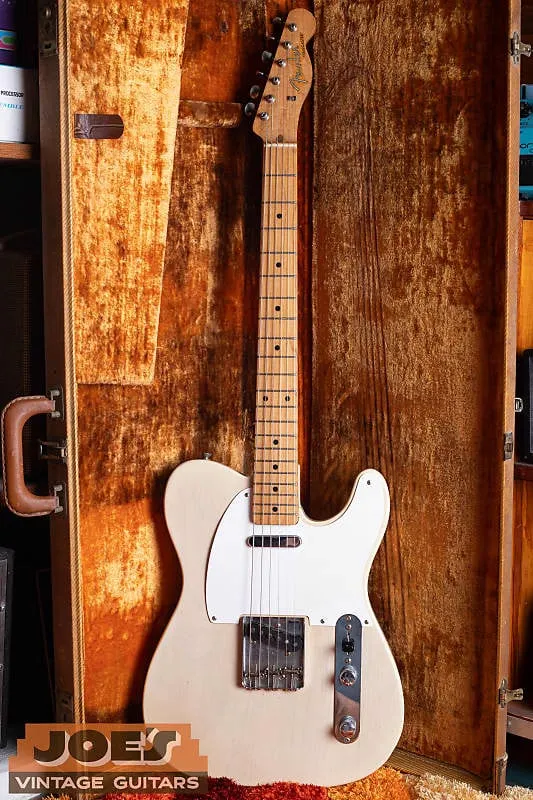
Vintage Fender Telecaster shown in its case
Start with the whole instrument, then move to the details that are hardest to fake.
One clue is not a verdict

Counterfeiters copy real details. Authentic guitars can also be repaired or modified.

Identify the exact claim

The model, factory, and production period decide which features should be present.

Do no harm

Photograph first. Do not force old screws, pull electronics, or clean away useful evidence.

Start here

The Fast Fender Field Check

A real Fender neck can sit on a replacement body. A real decal can also be applied to the wrong neck. Check whether the instrument left the factory together, was assembled later from factory parts, or contains counterfeit components.

1

First field check

Build a Specification Timeline

Counterfeits and partscasters often combine individually plausible parts that never overlapped in Fender production. Start with Joe's Fender serial-number lookup, then use the year-by-year Stratocaster dating guide when that is the model in front of you.

  • Write down the claimed model and year before judging the details.
  • Flag anachronisms: a later feature on an earlier claim, or wear that does not continue under adjacent parts.
  • Separate three questions: Is the part Fender? Is it from the claimed era? Did the whole guitar leave the factory together?
Keep it in context. Fender was a production factory, not a museum. Transitional combinations exist, and owners have swapped bolt-on parts for decades.
The whole timelineCheck the neck, body, finish, hardware, and electronics. The decal is only one clue.
2

Dating clue

Make the Hidden Dates Talk to Each Other

Depending on the model and period, useful clues can include the neck heel date, body-cavity markings, pickup dates, potentiometer codes, serial-number location, and hardware style. Joe's Fender pot-code guide and neck-heel date guide explain how those dates should support one another.

  • Photograph every mark before cleaning or rubbing it.
  • Allow normal lag between component manufacture and final assembly.
  • Treat a missing or unreadable date as unknown. It does not automatically mean the guitar is fake.
Keep it in context. Do not remove a neck, pickguard, or electronics unless you are comfortable doing it safely. Start with exterior photos and ask which hidden view is worth the risk.
Serial locationThe serial is one clue within a larger date range.
Assembly evidencePlate, fasteners, finish edges, and surrounding wear should tell one story.
3

Neck clue

Identify the Truss Rod Configuration

Fender used several truss rod layouts. Many vintage necks adjust at the heel. A solid walnut plug at the headstock is one sign of a heel-adjust neck. Later headstock-adjust necks may have a walnut-lined access hole, while some 1970s necks use a bullet-style nut. Match the configuration to the model, factory, and production period. See the period examples in Joe's 1959 Telecaster authentication guide and 1962 Stratocaster authentication guide.

  • Confirm where adjustment should occur for the claimed year.
  • Look at the plug material, hole shape, surrounding finish, and headstock contour together.
  • Remember that import Fender and Squier necks can legitimately use different plugs and hardware.
Keep it in context. Do not judge the neck from the plug alone. Verify the adjustment location and match the complete layout to the model and year.
Suspect exampleA plastic-looking insert on a neck represented as a USA example.
Walnut plugA walnut plug on the USA Fender neck used for comparison.
Heel adjustmentMany vintage Fender necks adjust at the heel. A solid walnut plug at the headstock can indicate this layout.
Bullet adjustmentA period-specific bullet-style configuration used on some later Fender necks.

The deeper check

What Else Has to Match?

A convincing Fender should remain convincing as you move from the obvious details to the construction and parts beneath them.

  • Neck and body relationshipHeel shape, pocket fit, screw pattern, dates, finish transfer, and wear should be compatible.
  • Decal and headstockLogo style, placement, clear coat, contours, string tree, tuners, and holes should match the period.
  • Routes and cavitiesPickup routes, control routes, tooling marks, paint shadows, shielding, and nail holes can identify factory practice.
  • ElectronicsPickup construction, lead wire, potentiometer codes, switch, capacitor, and solder history should form one timeline.
  • Finish and colorUnder-pickguard color, neck pocket evidence, checking, wear, and overspray matter more than surface color alone.
  • Hardware and plasticsBridge, saddles, plates, knobs, pickguard, screws, and tuner footprints should fit the claimed specification.

Before you buy or sell

Photos to Send for a Fender Authentication Review

Start with what you can photograph safely. Joe will tell you if one more hidden detail would settle the question.

  • Full front and back of the guitar
  • Front and back of the headstock
  • Serial-number location and neck plate or bridge plate
  • Neck pocket and heel only if safely accessible
  • Pickguard, bridge, saddles, tuners, knobs, and plastics
  • Pickup, potentiometer, switch, and solder details only when safely accessible
  • Body cavities, routes, paint edges, and finish beneath hardware
  • Case, tags, receipts, removed parts, and family photographs

Common questions

Fender Authentication Questions

A real guitar can have changed parts. A clean-looking guitar can still be wrong. These distinctions matter before you price it.

Does a Fender serial number prove the guitar is real?

No. Serial locations and ranges can narrow a period, but a number can be copied and an original plate can be moved to another guitar.

What is the difference between a fake and a partscaster?

A counterfeit is represented as something it is not. A partscaster may use factory or aftermarket parts and can be a good instrument, but it should not be sold as a factory-original vintage Fender.

Should I remove the neck or pickguard?

Not for the first review. Send safe exterior photos, and Joe can tell you whether a hidden date or cavity view is necessary.

Can Joe authenticate a Fender from photos?

Often, yes for an initial opinion. Original-finish claims, rare custom colors, and high-value pre-CBS guitars may still need closer or hands-on inspection.

Still unsure?

Have Joe Review the Whole Guitar

A serial number or one photo can raise a question. A complete photo set is how the answer becomes reliable.

Get a Free Fender Appraisal
Enlarged authentication photo