

Style 21 Small Bodies · Four Models With Different Histories
Martin Style 21 Guide
Separate body size, neck joint and New Yorker construction before comparing rosewood and period appointments.
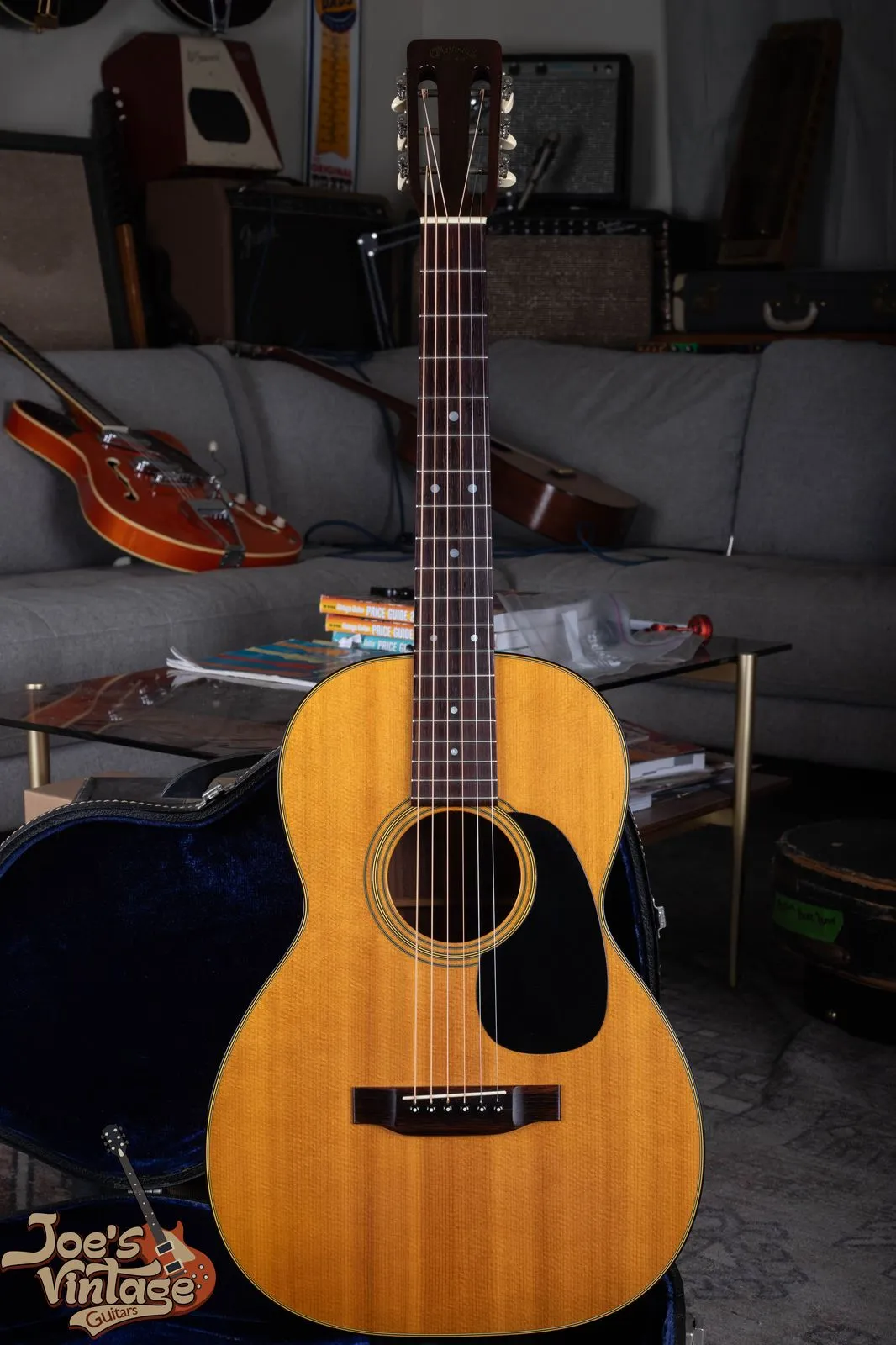
A vintage Martin Style 21 guitar uses rosewood with quieter decoration than Style 28, but body size and production version remain essential. The 0-21, 00-21, 000-21 and 00-21NY don’t share one continuous specification. Establish the model before using the Style 21 price guide.
Joe’s one-owner 1956 000-21 story supplies a documented Auditorium example. The archive also provides a 1930 0-21, a 1965 00-21NY with disclosed changes and a clean 1970 00-21. Together they show a useful spread of body forms and production periods.
Authenticity And Originality Are Assessed From The Information Provided. A Hands-On Inspection Can Change The Conclusion.
Body Size And Neck Joint
Distinguish The Four Small-Body Style 21 Models
| Model | Body Family | What To Establish |
|---|---|---|
| 0-21 | Concert | Early stringing, twelve-fret geometry and any unusual configuration |
| 00-21 | Grand Concert | Standard model period, neck joint and installed parts |
| 000-21 | Auditorium | Early versus later production, body joint and scale |
| 00-21NY | Grand Concert New Yorker | NY stamp, light construction and changed appointments |
The zeros before the hyphen identify size. The number 21 identifies the style. Measure the lower bout and body length using the Martin model-number guide as a reference. A case label or family description may be useful history, but it can’t replace the instrument’s measurements.
Count the frets clear of the body from a square-on view. A slotted headstock often accompanies a twelve-fret guitar, but the body joint is the direct evidence. The neck or headstock can have been replaced, and later recreations can reproduce older appointments. Record the outline, joint and scale as separate observations.
Take the scale measurement from the nut’s bearing edge to the center of the twelfth fret and double it. The saddle includes compensation. This is especially useful when an instrument is described loosely as an “OM-size” guitar: body resemblance does not establish the model stamp or the scale.
How It Differs From Styles 18 And 28
Read Style 21’s Rosewood And Ornament
The familiar Style 21 combination is spruce over rosewood with comparatively restrained decoration. Style 18’s familiar later combination uses mahogany back and sides, while Style 28 carries its own richer trim vocabulary. The small-body Martin history gives the broader comparison.
On earlier Style 21 guitars, herringbone can appear around the soundhole and in the back strip. That differs from the herringbone top border associated with early Style 28. The illustrated Style 21 archive documents those locations and later back-strip changes. Identify the actual piece of ornament before using “herringbone” as a model description.
Fingerboard ornament also changes by period. Photograph the full board, including the higher positions, rather than relying on one close-up of a marker. Replaced boards and later inlay work can alter the pattern. The model, serial and surrounding construction need to agree before the appointments are described as original.
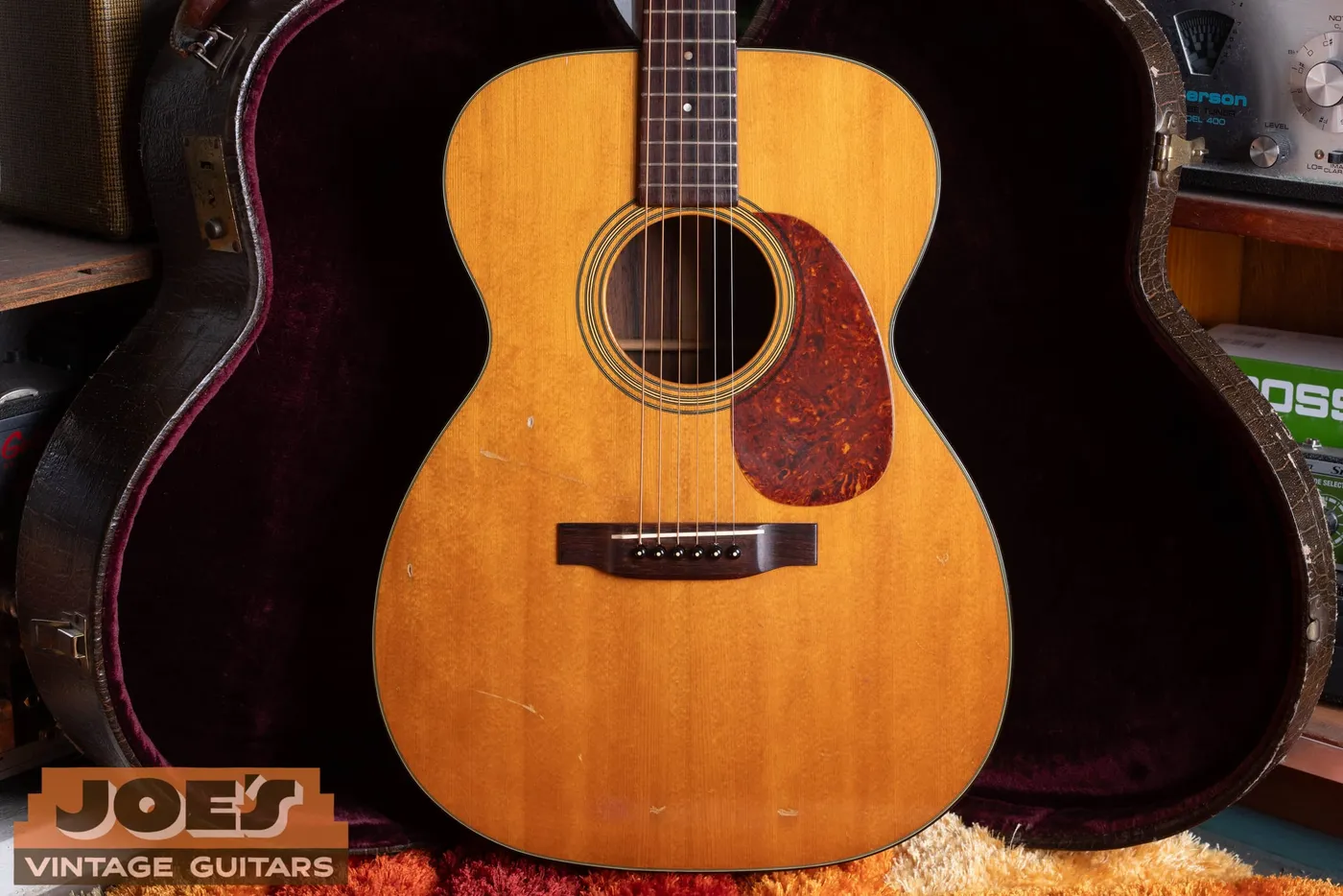
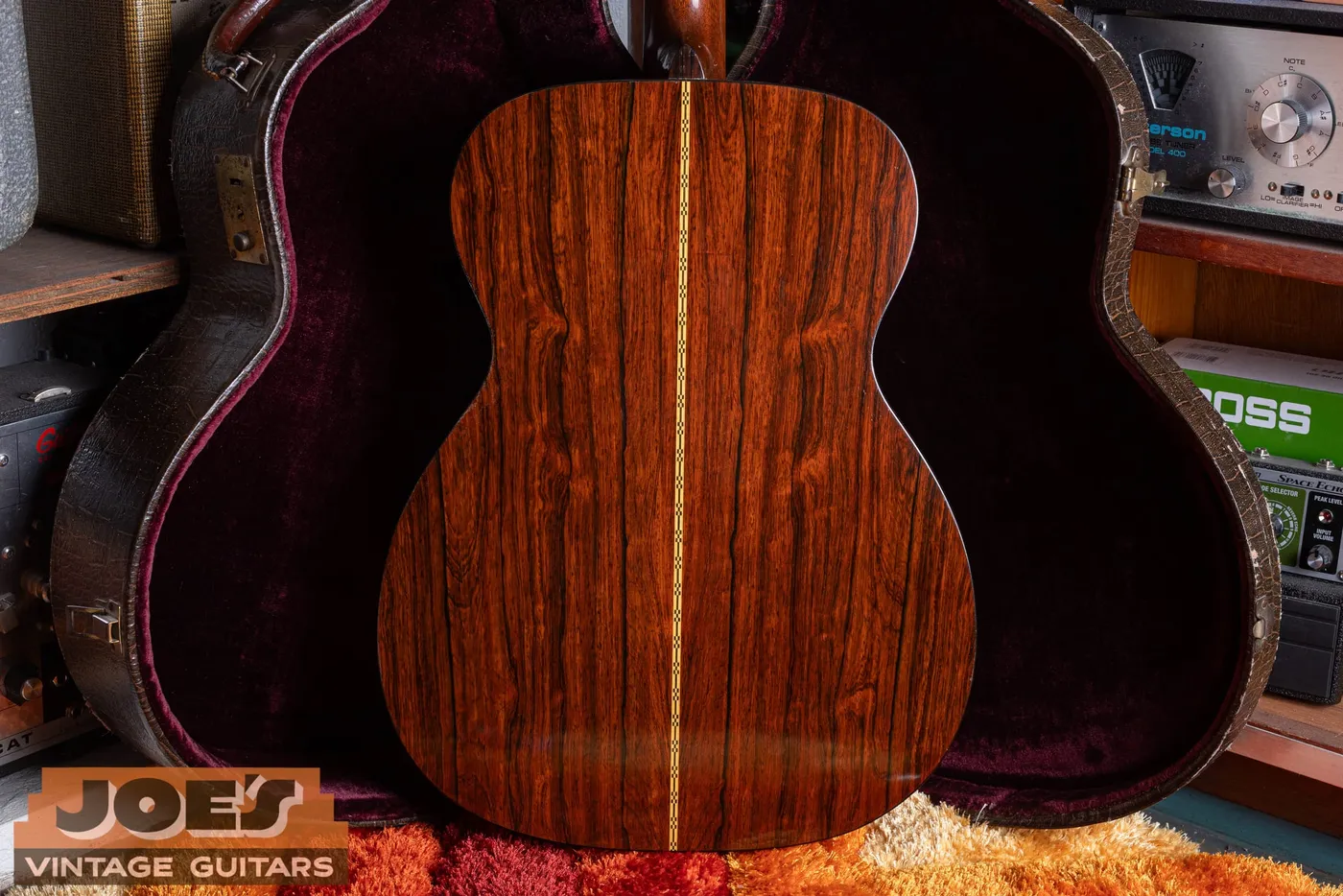
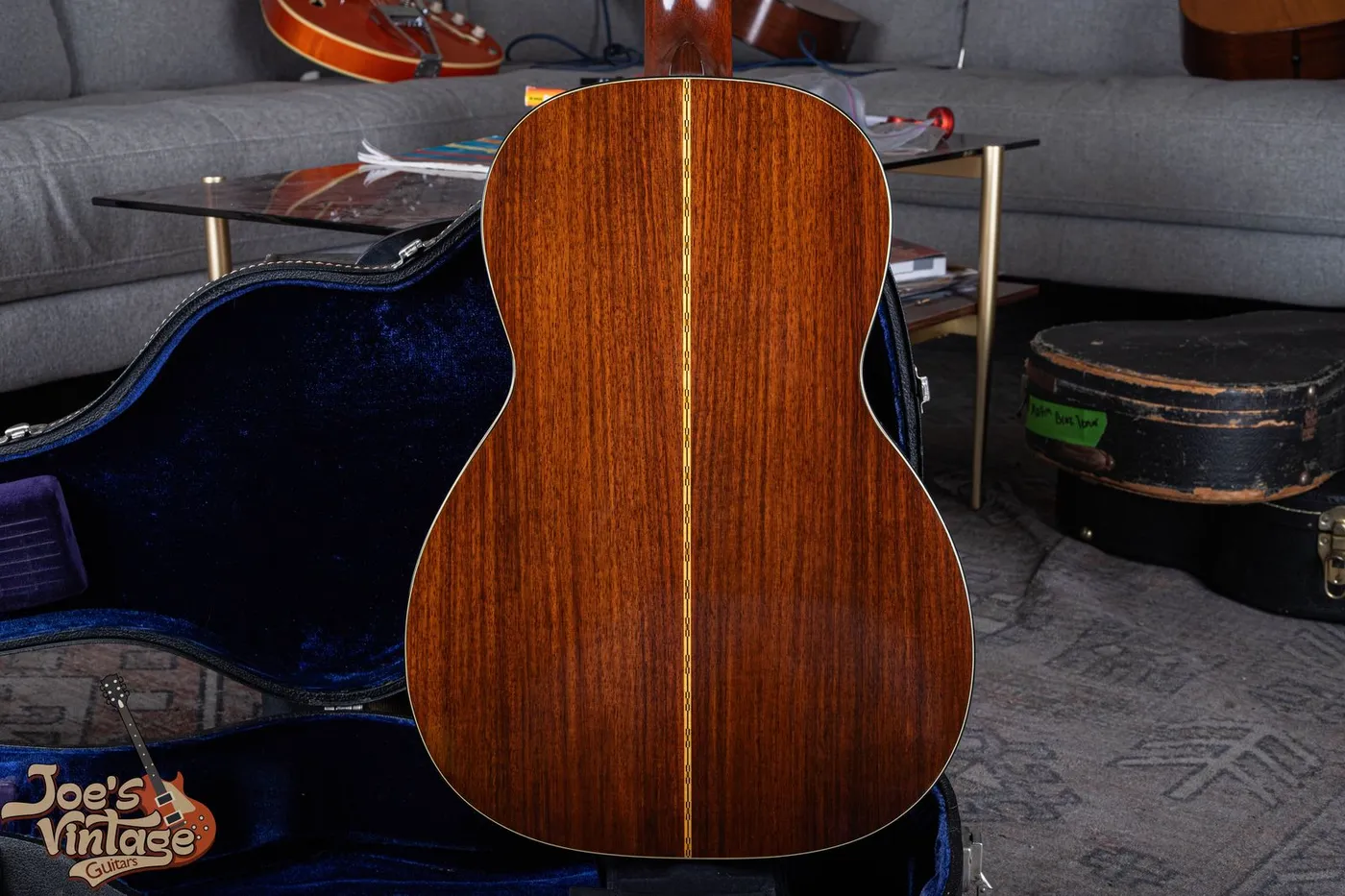
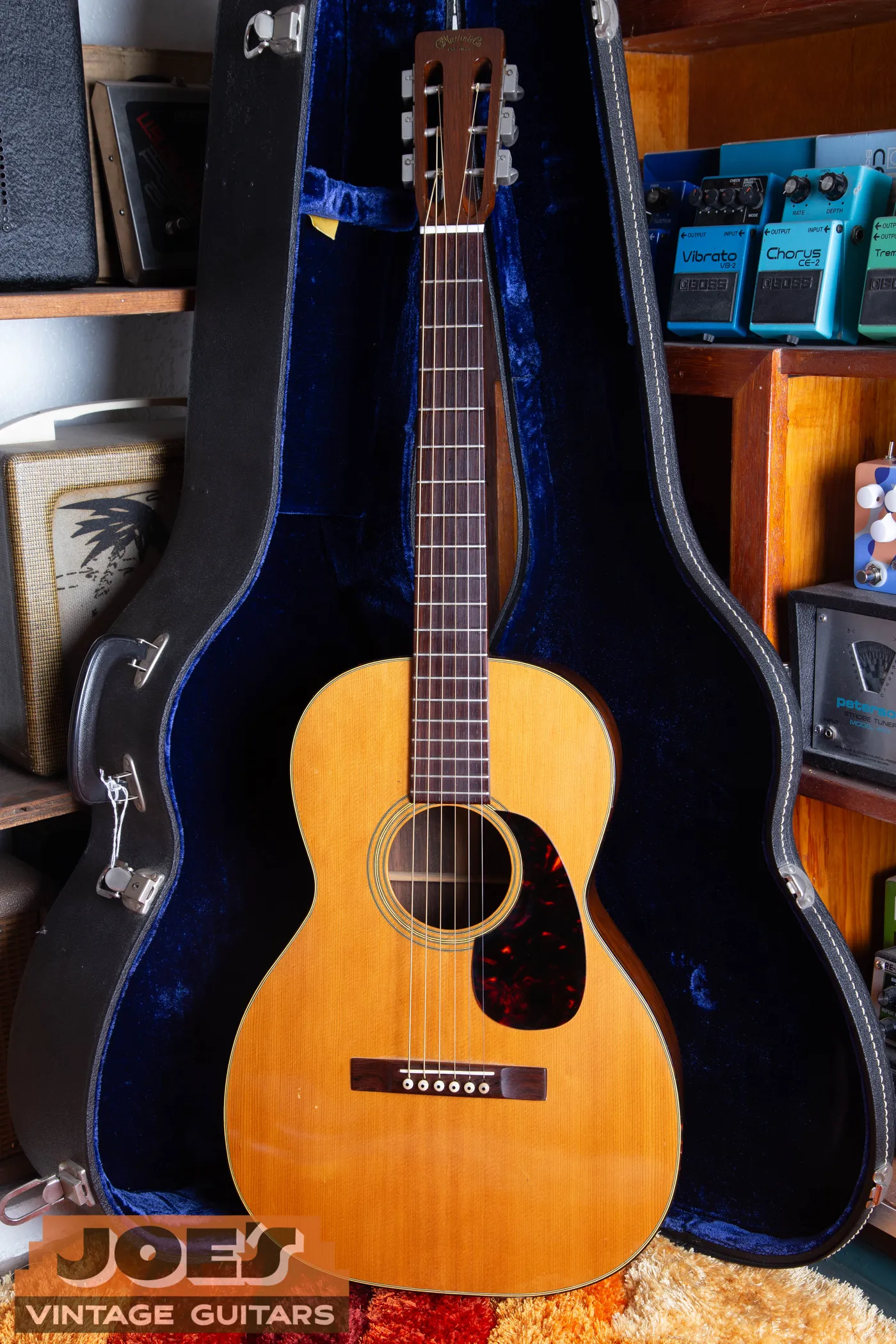
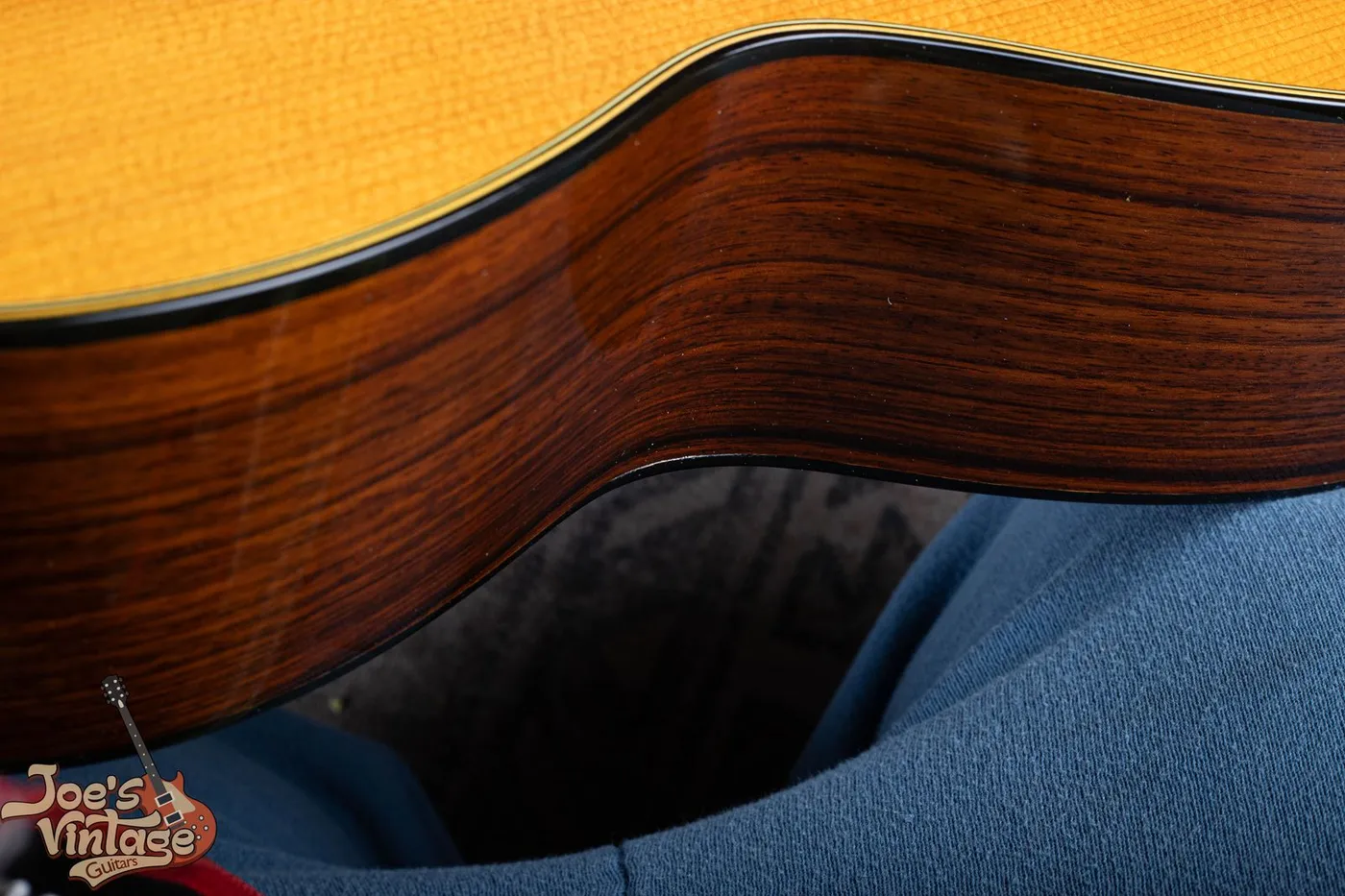
Joe’s 1956 000-21 photographs show the model’s top and rosewood back without borrowing a Style 28 example. The owner-story page preserves the associated provenance. Use those images for visible comparisons; they don’t establish hidden bracing, wood thickness or the condition of another instrument.
Early Models And Uncommon Configurations
Inspect A 0-21 As A Concert-Size Instrument
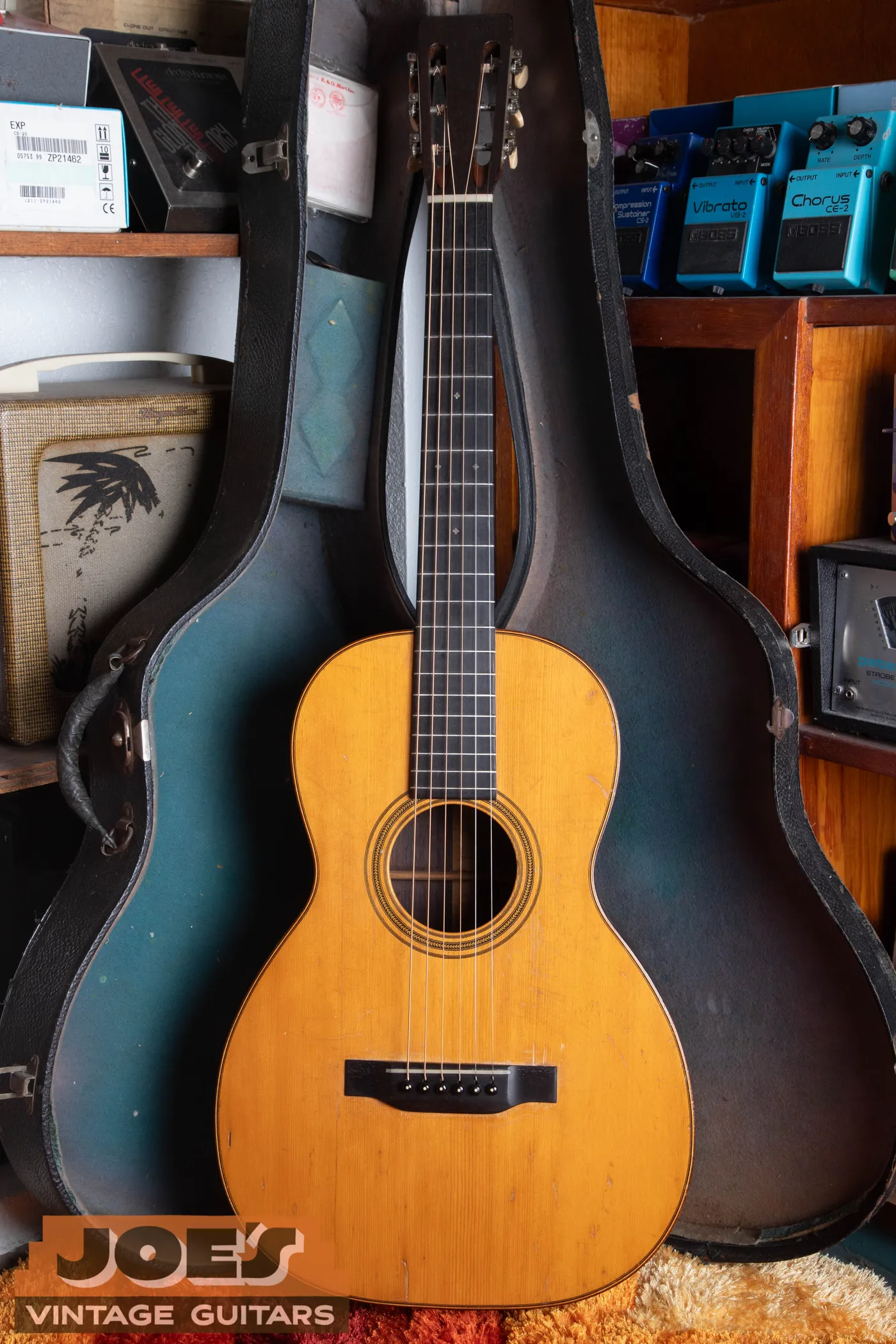
The 0-21 needs its own size and period identification. Early examples can predate routine model stamps, while later entries include uncommon configurations. The early Martin guide explains the construction and marking evidence needed when a serial alone doesn’t name the model.
Joe’s 1930 example shows a twelve-fret body, slotted headstock and belly bridge. The dated bridge archive places that guitar beside other period designs. Its bridge belongs to that particular example; compare other 0-21s with their own period and repair history.
An early guitar’s bridge and top need an assessment of intended stringing and present condition. Existing steel strings don’t establish that a nineteenth-century or early-twentieth-century instrument was built for that setup. Check construction and repairs before increasing tension.
If a seller describes a rare fourteen-fret 0-21 or another unusual order, request the supporting records and measurements. The price source includes isolated configurations, but a listed variant cannot authenticate an unexamined guitar. The model line, body geometry and production evidence must support the specific claim.
Grand Concert Comparisons
Trace The Standard 00-21 Across Its Production Periods
The standard 00-21 has a long history as a twelve-fret rosewood guitar. Establish its period before comparing bridges, guards and hardware. Early instruments and later postwar examples can look related while having different internal construction and repair needs. The house small-body guide supplies that chronological context.
Record the top border, rosette and center strip on the back. Then inspect the bridge outline and saddle arrangement. A replacement bridge may preserve the overall twelve-fret appearance while changing original material or covering damage. The top’s finish around its footprint can help identify questions for an in-hand inspection.
Joe’s 1970 example supplies a cleaner later comparison. Its instrument description reports original-family ownership, little use and slight back-binding separation. That last detail belongs in the condition report even though the full guitar presents well.
The rosewood transition needs both dating and wood evidence. The house chronology places the change from standard Brazilian to Indian rosewood around 1969 to 1970. Photograph the complete back, both sides and the interior surfaces. Grain appearance from one photograph cannot establish species or rule out replacement wood.
Early Guitars And Later Fourteen-Fret Models
Keep The 000-21’s Auditorium History Separate
The 000-21 designation appears in early production and later Auditorium groups. A familiar later fourteen-fret guitar should be compared with its own period, while an early twelve-fret example needs the corresponding construction research. The annual guide’s separate entries reflect those distinctions; they shouldn’t be joined into an assumed uninterrupted specification.
The 1956 owner-story guitar provides a useful later example. Count the frets clear of the body, note the solid headstock and compare its restrained top trim with the other Style 21 photographs. Read the original account for the documented history rather than inventing a story from the guitar’s wear.
A 000 body outline alone doesn’t make the instrument an OM. Use the stamped model and measured scale, and refer an original OM claim to the OM-28 identification guide where appropriate. Modern Custom Shop or other OM-style builds need their own factory designation.
When an unusual 000-21 is attributed to a small production run or special order, retain copies of the evidence. A family recollection, a serial lookup and a factory record are different kinds of support. State which one establishes the claim and leave unresolved details visible in the description.
The Rosewood New Yorker
Identify The 00-21NY Without Assuming Every Part Is Original
The 00-21NY was introduced in 1961 as part of the New Yorker line. Its familiar original appointments include a twelve-fret neck, slotted headstock, plain fingerboard, rectangular bridge and no pickguard. The New Yorker research describes the light construction and the model’s end in 1965.
The 00-21NY is a rosewood guitar. Its smaller partner, the spruce-and-mahogany 0-16NY, belongs to a different model and price group. The shared suffix doesn’t erase the differences in body size and back-and-side woods.
Historical New Yorker descriptions discuss nylon and silk-and-steel stringing. Treat that as production context. A surviving guitar’s safe setup depends on its actual structure, repairs and current condition, so an in-hand assessment should precede a change in string tension.
1965 00-21NY
A Readable Model With Disclosed Changes
Joe’s 1965 description records replacement tuners, a small back crack and a low saddle with a reset recommended. The guitar also carries a pickguard whose origin is unconfirmed. The description considers a period factory origin possible but does not establish it.
That uncertainty must stay attached to the photo. This is an actual 00-21NY, useful for the block and overall body comparison, but its current appointments should not be presented as a complete untouched factory template.
Model Suffix And Annual Serial Totals
Date The Photographed 00-21 And 00-21NY
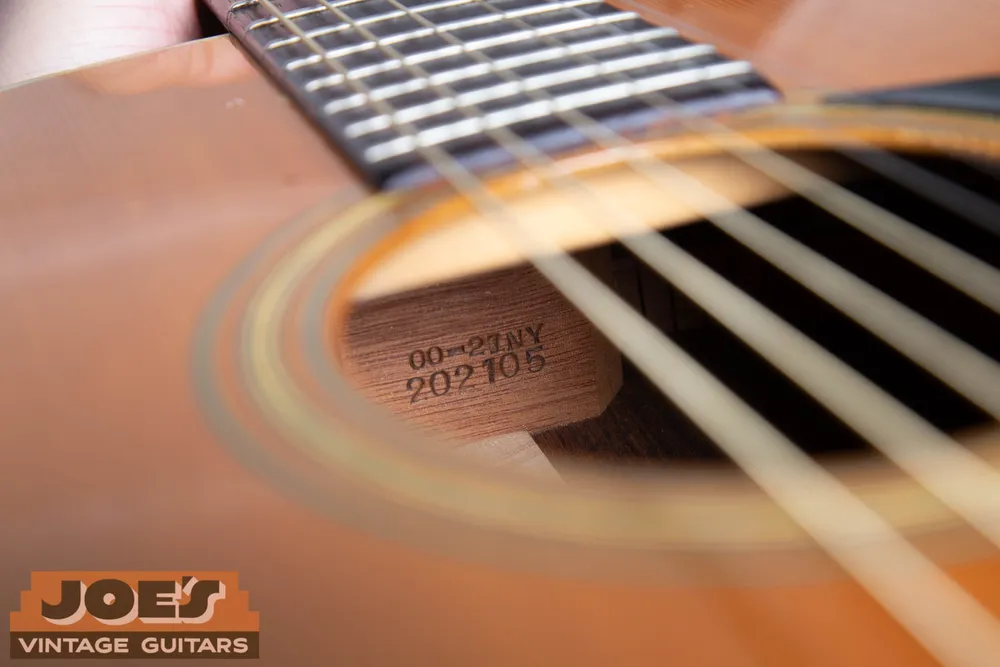
1965 Martin 00-21NY
The block shows the complete 00-21NY designation and serial 202105. It falls between Martin’s 1964 endpoint of 199626 and 1965 endpoint of 207030.
1970 Martin 00-21
This stamp reads 00-21 and 266849. The factory annual totals are 256003 for 1969 and 271633 for 1970, placing the instrument in 1970.
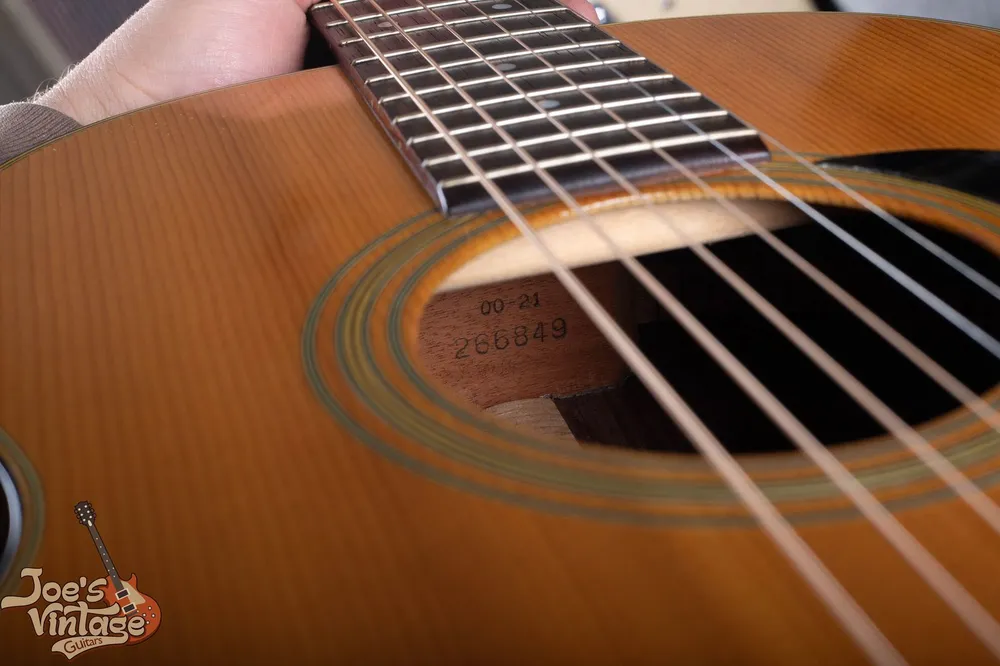
Check these readings against Martin’s serial-number table. The annual entries are the last number used in each year. A correct date doesn’t verify the origin of the guard, tuners or other installed parts.
The neck-block guide explains the earlier marking patterns and routine model stamping from around October 1930. Keep the surrounding wood visible when photographing a block. An unusually tight crop can hide repairs, sanding or an impression that needs closer examination.
Interior Construction Through The Decades
Separate Brace Profile From X Position And Neck Reinforcement
Bar Frets And Period Neck Construction
Early instruments require examination of fret type and reinforcement as well as the body. The prewar reference describes the earlier construction and late-1934 move toward T-frets and steel T-bars.
Different Body Sizes Follow Different X Timelines
The house history places smaller 0 and 00 changes around 1935 to 1936 and the 000 change in mid-1938. Preserve the distinction between twelve-fret and fourteen-fret layouts. An X-position date should never be transferred to every body merely because the style number matches.
Wartime Materials And Non-Scalloped Shaping
Wartime ebony reinforcement and hardware substitutions call for individual checking. Scalloping ended late in 1944, followed by transitional brace profiles. The construction photographs provide comparisons for the war and postwar periods.
New Yorker Construction And Later Neck Systems
The New Yorkers require their own light-build comparison. For later necks, the dating guide distinguishes the 1967 square-tube change and subsequent adjustable rods. Hidden reinforcement should be supported by examination or records rather than inferred from a missing adjustment nut.
A View Beneath The Soundboard
Document The Plate, Braces And Repair Joints
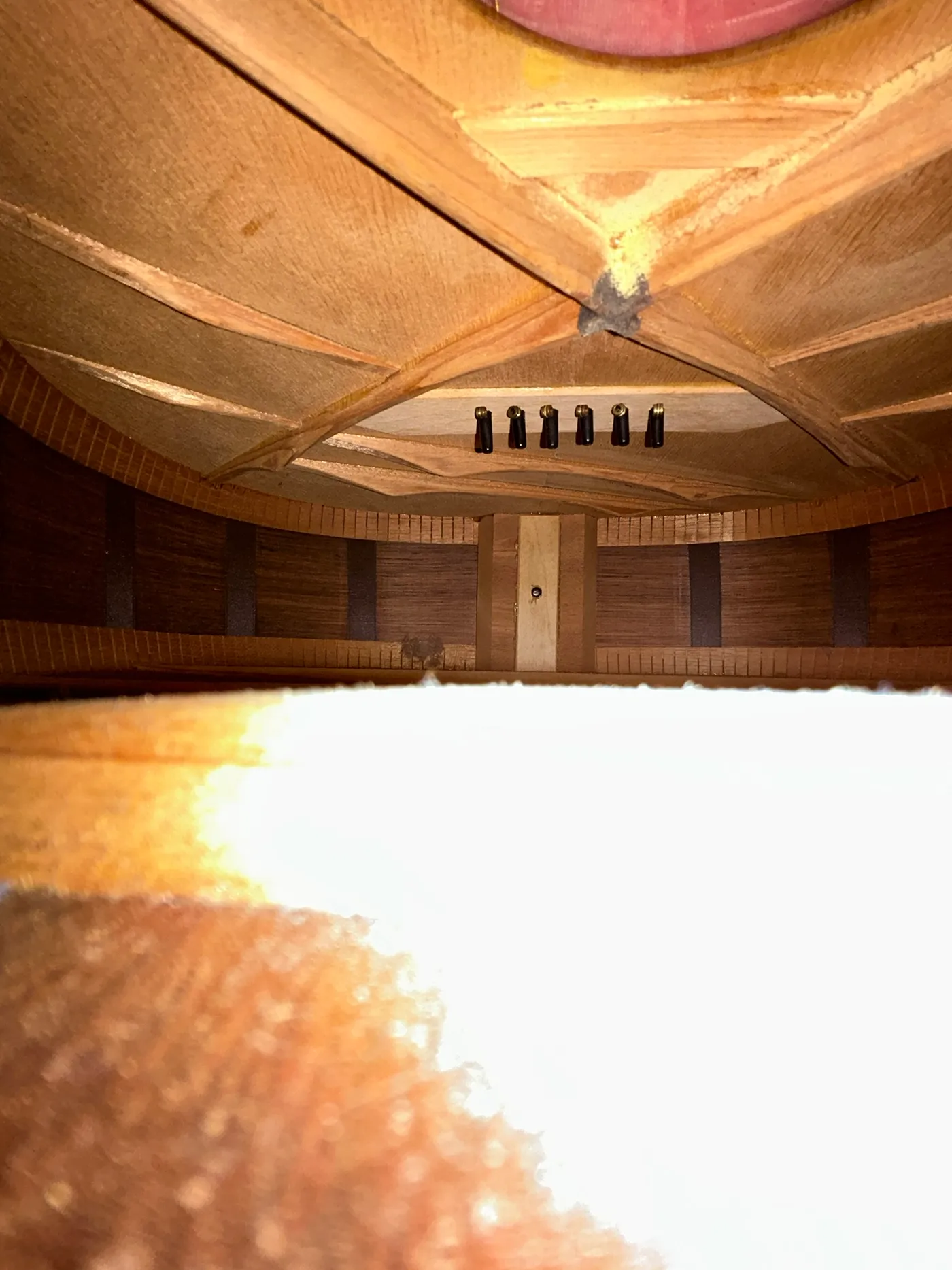
The 1936 00-21 photograph shows the bridge plate and adjacent braces. Request views of the same areas on the instrument being assessed. Scalloping concerns the brace’s profile, while X position concerns its location. Later shaving can alter one without moving the other.
Inspect the plate’s full outline, pin-hole area and any added cap. A larger replacement can cover damage that an exterior bridge photograph cannot show. Distinguish the plate from the bridge itself in the written report, and record patches, cleats or replaced braces separately.
Ask for photographs along brace edges and glue joints when a guitar is described as original inside. Fresh tool marks, uneven aging or unusual glue deserve investigation, but none provides a complete diagnosis from a single phone image. The interior inspection guide explains the broader comparison.
Originality Beyond The Model Stamp
Inspect Finish, Tuners, Guards And Binding
Headstock And Hardware
Compare the logo with the headstock chronology, then inspect tuner plates, gears and screw holes with the hardware archive. Correct-looking parts can still be later installations; the surrounding wood helps show earlier footprints.
Finish And Body Edges
Photograph protected areas and changes around the bridge, heel and binding using the finish inspection guide. Checking and shine alone can’t identify an original surface. Record separation or repairs at the binding even when the rest of the body looks clean.
Neck And Structural Work
Use action, saddle height and bridge thickness together when assessing a possible reset. The neck-angle guide explains the symptoms. Map cracks and identify repair workmanship rather than using a general “restored” label.
A Final Identity Check
Distinguish Modern Interpretations And False Attributions
Modern Standard Series, Authentic, Golden Era, VS, Custom Shop and signature interpretations need the actual serial year and complete factory designation. A historical appearance or an old year in the model name describes a design reference, not necessarily the instrument’s manufacture date. Use the model-code reference and ask for factory documentation on a CUSTOM stamp.
A replacement neck, retop or altered trim can complicate an old guitar’s identity. Record the original body, installed components and evidence for the attribution separately. A repair doesn’t automatically change the maker, but it can remove features that previously supported a precise model description.
Follow the counterfeit inspection guide when markings and construction conflict. Obtain fresh photographs of the complete instrument and connect every detail view to it through visible grain and wear. A plausible serial or a familiar gold logo is only part of that examination.
Classical, tenor and plectrum variants have classical, tenor and plectrum references. Keep those designations intact rather than absorbing them into the six-string small-body price groups.
Send The Evidence
Ask Joe About Your Style 21 Martin
Send the model and serial, complete body photographs, bridge and headstock details, and any repair history. I can help identify the useful comparison and the questions that remain.
Evidence Behind The Comparisons
Style 21 Research And Archive Sources
- Martin Factory Serial Lookup
Year-end serial totals for the pictured instruments.
- Illustrated Style 21 History
Rosette, back-strip and appointment comparisons.
- New Yorker Construction History
00-21NY introduction, features and production endpoint.
- Joe’s 1956 000-21 Owner Story
Original photographs and documented ownership account.
- 2026 Official Vintage Guitar Price Guide
Model descriptions and isolated original-production entries.
- Small-Body Martin Chronology
House construction timeline and model context.
Questions AboutMartin Identification
Is A Style 21 Just A Style 28 With Less Trim?
Does A 00-21NY Normally Have A Pickguard?
Can A Serial Number Prove Brazilian Rosewood?
Are A 00-21 And 000-21 The Same Body?
The Last Word
Keep Size, Period And Originality In The Same Description
Document the individual Style 21 guitar rather than averaging features across the family. When its model and construction are established, the Style 21 value guide provides the corresponding price groups and condition questions.
Authenticity And Originality Are Assessed From The Information Provided. A Hands-On Inspection Can Change The Conclusion.