

Style 21 Market Estimates · Original Small-Body Production
Martin Style 21 Values
Use a model-specific range, then assess the guitar’s woods, finish, repairs and surviving original parts.
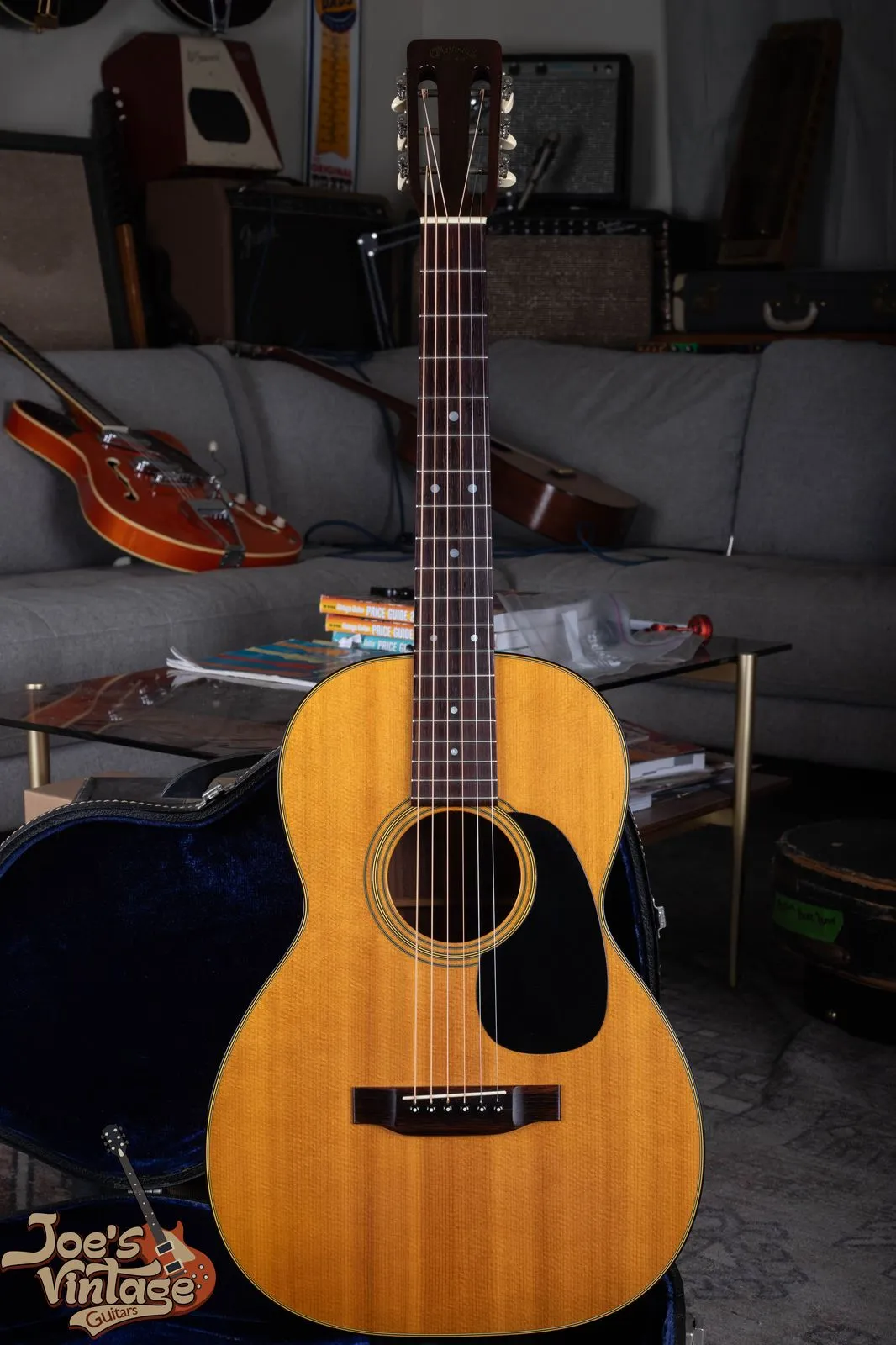
Vintage Martin Style 21 values depend on the exact model and production period. An 0-21, standard 00-21, 000-21 and 00-21NY need separate comparisons even when their wood and decoration look related. Start with the Style 21 identification guide if the stamp or version is unclear.
The ranges below assume excellent, original condition and the original case. They describe retail estimates for the stated configurations, with repairs and alterations considered individually. The early 000-21 row has no model-specific counterpart in the existing early-Martin chart. Pre-1920 0-21 and 00-21 guitars remain with the early Martin value guide.
This Is An Estimate Of Market Value, Not An Offer To Buy And Not A Guarantee. Market Values Fluctuate; Have Your Specific Item Appraised.
Original-Production Price Groups
Martin 0-21, 00-21, 000-21 And 00-21NY Values
| Model | Years | Configuration | Estimated Retail Value |
|---|---|---|---|
| 0-21 | 1920 to 1926 | Gut-String | $7,250 to $9,350 |
| 0-21 | 1927 to 1929 | Steel-String | $9,250 to $12,750 |
| 0-21 | 1930 | 14-Fret (1930 Only) | $9,050 to $12,450 |
| 0-21 | 1930 | Belly Bridge | $9,250 to $12,750 |
| 0-21 | 1931 to 1938 | 12-Fret | $9,350 to $12,900 |
| 0-21 | 1941 | 12-Fret | $8,800 to $11,450 |
| 0-21 | 1944 | Non-Scalloped | $8,150 to $10,300 |
| 0-21 | 1946 | Adirondack Top | $6,400 to $8,100 |
| 0-21 | 1947 to 1948 | Sitka Top | $6,250 to $7,850 |
| 00-21 | 1920 to 1926 | Gut Bracing | $7,550 to $10,700 |
| 00-21 | 1927 to 1939 | Steel Bracing | $13,350 to $17,200 |
| 00-21 | 1940 to 1943 | Scalloped | $13,200 to $17,000 |
| 00-21 | 1944 to 1947 | Non-Scalloped | $10,450 to $13,900 |
| 00-21 | 1948 to 1949 | Brazilian Rosewood | $9,900 to $12,900 |
| 00-21 | 1950 to 1959 | Brazilian Rosewood | $9,250 to $12,300 |
| 00-21 | 1960 to 1964 | Brazilian Rosewood | $7,400 to $9,550 |
| 00-21 | 1965 | Brazilian Rosewood | $5,600 to $7,300 |
| 00-21 | 1966 to 1969 | Brazilian Rosewood | $5,200 to $6,950 |
| 00-21 | 1970 to 1979 | Indian Rosewood | $3,100 to $4,000 |
| 00-21 | 1980 to 1989 | Indian Rosewood | $3,050 to $3,900 |
| 00-21NY | 1961 to 1964 | Brazilian Rosewood | $5,950 to $8,100 |
| 00-21NY | 1965 | Brazilian Rosewood | $5,550 to $7,250 |
| 000-21 | 1902 to 1923 | Early 12-Fret | $16,000 to $21,350 |
| 000-21 | 1931 | 12-Fret | $18,900 to $24,650 |
| 000-21 | 1938 to 1939 | Through Early 1939, 1 3/4-Inch Nut | $27,950 to $37,000 |
| 000-21 | 1939 | Late 1939, 1 11/16-Inch Nut | $24,050 to $31,150 |
| 000-21 | 1940 to 1941 | Brazilian Rosewood | $18,500 to $25,800 |
| 000-21 | 1942 to 1943 | Brazilian Rosewood | $17,400 to $22,600 |
| 000-21 | 1944 to 1945 | Brazilian Rosewood | $15,850 to $20,700 |
| 000-21 | 1946 | Brazilian Rosewood | $10,750 to $14,200 |
| 000-21 | 1947 to 1949 | Brazilian Rosewood | $9,050 to $12,050 |
| 000-21 | 1950 to 1954 | Brazilian Rosewood | $9,150 to $12,200 |
| 000-21 | 1955 to 1959 | Brazilian Rosewood | $8,700 to $11,300 |
| 000-21 | 1965 | Last Brazilian Rosewood Group | $7,650 to $10,200 |
| 000-21 | 1979 | Indian Rosewood | $3,100 to $4,000 |
U.S. dollars. Prepared in November 2026 from 2026 annual price-guide ranges, adjusted downward and rounded to the nearest $50. November dates this calculation; these are retail estimates rather than a record of completed November sales. They assume excellent, original condition and the original case and aren’t purchase offers. Repairs, changed parts and market conditions require individual appraisal.
The chart runs through 1989 where the source provides rows. That endpoint defines this guide’s coverage; it doesn’t mean every listed model ended production then. Isolated later configurations remain isolated entries, and missing years haven’t been assigned an interpolated figure.
For a 1944 instrument, confirm the brace profile before using a non-scalloped row: the factory transition occurred late in that year. Read all four columns before choosing a range. Early gut-string groups, later steel-string instruments and New Yorker models have distinct requirements. A nearby date or similar body size cannot substitute for a matching configuration. If the guitar falls outside a supported row, request an individual appraisal.
Four Different Comparisons
Why The Model Number Matters To The Price
0-21 And Standard 00-21
The Concert-size 0-21 and Grand Concert 00-21 have separate production histories and buyer comparisons. Early examples need their original stringing and construction established. Later standard 00-21s should be evaluated within the correct rosewood and period group.
Scarce configurations need evidence. A seller’s claim of an unusual order should be supported by measurements and records before it affects the estimate. The absence of many comparable examples makes a careful condition report more useful, not less necessary.
000-21 And 00-21NY
The Auditorium 000-21 has its own early and later groups. A family-owned postwar guitar should be compared with the corresponding 000-21 row after its originality and repairs have been assessed.
The 00-21NY is a distinct New Yorker version. Altered appointments, changed setup or structural work may affect how closely a surviving example matches the benchmark. Use its specific row rather than treating the NY suffix as an optional part of the name.
Don’t assign a Style 28 value to a Style 21 solely because both use rosewood. The models have different histories and appointments. Similarly, an original OM-28 needs its own comparison, even when an informal description uses “OM” to refer to a small-bodied Martin.
Material Identity And Replaced Wood
Confirm The Rosewood And The Original Structure
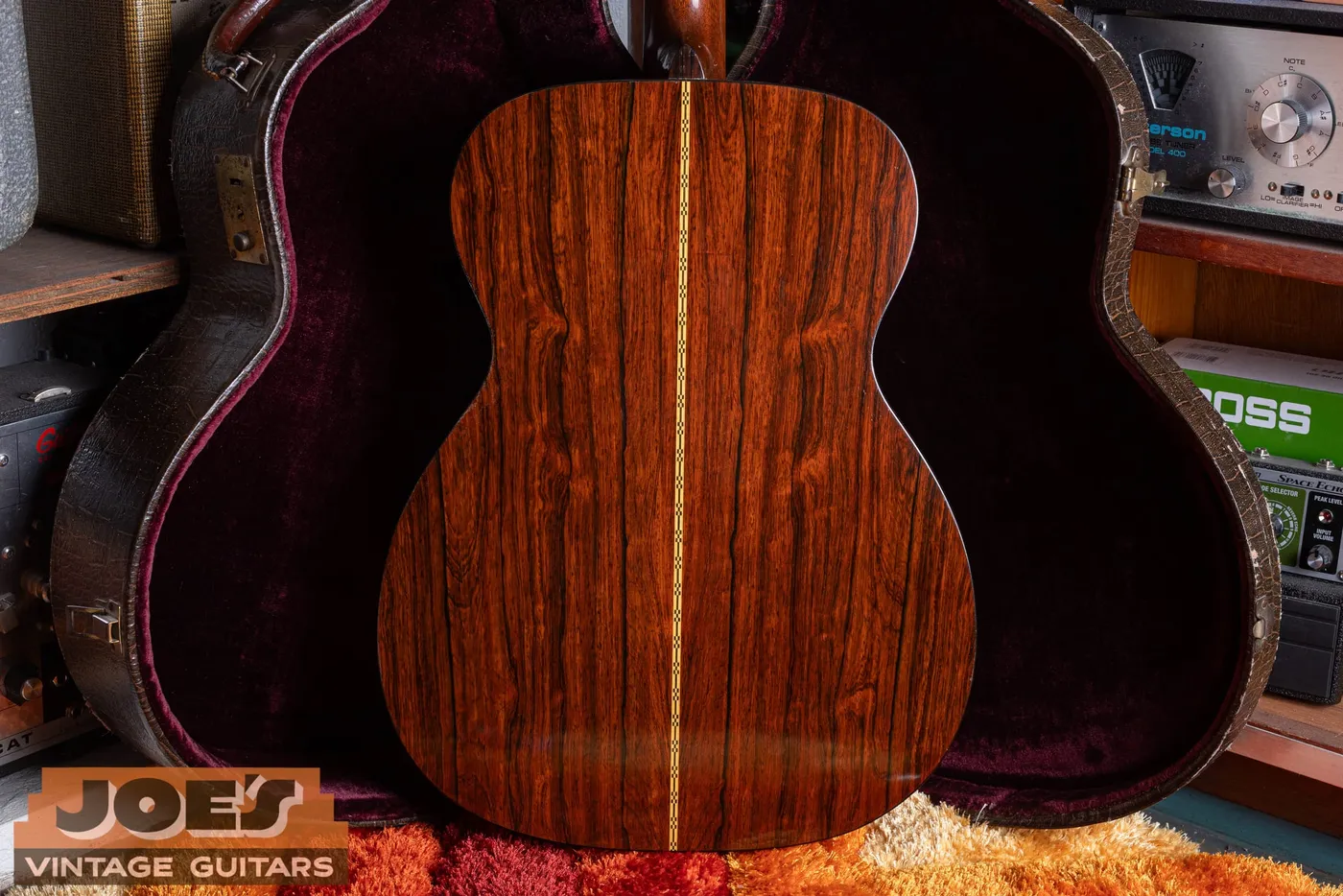
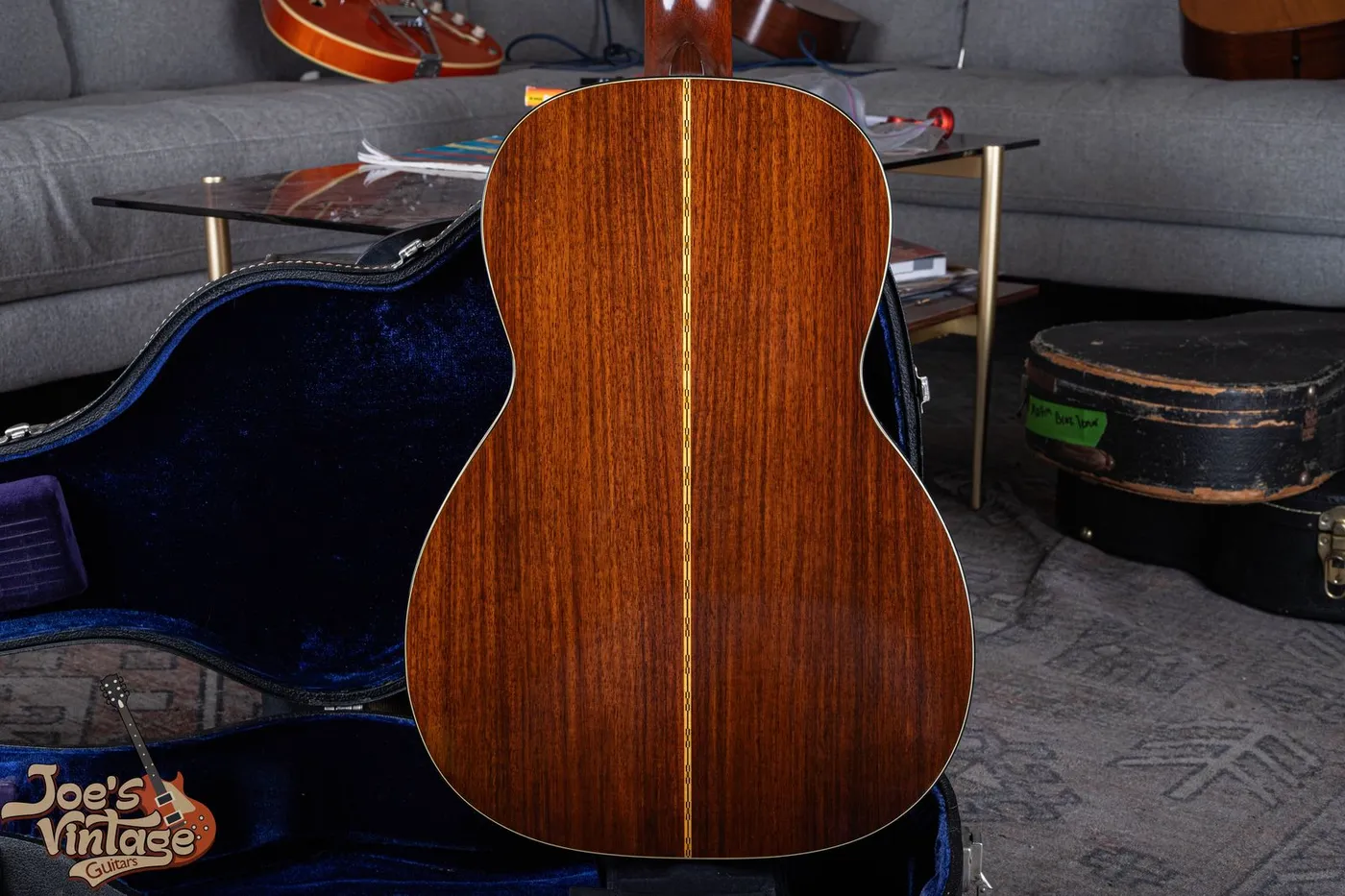
The back photographs show a 1956 000-21 and a 1970 00-21. They provide dated visual examples from different production periods. They don’t create a simple grain test for identifying the wood on an unexamined guitar.
When a price comparison depends on Brazilian rosewood, establish the actual back and sides as well as the date. Replacement wood can complicate an otherwise plausible serial-year assumption. Ask for the complete exterior, interior views and any repair records associated with that area.
The soundboard and braces also matter. A replaced top, altered bracing or extensive patching can change the comparison even when the rosewood body remains original. Record these findings separately so that a valuable material doesn’t obscure substantial structural changes elsewhere.
A clear description should say which features are confirmed and which need inspection. If wood identity or original construction remains uncertain, an appraisal can remain conditional on that finding. A narrow-looking dollar figure is less useful than an estimate with its unresolved assumptions stated plainly.
Condition In Specific Areas
Account For Finish And Repairs Without A Fixed Deduction Table
Ordinary wear, touch-up, overspray and complete refinishing belong in different descriptions. Identify the affected surfaces and the evidence for the conclusion. The finish inspection guide explains why protected areas and several lighting angles help more than a single glossy photograph.
Finish work can accompany a neck reset, crack repair or bridge replacement. Ask what was done together. A small touched-up area and a fully refinished body shouldn’t receive the same label simply because both involve later finish.
The guide to refinishing and value explains why the scope and workmanship matter. The chart here carries no automatic condition percentages. An appraisal should compare the actual guitar with the excellent-original assumption and explain the material differences.
Cracks need a location and a repair status. Photograph the exterior and, where possible, the corresponding interior. A stable seam repair, an open side crack and damage under a replacement bridge present different questions. Use the condition guide to organize those findings before discussing a figure.
Playing Condition And Remaining Original Material
Consider Neck Geometry And Bridge Work Together
Measure The Action And Saddle
Record both rather than relying on a description such as “low action.” A low saddle can limit further adjustment. The neck-reset guide explains the related measurements.
Inspect The Bridge Footprint
Look for a shaved bridge, oversized replacement or changed saddle arrangement. Ask whether original top wood was removed or covered. A tidy bridge installation doesn’t by itself establish the condition underneath.
Examine The Bridge Plate
Document its full outline, pin holes and any cap or patches. The exterior bridge and interior plate are separate parts, and work to one can leave questions about the other.
Review The Reset And Fret Work
A well-executed reset can restore usable geometry. Check the heel fit, alignment and accompanying fret or fingerboard work. The current result and retained original material matter to the comparison.
A repair estimate shouldn’t simply be subtracted from the highest price in the chart. The instrument may also differ in finish, hardware or structural originality, and those differences can remain after the work is complete. Consider the complete condition report before choosing a starting range.
Small Changes And Larger Structural Questions
Evaluate The 00-21NY’s Current Appointments
On a 00-21NY, photograph the fingerboard, bridge, headstock and full top. A pickguard or replacement tuner set needs its own history. An unconfirmed part should remain unconfirmed in the appraisal rather than being assigned a convenient factory explanation.
Also assess the setup and top structure. These guitars need a suitable stringing and repair evaluation; apparent cosmetic preservation doesn’t establish that the present setup is appropriate. A low saddle or distorted top deserves attention before a value is finalized.
Keep the standard 00-21 and the mahogany-bodied 0-16NY in their separate groups. Shared New Yorker features or similar appearance can be useful identification context, but they don’t make the price rows interchangeable.
Preparing For An Appraisal Or Sale
Keep The Case, Records And Current Condition Together
The price assumptions include the original case. Photograph its shell, lining, handle and hardware, and explain whether its history is known. A later protective case can be useful while still differing from that assumption. Keep any original parts that were removed during repairs with the instrument.
Ownership records can help establish continuity and identify when work occurred. Distinguish receipts and dated photographs from recollections. Both can be useful, but their evidentiary weight differs. The guitar’s current construction and condition should support the account.
Before paying for cosmetic improvements, read whether to restore before selling. An early assessment can help decide which work is necessary and which changes might remove useful original evidence. Send photographs before altering a finish, bridge or guard.
These figures are retail estimates, and they aren’t purchase offers. A transaction also depends on the actual guitar, any preparation required and the selling arrangement. I can review the model and condition information with you and discuss the options that fit the instrument.
Send The Evidence
Get A Value Assessment For Your Style 21
Include the complete guitar, readable neck block, bridge and heel views, the case and known repair history. I’m happy to help with an 0-21, 00-21, 000-21 or 00-21NY.
Questions AboutMartin Values
Does Less Decoration Make Style 21 Inexpensive?
Can I Use A Standard 00-21 Price For A 00-21NY?
Is An Original Case Included In These Estimates?
What If My Guitar’s Year Has No Row?
The Last Word
Document The Style 21 Before Choosing Its Range
Use the Style 21 identification guide to resolve the model and production version, then compare the actual condition with the chart’s assumptions. Clear photographs and an accurate repair history make that comparison much stronger.
This Is An Estimate Of Market Value, Not An Offer To Buy And Not A Guarantee. Market Values Fluctuate; Have Your Specific Item Appraised.