

Vintage Mahogany Martins · 0-16NY Prices Included
Martin 15 And 17 Values
Value the exact model and its surviving condition, with separate comparisons for the spruce-top New Yorker.
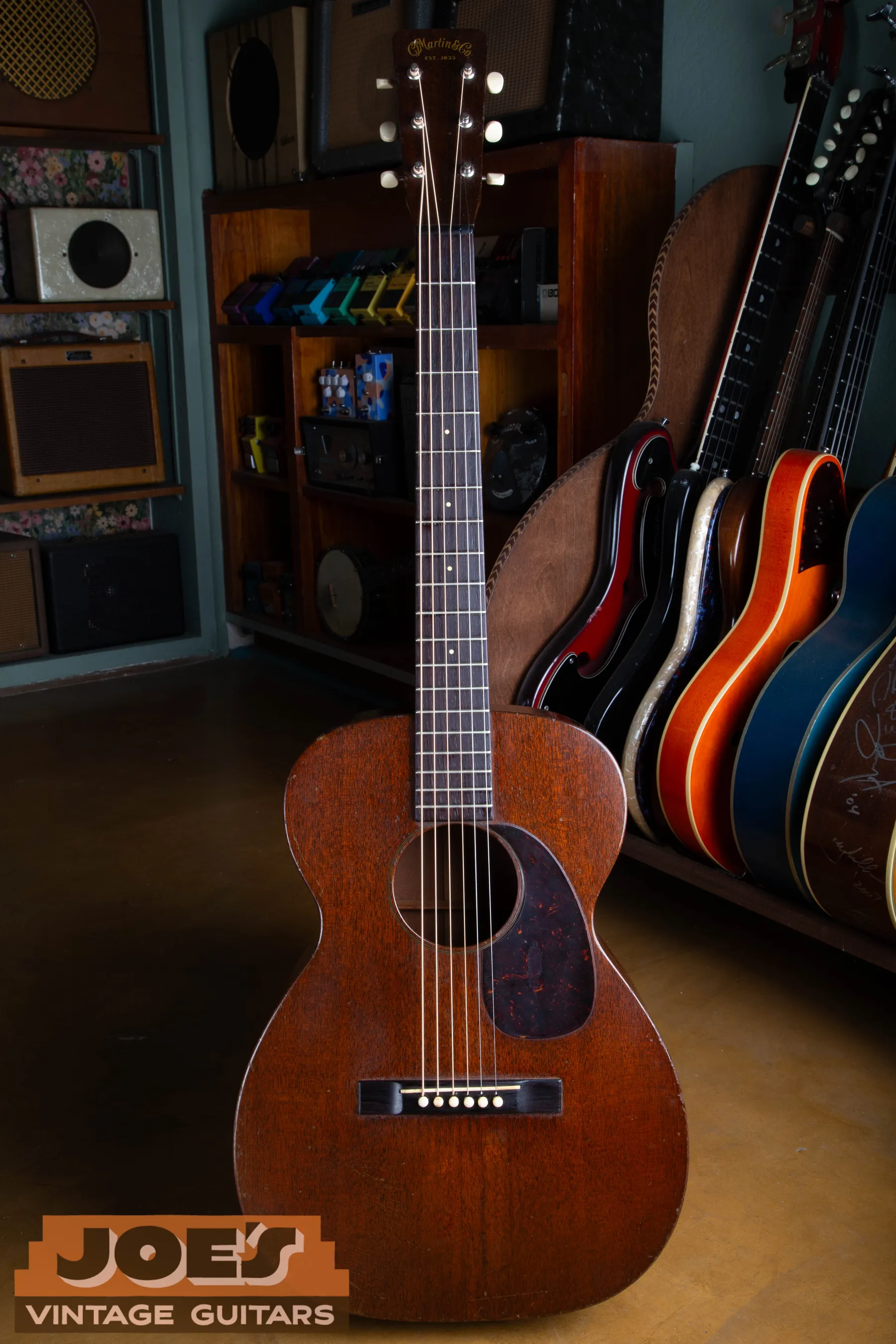
A vintage Martin 0-15 or 00-17 can be a straightforward-looking guitar with a complicated repair history. The useful price comparison starts with the exact model, production group and original materials. The 15, 16NY and 17 identification guide separates those versions.
This chart covers original all-mahogany Style 15 and 17 guitars in the supported sizes, plus the spruce-top 0-16NY. It gives retail estimates for excellent, original instruments with the original case. Modern 15-series guitars and Style 17 revivals require their own comparisons.
This Is An Estimate Of Market Value, Not An Offer To Buy And Not A Guarantee. Market Values Fluctuate; Have Your Specific Item Appraised.
Model, Period And Configuration
Vintage Martin 15, 16NY And 17 Price Ranges
| Model | Years | Configuration | Estimated Retail Value |
|---|---|---|---|
| 0-15 | 1940 to 1949 | Mahogany | $3,000 to $3,850 |
| 0-15 | 1950 to 1959 | Mahogany | $2,850 to $3,500 |
| 0-15 | 1960 to 1961 | Mahogany | $2,400 to $3,000 |
| 0-15H | 1940 | Hawaiian | $3,000 to $4,750 |
| 0-16NY | 1961 to 1969 | 12-Fret | $2,800 to $4,200 |
| 0-16NY | 1970 to 1979 | 12-Fret | $2,450 to $3,500 |
| 0-16NY | 1980 to 1989 | 12-Fret | $1,950 to $3,100 |
| 0-17 | 1929 to 1933 | Steel, 12-Fret | $3,500 to $5,300 |
| 0-17 | 1933 to 1934 | Flat Natural Finish, 14-Fret | $4,300 to $6,450 |
| 0-17 | 1934 to 1938 | Gloss Dark Finish, 14-Fret | $4,350 to $6,550 |
| 0-17 | 1939 | Early 1939, 1 3/4-Inch Nut | $4,300 to $6,450 |
| 0-17 | 1939 | Late 1939, 1 11/16-Inch Nut | $4,350 to $6,550 |
| 0-17 | 1940 to 1946 | Mahogany | $4,200 to $6,100 |
| 0-17 | 1947 to 1948 | Mahogany | $3,550 to $4,900 |
| 0-17 | 1966 to 1968 | Special Order | $3,250 to $4,250 |
| 0-17H | 1930 | Hawaiian, 12-Fret | $3,850 to $5,550 |
| 0-17H | 1935 to 1940 | Hawaiian, 14-Fret | $4,300 to $6,450 |
| 00-17 | 1930 to 1933 | Steel, 12-Fret | $5,450 to $7,050 |
| 00-17 | 1934 | Flat Natural Finish, 14-Fret | $5,800 to $7,550 |
| 00-17 | 1935 to 1938 | Gloss Dark Finish, 14-Fret | $5,700 to $7,500 |
| 00-17 | 1939 | Early 1939, 1 3/4-Inch Nut | $5,550 to $7,250 |
| 00-17 | 1939 | Late 1939, 1 11/16-Inch Nut | $5,150 to $6,900 |
| 00-17 | 1940 to 1944 | Mahogany | $5,200 to $6,950 |
| 00-17 | 1945 to 1946 | Mahogany | $4,700 to $5,950 |
| 00-17 | 1947 to 1949 | Mahogany | $4,400 to $5,700 |
| 00-17 | 1950 to 1960 | Mahogany | $4,000 to $5,350 |
| 00-17H | 1934 to 1935 | Hawaiian | $5,650 to $6,950 |
| 000-17 | 1952 | Original Small Run | $3,500 to $4,850 |
| 2-17 | 1922 to 1938 | All-Mahogany | $2,450 to $3,700 |
| 2-17H | 1927 to 1931 | Hawaiian | $2,400 to $3,600 |
| 5-17 | 1927 to 1928 | All-Mahogany | $3,500 to $5,300 |
| 5-17 | 1930 to 1939 | All-Mahogany | $2,800 to $4,200 |
| 5-17 | 1940 to 1943 | All-Mahogany | $2,450 to $3,700 |
U.S. dollars. Prepared in November 2026 from 2026 annual price-guide ranges, adjusted downward and rounded to the nearest $50. November dates this calculation; these are retail estimates rather than a record of completed November sales. They assume excellent, original condition and the original case and aren’t purchase offers. Repairs, changed parts and market conditions require individual appraisal.
The listed 0-16NY groups run through 1989 for this chart. That coverage limit isn’t a claim that production stopped then. The 1-17’s all-mahogany version is discussed in the identification guide but has no figure here because the pricing source supplies no dollar row.
Earlier spruce-top Style 17 instruments fall outside this all-mahogany chart. Earlier 00-17 groups belong in the early Martin value guide. An H designation identifies a Hawaiian configuration and requires a separate examination of any conversion work. The chart doesn’t silently treat those guitars as ordinary six-string Spanish-playing models.
Avoiding The Wrong Comparison
Start With The Exact Model Before Looking At Age
Size and style both affect the comparison. An 0-15, 2-17, 0-17 and 00-17 shouldn’t be combined under one “mahogany Martin” estimate. Record the stamp exactly and photograph it clearly. If the impression is faint, change the lighting angle before deciding whether an extra zero is present.
The same caution applies to small and scarce versions. A 5-17 or a small-run 000-17 needs a matching model row and evidence for its production identity. Rarity alone doesn’t establish a usable price. Original condition, repair needs and the pool of buyers interested in that configuration still matter.
For a guitar with a missing or uncertain stamp, provide body measurements, the neck joint, bridge and headstock. A provisional identification should remain provisional in the valuation. Choosing an attractive price first and fitting the guitar to that category afterwards creates avoidable uncertainty.
Four-string tenors belong in the Martin tenor price guide, while plectrum models have their own value comparisons. Modern 000-15M, 00-15M and 000-17 instruments aren’t included in these vintage rows.
Wood, Seams And Finish
Assess The Mahogany Top And Its Repairs
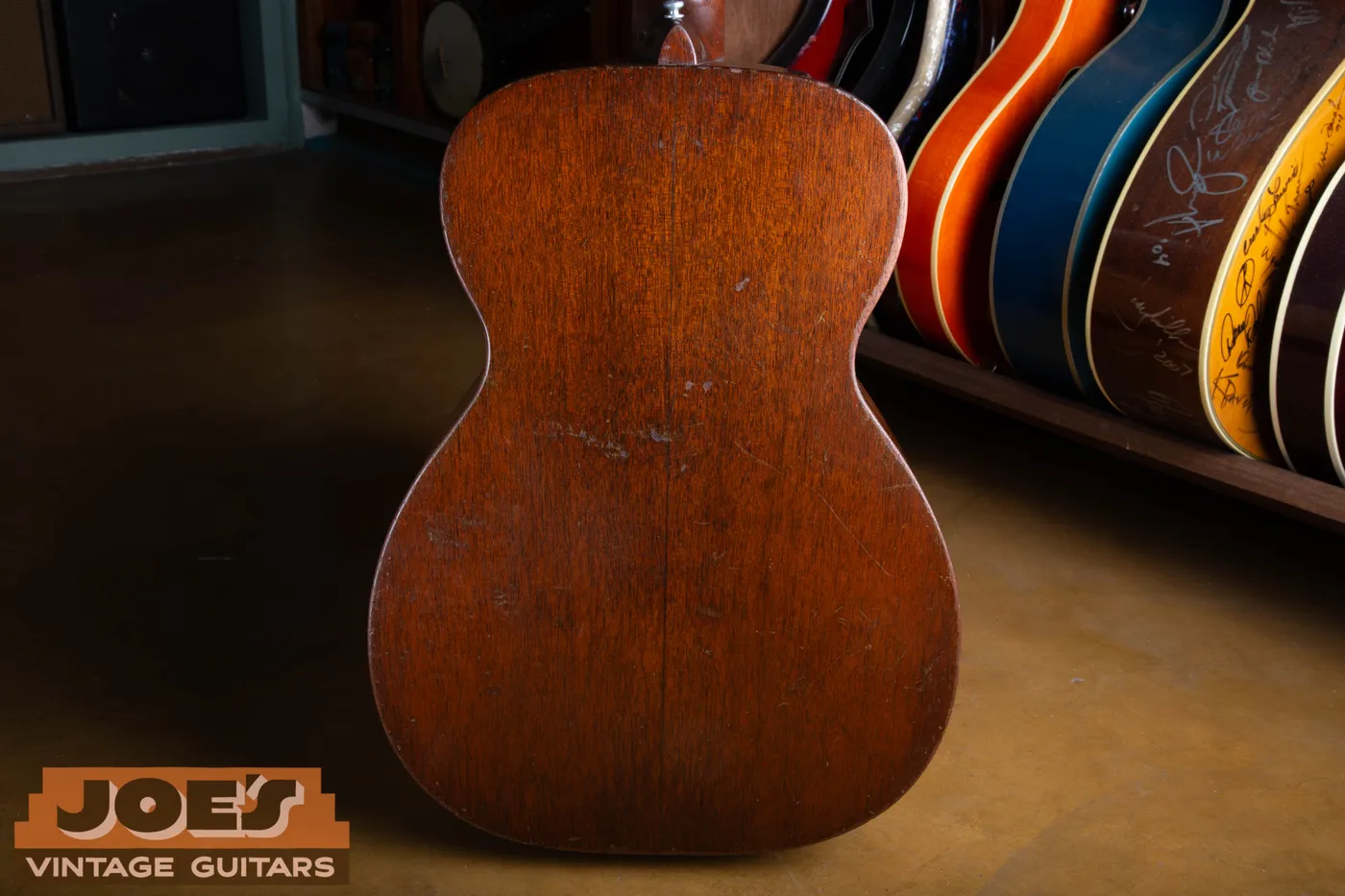
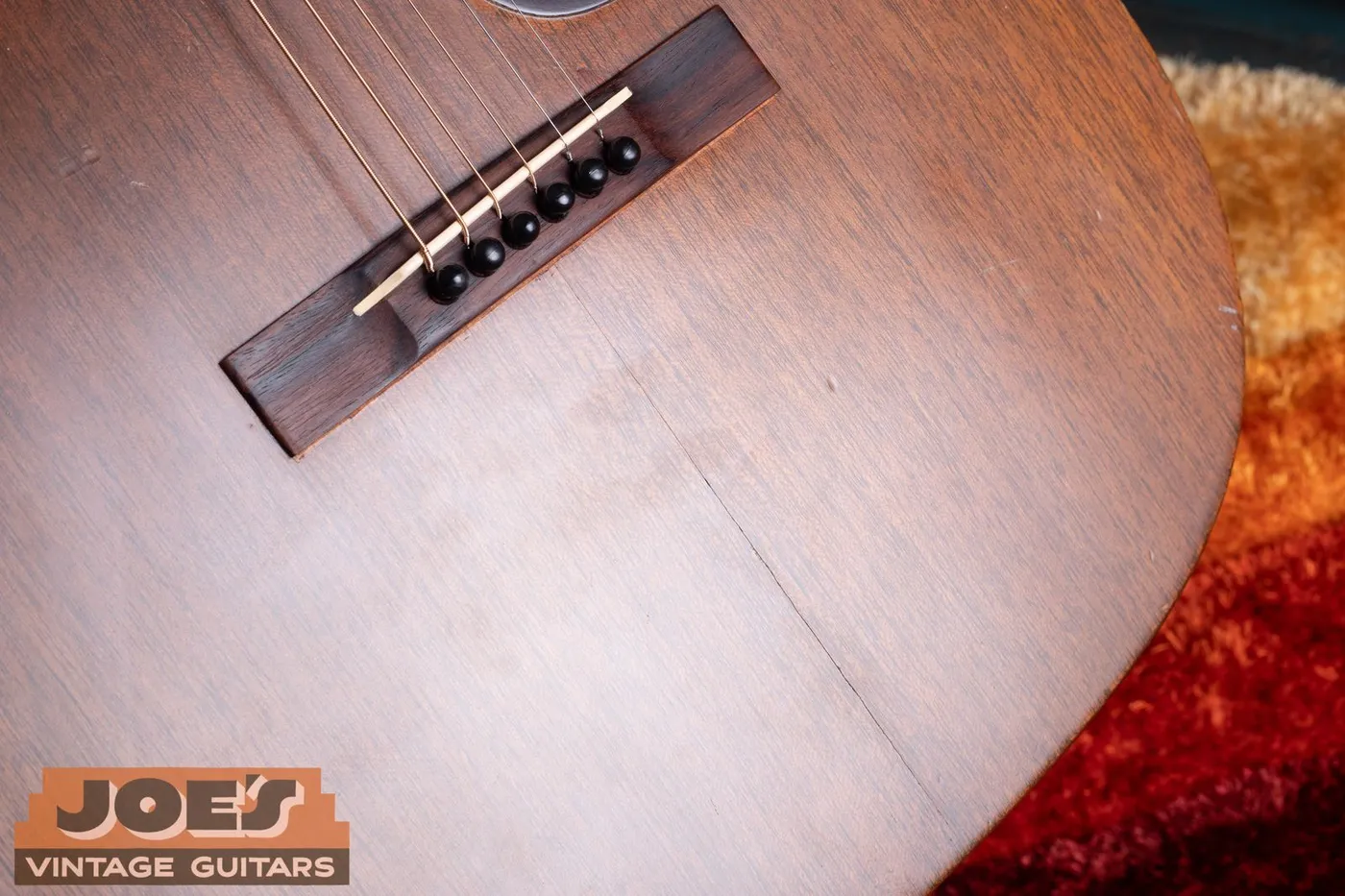
Inspect the top, back and sides separately. An all-mahogany body still has joints, grain direction and repair locations that need documentation. Identify a center-seam opening as such, and distinguish it from a crack elsewhere in a board. Exterior photographs should be paired with interior views when cleats or patches are present.
The repaired 1951 00-17 photograph shows why a neat overall appearance cannot substitute for a condition description. Record what was repaired, whether it remains stable and whether original wood was removed or covered. A repair invoice can explain work that the finished surface no longer reveals.
Finish deserves its own assessment. The dark color associated with some of these guitars can conceal touch-up in ordinary photographs. Use the finish inspection guide to collect views of protected edges and transitions around the bridge and neck. A shiny surface alone doesn’t establish a refinish.
The effect of work depends on its extent, as explained in the refinishing value discussion. Describe a local touch-up, an oversprayed area and a complete refinish separately. This chart’s excellent-original assumption should never be carried over without checking those details.
Necks, Bridges And Frets
Separate Useful Maintenance From Lost Original Material
Neck Angle And Action
Ask for the action and saddle height together. A low saddle can leave little room for further adjustment, while high action may involve more than the neck angle. The neck-reset guide explains the observations needed for a sensible assessment.
Bridge And Bridge Plate
Look for a shaved or oversized bridge and document the plate inside the top. A bridge replacement, plate cap and larger plate replacement are different repairs. The resulting condition determines whether the guitar remains close to the chart’s benchmark.
Frets And Neck Work
Worn frets, a replaced fingerboard and a well-executed refret have different implications. Ask what work accompanied a reset and whether the neck remains aligned with the bridge. A brief “plays great” description leaves those questions unanswered.
Repair cost is part of the discussion, but it isn’t a universal subtraction formula. An instrument requiring work may also have finish changes or replaced parts that continue to affect its appeal after the repair is complete. The broader guide to value-reducing condition issues explains why the findings need to be considered together.
Spruce Top And Light Construction
Value The 0-16NY As Its Own Model
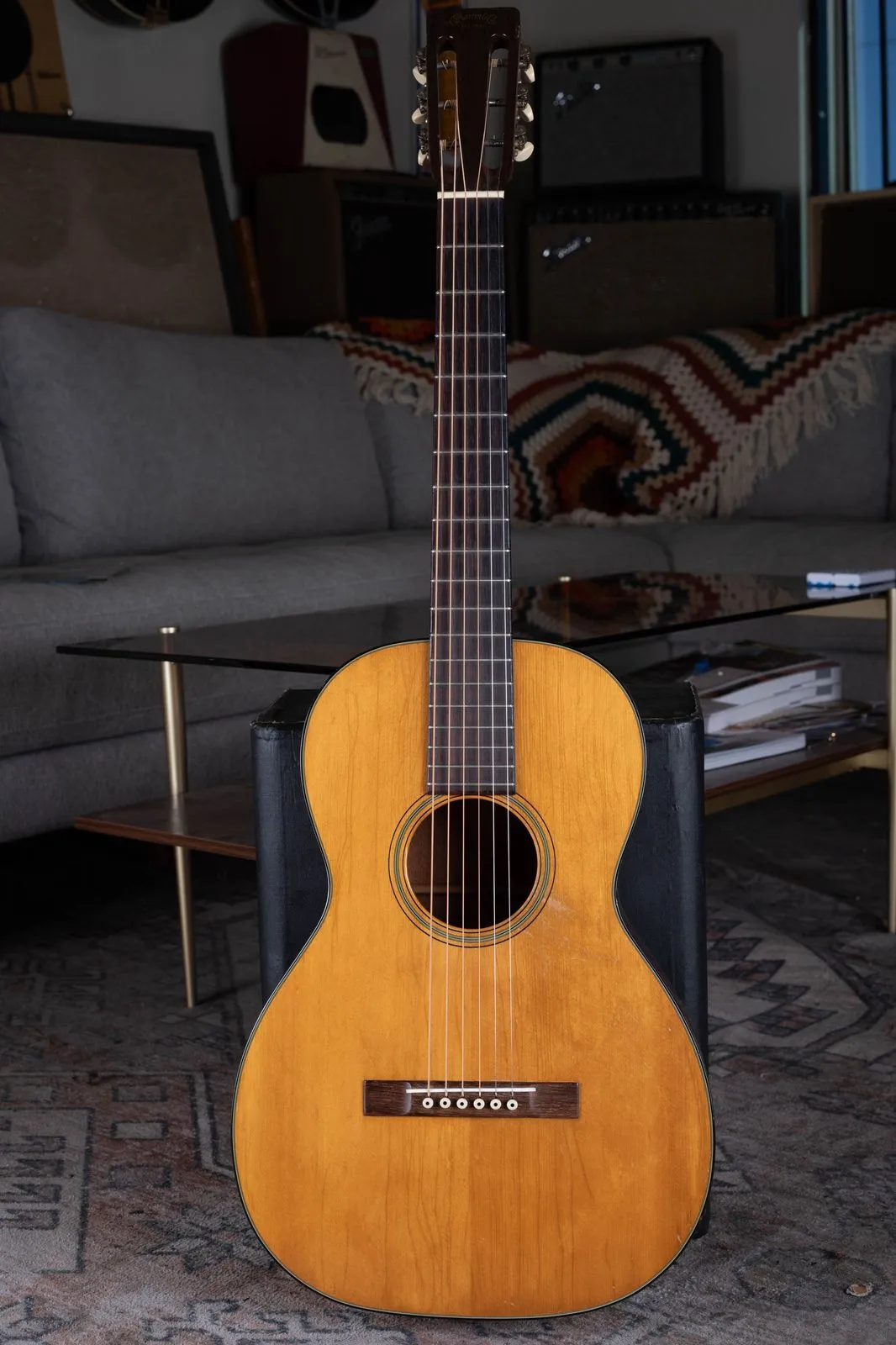
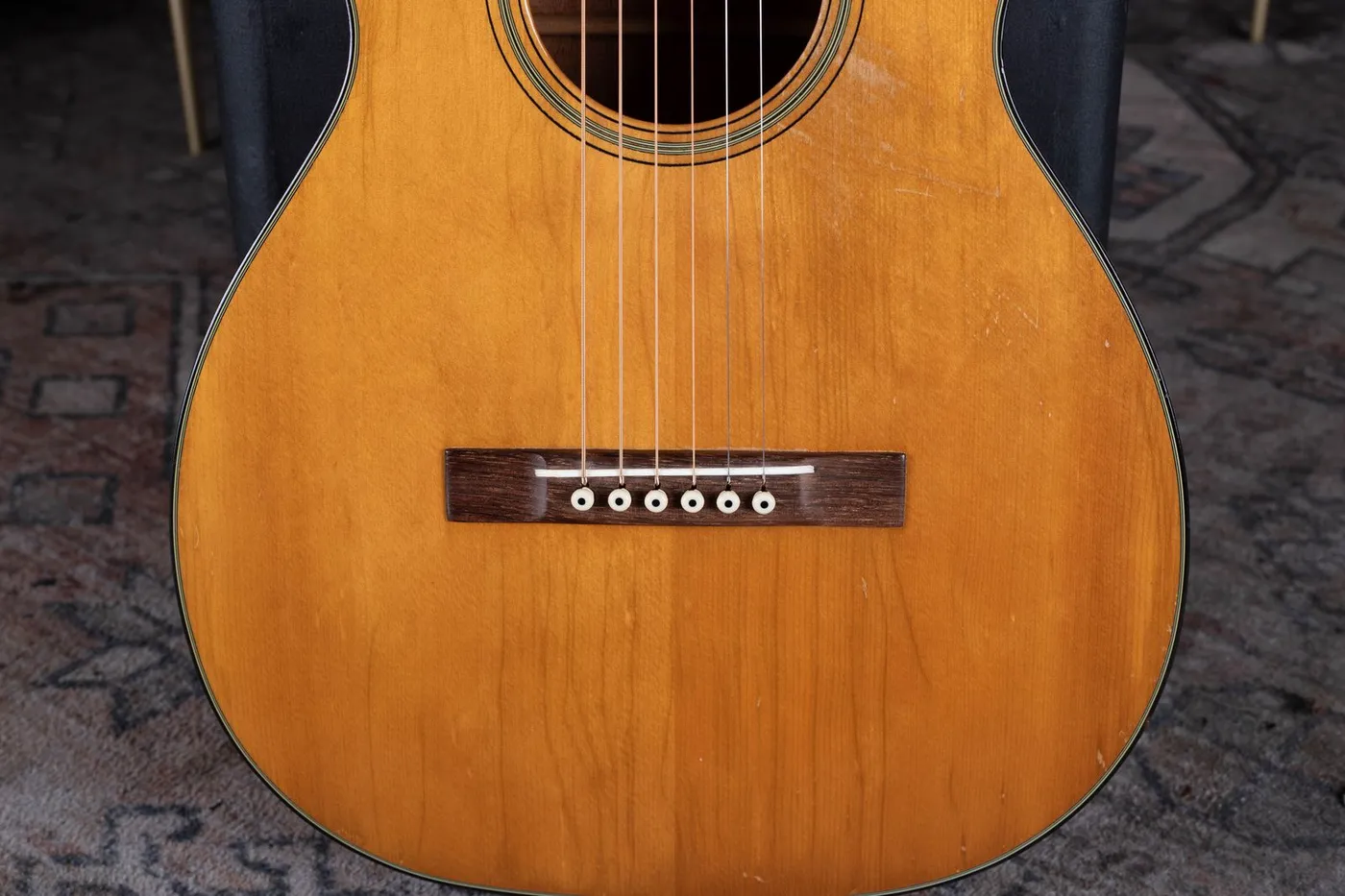
The 0-16NY shares this page with the mahogany family for convenience, but its spruce top and New Yorker construction require a distinct comparison. Use the rows that explicitly name 0-16NY. A superficially similar twelve-fret Custom Shop guitar or another Style 16 variant belongs elsewhere.
Preserved examples need the same structural checks as worn ones. Record bridge height, saddle exposure, heel fit and any top distortion. A clean-looking top can coexist with a setup problem, and attractive photographs don’t establish the suitability of the current strings.
Changes to the plain appointments also deserve attention. Document an added guard, replacement tuners or modifications to the bridge and nut. The appraisal should distinguish reversible replacement parts from changes that removed or covered original material. Keep any retained original parts with the guitar.
The rosewood 00-21NY has separate rows in the Style 21 price guide. Its value cannot be inferred from a 0-16NY simply because both carry the NY suffix.
Original Configuration And Present Setup
Describe A Hawaiian Conversion Before Using A Range
An H-model guitar may retain Hawaiian features or have been converted for conventional fretted playing. Record the current nut, saddle, fretwork, neck relief and string alignment. A useful conversion needs to be evaluated on its workmanship and the original material affected.
The chart retains the configuration stated beside each Hawaiian row. It doesn’t promise that every converted example fits the same range. A heavily altered guitar, an incomplete conversion and a carefully preserved original can attract different buyers and need different condition comparisons.
If the history is uncertain, include close-ups and any repair invoices with the appraisal request. Avoid further modifications before the guitar has been identified. The guide on restoring before a sale explains why early advice can prevent unnecessary work.
A Complete Appraisal Package
Gather The Evidence That Makes An Estimate Useful
Show The Complete Instrument
Include straight-on front and rear photographs, both headstock faces and the readable block. Keep close-ups connected to that same instrument through a consistent photo set.
List Known Changes
Describe cracks, finish work, replaced hardware, neck resets and bridge work. Note which details are documented and which are family recollections. Uncertainty is useful information when it is clearly identified.
Include The Case
Photograph the exterior, lining, handle and latches. These estimates assume the original case. A later case may be perfectly useful for protection while requiring a different condition description.
The quoted range is a retail estimate under stated assumptions. An actual purchase offer also depends on the instrument’s present condition and the work needed to prepare it for sale. For a guitar outside a supported row, send the evidence for an individual assessment instead of forcing it into a nearby category.
Send The Evidence
Discuss Your Mahogany Martin Or 0-16NY
I’m happy to review photos, help identify the production group and discuss value or selling options for the instrument you have.
Questions AboutMartin Values
Does This Chart Include Current 000-15M Guitars?
Why Is The 0-16NY Listed Separately?
Is A Repaired Crack Always A Major Deduction?
Can A Missing Price Be Taken From Another Size?
The Last Word
Use The Model And Repair History Together
Return to the 15, 16NY and 17 identification guide if the top wood, suffix or production version remains unclear. A supported identity and an honest condition description are the basis for a useful value estimate.
This Is An Estimate Of Market Value, Not An Offer To Buy And Not A Guarantee. Market Values Fluctuate; Have Your Specific Item Appraised.