

Style 28 Small Bodies · Construction And Originality
Martin 000-28 Guide
Read the body generation, rosewood and bracing together before assigning a vintage 000-28 identity.
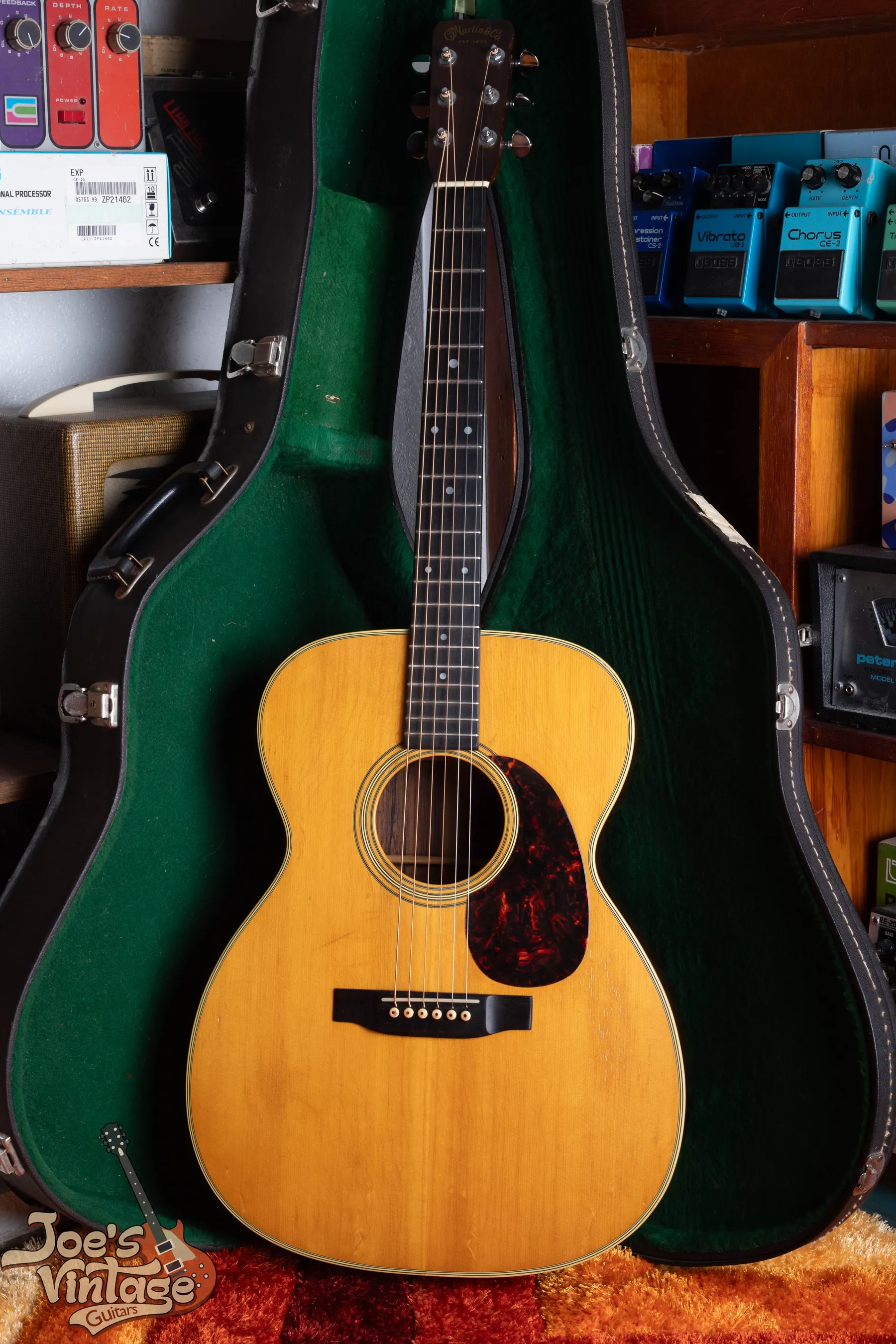
A vintage Martin 000-28 combines a particular body generation with Style 28 materials and trim. The name covers early 12-fret guitars, the 1934 scale transition and decades of later 14-fret production. Establish which guitar you have before using the 000-28, 0-28 and 00-28 price chart.
Joe’s 1950 and 1965 000-28 photographs show actual vintage examples with different repair histories. The earlier guitar has a documented replacement bridge. The later one supplies a cleaner overall comparison, alongside a recorded neck reset and new saddle. Those disclosures belong with the photographs whenever condition is discussed.
Authenticity And Originality Are Assessed From The Information Provided. A Hands-On Inspection Can Change The Conclusion.
Size And Construction
Separate The 000 Body From Its Style 28 Trim
The zeros identify body size; 28 identifies the style. The familiar 000 measures about 15 inches across the lower bout, while 00 and 0 bodies are smaller. Check the measurements in the Martin model-number guide against the instrument itself. Case labels and sellers’ descriptions can outlive the guitar they originally accompanied.
For the familiar vintage steel-string 000-28, look for a spruce top, rosewood back and sides, and Style 28 appointments appropriate to its period. The soundboard’s edging changes across the model’s history. An attractive herringbone border is only one observation: it can belong to an early original, a modern recreation or a later repair.
Count the frets between the nut and body joint. A 12-fret body extends farther toward the neck than the familiar 14-fret form. Photograph the complete outline square-on, then measure the body and scale separately. The small-body history explains why the relationship among body, soundhole and bridge matters more than one isolated dimension.
| Model | Body Family | Identification Priority |
|---|---|---|
| 0-28 | Concert | Confirm early stringing, body joint and any special-order history |
| 00-28 | Grand Concert | Separate original early production from later special orders and recreations |
| 000-28 | Auditorium | Establish 12 or 14 frets, then measure a claimed 1934 transition |
The OM Connection
Measure A 1934 000-28 Before Calling It Short Scale
The original OM-28 and the updated 000-28 are closely related, which makes 1934 a year to measure carefully. Martin’s museum describes the change from OM naming to the updated 000, followed by the 000’s move from long to short scale during 1934. Use the OM-28 identification guide for an instrument carrying the original OM designation.
Use approximately 25.4 inches as the long-scale reference and 24.9 inches as the short-scale reference. The OM-28 history explains the longer predecessor, and the documented 1934 example below confirms the shorter specification. Measure from the nut’s string-bearing edge to the center of the twelfth fret, then double that distance. The saddle is compensated, so measuring only from nut to saddle introduces an unnecessary variable. Record the result in inches or millimeters rather than relying on the owner’s memory of a published specification.
A documented 1934 000-28, serial 57851, provides a useful transition reference: the factory-record account places it in a short-scale batch with T-frets and steel T-bar reinforcement. That example supports the need to distinguish production groups within the year. It doesn’t establish the construction of every guitar stamped 1934.
Also measure the nut and string spacing. Neck width, scale, fret type and reinforcement are separate observations. A replacement fingerboard or neck can make a familiar measurement misleading, so include the heel, fingerboard extension and surrounding finish in the inspection photographs.
A Timeline For Inspection
Follow The Major 000-28 Construction Changes
12-Fret Guitars And Changing String Requirements
The early 000-28 belongs to a different construction period from the later steel-string model. The early Martin guide explains the checks needed on delicate early instruments. Existing steel strings don’t establish that an old top and bridge can safely carry that tension.
Body Geometry, Scale And X Position
The 14-fret transition and 1934 scale change precede the 000’s rearward X-brace movement in mid-1938, as described in the house chronology. A smaller 0 or 00 follows a different X-position timeline.
War Materials, Brace Profiles And Herringbone
Wartime reinforcement and tuner substitutions need individual checking. Scalloping ended late in 1944, while tapered shaping and top-wood changes continued into the postwar period. Herringbone trim persisted after scalloping ended, so the border alone cannot establish scalloped braces. See the prewar construction guide.
Postwar Hardware And The Rosewood Transition
Later guitars show changes in tuners, saddles, guards and reinforcement. Brazilian-to-Indian rosewood production belongs around the 1969 to 1970 transition. Use the dating guide alongside photographs of the actual back, sides and interior.
Woods And Ornament
Read Herringbone, Fingerboard Inlays And Rosewood Together
Classic pre-1947 Style 28 uses herringbone top trim in the house model history. Later 000-28s have simpler top purfling. Inspect the entire border where it meets the binding, particularly beside repaired cracks or a replaced section of top. A photograph of one undamaged corner won’t document the rest.
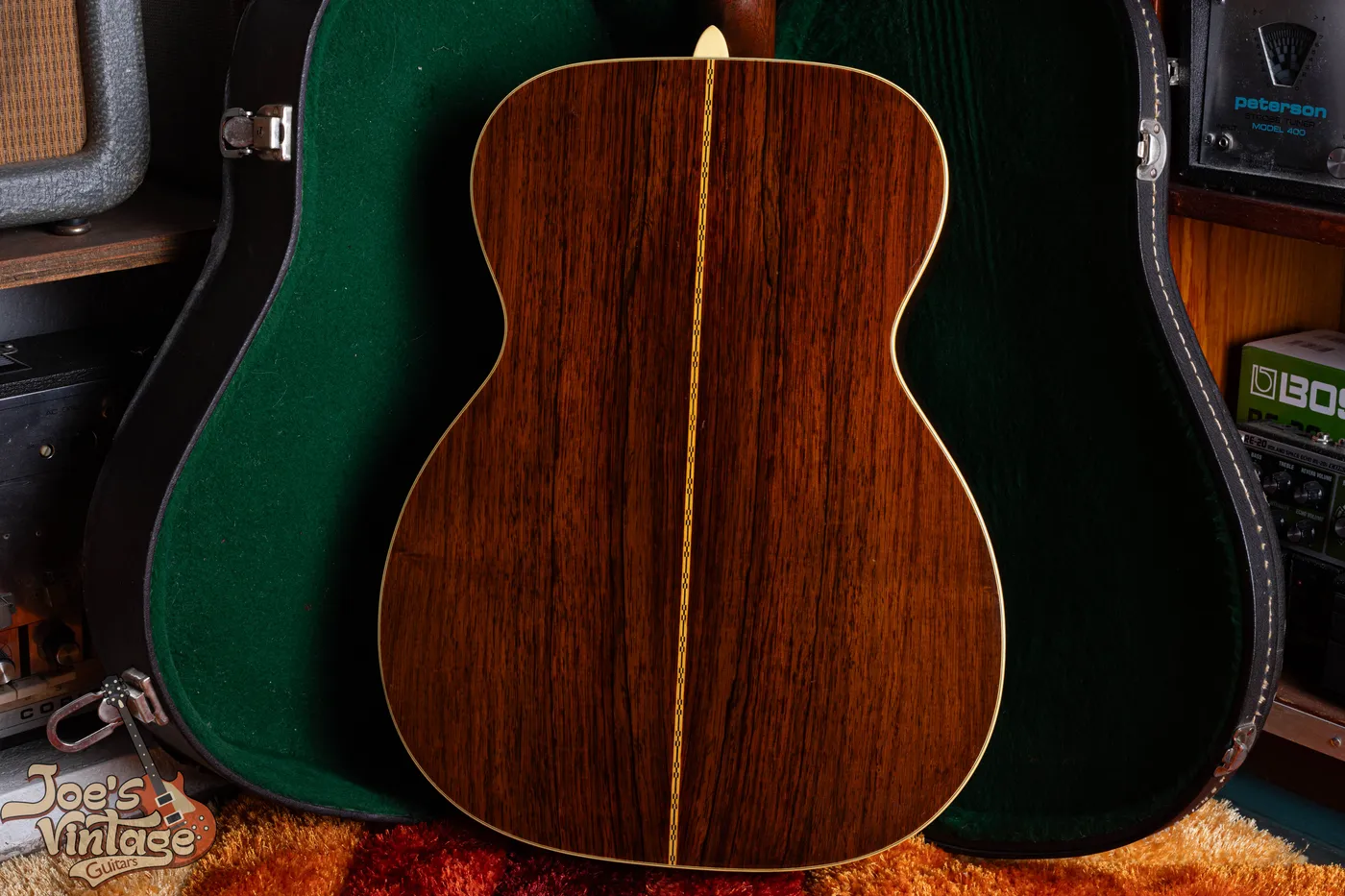
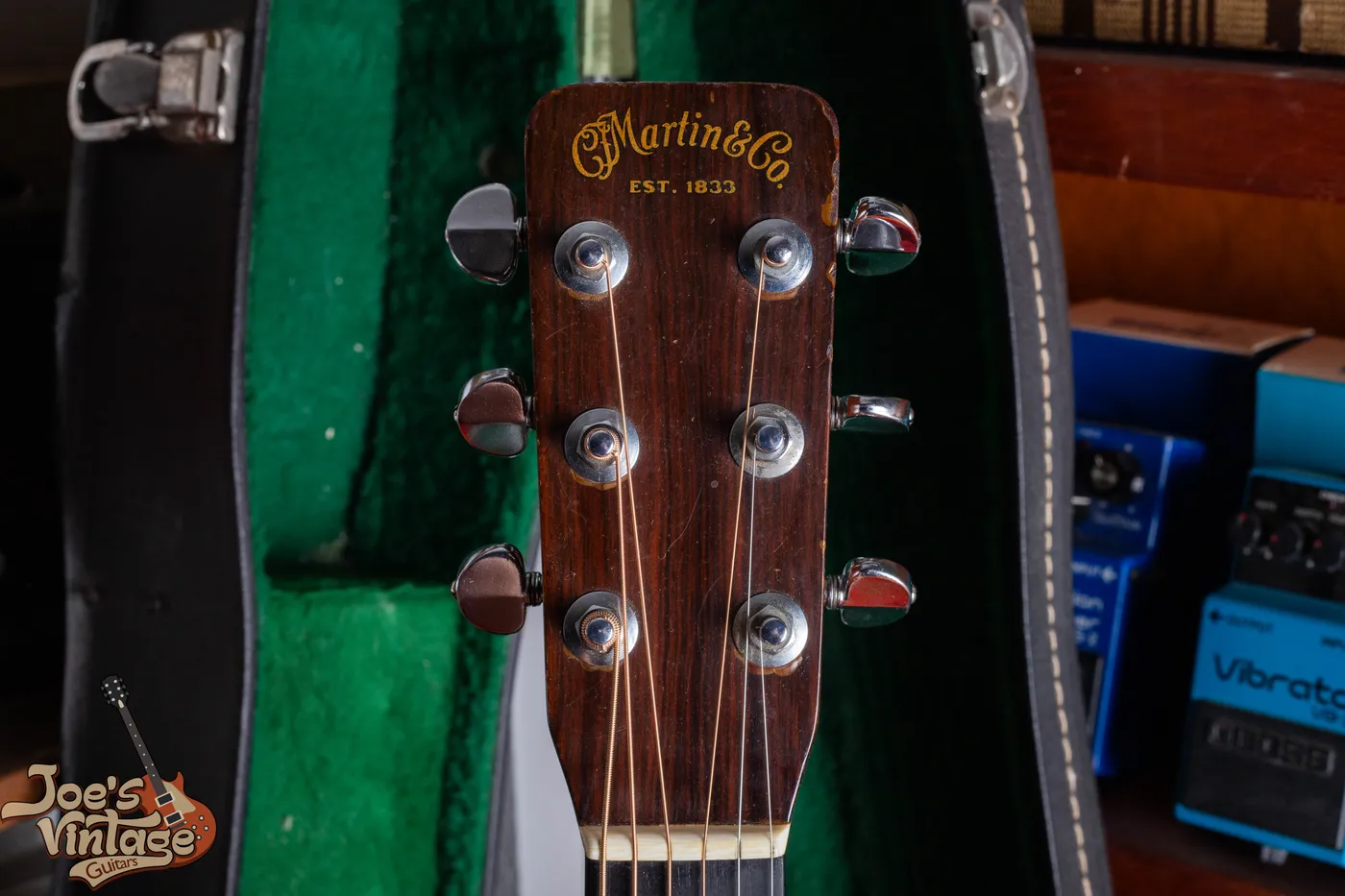
The 1950 and 1965 guitars here both illustrate post-herringbone production. Their rosewood backs, bridges, fingerboards and top trim should be considered as a group. A Style 21 can also have a spruce top and rosewood body; the Style 21 guide explains the different ornament and model history.
Brazilian rosewood identification needs more than a dramatic grain photograph. Ask for the complete back, both sides and the wood visible inside, and check that the serial, model and documented construction agree. Replacement backs and sides complicate a year-based assumption. The house dating guide’s transition is a starting point for examination, especially around the late 1960s.
Top color is similarly limited evidence. Aging, lighting, finish and repairs affect appearance. Don’t assign a red-spruce premium from a yellow or reddish photograph. Use dated construction information and an in-hand wood assessment when the species would materially change the description.
What Exterior Photos Leave Unanswered
Inspect Brace Shape, X Position And The Bridge Plate
Scalloping is the carved profile of a brace. X position describes where the main braces cross. They need separate photographs. A rearward X can coexist with scalloped braces, and a guitar can acquire scalloping through later brace shaving. Follow the prewar inspection examples when requesting interior views.
Include the complete brace edges, glue joints and soundhole area. Look for changes in tool marks, interrupted aging and repairs around the bridge area. A fresh-looking surface warrants investigation; it doesn’t prove a particular repair without more evidence. Ask for invoices or the repairer’s description when the interior has been altered.
Document the bridge plate’s outline and pin holes. A cap, plugs, an oversized replacement or damage hidden beneath the plate can affect an otherwise attractive guitar. Exterior bridge work and interior plate work are different repairs. Describe both so that “new bridge” doesn’t conceal an unresolved question about the top underneath.
Neck reinforcement usually requires more than an exterior photograph. The Martin construction guide discusses late-1934 steel T-bars, wartime ebony substitutions, the 1967 square-tube change and later adjustable rods. The absence of an adjustment nut doesn’t distinguish all those nonadjustable systems. Preserve the uncertainty when repair records or an appropriate examination aren’t available.
Two Readable 000-28 Blocks
Use The Actual Stamp To Check An Archive Date
1950 Martin 000-28
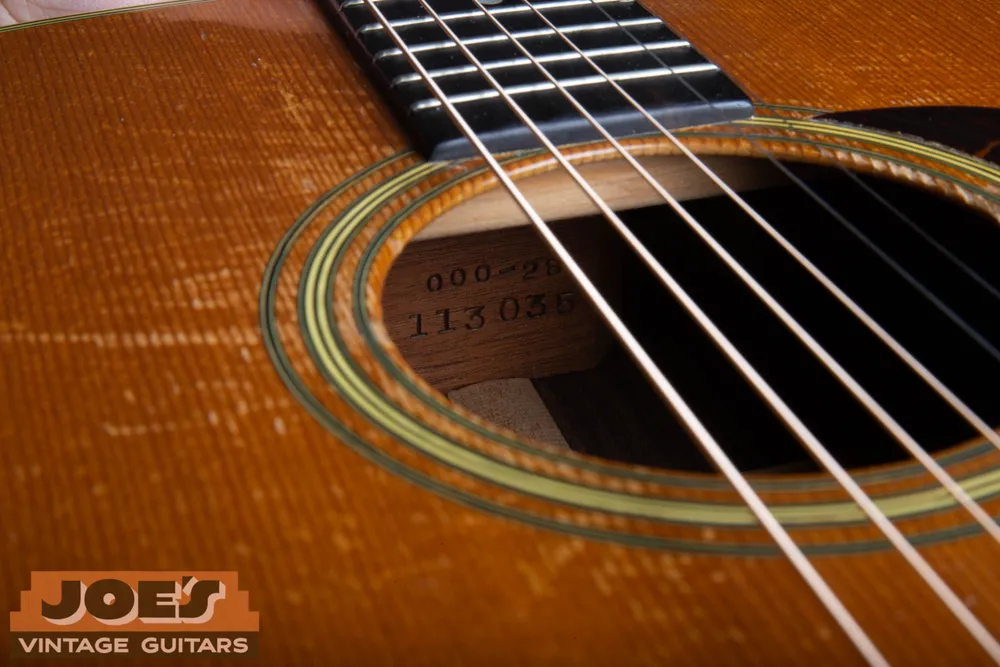
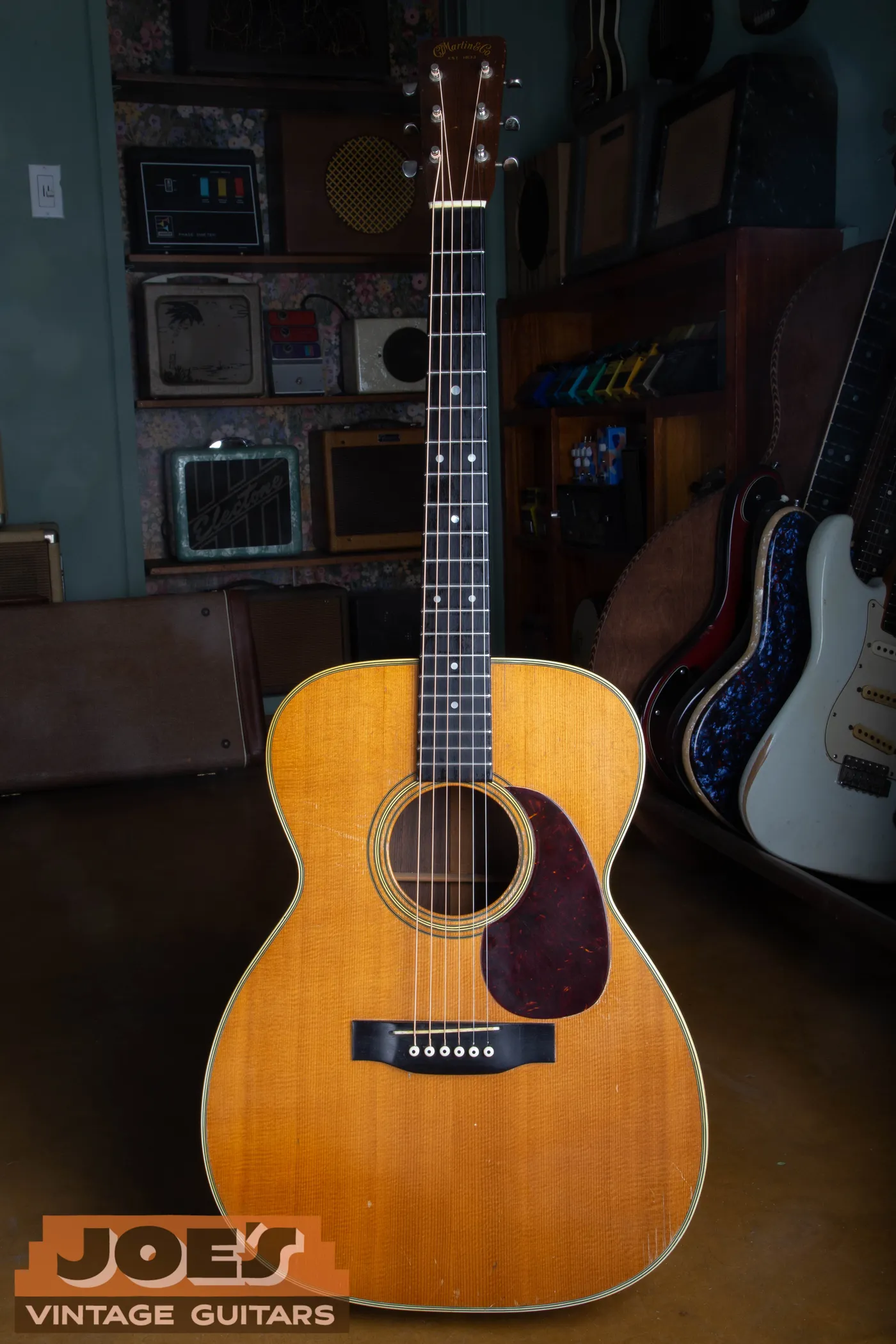
The archive filenames say 1949, but the block reads 113035. Martin’s year-end numbers are 112961 for 1949 and 117961 for 1950. The visible serial therefore places this guitar in 1950.
1965 Martin 000-28
Serial 204220 falls after the 1964 endpoint of 199626 and before the 1965 endpoint of 207030. The separate model line reads 000-28.
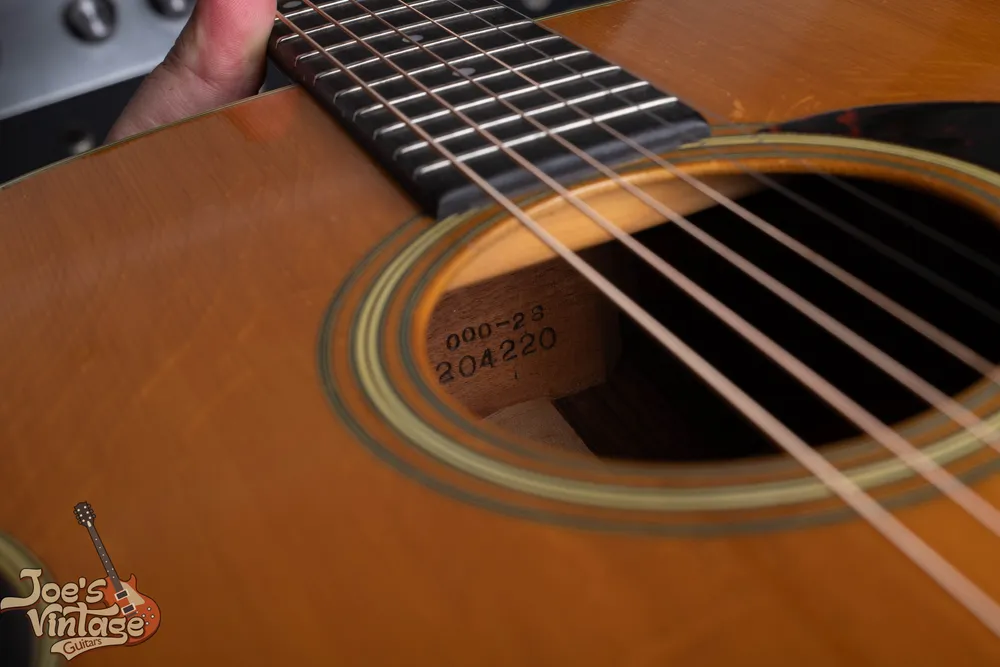
The factory serial table supplies year-end totals. Keep the complete block photograph with your notes, including the surrounding wood. Routine model stamping began around October 1930 in the neck-block guide; an earlier serial-only block calls for measurements and period construction evidence.
Bridges, Neck Angles And Surfaces
Recognize Repairs Without Losing The Guitar’s Identity
1950 000-28
An Oversized Replacement Bridge
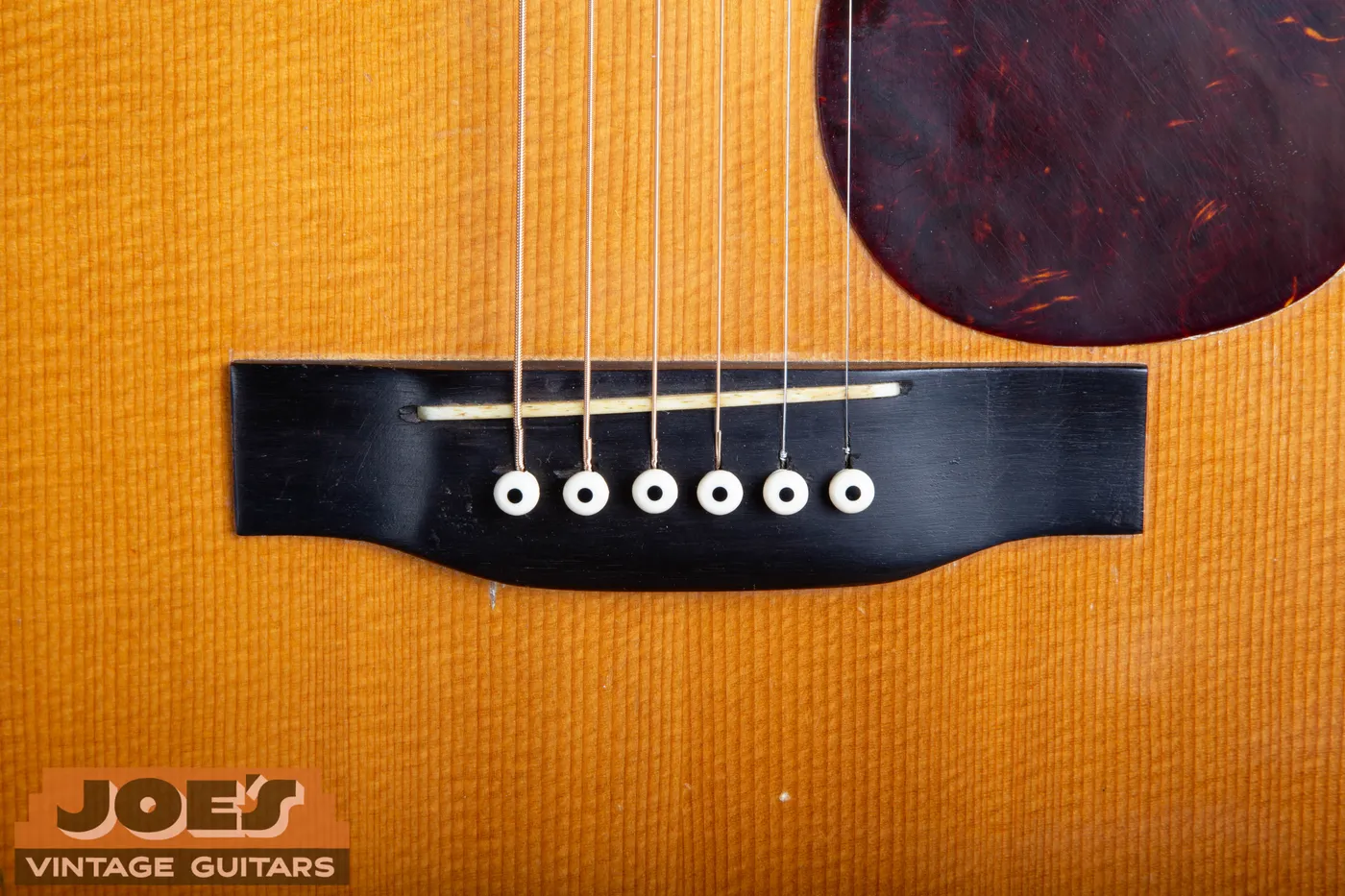
Joe’s 1950 instrument description records an oversized replacement bridge, stable edge hairlines and action that would benefit from a reset for a lower setup. Use this guitar to study a disclosed alteration. Its bridge outline should never become a template for an untouched 1950 example.
1965 000-28
A Cleaner Example With Documented Maintenance
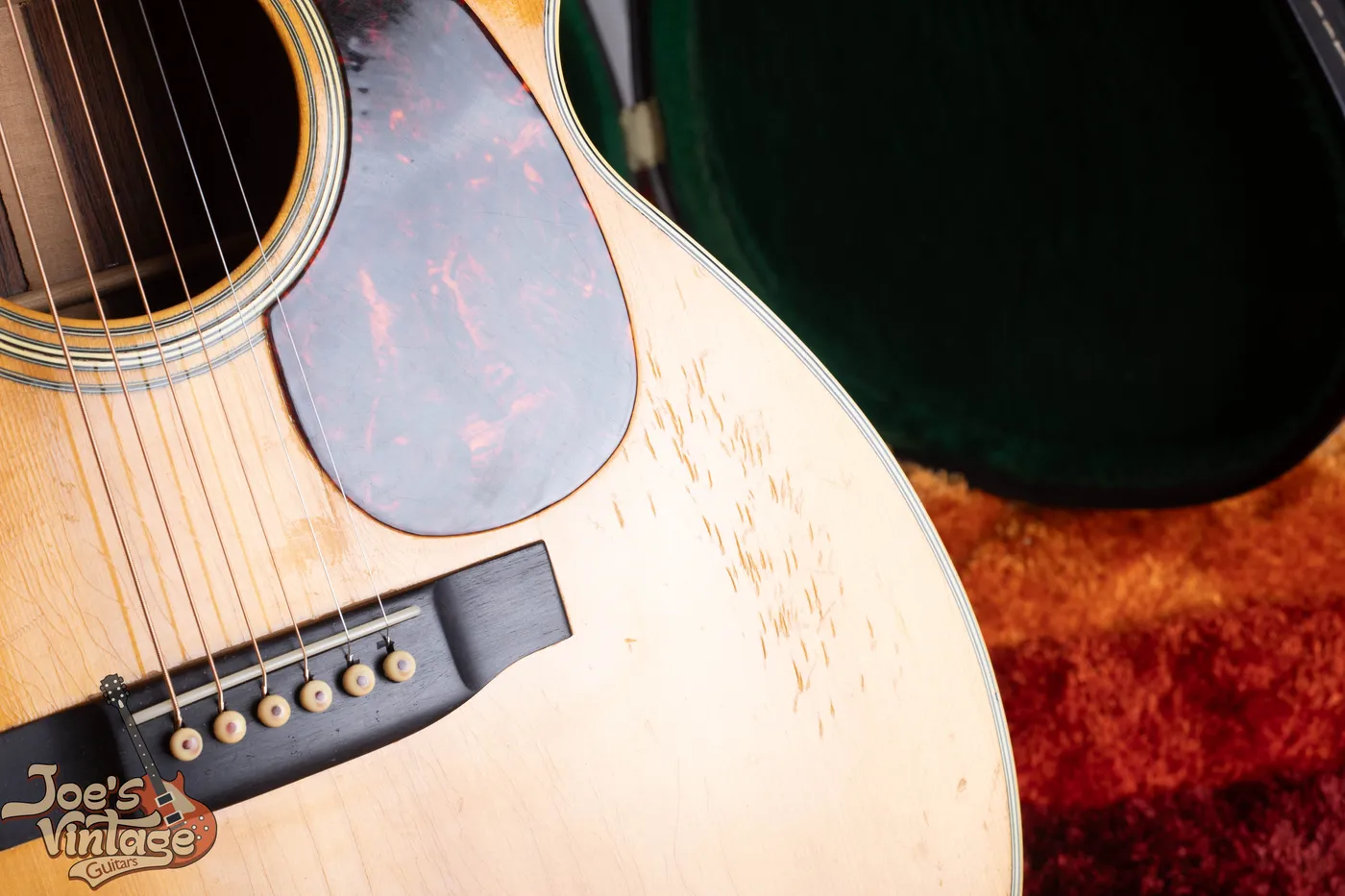
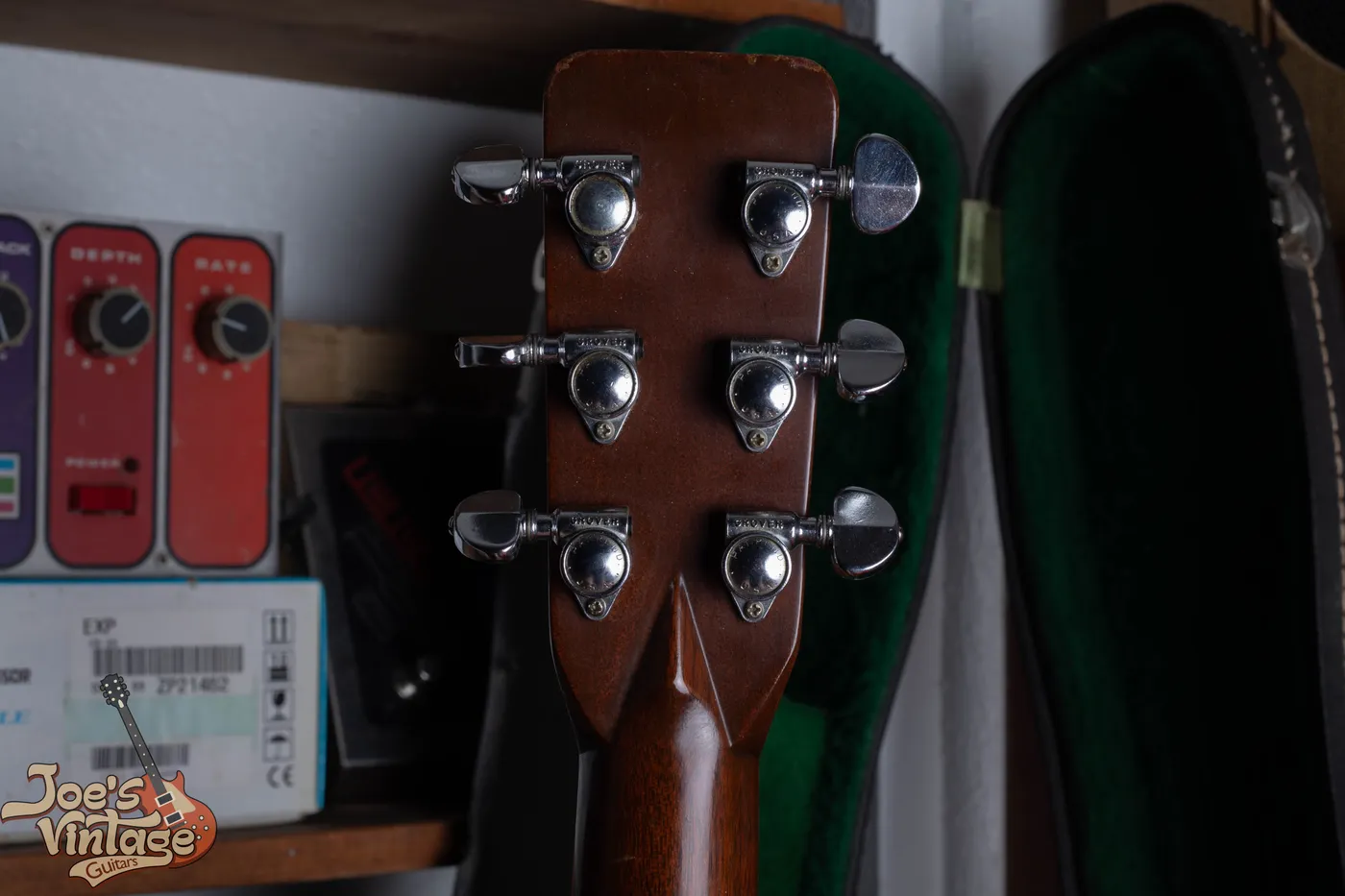
The 1965 description records a neck reset and new bone saddle, with no cracks reported. Compare the bridge, guard and installed tuners, then evaluate the workmanship. A reset is different from shaving an original bridge to accommodate a poor neck angle.
The Smaller Style 28 Models
Identify A Vintage 0-28 Or 00-28 Separately
The 0-28
The 0-28 has its own early production and occasional later entries. A small 12-fret guitar with rosewood back and sides still needs a body measurement, trim inspection and period attribution. Early stringing requirements matter; a later steel-string comparison cannot establish the safe setup of a nineteenth-century instrument.
The value chart preserves separate 0-28 rows, including uncommon configurations. A claimed 14-fret or special-order example needs supporting records and measurements. Don’t convert rarity into authenticity merely because a matching photograph is difficult to find. Use the size and style reference and early construction guide together.
The 00-28
The Grand Concert 00-28 also requires its own production context. Early originals, later special orders and modern 00-28s can share a name while differing in body joint and construction. The chart’s isolated later entries apply only to the named configurations; they don’t create a continuous vintage production run.
G and C suffixes belong to the classical Martin family. The modern 00-28 Standard Series and 0-28VS belong to later production. Confirm the serial year before using old appointments, a slotted headstock or a twelve-fret neck as evidence of an early original.
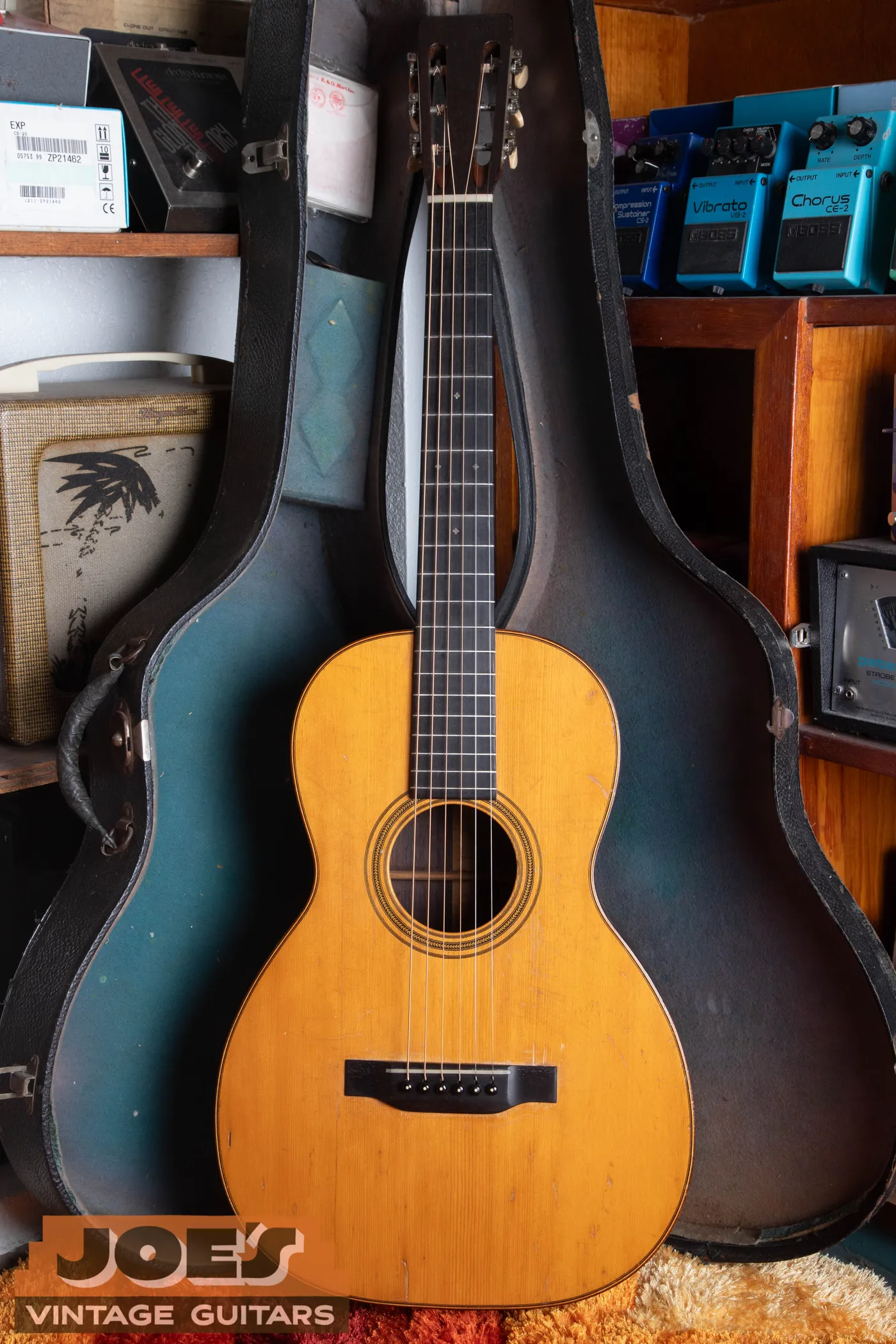
The photograph above is Joe’s 1930 0-21, included as a clearly labeled small 12-fret body comparison. It illustrates the outline and neck-to-body relationship only. Its Style 21 trim must not be used to authenticate a 0-28, and it supplies no evidence about an unpictured guitar’s bracing.
An Inspection Before Purchase
Check Reissues, Counterfeits And Replaced Parts
Modern 000-28EC, Norman Blake, Golden Era, Authentic, VS, Standard Series and Custom Shop instruments need their full designation and actual manufacture year. A historical year in a recreation’s name describes an intended specification. The model-code guide helps separate that designation from a production date. Ask for factory paperwork when the stamp says CUSTOM.
Joe’s counterfeit Martin guide shows why a convincing headstock logo or plausible number is insufficient. Compare stamp lettering, logo, neck joint, body materials and internal construction. Request fresh photographs of the same guitar in every view; matching scratches and grain help connect the details to the complete instrument.
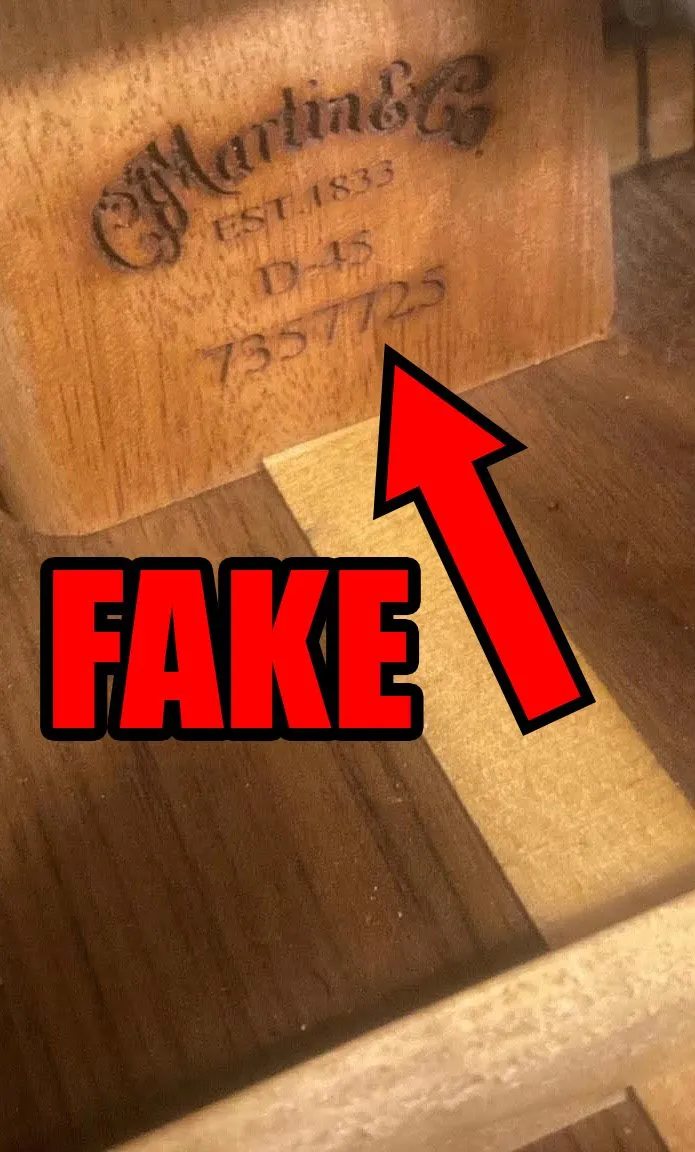
The counterfeit D-45 image is a comparison from that separate inspection guide. It is explicitly labeled because a Dreadnought is a different body family. Use it to understand the need to investigate inconsistent markings, not as a universal font rule for every Martin period.
Finally, check tuner screw holes and plate outlines using the tuner archive, then compare the headstock logo. Photograph binding joints, guard edges and finish around the bridge. Joe’s finish inspection guide explains the evidence needed before describing a surface as original.
Send The Evidence
Have Joe Check Your Style 28 Guitar
Send the complete front and back, readable block, bridge profile and known repair history. I can help sort out the model and the questions that need an in-hand inspection.
Sources And Further Reading
Style 28 Identification References
- Martin Factory Serial Table
Year-end totals for the photographed 1950 and 1965 guitars.
- Martin Museum: The OM Transition
Factory history of the 1934 naming and scale changes.
- Documented 1934 000-28
Individual short-scale example and factory-record research.
- Martin Construction Photographs
Bridges, reinforcement and period comparisons.
- Small-Body Martin History
Body sizes, woods, trim and production chronology.
Questions AboutMartin Identification
Does Herringbone Prove A 000-28 Has Scalloped Braces?
Are All 1934 000-28s Short Scale?
Can A Replacement Bridge Leave The Guitar Authentic?
Where Do The 0-28 And 00-28 Fit?
The Last Word
Match The Construction Before Comparing Prices
Keep the body generation, serial date, woods and alterations together in the description. Once those observations agree, use the corresponding row in the vintage Style 28 value guide. A remaining uncertainty belongs in the appraisal notes.
Authenticity And Originality Are Assessed From The Information Provided. A Hands-On Inspection Can Change The Conclusion.