

Style 28 Prices · Early Originals Through 1989
Martin 000-28 Values
Choose the correct body and production group before accounting for condition, repair work and the case.
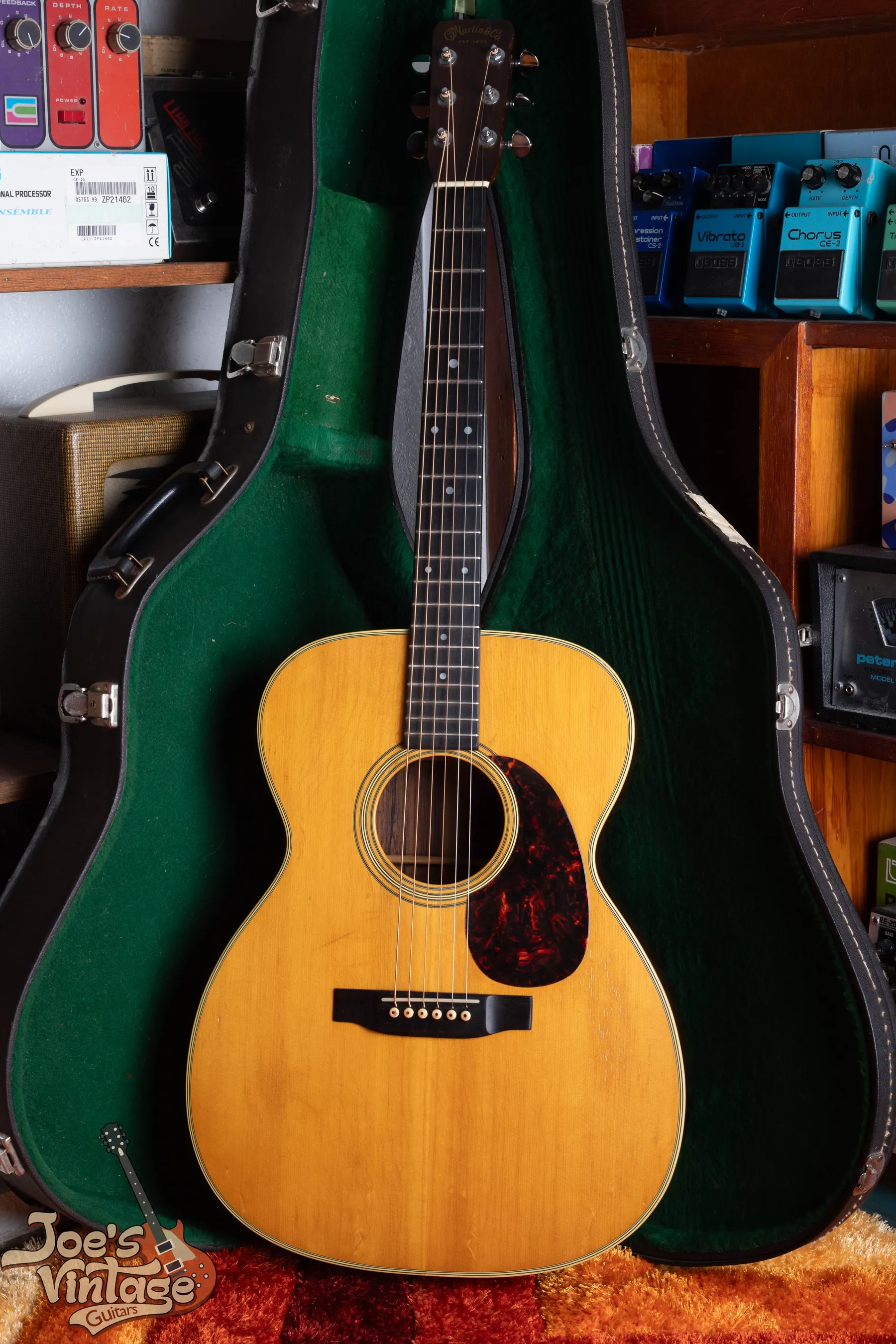
A vintage Martin 000-28’s value depends on its production group and what survives of the original instrument. Scale, bracing, trim and rosewood can separate guitars that share the same model number. Before choosing a figure, use the Style 28 identification guide to establish those details.
The estimates below also cover 0-28 and 00-28 guitars in their own rows. They describe excellent, original instruments with the original case. A repaired guitar needs an individual comparison, especially when work affects the soundboard, finish or neck geometry.
This Is An Estimate Of Market Value, Not An Offer To Buy And Not A Guarantee. Market Values Fluctuate; Have Your Specific Item Appraised.
Joe’s Estimated Retail Ranges
Vintage 000-28, 0-28 And 00-28 Price Chart
| Model | Years | Configuration | Estimated Retail Value |
|---|---|---|---|
| 0-28 | 1920 to 1923 | Rosewood, Gut-String | $8,900 to $13,350 |
| 0-28 | 1924 to 1927 | Gut-String | $8,900 to $13,350 |
| 0-28 | 1925 to 1927 | Steel-String Option | $12,350 to $17,000 |
| 0-28 | 1928 to 1929 | Steel-String Standard | $12,600 to $17,400 |
| 0-28 | 1930 to 1931 | Belly Bridge, 12-Fret | $15,600 to $20,050 |
| 0-28 | 1937 | Belly Bridge, 14-Fret | $17,400 to $22,600 |
| 0-28 | 1969 | Brazilian Rosewood | $7,850 to $10,450 |
| 00-28 | 1920 to 1924 | Gut-String | $12,300 to $15,850 |
| 00-28 | 1925 to 1931 | Steel-String | $24,100 to $32,700 |
| 00-28 | 1934 | Limited Production | $32,250 to $43,000 |
| 00-28 | 1936 to 1941 | Limited Production | $32,250 to $43,000 |
| 00-28 | 1958 | Special Order | $13,650 to $17,600 |
| 00-28 | 1977 | Special Order | $3,250 to $4,250 |
| 00-28 | 1984 | Special Order | $2,750 to $3,850 |
| 000-28 | 1902 to 1921 | Gut-String | $20,200 to $25,800 |
| 000-28 | 1925 to 1927 | Steel-String | $37,400 to $48,950 |
| 000-28 | 1928 | 12-Fret | $36,550 to $47,850 |
| 000-28 | 1929 | 12-Fret | $36,950 to $48,400 |
| 000-28 | 1930 | Belly Bridge | $35,700 to $46,750 |
| 000-28 | 1931 to 1933 | 12-Fret | $37,400 to $48,950 |
| 000-28 | 1934 | Early 1934, Long Scale | $61,600 to $83,600 |
| 000-28 | 1934 to 1937 | Short Scale | $57,850 to $75,650 |
| 000-28 | 1938 to 1939 | Through Early 1939, 1 3/4-Inch Nut | $52,200 to $69,600 |
| 000-28 | 1939 | Late 1939, 1 11/16-Inch Nut | $47,200 to $63,750 |
| 000-28 | 1940 to 1941 | Herringbone | $39,950 to $51,000 |
| 000-28 | 1942 to 1944 | Scalloped Braces, Herringbone | $41,850 to $53,400 |
| 000-28 | 1944 to 1946 | Non-Scalloped, Herringbone | $28,300 to $37,000 |
| 000-28 | 1947 to 1949 | Non-Herringbone | $16,100 to $20,900 |
| 000-28 | 1950 to 1952 | Brazilian Rosewood | $13,350 to $17,200 |
| 000-28 | 1953 to 1955 | Kluson Tuners | $13,350 to $17,200 |
| 000-28 | 1956 to 1958 | Kluson Tuners | $12,300 to $15,850 |
| 000-28 | 1958 to 1959 | From Late 1958, Grover Tuners | $12,200 to $15,650 |
| 000-28 | 1960 to 1962 | Brazilian Rosewood | $9,350 to $12,350 |
| 000-28 | 1964 | Brazilian Rosewood | $9,150 to $12,200 |
| 000-28 | 1965 | Brazilian Rosewood | $6,950 to $9,350 |
| 000-28 | 1966 to 1969 | Brazilian Rosewood; Early 1966 Tortoise Guard | $7,150 to $9,550 |
| 000-28 | 1970 to 1979 | Indian Rosewood | $3,500 to $4,850 |
| 000-28 | 1980 to 1989 | Indian Rosewood | $2,850 to $4,000 |
U.S. dollars. Prepared in November 2026 from 2026 annual price-guide ranges, adjusted downward and rounded to the nearest $50. November dates this calculation; these are retail estimates rather than a record of completed November sales. They assume excellent, original condition and the original case and aren’t purchase offers. Repairs, changed parts and market conditions require individual appraisal.
Coverage follows the original-production configurations shown through 1989. The early 000-28 row is included because it has no model-specific entry in the early Martin value guide. Pre-1920 0-28 and 00-28 guitars remain with that guide. The absence of a year is a gap in this chart, not proof that no guitar was built. There is no separate 1963 000-28 figure here.
Each range applies to the named model, years and configuration. A 0-28 figure cannot be transferred to a 00-28 of similar age, and a rare later special-order entry doesn’t price every guitar made between the listed years. Keep photographs and measurements available when the instrument falls outside a clear row.
Body And Production Groups
Why Similar 000-28s Can Have Different Values
Early 12-Fret Instruments
Early originals need their own comparison group. Stringing requirements, top structure and period repairs matter alongside appearance. A delicate early guitar shouldn’t be priced as a later steel-string 000 merely because the body width is similar. Its actual configuration must be established first.
Prewar 14-Fret Production
Scale length, neck width and brace layout can distinguish neighboring production groups. A claimed 1934 long-scale guitar needs measured evidence. For a 1938 or 1939 instrument, record the construction and neck dimensions rather than selecting whichever nearby row carries the higher figure.
Wartime And Early Postwar Guitars
Trim and internal construction don’t always change together. A herringbone guitar can belong to a different brace group from another herringbone example. Interior photographs and repair history are necessary when a description relies on scalloped bracing.
Later Rosewood 000-28s
The chart separates later Brazilian and Indian rosewood production where the configuration calls for it. Wood identity, originality and structural condition should support that comparison. A date alone won’t establish the origin of a replaced back or sides.
These distinctions explain why a broad “old Martin” price is often unhelpful. Start with the narrowest supported production group and then assess condition. If the model remains uncertain, retain a provisional range instead of averaging unrelated categories into a seemingly precise number.
What To Inspect Before Adjusting A Range
Finish And Original Wood Carry Different Questions
Finish condition includes ordinary wear, touch-up, overspray and complete refinishing. Those descriptions should identify the affected area. A touched-up heel after a reset, a resprayed top and a fully stripped body don’t describe the same work. Ask for a written repair history and photographs in diffuse and angled light.
Use the finish inspection guide to collect useful evidence. Gloss alone is inconclusive, and a polished instrument can photograph differently from its appearance in the room. Protected edges and transitions around the bridge, binding and neck help an appraiser understand what was done.
The discussion of refinishing and value explains why the work’s extent matters. Avoid assigning the same adjustment to every finish concern. The wood left beneath the surface, the instrument’s overall originality and the quality of the repair all belong in the evaluation.
A replacement top is a substantial change even when its color and herringbone look convincing. Record any replaced structural wood separately from cosmetic treatment. Buyers assessing a vintage instrument need to know which parts of its construction remain from the original production period.
The Soundboard’s Working Area
Evaluate The Bridge And Plate As Separate Repairs
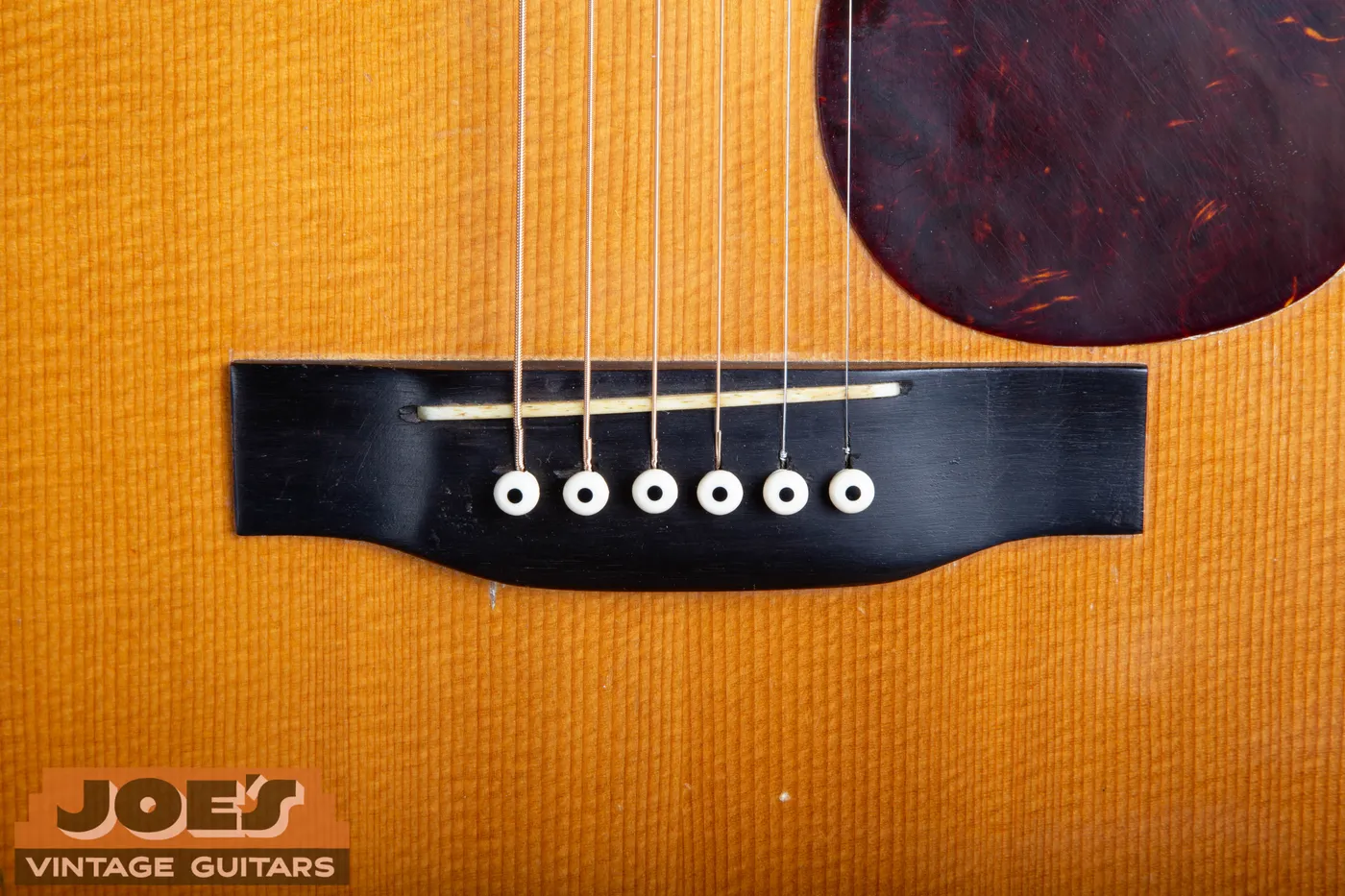
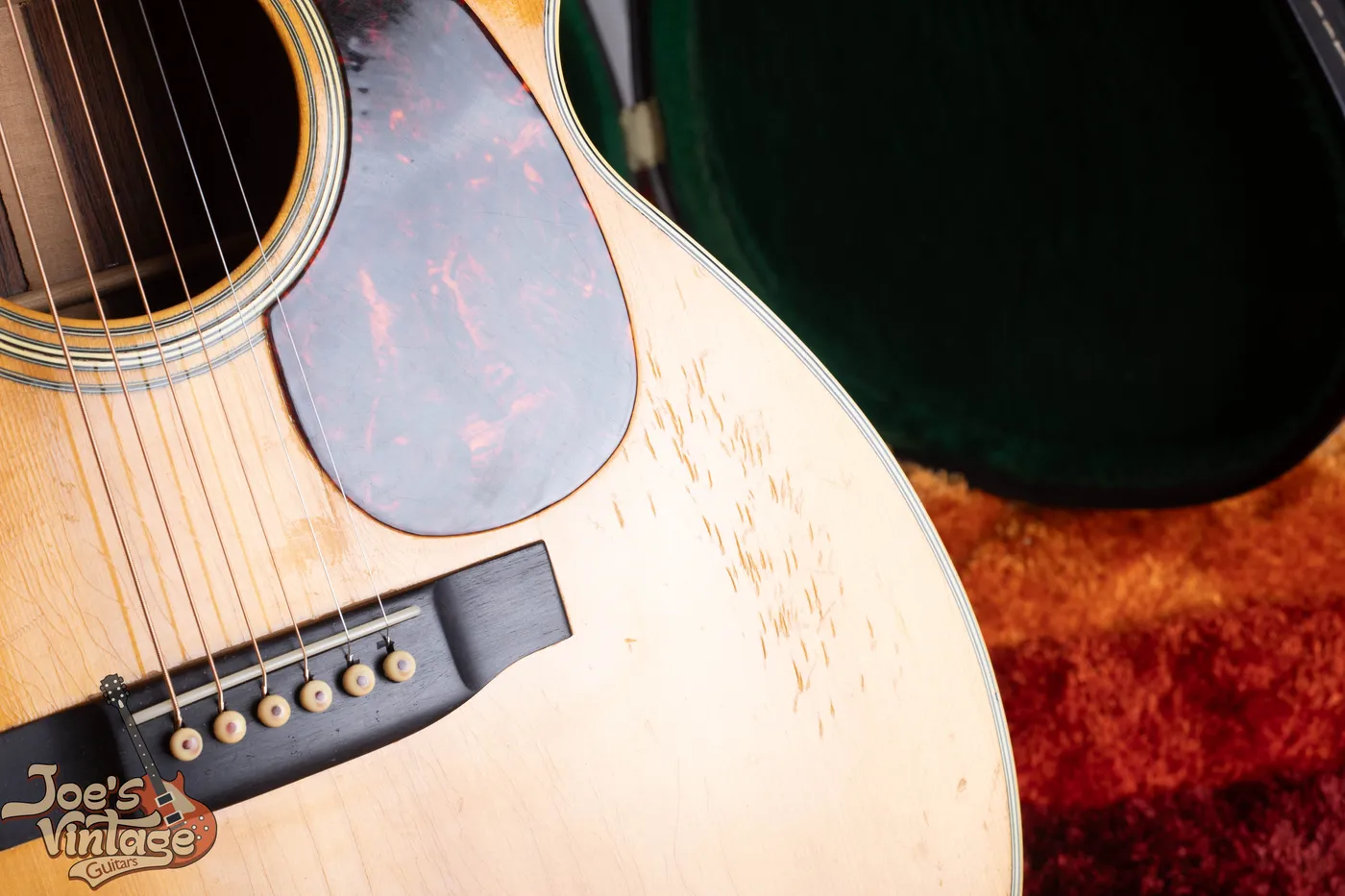
These photographs show two actual 000-28 bridge areas: the 1950 guitar has an oversized replacement bridge, and the 1965 guitar has documented saddle work. They illustrate features to record. Neither photograph establishes the condition of an instrument being appraised elsewhere.
Check the bridge footprint, thickness, saddle height and pin spacing. A larger replacement may cover an earlier footprint or damaged wood. A shaved bridge can limit future setup choices. The appraisal needs to account for the resulting condition, including whether a suitable repair can preserve the remaining original material.
Inside the guitar, examine the bridge plate and surrounding top. A small local repair, a cap and an oversized replacement deserve different descriptions. Ask whether the pin holes are worn, whether there are patches under the bridge and whether any braces were replaced or carved. The cost of a new exterior bridge doesn’t answer those questions.
For a broader view of these issues, read what lowers a vintage guitar’s value. Keep each finding tied to a visible part or a repair record. Vague descriptions such as “professionally restored” leave too much unresolved for a reliable comparison.
Measurements And Repair Quality
Separate A Needed Neck Reset From Cosmetic Wear
A clean surface doesn’t establish comfortable action. Request the action at the twelfth fret, remaining saddle height and a side view of the bridge. Also note relief and fret condition. The neck-reset guide explains why several observations are needed before diagnosing the neck angle.
A well-executed reset can make an old guitar usable while retaining its original bridge. The appraisal should describe that maintenance and inspect the heel fit, finish touch-up and related fret work. Poor alignment or unnecessary removal of original material creates a different condition problem.
Cracks need location, length and repair status. An old stable repair and an open crack requiring attention should never be combined under the same one-word condition label. Photographs of the outside and corresponding interior area help show cleats, patches and the surrounding top.
Don’t subtract a repair quote mechanically from the highest chart figure. The starting guitar may already differ from the excellent-original benchmark in several ways, and the repair’s effect on originality may remain after the bill is paid. An individual appraisal can consider those findings together.
Scarce Models And Incomplete Year Coverage
Use The 0-28 And 00-28 Rows On Their Own Terms
The smaller Style 28 guitars have separate demand and production histories. Confirm the body size and original configuration before comparing them with a 000-28. A rare label or an uncommon year doesn’t by itself establish a higher value than a better-preserved, more familiar instrument.
On an early 0-28 or 00-28, document the neck joint, bridge design and intended stringing. A conversion or structural alteration can change the useful comparison. If an instrument’s year falls between isolated chart entries, send its photographs for review rather than borrowing a price from the nearest date.
Classical 00-28G and 000-28C instruments belong in the classical Martin value guide. Original OM-28s belong in the OM-28 price guide. Modern VS, Authentic, signature and Standard Series instruments aren’t priced in this vintage chart.
Photos, Records And The Case
Prepare A Useful Style 28 Appraisal Request
Record The Identity
Send the complete front and back, readable model and serial stamp, and the body joint. Include a scale measurement for a transition-era claim and explain any uncertainty about the model.
Show The Areas That Affect Condition
Add the bridge profile, guard edges, heel, headstock and visible repairs. Interior photographs are useful when they can be obtained safely; a repairer can document inaccessible areas.
Keep The Case And Paperwork Together
The chart assumes the original case. Photograph its exterior, interior and hardware, and include repair invoices or ownership records. A replacement case needs to be identified as such.
Before commissioning cosmetic improvements, read whether to restore a guitar before selling. Cleaning, refinishing and structural work should follow an assessment of what the guitar needs. Preserving the current evidence helps an appraiser make that recommendation.
A retail estimate and a purchase offer answer different questions. The figures here describe a retail comparison under stated condition assumptions. A proposed transaction also depends on the actual guitar, any work required and how it will be sold. Send the condition information before expecting a firm offer.
Send The Evidence
Request A Style 28 Appraisal
I’m happy to look at your 000-28, 00-28 or 0-28 photographs and discuss the instrument’s condition, value and selling options.
Questions AboutMartin Values
Does Brazilian Rosewood Guarantee The Highest Price?
Can I Use A Nearby Year When Mine Is Missing?
Does A Neck Reset Automatically Lower Value?
Are Modern 000-28 Signature Models Included?
The Last Word
Choose A Supported Comparison For Your Guitar
Use the 000-28, 0-28 and 00-28 identification guide when the date or configuration remains uncertain. A documented model, clear condition report and complete photographs make the resulting value discussion more useful.
This Is An Estimate Of Market Value, Not An Offer To Buy And Not A Guarantee. Market Values Fluctuate; Have Your Specific Item Appraised.