

Grand Concert Martins · Standard, Dealer-Branded And Hawaiian Forms
Martin 00-18 Guide
Read the complete designation before comparing a 00-18 with a Hawaiian conversion, a classical guitar or a later recreation.
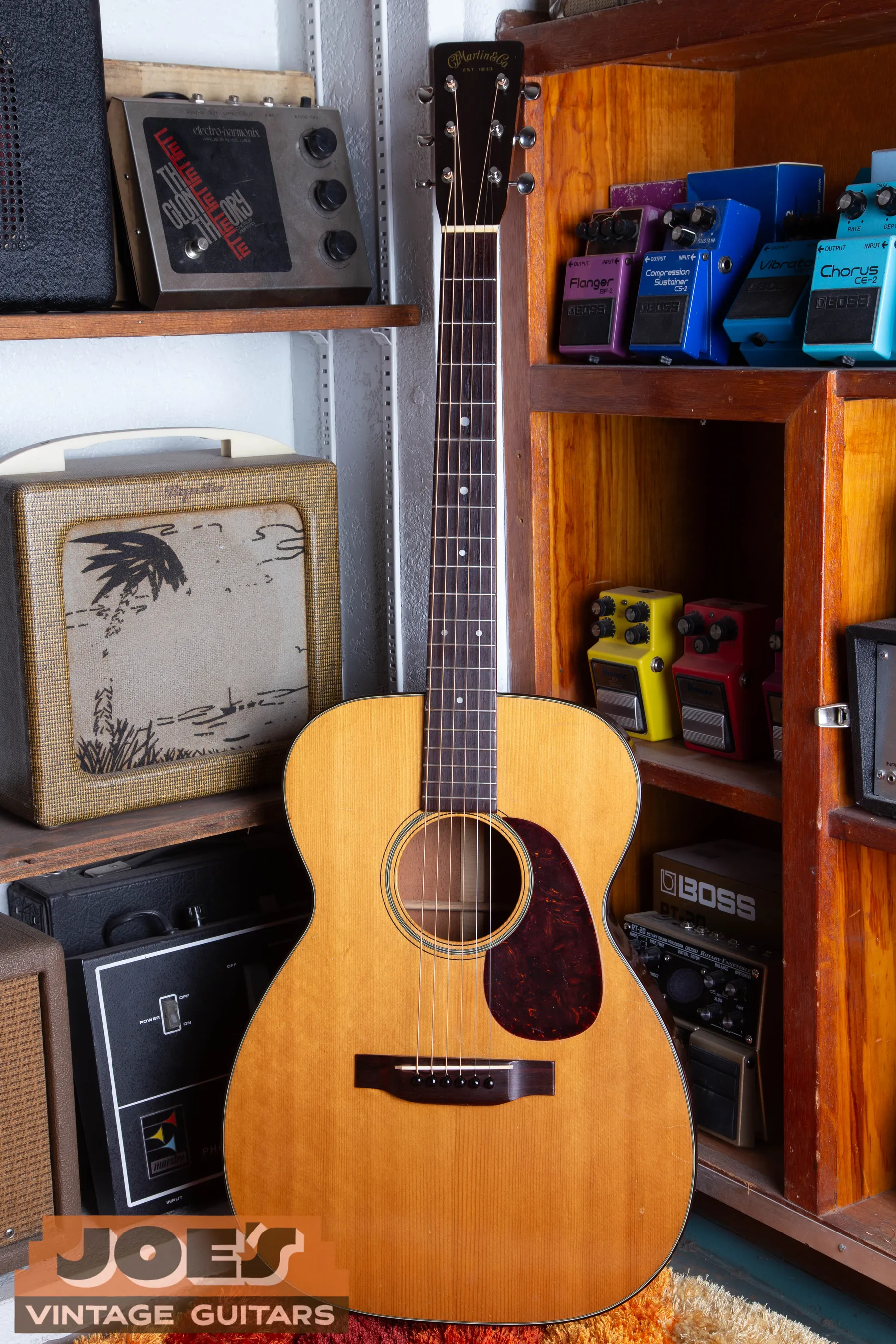
The Martin 00-18 name covers guitars that can look similar from across a room but need different identification work. A 12-fret steel-string, a converted Hawaiian instrument and a 00-18G classical aren’t interchangeable. This guide starts with those distinctions and uses Joe’s 1920s, 1951, 1952 and 1962 guitars as photographic examples. Prices belong in the paired 00-18 value guide.
On the 1952 guitar, the model and serial are both readable: 00-18 and 124189. On an earlier dealer-branded instrument, a different name on the headstock may be part of its history. The markings need to be read with the body and construction, rather than used as a quick acceptance or rejection test.
Authenticity And Originality Are Assessed From The Information Provided. A Hands-On Inspection Can Change The Conclusion.
Body And Playing Format
Which 00-18 Family Is In Front Of You?
| Designation | What To Establish | Next Reference |
|---|---|---|
| 00-18 | Year, 12- or 14-fret body, original construction | This guide |
| 00-18H | Hawaiian origin and any conversion work | Hawaiian section below |
| 00-18K | Koa construction and original setup | Koa inspection below |
| 00-18G or 00-18C | Classical model and intended string tension | Martin classical guide |
| 00-18E | Factory electric equipment and top changes | Martin electric guide |
| CUSTOM or modern edition | Actual serial year and factory specification | Build sheet and model records |
The size code 00 means Grand Concert. Familiar examples measure about 14 1/8 inches across the lower bout, between the 0 and 000 families. The Martin model-number reference explains how size and style combine. On the usual later steel-string 00-18, a spruce top and mahogany back and sides accompany plain Style 18 appointments.
Count the strings as well as the zeros. A tenor belongs with the four-string tenor models, and a long-neck plectrum needs the plectrum reference. A different bridge, neck width or tuner count may identify another factory model before it suggests a modification.
The Neck Joint Changes The Comparison
Follow The Change From 12 To 14 Frets
The Earlier 12-Fret 00-18
A 12-fret body has a longer upper section and meets the neck at the twelfth fret. Check that joint directly; a slotted peghead is supporting evidence, not a substitute for counting. The 1920s 00-18 photograph from the existing small-body archive provides a labeled comparison with the later 1952 guitar shown here.
Style 18’s regular move toward steel strings belongs around 1923 in the small-body history. An earlier guitar needs its intended tension assessed. Don’t assume a set of steel strings already on the instrument represents a safe or historically correct setup.
The 14-Fret Steel-String Guitar
During the 1930s, the familiar 14-fret design became part of the 00-18’s history. Its body joint, upper outline, bridge placement and neck dimensions should be compared as a group. Record the actual nut width, rather than estimating it from string spacing. A replacement nut can change the spacing while leaving the fingerboard width unchanged.
The prewar Martin guide documents the separate fret and neck transitions. Many models changed from bar frets toward T-frets during 1934; many 14-fret necks narrowed in 1939. A refret or replacement fingerboard can alter what is visible today, so the serial doesn’t guarantee that the installed frets are original.
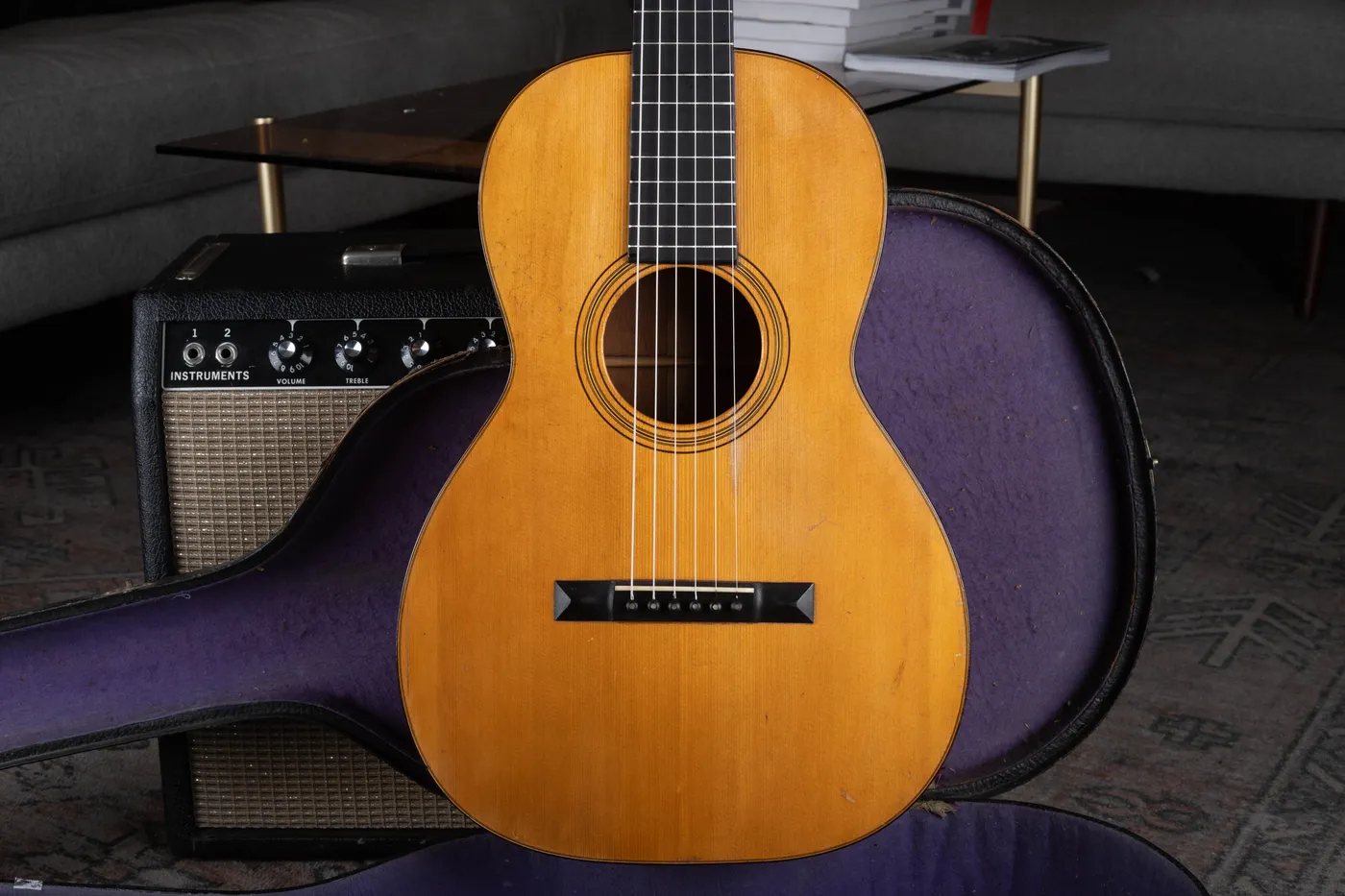
The archive’s 1920s 12-fret 00-18 and the 1952 14-fret guitar require different construction comparisons.
Dealer Branding Needs Its Own Research
Read A Wurlitzer Name Without Assuming A Fake
Robert Corwin’s photographed Wurlitzer research identifies the 2086 with the Martin 00-18 family and dates the specially designated Company Line to 1922. A dealer’s name can therefore be part of an old instrument’s history. Establish the individual guitar through its dimensions, internal marks, construction and surviving records.
A Wurlitzer name alone cannot settle who built a guitar or when it was made. Keep a seller’s attribution separate from the evidence that supports it. If an archive date conflicts with a documented model chronology, retain both records and ask for the serial photograph before assigning a precise year.
Different Years, Different Repair Records
Compare Clean 1951 And 1962 00-18 Examples
1951 One-Owner Guitar
Preserved Finish With A Documented Neck Reset
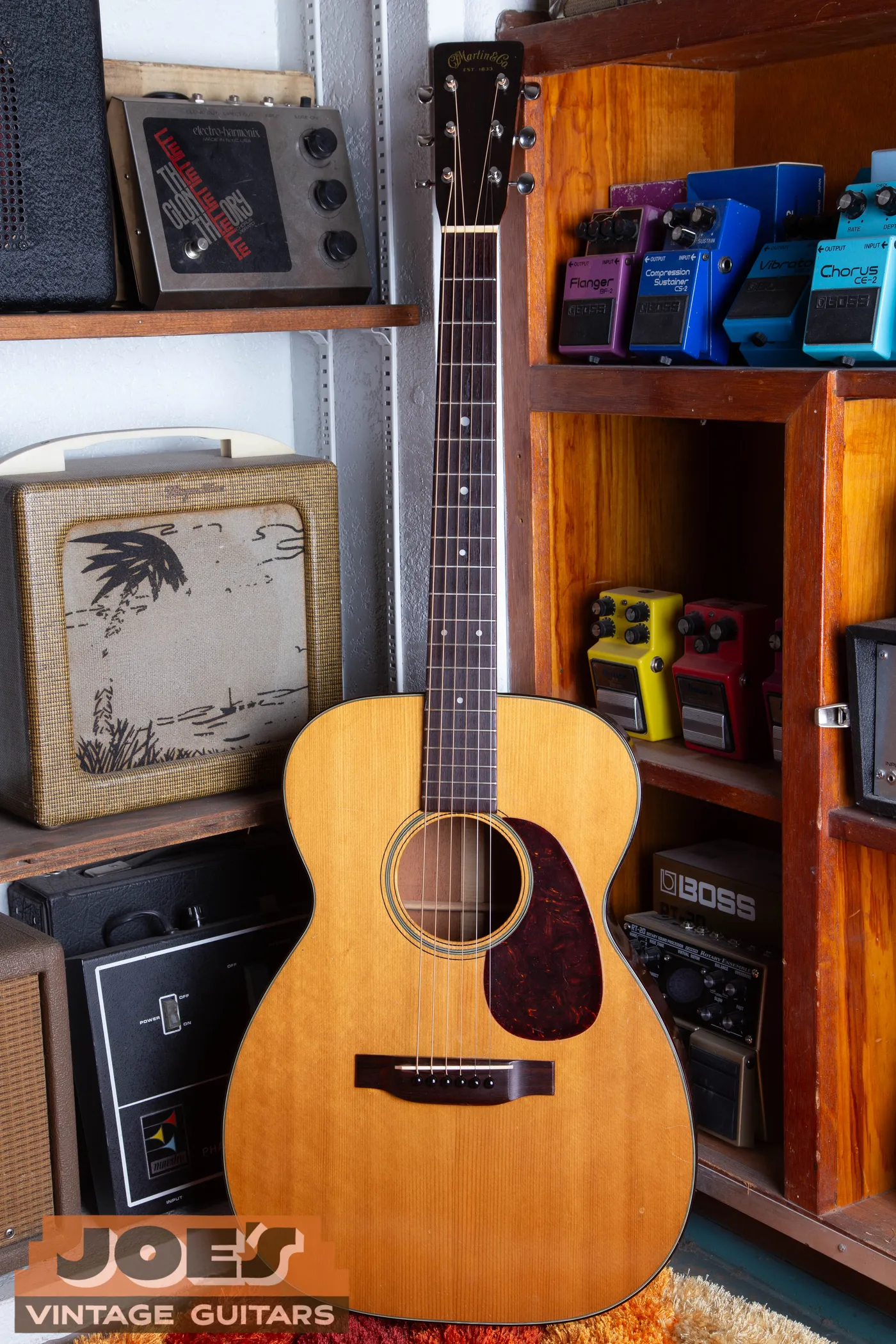
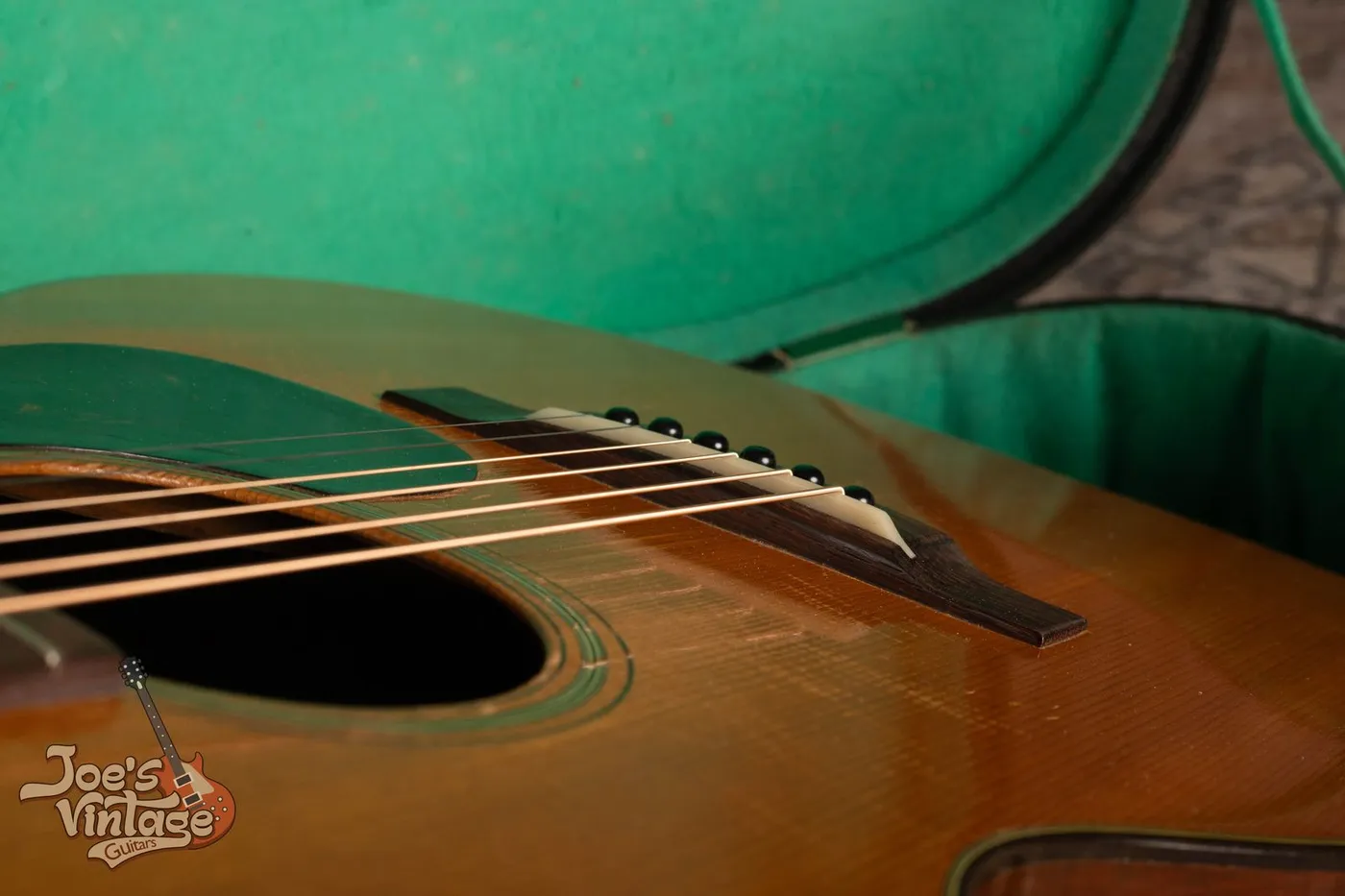
Joe’s 1951 one-owner listing records excellent original condition and a professional neck reset. It also discloses a shim beneath the fingerboard extension. The full-front view shows the 14-fret body; the low bridge view helps document the resulting setup.
Keep the reset and shim in the instrument’s written history. A clean finish and original ownership are useful facts, while the repair details explain how the guitar reached its current playing condition. The 1952 photographs later in this guide provide a neighboring-year hardware comparison.
1962 Guitar
A Later Top And Tuner Comparison
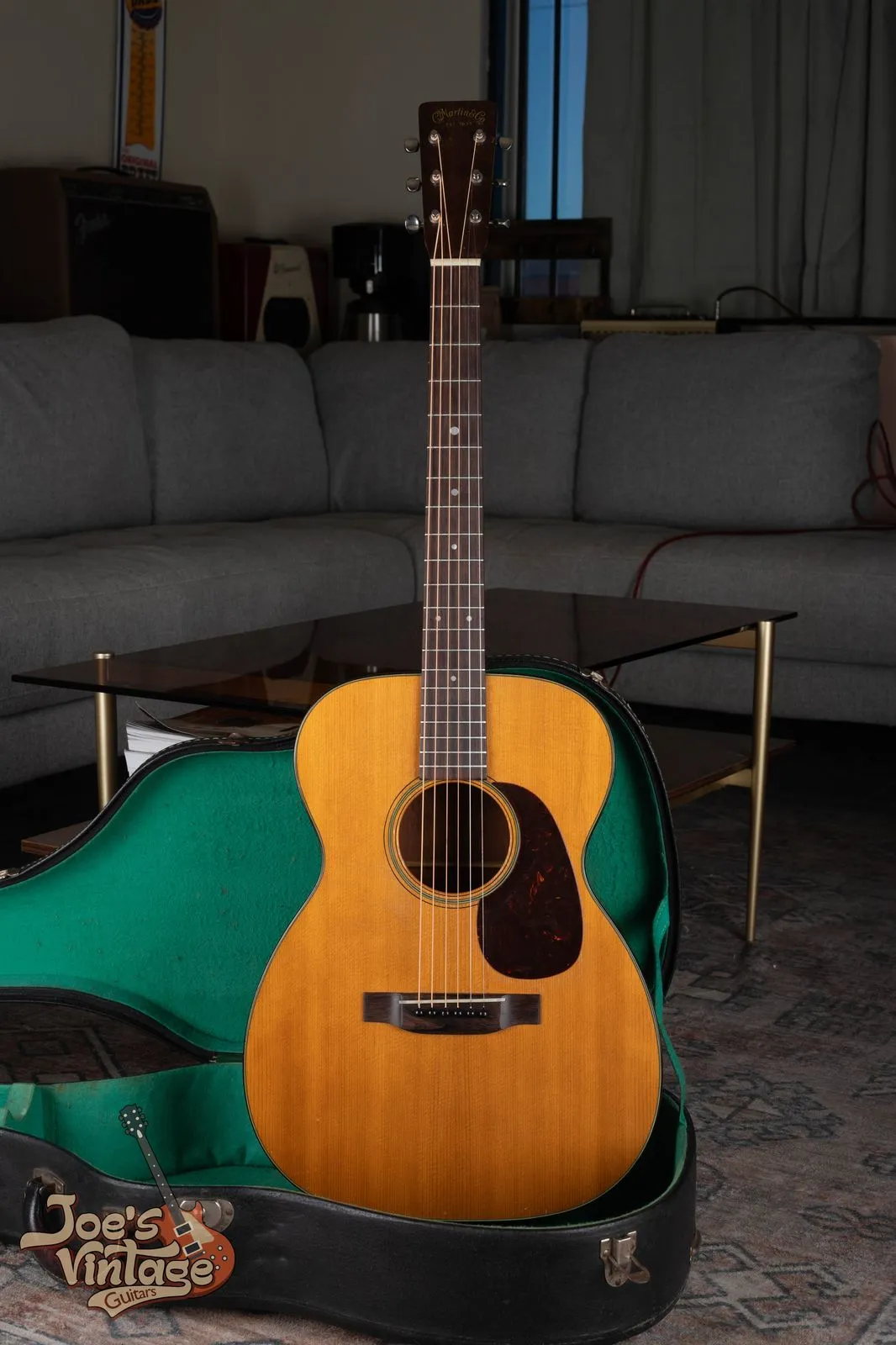
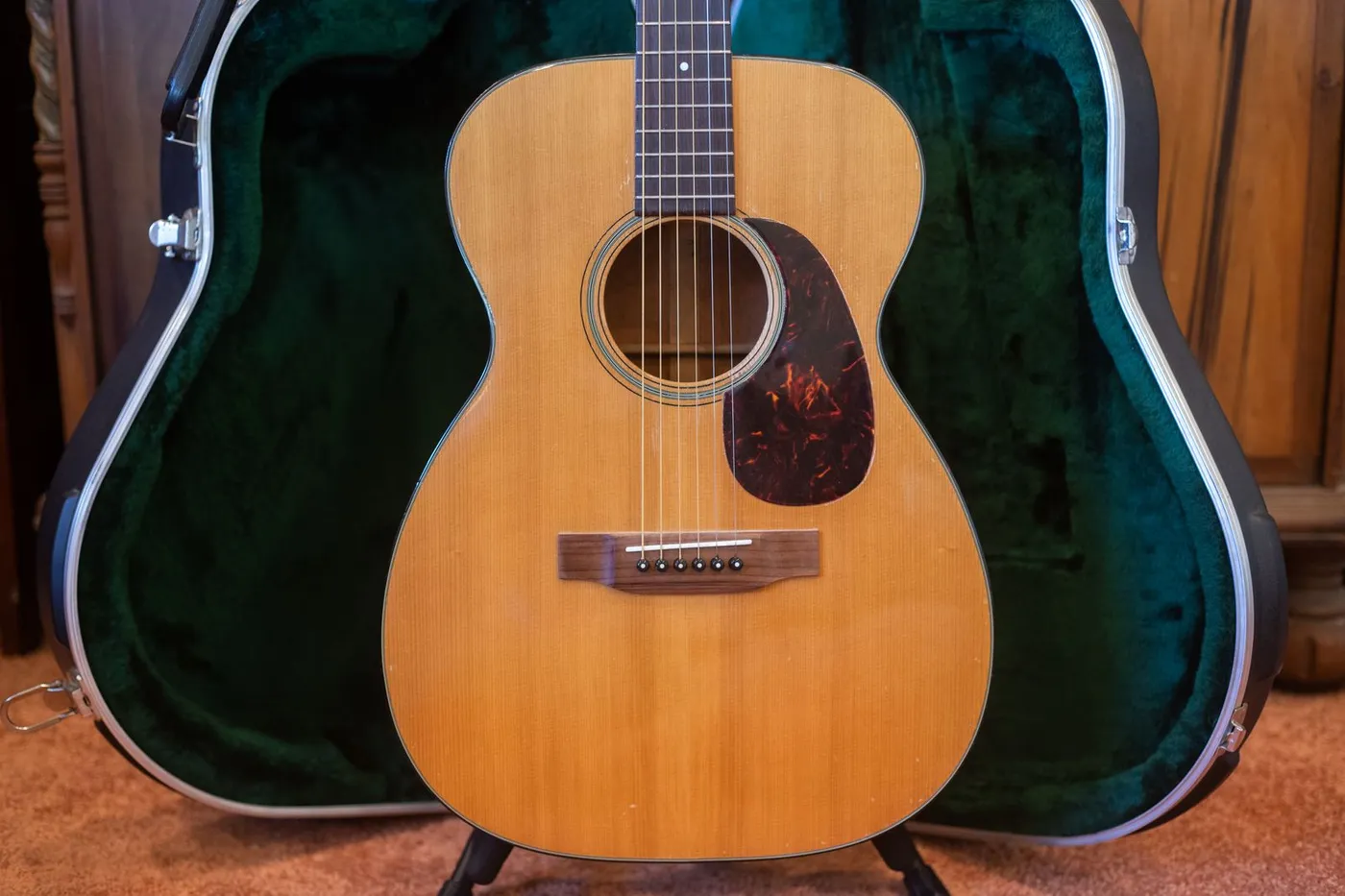
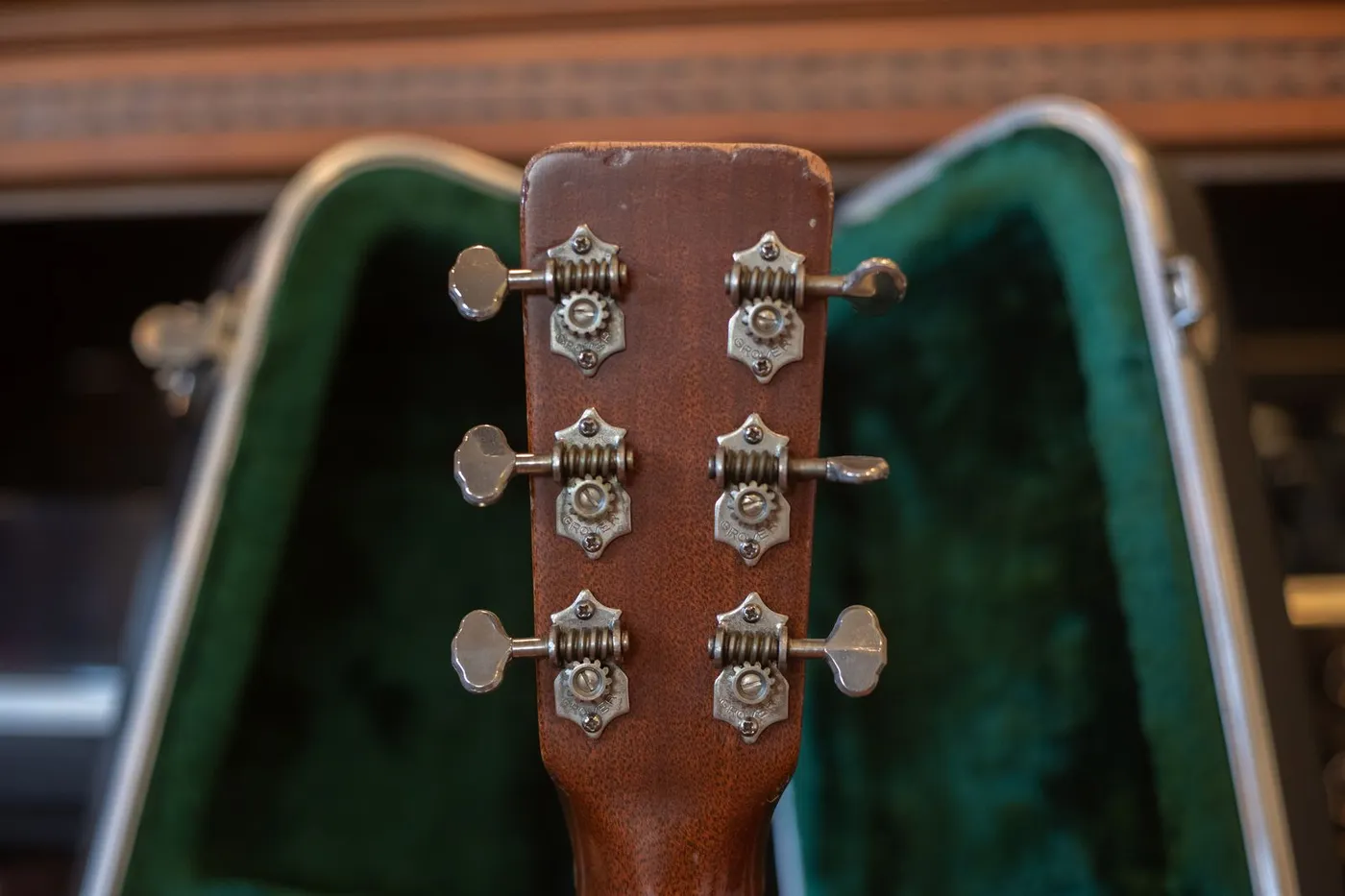
The 1962 listing describes excellent neck angle and low action, with a small professionally repaired hairline crack. Its front and rear-headstock photographs broaden the comparison beyond the early 1950s. The open-gear tuner plates differ from the octagonal plates on the 1952 guitar.
Read the condition note with the photo set. A subtle repaired crack may be difficult to see at normal page size. Good photographs support an inspection, but the owner’s repair record supplies information that the overall appearance can leave hidden.
00-18H And 00-18K
Identify Hawaiian And Koa Versions Before A Conversion Verdict
A Hawaiian-origin guitar needs its current playing setup described separately from its factory identity. A conversion for ordinary fretted playing can involve the nut, saddle, frets, neck geometry and other work. A comfortable action today doesn’t show how that result was achieved. Ask for the conversion invoice and photographs of the fingerboard, bridge and neck heel.
The small-body Martin guide identifies Hawaiian forms and warns that conversions require scrutiny. On a claimed 00-18H, preserve the suffix in the record and check the construction against that model. Don’t call it a standard 12-fret 00-18 simply because it now plays in the usual position.
The K family needs wood identification as well as setup history. Koa on the top, back and sides differs from the familiar spruce-over-mahogany recipe. Photograph each surface in neutral light and include the inside where practical. Figure, stain and a warm photograph can mislead; the model, serial and complete wood set should support the conclusion.
Unconverted and converted examples cannot be silently substituted for each other in a price comparison. The companion value page explicitly labels its converted 00-18H row. This guide’s 1952 spruce-top guitar is a standard 00-18 example, not a photographic stand-in for a Hawaiian model or an all-koa guitar.
Model-Specific Interior Changes
Check The 00-18’s Wartime And Postwar Construction
X Position On The Smaller Bodies
The house small-body history places the 0 and 00 rearward X change around 1935 to 1936, earlier than the 000’s mid-1938 transition. Compare the correct body and fret format. Brace location and scalloped shaping are separate observations.
Reinforcement And Available Hardware
Martin used ebony reinforcement again on many wartime guitars, alongside hardware substitutions. The construction chronology and tuner guide explain the overlap. A tuner’s button material alone can’t prove a year or identify the hidden neck bar.
Non-Scalloped Braces And Top-Wood Changes
Scalloping ended during late 1944, while the top-wood transition continued into the postwar period. Inspect brace profiles and later carving. The prewar reference also records reinforcement overlap after the war, so a postwar date doesn’t justify an unsupported steel-bar claim.
Dated Fittings Need Their Own Comparisons
Joe’s 1952 example shows octagonal tuner plates, while later small Martins can carry other hardware. Match the screw pattern, footprints and button shape together. Mid-1960s saddle changes and later black guards are covered in the house dating guide; replacements need to be described independently.
Model 00-18 · Serial 124189
Use The Readable 1952 Neck Block As A Comparison
The Pictured 1952 Martin 00-18
The photograph clearly reads 00-18 above 124189. Martin’s factory table lists 122799 as the last number for 1951 and 128436 as the last for 1952, placing this number in 1952. The model is read from its separate line, not decoded from the serial.
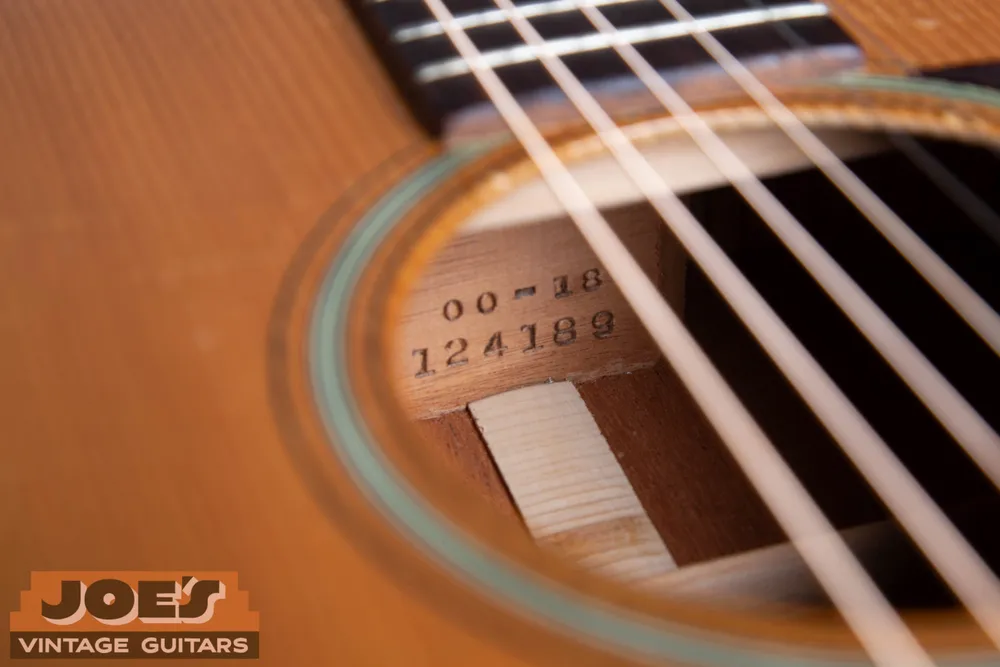
Check another guitar with Martin’s year-end serial table or the house serial lookup. Photograph the full block so the model, number and surrounding wood remain visible together. A copied plausible number isn’t a certificate of manufacture.
Earlier instruments may show a serial without a model line because routine model stamping began around October 1930. The stamp reference illustrates that difference. Uneven hand-stamping needs a period comparison; it shouldn’t be treated as an automatic sign of a fake. Sanding, added markings or repairs around the block require a separate explanation.
Bridge, Logo, Tuners And Wood
Use The 1952 Photos To Check Installed Parts
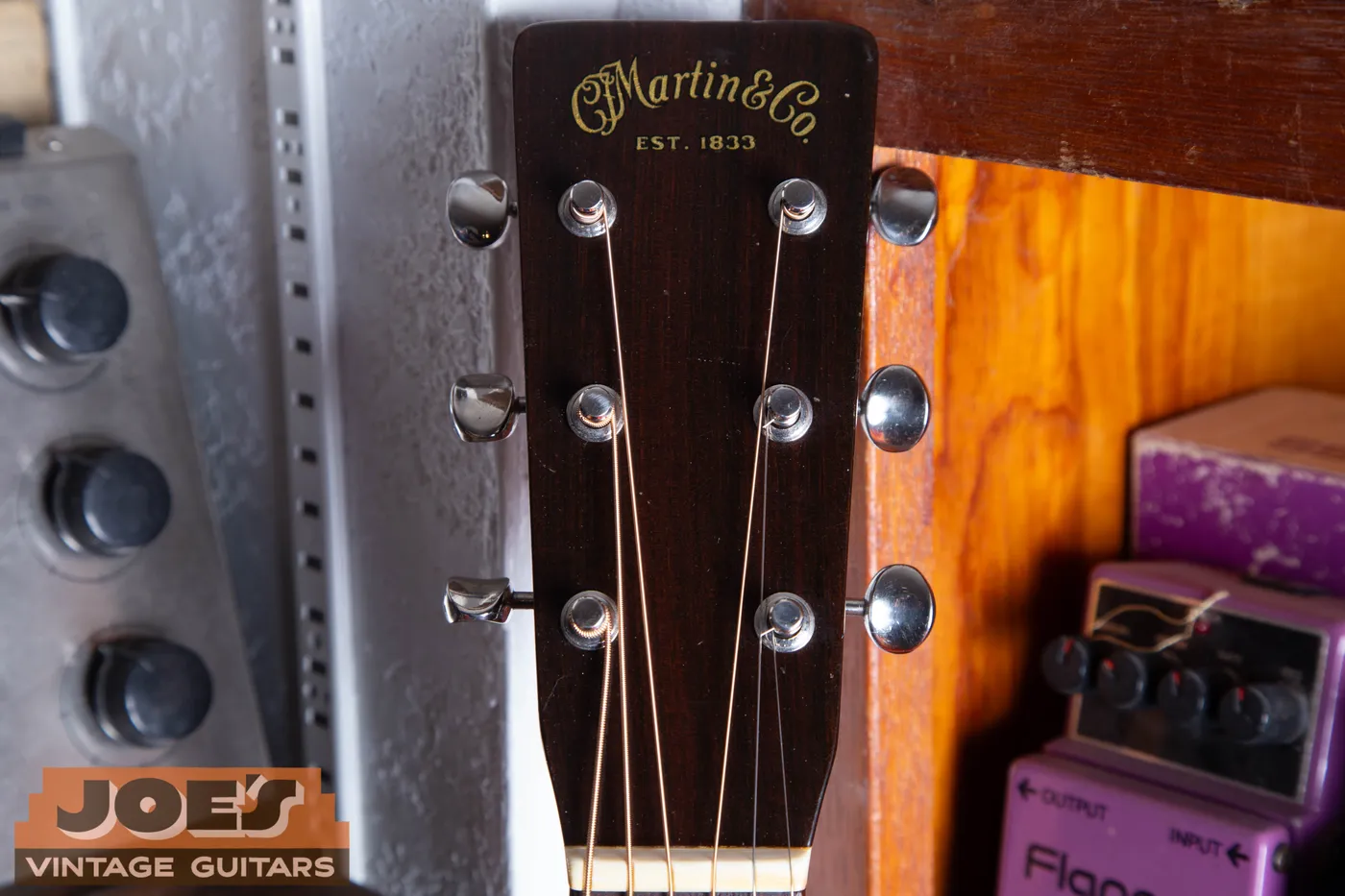
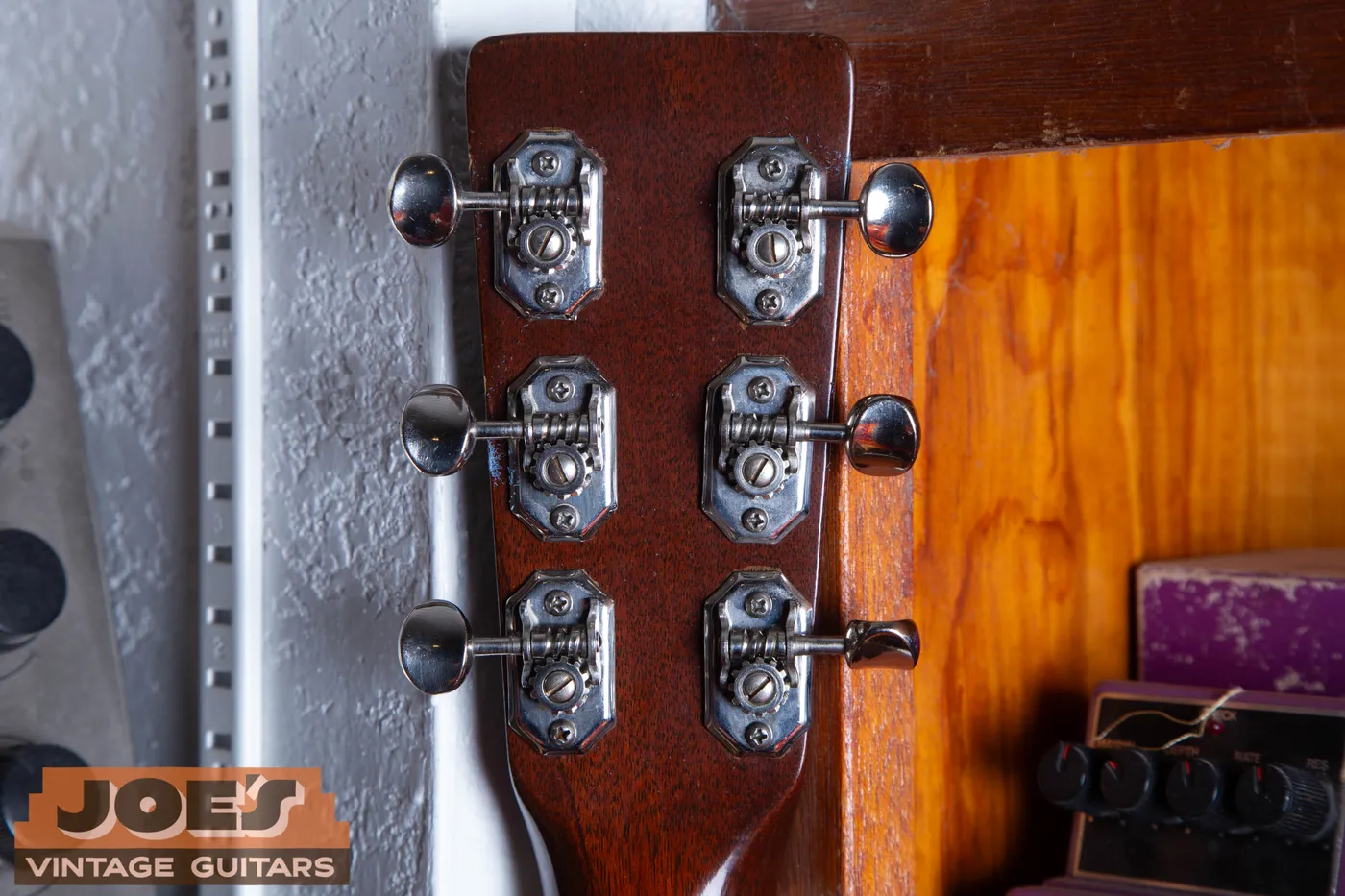
The headstock views show the logo on one side and the tuner plates on the other. Read them together with the logo photographs and tuner reference. The same general gold-script appearance spans more than one production period. Scratches and darkened lacquer can make a recent replacement look older in a low-resolution image.
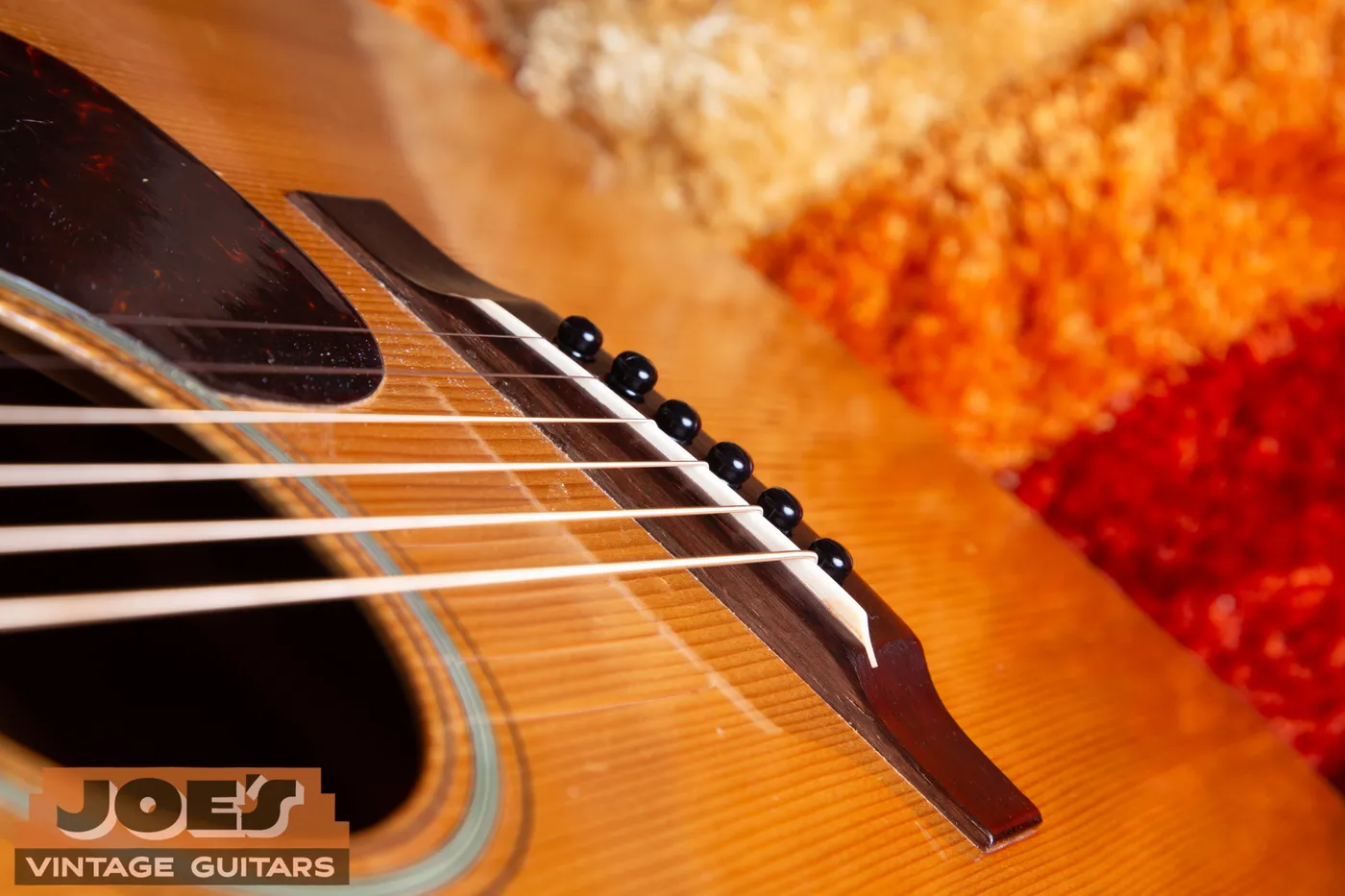
The bridge photograph shows the saddle and the top surface around the footprint. A separate interior view is still needed to assess the bridge plate, string-ball wear and any cap or patch. Ask for the plate’s outer edges and its relationship to the X-braces. A close-up of the six pin ends leaves much of that work outside the frame.
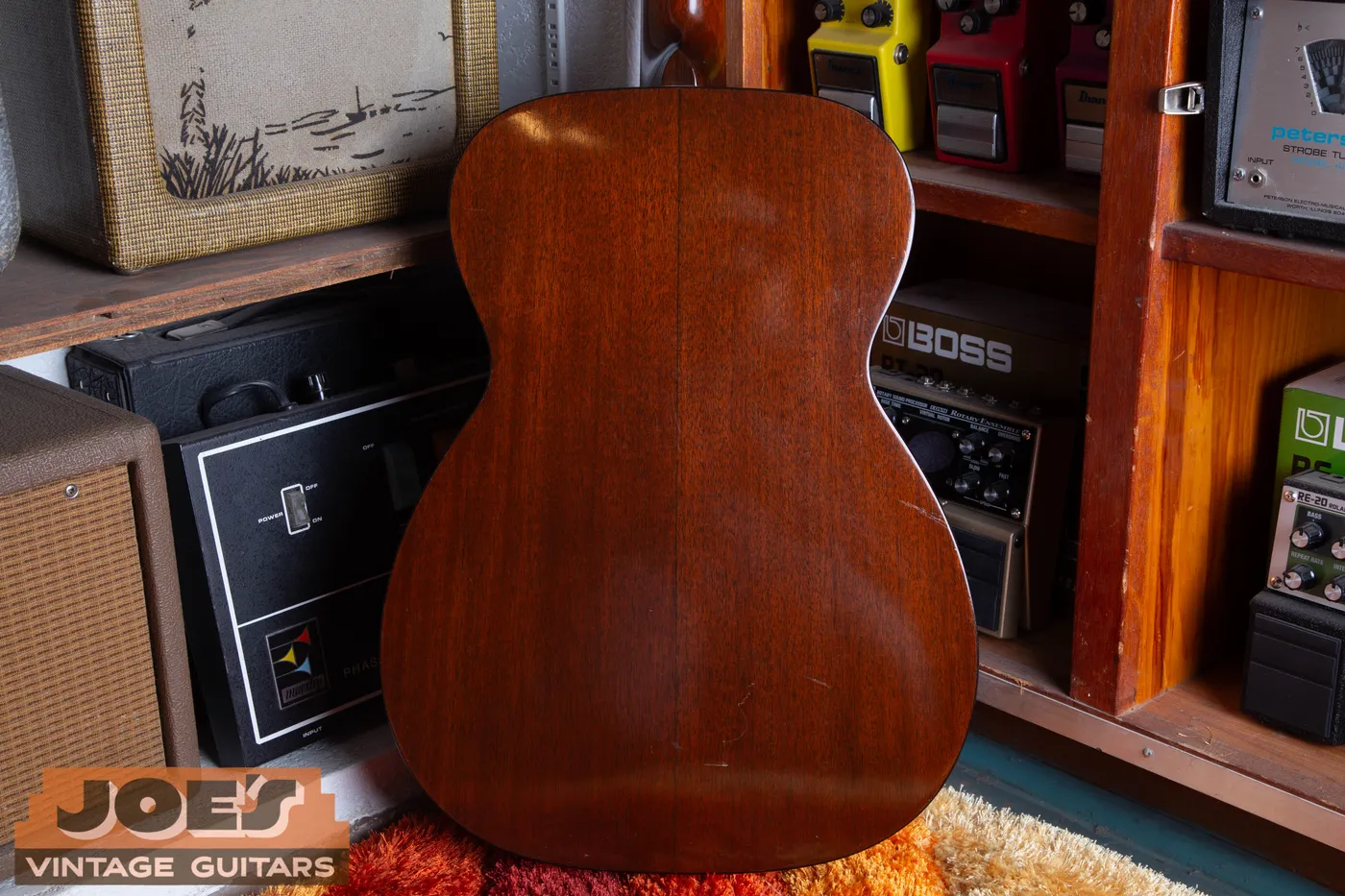
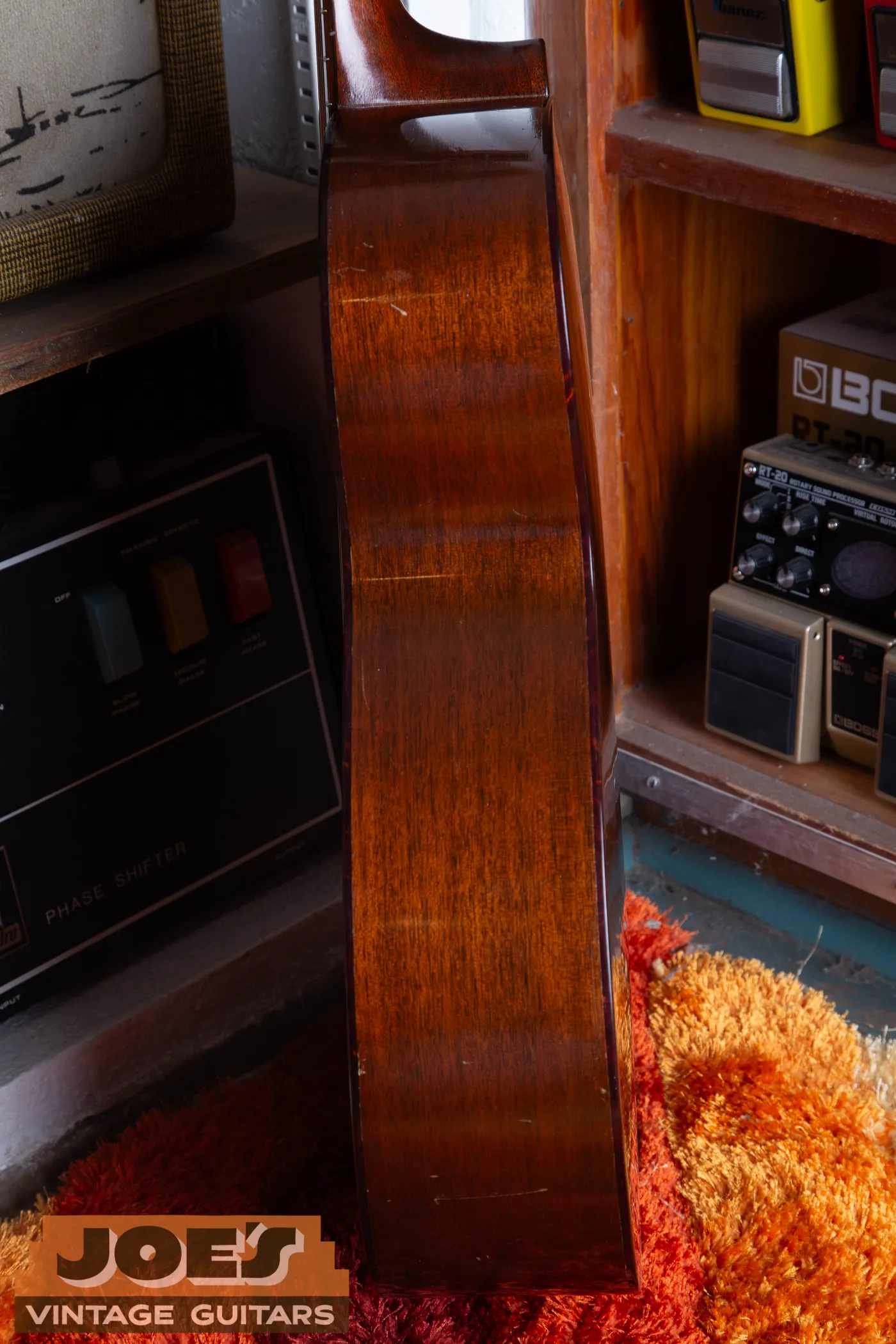
The back and side views show the wood and binding edges, but don’t establish that the finish is untouched. Compare protected areas, checking, pore texture and changes in color around hardware. Use the finish inspection guide if a refinished or oversprayed area is suspected. The conclusion should identify the area involved, rather than treating the entire guitar as one uniform surface.
Similar Names, Different Instruments
Separate Classical Models And Modern Editions
00-18G And 00-18C
These belong to the classical Martin family. Their intended string tension, bridge and neck specifications need that comparison. Don’t put steel strings on a guitar simply because its body resembles a steel-string 00. Keep the full designation in any appraisal request.
Factory Electric 00-18E
The electric Martin guide covers the 00-18E. A factory pickup-equipped instrument and a standard acoustic with later pickup work have different histories. Photograph controls, mounting points and the complete model stamp before deciding which description applies.
Custom And Historical Recreations
A later Authentic, Vintage Series, Custom Shop or signature model can deliberately resemble an earlier guitar. Establish its actual production year from the serial and obtain its specification when the stamp reads CUSTOM. An older year in the name describes a design reference, as explained in the model-code guide.
An Inspection Sequence For A 00-18
Record Repairs Without Losing The Model’s History
Document The Playing Format
State whether it is a standard steel-string, Hawaiian-origin instrument, classical or electric model. For a conversion, keep the original designation beside a description of the present setup.
Check Neck Geometry And Top Stability
Record action, saddle height, the bridge’s side profile and any movement at the heel. A repairer can assess whether the top, bridge or neck angle explains a problem. The neck-reset reference describes the symptoms to photograph.
Map Cracks And Interior Work
Identify the location and repair status of each crack. Photograph cleats, brace repairs and the full bridge plate when access permits. A repaired crack and an open crack are different conditions.
Preserve Evidence Before Restoration
Keep removed parts and written records. Review restoration before selling before cosmetic changes. Use the fake Martin guide for unexplained contradictions and the 00-18 value guide for the matching market group.
Send The Evidence
Ask Joe About Your 00-18
Send the full stamp, both headstock views, body photos and any conversion or repair records. I can help sort the model family and discuss the next questions the instrument needs answered.
References For Further Inspection
00-18 Identification Sources
- Martin Factory Serial Table
Year-end totals that date serial 124189.
- Wurlitzer Instrument Research
Photographed dealer models and the historical 2086 designation.
- Martin Small-Body History
Size, stringing and brace-position context.
- Martin Tuners
Dated hardware photographs, including the 1952 00-18.
- Martin Classical Models
The separate G and C model histories.
Questions AboutMartin Identification
Is A Wurlitzer-Branded Guitar Automatically A Fake Martin?
Does A 00-18G Use The Standard 00-18 Specification?
Can A Hawaiian Conversion Still Be Identified?
What Year Is The 00-18 In The Serial Photograph?
The Last Word
Keep The Full 00-18 Identity In The Description
Body geometry, suffixes and dealer marks can change the reference a guitar needs. Preserve those details through the inspection instead of reducing the description to a familiar model name. Once they agree, the 00-18 price guide provides the applicable market groups.
Authenticity And Originality Are Assessed From The Information Provided. A Hands-On Inspection Can Change The Conclusion.