

Grand Concert Values · Standard, Koa And Converted Hawaiian Guitars
Martin 00-18 Value Guide
Choose the complete model and playing configuration before using a 00-18 price range.
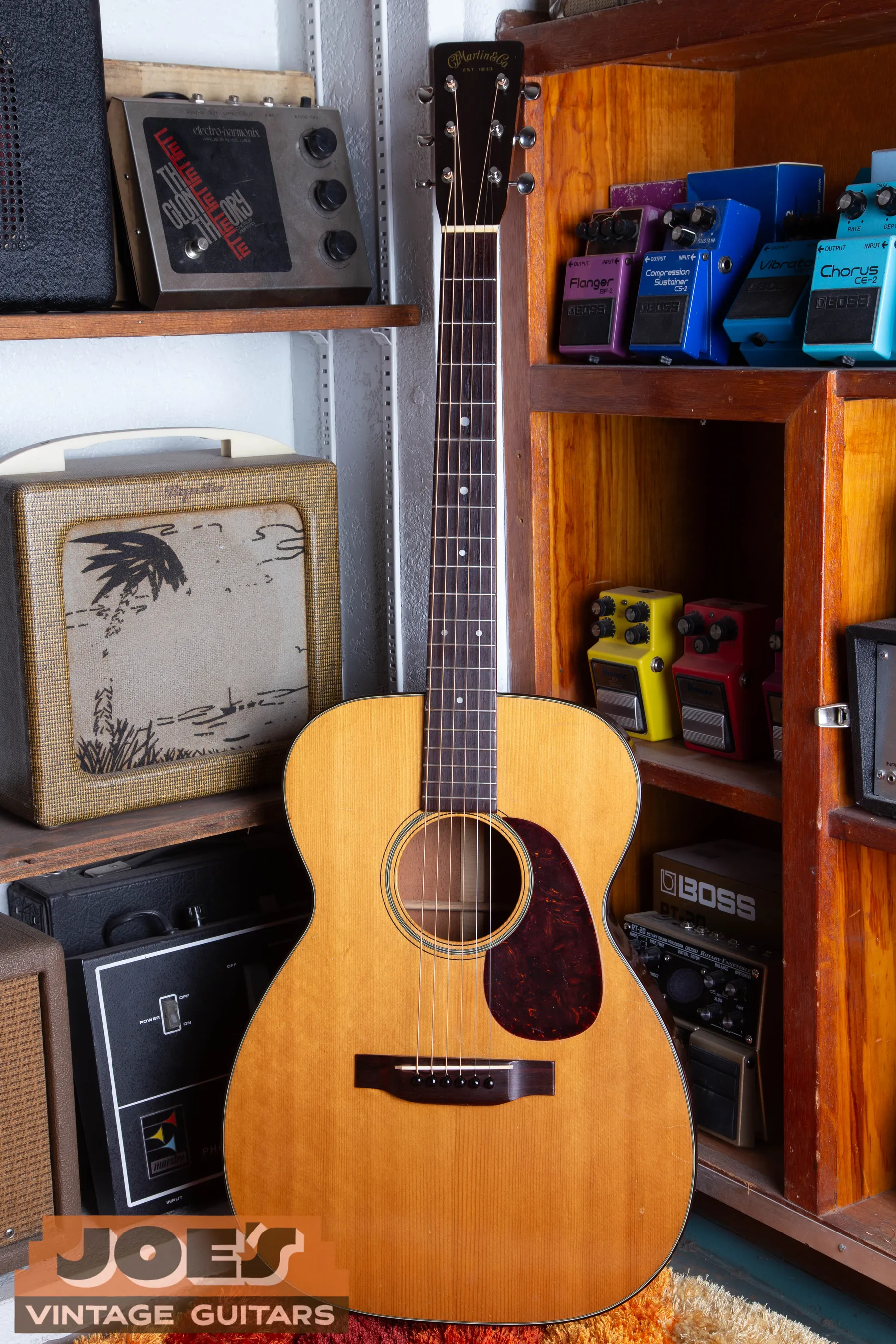
A 1950 to 1953 Martin 00-18 is estimated at $4,400 to $5,700; the 1960 to 1964 group is $3,650 to $4,800. Those ranges assume excellent, original condition and the original case. Earlier examples, koa versions and Hawaiian conversions have separate rows below. If the suffix or body format is unclear, use the 00-18 identification guide before choosing a figure.
A small body and a familiar Martin logo aren’t enough to select a price. The appraisal needs the whole model designation, production year, present playing setup and condition. A classical guitar or a factory electric version belongs to a different comparison even when 00-18 appears in its name.
This Is An Estimate Of Market Value, Not An Offer To Buy And Not A Guarantee. Market Values Fluctuate; Have Your Specific Item Appraised.
Excellent-Original Retail Estimates
Martin 00-18 Values By Year And Configuration
| Model | Years | Configuration | Estimated Retail Value |
|---|---|---|---|
| 00-18 | 1920 to 1922 | Mahogany | $6,000 to $7,900 |
| 00-18 | 1923 to 1929 | Standard | $8,700 to $10,700 |
| 00-18 | 1930 to 1932 | 12-fret | $12,000 to $16,000 |
| 00-18 | 1933 | 14-fret, bar fret | $15,300 to $20,400 |
| 00-18 | 1934 to 1937 | 14-fret | $15,650 to $20,900 |
| 00-18 | 1938 | 1 3/4-inch nut | $16,000 to $21,350 |
| 00-18 | 1939 | Early 1939, 1 3/4-inch nut | $15,850 to $21,100 |
| 00-18 | 1939 | Late 1939, 1 11/16-inch nut | $14,700 to $19,600 |
| 00-18 | 1940 to 1941 | Standard | $14,050 to $18,700 |
| 00-18 | 1942 to 1944 | Scalloped | $14,500 to $19,350 |
| 00-18 | 1944 to 1946 | Non-scalloped | $9,800 to $12,750 |
| 00-18 | 1947 to 1949 | Standard | $8,000 to $10,700 |
| 00-18 | 1950 to 1953 | Standard | $4,400 to $5,700 |
| 00-18 | 1954 to 1959 | Standard | $4,450 to $5,800 |
| 00-18 | 1960 to 1964 | Standard | $3,650 to $4,800 |
| 00-18 | 1965 | Standard | $3,500 to $4,800 |
| 00-18 | 1966 to 1969 | Standard | $3,150 to $4,350 |
| 00-18 | 1970 to 1979 | Standard | $2,850 to $4,000 |
| 00-18 | 1980 to 1989 | Standard | $2,350 to $3,050 |
| 00-18H | 1935 to 1941 | Converted From Hawaiian To Spanish Playing | $9,550 to $12,600 |
| 00-18K | 1918 to 1921 | All koa | $4,400 to $5,700 |
| 00-18K | 1922 to 1925 | All koa | $6,550 to $8,250 |
| 00-18K | 1934 | All koa | $7,100 to $8,900 |
U.S. dollars. Prepared in November 2026 from 2026 annual price-guide ranges, adjusted downward and rounded to the nearest $50. November dates this calculation; these are retail estimates rather than a record of completed November sales. They assume excellent, original condition and the original case and aren’t purchase offers. Repairs, changed parts and market conditions require individual appraisal. The 00-18H row specifically describes a converted guitar; the quality and extent of that conversion require individual assessment.
Standard 00-18 rows begin at 1920. Earlier standard guitars belong to the small and early Martin price guide. The 00-18K starts earlier here because that existing guide doesn’t have a specific koa-model row. Missing years require individual appraisal, not an average of the neighboring bands.
Use the classical values for 00-18G and 00-18C, and the electric values for 00-18E. Tenors and plectrums have their own guides. Modern signature, Custom Shop and historical recreation models aren’t included in this chart.
The Model Name Is Only The First Step
Match The 00-18 To Its Price Row
Early Standard 00-18s
Establish the body joint and intended stringing before selecting an early range. For a guitar without a model stamp, dimensions and construction need to support the identification. A family description of “a small Martin” can start the conversation, but it doesn’t choose between an 0, 00 and 000.
1930s And Wartime Guitars
Use the neck-width and brace-configuration labels where the chart provides them. The 1942 to 1944 scalloped band and 1944 to 1946 non-scalloped band overlap by date. Interior evidence decides the comparison. Later brace alteration should be reported separately instead of used to qualify for the earlier group.
Postwar Standard Guitars
On a 1950s or 1960s 00-18, finish, bridge history and neck geometry can explain differences among guitars of the same age. A clean-looking instrument still needs side and interior views. The later original-production rows are separate from modern models styled after those decades.
Once the configuration matches, check the condition assumption. A range for an excellent original example isn’t a promise that a guitar with a replaced top, extensive overspray or structural problems will reach the lower endpoint. An individual instrument can fall outside the range, and the appraisal should explain why.
Playing Condition And Preserved Construction
Evaluate A 00-18H Conversion On Its Actual Work
The converted 00-18H row describes a specific market category. Ask how the conversion was performed and whether its documentation identifies the work to the nut, frets, bridge, saddle and neck angle. A seller’s phrase “professionally converted” supplies no details by itself. The repair invoice and current measurements are more useful.
Consider what remains original and what was changed to make the guitar playable in the usual position. A conversion that preserves the body and bridge arrangement raises different questions from one with extensive alterations to the top or fingerboard. The price assessment needs that distinction before it can compare the instrument with the chart’s group.
An unconverted Hawaiian example needs an individual appraisal. The converted range shouldn’t be copied onto it, and the cost of a proposed conversion shouldn’t simply be subtracted from that range to create a purchase price. The finished result, buyer interest and amount of original material preserved are all still unknown.
Koa models also require their own rows. Don’t borrow a standard spruce-top 00-18 figure because the outline is similar. Confirm the complete wood set and model identity first, then document finish, repairs and setup just as carefully as on a standard instrument.
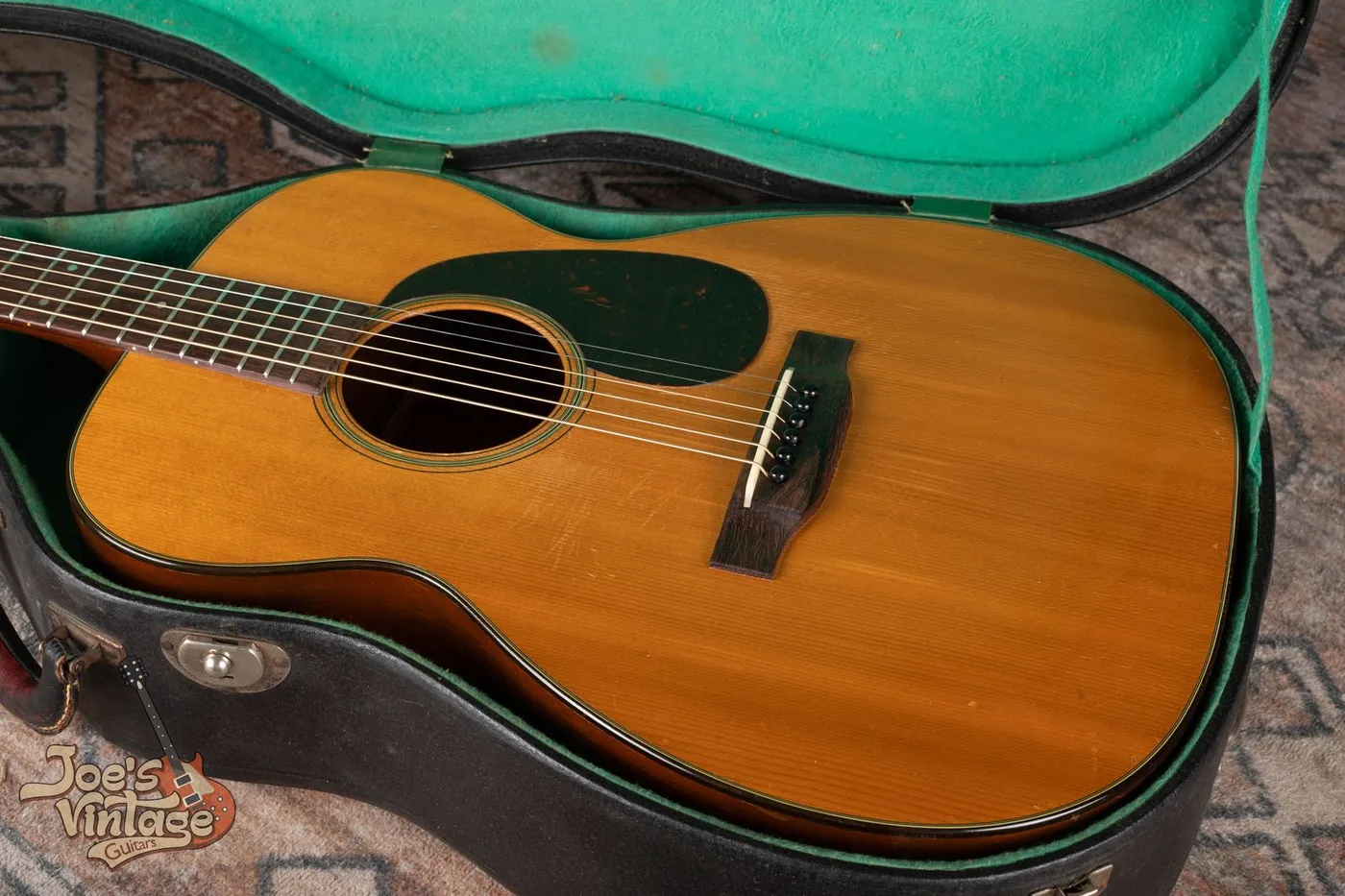
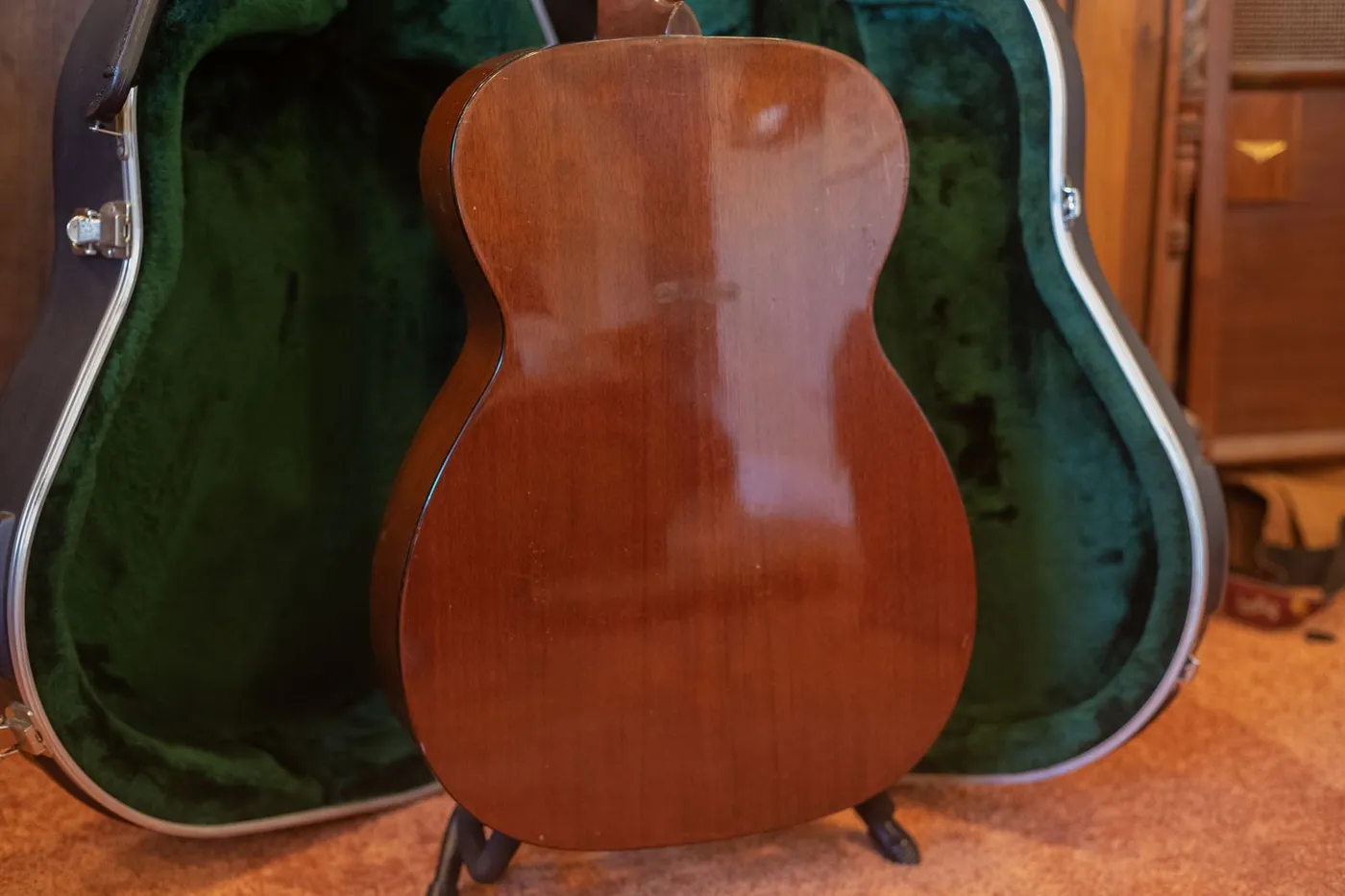
A 1951 one-owner 00-18 in its original case and the mahogany back of a 1962 example.
Assess The Area And Quality Of The Work
How Repairs Change A 00-18 Comparison
Finish Work
Separate factory finish wear, localized touch-up, overspray and a complete refinish. Those descriptions are more useful than a single “restored” label. Start with how to identify finish work, then read how refinishing affects value. Get the assessment before authorizing cosmetic changes.
Cracks And Bridge-Plate Repairs
Describe where a crack is, whether it is open and how it was repaired. Include interior photographs of cleats or patches when available. A bridge-plate cap and a full plate replacement are different jobs. Both need to be disclosed, along with the condition of the top they support.
Neck Resets And Fingerboard Work
A reset, refret and replacement fingerboard should be recorded independently. Ask whether a low saddle or shaved bridge is masking a neck-angle problem. The neck-reset guide explains the views that help distinguish geometry from a routine setup complaint.
There isn’t a dependable percentage formula for combining these conditions. A bridge replacement might be part of the same repair as a top patch, and a neck reset may have accompanied a refret. Treat the work as a documented history, then compare the completed instrument with other guitars of the same model and configuration. The broader condition guide explains why different repairs affect collector interest differently.
Identification, Condition And Ownership
What The Archive Photos Can Establish
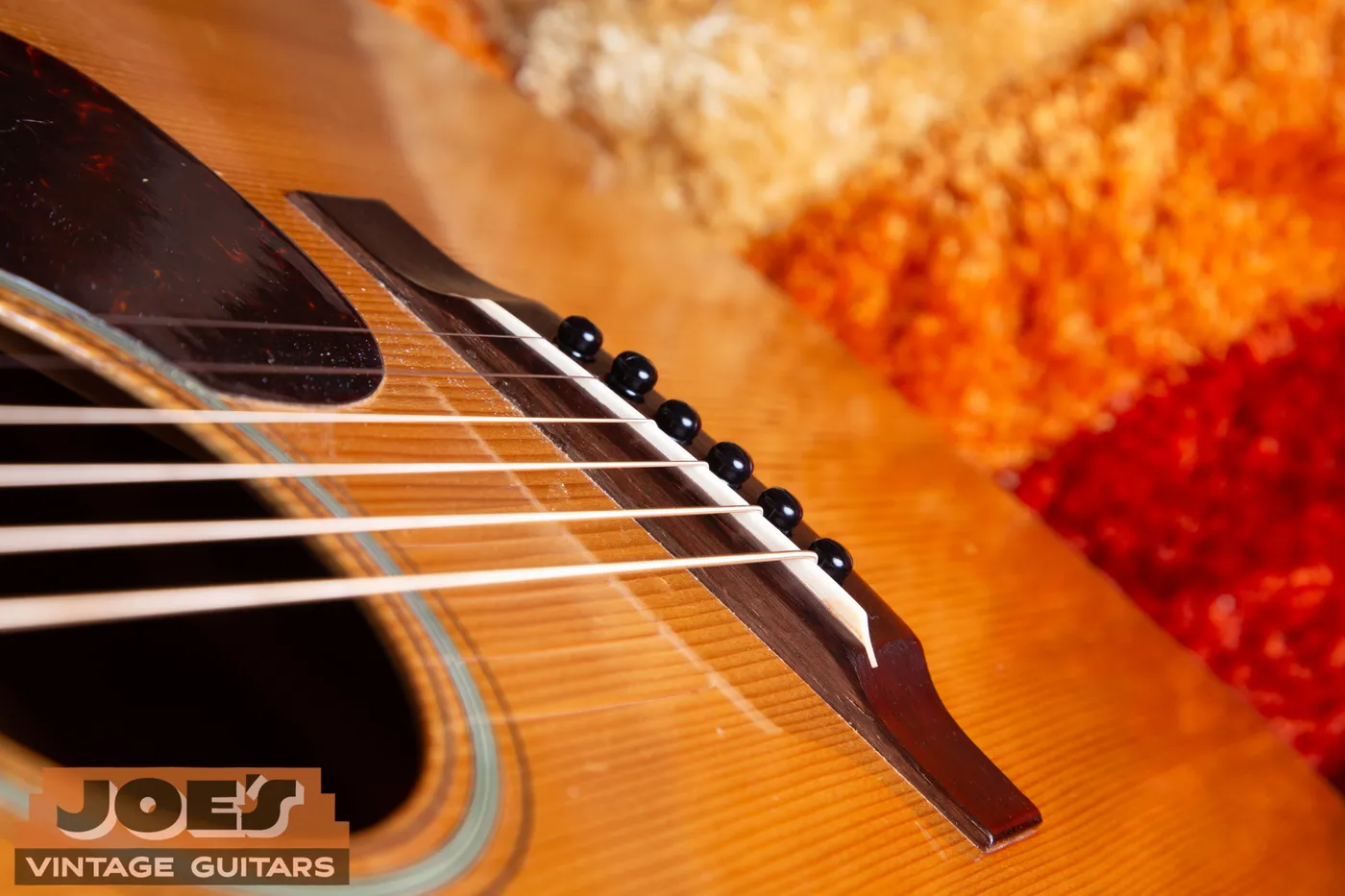
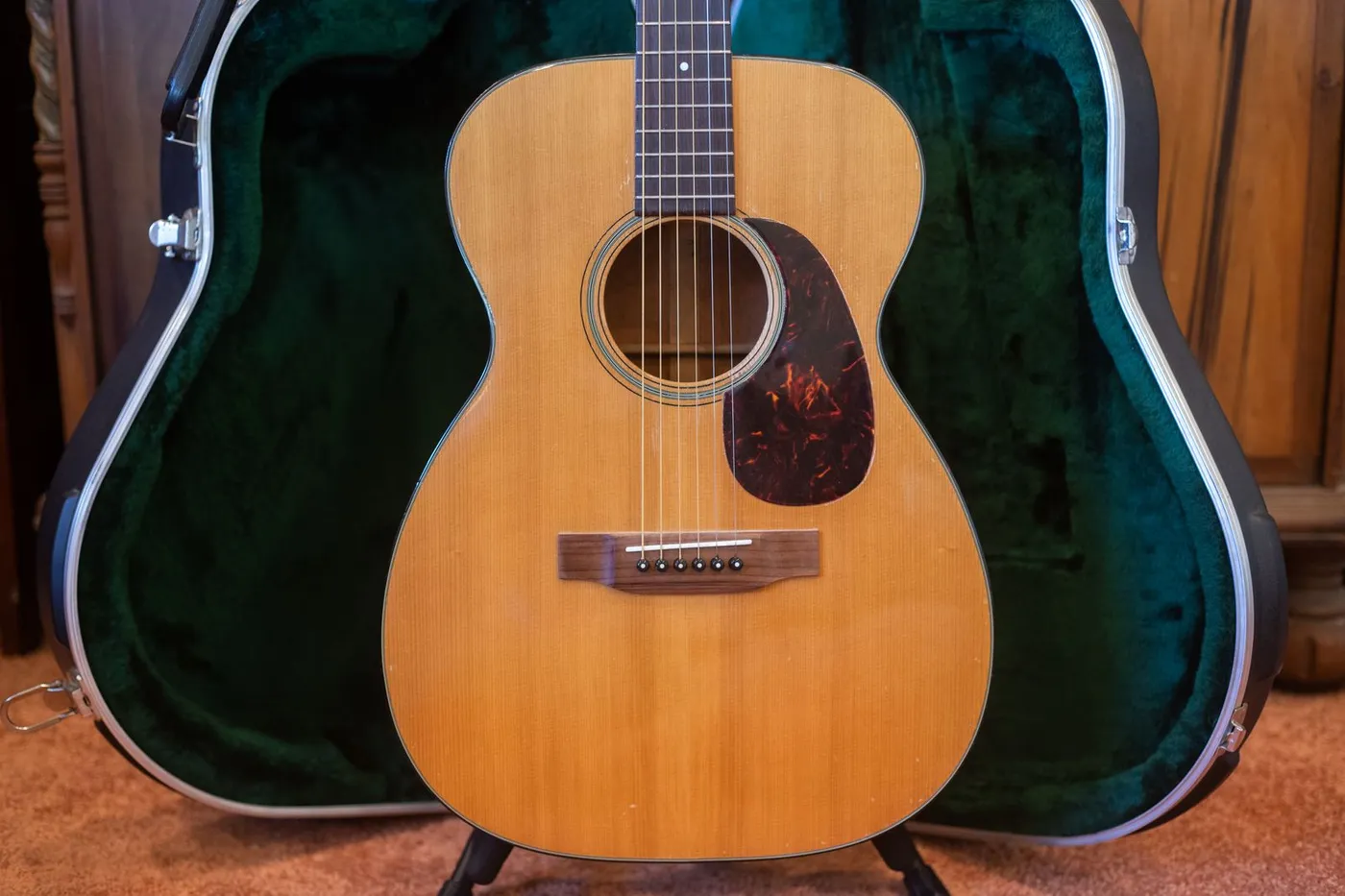
Joe’s 1952 00-18 supplies a readable model and serial photograph together with the bridge, headstock, tuners, back and sides. That makes it useful for showing an appraisal photo set. It doesn’t turn a photograph into an untouched-original guarantee, and no sale price for that individual guitar is used here.
The 1951 guitar has a professional neck reset and a documented fingerboard-extension shim. The 1962 example has a small professionally repaired hairline crack. Their preserved appearance makes them useful comparisons, while those disclosures still belong in an appraisal. The paired identification guide includes the corresponding photographs and source records.
For an inherited 00-18, keep the case, old receipts and family pictures together. A documented ownership chain can clarify how the instrument was used and who authorized repairs. A one-owner history doesn’t prove that no work occurred; an owner may have maintained the guitar for decades without retaining every invoice.
Preserve The Evidence You Already Have
Prepare A 00-18 For An Appraisal
Photograph the guitar in its present condition before cleaning or repair. Heavy polishing can make finish assessment harder, and replaced parts can remove clues that would have answered a model question. The guide to restoration before selling helps decide which work should wait for an appraisal.
If a repair is already under discussion, send the written estimate and photographs of the problem. The cost of the job and the guitar’s value after the work are separate questions. Some repairs improve playability while leaving an originality issue unchanged. Others stabilize damage that would otherwise worsen.
Include the case condition in the description. Show the latches, handle, lining and any maker’s label, and say whether you know it came with the guitar. An original case is an assumption in these ranges; a later case shouldn’t be quietly described as original because it fits well.
Information That Narrows The Estimate
Send A Complete 00-18 Photo Set
Full Model And Number
Make every suffix and serial digit readable. Add any dealer markings or internal labels, including the surrounding wood and paper edges.
Body, Neck Joint And Headstock
Show the front and back, count the frets clear of the body and photograph both headstock faces. Include a lower-bout measurement if the model is uncertain.
Setup And Repair Details
Photograph the saddle from the side, the heel and known damage. For Hawaiian-origin guitars, include conversion records and a clear description of the current playing format.
Case And Provenance
Send readable copies of invoices, family photographs and case markings. Label an uncertain recollection as uncertain so it can be kept separate from a documented date.
Send The Evidence
Discuss Your Martin 00-18 With Joe
Use the free appraisal form to send the pictures and history. I’ll help identify the relevant comparison and discuss how the guitar’s current condition affects its value.
Identification And Condition References
00-18 Appraisal Resources
- 00-18 Identification
Compare the standard, dealer-branded and Hawaiian forms.
- Classical Martin Prices
Find the correct ranges for G and C models.
- Repairs And Vintage Value
Describe condition changes before assigning a figure.
Questions AboutMartin Values
Does The 00-18H Price Apply To An Unconverted Guitar?
Are 00-18G And 00-18C Values Included?
Does A Wurlitzer Name Add A Fixed Premium?
Can A Repaired 00-18 Fall Below The Chart?
The Last Word
Choose A 00-18 Comparison With The Same Configuration
The full model, playing format and repair record keep a price comparison useful. Resolve uncertain suffixes or dealer markings in the 00-18 authentication guide, then send Joe the guitar’s details for a free appraisal.
This Is An Estimate Of Market Value, Not An Offer To Buy And Not A Guarantee. Market Values Fluctuate; Have Your Specific Item Appraised.