

Concert-Size Martins · Koa, Steel Strings And Postwar Players
Martin 0-18 Guide
Use the small body, complete stamp and construction history to distinguish an 0-18 from its relatives and later recreations.
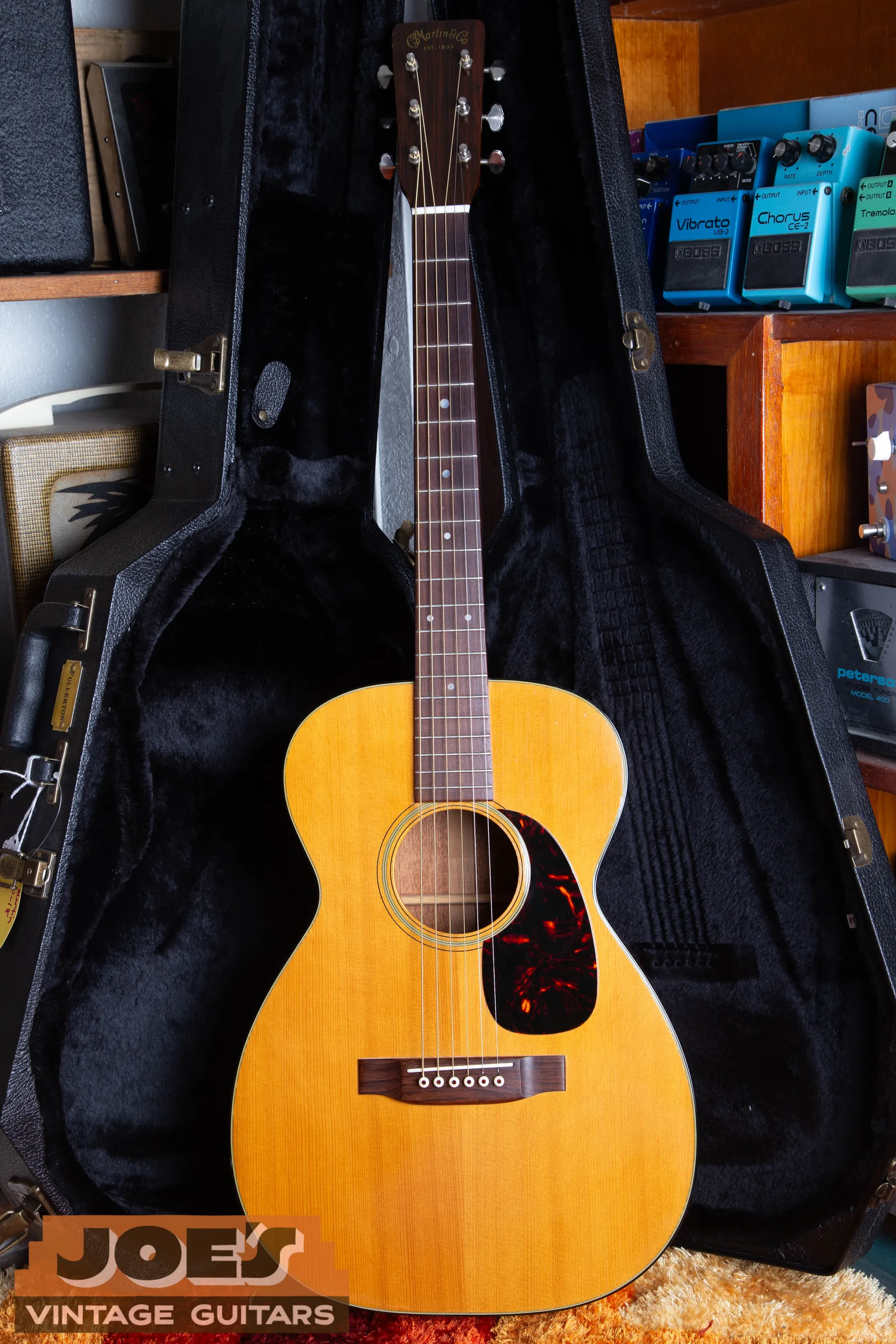
A Martin 0-18 is the Concert-size member of the familiar spruce-and-mahogany Style 18 family. Its smaller body distinguishes it from the 00-18 and 000-18, while its year and suffix determine which construction details to expect. This guide follows that identification through the 0-18K, the 12-fret and 14-fret forms, and photographed examples from 1925, 1951 and 1966. Use the 0-18 value guide after the version is established.
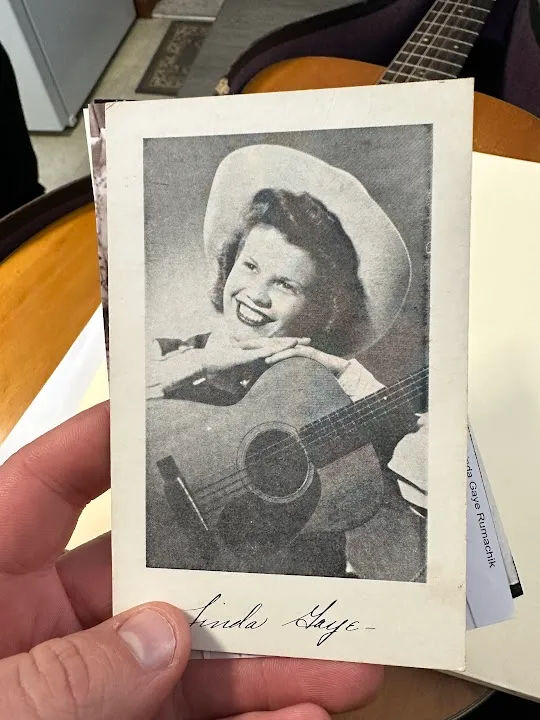
The lead photograph shows a lightly worn 1966 guitar. Earlier views include a 1925 12-fret instrument and a 1951 example, with serial and repair notes where available. Linda Gayle’s separate 1949 ownership story remains below as an example of preserving the family record alongside a guitar’s identification.
Authenticity And Originality Are Assessed From The Information Provided. A Hands-On Inspection Can Change The Conclusion.
Measure Before Reading The Wear
Confirm The Concert-Size Body And Style 18 Woods
| Observation | Familiar 0-18 Comparison | What Still Needs Checking |
|---|---|---|
| Lower-bout width | About 13 1/2 inches | Body form and measurement accuracy |
| Later standard wood set | Spruce top, mahogany back and sides | Early wood exceptions and K variants |
| Body joint | 12-fret or 14-fret version | Whether the neck and body belong together |
| Style details | Simple trim and dot fingerboard markers | Year-specific bridge, binding and fittings |
| Interior marking | Model plus serial on later examples | Early serial-only stamps and altered wood |
Measure the widest part of the lower bout without following the curved rim. The Martin model-number guide compares the zero-size bodies and explains why 0, 00 and 000 aren’t interchangeable names. Body depth and length help when a model stamp is absent or difficult to read.
The spruce top on a standard later 0-18 contrasts with the mahogany tops associated with many vintage 0-15 and 0-17 guitars. Don’t identify a top species from its darkness alone. Finish, age and lighting all change color. Use the complete wood set, trim and date; early Style 18 instruments and koa variants need a more specific comparison than the familiar postwar specification.
Koa And Hawaiian Playing History
Identify An 0-18K Before Calling Its Top Unusual
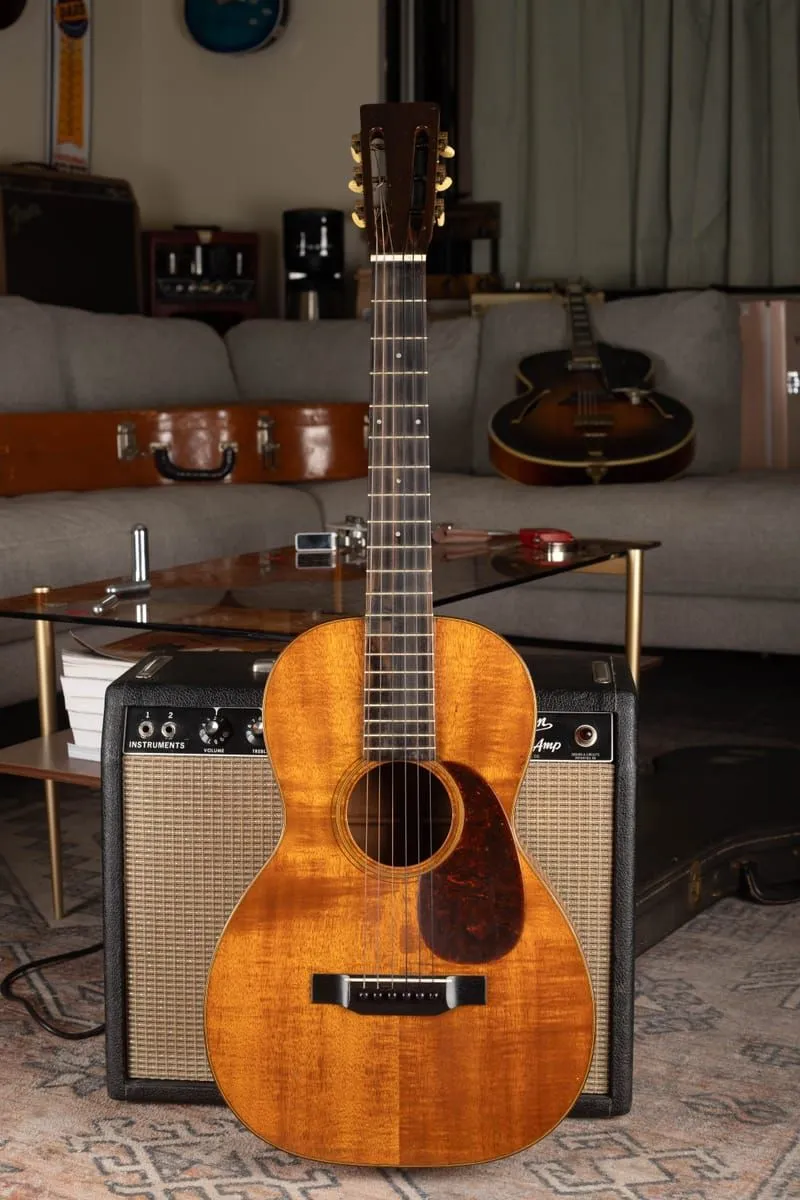
The 1931 0-18K shown here comes from Joe’s existing archive and is labeled as a koa-model comparison. K models belong to a different wood configuration from the spruce-top 0-18. The small-body Martin history describes koa models and their connection with Hawaiian playing. Inspect the top, back and sides together, and record the actual setup.
A K suffix doesn’t tell the complete story of work performed since manufacture. For a guitar that began with Hawaiian-style playing geometry, ask whether it has been converted and how the nut, frets, saddle and neck angle were addressed. The current action may reveal that it is now fretted normally; it doesn’t document the conversion’s method or quality.
The price guide supplies separate 0-18K and 0-18KH rows, so retain the complete model description in an appraisal request. Don’t erase an H because the guitar can now be played in the usual position. If the stamp or original designation is uncertain, submit photographs of the block, fingerboard, bridge and body rather than choosing a suffix from appearance alone.
The 1917 and 1918 standard 0-18s fall within the early Martin guide’s scope. Use that reference for an early guitar’s wood and stringing history. The koa example here is a labeled variant comparison, not evidence that the 1949 spruce-top guitar originally had another top.
Earlier Geometry And The 14-Fret Guitar
Compare The Two Body Joints And Their Construction
The 12-Fret Concert Guitar
On the earlier format, the neck meets the body at the twelfth fret. Its longer upper-body outline places the soundhole and bridge in a different relationship to the neck. Count the frets clear of the body and photograph the heel from both sides. A slotted headstock is a useful clue, but a neck replacement can complicate that clue.
The house history places the regular Style 18 move toward steel strings around 1923. An earlier instrument should have its structure and intended tension assessed before restringing. A modern set already installed by a previous owner is evidence of current use, not proof of the factory design.
The Familiar 14-Fret 0-18
The 1930s shift to 14-fret construction changed the upper body and neck access. Use the actual body joint to establish which form is present; the source timelines don’t justify dating an unidentified guitar from one remembered transition year. Compare the bridge position, outline and neck dimensions with a documented example of the same format.
Many 14-fret Martin necks narrowed in 1939, while fret and reinforcement changes had already occurred earlier in the decade. The prewar reference treats these as separate observations. Nut width is measured across the fingerboard, and can’t be inferred reliably from the distance between the outside strings.
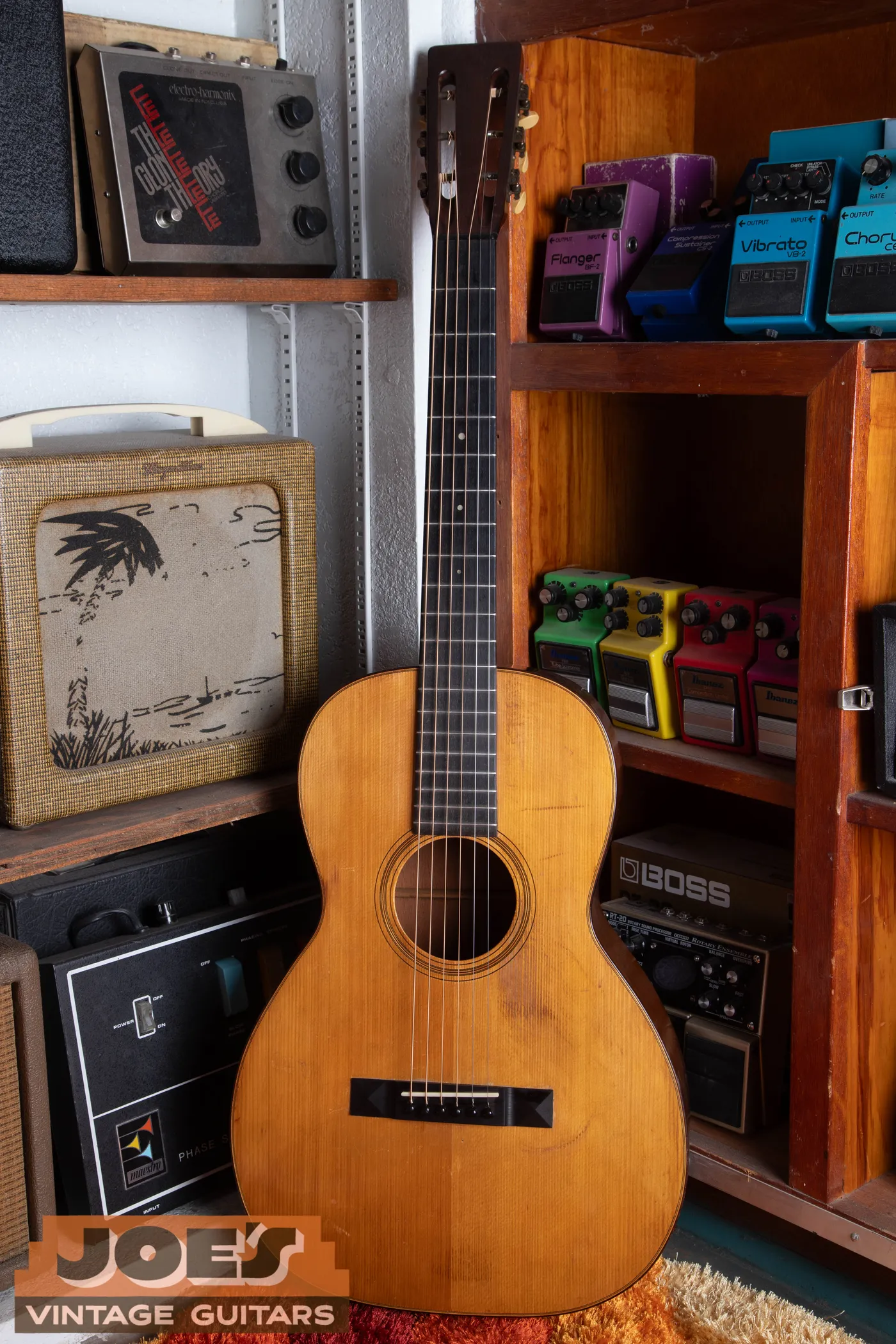
The 1925 12-fret 0-18 and 1951 14-fret example show the change in body outline and neck access.
Braces, Neck Support And Fittings
Trace The 0-18 Through Wartime And Postwar Changes
The Smaller Body’s X-Brace Position
The house small-body guide places the 0 and 00 rearward X change around 1935 to 1936. That differs from the larger 000 timeline. Inspect the appropriate fret format and measure the crossing instead of borrowing a dreadnought date.
Frets And Hidden Reinforcement
Steel T-bars accompanied the shift toward T-frets, while wartime shortages brought ebony reinforcement back on many guitars. The dating guide records those changes and the later overlap. An exterior neck photograph cannot reveal the cross-section of the hidden bar.
Brace Profiles And Spruce
Factory scalloping ended late in 1944, and Sitka became normal during 1946. These changes require separate evidence. A dark top doesn’t identify red spruce, and later shaved braces don’t establish original scalloping. Ask for repair records and complete interior views.
Saddles, Guards And Neck Systems
Later guitars show the short-saddle change, black guards and new neck reinforcement described in the construction chronology. The 1967 square steel tube remained nonadjustable; regular adjustable-rod production came later. Historical recreations can use older systems, so the absence of adjustment access doesn’t prove age.
A Guitar Preserved With Its Family History
Linda Gayle’s 1949 0-18 As A Documented Example
Original-Owner Story
The Instrument And The Photographs Stayed Together
Linda Gayle performed around Iowa and appeared on local radio stations. Her niece passed along both the guitar and photographs connecting it to Linda’s life. The full original-owner story records that account. It is a specific example of an 0-18 used for singing and performance, rather than an assumption that every small guitar was a beginner’s instrument.
I bought Linda’s guitar from her niece, with the family photographs and ownership account preserved. Its full condition photographs remain with the linked story. Here the publicity photograph and readable serial serve a specific purpose: they show the separate kinds of evidence that an inherited instrument can carry.
The publicity photograph adds an ownership connection that the serial cannot provide. Keep that distinction clear when evaluating another family instrument. A serial establishes a production interval; a dated photograph may show possession or use. Neither substitutes for the other, and neither alone proves that all parts remained unchanged.
1925, 1949 And 1966 Examples
Read The Neck Blocks Across Three Eras
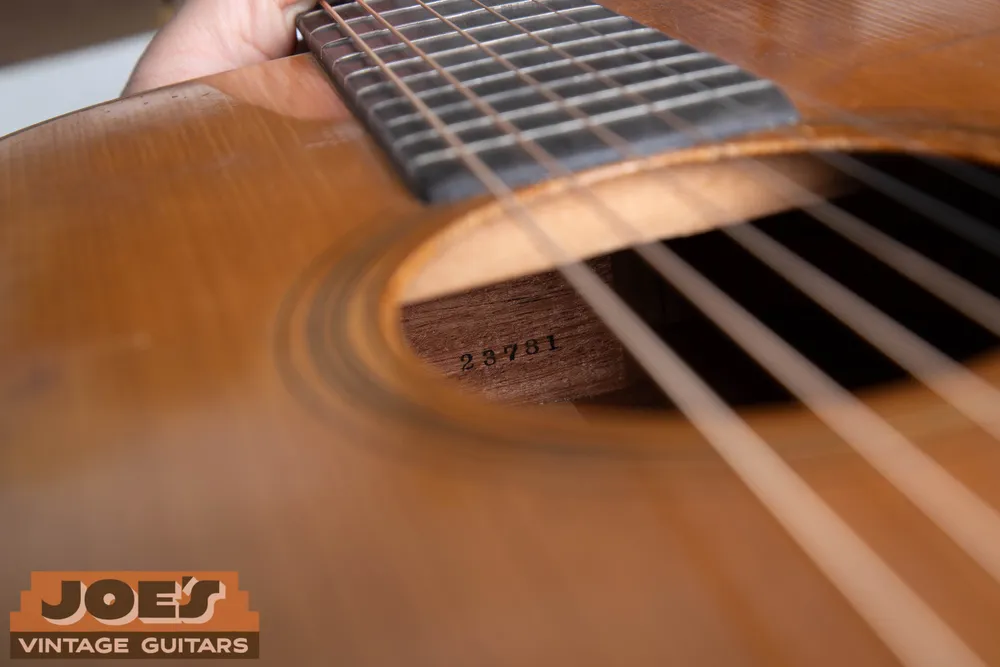
The 1925 12-Fret 0-18
The earlier block carries serial 23781 without a model line. Martin’s totals end 1924 at 22008 and 1925 at 24116, placing the number in 1925. The archive identifies this guitar as an 0-18; its model needs the body and style evidence alongside the serial.
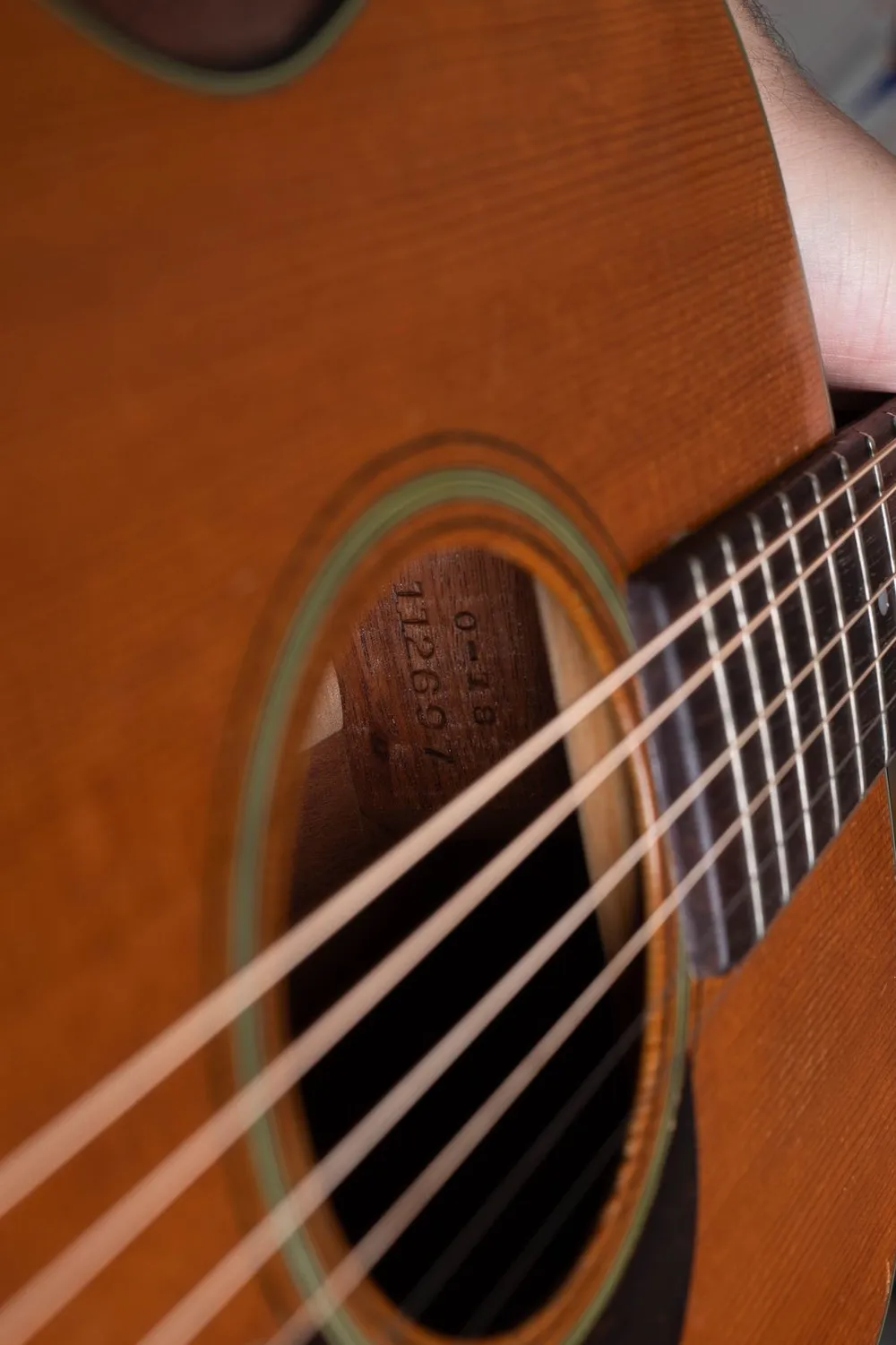
Linda Gayle’s 1949 Martin 0-18
The photograph shows 0-18 above 112697. Martin’s published year-end numbers are 108269 for 1948 and 112961 for 1949, so 112697 belongs in 1949. All six serial digits are visible in this photograph.
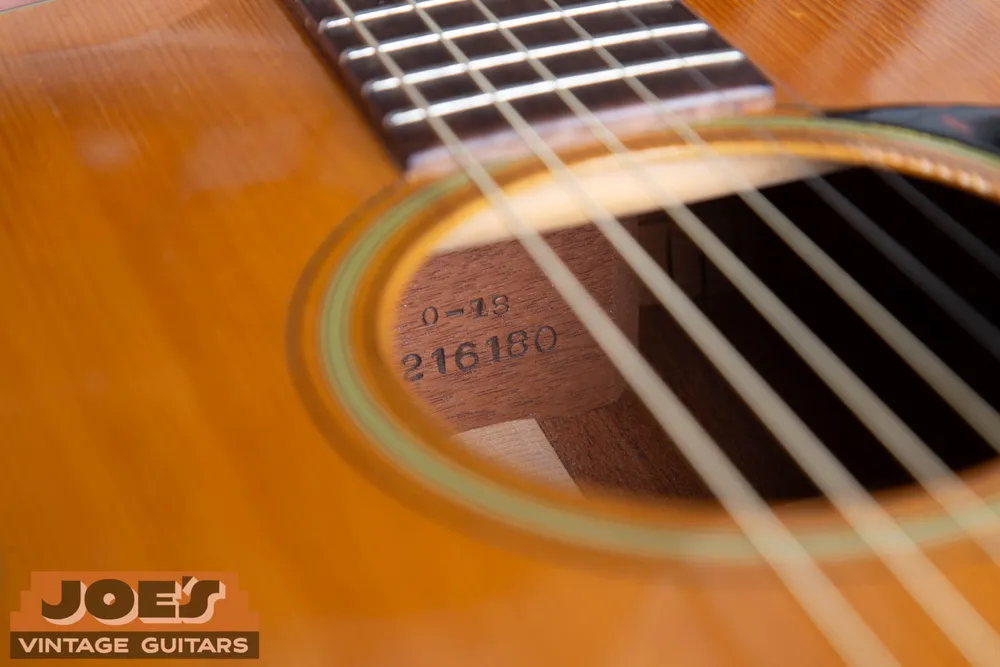
The 1966 Martin 0-18
The later guitar is stamped 0-18 and 216180. That number falls after the 1965 year-end total of 207030 and within the 1966 total of 217215. This dates the same guitar shown in the lead and hardware photographs.
Use Martin’s serial-number reference for the year and the model line, when present, for the instrument’s designation. A serial doesn’t encode “0-18,” and it doesn’t show whether a bridge or fingerboard has been replaced. Photograph the complete block before separating the information into written notes.
Routine model stamps began around October 1930 according to the house stamp guide. Compare the block’s lettering, wood and surrounding marks with the proper era. Don’t add a missing digit because another number would produce a more attractive year.
Tuners, Logo, Bridge And Binding
Check Small-Body Hardware Without Borrowing Dreadnought Rules
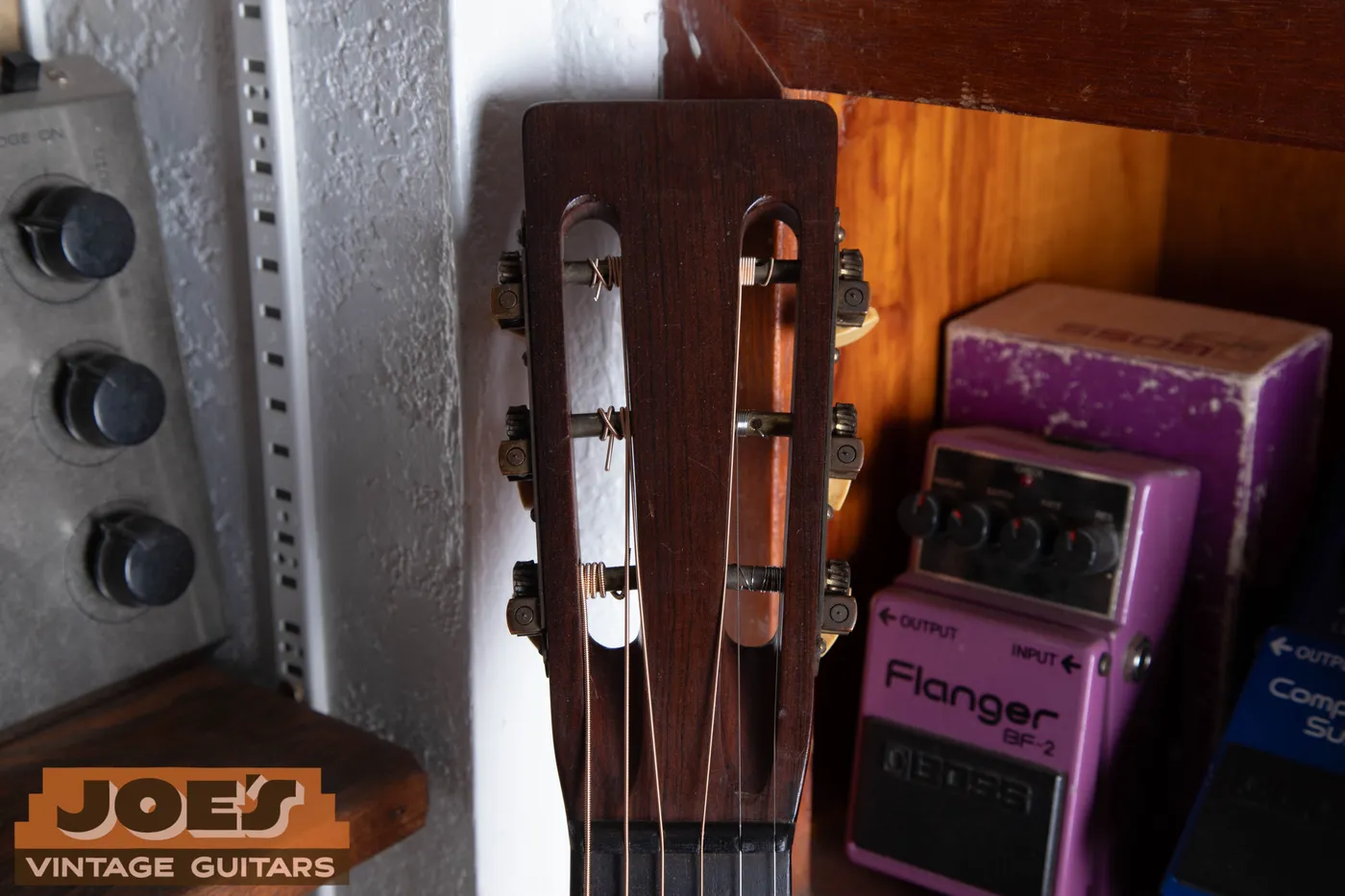
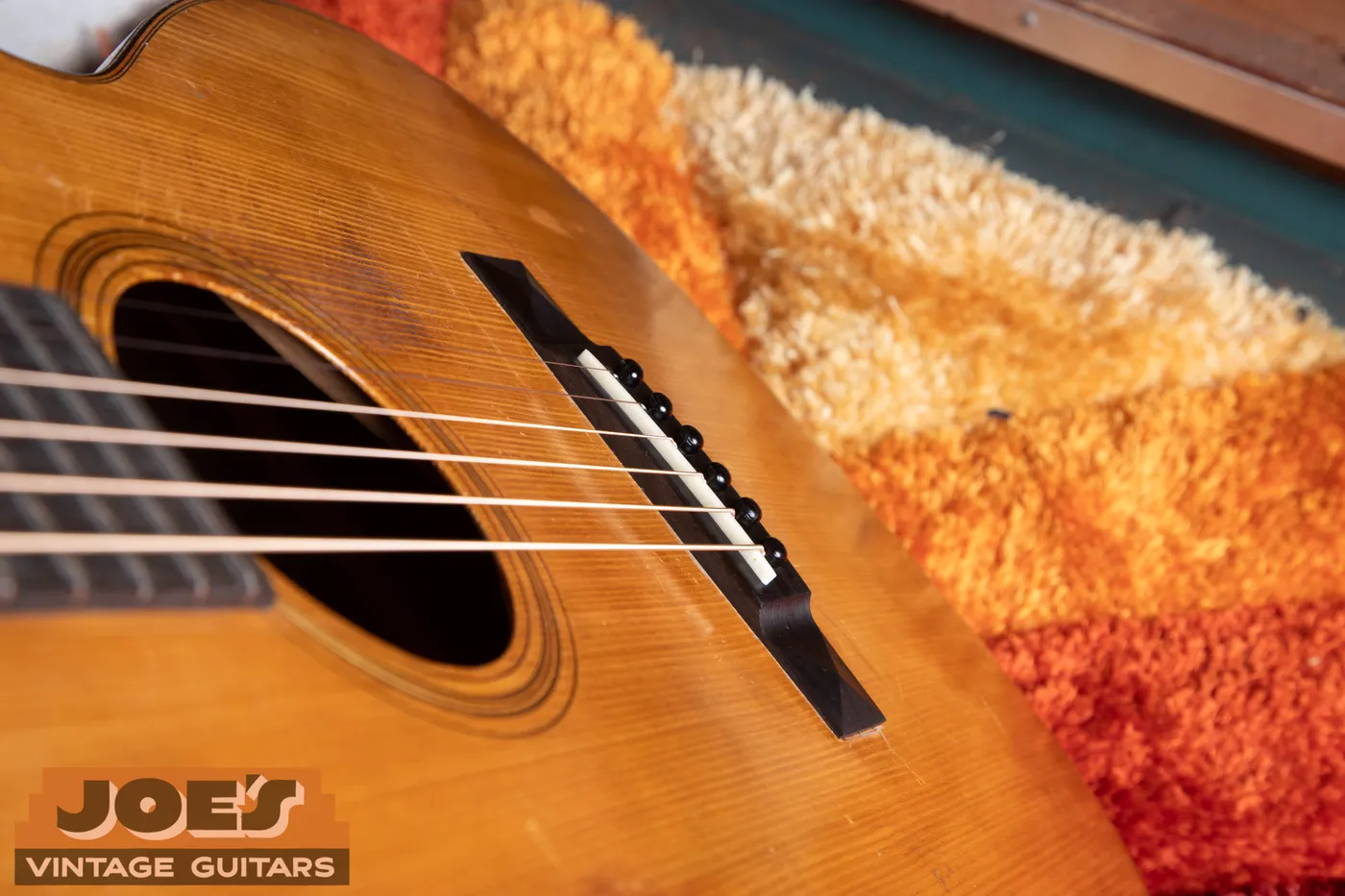
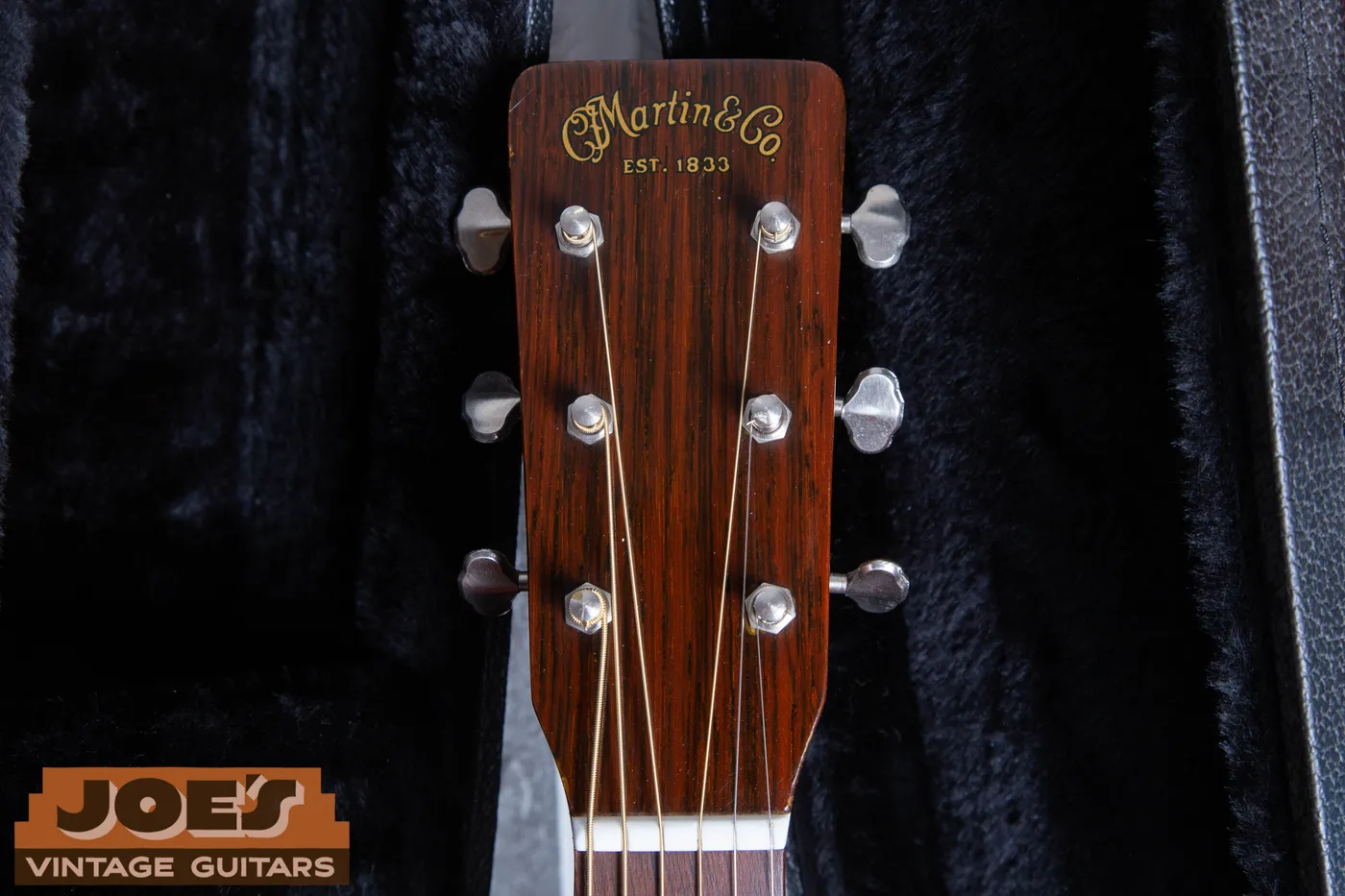
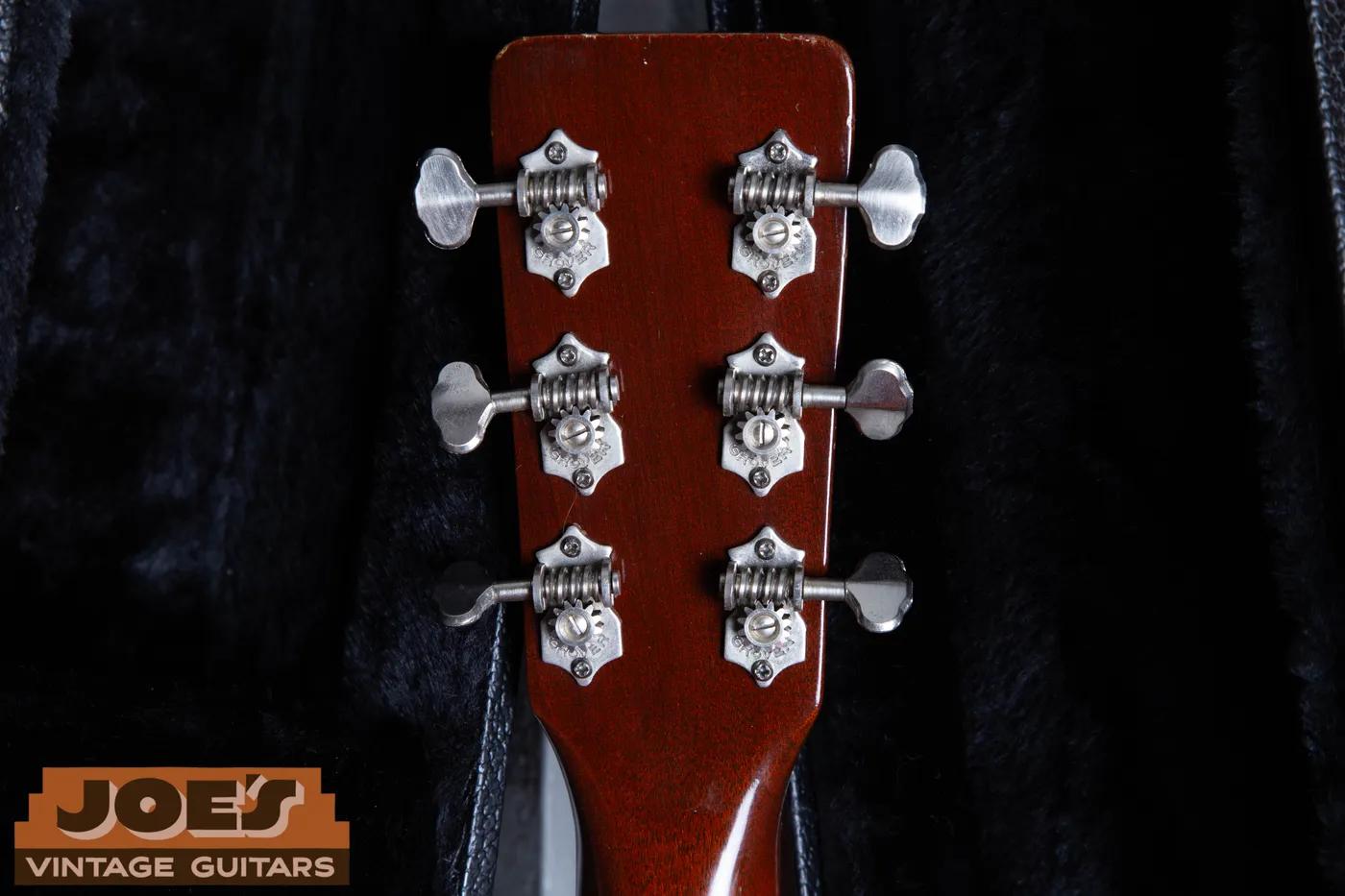
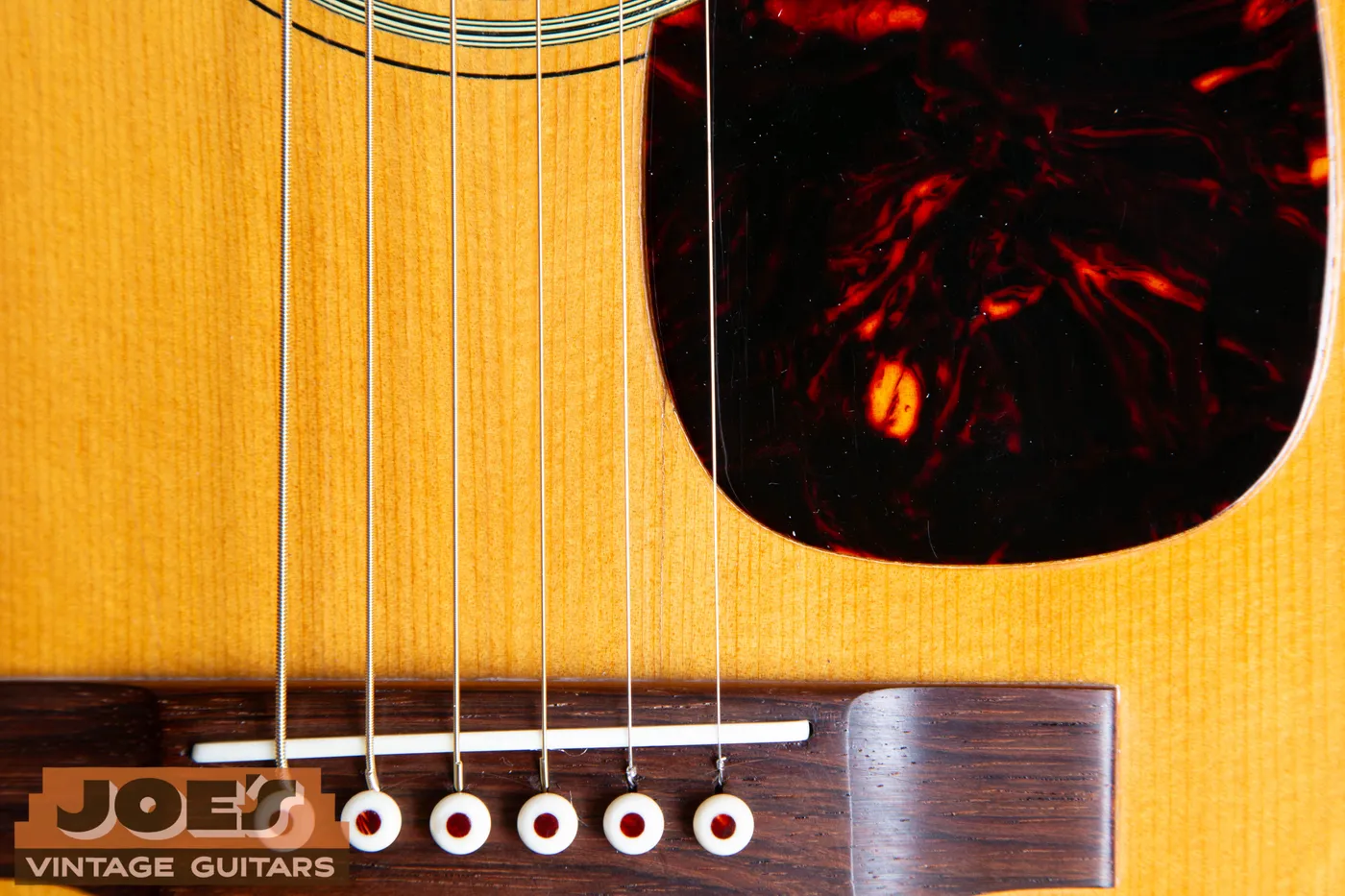
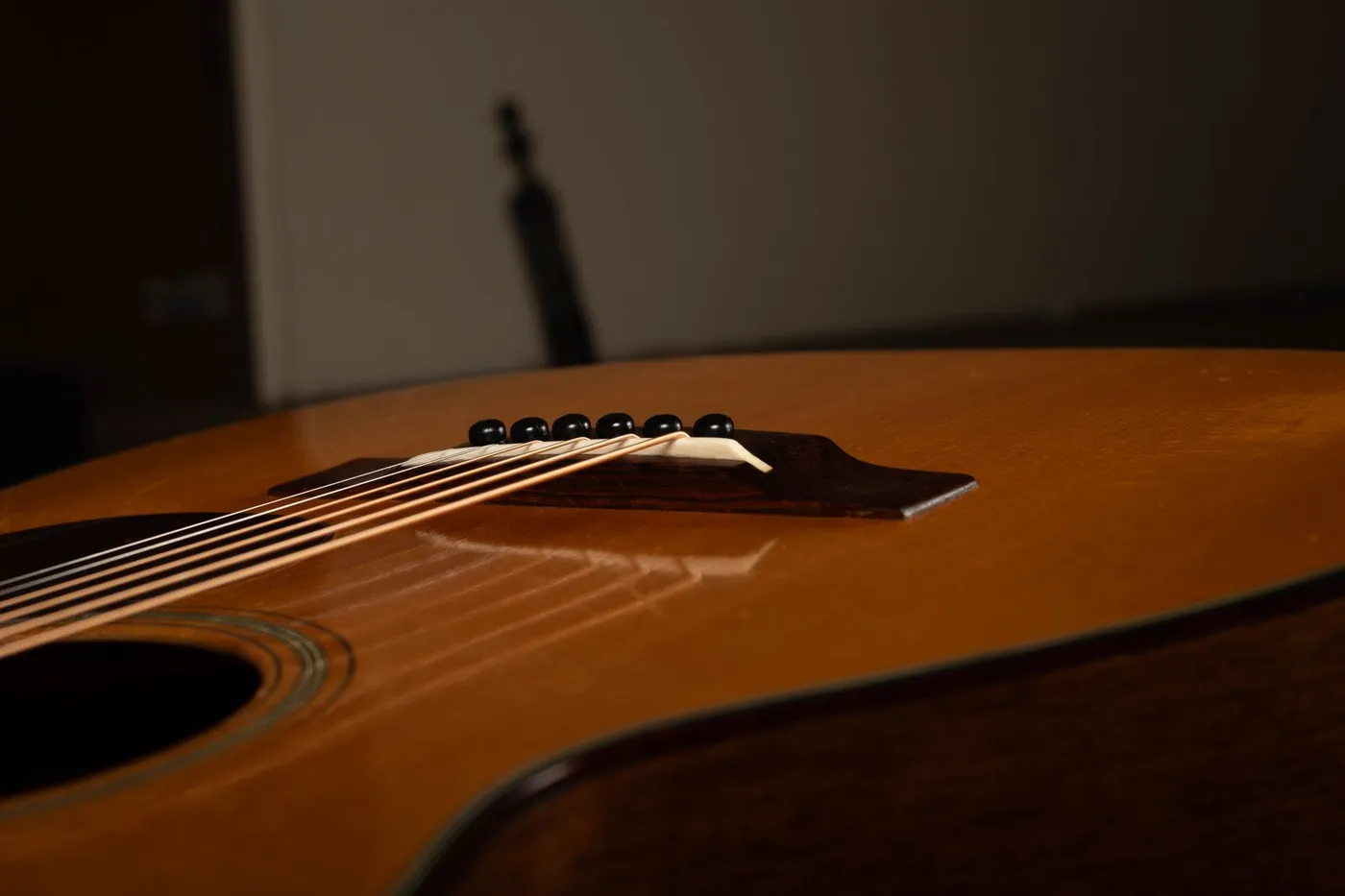
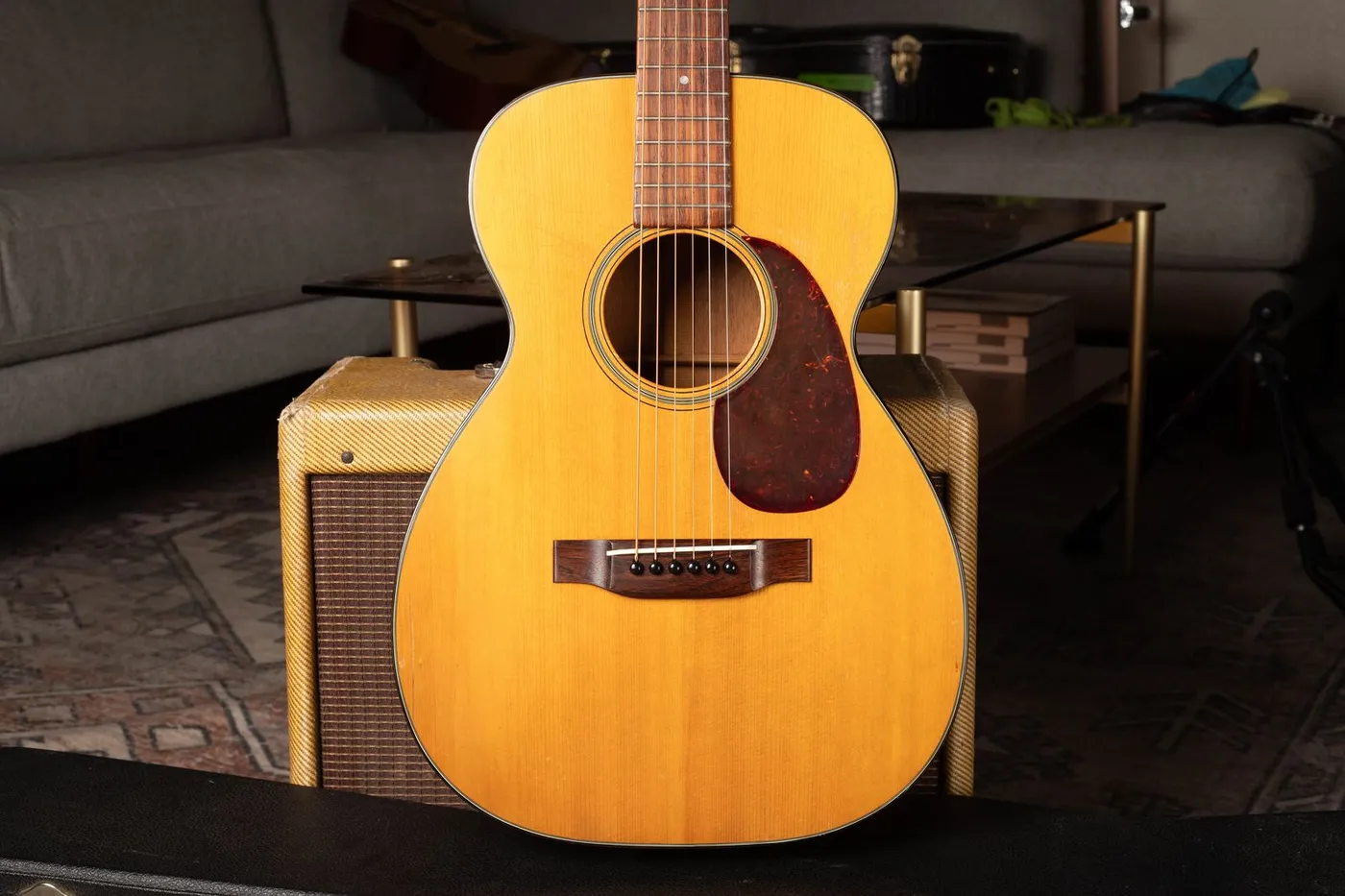
The photographs compare the 1925 slotted headstock and pyramid bridge with the 1966 gold-script face, Grover Sta-Tite tuners and short saddle. The bridge profile from the 1951 guitar adds a view of a low saddle. The tuner reference also shows prewar, wartime and early-postwar patterns. Match the plates, gear form, screw spacing, bushings and unused holes. A button can be replaced without replacing the entire tuner.
Use the logo chronology to compare a blank early face, maker’s stamp or later gold-script presentation. A replacement decal can accompany headstock finish work, while an original logo can remain on a guitar with changed tuners. Record those as distinct findings.
At the bridge, photograph the footprint, thickness, pin row and saddle slot. A bridge that has been shaved should not be described merely as “low action.” It may have lost material during earlier attempts to improve playability. The bridge and saddle photographs provide dated comparisons, with a reminder that bridge shapes overlap across different Martin models.
Inspect the binding and pickguard edges for lifting, shrinkage and repairs. A crack beside the guard can require a different repair from a center-seam opening or side impact. Look at the complete area and the inside reinforcement before describing the damage. An otherwise correct-looking outline cannot disclose the condition underneath it.
Describe What Changed And What Remains
Inspect The Plate, Finish And Neck Repairs
Joe’s 1966 listing records light wear, original finish and parts, and a small professionally repaired pickguard crack. The 1951 listing records a small repaired top crack, medium action and a low saddle, with a future neck reset expected. These details explain why a clean-looking instrument still needs its repair history and geometry checked.
An interior photograph should include the entire bridge plate, the string-ball area, both X-brace arms and any cleats. Added plate material, repaired pin holes and a replacement plate should be distinguished. The prewar inspection reference illustrates how the outline and joints help document that work. The exterior bridge photo cannot settle it.
Refinishing and original wear can look similar in a casual photograph. Use angled light, protected edges and the surfaces around fittings to identify where more inspection is needed. Joe’s finish guide explains the limits of a single photograph and of a single black-light response. State whether the concern involves a small touched-up area, overspray or a complete new surface.
A reset changes the neck’s relationship to the body to address geometry; a refret addresses the playing surface. Ask what was done to the bridge and fingerboard at the same time. Read the neck-reset guide before deciding that high action has only one cause. A competent repair can preserve an old instrument without restoring every part to factory condition.
Confirm The Actual Production Claim
Recognize Tenors And Later 0-18 Recreations
A four-string 0-18T goes to the tenor guide. Its tuner count, neck and bridge need four-string comparisons. Plectrums belong to the plectrum family. Keep any suffix visible when photographing the stamp.
Later Standard Series, Custom Shop and artist editions require the actual serial year. An older design, aged finish or historical specification doesn’t establish an older production date. The model-number guide explains why a CUSTOM mark needs a build sheet and why a historical year in a name isn’t necessarily the build year.
A suspicious sales description should be tested against the physical guitar. Request fresh full-body and stamp photographs, then compare grain, wear and installed parts across the set. The fake Martin guide explains how inconsistent materials and construction can expose an incorrect claim. Repair work alone is a separate question from whether Martin built the guitar.
Before Repairs Or A Sale
Build An Evidence Record For Your 0-18
Measure And Name The Body
Record the lower bout and fret where the body joins the neck. Keep the complete model and any suffix beside those measurements.
Photograph The Inside And Outside
Include the serial, both headstock faces, bridge, heel and all visible damage. Ask a repairer to document concealed construction when needed.
Attach The History Without Filling Gaps
Save family photographs and repair invoices. Distinguish what a relative remembers from what a dated document or photograph establishes.
Assess Before Cosmetic Changes
Read whether to restore before selling, then use the 0-18 value guide for the appropriate price group.
Send The Evidence
Send Joe Your 0-18 Evidence
Share the model, serial, complete photographs and known history. I can help identify the guitar and discuss repairs or value questions that the photographs leave open.
Sources Behind These Comparisons
0-18 Dating And Archive References
- Martin Factory Serial Numbers
Annual totals used for the photographed 1925, 1949 and 1966 stamps.
- Linda Gayle’s 1949 0-18
Joe’s purchase account and the preserved family photographs.
- Martin Model Numbers
Body-size codes, style details and modern model-name limits.
- Martin Construction Chronology
Frets, reinforcement, bridges and guards.
- Small-Body Martin History
Koa variants, body joints and the smaller-body brace timeline.
Questions AboutMartin Identification
How Is An 0-18 Different From A 00-18?
What Does The K In 0-18K Mean?
Is An 0-18T A Six-String Guitar?
Does A Family History Prove All-Original Condition?
The Last Word
Preserve The 0-18’s Identity And Its Evidence
The size, stamp and construction establish which guitar you have. Its wear, repairs and ownership records describe how it reached its present condition. Keep both parts of that record when moving to the 0-18 value guide or asking Joe for an appraisal.
Authenticity And Originality Are Assessed From The Information Provided. A Hands-On Inspection Can Change The Conclusion.