

Concert-Size Prices · Standard 0-18, 0-18K And 0-18KH
Martin 0-18 Value Guide
Start with the correct size and variant, then compare preserved original condition with the repairs your guitar actually has.
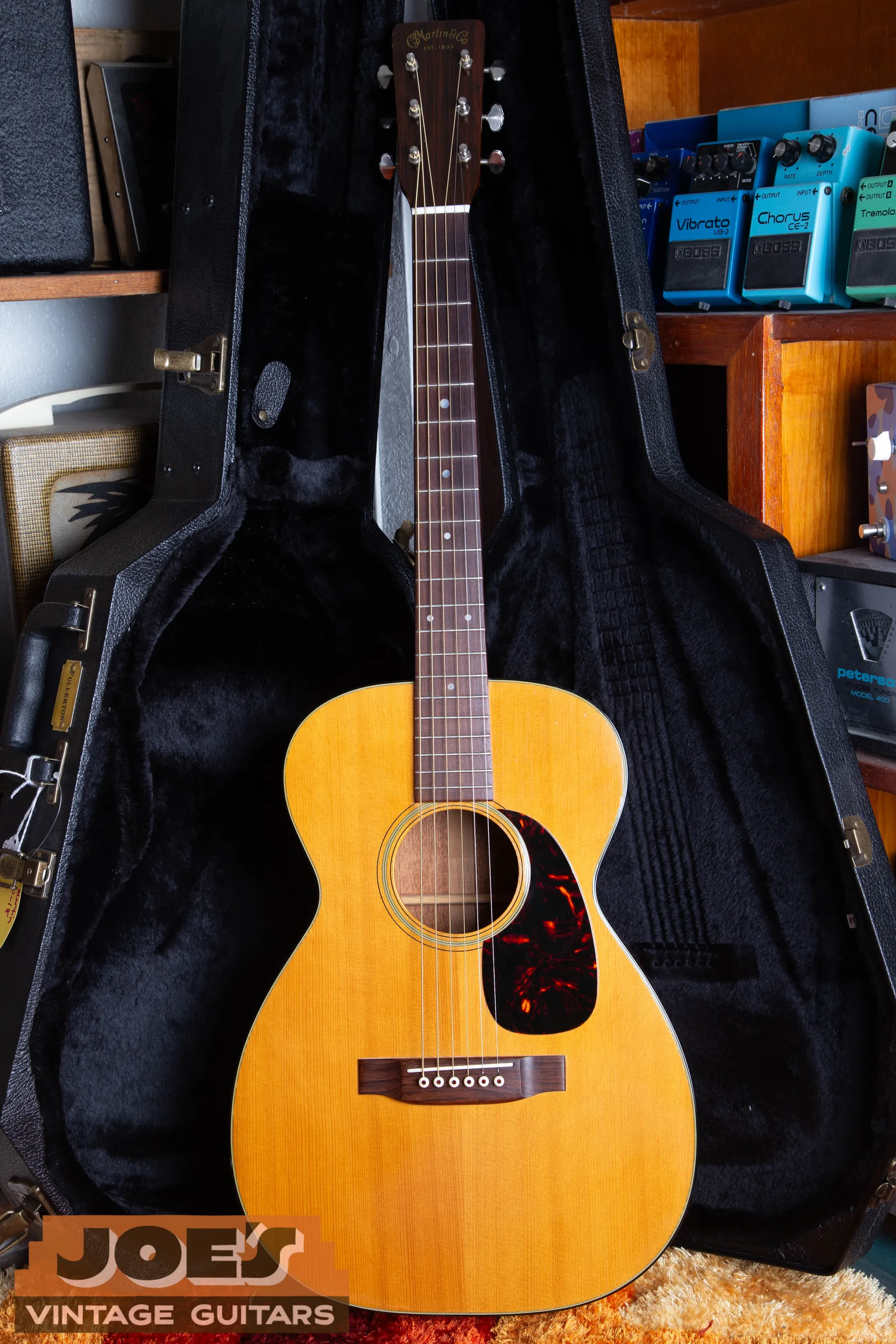
A 1947 to 1949 Martin 0-18 has an estimated retail range of $4,350 to $5,650; a 1950s example is $3,900 to $5,200, assuming excellent original condition and the original case. Koa variants and earlier configurations have separate entries. Confirm the size, suffix and year with the 0-18 identification guide before applying one of these ranges.
An inherited 0-18 may have spent decades being played, maintained and stored by the same family. Wear doesn’t make it worthless, and a clean appearance doesn’t prove originality. The useful appraisal describes what remains, what changed and whether any repair is still needed.
This Is An Estimate Of Market Value, Not An Offer To Buy And Not A Guarantee. Market Values Fluctuate; Have Your Specific Item Appraised.
Joe’s Estimated Retail Market Ranges
Vintage Martin 0-18 Values And Koa Variants
| Model | Years | Configuration | Estimated Retail Value |
|---|---|---|---|
| 0-18 | 1920 to 1922 | Mahogany, gut | $3,500 to $4,350 |
| 0-18 | 1923 to 1934 | 12-fret, steel | $6,250 to $8,000 |
| 0-18 | 1939 | Early 1939, 1 3/4-inch nut | $6,800 to $8,500 |
| 0-18 | 1939 | Late 1939, 1 11/16-inch nut | $6,000 to $7,750 |
| 0-18 | 1940 to 1944 | Standard | $5,800 to $7,550 |
| 0-18 | 1945 to 1946 | Standard | $4,800 to $6,100 |
| 0-18 | 1947 to 1949 | Standard | $4,350 to $5,650 |
| 0-18 | 1950 to 1959 | Standard | $3,900 to $5,200 |
| 0-18 | 1960 to 1964 | Standard | $3,750 to $4,900 |
| 0-18 | 1965 | Standard | $3,400 to $5,100 |
| 0-18 | 1966 to 1969 | Standard | $3,000 to $3,850 |
| 0-18 | 1970 to 1979 | Standard | $2,550 to $3,400 |
| 0-18 | 1980 to 1989 | Standard | $2,150 to $3,000 |
| 0-18K | 1918 to 1933 | Hawaiian, all koa | $5,650 to $7,400 |
| 0-18K | 1934 to 1935 | Hawaiian, all koa | $6,550 to $8,250 |
| 0-18KH | 1927 to 1928 | Hawaiian, koa | $6,600 to $8,350 |
U.S. dollars. Prepared in November 2026 from 2026 annual price-guide ranges, adjusted downward and rounded to the nearest $50. November dates this calculation; these are retail estimates rather than a record of completed November sales. They assume excellent, original condition and the original case and aren’t purchase offers. Repairs, changed parts and market conditions require individual appraisal.
Standard 0-18 pricing starts at 1920; earlier examples belong in the early Martin value guide. The 0-18K begins in 1918 here because the early guide has no specific K-model price row. The chart has no price range for 14-fret guitars attributed to 1932 through 1938. Those guitars need an individual appraisal; no substitute estimate has been created.
The tenor value guide owns 0-18T pricing. Modern recreations, later Custom Shop instruments and signature editions are excluded from the chart. The original-production 1970s and 1980s rows refer to guitars built during those periods, not new instruments with older styling.
Different Eras And Variants
How To Select An 0-18 Comparison
Early Standard Guitars
Use the listed configuration and establish the instrument’s intended stringing. An early small Martin can be misidentified when its model line is absent. Body measurements, wood and construction should support the 0-18 description before a price is assigned. The presence of steel strings today doesn’t settle what the guitar was built to carry.
Body Format And Neck Specifications
Separate the 12-fret group from the 14-fret guitar, then use the early or late 1939 label where applicable. A changed nut can alter string spacing, so measure the neck itself if that distinction affects the comparison. For a heavily modified neck or top, an individual assessment may be more appropriate than a clean-original row.
Played Instruments With Repair Histories
The postwar rows cover guitars that often arrive with a long history of use. A completed neck reset and a bridge shaved to postpone one are different conditions. The appraisal should explain which is present, what documentation exists and whether the current setup leaves sufficient adjustment for normal use.
Keep K And KH Separate
Use the exact variant named in the chart. A spruce-top 0-18 and an all-koa model don’t share a price simply because the body size matches. For a Hawaiian-origin instrument, describe any conversion and the quality of the resulting setup before comparing its value.
A Worn Guitar Can Still Have A Clear History
Separate Playing Wear From Altered Originality
Linda Gayle’s 1949 0-18 has visible back wear and a family history preserved by her niece. The original-owner story connects the guitar with photographs and an account of Linda’s musical life. Those records help explain its use; they don’t erase the wear or establish that no repair ever occurred.
For another family guitar, photograph worn areas before cleaning. A patch of missing finish, a shallow scratch and a crack through the wood need different descriptions. Include both an overall view and a close-up so the location remains clear. If the damage can be seen inside, a repairer’s interior photograph can help establish its extent.
Refinishing replaces an original surface; ordinary wear doesn’t. If finish work is suspected, read how to identify a refinish and how refinishing affects value. The appraisal should distinguish a localized touch-up from broad overspray or a complete refinish before applying a market comparison.
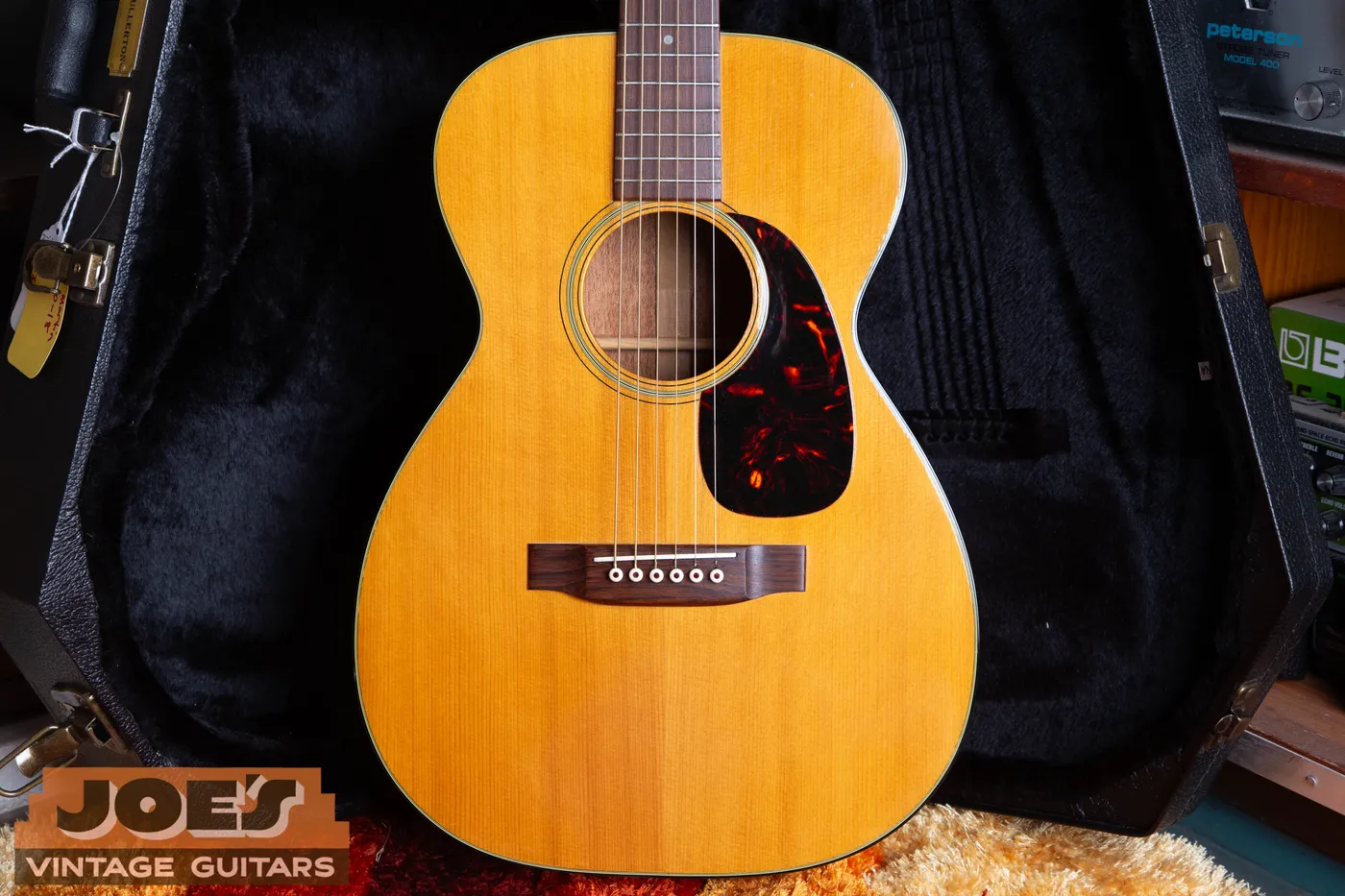
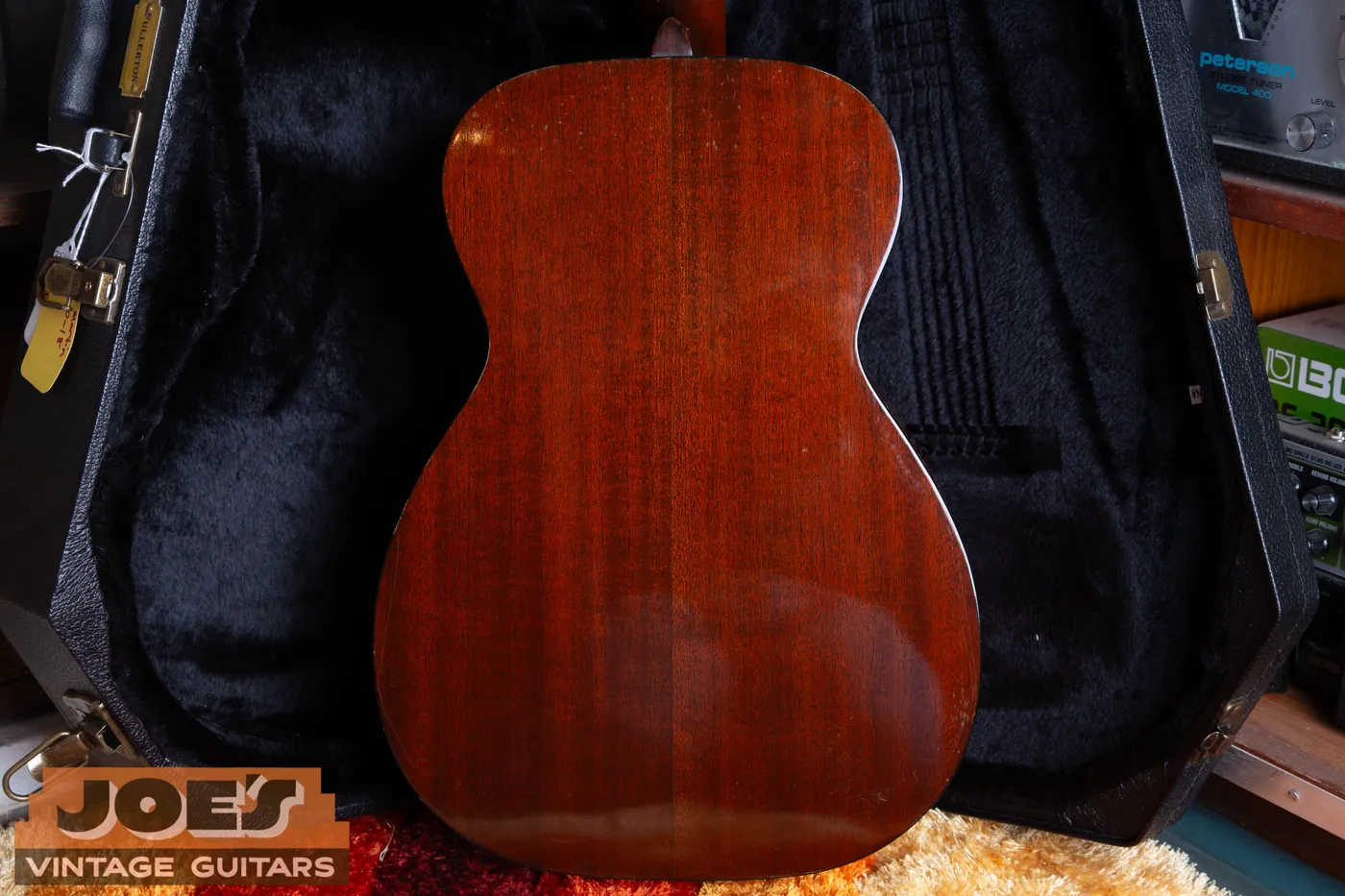
Front and back of the lightly worn 1966 0-18. Its documented pickguard-crack repair remains part of the condition record.
Neck, Bridge And Top Condition
Assess The Repair Needs Of A Small 0-18
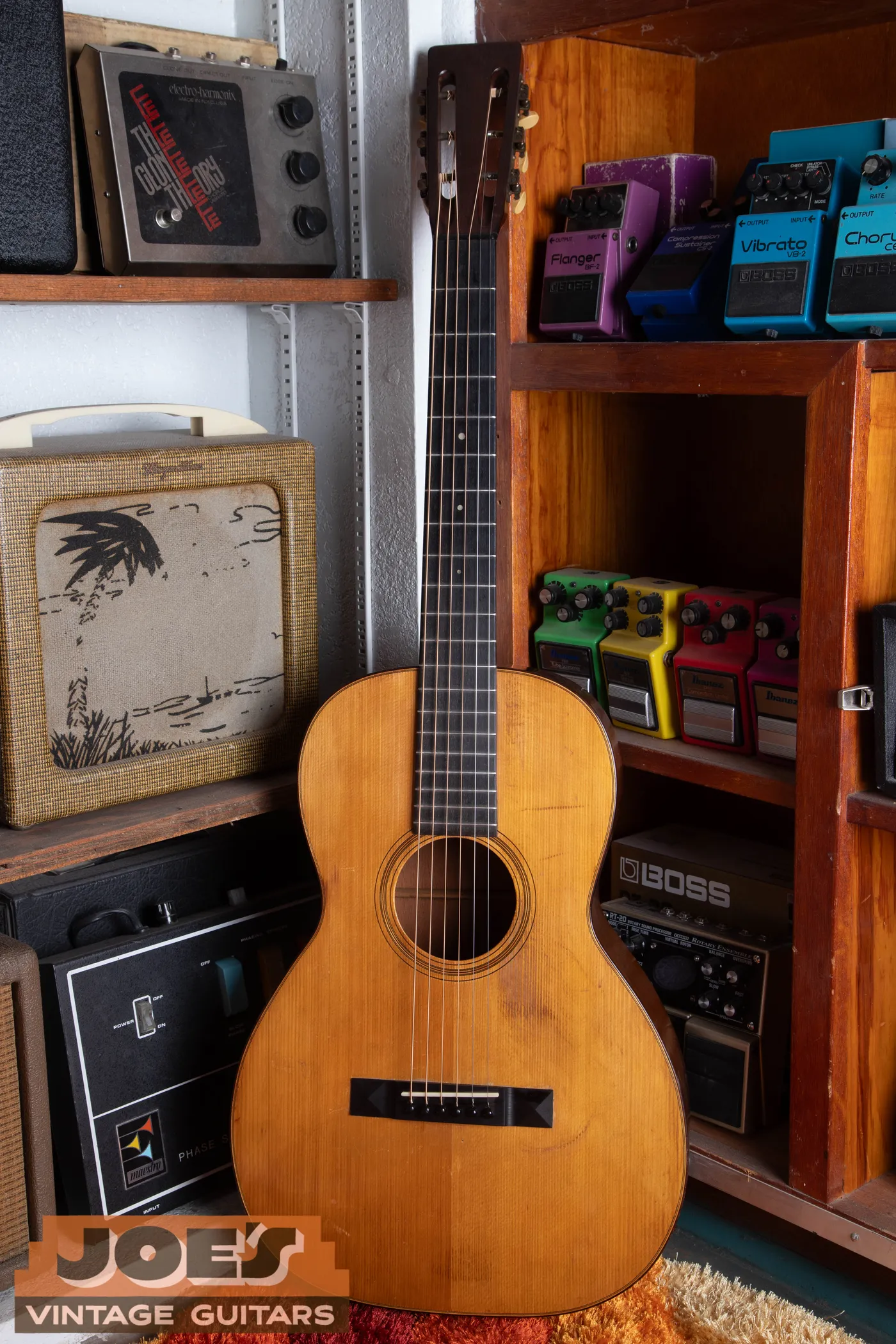
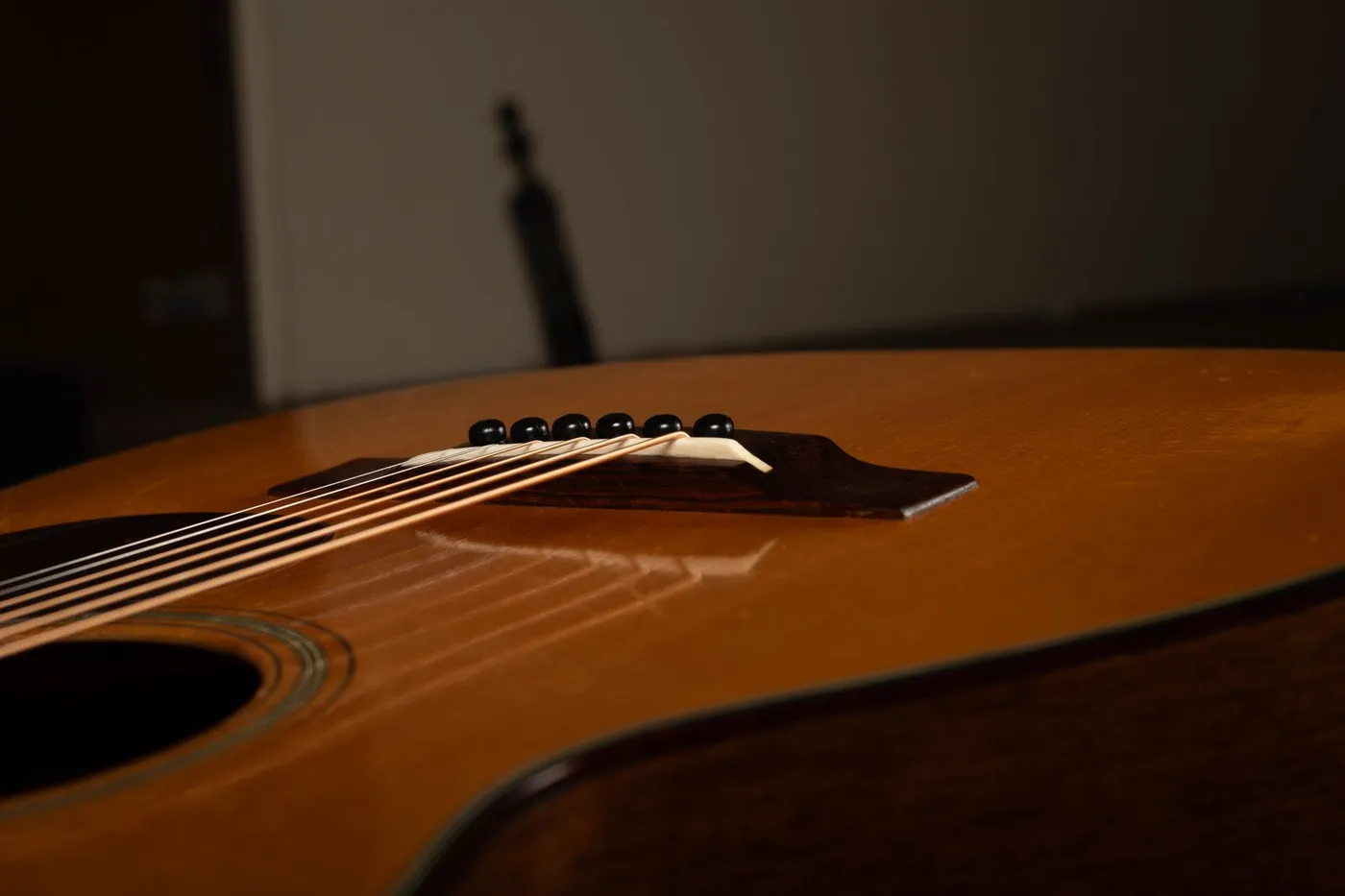
The 1925 12-fret example illustrates an earlier body and bridge configuration. The 1951 bridge profile illustrates a different appraisal question: the listing records a low saddle and a future neck reset. Match the production group first, then account for the work needed on that individual guitar.
High Action And A Low Saddle
A complaint that the guitar is hard to play needs measurements and a side view of the bridge. Lowering the saddle may already have used most of the available adjustment. The neck-reset guide explains why neck geometry, top movement and setup need to be considered together.
Bridge And Plate Alterations
Record a replacement bridge, enlarged footprint and repaired pin holes separately. Ask for an interior view of the plate’s full outline. A small cap over worn holes and an oversized replacement plate are different alterations, even if the outside of the guitar looks similar afterward.
Cracks, Cleats And Loose Braces
State whether each crack is open, stable or previously repaired, and include any written repair assessment. A loose brace can affect the top’s support without being obvious in a front photograph. Don’t label a guitar structurally sound solely because it holds tuning during a short trial.
The overall value should reflect the finished condition, not a mechanical sum of penalties. A bridge job and a top repair may describe the same event. A refret and reset can be normal maintenance performed together. Read what lowers vintage guitar value for the distinctions, then provide enough information to evaluate the instrument as a whole.
Documentation For An Inherited 0-18
Keep Family Records And Original Parts Together
Write down who owned the guitar, how it reached the current owner and which details come from direct knowledge. Dates supported by receipts or photographs are different from approximate family recollections. Both can be recorded, provided the distinction remains clear. Don’t turn “my grandfather had it before I was born” into an unsupported production year.
Keep the original case if it survives, even when a newer case is used for transport. Photograph its handle, hinges, latches, lining and markings. A case can preserve labels and paperwork that would otherwise be lost, but its age and fit don’t by themselves prove that it was supplied with this guitar.
Save removed tuners, bridge pins and other parts in a labeled container. Include the repair date if it is known. Loose original parts can explain the instrument’s history, although they don’t automatically undo a modification or restore a changed guitar to the chart’s original-condition assumption.
Ownership history doesn’t create a fixed dollar premium here. A documented player connection may deserve further research, but no celebrity or provenance price is added without evidence. The chart remains a model-and-condition comparison, and the appraisal can discuss unusual documentation separately.
Preservation And Sale Preparation
Get A Value Before Ordering Restoration
If you’re considering a sale, ask about the instrument in its present state before committing to a refinish, new hardware or major cosmetic repair. The restoration guide explains why making an old guitar look new can remove features that a collector wants to preserve.
Necessary stabilization is a separate question. If a repairer finds an open seam or loose bridge, retain the diagnosis and estimate. Send them with the appraisal request. The current value, cost of the proposed work and likely condition afterward should be discussed as separate figures rather than collapsed into an assumed profit from restoration.
For a koa or Hawaiian-origin guitar, get the model and setup history settled before requesting a conversion. A buyer may have a preference about original construction that differs from the owner’s playing needs. The guitar can be assessed as it exists while those choices remain open.
A Short Appraisal Checklist
Photographs That Help Value An 0-18
Front, Back And Measured Width
Show the full body in even light and include the lower-bout measurement. This helps separate an 0 from another small Martin when the model is uncertain.
Complete Stamp And Headstock
Photograph the model and serial together, plus the front and rear of the headstock. Keep any K, H or T suffix in the written description.
Bridge, Heel And Known Repairs
Add a side view of the saddle, the neck heel and all damage. Include interior images or repair estimates already available; don’t dismantle the guitar for a picture.
Case, Parts And Family Documents
Send copies of dated photographs and invoices with a brief ownership account. Explain what you know and leave uncertain details identified as uncertain.
Send The Evidence
Ask Joe What Your 0-18 Is Worth
Send the photographs through the free appraisal form. I’ll review the model and condition with you, including questions about repairs or selling the guitar.
References For The Next Question
0-18 Valuation Resources
- 0-18 Authentication
Check the size, koa variant and actual serial photographs.
- Linda Gayle’s 1949 0-18
See how a family history is preserved alongside the instrument.
- Restoration Before Selling
Consider an appraisal before making cosmetic changes.
Questions AboutMartin Values
Is A Small 0-18 Worth Less Because It Was A Student Guitar?
Can I Use These Ranges For An 0-18T?
Should I Replace Worn Parts Before Asking For A Price?
Why Is There No 1932 To 1938 14-Fret 0-18 Range?
The Last Word
Value The 0-18 You Have Documented
The correct model and production group establish a starting comparison. Photographs, repairs and case history explain where the individual guitar belongs. Return to the 0-18 identification guide for unresolved details, or request a free appraisal from Joe.
This Is An Estimate Of Market Value, Not An Offer To Buy And Not A Guarantee. Market Values Fluctuate; Have Your Specific Item Appraised.