

Auditorium Martins · Early Bodies, War Years And Postwar Guitars
Martin 000-18 Guide
Separate the 12-fret guitar, the 1934 long-scale transition and the later short-scale 000 before judging the details.
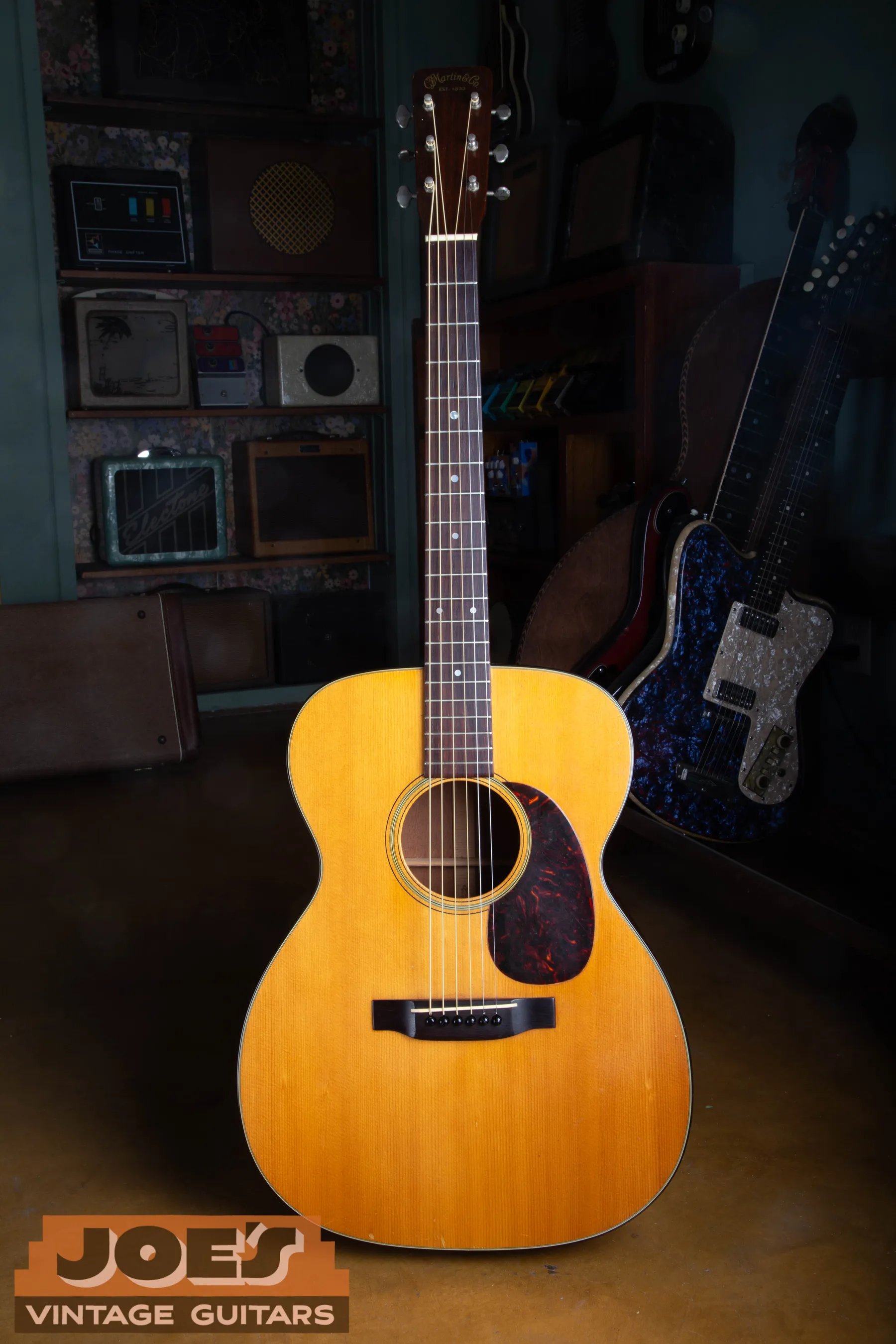
A vintage Martin 000-18 needs to be identified by body generation as well as year. The early 12-fret design, the short-lived long-scale 14-fret form and the familiar later short-scale guitar don’t share every specification. Once those details are settled, the 000-18 value guide supplies the matching price groups.
The photographs follow three 000-18s from 1938, 1951 and 1960. The prewar guitar supplies a dated headstock and stamp comparison; the later examples show preserved surfaces alongside documented maintenance. Read the body, close-ups and repair history together. Exterior photographs leave the neck reinforcement and much of the top’s underside out of view.
Authenticity And Originality Are Assessed From The Information Provided. A Hands-On Inspection Can Change The Conclusion.
Size, Style And Geometry
What Identifies A Vintage 000-18?
| Feature | Earlier 12-Fret Guitar | Familiar Later 14-Fret Guitar |
|---|---|---|
| Neck meets body | At the twelfth fret | At the fourteenth fret |
| Upper body | Longer upper-body outline | Shorter upper-body outline |
| Scale comparison | Measure the individual guitar | Usually about 24.9 inches; early 1934 needs checking |
| Typical later Style 18 woods | Confirm early exceptions | Spruce top with mahogany back and sides |
| Model evidence | Early blocks may lack a model stamp | Model and serial generally appear together |
The 000 designation means Auditorium size; 18 describes the style. It isn’t a date code. Joe’s Martin model-number guide explains the size and style codes and provides body measurements. The familiar 000 body is about 15 inches across its lower bout, compared with the smaller 00 and 0. Measure across the body in a straight line, not around its curved surface.
For a later steel-string 000-18, the spruce soundboard, mahogany back and sides, dot fingerboard markers and restrained trim should make sense together. Early Style 18 instruments can depart from the later wood recipe. If the serial points to the first decades of the twentieth century, use the early Martin history alongside the physical measurements instead of rejecting an unfamiliar wood immediately.
From 12 Frets To The Updated 000
Why A 1934 000 Needs A Scale Measurement
The Older 12-Fret Body
On a 12-fret guitar, the neck joins the body at fret twelve and the upper body extends farther toward the player. That arrangement changes the relationship among the bridge, soundhole and outline. A slotted headstock can support the identification, but the body joint is the direct observation. Headstocks and necks can be replaced.
Count the frets clear of the body from a square-on photograph. A perspective view can hide the joint under the fingerboard extension. Record body length as well as width so that a seller’s use of “000 size” doesn’t become the only evidence for an unstamped early guitar.
The Long-Scale 14-Fret Transition
Martin’s museum explains that the original OM period ended as the company updated the 000s in 1934, and that the 000 changed from long to short scale later that year. A 1934 000 therefore needs more than a glance at the number of frets. Measure from the nut’s string-bearing edge to the center of the twelfth fret and double it; the saddle includes compensation and isn’t the best single endpoint.
The Martin Museum’s account of the OM transition supplies that chronology. Original OM-18s have a separate identification guide. Keep their model stamps and historical comparisons separate from a 000 carrying similar construction.
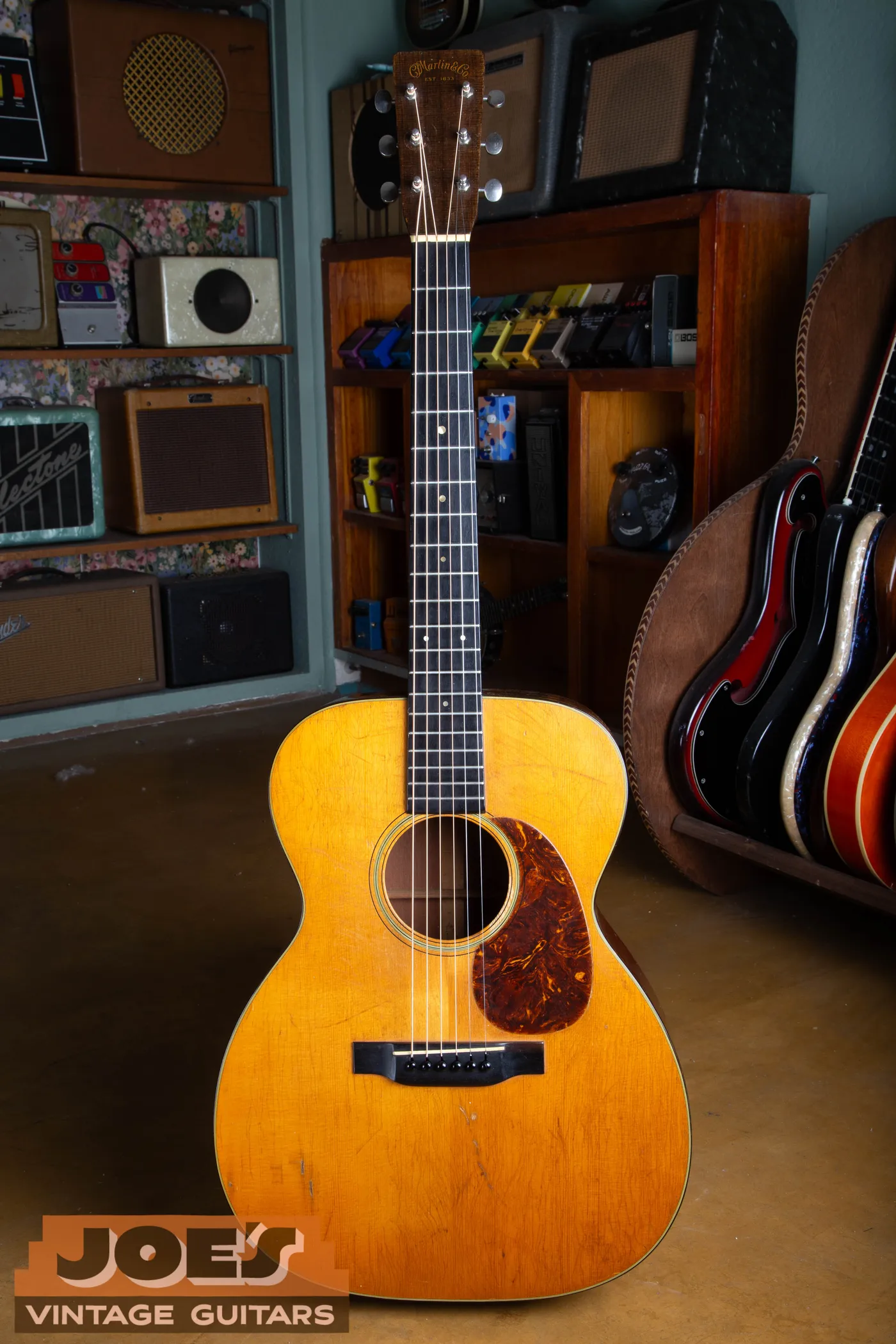
A 1938 prewar 000-18 and a 1951 one-owner example show the model across two production periods.
Changes That Need More Than A Serial
000-18 Features To Check Across The Decades
Stringing And The 12-Fret Form
Style 18’s move toward regular steel-string construction belongs around 1923 in the small-body Martin history. An earlier guitar needs a tension assessment. Existing steel strings don’t demonstrate that its top and bridge were built for that setup.
Scale, Frets And Neck Width
Separate the 1934 scale change from the move toward T-frets and steel T-bar neck reinforcement. Many 14-fret necks narrowed during 1939. The prewar construction guide treats neck width, fret type and brace layout as different observations, so record each instead of assigning one package of features from a year.
Wartime Substitutions And Brace Profiles
Ebony reinforcement returned on many wartime guitars, and scalloped bracing gave way to non-scalloped shaping late in 1944. Material overlap continued into the early postwar period. A guitar dated 1944 requires an interior view before it is described as scalloped.
Postwar Tops And Later Fittings
Sitka became the normal top wood during 1946, while later guitars also show changes in saddles, guards and tuners. Use the dated construction photographs to check these parts. Top color by itself can’t establish red spruce or a special 1953 top.
Interior Evidence
Read The Bracing And Bridge Plate Separately
Scalloping describes the shaped profile of the braces. X position describes where the main braces cross beneath the soundhole. Those are different features, and the presence of one doesn’t establish the other. The house small-body history places the 000’s rearward X change in mid-1938; the 0 and 00 followed a different schedule. Don’t transfer a smaller guitar’s timeline to this body.
Ask for an interior photograph that includes the X crossing, both arms and the bridge plate. Another angle should show the brace edges, where later shaving may have changed their profile. Freshly cut surfaces, mismatched tool marks or an abrupt change in finish and dirt are reasons for closer inspection, not a complete verdict from a phone picture. The prewar inspection photographs explain the views to obtain.
The bridge plate is the separate piece supporting the string-ball area inside the top. Document its full outline, thickness, pin holes and joints with the braces. An added cap can cover worn holes while leaving an earlier plate underneath. A large replacement can obscure top damage. Neither should be described merely as “the bridge was repaired,” because the exterior bridge and interior plate are different parts.
Neck reinforcement is hidden. The house dating guide records steel T-bars from late 1934, wartime ebony substitutions, later steel and the 1967 square-tube change. It also warns that a soundhole view cannot reveal a nonadjustable bar’s cross-section. Use repair documentation or an appropriate in-hand examination; the absence of a visible adjustment nut doesn’t identify ebony.
Prewar Details And Preserved Postwar Examples
Compare Joe’s 1938, 1951 And 1960 000-18s
1938 Prewar Guitar
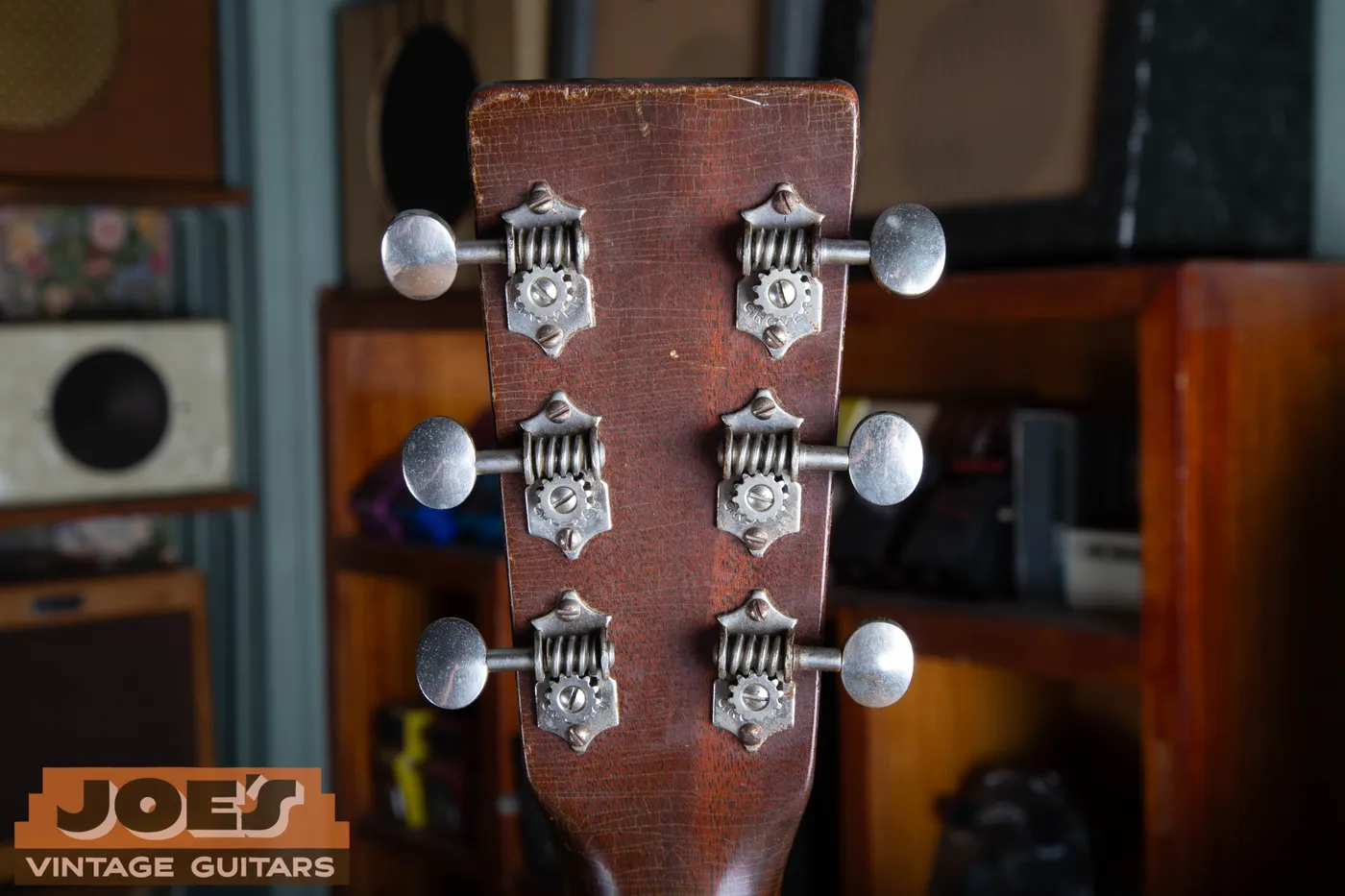
Headstock And Open-Gear Tuners
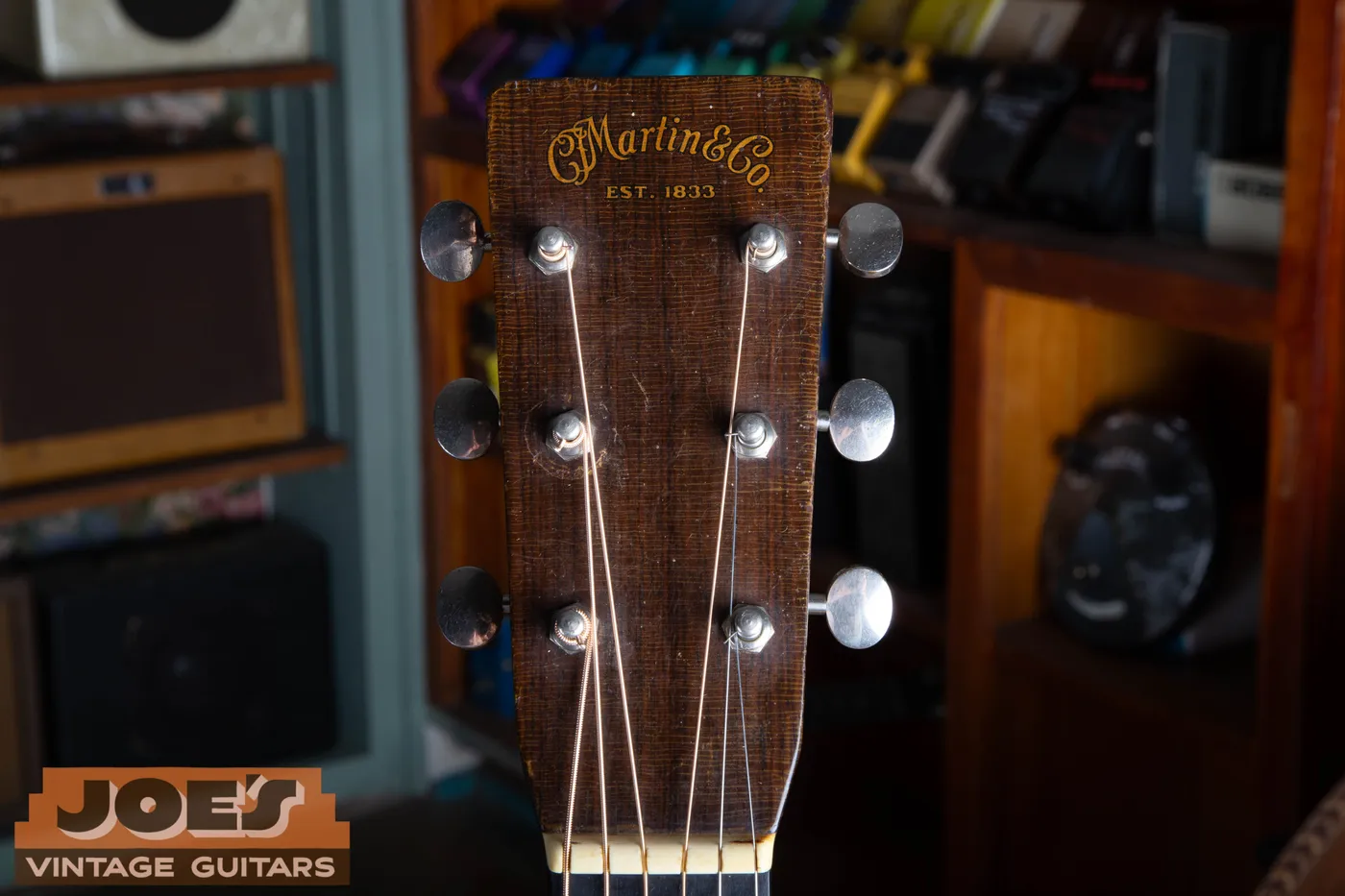
The 1938 full-front photograph above shows the 14-fret body, belly bridge and tortoise-pattern guard. These close-ups add the headstock face and installed tuners. Compare the logo, screw locations and plate outlines with the dated examples in the Martin tuner guide. A matching appearance needs the surrounding wood and repair history checked before the hardware is called original.
The readable block below dates this instrument independently of the archive filename. Its exterior views do not establish the X-brace position or rule out interior work. A 1938 example still needs the construction checks described above.
1960 Original-Family Guitar
A Clean Top Still Needs A Neck-Angle Check
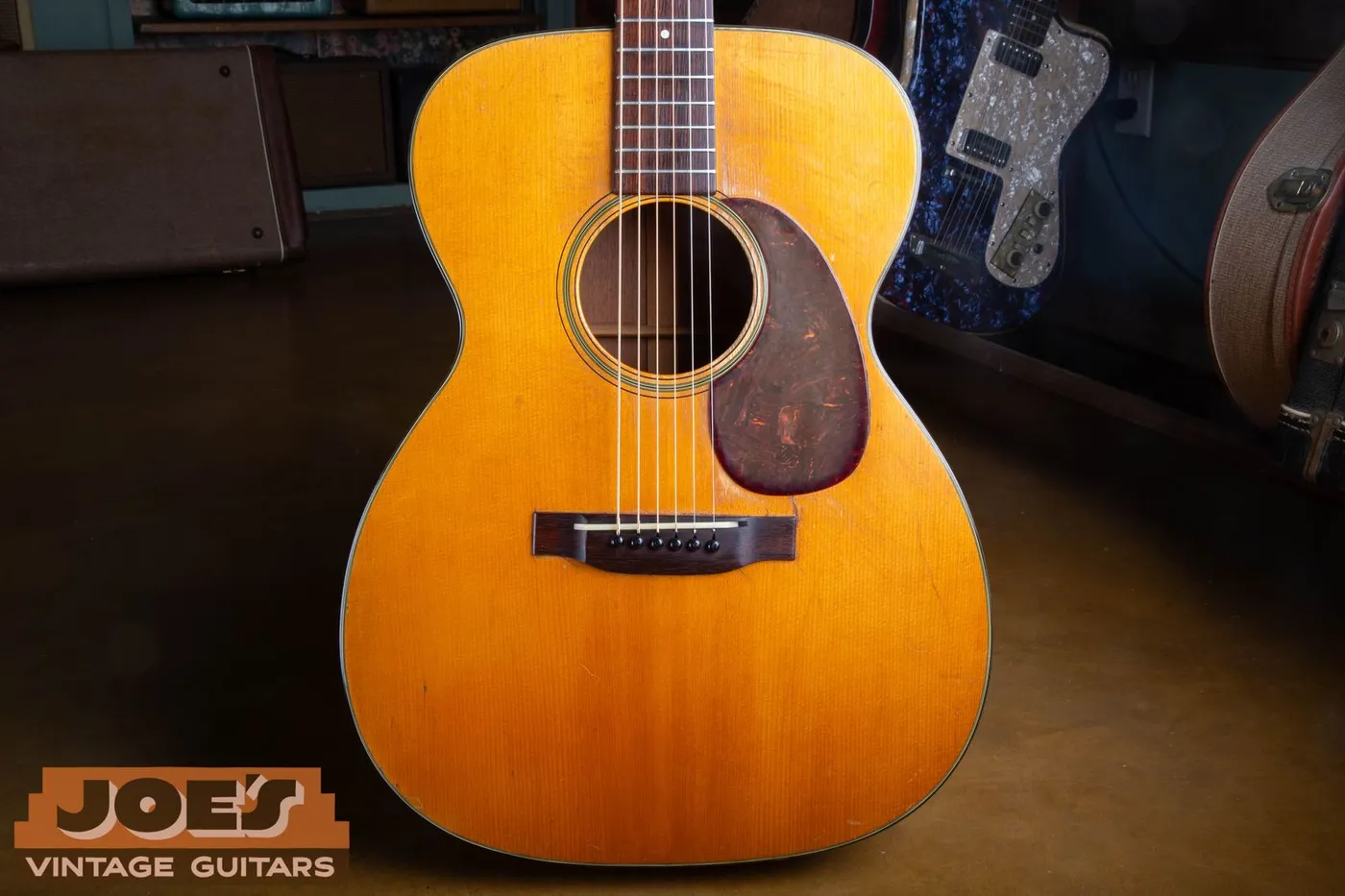
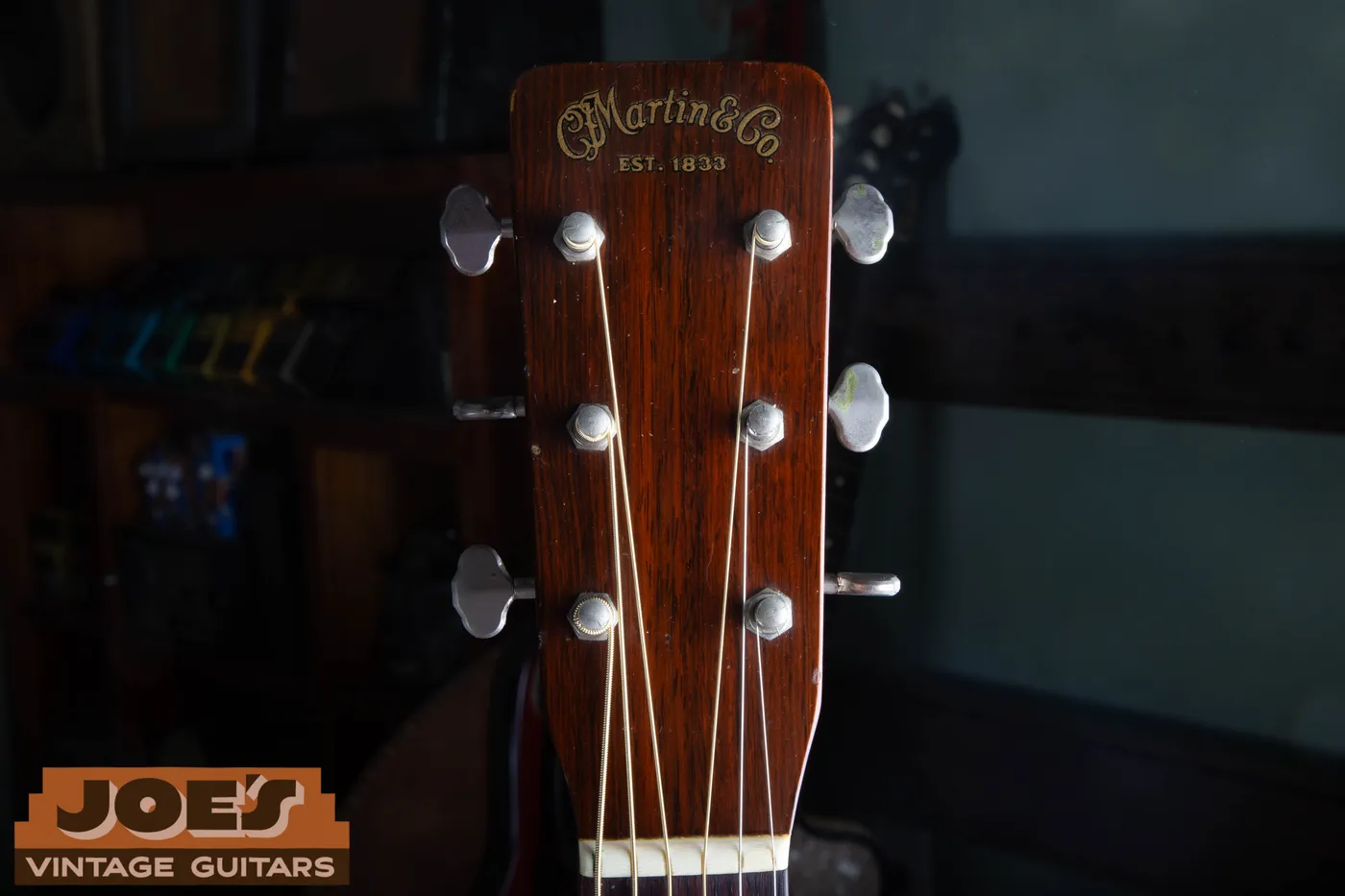
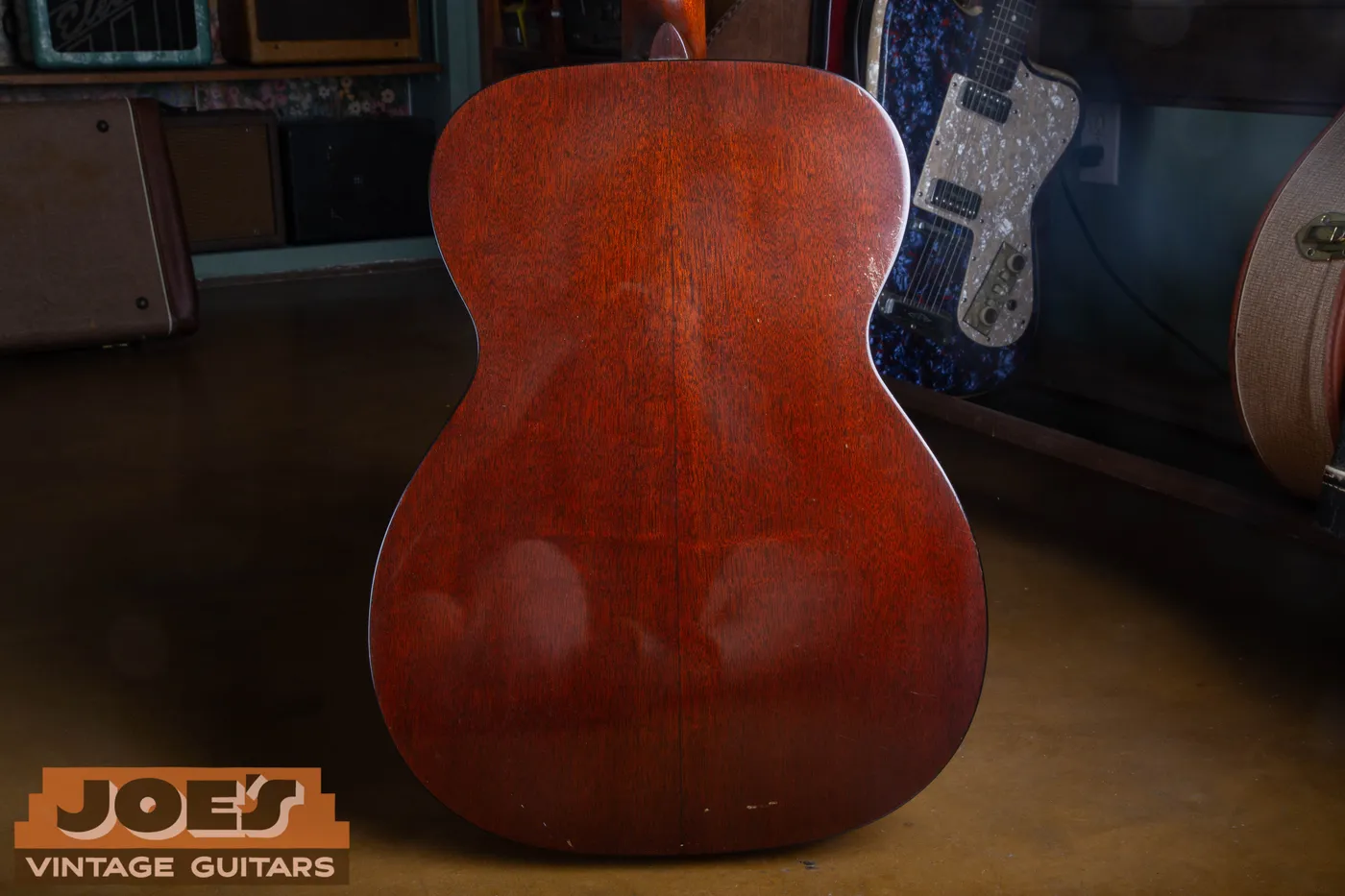
Joe’s 1960 listing describes original finish and parts, no cracks, and ownership within the original family. The headstock and back views belong to the same guitar as the lead photograph. They provide a cleaner postwar comparison while showing the actual wood, finish and fittings.
The listing also identifies a neck reset as necessary to achieve low action. That repair need matters even on a guitar with unusually well-preserved surfaces. Ask for action measurements and a bridge profile before assuming that cosmetic condition establishes playing condition.
1938 And 1960 Neck-Block Evidence
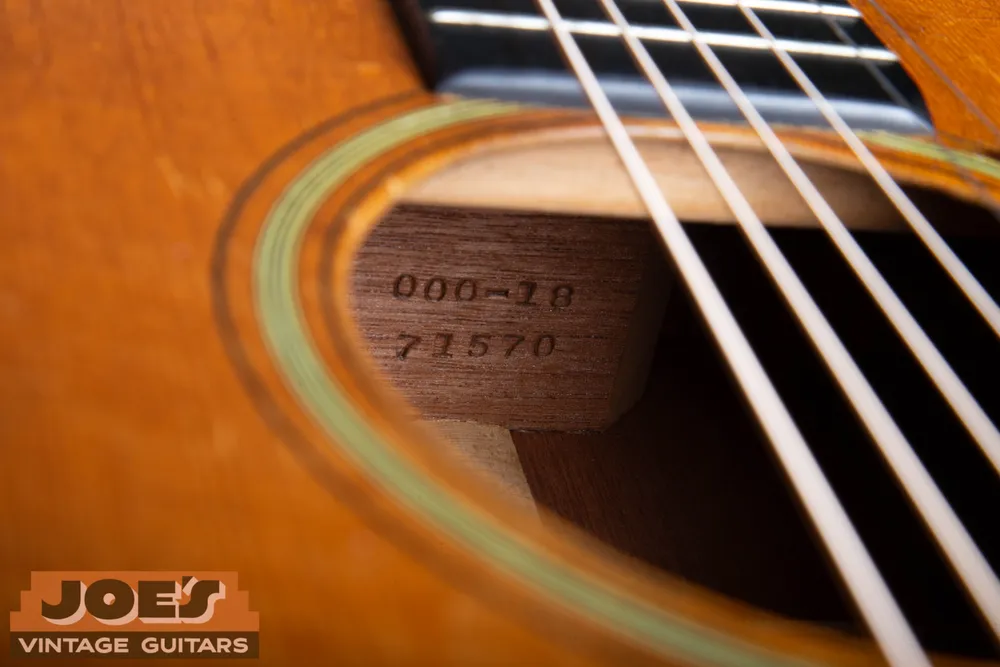
Read The Model And Serial On Two Dated Guitars
The 1938 Martin 000-18
The block reads 000-18 above 71570. Martin’s table ends 1937 at 68865 and 1938 at 71866, placing this guitar in 1938. All five digits are visible in the photograph.
The 1960 Martin 000-18
This later block reads 000-18 and 174299. The factory year-end totals are 171047 for 1959 and 175689 for 1960, so the serial dates the guitar to 1960. The model remains a separate stamped line.
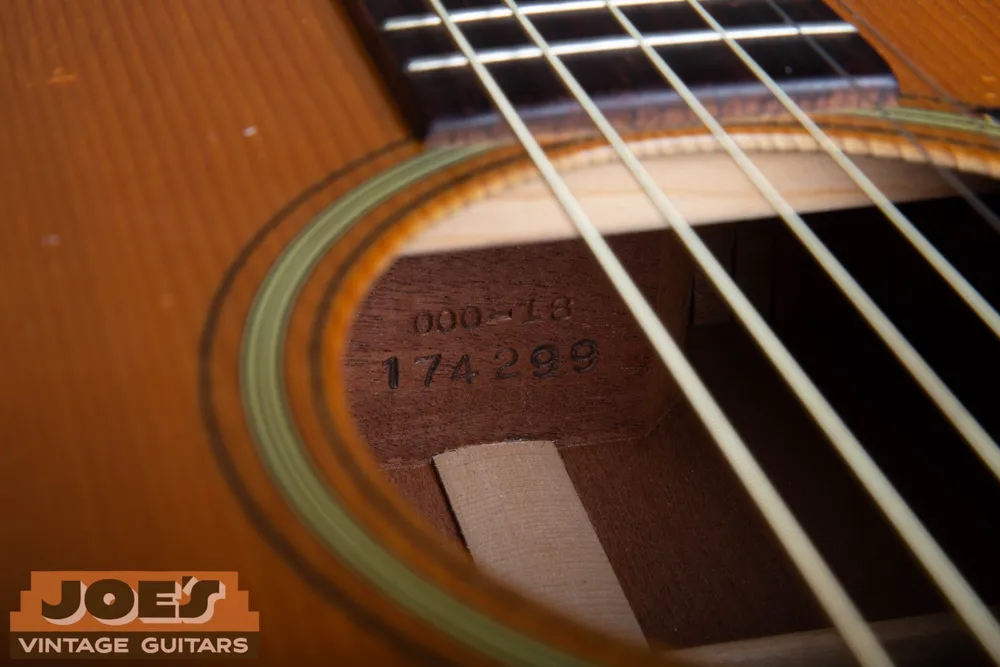
Martin’s serial table lists the last number in each year. It doesn’t certify originality. The dated wood, construction and parts then need to agree with the model identification.
Routine model stamping began around October 1930, so an earlier serial-only block isn’t automatically suspicious. Compare the neck-block stamp photographs before judging letter spacing or depth. Record the surrounding wood too. A close crop of convincing digits can hide sanding, a repaired block or another feature that needs explanation.
Original Features And Later Repairs
Compare Bridges, Guards, Tuners And Finish
Bridge And Saddle
Photograph the bridge footprint from above and its height from the side. A shaved bridge can make a high-action guitar appear temporarily manageable while removing original wood. The long through-saddle and later short drop-in arrangement are distinct details; compare the bridge shape and slot with the guitar’s year using the construction guide.
Headstock And Tuners
Use the tuner photographs and logo chronology together. Show the backs of the plates, screw holes, bushings and headstock edges. A correct-looking logo can survive a tuner replacement, while a refinished headstock can carry a replacement decal on an otherwise old guitar.
Guard, Binding And Surface
Record the guard’s outline and any crack running beside it. Compare the binding joints, top edges and finish around the bridge. A darkened top or heavy checking doesn’t establish age. Joe’s finish inspection guide explains why protected areas and several lighting angles are more useful than gloss alone.
Reissues And Altered Guitars
Distinguish An Original From A Later 000-18
Golden Era, Authentic, Standard Series and Custom Shop instruments require the serial year and full factory designation. A historical year in a model name refers to the design being recreated; it isn’t necessarily the production date. The model-code guide explains this distinction. A modern 000-18 can have scalloped braces and old-style appointments without being a vintage original.
A CUSTOM stamp needs its build sheet or factory confirmation. Don’t assign a vintage specification to it because the body outline and dot markers look familiar. Conversely, a replacement bridge or refret on an old guitar doesn’t make the entire instrument a counterfeit. Separate maker, production date, original configuration and installed parts in the description.
When a seller claims a rare early guitar, request original photographs of the complete body, block and interior. Compare grain and wear patterns between views. Joe’s fake Martin inspection guide uses contradictions among markings, materials and construction to identify questions worth investigating. One serial lookup result or one attractive headstock photograph cannot settle them.
A Model-Specific Inspection Order
Document A 000-18 Before Buying Or Selling
Record The Body Joint And Scale
Count the frets clear of the body, measure the lower bout and record the doubled nut-to-twelfth-fret distance. A claimed 1934 guitar needs those measurements before a long-scale comparison is chosen.
Photograph The Stamp And Interior
Keep every digit legible and include the wood around the markings. Ask a repairer for the brace profiles, X crossing, bridge plate and any cleats if they can’t be photographed safely through the soundhole.
Separate Playability From Originality
A well-executed neck reset can restore usable geometry while preserving an old instrument. Record its date, repairer and accompanying bridge or fret work. Use the neck-reset guide to understand the symptoms without diagnosing the guitar from action height alone.
Keep The Repair History With The Guitar
List cracks by location and condition, retain invoices and photograph loose original parts. Before authorizing cosmetic work, read whether to restore before selling. The 000-18 value guide explains how to choose a price comparison once the identity is established.
Send The Evidence
Send Joe Your 000-18 Photographs
Include the complete guitar, neck-block number, bridge, headstock and known repairs. I can help identify the production group and discuss a value for the instrument you have.
Sources For The Identification
000-18 Research And Photo References
- Martin Serial Number Lookup
Factory year-end numbers used for the pictured stamp.
- Martin Museum: The OM And 000 Transition
Museum account of the 1934 change from long to short scale.
- Joe’s 1951 One-Owner 000-18
Photographs and the documented reset, bridge reglue, nut and saddle replacements.
- Prewar Martin Construction
Bracing, reinforcement, neck width and repair comparisons.
- Martin Dating Photographs
Dated bridges, guards, frets and neck-construction notes.
- Martin Small-Body History
Body families and model-specific transition context.
Questions AboutMartin Identification
Is A 000-18 The Same As An OM-18?
Does A 1944 Serial Prove Scalloped Bracing?
Can A Modern Authentic Model Have Old-Style Features?
Does A Neck Reset Make An Old 000-18 Fake?
The Last Word
Identify The 000-18 Before Choosing Its Price Group
The body joint and scale establish the generation; the stamp, interior construction and parts refine the identification. Keep uncertainty attached to the specific detail that remains unresolved. Then compare the guitar with the matching group in the Martin 000-18 value guide.
Authenticity And Originality Are Assessed From The Information Provided. A Hands-On Inspection Can Change The Conclusion.