

000-18 Prices · Original Production Through The 1970s
Martin 000-18 Value Guide
Use the year and configuration together, then account for the guitar’s finish, structure and repair history.
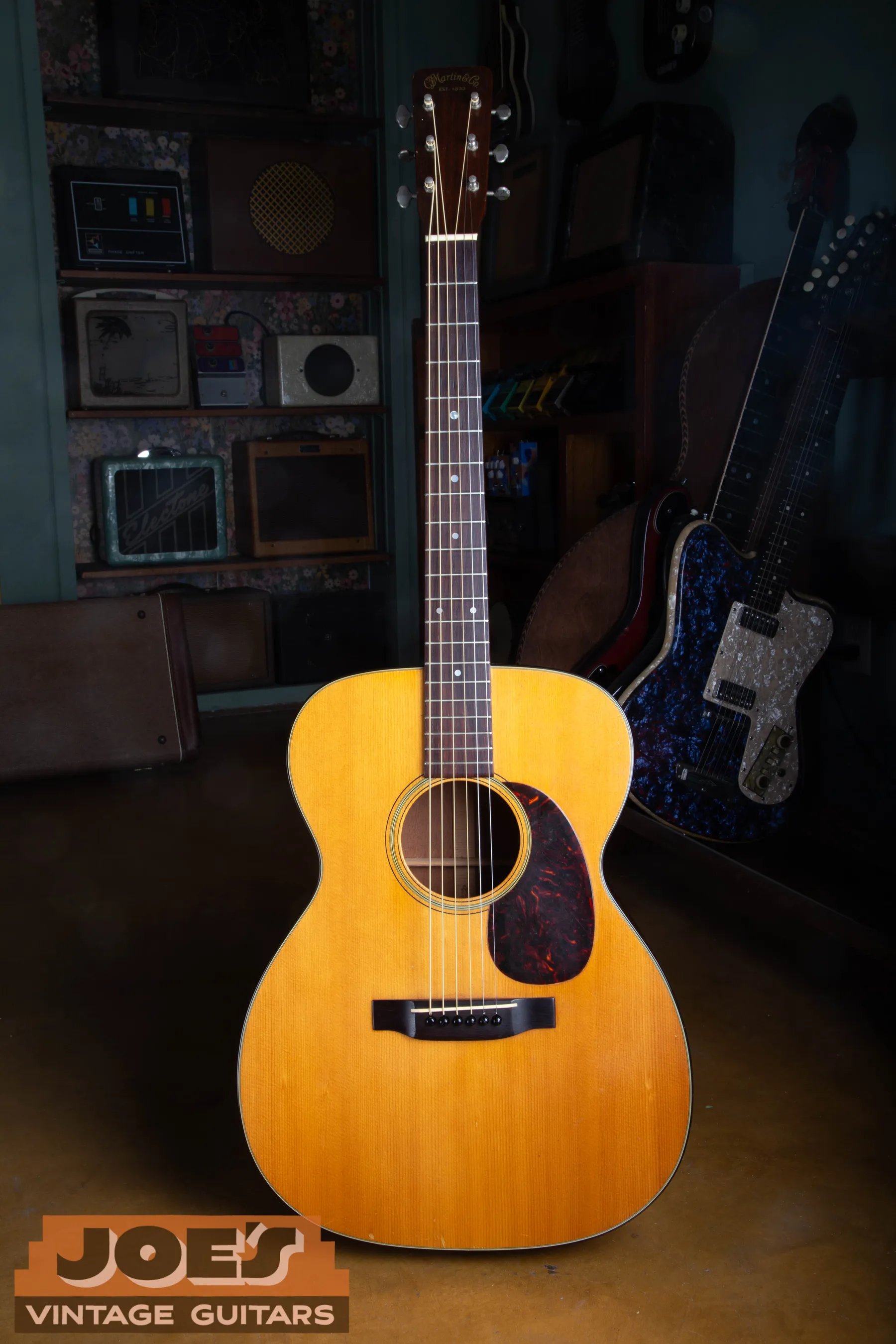
A vintage Martin 000-18 from 1954 to 1959 is estimated at $5,800 to $7,550, while a 1966 to 1969 example is $3,400 to $4,700, assuming excellent, original condition and the original case. Earlier guitars occupy different groups, including the 1934 long-scale transition and wartime brace changes. Start with the 000-18 identification guide if those details aren’t confirmed.
These figures describe estimated retail market value. An offer to buy requires a separate assessment of the individual guitar, its repair needs and the work involved in selling it. A photograph of a clean top can’t establish the condition of the neck joint, bridge plate or back.
This Is An Estimate Of Market Value, Not An Offer To Buy And Not A Guarantee. Market Values Fluctuate; Have Your Specific Item Appraised.
Joe’s November 2026 Estimates
Vintage Martin 000-18 Price Ranges
| Model | Years | Configuration | Estimated Retail Value |
|---|---|---|---|
| 000-18 | 1906 | Maple | $11,500 to $15,300 |
| 000-18 | 1911 to 1917 | Rosewood | $12,000 to $16,000 |
| 000-18 | 1920 to 1922 | Gut, mahogany | $10,550 to $14,100 |
| 000-18 | 1923 to 1931 | Steel | $17,600 to $24,650 |
| 000-18 | 1934 | Early 1934, long scale | $28,050 to $35,600 |
| 000-18 | 1934 to 1938 | 14-fret | $27,700 to $35,200 |
| 000-18 | 1939 | Early 1939, 1 3/4-inch nut | $18,500 to $24,650 |
| 000-18 | 1939 | Late 1939, 1 11/16-inch nut | $14,600 to $19,350 |
| 000-18 | 1940 to 1941 | Standard | $14,100 to $19,350 |
| 000-18 | 1942 to 1943 | Scalloped braces | $14,100 to $19,350 |
| 000-18 | 1944 | Scalloped braces | $11,900 to $15,850 |
| 000-18 | 1944 to 1947 | Non-scalloped | $8,800 to $12,300 |
| 000-18 | 1948 to 1949 | Standard | $7,500 to $9,700 |
| 000-18 | 1950 to 1953 | Standard | $6,900 to $9,050 |
| 000-18 | 1954 to 1959 | Standard | $5,800 to $7,550 |
| 000-18 | 1960 to 1964 | Standard | $4,800 to $6,100 |
| 000-18 | 1965 | Standard | $4,250 to $5,550 |
| 000-18 | 1966 to 1969 | Standard | $3,400 to $4,700 |
| 000-18 | 1970 to 1979 | Standard | $2,850 to $4,000 |
U.S. dollars. Prepared in November 2026 from 2026 annual price-guide ranges, adjusted downward and rounded to the nearest $50. November dates this calculation; these are retail estimates rather than a record of completed November sales. They assume excellent, original condition and the original case and aren’t purchase offers. Repairs, changed parts and market conditions require individual appraisal.
The earliest listed 000-18 rows are included because the pre-1920 Martin value guide has no specific 000-18 price row. Other early Martin models belong there. Gaps in this chart mean a separate appraisal is needed; they don’t imply that an adjacent year’s number applies.
Original OM-18s belong in the OM-18 value guide. Modern recreations, signature editions and Custom Shop builds are outside this vintage chart. A model name containing an older year should be checked against its actual serial date before any range is used.
Early Bodies Through Later Originals
Choose The Right 000-18 Market Group
Unusual Woods And The 12-Fret Guitar
The early maple and rosewood rows describe their named configurations. They aren’t a general allowance for any 000 with unfamiliar wood. For these guitars, dimensions, intended string tension, bridge history and documentation need close review. A later spruce-and-mahogany comparison can be far off even when the model stamp or family description sounds similar.
Long Scale, Neck Width And Original Construction
The early-1934 long-scale row overlaps the broader 14-fret band. Use the correct physical configuration and count the guitar once. The early and late 1939 rows likewise require a neck-width check. Don’t select the highest number simply because the serial falls somewhere inside that calendar year.
On a valuable prewar guitar, a changed top, oversized bridge or extensive finish work can remove the basis for a clean-original comparison. An appraisal should state those differences before arriving at a number. A rare year doesn’t cancel the effect of altered wood.
Wartime And Postwar Brace Groups
The chart separates factory-scalloped and non-scalloped examples into their listed production groups. For a transition-year instrument, get interior photographs before settling on a row. Later brace shaving needs to be disclosed separately; it doesn’t put a postwar guitar into an earlier factory-built group.
Later Guitars And Playing Condition
Postwar 000-18s offer more price groups to compare, but they still vary with originality and repair quality. A playable guitar with a documented reset may be easier to assess than one advertised as untouched with high action and a shaved saddle. The 1970s row covers original production of that period, not a modern recreation of it.
Describe The Work Before Adjusting The Price
What Changes A 000-18’s Worth?
Original Finish
Wear and a refinish are different conditions. Scratches and a worn patch can leave much of the factory surface intact, while a complete refinish replaces it. Have suspected touch-up and overspray assessed by area. Joe’s refinish identification guide explains the evidence, and the refinish value guide addresses its market effect.
Bridge And Top Work
A replacement bridge should be described by its fit, dimensions and the condition of the top beneath it. An oversized footprint can hide earlier damage. Repairs to the internal plate need their own entry in the condition report. A tidy exterior photograph doesn’t disclose an added plate cap, a large patch or previously enlarged pin holes.
Neck Angle And Frets
Document a completed reset, a pending reset and a refret separately. They describe different work. Ask for the remaining saddle height and a side view of the bridge along with action measurements. The neck-reset guide explains why lowering a saddle repeatedly may leave the underlying geometry unresolved.
A condition adjustment isn’t a stack of automatic discounts. A crack beside a shrinking guard, the repair to that crack and a replacement guard may all belong to one repair history. Counting them as unrelated problems can distort the result. Describe what happened, how it was corrected and what remains before comparing the guitar with another example.
Use what lowers vintage guitar value for the broader condition categories. The chart assumes a much cleaner baseline than many guitars that arrive from decades of family use. An instrument outside that baseline can still be desirable, but its price needs to be justified on its actual condition.
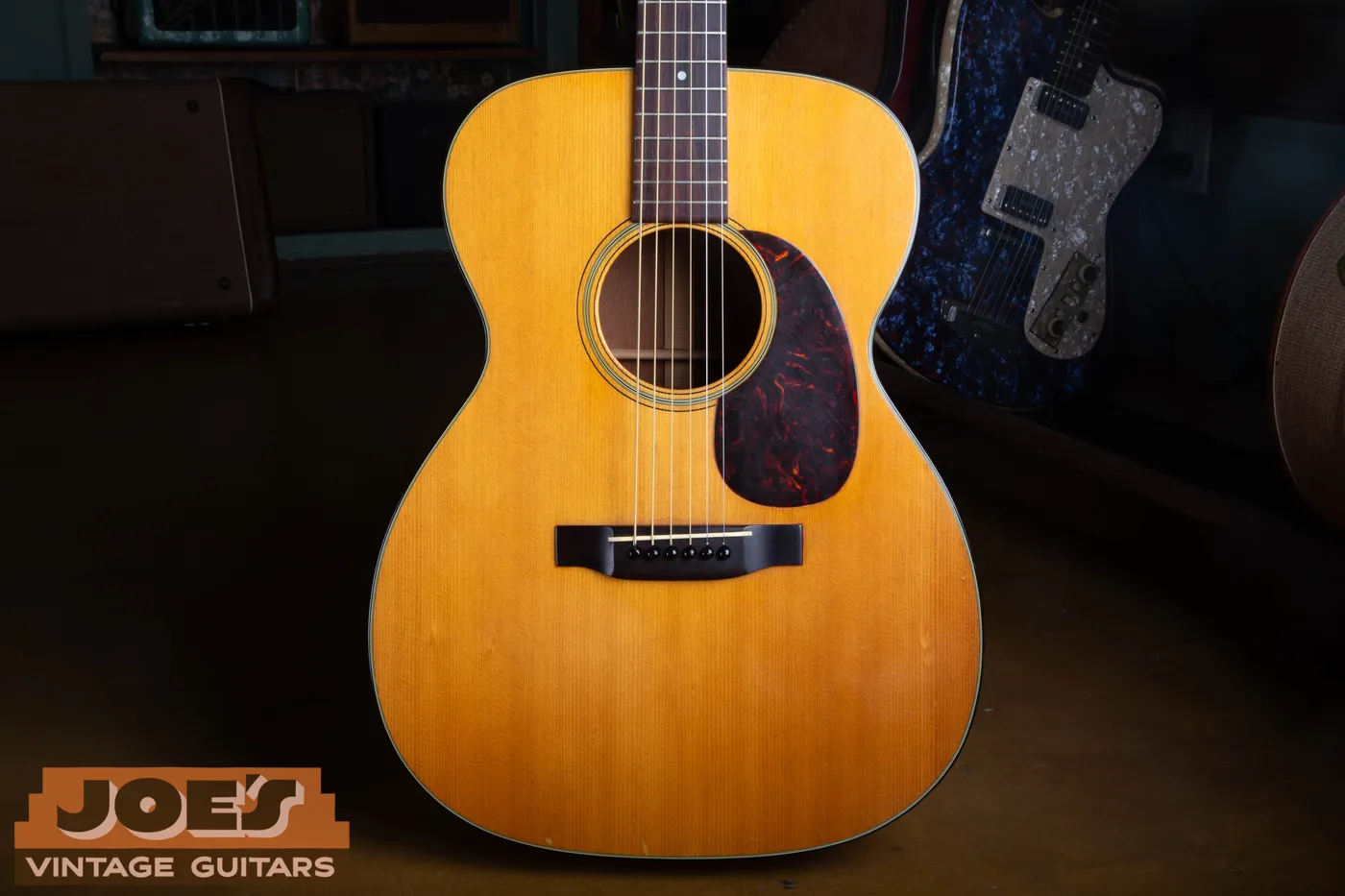
The 1960 and 1951 examples combine clean presentation with different maintenance histories. Include those records with the photographs.
What A Useful Appraisal Record Contains
Compare The Whole 000-18, Including Its Case
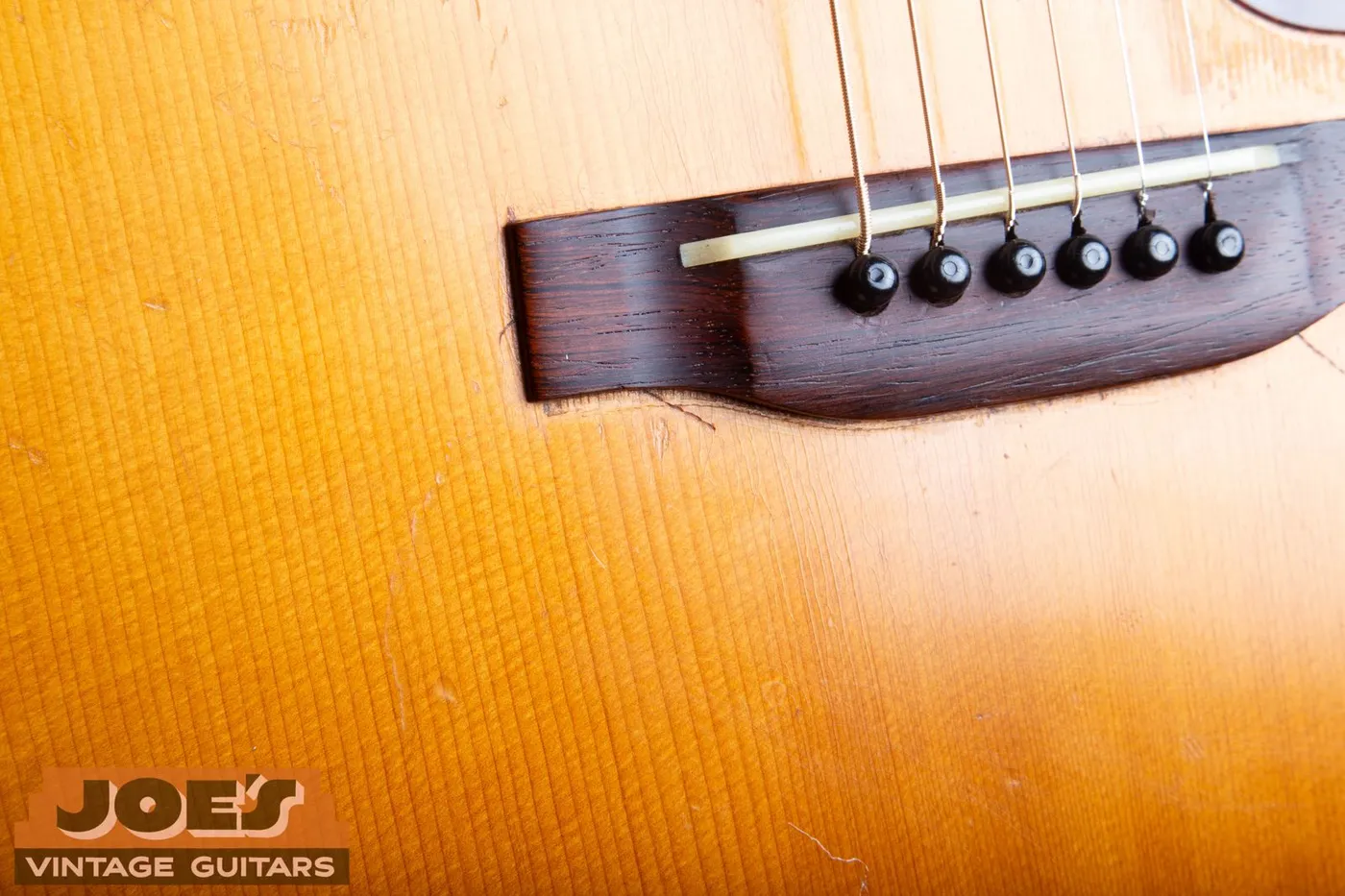
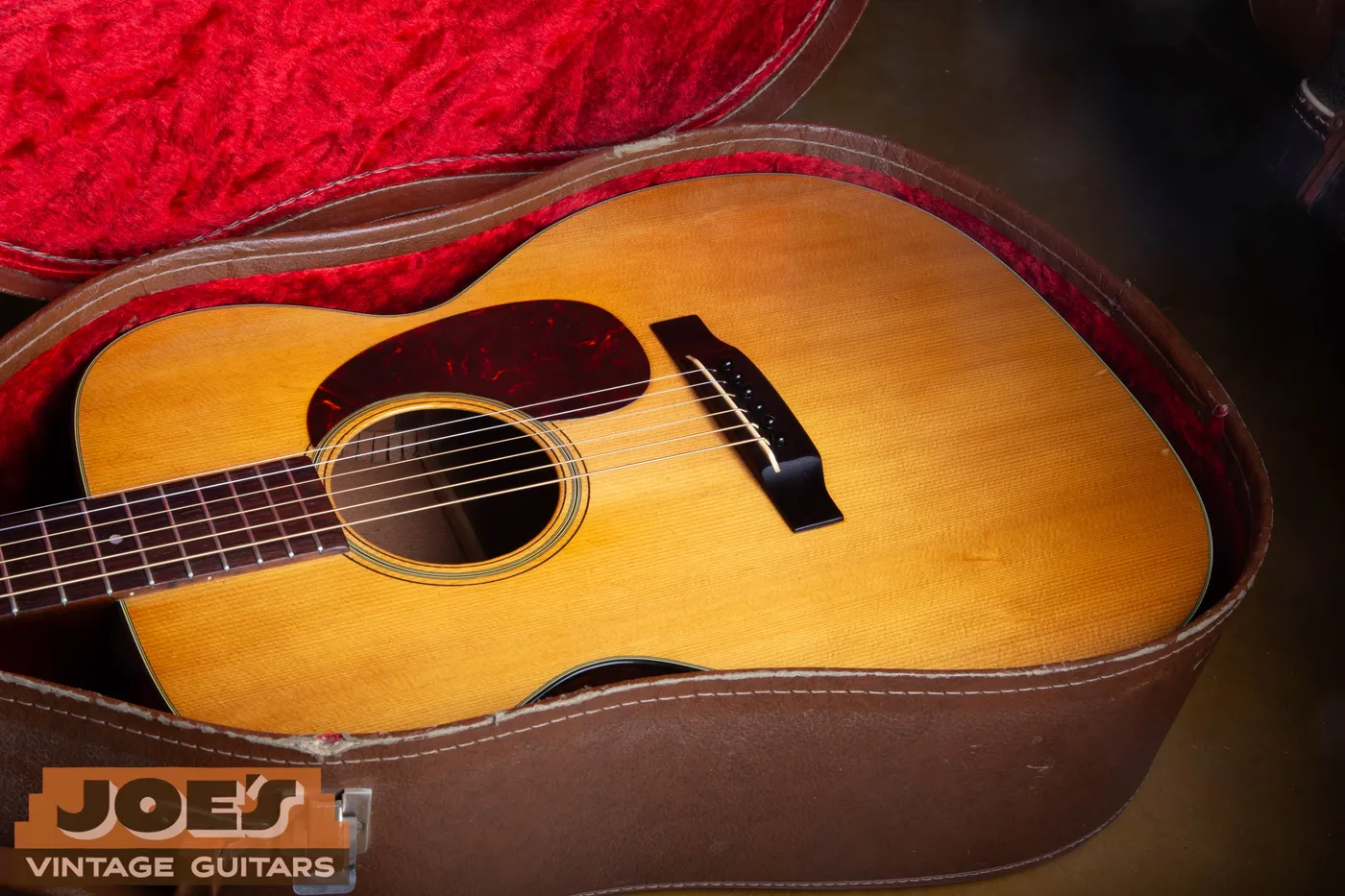
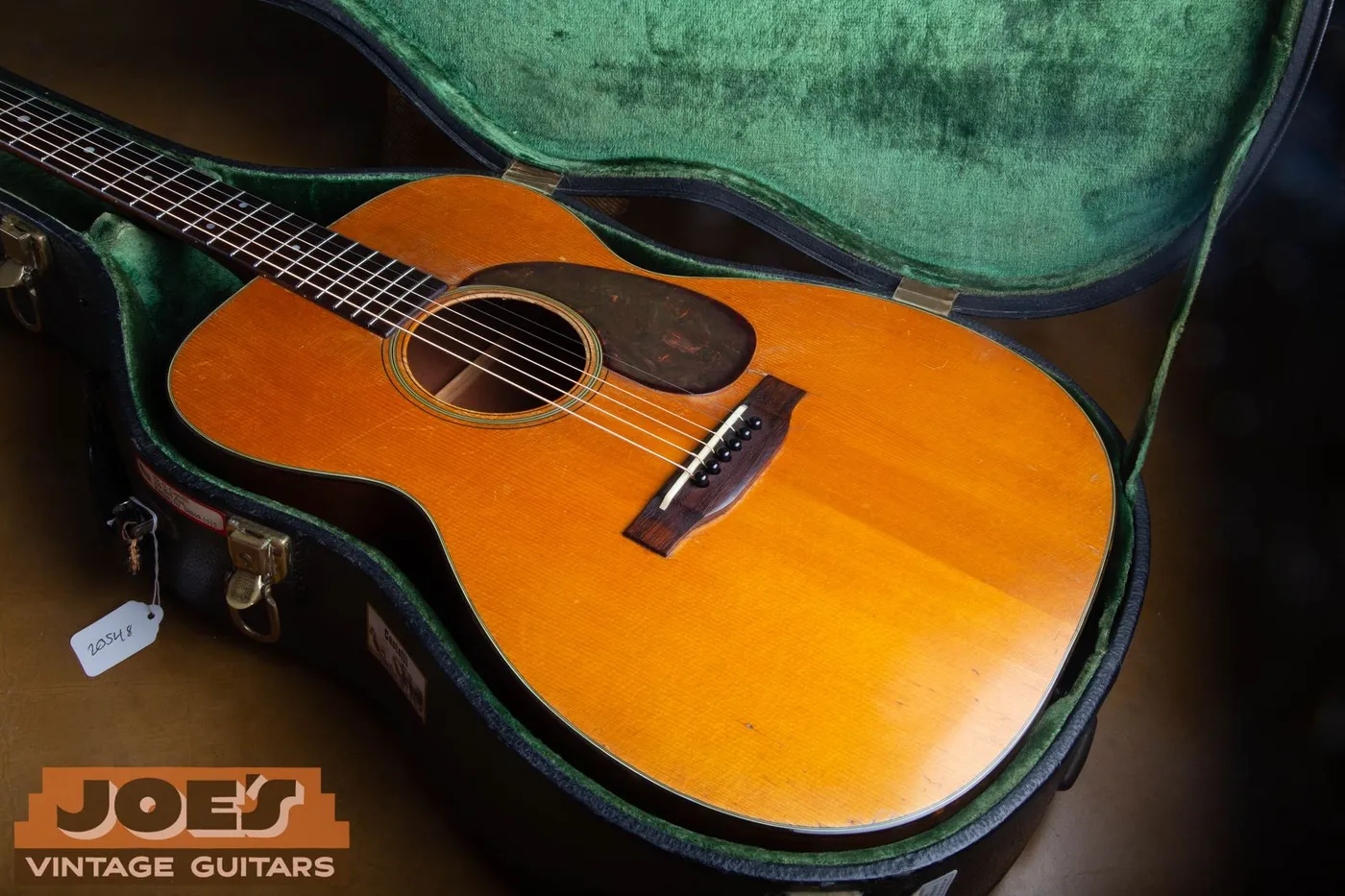
The 1951 one-owner example has a documented neck reset, a reglued original bridge and replacement bone nut and saddle. Its bridge photograph shows the shadow around the footprint. The 1960 guitar was described with original finish and parts and no cracks, but with a reset needed for low action. These records explain why two clean-looking guitars still need individual condition adjustments.
Keep the case with the guitar and photograph its exterior, lining, handle, latches and any markings. A period-looking case isn’t automatically the original case supplied with the instrument. If its history is uncertain, say so. The original-case assumption is part of the listed ranges, and a replacement case should be described plainly.
Receipts, repair invoices and dated family photographs can establish a history that condition photos cannot. Retain the originals and send readable copies. A name written inside a case or a family memory can be a useful lead, but it doesn’t justify a celebrity premium without supporting evidence connecting that person to this instrument.
Get The Assessment Before Cosmetic Work
Should You Repair A 000-18 Before Selling?
Ask for a value assessment before polishing away evidence, replacing a worn guard or ordering a complete refinish. The buyer’s preference may favor preserved original surfaces over a fresh appearance. Joe’s restoration-before-sale guide explains how to separate necessary stabilization from changes made mainly for looks.
If a repairer has already recommended work, include that estimate and the reason for it. A loose bridge, an open crack and an uncomfortable action aren’t interchangeable diagnoses. The appraisal can consider the instrument as it sits and explain which unanswered condition questions prevent a tighter range.
Don’t discard removed tuners, bridge pins or other original parts. Label them with the guitar’s serial and keep the repair invoice alongside them. Their presence doesn’t reverse an irreversible modification, but it helps document what was changed and may allow a future owner to preserve the instrument more accurately.
Photographs And Measurements
What To Send For A 000-18 Appraisal
Show The Complete Front And Back
Use daylight without filters and include the body edges. Add a full-length view of the neck and headstock so the shape and proportions can be checked.
Include The Model, Serial And Scale
Photograph the neck block at an angle that clears the strings. For an early 14-fret guitar, supply the nut-to-twelfth-fret measurement and the number of frets clear of the body.
Add Bridge, Heel And Interior Views
A low side view should show the saddle and bridge height. Include known cracks, the neck heel and any available repairer photographs of the braces or plate.
List Repairs And Ownership Records
State what you know about finish work, neck resets, refrets and replacement parts. Include the case and paperwork, and label anything that is only a family recollection.
Send The Evidence
Get A Value For Your Martin 000-18
Send the photo set through the free appraisal form. I’ll review the production group and condition information with you. If you’re considering a sale, the Martin selling page explains the next steps.
Continue With The Question You Need Answered
000-18 Pricing And Condition Resources
- 000-18 Authentication
Settle the body, scale and construction before using a price band.
- Vintage Guitar Condition
Understand how repairs and changed parts affect comparisons.
- Neck-Reset Symptoms
Separate action complaints from a diagnosis of neck geometry.
Questions AboutMartin Values
Are These 000-18 Prices Offers To Buy?
Which Range Applies To A 1944 000-18?
Do These Figures Apply To A Golden Era Or Authentic?
Should I Refinish A Worn 000-18 Before An Appraisal?
The Last Word
Put The 000-18’s Condition Beside The Price
Choose a row only after confirming the model, year and configuration. Then describe the condition that makes your guitar different from the chart’s assumption. Use the 000-18 authentication guide for unresolved identification questions, or send Joe the photographs for a free appraisal.
This Is An Estimate Of Market Value, Not An Offer To Buy And Not A Guarantee. Market Values Fluctuate; Have Your Specific Item Appraised.