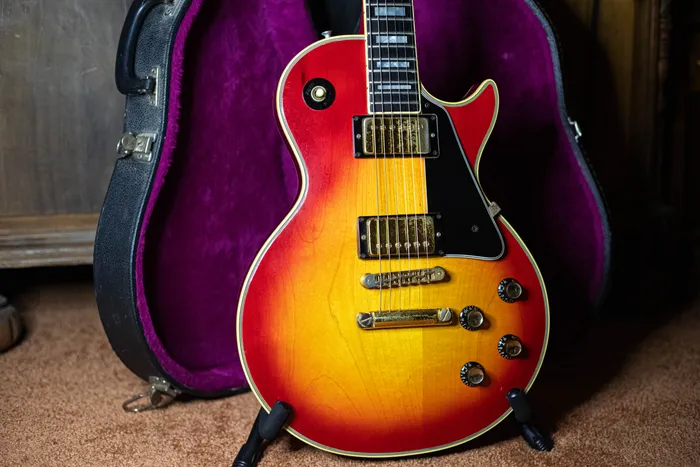
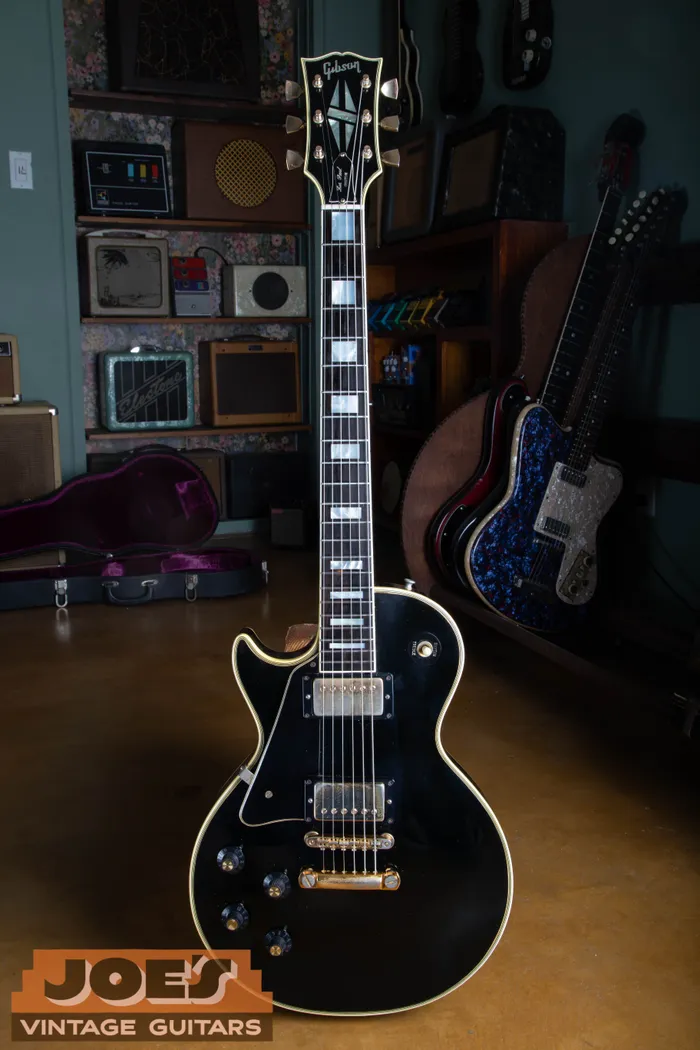
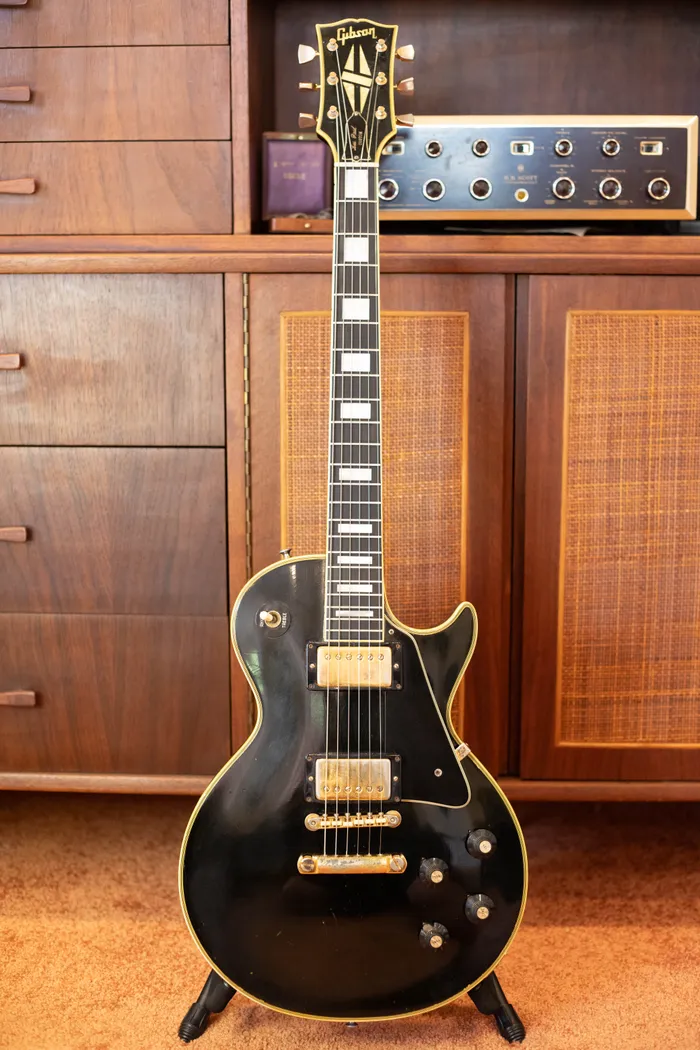
1968 Gibson Les Paul Custom: Specs, Dating And Value
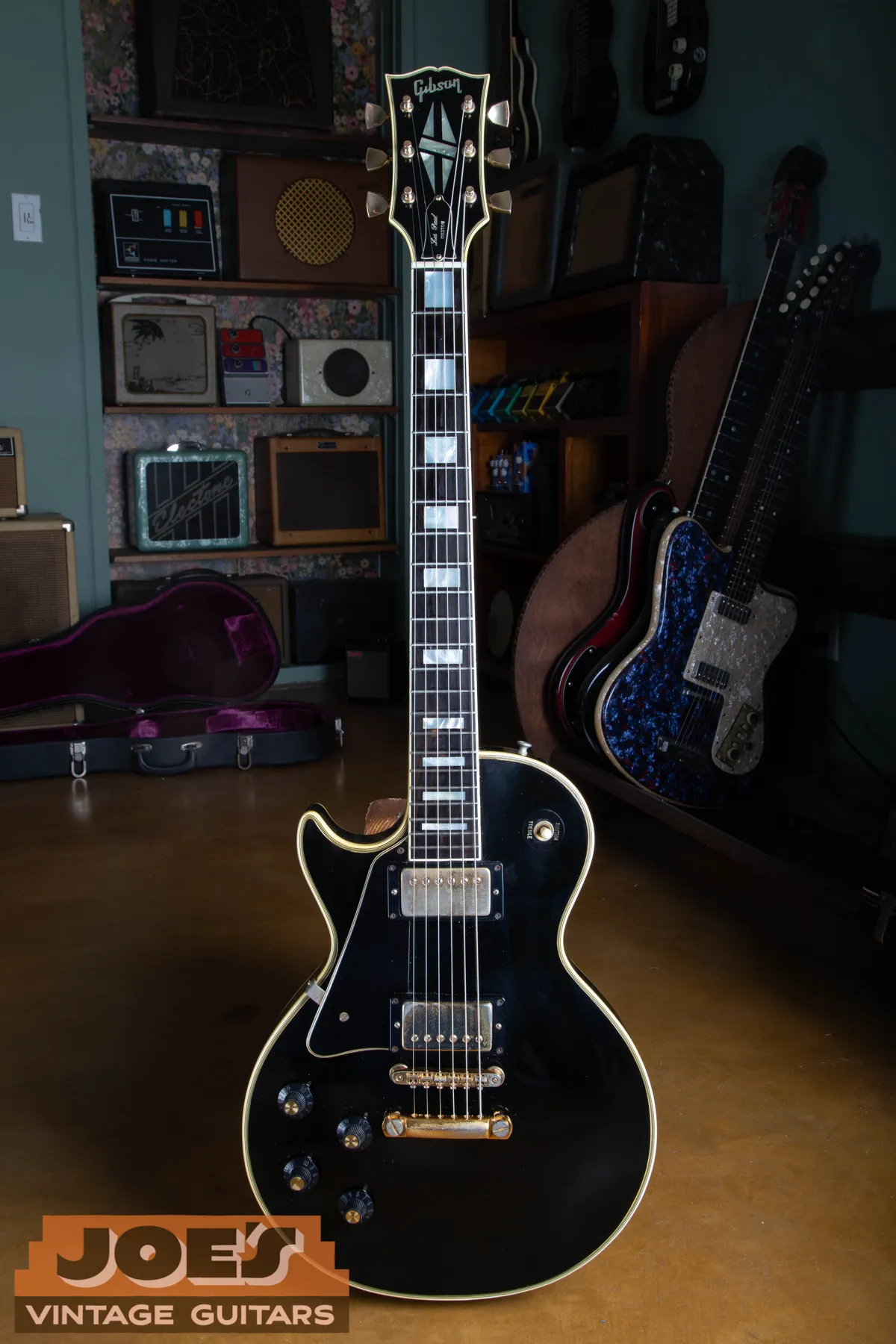
The 1968 Gibson Les Paul Custom has a carved maple top, a one-piece mahogany back and neck, and two humbucking pickups. It returned before the construction changes of 1969 and 1970, making it the starting point for dating these early Customs.
Gibson Les Paul Custom Reintroduction In 1968
Gibson brought the single-cutaway Les Paul Custom back into production in 1968. Its black finish, gold-plated hardware and decorative binding, the contrasting trim around the edges, gave it the familiar Black Beauty appearance. Underneath that finish, the body combined a carved maple top with a mahogany back.
This guitar came before the ownership period usually called the Norlin era, which began in 1969. The 1968 to 1986 Les Paul Custom guide explains that history and the later construction changes. Here, the focus is on recognizing the 1968 model and distinguishing it from the early 1969 guitars that can look very similar.
If you're trying to identify a particular instrument, you can send photographs for a Custom appraisal. A full front view and both sides of the headstock provide a useful starting point.
1968 Gibson Les Paul Custom Specifications
The regular 1968 Custom has an ebony fingerboard, the dark playing surface attached to the front of the mahogany neck. Large pearl blocks mark the fret positions, and the headstock carries the Gibson name above a split-diamond inlay. Gibson's June 1968 brochure specifies 22 extra-low frets and a nominal 24¾-inch scale length, the vibrating length of the open strings.
Its two humbuckers sit beneath the strings near the neck and bridge. These pickups use two coils to reduce electrical hum. Each has its own volume and tone control, with black witch-hat knobs and gold-colored inserts. The three-way pickup switch selects the neck pickup, bridge pickup or both.
The brochure lists a body length of 17¼ inches and a width of 12¾ inches, with seven alternating binding strips around the top and five around the back. Ebony was the regular finish, paired with gold hardware. These describe the model's original appearance; the construction and component dates below help establish when a particular guitar was built.
1968 Les Paul Custom Body, Neck And Long Tenon
The body has a carved maple top, often called a cap, glued over a one-piece mahogany back. When someone describes a 1968 Custom as having a one-piece body, they're usually referring to that mahogany back. The maple top is still a separate piece of the body assembly.
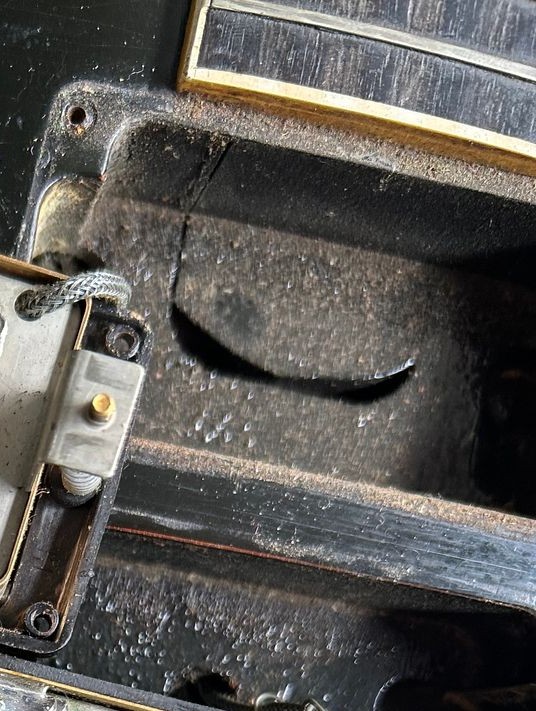
The neck shaft is also one piece of mahogany. At the body end, a wooden extension called the tenon fits into a recess and is glued in place to join the neck to the body. On the early long-tenon design, that extension reaches into the opening underneath the neck pickup.
In the photograph below, the rounded tongue of neck wood projects into the pickup cavity. That's the visible part of the long tenon. The rest of the joint is hidden inside the body.
Early 1969 Customs can have the same one-piece back, one-piece neck and long joint. These features identify the early construction, but don't distinguish the two years by themselves. The 1968 to 1970 neck-joint comparison shows how the later, shorter form differs.
The Control Cavity In An Early Les Paul Custom
The control cavity is the hollowed-out space beneath the plastic cover on the back of the guitar, where the volume and tone controls are mounted. On the early construction, its walls are relatively straight and its wooden floor is fairly flat. During early 1969, a different shape appears with a small internal shelf or stepped ledge near the bottom.
Those descriptions refer to the wood around the electronics, not the outline of the plastic cover. Existing cavity photographs can add another clue when a guitar otherwise fits either 1968 or early 1969. The shape doesn't establish an exact assembly month.
1968 Les Paul Custom Headstock, Volute And Gibson Logo
No Volute On A 1968 Les Paul Custom
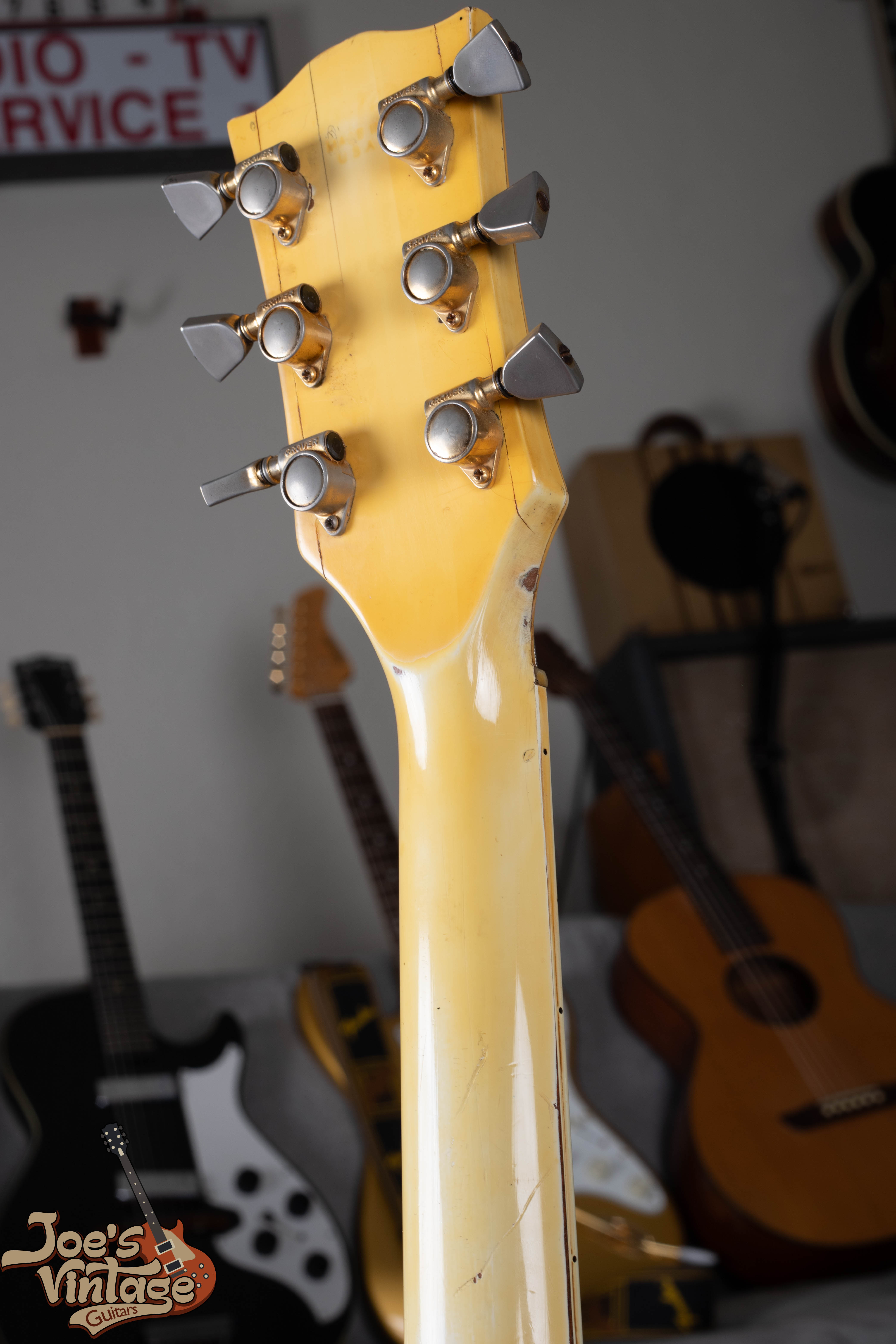
A volute is a raised area of wood on the back of the neck where it meets the headstock. It's behind the nut, the slotted piece that supports the strings before they reach the tuners. A factory 1968 neck has a smooth transition here, without that raised ridge.
The photographs compare a smooth Les Paul neck with the pronounced volute on a later Custom. On the smooth neck, the curve continues into the headstock without an added mound of wood. The later neck has a visible projection at that junction. Small volutes began appearing late in 1969, before the larger forms seen later in the 1970s.
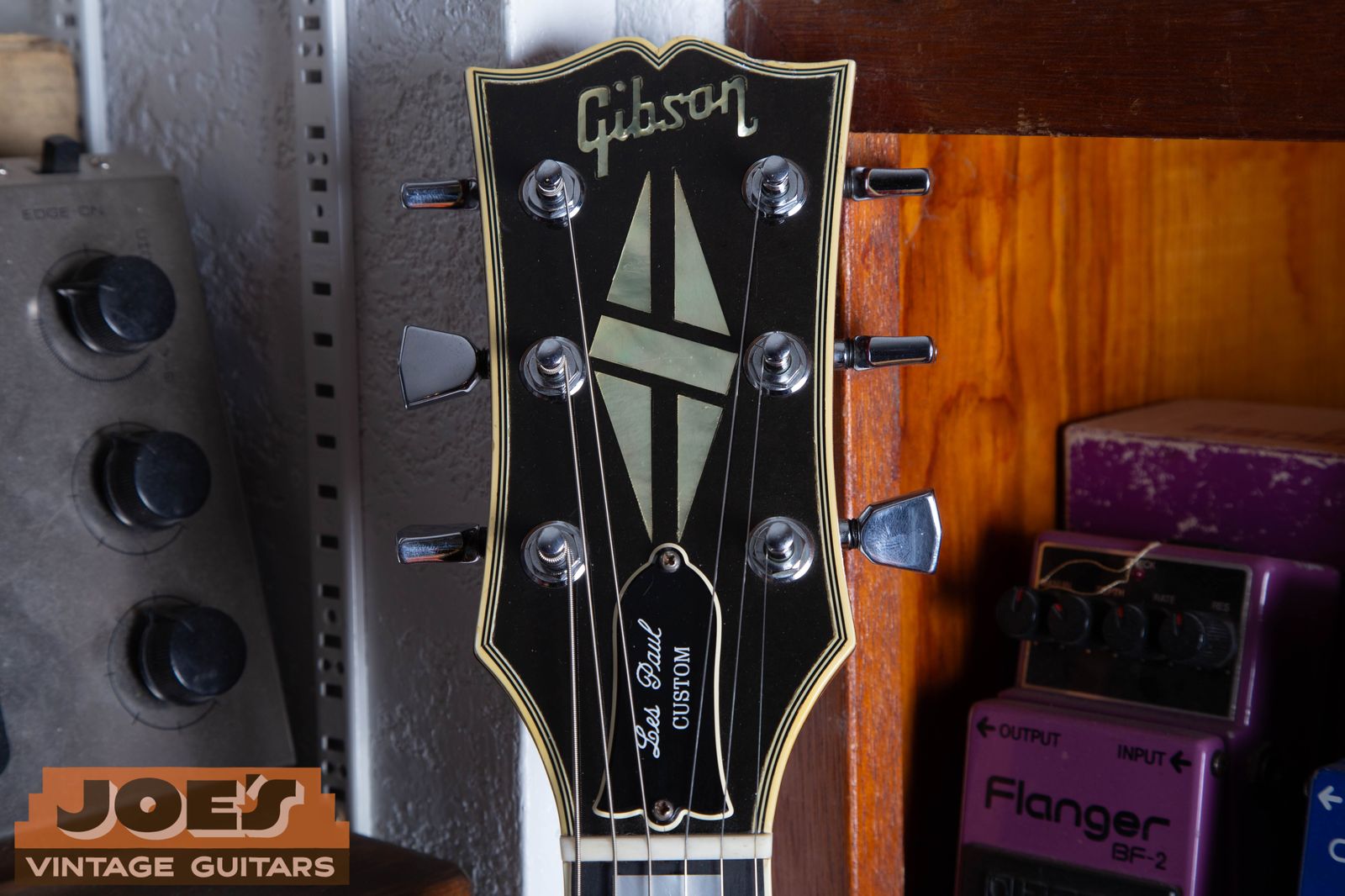
A 1968 Custom also lacks a factory Made in USA stamp. Gibson introduced that marking during 1970. Its headstock tilts back about 14 degrees from the neck, and the black headstock face has a wood veneer beneath the finish.
Dotted And Dotless Gibson Logos
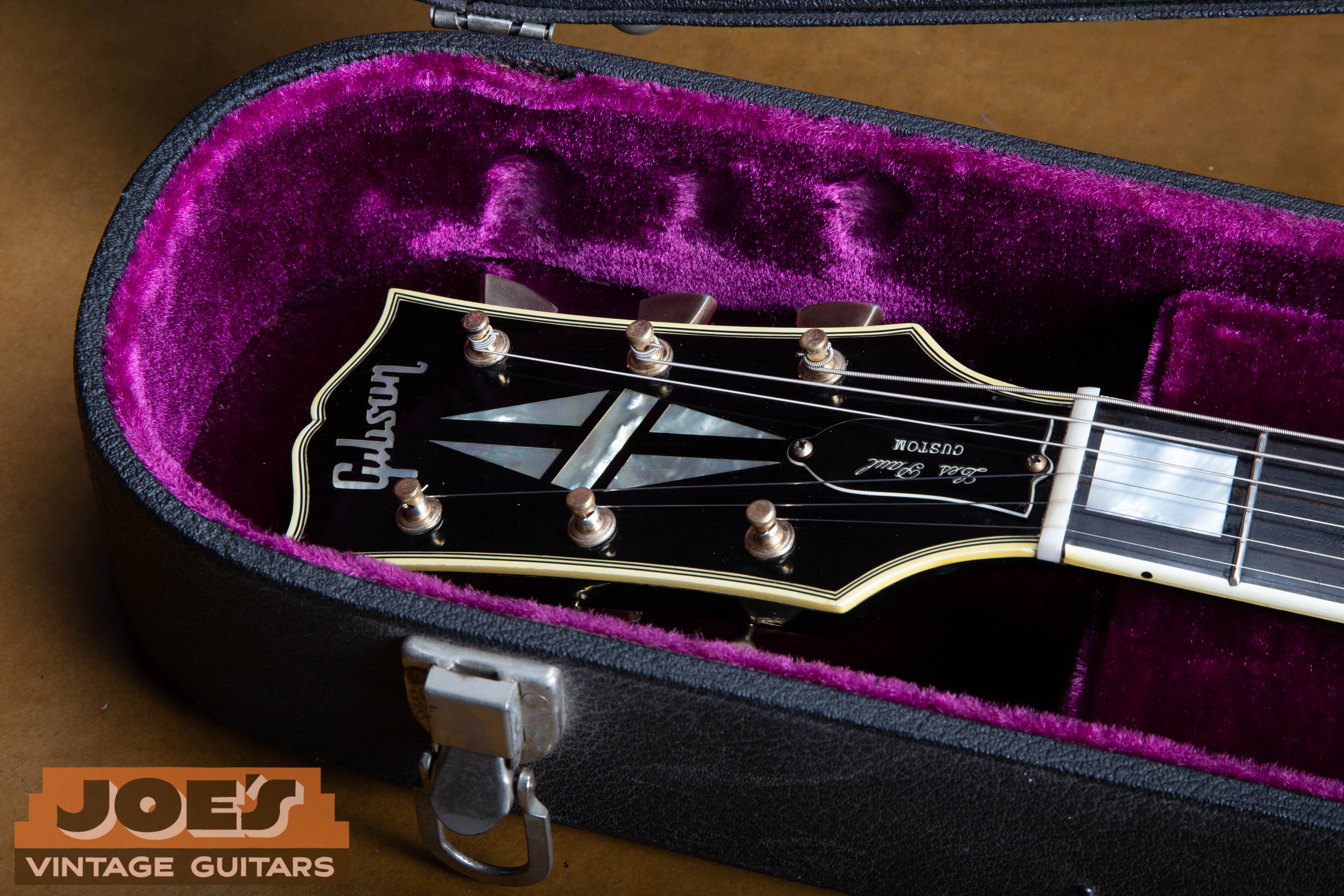
The small pearl dot above the i in Gibson is another dating clue. Earlier 1968 Customs can have the dot. The usual late-1968 through 1971 pattern is dotless, with the dot returning around 1972. There are overlapping examples, so the logo works best alongside the neck construction, serial and original component dates.
The headstock photographs below show where to look for the dot and how the two styles differ. The Gibson logo chronology covers the lettering changes in more detail. A replaced headstock veneer or refinishing can alter this evidence.
1968 Les Paul Custom Waffleback And Grover Tuners
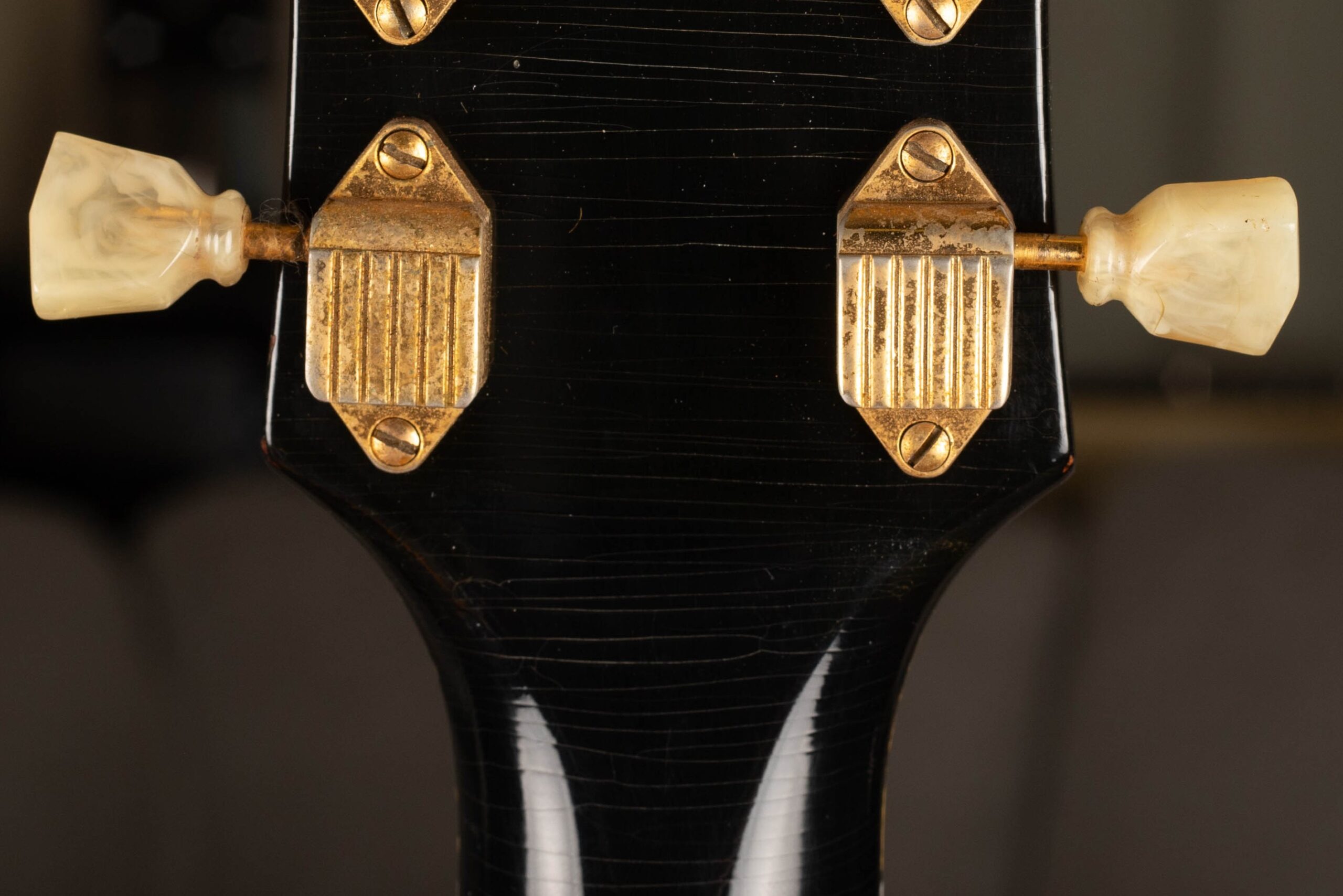
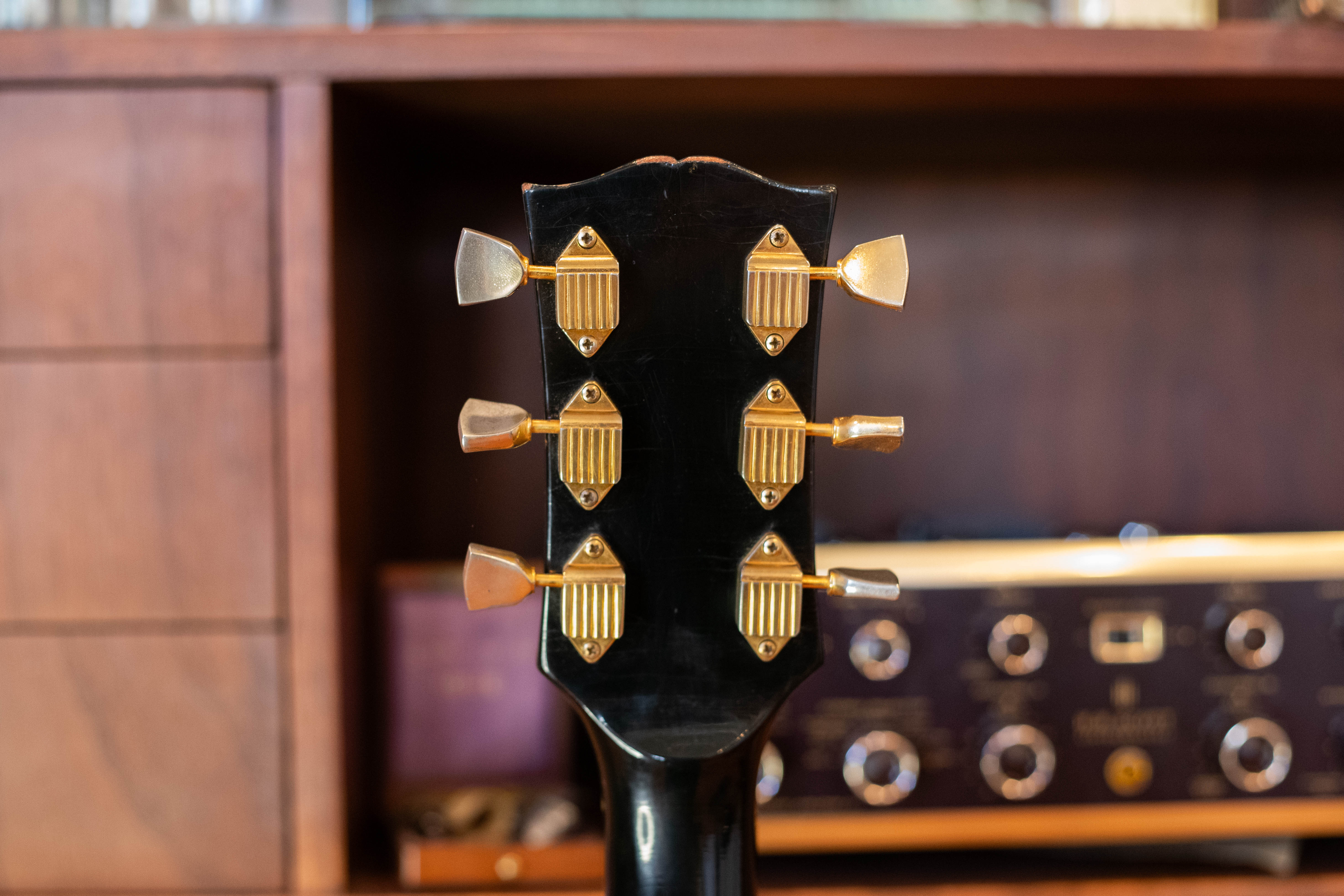
The tuners are the geared machines on the headstock that wind the strings and set their pitch. Gold Kluson Super tuners, usually called wafflebacks, are the familiar 1968 Custom type. Their rear housings have a ribbed pattern, and their metal buttons have a keystone shape. The detail photograph below shows this early Custom tuner design.
Some 1968 Customs were fitted with Grover Rotomatics. These have rounded enclosed gear housings that look different from the ribbed wafflebacks. Grovers were also a common later replacement, so the brand alone doesn't establish whether the set left the factory on that guitar.
The 1974 headstock in the volute comparison above shows the round Grover housings. On a particular 1968 Custom, mounting marks and the guitar's history help assess whether its set was installed at the factory or later.
An earlier set can leave extra screw holes, filled holes or marks around the string posts. The Gibson tuner installation guide explains those clues. For the later Gibson-branded enclosed tuners, see the illustrated Custom tuner comparison.
1968 Les Paul Custom Pickups, Bridge And Frets
The humbuckers used in this period are commonly called Patent Number pickups, after the patent label on the metal plate underneath them. You may also see the name T-Top. That describes a molded T on the plastic bobbin around which the pickup coil is wound. A pickup can have a Patent Number label and T-Top bobbins, so the names describe different details of the same assembly.
The gold cover hides the bobbins. A photograph of the underside can show the label and wiring without removing that cover. The Gibson pickup identification guide explains the markings and construction.
The bridge is an ABR-1 Tune-O-Matic, the narrow metal assembly beneath the strings near the bridge pickup. Each string rests on an adjustable saddle. Behind it, a separate stopbar tailpiece anchors the string ends. The ABR-1 reference shows its mounting posts, saddles and retaining wire.
The Custom's very low frets gave it the Fretless Wonder nickname. It does have frets, but they're low enough to give a different feel from taller modern fretwire. A later refret replaces those wires and can change how the guitar plays while leaving its original neck and body intact.
1968 Les Paul Custom Serial Numbers And Pot Codes
The serial number is impressed into the back of the headstock. Gibson reused some number ranges, so a lookup may return more than one year. The Gibson serial number guide explains the different systems and why a six-digit number from this period needs supporting evidence.
The earliest returning Les Pauls appear in the 501xxx to 505xxx group. Here, each x stands for another digit. The following 506xxx to 561xxx construction group spans late 1968 into early 1969. These are observed groups across the returning Les Paul family, rather than a complete Custom-only list.
Dates on the volume and tone controls can help narrow that overlap. The electrical component underneath each knob is a potentiometer, usually shortened to pot. Manufacturers often stamped a date code into its metal casing.
For example, a CTS code of 1376837 means week 37 of 1968: 137 identifies CTS, 68 is the year and 37 is the week. This is an example of how to read the format. An original pot must have been made before the guitar was assembled, but a pot manufactured in 1968 could still have been installed in 1969.
The Gibson pot-code guide explains the markings and how the wiring can reveal replacements. Match original component dates with the neck, body, logo and serial, using the 1968 vs 1969 vs 1970 comparison. Factory records or contemporary paperwork can help if the guitar still fits both 1968 and early 1969.
1968 Custom Production, Original Price And Cases
The published Gibson shipping table lists 433 Les Paul Customs in 1968, compared with 2,353 in 1969. Those figures count recorded shipments rather than surviving guitars.
The June 1968 list priced the Custom at $545 without a case. The shaped 0535 Faultless plush-lined case cost $73; the 1237 oblong case was $52. Orange-lined black cases belong to the early comparison, and both shaped and oblong forms need to be considered.
A period case adds to a complete package, but it can have been paired with the guitar later. Compare its shell, handle, latches and lining with the Gibson case guide, and keep any original invoice or dealer paperwork with it.
What Is A 1968 Les Paul Custom Worth?
Our Les Paul value guide, checked in October 2026, gives a broad US retail estimate of $12,000 to $18,000 for 1968 to 1969 Customs in excellent, all-original condition with the correct case. That is a condition-specific guide range, not a price for every black Custom carrying a 1968 attribution.
For a 1968 example, confirm the date and original construction before comparing prices. An original finish, unrepaired headstock, original pickups and undisturbed hardware support a different comparison from a refinished or repaired guitar. A refret affects the low-fret feel and originality; its workmanship should be described rather than hidden behind a general condition grade.
1968 Les Paul Custom Questions
Should A 1968 Les Paul Custom Have A Volute?
No. Its original neck has a smooth transition into the headstock behind the nut. Small volutes appear late in 1969. A guitar described as a 1968 with a volute needs its date and neck history checked.
Can A 1968 Les Paul Custom Have Grover Tuners?
Yes. Some 1968 Customs have factory-fitted Grover Rotomatics. Grovers were also installed as replacements, so their mounting holes and the guitar's history help establish whether a particular set is original.
Should The Gibson Logo Have A Dot Over The I?
Earlier 1968 Customs can have the dot. Dotless logos are the usual pattern from late 1968 through 1971, with the dot returning around 1972. Transitional examples overlap, so the logo alone can't prove the year.
Does A 1968 Les Paul Custom Have A Pancake Body?
The regular 1968 Custom has a one-piece mahogany back beneath a separate maple top. The pancake back, with a thin maple layer between two thicker mahogany sections, appears later in 1969.
Can A Long Tenon Prove A Custom Is From 1968?
A long tenon also appears on early 1969 Customs. It identifies the early neck-joint construction, but the serial, original pot dates and other features are needed to distinguish the two years.
Is A 1968 Les Paul Custom A Norlin Guitar?
It predates the 1969 ownership change that begins the usual Norlin period. The 1968 model is included in the wider guide because its construction continued into early 1969, before Gibson introduced the later changes.
Get A 1968 Les Paul Custom Appraisal
Send full front and back views, the headstock, serial, case and any existing cavity photographs for a 1968 Custom appraisal. Include known repairs and the guitar’s history. You can also speak with Joe Dampt at (602) 900-6635.