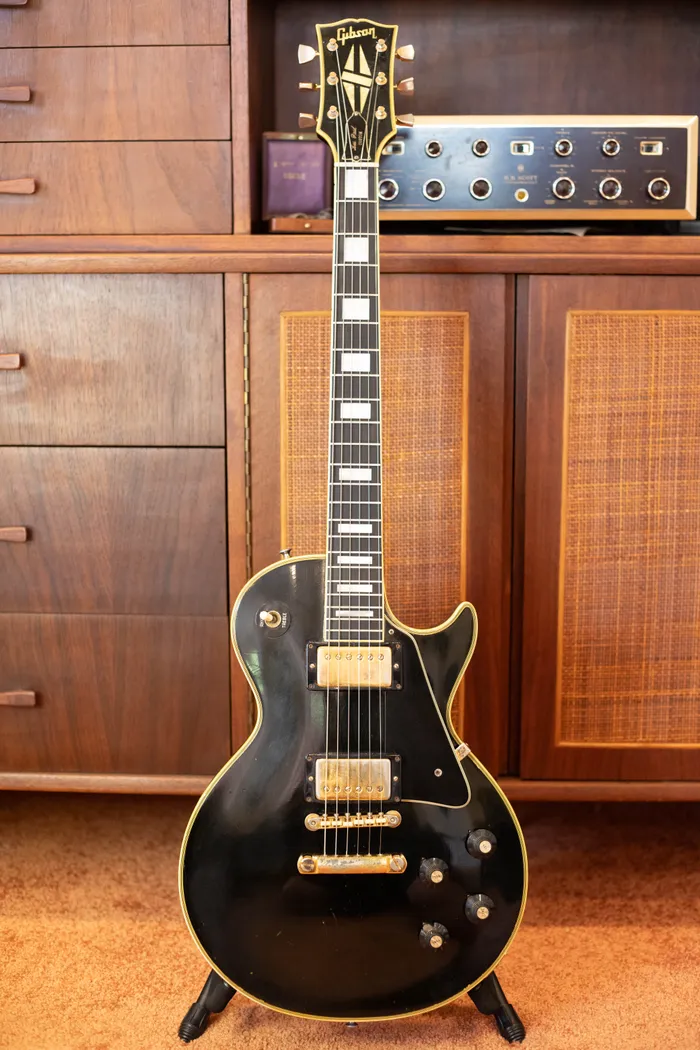
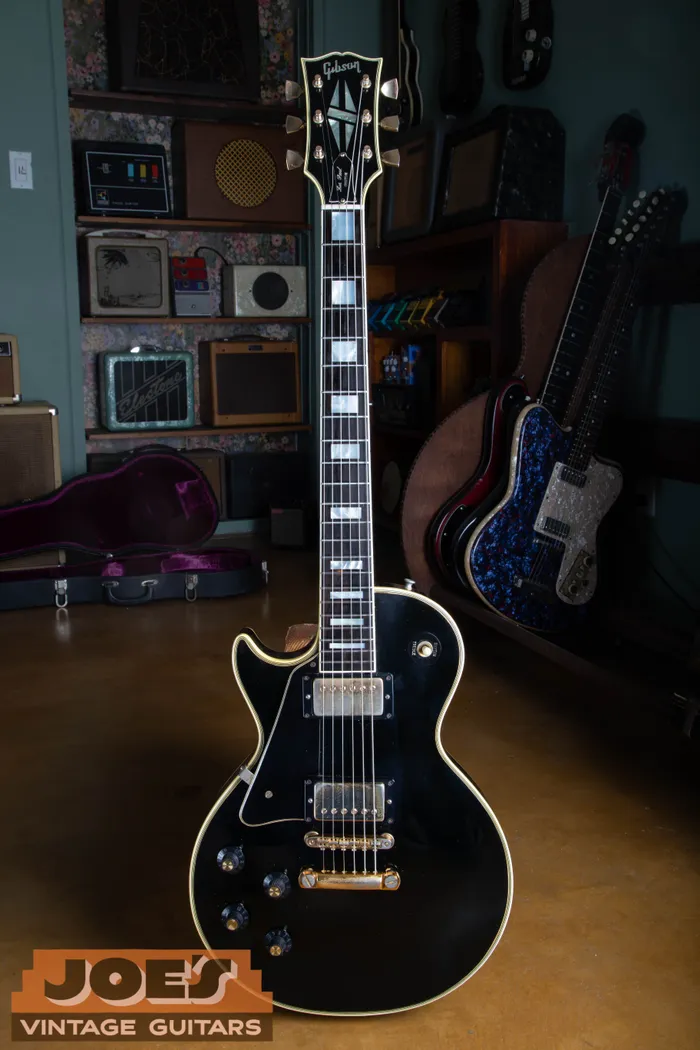
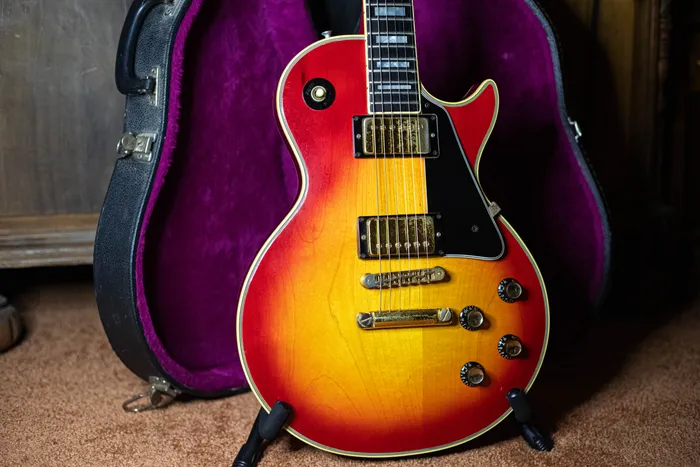
1968 Vs 1969 Vs 1970 Les Paul Custom: Dating Guide
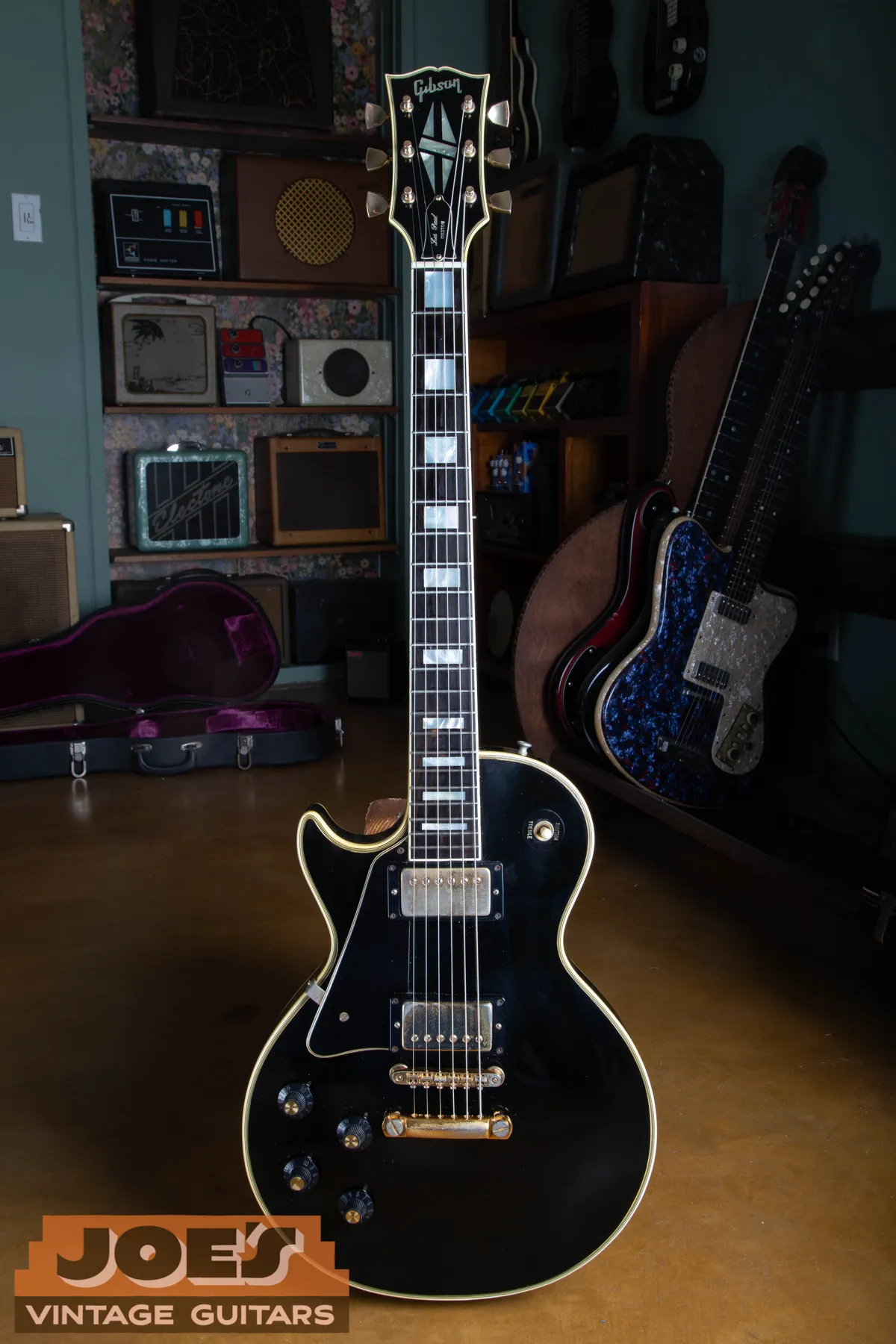
Dating a 1968, 1969 or 1970 Les Paul Custom takes a combination of clues. Early 1969 guitars can resemble 1968, while late 1969 can overlap 1970. Body layers, neck joints, headstock details and original component dates help separate them when the serial number can't.
How To Date A 1968, 1969 Or 1970 Les Paul Custom
The difficulty is that Gibson changed these guitars gradually. The 1968 Custom starts with a one-piece mahogany back and neck. During 1969, the body layers, neck assembly and neck joint change at different points. By 1970, the regular construction combines a pancake body and a three-piece mahogany neck.
Gibson also reused serial-number ranges. A lookup can return more than one year, and several construction features occur in adjacent years. The most convincing date is the one supported by the original features together, rather than a single number or part.
The explanations and photographs below show what each clue means, followed by a side-by-side comparison and worked examples. For the full specifications and original prices, open the 1968, 1969 or 1970 Custom guide. You can also send photos for help dating your Custom.
If you're still identifying the model, the Gibson Les Paul dating guide explains how the Custom differs from the Standard, Deluxe and other Les Pauls.
One-Piece And Pancake Les Paul Custom Bodies And Necks
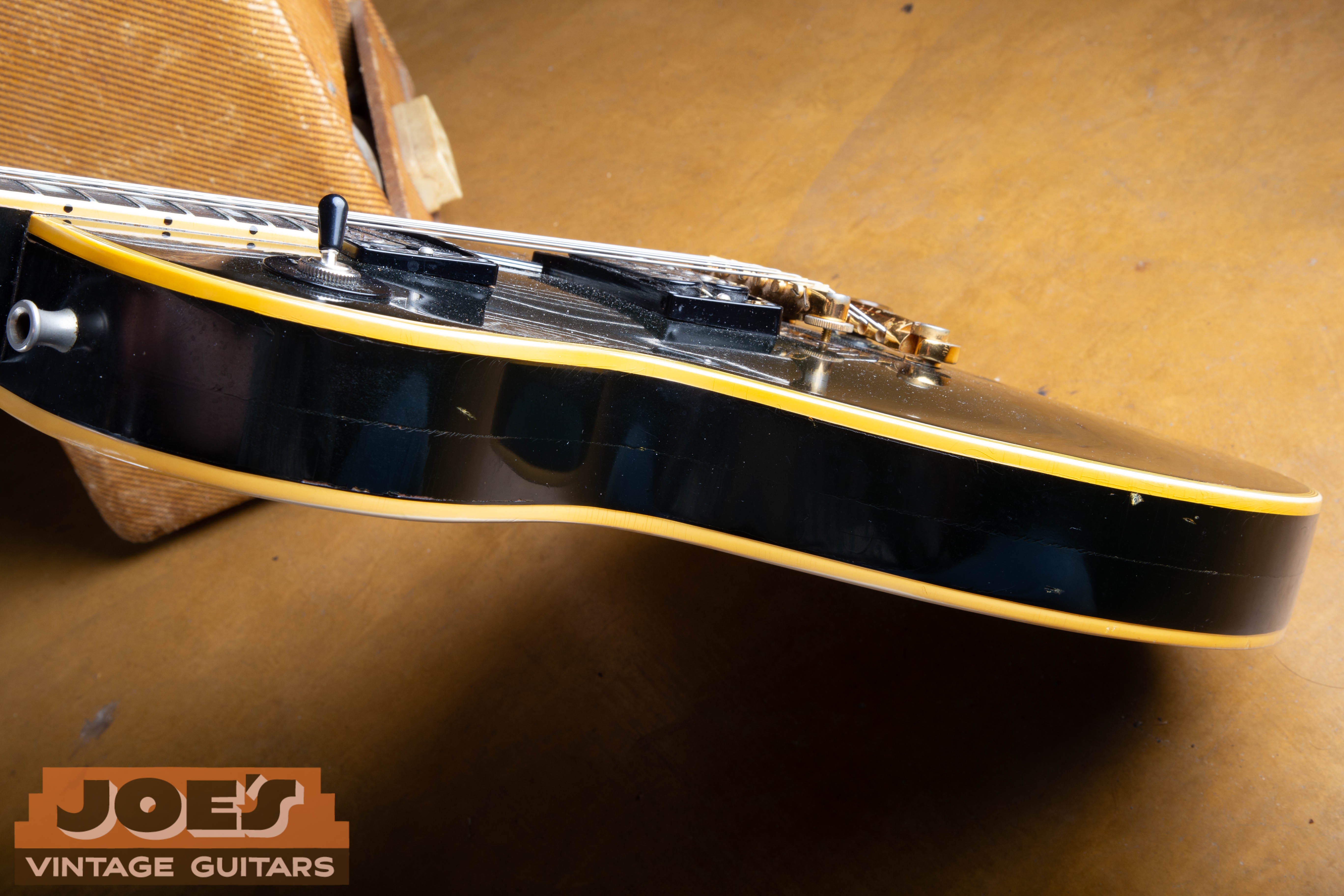
The regular Customs in this comparison have a carved maple top, called a cap, over a mahogany back. A 1968 or early-1969 guitar has a one-piece mahogany back. That is the part meant by the usual shorthand one-piece body; the maple top is still separate.
Some early-1969 bodies add a thin maple sheet directly beneath the cap while retaining the full one-piece back. This upper crossbanding appears around the 535xxx to 537xxx portion of the observed early serial group, with each x representing another digit.
On a true pancake body, the thin maple sheet is farther down, between two thick mahogany sections. The carved maple cap sits above that layered back. This construction appears late in 1969 and is the regular pattern in 1970.
The position of the thin layer separates the two designs. A line around the side may help locate it, but black lacquer can hide the wood. A side-by-side join in the back is a different type of seam. The Gibson body construction guide illustrates the layer arrangement.
How The Neck Construction Changes
The neck changes on a separate schedule. A one-piece neck has one main piece of mahogany in its shaft. A three-piece neck has three long pieces joined side by side. The joins run along the neck, while the ebony fingerboard is attached to the front of either construction.
One-piece mahogany necks continue into spring 1969; three-piece mahogany necks are documented by May. A three-piece neck can therefore be paired with a one-piece back before the pancake body appears. The neck construction photographs show the lengthwise joins.
What The Control-Cavity Shape Means
The control cavity is the recess beneath the rear plastic cover, where the volume and tone controls sit. The early shape has relatively straight walls and a flat wooden floor. During early 1969, a shape with a small internal shelf or stepped ledge near the bottom appears.
That difference concerns the wood cutout around the electronics. It can support the early construction sequence, but isn't an exact month code. It's useful when existing cavity photographs show the shape clearly enough to compare.
1968 To 1970 Les Paul Custom Long And Transitional Tenons
The tenon is the extension of neck wood that fits into the body and is glued in place. Part of it can be seen inside the opening beneath the neck pickup. On the early long-tenon joint, a tongue projects into that cavity.
The long tenon is found on 1968 and early 1969 Customs. A shorter transitional joint appears around late April and May 1969, with overlapping neck and body assemblies. Sellers sometimes call this later form a short tenon, so the name is best accompanied by a photograph.
In the paired views below, the shorter 1969 joint ends near the fingerboard-side wall. The long tenon extends farther into the cavity with a rounded tongue. The photographs are taken at different angles, but both show where the neck wood ends.
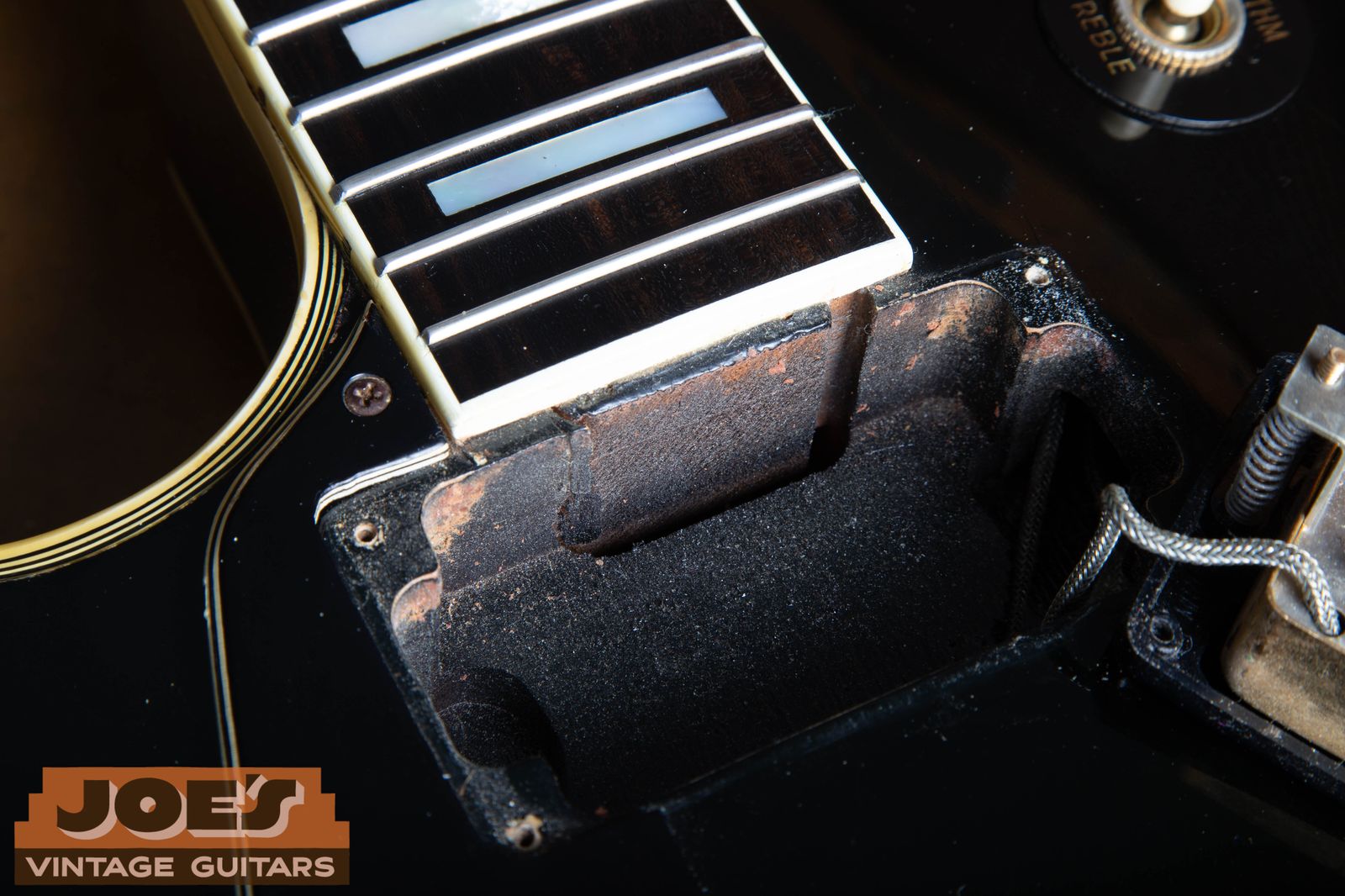
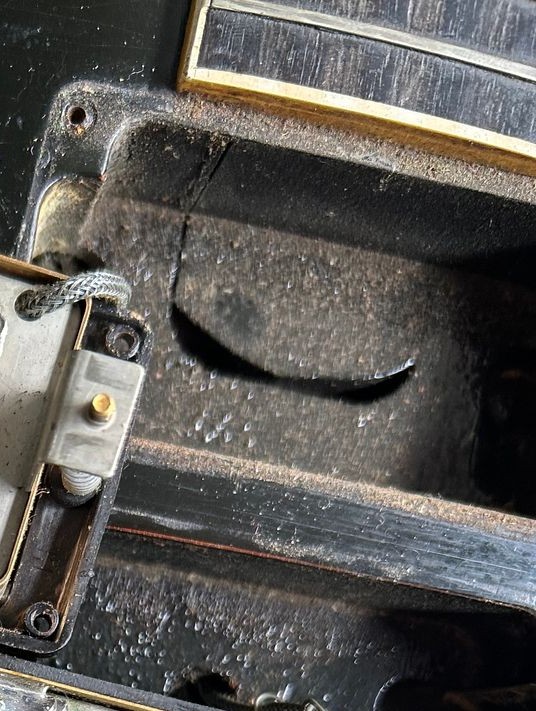
The cavity itself may extend beyond the tenon. Follow the wood of the neck rather than assuming that the full empty opening is part of the joint. The Gibson neck-joint guide explains the construction in more detail.
Les Paul Custom Volutes, Gibson Logos And Made In USA Stamps
No Volute, Small Volute And Later Volute Shapes
A volute is a raised area of wood behind the nut, where the neck meets the headstock. The nut is the slotted piece supporting the strings before the tuners. A 1968 or early-1969 neck flows smoothly through this area without a volute.
A small swelling appears late in 1969 and can continue into early 1970. Later Customs can have a more pronounced ridge. The photographs compare a smooth neck with a larger volute on a 1974 Custom; the latter shows the shape clearly, rather than representing the small late-1969 version.
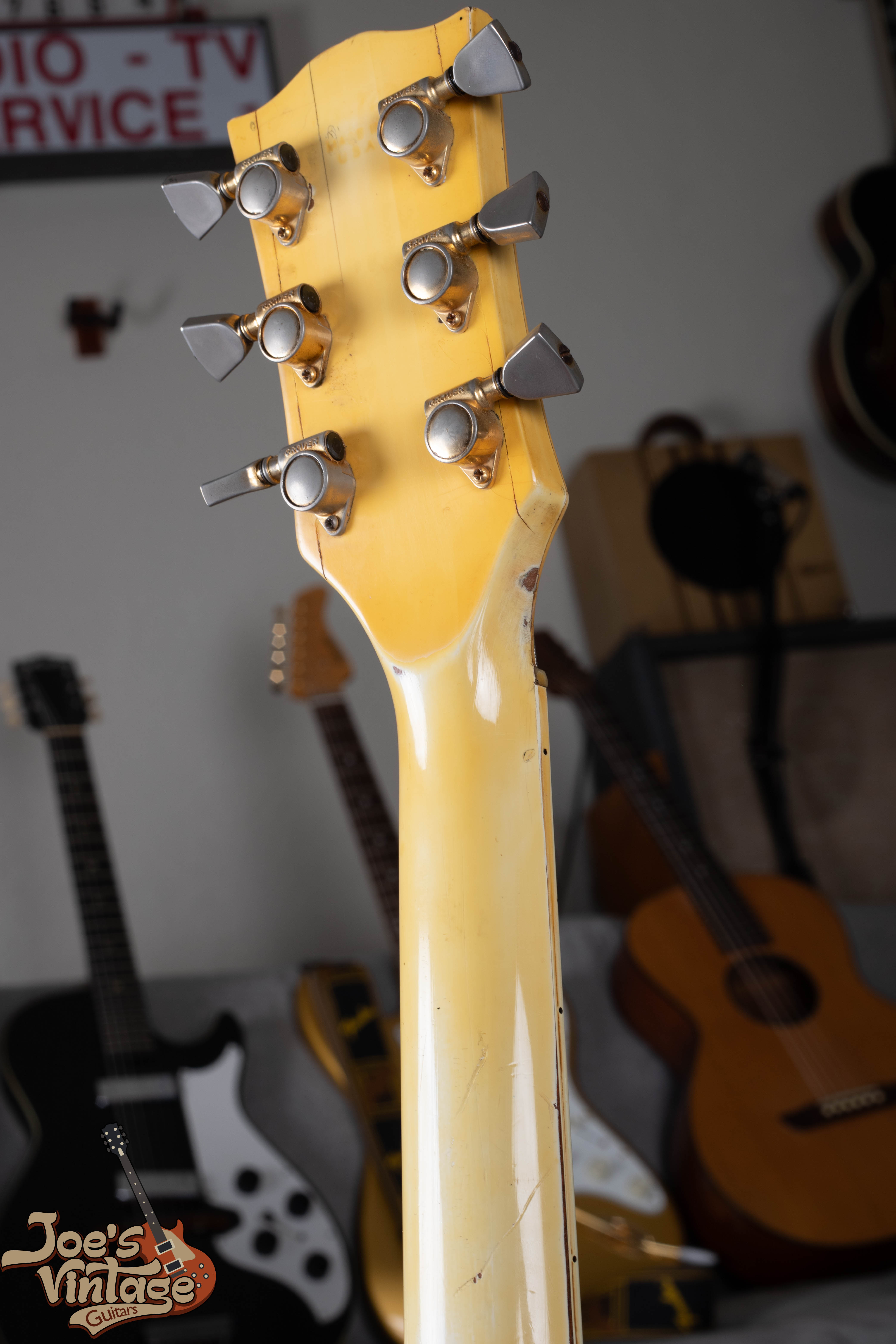
A side view helps reveal the projection. Headstock repairs and sanding can change that contour, so volute size needs to agree with the neck, body and other surviving features.
Made In USA Stamp
Factory 1968 and 1969 Customs lack a Made in USA stamp. Gibson introduced it during 1970, and early 1970 examples can also be unstamped. An original stamp sets a 1970-or-later limit; the absence of one doesn't prove a pre-1970 date.
Dotted And Dotless Gibson Logos
Earlier 1968 Customs can have the small dot above the i in Gibson. The usual late-1968 through 1971 logo lacks it, and the dot returns around 1972. The styles overlap on some guitars, so this is a pattern to compare with the rest of the instrument rather than a universal cutoff.
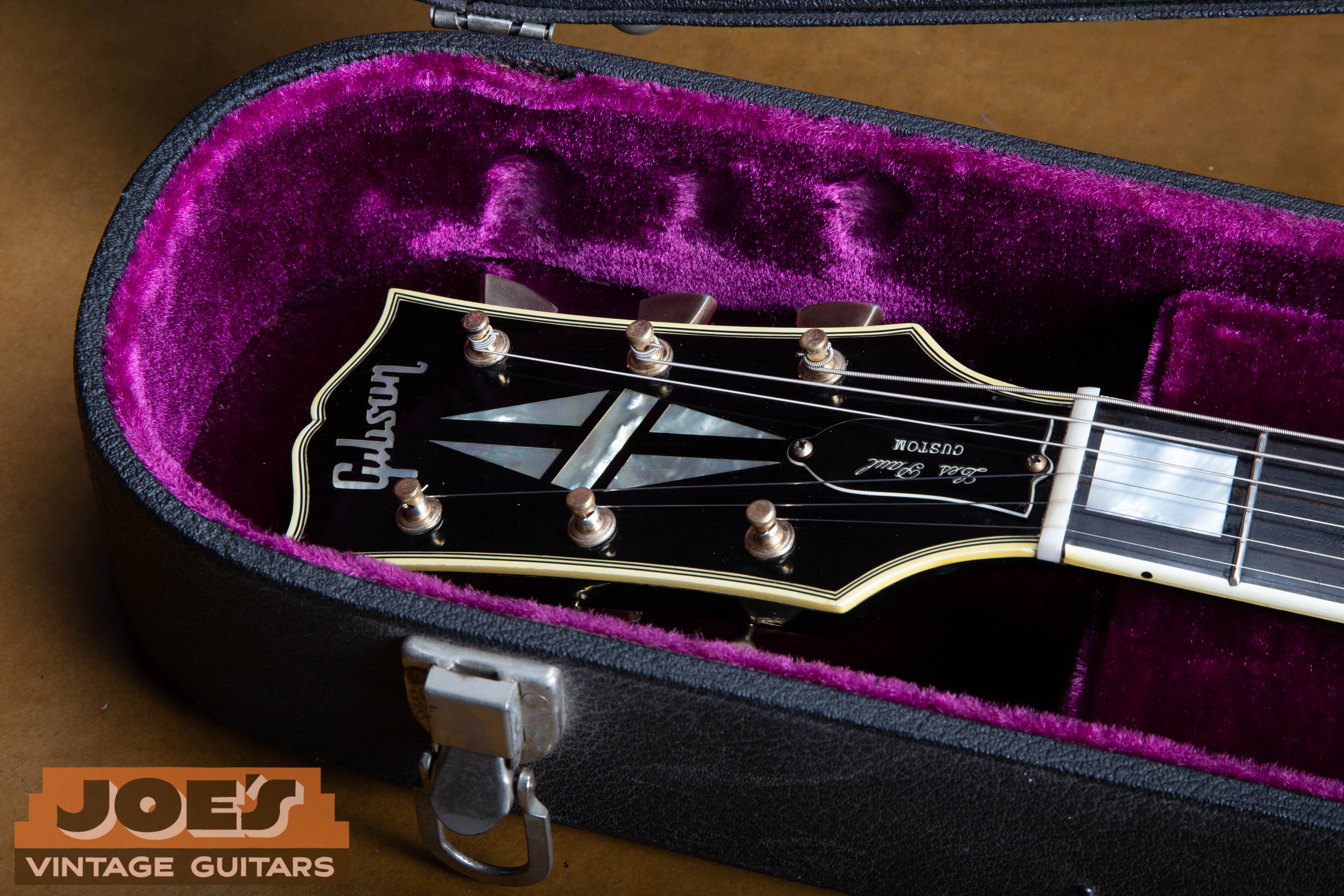
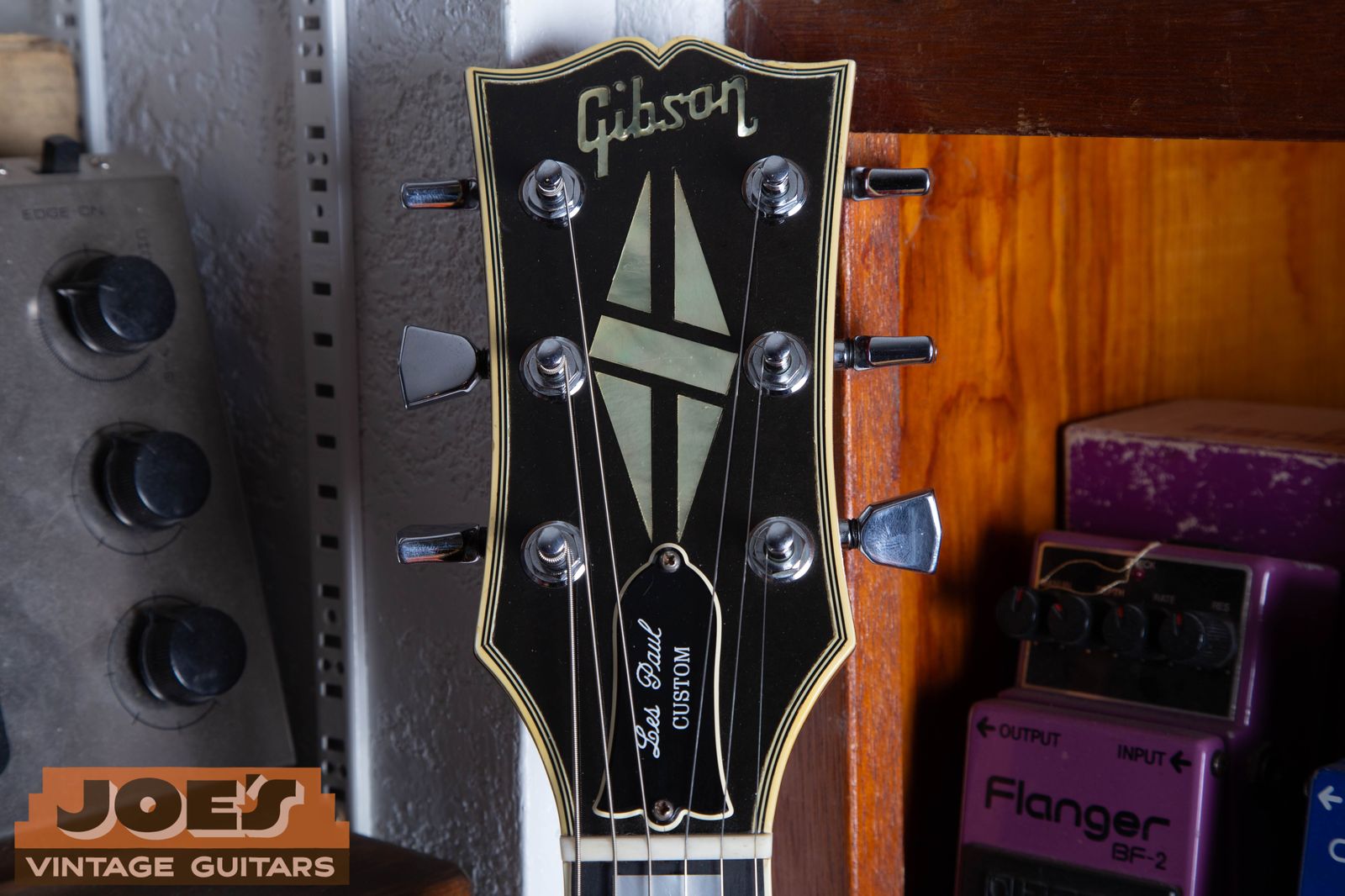
The photographs show the dotless and later dotted pearl logos. A headstock-face repair can change the inlay, and the facing material itself shifts from wood toward fiber around 1970. The Gibson headstock logo guide explains these features and the transitional exceptions.
1968 To 1970 Les Paul Custom Tuners, Bridges And Pickups
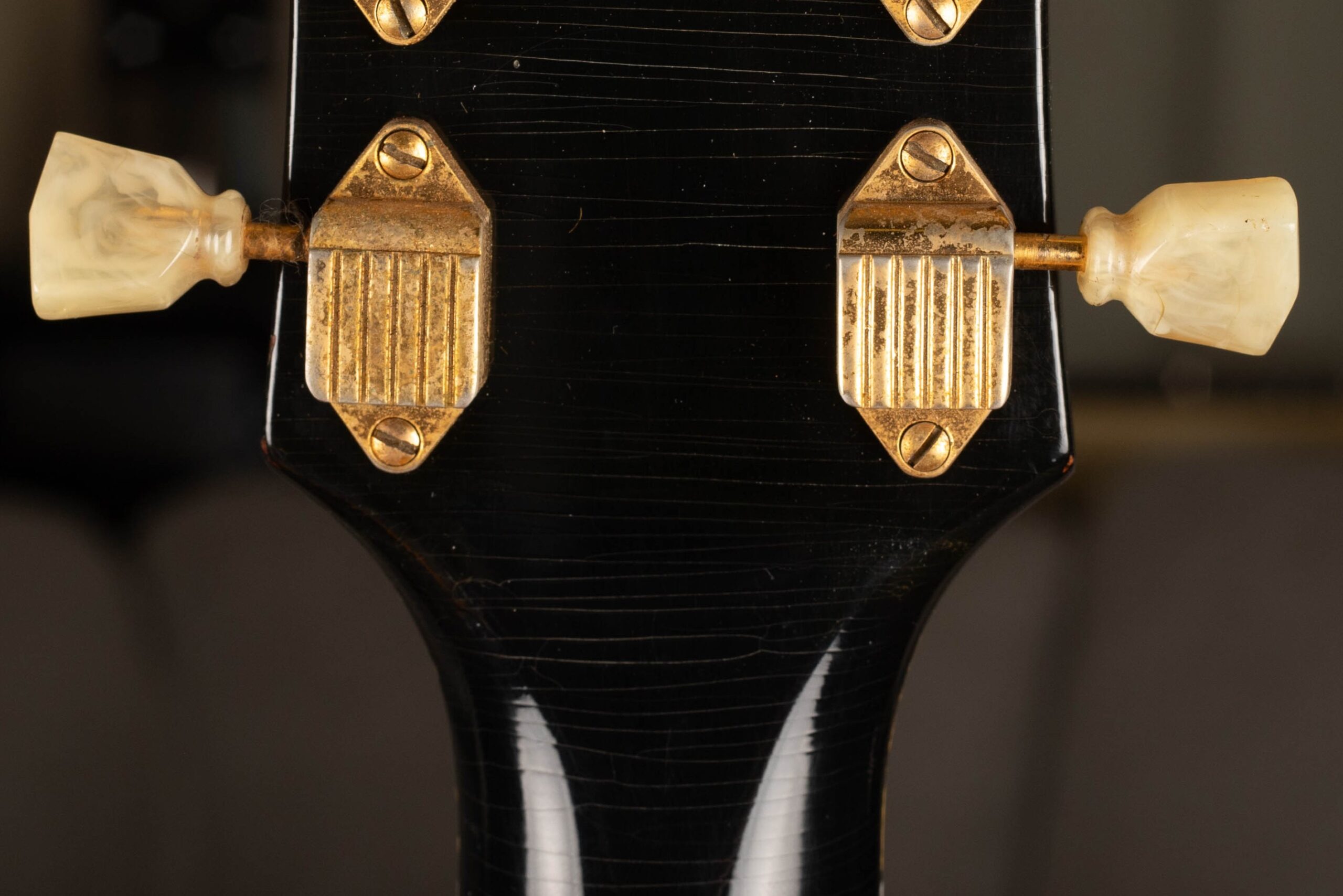
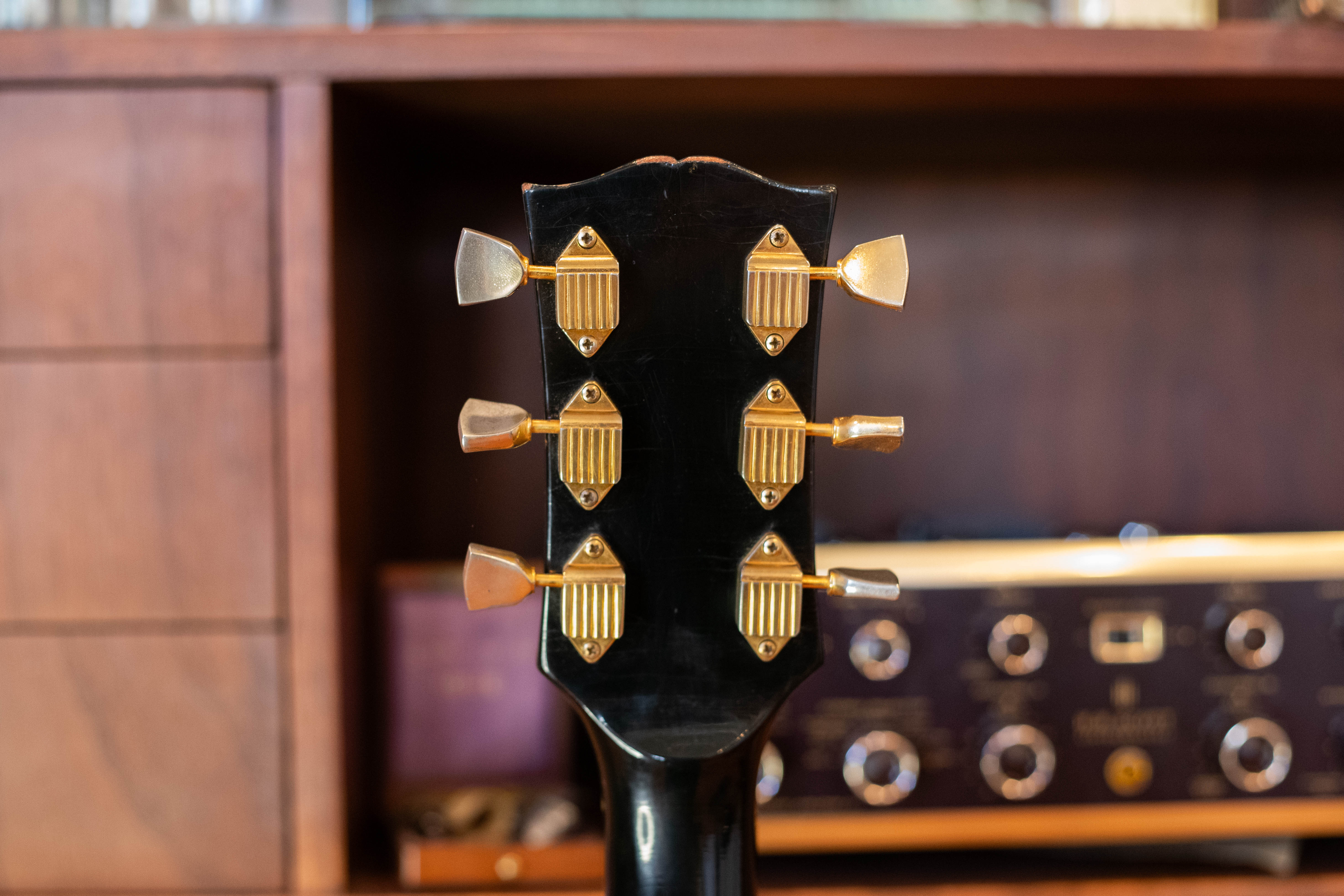
The gold Kluson Super tuners commonly found on early Customs are called wafflebacks because of the ribbed pattern on their rear housings. Their buttons have a metal keystone shape. The rear-headstock photo below shows this family on a 1970 Custom.
Grover Rotomatics have round enclosed housings, as seen on the later headstock used in the volute comparison above. Some 1968 Customs had factory Grovers, and Grovers were also fitted later as upgrades. Extra holes or old washer impressions can help identify a change. The Gibson tuner guide compares the families and their mounting details.
The regular bridge arrangement is an ABR-1 Tune-O-Matic and separate stopbar. The bridge supports the strings on adjustable saddles, while the stopbar behind it anchors their ends. This layout is shared across the three years. The ABR-1 guide shows the narrow bridge and its small posts.
The regular Custom also has two humbuckers. Patent Number describes a label on the metal underside of a pickup; T-Top describes a molded T on the plastic bobbin holding its coil. The same pickup can have both features. The photographed 1969 example below shows the patent label while its bobbins remain under the cover. The Gibson pickup guide explains these markings.
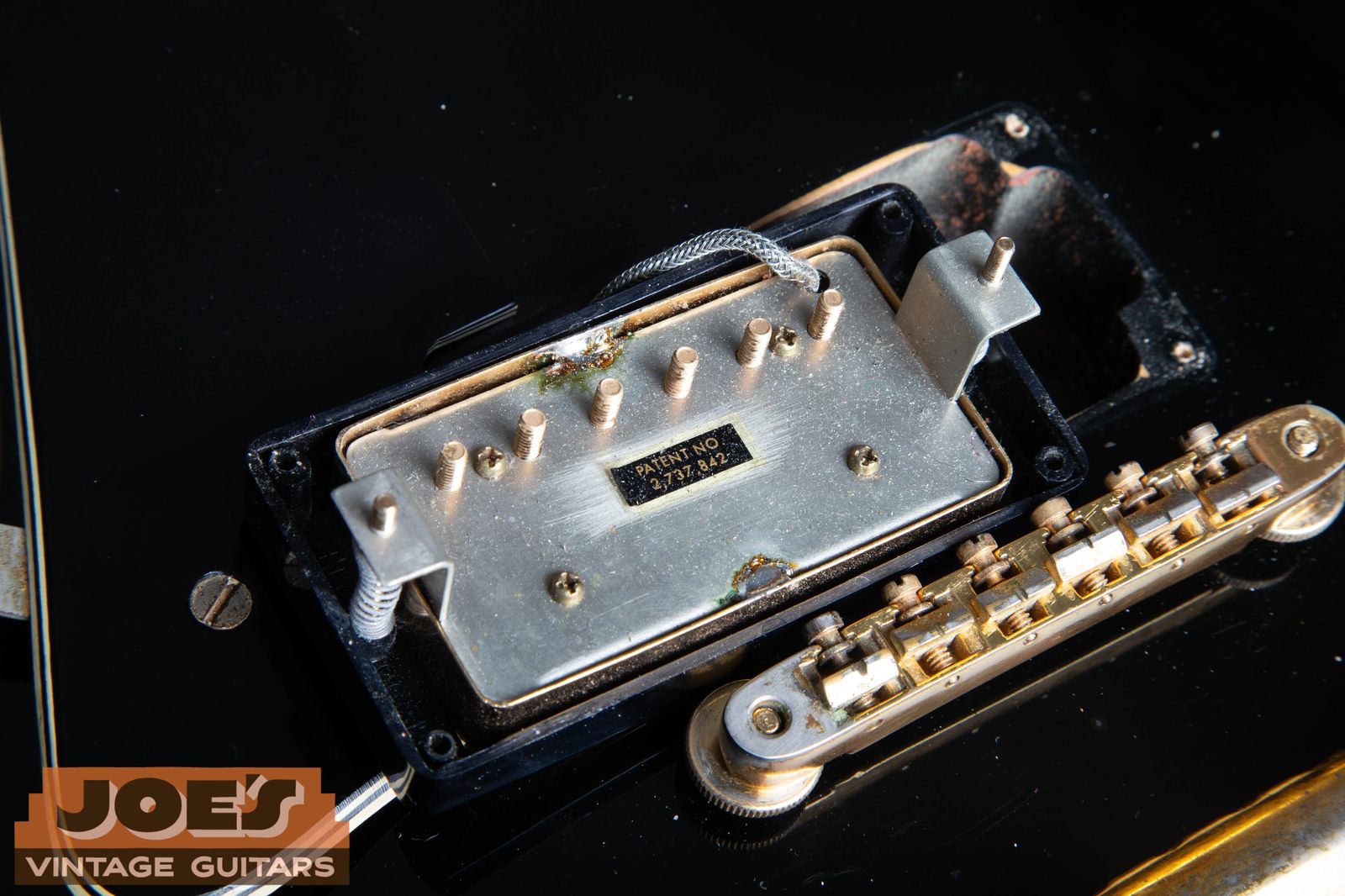
These hardware families help confirm the model and period, but they're shared widely enough that they won't separate 1968, 1969 and 1970 on their own. Replacements also need to be distinguished from the parts installed when the guitar was built.
Gibson Serial Numbers And Pot Codes For 1968 To 1970
The serial is impressed into the back of the headstock. Gibson reused six-digit ranges during this period, so one number can produce several possible years in a lookup. These guitars predate the later eight-digit date code. The Gibson serial number guide explains which system applies.
The earliest 501xxx to 505xxx Les Paul group belongs to the 1968 return. The 506xxx to 561xxx group crosses into 1969, followed by later 565xxx, 566xxx and 800xxx groups. Very late 891xxx to 897xxx and some 9xxxxx groups extend toward 1970. Each x represents another digit. These are observed Les Paul groups, not a complete Custom-only decoder.
What A Pot Code Dates
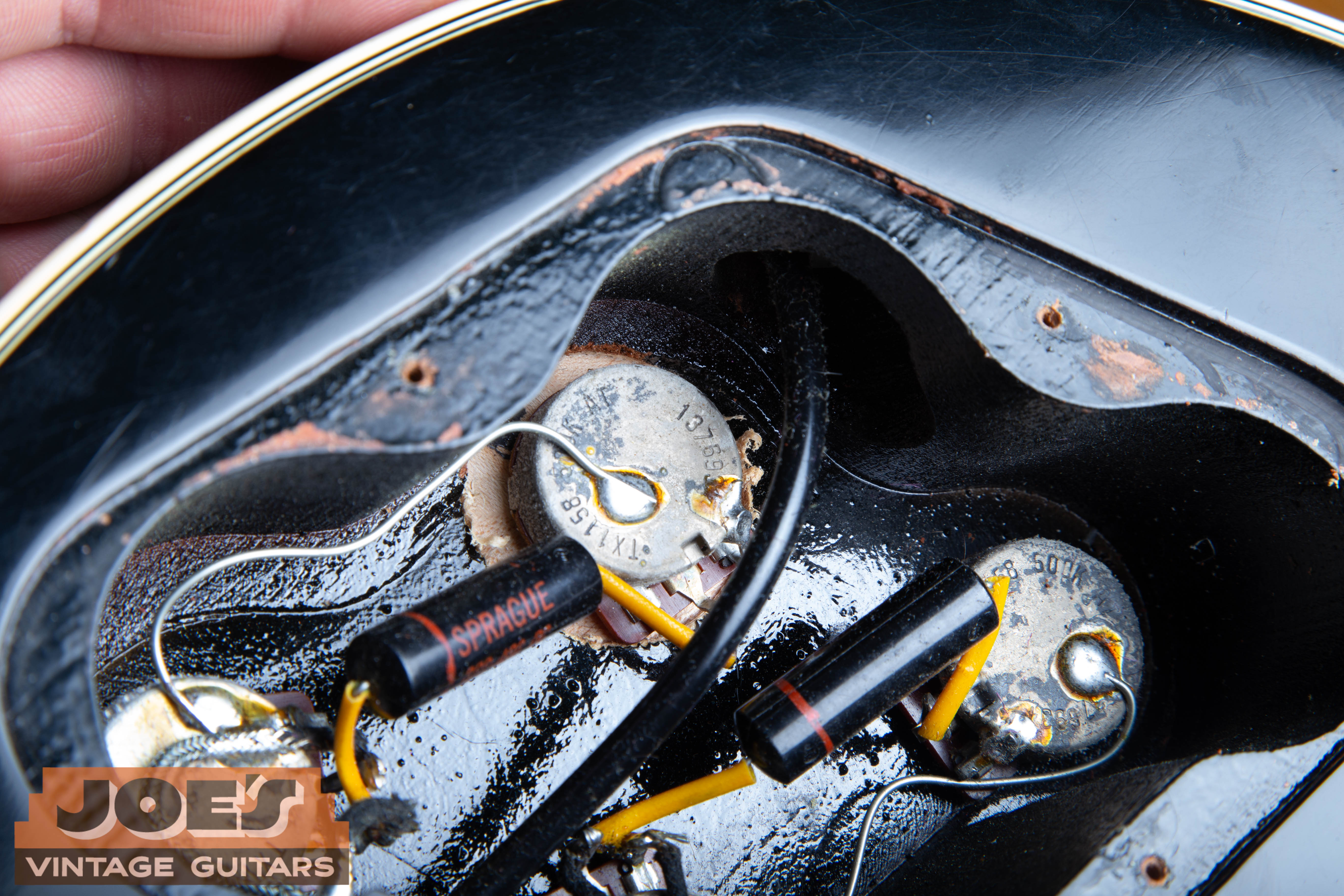
The volume and tone controls are potentiometers, usually called pots. Their metal casings can carry a manufacturer's production code, visible inside the rear control cavity. A common CTS format is 137YYWW: 137 identifies CTS, YY gives the year and WW the week.
For example, 1376837 means week 37 of 1968, 1376902 means week 2 of 1969, and 1377014 means week 14 of 1970. These are examples of component dates, not guaranteed guitar assembly dates.
In the photograph below, 13769 is visible on the upper pot while solder partly hides the week digits. That gives an incomplete 1969 code without requiring a guess at the obscured numbers. Other markings can indicate electrical resistance or a part number.
If the pot is original, the guitar must have been assembled after that component was made. A 1968 pot can carry into 1969, and a 1969 pot can carry into 1970. A confirmed original 1970 pot rules out 1969 assembly. Replacements date later work instead, so the pot-code and control-cavity guide also considers the wiring and solder joints.
1968 Vs 1969 Vs 1970 Les Paul Custom Differences
This table brings the features described above together. Read across a row to compare one feature, then down a column to see the usual combination for a year. Transitional guitars may share features from adjacent columns.
| Feature | 1968 | 1969 | 1970 |
|---|---|---|---|
| Mahogany Back | One-piece back beneath maple cap | One-piece back continues; true pancake back appears late | Pancake back is the regular construction |
| Maple Crossband | No middle crossband | Thin upper layer on some early bodies; middle layer on late pancake bodies | Thin layer between thick mahogany sections |
| Neck Wood | One-piece mahogany | One-piece through spring; three-piece mahogany by May | Three-piece mahogany |
| Neck Tenon | Long joint into pickup cavity | Long to shorter transitional joint around spring | Shorter transitional pattern |
| Volute | None | None early; small swelling late | Small early shape; later contours grow more pronounced |
| Made In USA Stamp | Absent | Absent from factory 1969 Customs | Introduced during the year; early guitars can lack it |
| Gibson Logo | Earlier examples can be dotted; dotless style appears late | Usually dotless; transitional dotted examples occur | Usually dotless |
| Headstock Face | Wood veneer | Wood veneer in the early pattern | Transition toward fiber veneer |
| Control Cavity | Early flat-floor pattern | Stepped ledge appears during the early transition | Later stepped form |
| Tuners | Gold wafflebacks; some factory Grover Rotomatics | Same family; inspect any Grover installation | Wafflebacks remain an early reference |
| Pickups And Bridge | Patent Number humbuckers; ABR-1 and stopbar | Shared layout; T-Top is a bobbin detail | Shared layout; check replaced parts |
| Serial Groups | 501xxx to 505xxx early; later group overlaps 1969 | 506xxx to 561xxx early group; later 565xxx/566xxx and 800xxx groups | Late 800xxx and some 9xxxxx groups overlap; no single-year code |
| Original Pot Dates | 1968 dates may also be used in 1969 | 1969 dates may also be used in 1970 | An original 1970 code excludes 1969 assembly |
| Cases | Early black cases with orange lining; shaped or oblong | Orange lining; purple enters near the late transition | Purple-lined shaped cases relevant; older stock can remain |
How To Weigh Conflicting 1968 To 1970 Dating Clues
Consider an early-style Custom with a one-piece back and neck, long tenon, smooth headstock transition and original 1968 pots. That combination supports the early construction period, but the pot date alone can’t exclude assembly in early 1969. A shipping record or strong contemporary documentation may narrow the result.
Now consider a three-piece mahogany neck on a one-piece back with no Made in USA stamp. It fits the 1969 transition better than a simple all-features-changed-at-once timeline. The neck changed before the true pancake body became the later pattern.
A pancake back, laminated mahogany neck and small volute can leave late 1969 and early 1970 difficult to separate. An original Made in USA stamp or original 1970 pot sets a 1970-or-later limit. Absence of the stamp can still fit early 1970. Replacement pots or altered headstock finish remove some of that evidence.
When the surviving evidence supports late 1969 to early 1970, retain that range. A dated sales receipt records a sale, and a family photograph shows that the guitar existed by then; neither automatically records the assembly date. State the strongest supported conclusion instead of forcing a single year.
Photos And Condition Details For A Dating Appraisal
Photograph the full front and back, both sides of the headstock, the serial and stamp area, the side profile behind the nut, the body edge, tuners, bridge posts and accessible pot markings. Include existing pickup-cavity pictures and any repair records. You don’t need to dismantle the guitar before sending a first set of photos.
Separate evidence that dates original construction from changes made during repairs. A refret affects the playing feel, a replaced pickup affects originality, and a headstock repair can obscure important contours and markings. One altered feature need not erase every unaffected clue.
After identifying the construction and the best-supported date, compare condition through the Les Paul market value guide. The Norlin-era Custom guide carries the later timeline, variants and period prices.
Les Paul Custom Dating Questions
Can The Serial Alone Separate 1968, 1969 And 1970?
No. Reused ranges overlap, so the number needs to be matched to the guitar's construction and original parts. Early 1969 can share the long tenon and one-piece neck of 1968, while late 1969 can resemble early 1970.
Does No Made In USA Stamp Mean A Custom Is Pre-1970?
No. Early 1970 Customs can lack the stamp because it was introduced during the year. Factory 1968 and 1969 Customs also lack it, so its absence leaves more than one possibility.
Is A Thin Maple Layer Always A Pancake Body?
No. Some early-1969 bodies have a thin layer immediately below the maple cap and a full one-piece mahogany back. On a true pancake back, the thin maple layer divides two thick mahogany sections.
Can A Three-Piece Neck Have A One-Piece Back?
Yes. Gibson introduced the three-piece mahogany neck before the true pancake body became the later pattern. That combination is part of the 1969 transition.
Does The Dot In The Gibson Logo Prove The Year?
No. Earlier 1968 examples can have the dot, while the usual late-1968 through 1971 pattern is dotless and the dot returns around 1972. Overlapping examples and possible headstock repairs mean the logo should support other evidence.
Do Grover Tuners Rule Out An Original 1968 Custom?
No. Some 1968 Customs have factory Grovers, and other guitars received them later. The tuner type needs to be considered alongside mounting marks and the guitar's history.
What If A Guitar Still Fits Late 1969 And Early 1970?
Keep the date range until stronger evidence narrows it. Original 1969 pots and an unstamped neck with a small volute can fit either year. A factory record may resolve the overlap; a sales receipt establishes when it was sold, not necessarily when it was built.
Send Photos To Date Your 1968 To 1970 Custom
If the features still leave two years open, send the available photographs for a dating and value appraisal. Include the serial, pot codes, body edge and headstock from the rear and side. Joe Dampt can assess the remaining evidence; call (602) 900-6635 to discuss the instrument.