1970 Gibson Les Paul Custom: Specs And Dating Guide
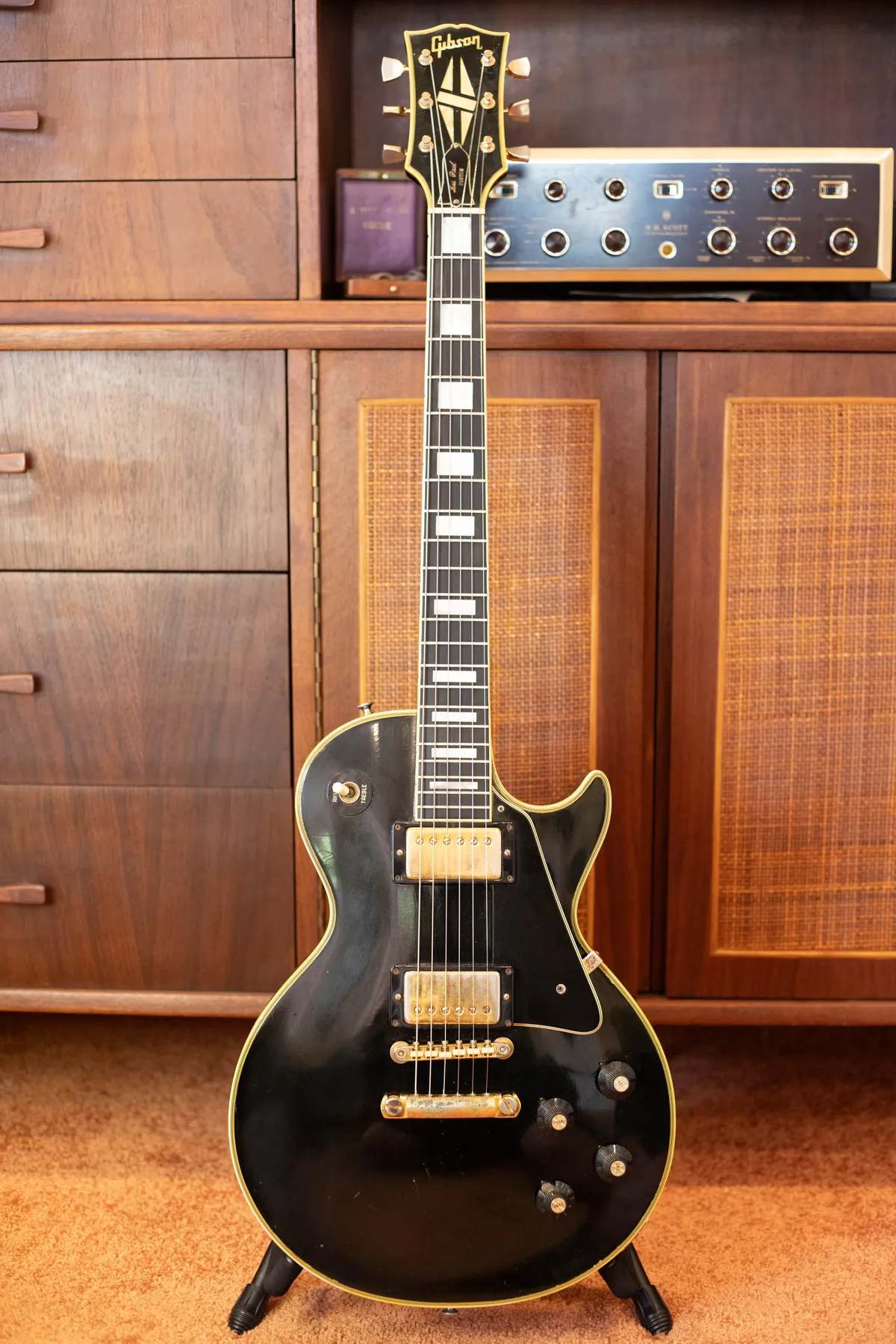
The regular 1970 Gibson Les Paul Custom has a layered pancake body, a three-piece mahogany neck and two humbuckers. It shares several features with late 1969, so its serial number, headstock markings and original component dates need to be read together.
1970 Gibson Les Paul Custom Specifications
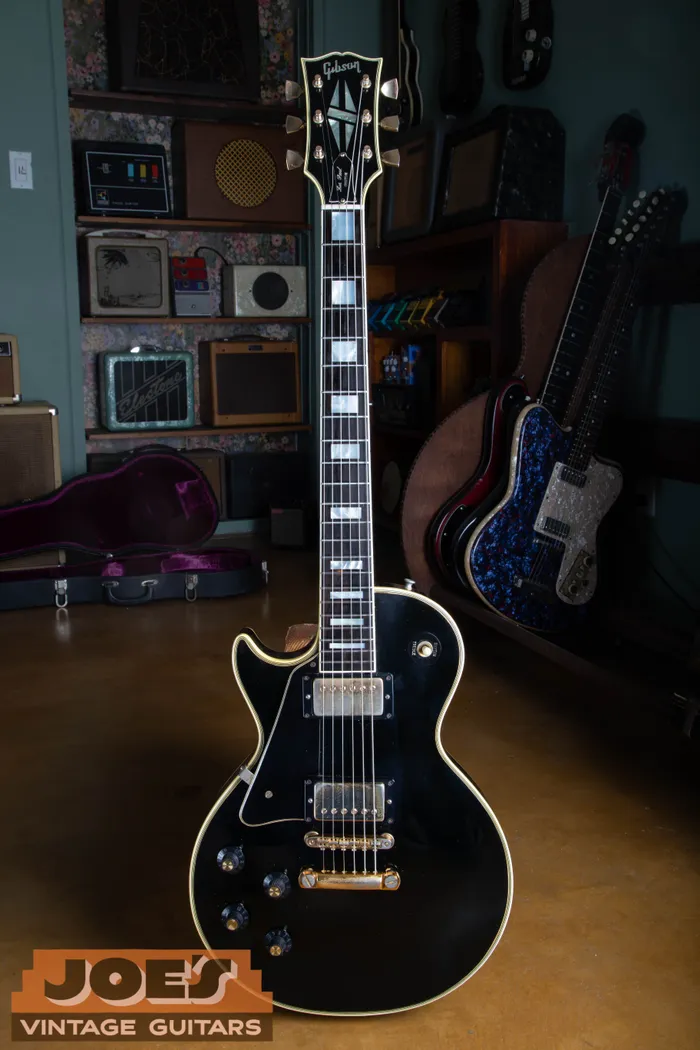
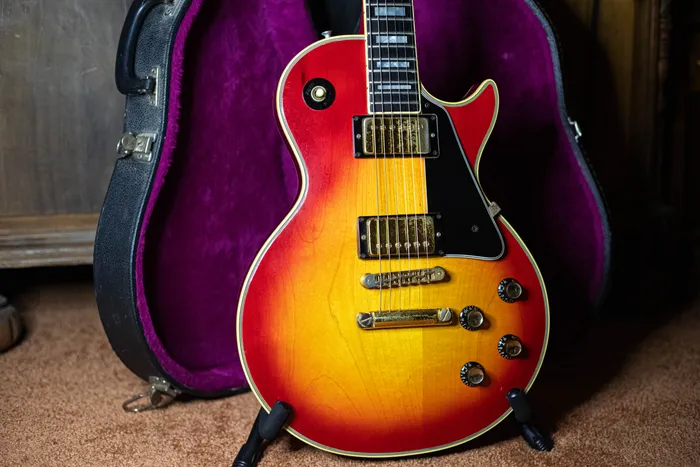
The 1970 Custom has the familiar black finish and gold hardware, with contrasting binding around the body and headstock. Its carved maple top sits over a mahogany back. The dark ebony fingerboard carries large pearl block inlays, while the headstock has the Gibson name above a split-diamond decoration.
Gibson's 1970 pamphlet specifies a three-piece mahogany neck, 22 low frets and a nominal 24¾-inch scale length, the vibrating length of the open strings. The low fretwire gave the Custom its Fretless Wonder reputation, although many examples have since been refretted with taller wire.
The regular model has two humbuckers, pickups that use two coils to reduce electrical hum. Each pickup has its own volume and tone control. A three-way switch selects the neck pickup, bridge pickup or both. These basic features identify the model before the construction and markings help establish its date.
For help identifying an individual guitar, send photos for a 1970 Custom appraisal. Both sides of the headstock are useful, even if there's no Made in USA stamp.
The four controls normally have black witch-hat knobs with gold-colored inserts. Their flared shape gives them the nickname. The Gibson knob guide shows the design and how it differs from earlier knobs.
1970 Les Paul Custom Pancake Body, Neck And Tenon
What Is The Pancake Body?
The pancake name describes the layers in the back of the body. Two thick mahogany sections are separated by a thin maple sheet, and the carved maple top sits above them. Seen from the side, the middle maple layer forms the thin filling in that sandwich.
This is the regular 1970 construction. Some earlier 1969 bodies have a thin layer immediately beneath the top while retaining a full one-piece mahogany back. The body construction guide shows how the position of the layer distinguishes those designs.
The Three-Piece Mahogany Neck
The neck is assembled from three long pieces of mahogany joined side by side. Those joins run along the neck, separately from the horizontal layers in the body. The fingerboard is another piece of wood attached to the front of the neck; on the regular 1970 Custom, it's ebony.
Mahogany is the neck wood specified in Gibson's 1970 brochure. The three-piece maple neck found on later Customs belongs to the mid-1970s changes.
The Neck Joint And Heel
A wooden extension called the tenon fits into the body and is glued in place to secure the neck. The shorter transitional design follows the earlier long tenon. A pickup-cavity photograph can show where the neck wood ends inside the body; the tenon comparison illustrates both forms.
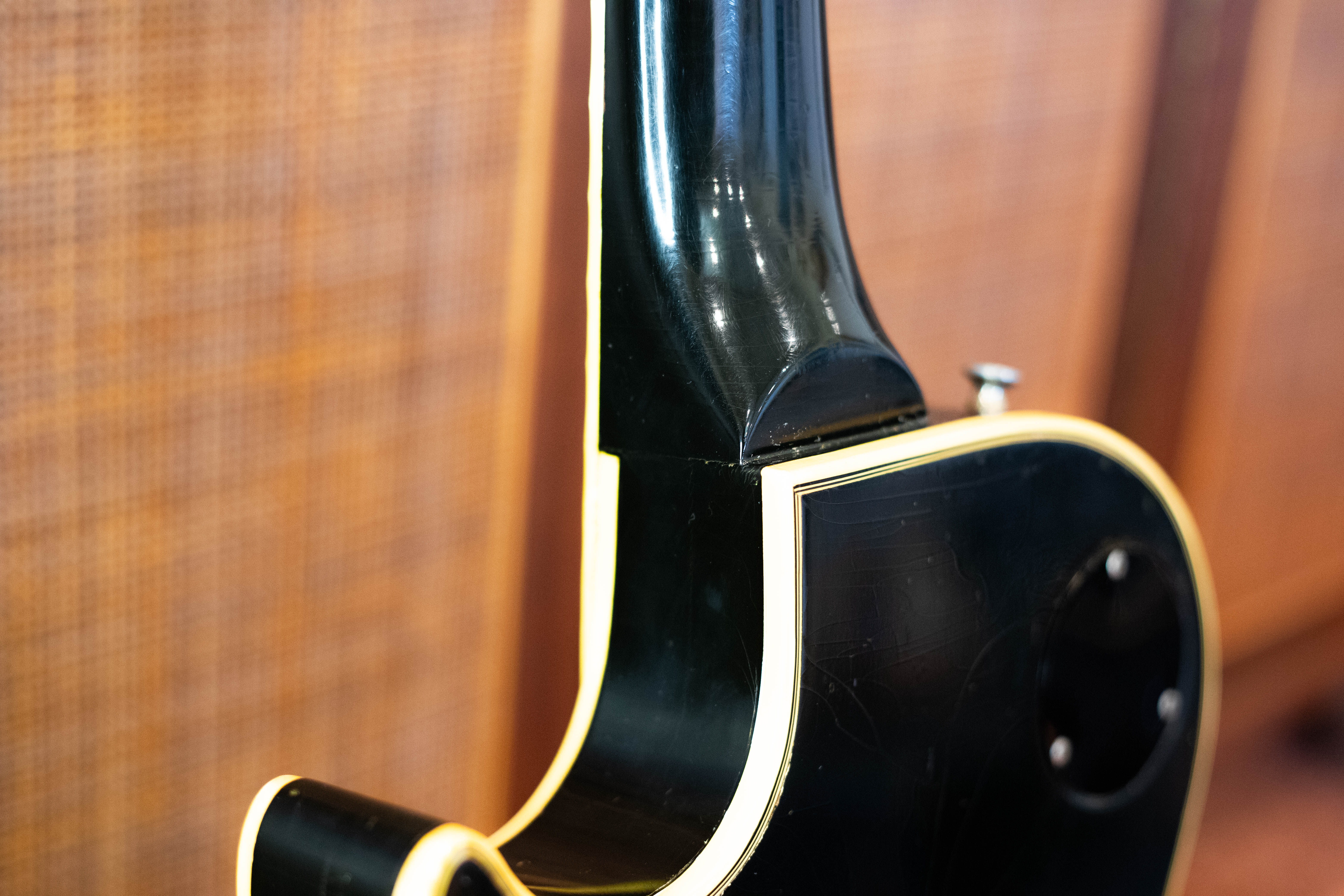
The heel is the visible junction where the back of the neck meets the body. The photograph below shows that exterior area and its finish. It doesn't expose the tenon, which is hidden inside the joint.
1970 Les Paul Custom Pickups, Bridge And Tuners
Patent Number And T-Top Humbuckers
Patent Number refers to the marking on the metal underside of a Gibson humbucker. T-Top refers to a molded T on a plastic bobbin, the part around which a coil is wound. The names describe different features, so a pickup can have both a patent label and T-Top bobbins.
The gold cover hides the bobbins. Underside photographs can show the label, wires and cover solder, which help identify the pickup and assess whether it has been changed. The Gibson humbucker guide explains those details.
ABR-1 Bridge And Stopbar
The ABR-1 is the narrow metal bridge beneath the strings near the bridge pickup. Each string rests on an adjustable saddle; behind it, a separate stopbar tailpiece holds the string ends. The ABR-1 reference shows its small mounting posts, retaining wire and saddles.
The wider Nashville bridge appears later in the Custom timeline. An older guitar can have a replacement bridge or tailpiece, so its current hardware should be compared with the mounting work as well as the model year.
Waffleback Tuners
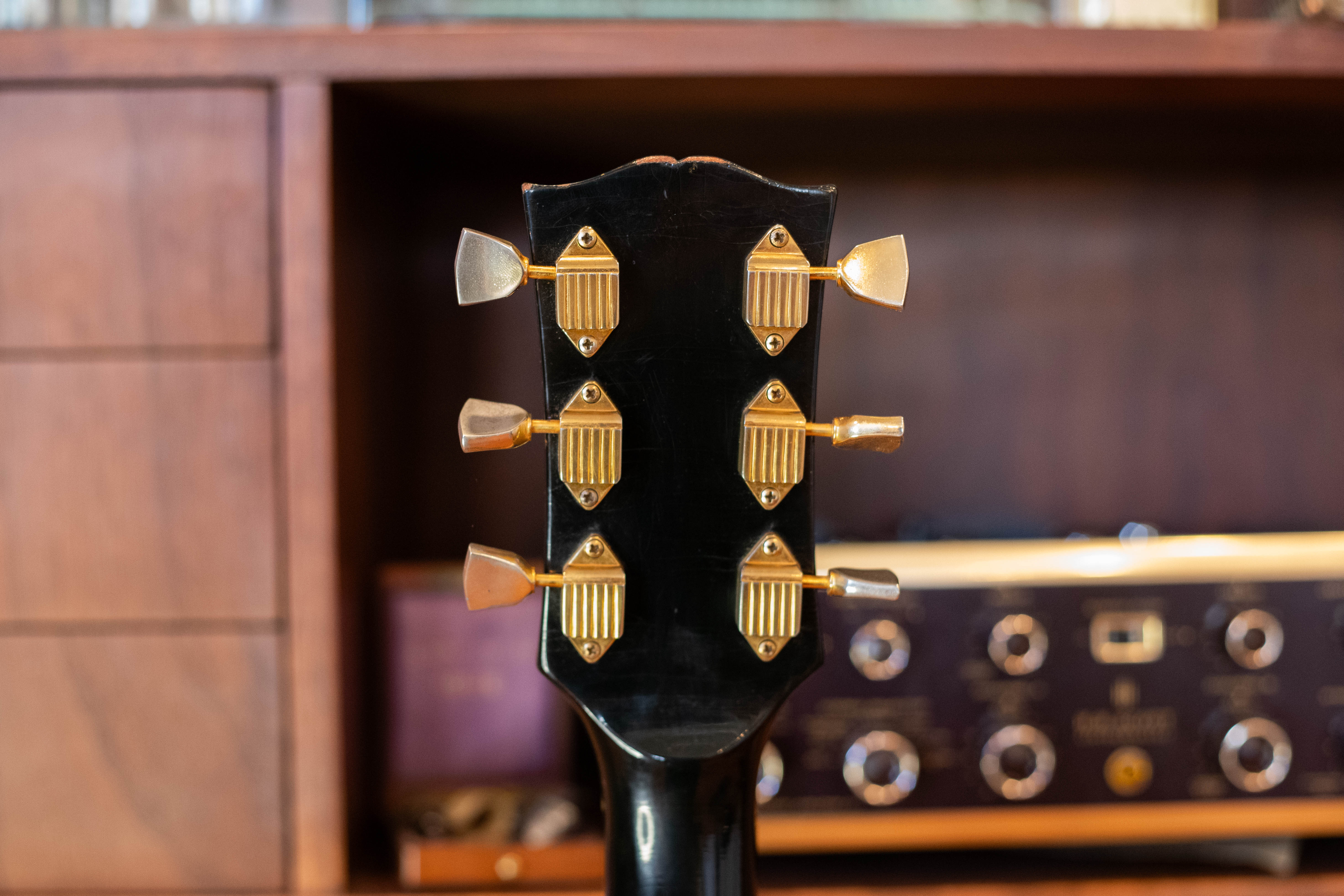
The headstock photograph below shows gold Kluson Super tuners, commonly called wafflebacks because of their ribbed rear housings. They have metal keystone-shaped buttons and are a familiar early-Custom type.
Grovers and later Gibson-branded enclosed tuners have different housing shapes and mounting patterns. The illustrated Les Paul Custom tuner comparison shows those families. If a set has been changed, unused screw holes or old washer marks can remain visible, as explained in the tuner installation guide.
1970 Les Paul Custom Headstock, Logo And Serial Numbers
The Made In USA Stamp
Gibson introduced the Made in USA stamp on the back of the headstock during 1970. Early examples can lack it. An original factory stamp rules out a 1968 or 1969 Custom, while its absence still leaves early 1970 as a possibility.
Volute And Gibson Logo
The volute is the raised area of wood behind the nut, where the neck meets the headstock. The nut is the slotted strip supporting the strings before the tuners. Early 1970 volutes can be small and resemble the late-1969 shape. Later examples become more pronounced. The volute photographs show the difference between a smooth neck and the raised form.
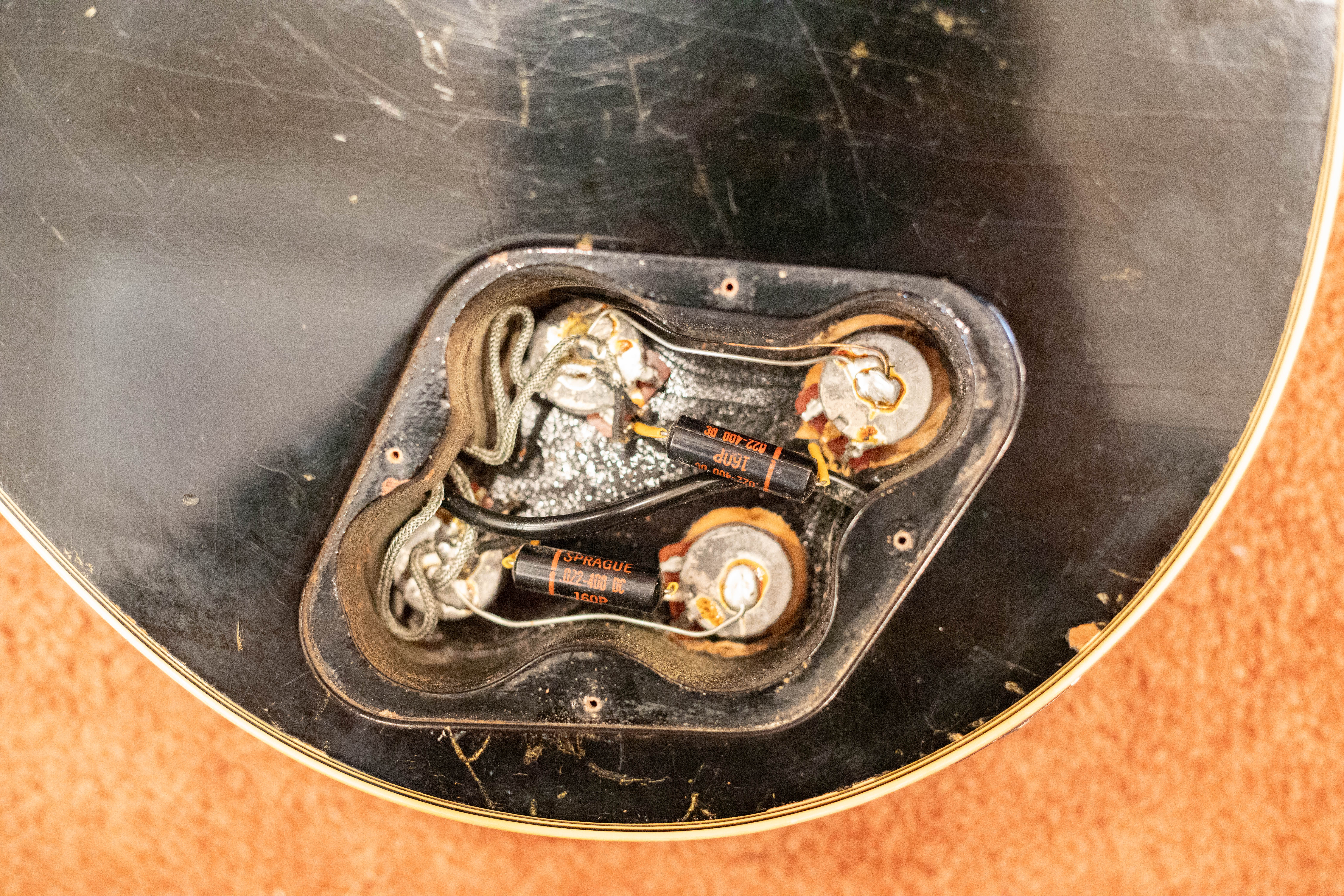
The usual Gibson logo in this period has no dot above the i. Dotless logos are common from late 1968 through 1971, with the dot returning around 1972 and some overlap between styles. The photograph below shows the dotless pearl inlay on a Custom. Our Gibson logo guide explains the wider sequence.
The headstock face also changes from a thin wood veneer to a fiber facing around 1970. This is the material beneath the black finish, rather than the wood of the neck itself. Existing edge wear can sometimes expose it, but the opaque finish or an earlier repair may conceal the original material.
Overlapping Six-Digit Serial Numbers
The serial is impressed into the headstock wood. These six-digit numbers come from reused ranges; they aren't encoded like the eight-digit system Gibson introduced later. Some late 891xxx to 897xxx and 9xxxxx Les Paul groups cross the 1969 to 1970 boundary. Each x stands for another digit.
The Gibson serial number guide can identify the possible ranges. The body, neck, headstock and original pot dates help determine which range fits the guitar.
How To Read 1970 Les Paul Custom Pot Codes
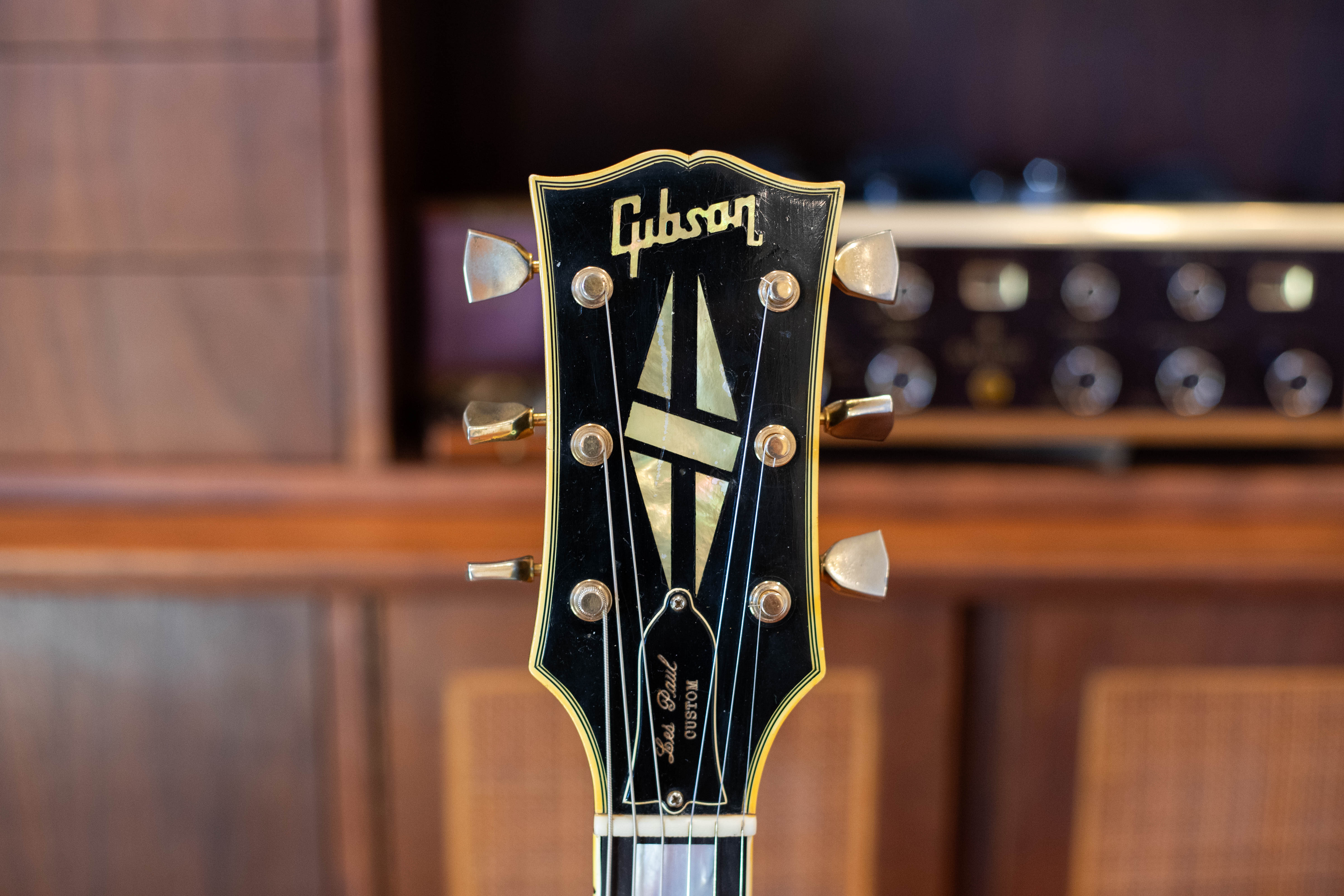
The volume and tone knobs turn electrical components called potentiometers, usually shortened to pots. These sit inside the control cavity beneath the plastic cover on the back of the guitar. A manufacturer's code stamped into a pot's metal casing may record when it was made.
For example, CTS code 1377014 means week 14 of 1970: 137 identifies CTS, 70 is the year and 14 is the week. This is a worked example of the code format. An original pot with that date means the guitar was assembled in 1970 or later.
The photograph below shows the electronics in a guitar catalogued as 1970 in the archive. Its pot markings are partly obscured, so this view doesn't independently establish its year. The lettering on the capacitors, the separate components wired between the controls, isn't a pot date.
An original 1969 pot can also appear in a 1970 guitar because component stock carried over between years. A replacement pot dates later repair work instead. The Gibson pot-code guide explains the markings and the wiring evidence used to assess whether the controls are original.
1970 Custom Original Price, Shipments And Case
The U.S. Zone 1 list priced the Custom at $575 in March 1970 and $595 in September. These were period list prices, with the case sold separately. They shouldn’t be used as present-day valuations.
The published Gibson shipping table records 2,612 Customs in 1970, compared with 2,353 in 1969. It counts shipments in that category, not the number still surviving.
A black shaped case with purple lining belongs to this transition, while older stock and later case swaps complicate an exact-year judgment. Check the shell, latches, handle and lining in the Gibson case guide. The instrument’s construction and component dates carry more weight than lining color alone.
1970 Vs 1969 Les Paul Custom: What Separates Them?
A pancake back, three-piece mahogany neck and small volute can fit both late 1969 and early 1970. An unstamped headstock with 1969 pot dates can also fit either year. These features establish a construction period more readily than an exact year.
An original Made in USA stamp or an original pot manufactured in 1970 moves the earliest possible date into 1970. Neither limits the guitar to that year by itself, but both help resolve a claimed 1969 date. The three-year dating comparison shows how to weigh the evidence together.
For the later changes to maple necks, Nashville bridges and serial formats, continue with the 1968 to 1986 Custom guide.
What Affects A 1970 Les Paul Custom’s Value?
Compare a 1970 Custom with other verified pancake-body, mahogany-neck examples. An early 1969 one-piece guitar and a mid-1970s maple-neck Custom differ in construction, so either can give a misleading price comparison if the year alone is the filter.
Record original finish, headstock repairs, pickup and tuner changes, fretwork, actual weight and the case. A larger refret may appeal to a player while changing the original low-fret specification. A repaired headstock needs clear photographs of the work and surrounding finish.
The Les Paul value guide provides market context. Its broad 1968 to 1969 estimate shouldn’t be used as a 1970 price band. For this year, compare current examples with matching construction and condition, then have the individual guitar assessed.
1970 Les Paul Custom Questions
Does Every 1970 Les Paul Custom Have A Made In USA Stamp?
No. The stamp was introduced during 1970, so early examples can lack it. Its absence can leave late 1969 and early 1970 open when the other features overlap.
Does A 1970 Les Paul Custom Have A Maple Neck?
The regular 1970 specification is a three-piece mahogany neck. Maple is used in the top and thin body crossband, which are separate from the neck. Three-piece maple necks appear on Customs in the mid-1970s.
Can A 1970 Custom Have Original 1969 Pots?
Yes. Pots could remain in stock before being installed. A 1969 code dates the component, and an original set can therefore be found in a guitar assembled in 1970.
Can A Serial Decoder Date A 1970 Custom As 1969?
Yes. The reused six-digit ranges can suggest more than one year. The guitar's construction, original component dates and headstock markings help determine which period fits.
Should A 1970 Custom Have A Dot Over The Gibson I?
The usual 1970 logo is dotless. The dot returns around 1972, but Gibson's logo changes overlap, and headstock repairs can also affect the inlay. The logo is a supporting clue rather than an exact date stamp.
Is A Three-Piece Neck A Sign Of Poor Quality?
No. It describes how the neck wood was assembled, rather than a defect. Judge the condition and playing feel of the individual guitar, including any repairs and later fretwork.
Get A 1970 Les Paul Custom Dating And Value Appraisal
For a 1970 Custom appraisal, send both sides of the headstock, the serial area, body edge, full guitar views and any existing pot photographs. An unstamped headstock is worth including clearly. Contact Joe Dampt at (602) 900-6635 for help with the date and condition comparison.