

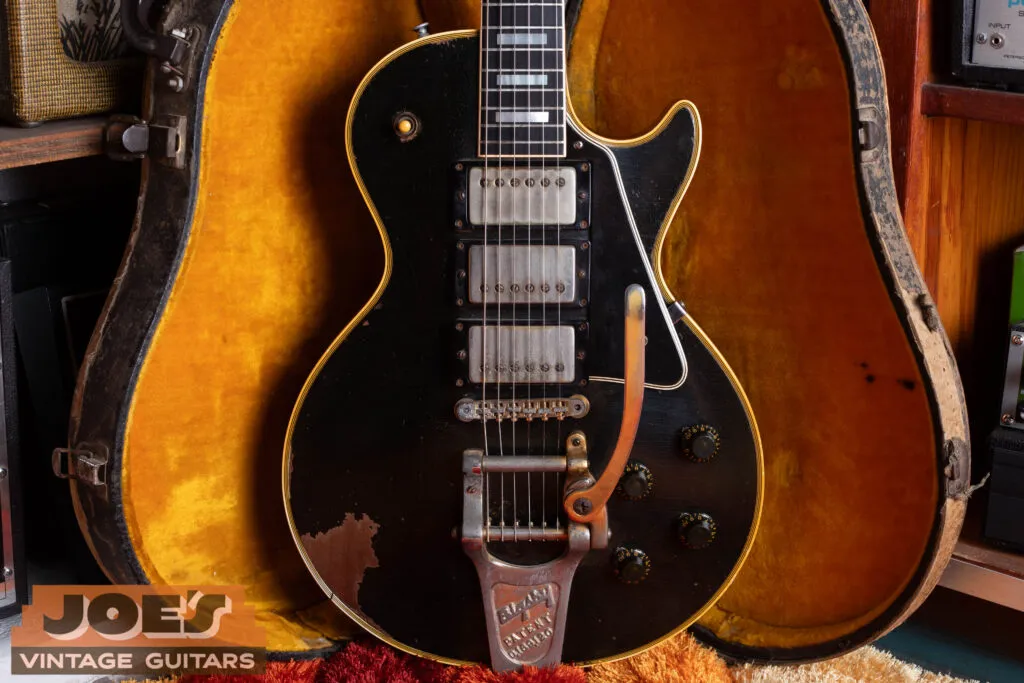
A clean, original 1968 or 1969 Gibson Les Paul Custom has a guide range of $11,000 to $17,000. Standard two-pickup Customs from 1975 through 1979 sit at $4,500 to $6,000 in excellent condition. A 1950s Custom belongs in a different market, with its pickup configuration separating the groups below.
I buy vintage Les Paul Customs and start by separating the original 1950s carved-body guitars from the model that returned in 1968. If you haven’t established the year, use the Les Paul Custom dating and construction guide before choosing a row. The table here handles value; that guide handles the evidence behind the date.
Gibson Les Paul Custom Values By Year
These are U.S. dollar references reviewed as of October 2026. Unless stated otherwise, they assume an excellent, all-original guitar with its original case, no structural repairs and the factory pickup configuration. A quality refret is accepted maintenance on an otherwise original guitar, although it removes the instrument from the museum-quality category.
Each production year has a row, and adjacent years can share a range. I use the exact configuration, condition and repair history to narrow an individual appraisal.
| Year | Configuration | Value Range |
|---|---|---|
| 1954 | Staple neck pickup and P-90 bridge | $23,000 to $50,000 |
| 1955 | Staple neck pickup and P-90 bridge | $23,000 to $50,000 |
| 1956 | Staple neck pickup and P-90 bridge | $23,000 to $50,000 |
| 1957 | Staple neck pickup and P-90 bridge | $23,000 to $50,000 |
| 1957 | Original factory humbuckers | $54,000 to $203,000 |
| 1958 | Original factory humbuckers | $54,000 to $203,000 |
| 1959 | Original factory humbuckers | $54,000 to $203,000 |
| 1960 | Original factory humbuckers | $54,000 to $203,000 |
| 1968 | Two humbuckers, standard carved body | $11,000 to $17,000 |
| 1969 | Two humbuckers, standard carved body | $11,000 to $17,000 |
| 1970 | Standard two-pickup Custom | $6,500 to $9,000 |
| 1971 | Standard two-pickup Custom | $6,500 to $9,000 |
| 1972 | Standard two-pickup Custom | $6,500 to $9,000 |
| 1973 | Standard two-pickup Custom | $6,500 to $9,000 |
| 1974 | Standard two-pickup Custom | $6,500 to $9,000 |
| 1975 | Standard two-pickup Custom | $4,500 to $6,000 |
| 1976 | Standard two-pickup Custom | $4,500 to $6,000 |
| 1977 | Standard two-pickup Custom | $4,500 to $6,000 |
| 1978 | Standard two-pickup Custom | $4,500 to $6,000 |
| 1979 | Standard two-pickup Custom | $4,500 to $6,000 |
Missing or replaced parts and case condition affect a Custom’s value. An Excellent label doesn’t establish that the guitar is all-original. I check its actual parts and repair history before applying the clean range.
The $54,000 to $203,000 early humbucker range is a broad family reference. It doesn’t promise that every three-pickup Custom reaches the top, or that two-pickup examples and guitars fitted with a vibrato have interchangeable demand. Original configuration, preservation and the actual pickup set need individual review.
The 1968 to 1969 range covers different construction details. An unusually clean early one-piece-body example needs an individual appraisal before you use the table as a selling target.
The Three Custom Markets
The Original Black Beauty
The first Custom family covered here has a carved mahogany body, an ebony fingerboard and the elaborate binding associated with the Black Beauty name. The fingerboard is the separate playing surface beneath the strings. The binding is the contrasting trim around the body and headstock.
The early pickup combination pairs a staple-style Alnico neck pickup with a P-90 at the bridge. Both are single-coil pickups, even though they don’t look alike. From 1957, Customs with humbuckers form another category; a humbucker uses two coils to reduce electrical hum.
I need that distinction before I compare values. A later replacement pickup may sound excellent while leaving the instrument outside the original-pickup reference. A guitar that has been cut for a different pickup arrangement also needs its own comparison, even if the replacement parts resemble a more expensive version.
The Les Paul family identification guide places the Custom alongside the Standard, Junior and Special. Their names share a history, but a price from one model doesn’t transfer to another merely because the year matches.
The Return In 1968 And The 1969 Transitions
The single-cutaway Custom returned in 1968 with a maple top over a mahogany back and two humbuckers. The 1968 Custom has its own construction details and market, distinct from a 1958 Custom. The two guitars have different construction and different collector markets.
During 1969, several construction details changed, and early and late examples can differ. The table’s shared 1968 to 1969 reference is a starting point. An appraisal needs to place a particular guitar within that transition before making a closer comparison.
The existing 1968 Custom guide and 1969 Custom guide show those years in detail. You don’t need to remove the pickups yourself to request a value opinion. Start with the photographs you can safely take and any service records already available.
The 1970s Production Guitars
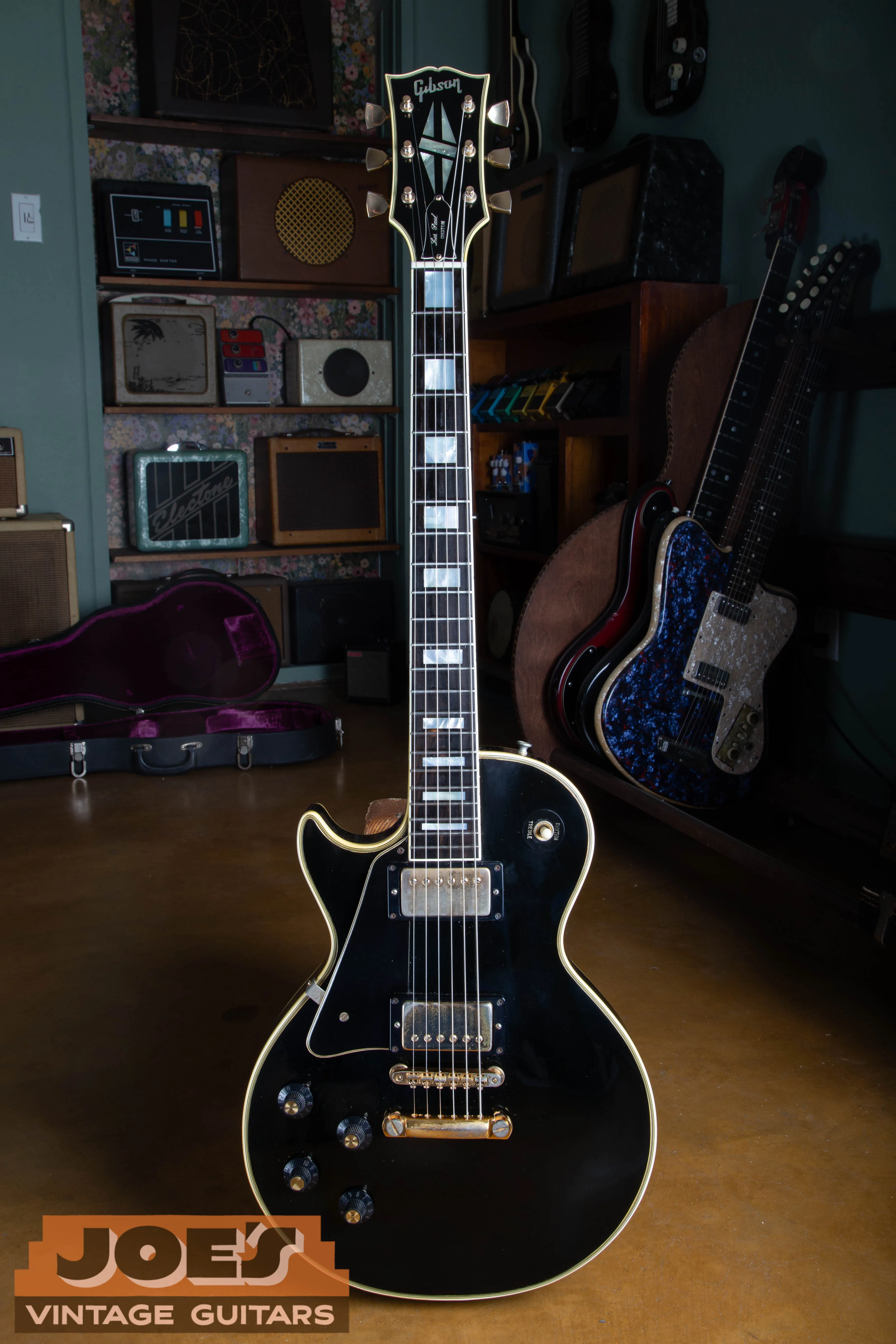
A 1970s Custom can be a heavily used working guitar, an altered instrument or a carefully preserved original. “Norlin era” identifies an ownership period; it doesn’t tell me which of those guitars is in front of me.
The table separates early 1970s Customs from the later standard two-pickup range. Finish options, neck construction and hardware changed during the decade. I check those details rather than forcing a transitional guitar into the most expensive neighboring year.
I look at the individual Custom’s original finish, pickups, electronics, structural condition and included case. Weight and playing feel can influence which buyer wants it. They don’t create a universal dollar premium that I can apply without comparable instruments.
The 1970 Les Paul Custom guide covers the early part of that period. For a later guitar, keep the model designation and full serial number with your photographs so I can compare the right production group.
Finish And Configuration Change The Comparison
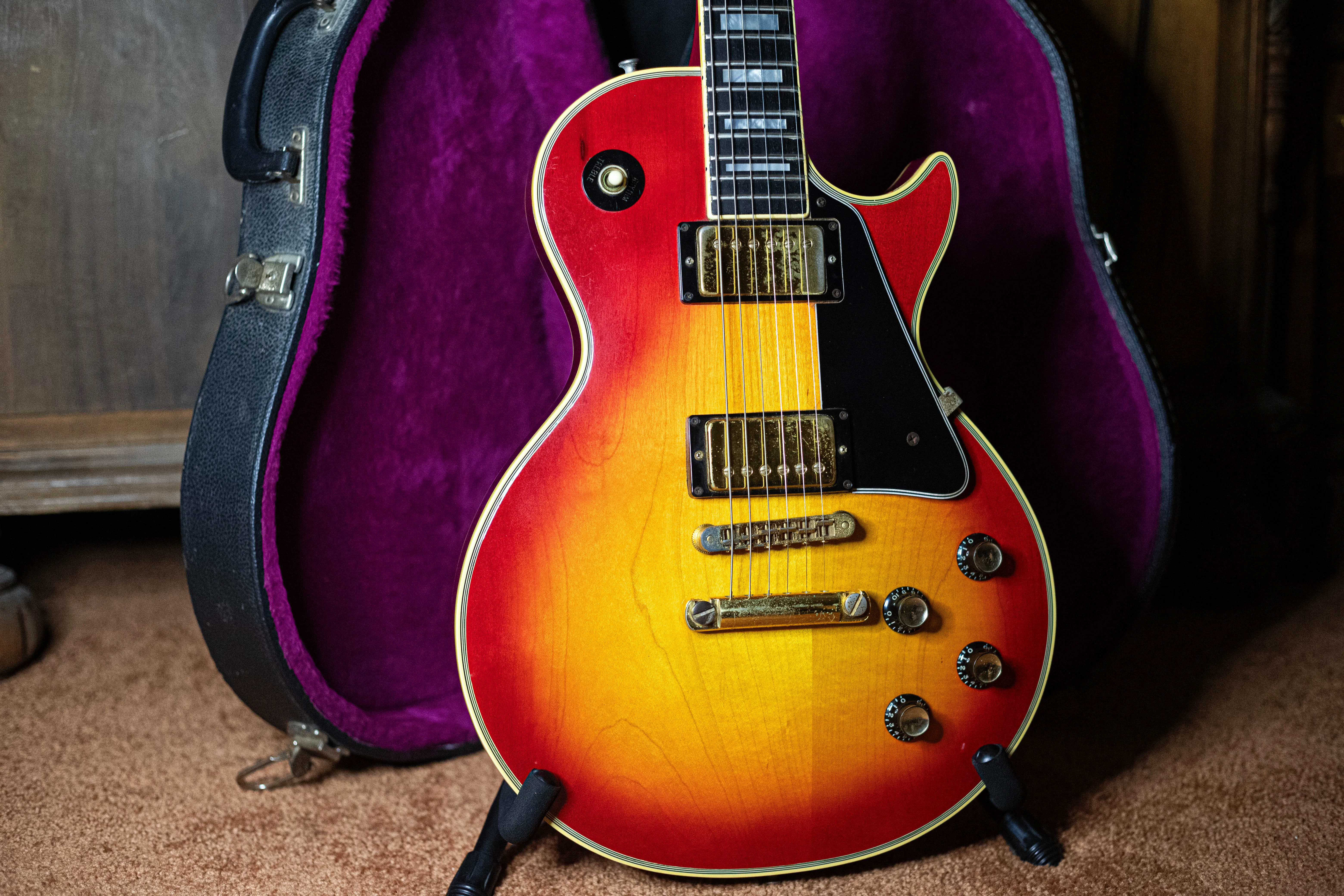
Black, sunburst and white Customs can appeal to different buyers. The table gives a broad standard-production range. I assess the actual finish and condition before assigning a color premium.
Silverburst, maple-fingerboard versions, three-pickup variants and the early 1970s ’54 reissue need configuration-specific review. Their individual features and condition determine the appraisal. The ’54 reissue, for example, borrows an earlier pickup arrangement; its appearance doesn’t make it an original 1950s guitar.
A white finish can look cream or yellow after years of aging. Color in a photograph also depends on the light and camera. Clear photographs in natural light help me assess the finish and any color premium.
Anniversary Markings
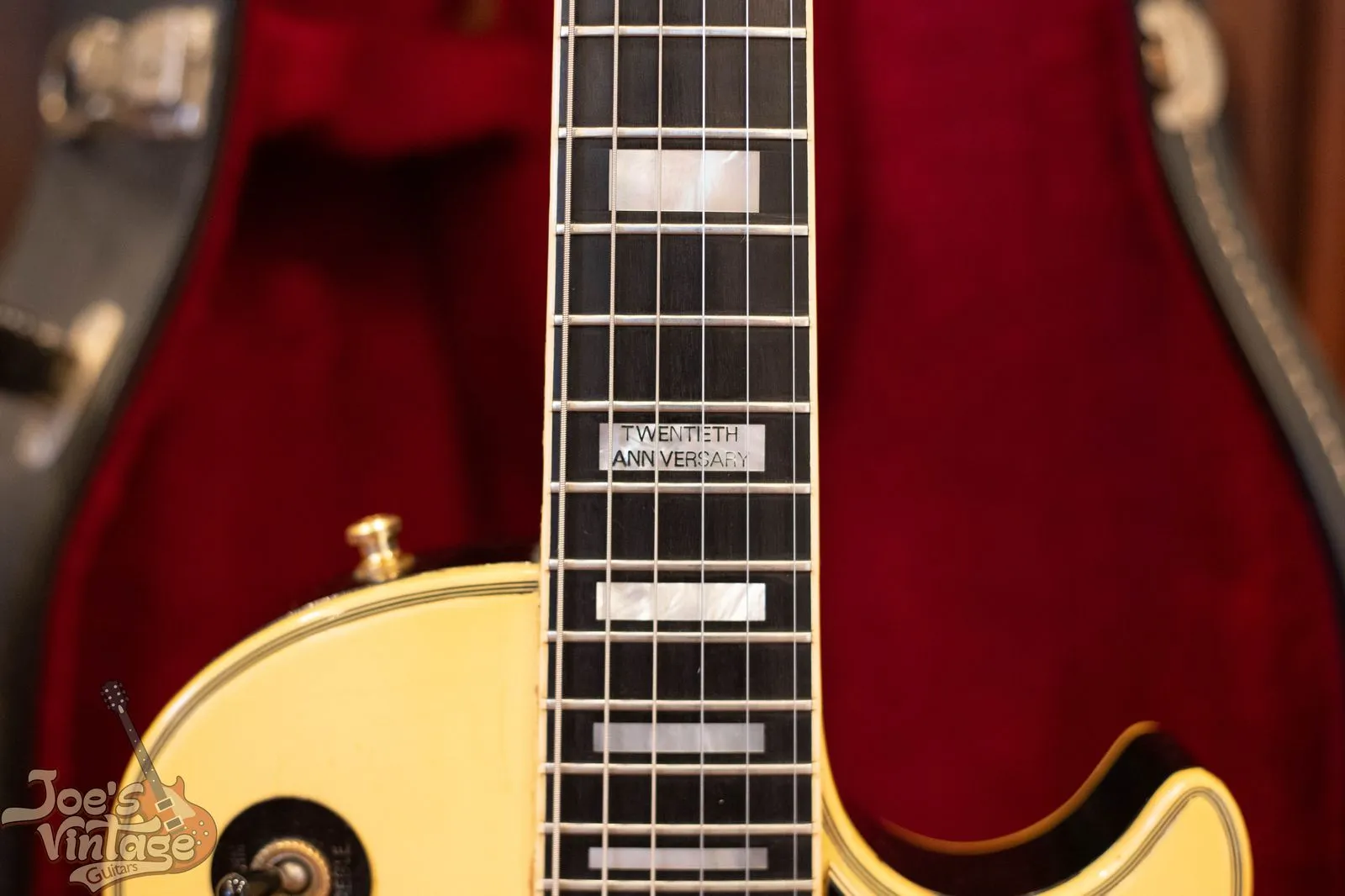
The twentieth-anniversary fingerboard inscription is a recognizable feature of the 1974 anniversary version. It helps describe which guitar is being compared. The inscription by itself doesn’t establish a fixed premium over another Custom.
For a valuation, I still need the rest of the guitar: its parts, condition, finish and repairs. A worn anniversary guitar and a very clean ordinary production Custom don’t become equivalent because one carries commemorative lettering.
Original Pickups And Electronics
Original pickups can account for much of the difference between two otherwise similar Customs, especially in the 1950s humbucker market. The table assumes the factory pickup set remains with the guitar. If it doesn’t, tell me what is fitted now and whether the removed pickups survive.
A pickup replacement and a pickup repair are separate histories. A rewind, changed cover or shortened lead should be described accurately. I won’t assume that a pickup is untouched because the metal cover looks old or because someone called it a PAF.
The same care applies to the controls. Pots are the components behind the volume and tone knobs. Replaced pots can leave a guitar fully usable, but they change the originality comparison even when the original pieces are kept in the case.
Leave solder joints intact when preparing for an initial estimate. If a repairer has already photographed the interior, include those images. If not, a first appraisal can identify what still needs a qualified inspection.
Keep Removed Parts Together
A bag of removed hardware is part of the guitar’s documentation. Label it by instrument if you own more than one Custom, and keep any repair invoice with it. An old part found in a case isn’t automatically original to that guitar, but losing it removes an opportunity to establish its history.
Reinstalling parts solely to improve a sales description can create another round of damage or uncertainty. Tell me what changed first. I can assess the guitar in its present state and explain which questions affect the comparison.
Wear, Fretwork And Structural Repairs
Finish wear, a refret and a repaired headstock describe different conditions. A guitar can show extensive use and retain its original finish and electronics. A shiny guitar can have a replacement finish or concealed structural work.
I separate those issues before applying the table. The clean-original reference isn’t a calculator where every flaw receives the same deduction. The nature of the repair, its stability, the extent of finish work and the remaining original parts all affect the appropriate comparison.
A quality refret preserves the all-original classification of an otherwise original guitar. It does remove museum-quality status. Neck reshaping, a replaced fingerboard or substantial work to the binding are different alterations and need to be disclosed separately.
Low Frets And Playing Preference
The Custom’s Fretless Wonder reputation comes from its low fretwire, not from an absence of frets. Some players want that original feel; others prefer a well-executed refret. For a guitar being sold, describe what is present without assuming every buyer has the same preference.
I also want to know about buzzing, a nonworking truss rod or an action problem you already know exists. Those are useful facts for an appraisal. You don’t need to authorize a repair before sending photographs.
Refinished And Repaired Examples
A refinished Custom needs comparison with other refinished guitars of the same general era and configuration. A repaired headstock requires a repair description, not just a photograph of the front. If you have an invoice or photographs from before the work, keep them with the instrument.
A headstock repair or refinish can substantially reduce collector value. A carefully repaired guitar with original pickups and an extensively modified instrument need different appraisals.
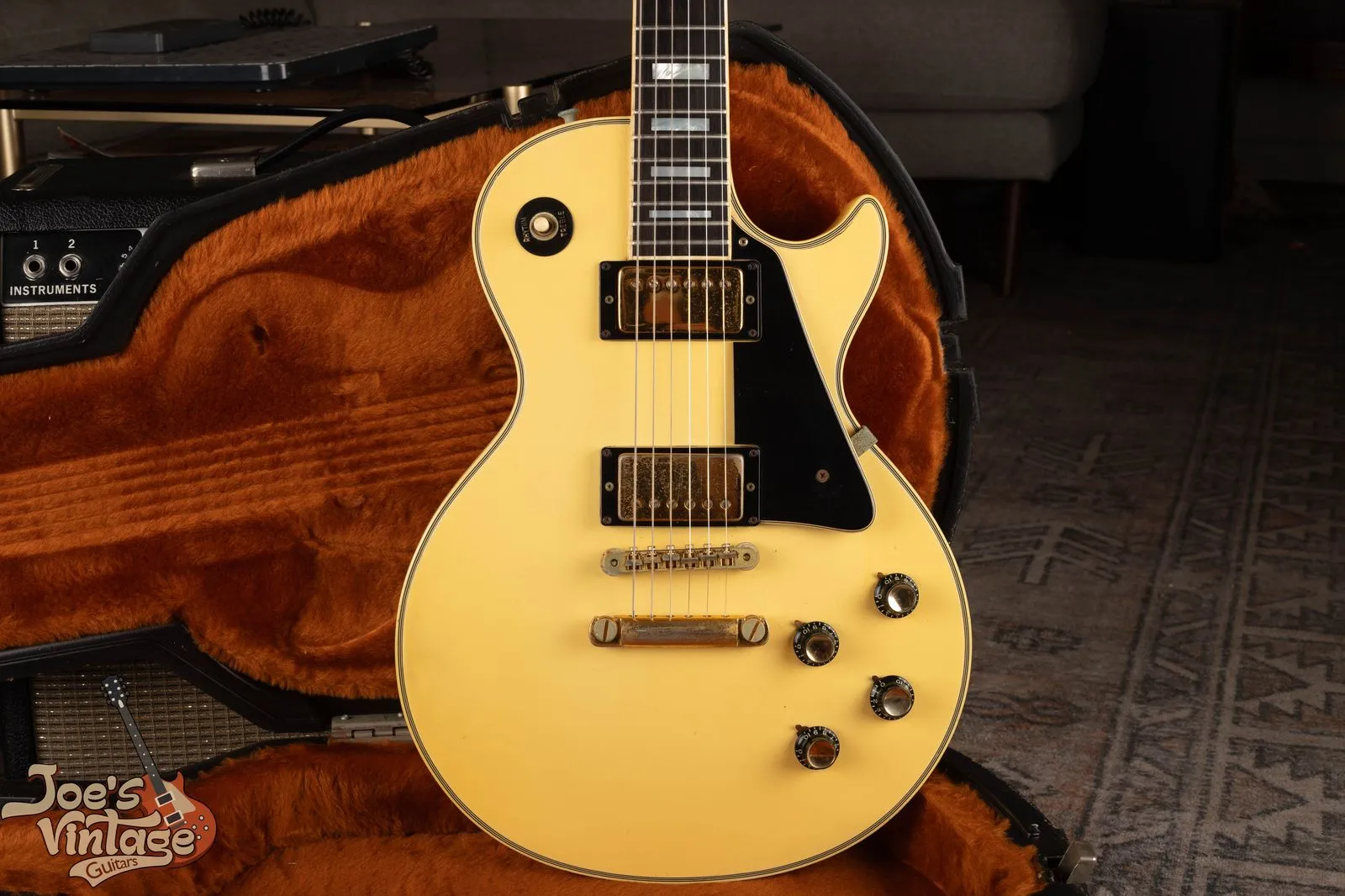
The Case And Paperwork
The table’s clean-condition assumption includes the original case. A later Gibson case, another brand’s case and the factory case are different descriptions. Case condition also varies: damaged latches, a replaced handle and interior deterioration should be included in the photographs.
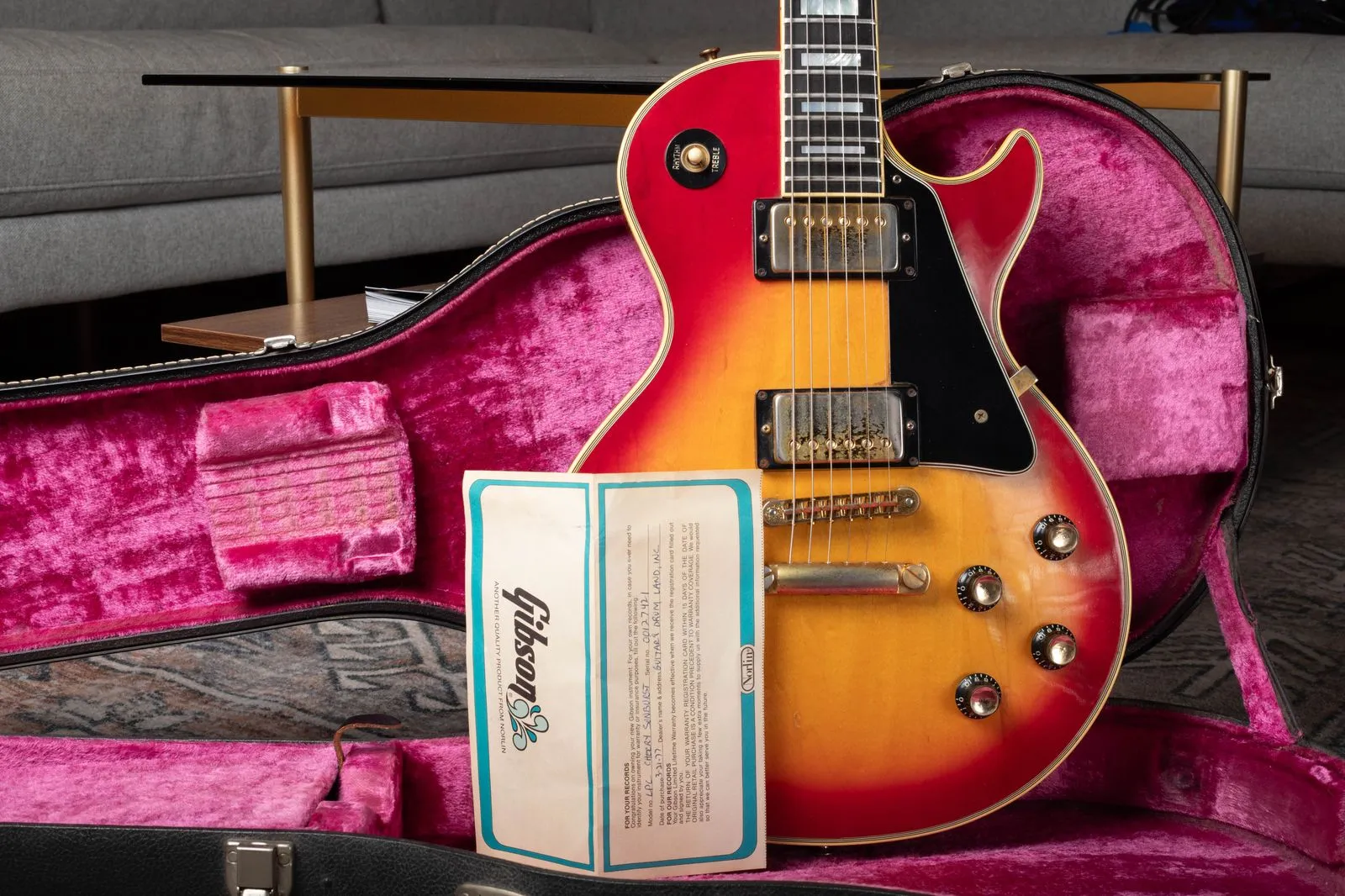
Original paperwork can help connect the instrument with its history. It doesn’t prove that every part is still original. Keep receipts, warranty material and service records together, and avoid separating them from the guitar before an appraisal.
The photograph below shows how useful a wider view can be. The body, case interior and paperwork are visible together. It gives me context that a close view of the serial number alone can’t supply.
Asking Price, Completed Price And Your Proceeds
A listing price is what a seller requests. A completed transaction records an agreement, subject to the condition described and the terms of that sale. The numbers aren’t interchangeable.
The guide ranges describe guitars in stated condition. They aren’t an offer from me or a promise of the amount you’ll receive after selling costs. Shipping, fees and preparation can affect the owner’s proceeds.
Before making an offer, I want to understand the guitar’s exact configuration, repairs and included accessories. An advertised price alone doesn’t settle those questions.
Documented artist ownership requires a separate provenance appraisal. A documented association can create a separate market. An ordinary Custom shouldn’t inherit that result simply because its finish and year look similar.
Get A Value Opinion On Your Custom
For a free vintage guitar appraisal, send a full front and back view, both sides of the headstock, the body edges and the case. Include the serial number as it appears, any known repairs and photographs of removed parts. A picture of the whole guitar keeps a close detail from being interpreted in the wrong context.
Natural indirect light helps show the finish without hiding it under glare. Keep the files at their original resolution when possible. There is no need to scrape a surface, loosen the neck or dismantle the electronics to begin.
If you’re comparing several inherited guitars, photograph each instrument and its case separately. That keeps one Custom’s paperwork or loose parts from being assigned to another. Once the year, configuration and condition are established, the price reference becomes a useful starting point for discussing the guitar you actually own.
For the wider family, my vintage Gibson value guide links the solidbody, ES, archtop and acoustic model comparisons.
My Les Paul market value guide compares the wider family, including Goldtops, Standards and the other original Les Paul models.
Questions About Gibson Les Paul Custom Value
What Is A Vintage Gibson Les Paul Custom Worth?
Clean original 1968 to 1969 Customs have a guide range of $11,000 to $17,000. Standard two-pickup 1975 to 1979 Customs sit at $4,500 to $6,000 in excellent original condition. Original 1950s guitars use separate pickup-based bands. Read the condition assumptions before applying a range.
Does Every Year Have A Separate Price?
Every covered production year has a row, but neighboring years can share an era range. I still need the guitar's configuration and condition to narrow an appraisal.
Why Are There No Carved-Body Custom Rows For 1961 To 1967?
My family identification guide ends the original carved-body run in 1960 and records its return in 1968. SG-shaped Customs belong to a different body family. An unusual transitional example needs individual identification rather than an assumed carved-body price.
Does A Three-Pickup Custom Always Cost More?
No fixed premium applies to every year and condition. I check whether the arrangement is factory original, whether the pickups remain original and which era is being compared. A later conversion doesn't inherit the value of an original factory configuration.
Is A Refretted Custom Still All Original?
A quality refret preserves the all-original classification of an otherwise original guitar. It removes museum-quality status. Neck reshaping, a replaced fingerboard and structural repairs are separate alterations.
Can I Use An Asking Price As A Completed Sale?
No. An asking price is a seller's request. The amount ultimately paid may differ, and a sold label alone doesn't establish that amount.
Should I Polish Or Replace Parts Before An Appraisal?
Photograph the guitar as it is first. Keep any removed original parts and known repair records with it. Leave the hardware, wiring and finish as they stand for the initial appraisal.