

Gretsch Identification Guide
Gretsch Finish Colors And Originality Checks
Color helps identify a model and version, but it can’t date a Gretsch by itself. Compare the finish with the serial, model number and areas around the hardware.
Back To The Gretsch Serial LookupOrange Stain And Natural Maple
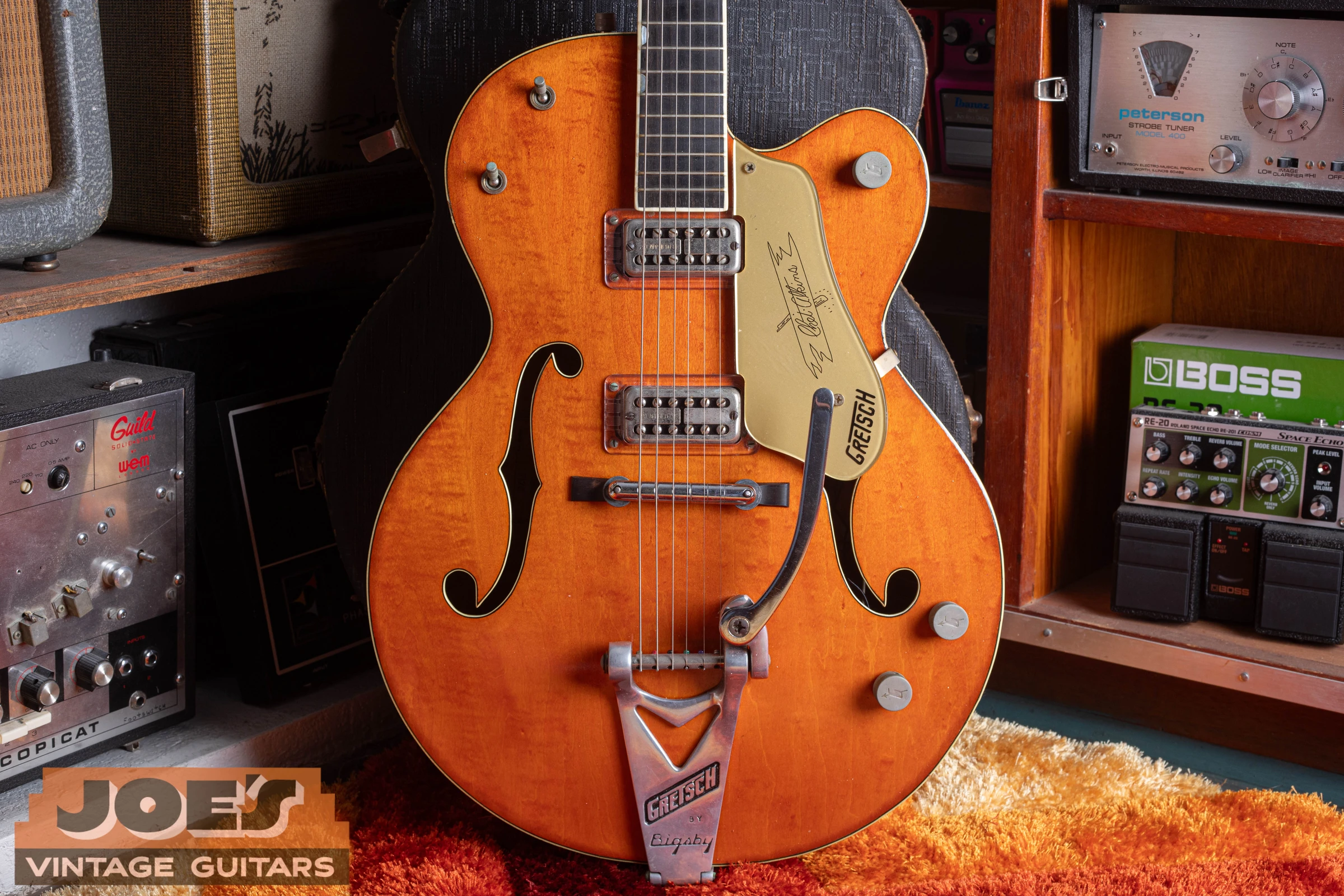
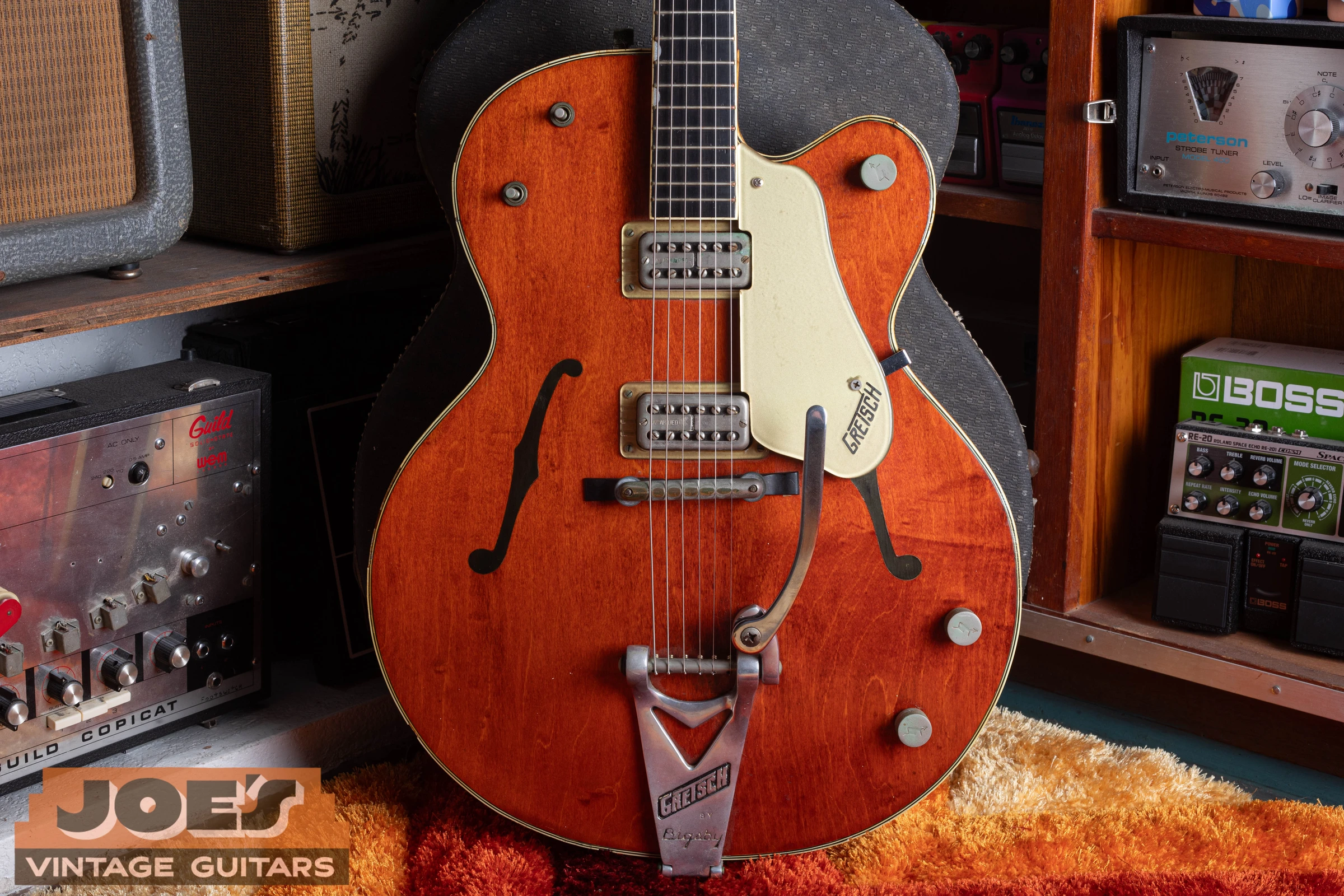
The orange 6120 is one of the most recognizable Gretsch combinations, but orange doesn’t identify one production year. Different examples can photograph as amber, red-orange or deeper brown-orange depending on lighting, finish aging and the wood beneath. Compare the actual guitar in diffuse daylight before choosing a catalog color name.
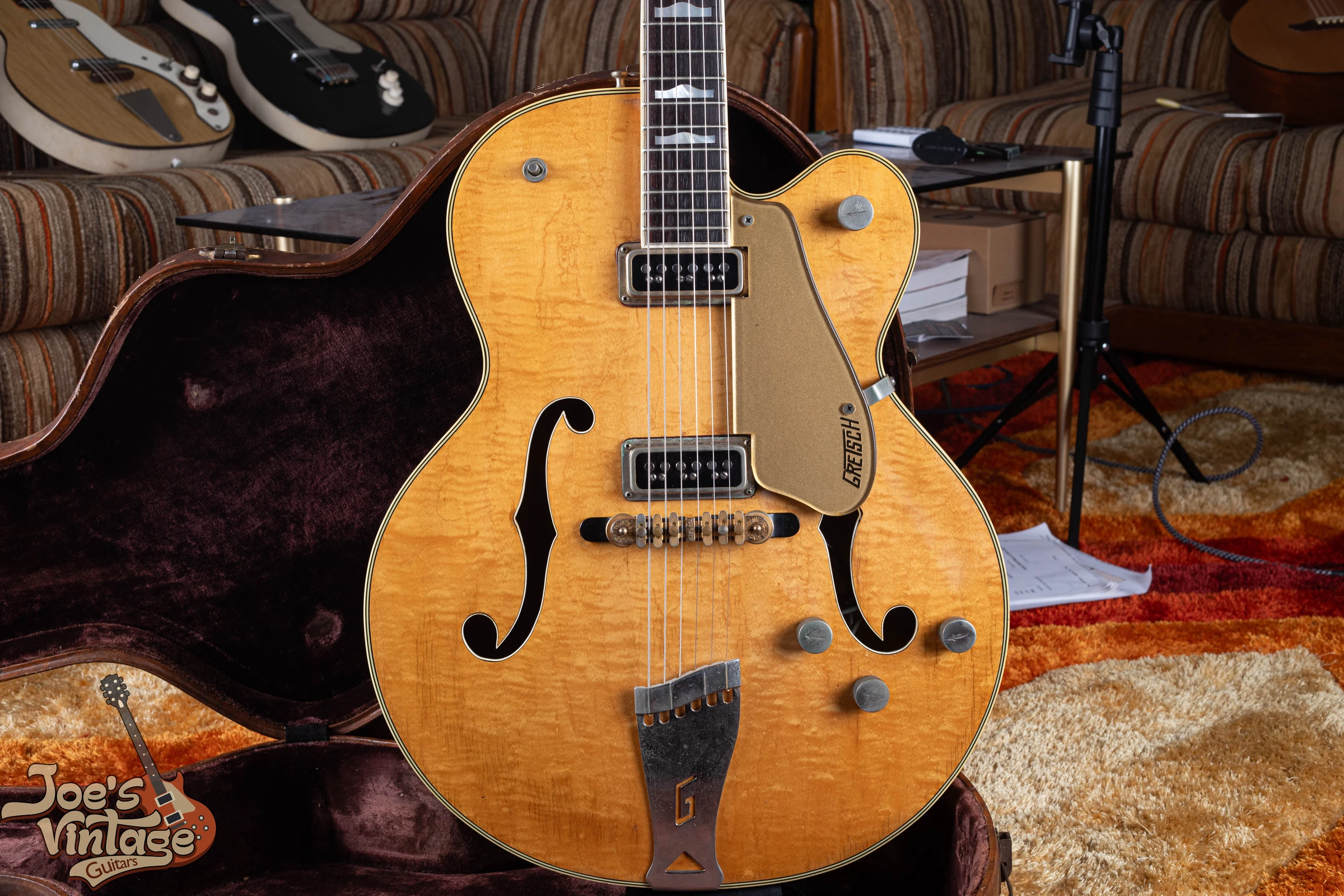
Natural maple exposes the wood figure more directly. The Country Club here shows a different relationship between grain and color from the orange 6120. “Natural” describes the appearance; it doesn’t establish whether all the clear finish is factory material. A clear overspray can preserve the general color while changing the originality assessment.
Record the model number and any finish suffix before researching a color. The label guide shows where that information may appear. For the orange model's development, use the 6120 history guide alongside these visual comparisons.
Smoke Green And Two-Tone Finishes
Two-tone finishes require photographs of the top, sides, back and neck. A front view may show only the lighter color and conceal the contrast that identifies the scheme. Pickguards can add a third shade, so don't assume every green surface should match.
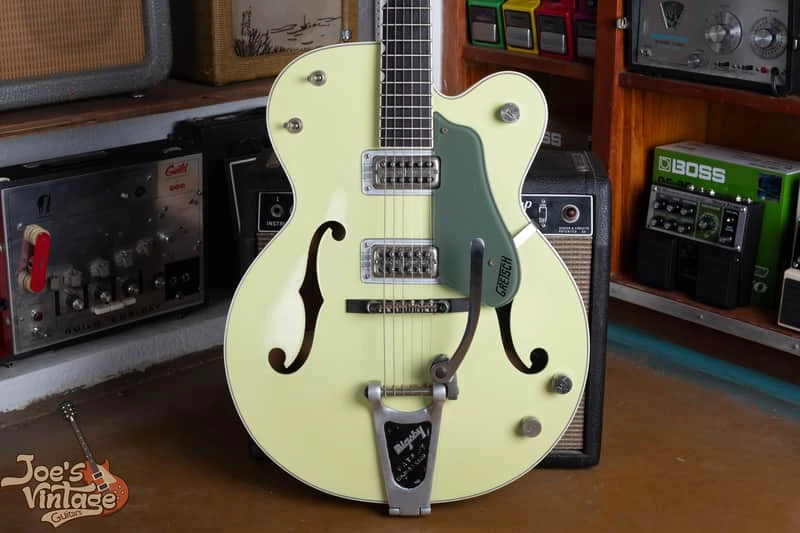
Joe’s 1997 Double Anniversary is listed in Smoke Green. Its pale top and darker guard illustrate a later instrument using a long-established Gretsch appearance. The finish name and Anniversary badge therefore don’t establish a 1958 build. The reissue guide explains the difference between a historical design and a manufacture date.
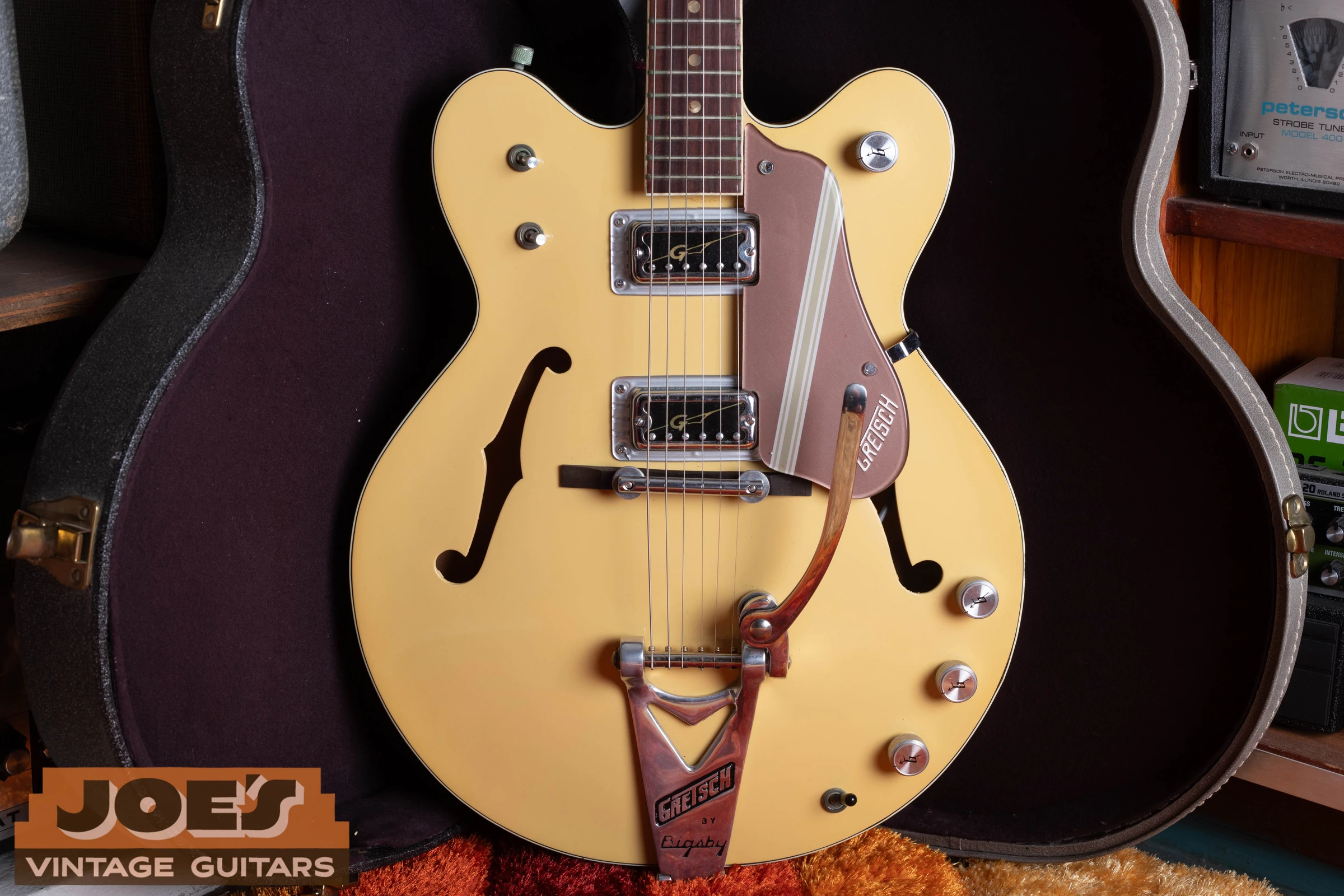
The Rally has its own contrasting finish and body details. Describe the visible colors first, then match the documented model specification. Marketplace names can be inconsistent, and two guitars photographed with different white balance may appear less alike than they are. Don't invent a rare factory color from a single warm or cool image.
For a documented later example, Gretsch’s G6118T-60 specification identifies a Two-Tone Smoke Green finish and its construction details. Use an exact model reference rather than applying that specification to every Anniversary.
Sunburst And Brown Finishes
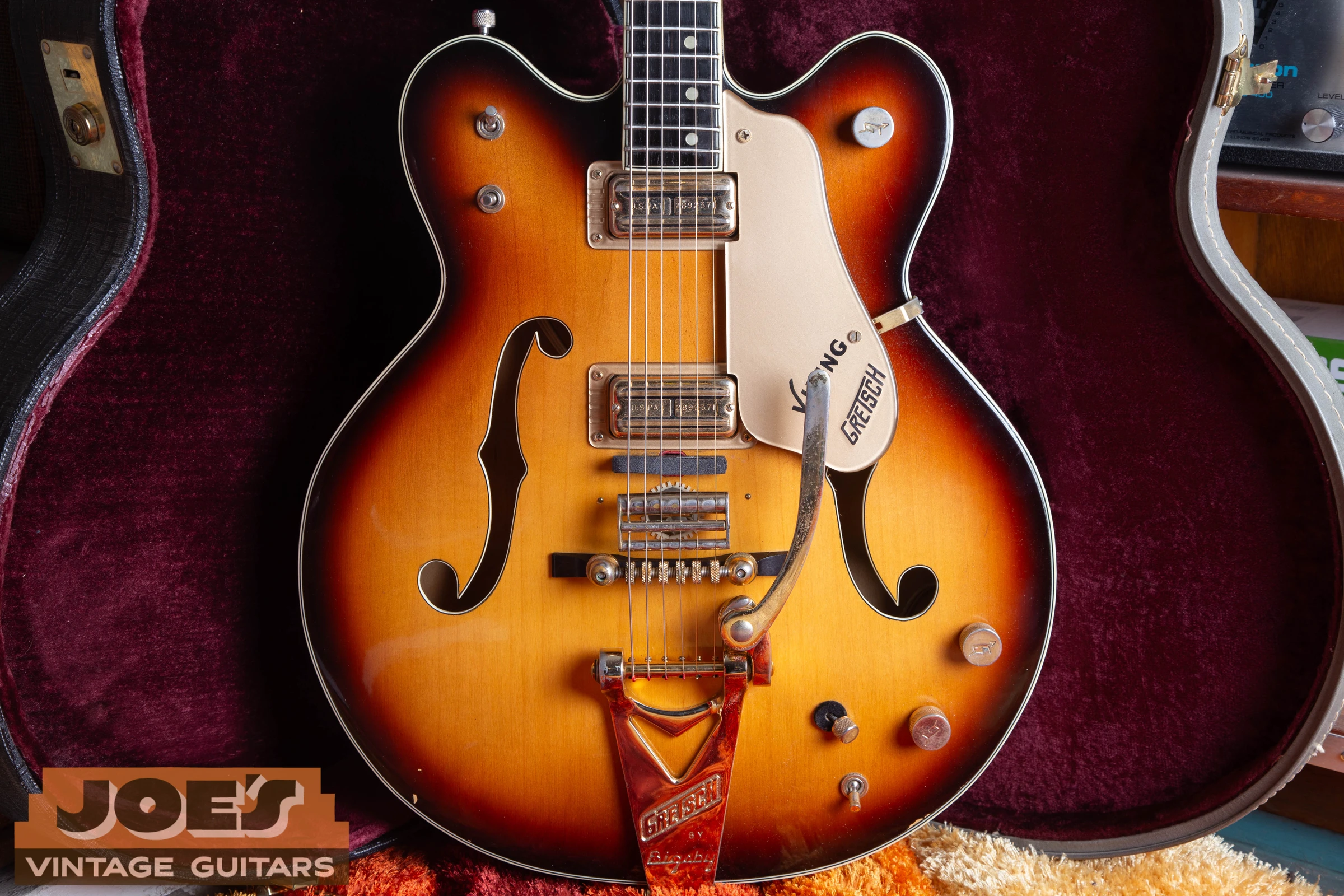
A sunburst has a visible color transition, usually from a lighter center toward darker edges. Photograph the body squarely so reflections don't conceal that transition. The Viking shown here has a dark perimeter surrounding a brighter center, with the shading continuing around its cutaways.
A brown or walnut-colored instrument may show a much more even stain. The Country Gentleman example is a useful comparison, though screen color and lighting still limit what a photograph can prove. Read a finish name from a reliable model record before treating it as an exact factory designation.
Dark edges can hide repairs or altered binding more easily than a bright natural surface. A side view and a close-up at the heel can show details the front misses. Pair this inspection with the binding and neck-joint checks; the condition of those areas may matter more to an appraisal than a subtle difference in color.
White, Black, Red And Sparkle Finishes
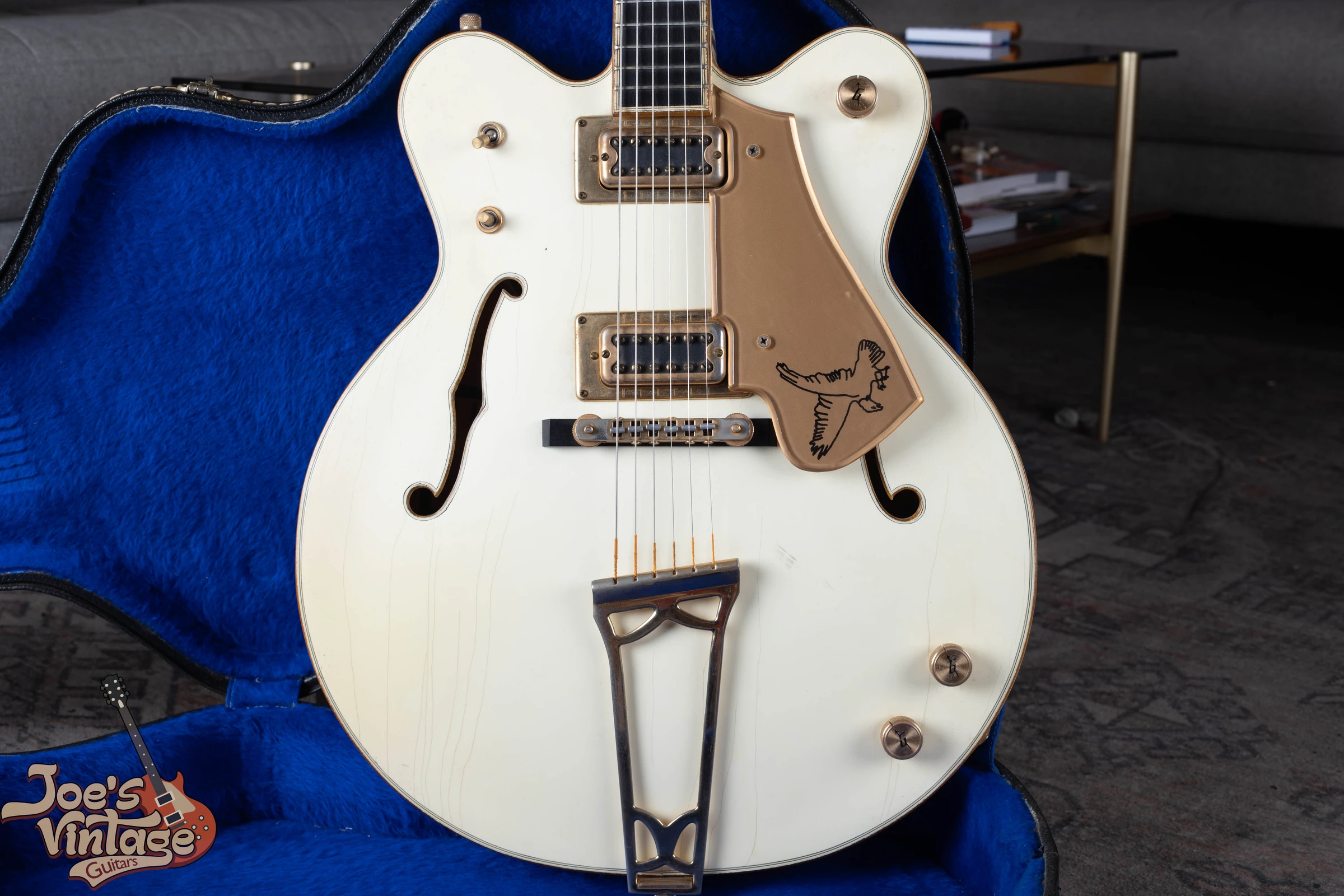
White finishes can develop a cream tone, but yellowing isn’t a dependable clock. Storage, light exposure, clear coats and previous work can change the appearance. Some later instruments also use deliberately aged colors. A bright white guitar can be old; a cream-colored guitar can be recent.
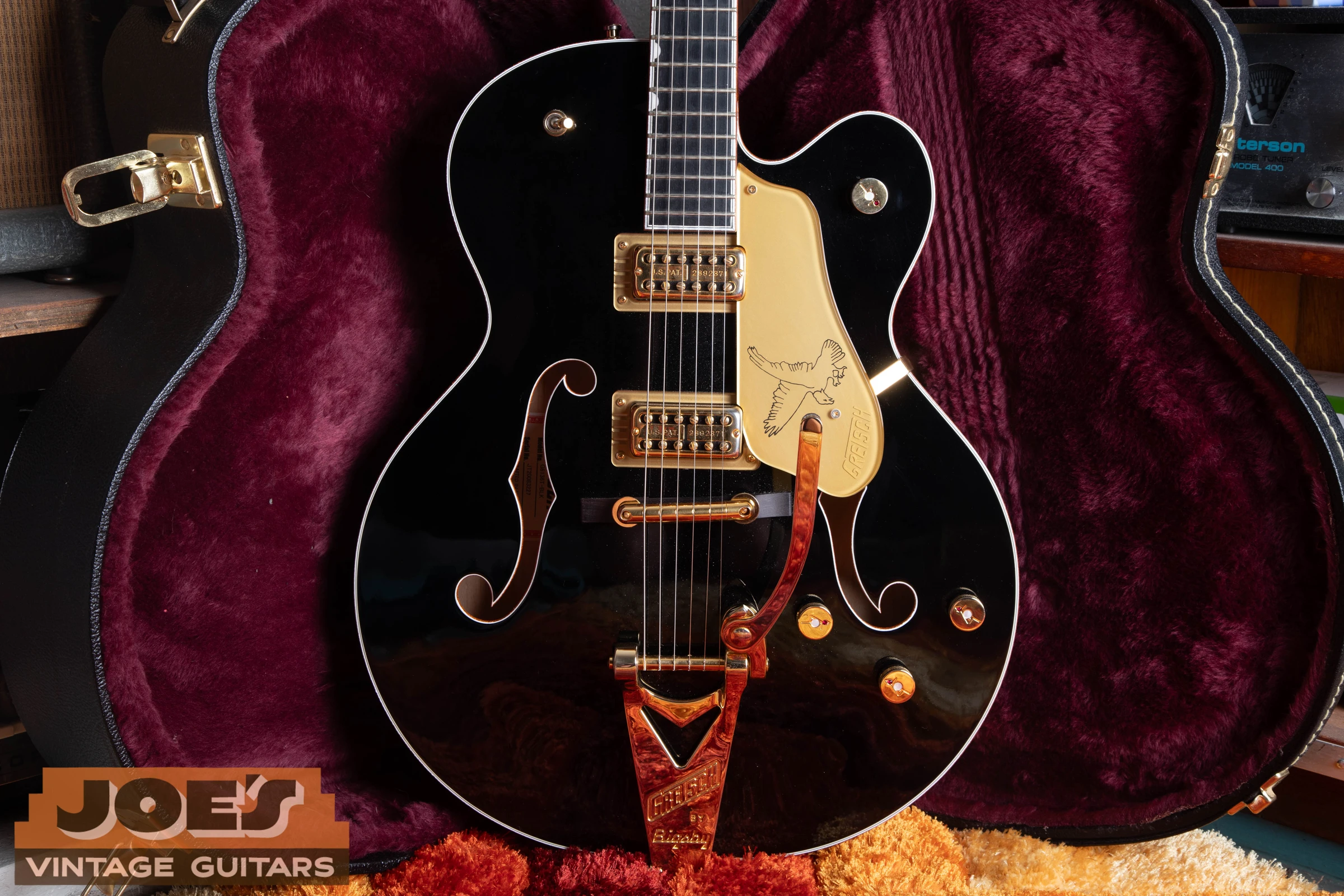
The 1970s White Falcon and 2020 Black Falcon share decorative gold elements across different production periods. The black guitar's readable modern serial is better evidence of its age than the styling. Compare the Falcon headstock examples for the same lesson.
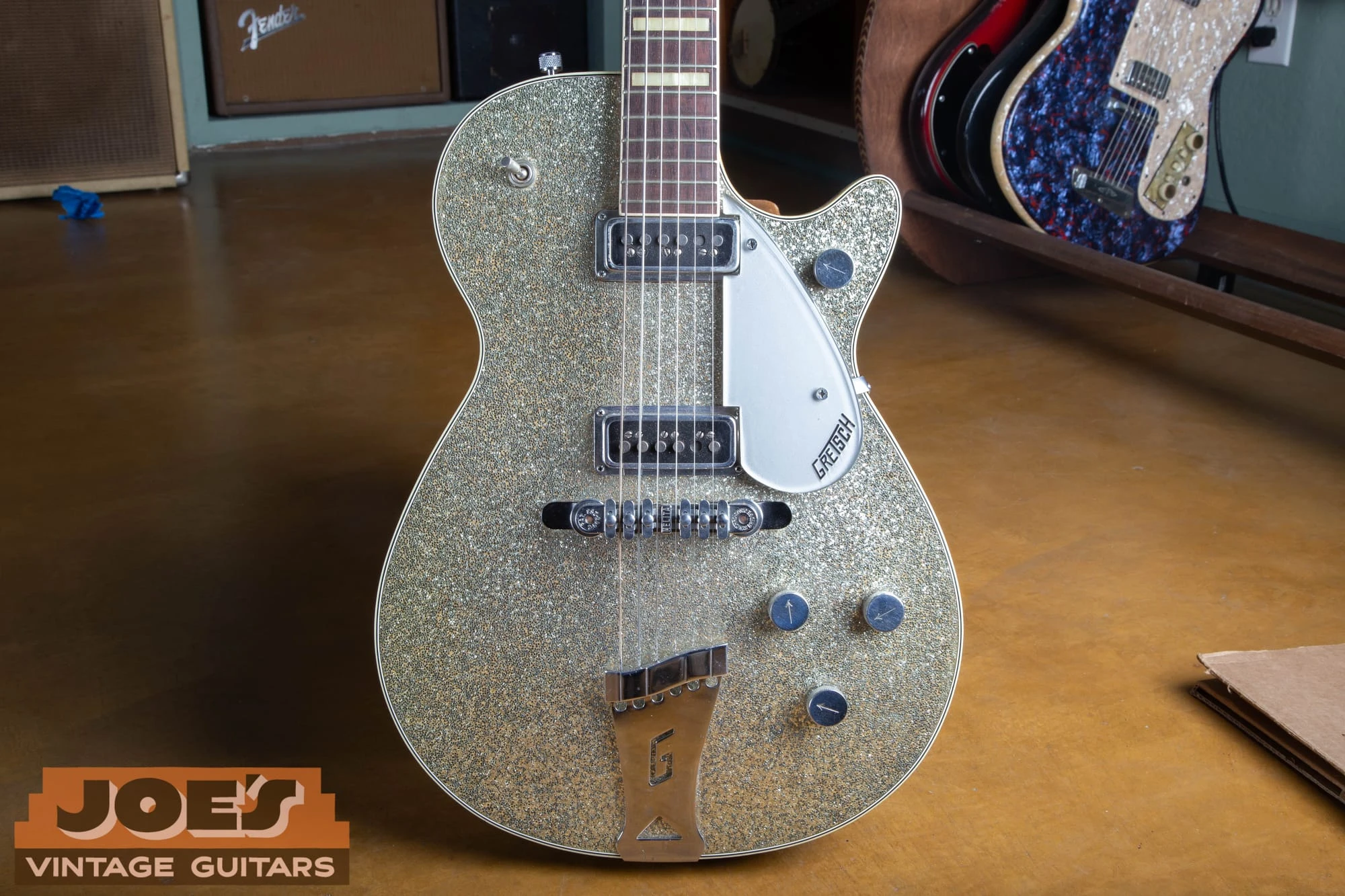
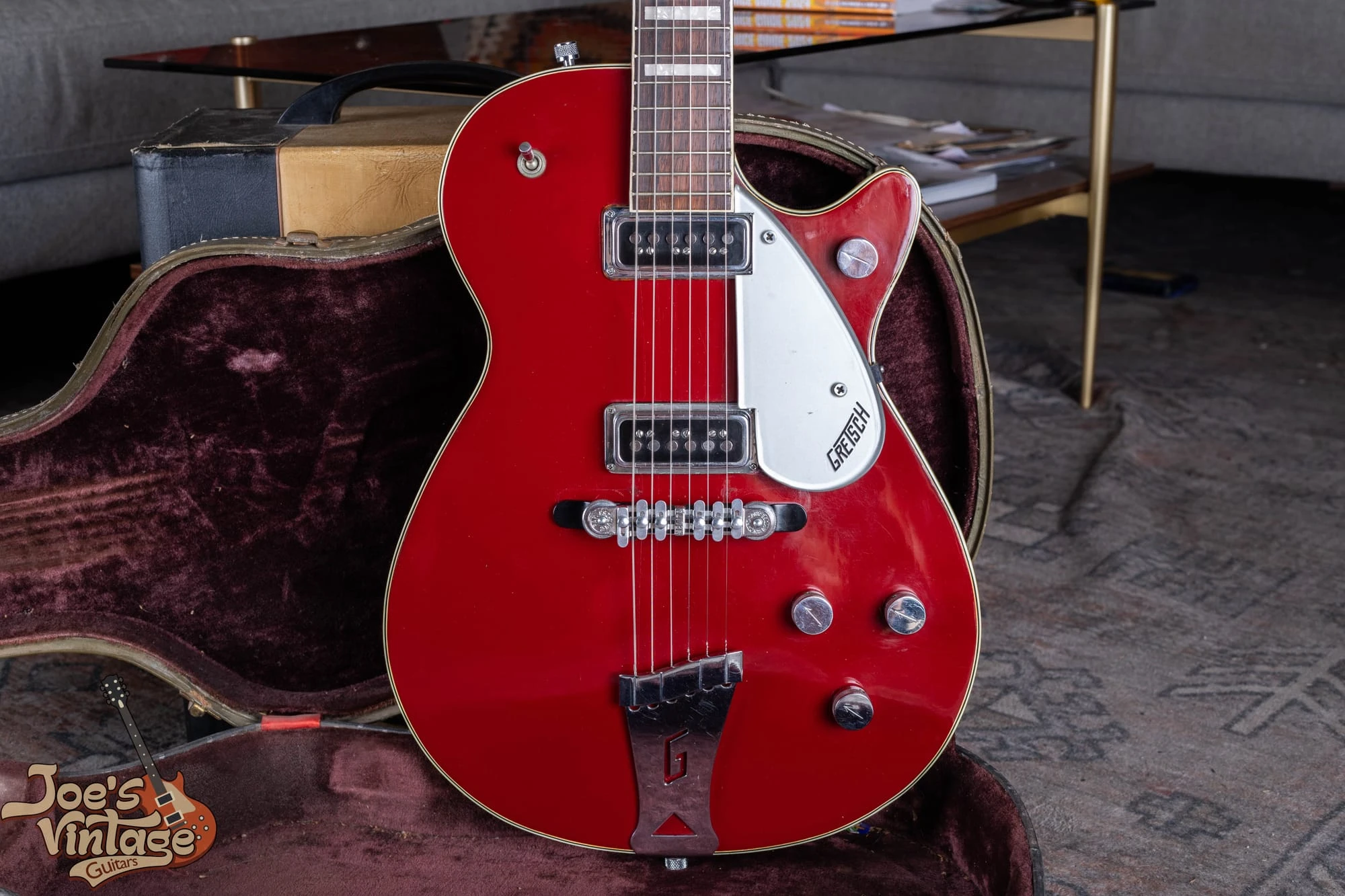
Jet finishes include black, red and sparkle variants. The Silver Jet's reflective top should be photographed without direct flash, which can wash out its texture. Keep a second wider image that shows the body edge and sides. The Jet model guide explains the related Duo Jet, Jet Firebird and Silver Jet identities.
Photographs That Help Assess A Possible Refinish
Look around the neck joint, binding edges, screw holes, pickup surrounds and headstock lettering. Paint on hardware, an unusual finish edge, obscured stamps or a different color in a worn area can justify closer inspection. Each observation needs context; none alone proves a refinish.
A finish shadow beneath a moved part may record earlier hardware. Clear finish over a repair may be local touch-up or broader overspray. A worn area might expose sealer or an undercoat rather than bare wood. Describe what is visible before assigning a repair category.
Don't scrape, use solvent or remove fragile parts to test the finish. Photograph the area with and without reflected light, then seek an in-person assessment if originality is important to the decision. The bridge and tailpiece guide and tuner guide show the hardware areas most useful to include.
For a Gretsch appraisal, provide a full front and back, both sides, the serial and close-ups of anything that looks different. Include known refinish or touch-up work even if it is difficult to see. A useful condition record should follow the instrument if you later sell your Gretsch.
Manufacturer References
- Gretsch Catalog Archive
Match a finish name to the correct model and catalog period.
- Vintage Select Models
See later instruments that intentionally reuse historical colors and appointments.
- Gretsch Product Dating
Keep the serial period separate from a visual color estimate.
Get Help Identifying Your Gretsch
Send the serial, a full front and back view, and close-ups of the feature you want checked. Include any known repairs or replacement parts.
Get A Free Gretsch AppraisalReturn to the Gretsch serial lookup and dating library to compare the rest of the instrument.